15 Shorebirds in Delaware
Delaware’s coastline may be short, but it’s one of the best places on the East Coast to see shorebirds. From the vast mudflats of the Delaware Bay to the sandy stretches of Cape Henlopen and Prime Hook, the state is a crucial stopover for migrating birds traveling along the Atlantic Flyway. Each spring and fall, thousands of sandpipers, plovers, and other coastal species gather here to feed and rest on their long journeys between the Arctic and South America.
Whether you’re a beginner birder or an experienced photographer, Delaware’s beaches and wetlands offer endless opportunities to spot shorebirds up close. Here are fifteen species you can expect to find along the state’s bayshores, marshes, and tidal flats.
1. Red Knot
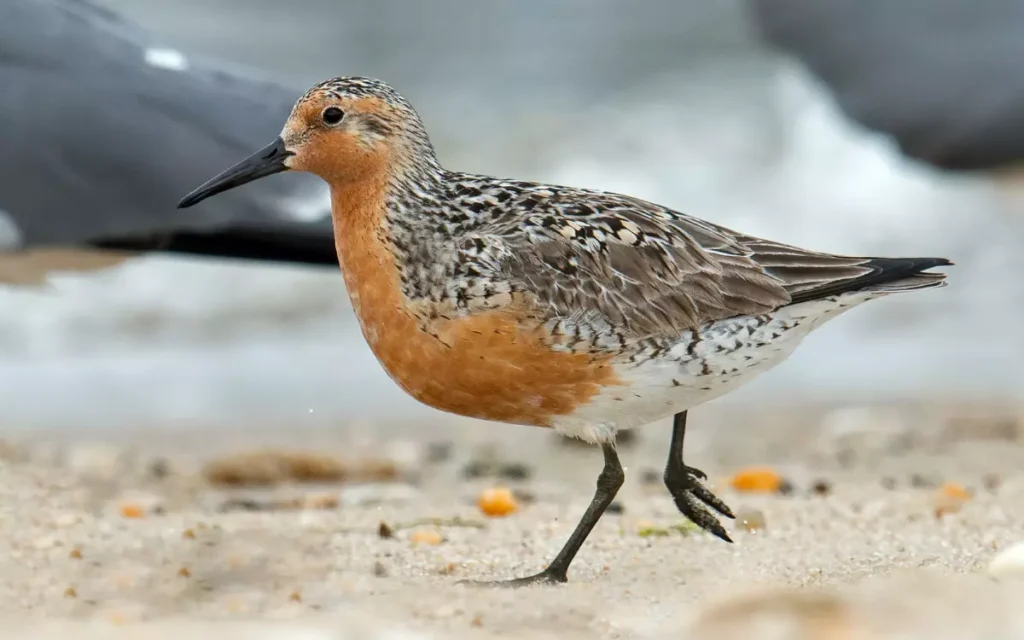
The Red Knot is perhaps Delaware’s most famous shorebird. Each spring, tens of thousands stop along the Delaware Bay to feed on horseshoe crab eggs during their incredible migration from South America to the Arctic. In their breeding plumage, adults show a deep rusty-red chest and face; in winter, they turn grayish overall. Late May is the best time to see them at places like Mispillion Harbor and Slaughter Beach.
2. Semipalmated Sandpiper

Small and lively, the Semipalmated Sandpiper is a common migrant in Delaware. It has gray-brown feathers and partially webbed toes that give it its name. You’ll often see flocks of hundreds probing the mud for tiny crustaceans. Peak numbers appear from May to June and again in August during the southbound migration.
3. Sanderling

If you’ve walked along Delaware’s ocean beaches, you’ve probably seen the Sanderling. These pale, quick-moving birds chase waves back and forth, picking up food before the surf rolls in again. In summer plumage, they show rusty markings on the head and back, but in winter they turn pure white and gray, blending perfectly with the sand.
4. Dunlin

The Dunlin is a medium-sized sandpiper with a long, slightly curved bill. During the breeding season, it sports a black belly patch and rusty back, but in winter it’s soft gray and brown. Flocks of Dunlins are common along the Delaware Bay during migration and winter, feeding on tidal flats and saltmarsh edges.
5. Black-bellied Plover

Large and striking, the Black-bellied Plover is easy to spot with its black face and belly during spring and summer. In winter, the dark plumage fades to gray, but the bird’s size and bold posture remain distinctive. They often stand alone on beaches or tidal flats, scanning for insects and small crustaceans.
6. Semipalmated Plover

This small, compact plover has a brown back, white belly, and a neat black ring around its neck. It’s one of the most widespread plovers in Delaware, especially during migration. Its soft, piping call is a familiar sound over the bay flats in spring and fall.
7. Piping Plover
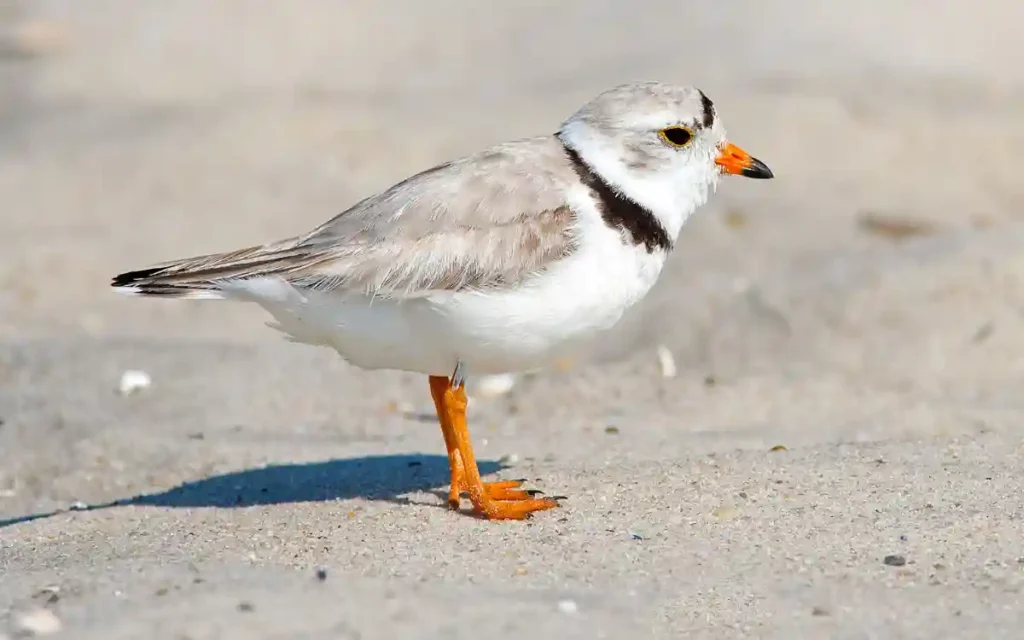
The Piping Plover is one of Delaware’s rarest and most protected shorebirds. With pale sandy feathers and orange legs, it blends perfectly with the beach. Piping Plovers nest on open sand along Cape Henlopen State Park, where conservation programs protect them each summer. Seeing one is always a special moment for birders.
8. Killdeer

The Killdeer is a larger plover often found away from the coast in open fields, parking lots, and golf courses. Its double black breast bands and loud “kill-deer” call make it easy to recognize. In Delaware, Killdeer breed in both inland and coastal areas and remain year-round residents.
9. Ruddy Turnstone

Named for its habit of flipping stones and shells to find food, the Ruddy Turnstone is one of the most colorful shorebirds in Delaware. Its patterned back, black chest markings, and orange legs stand out against the sand. You’ll often find them among flocks of Red Knots in late spring at Mispillion Harbor.
Read also: 15 White Birds in Delaware Complete Identification Guide
10. Willet

The Willet is a sturdy, medium-sized shorebird that’s grayish-brown when standing still but flashes bold black-and-white wings in flight. It’s one of the few shorebirds that nests in Delaware, especially around Prime Hook National Wildlife Refuge and Bombay Hook. Its piercing “pill-will-willet” call carries over the marshes during summer.
11. Greater Yellowlegs
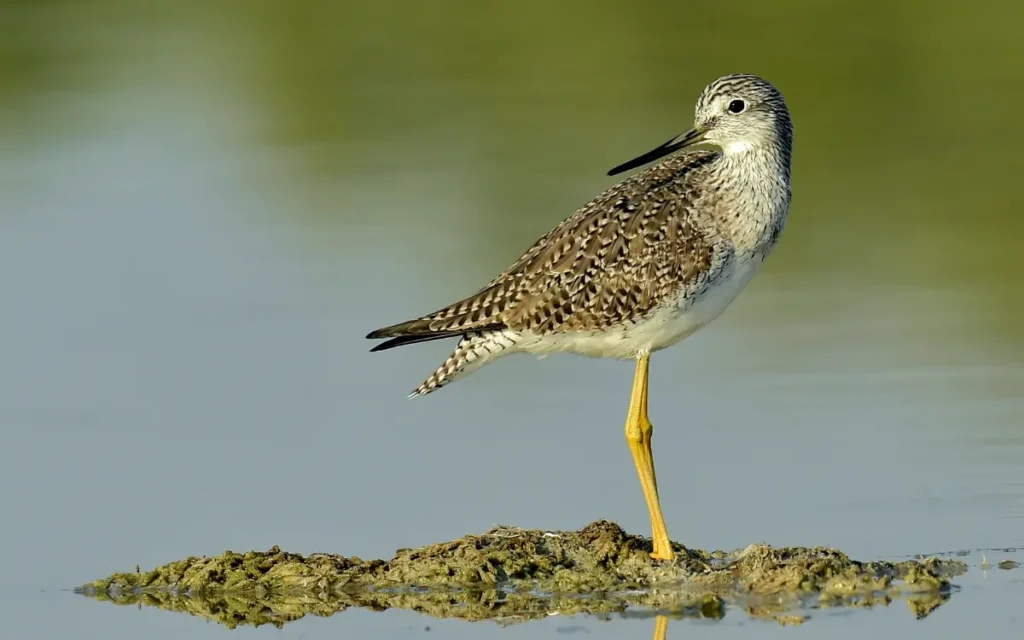
Tall and elegant, the Greater Yellowlegs is named for its long, bright yellow legs and slender bill. It often feeds in shallow water, striking at insects and small fish. You can spot them throughout Delaware during migration and in smaller numbers year-round in tidal pools and marshes.
12. Lesser Yellowlegs
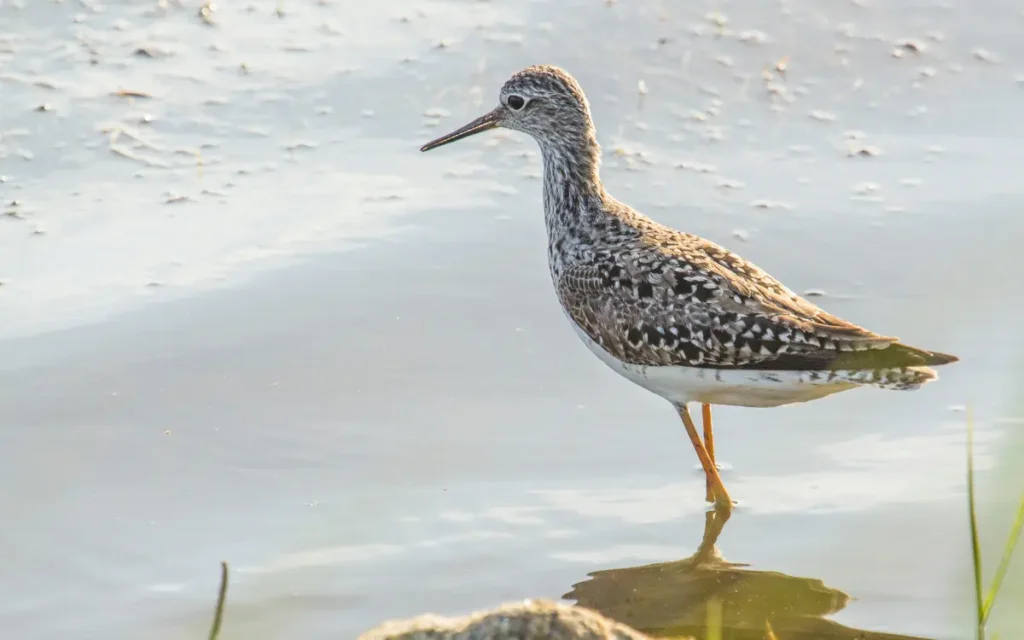
Nearly identical to the Greater Yellowlegs but smaller with a shorter bill, the Lesser Yellowlegs is a graceful bird that frequents the same habitats. Both species often appear side by side at Bombay Hook, where birders can practice telling them apart.
13. Short-billed Dowitcher

The Short-billed Dowitcher uses its long bill to probe deep into the mud for food. Despite the name, its bill is quite long just shorter than that of its cousin, the Long-billed Dowitcher. In spring, they show reddish-brown plumage; in winter, they’re gray and white. They migrate through Delaware in large numbers, especially in May and August.
14. American Oystercatcher

One of the most eye-catching shorebirds, the American Oystercatcher has a striking orange bill, dark brown back, and white underparts. It uses its bill to pry open clams and oysters along the coast. You can find them nesting and feeding on Delaware’s barrier beaches and tidal islands, especially near Cape Henlopen and Broadkill Beach.
15. Marbled Godwit

The Marbled Godwit is one of the largest shorebirds seen in Delaware. It has long legs, a long upturned bill, and warm cinnamon-brown plumage. Though not as common as some smaller species, it’s regularly spotted at Bombay Hook and Prime Hook during migration, wading gracefully through shallow water.
Best Places to See Shorebirds in Delaware
Bombay Hook National Wildlife Refuge near Smyrna is Delaware’s top hotspot for shorebirds. Its tidal pools and mudflats attract species by the thousands during migration. Prime Hook National Wildlife Refuge offers similar opportunities with less crowding, especially at low tide. For beach-nesting species like the Piping Plover and American Oystercatcher, Cape Henlopen State Park and Slaughter Beach are ideal.
Late spring (May–June) and late summer (August–September) are the most productive months for shorebird watching, though winter visits can reveal hardy species like Dunlins and Sanderlings.
Watching Tips for Delaware Shorebirds
A spotting scope or binoculars are essential since many shorebirds feed far from shore. Visit during low tide when mudflats are exposed, and approach slowly to avoid disturbing feeding birds. Early morning light provides the best visibility and photo conditions. Keep an eye on tide schedules and check eBird Delaware for recent sightings shorebird numbers can change daily depending on weather and water levels.
Frequently Asked Questions
When is the best time to see shorebirds in Delaware?
Late May through early June is peak season during spring migration, followed by August and September in the fall.
Where can I see Red Knots in Delaware?
Mispillion Harbor and Slaughter Beach are world-famous Red Knot stopover sites, attracting birders from around the globe.
Are shorebirds protected in Delaware?
Yes. Species like the Piping Plover are federally protected, and nesting areas are fenced off each summer to prevent disturbance.
Do shorebirds stay year-round in Delaware?
Some, like Killdeer and Sanderlings, stay throughout the year, but most migrate long distances and are seen only seasonally.
Can I see shorebirds in winter?
Yes. Dunlins, Sanderlings, and Black-bellied Plovers remain on Delaware’s beaches and mudflats even during colder months.
Final Thoughts
Shorebirds bring Delaware’s coastlines to life. Their arrival marks the changing of seasons, their movements connect continents, and their presence reminds us how vital the state’s wetlands truly are. From the tiny Semipalmated Sandpiper to the bold Oystercatcher, each bird tells a story of endurance and migration. Take your binoculars to the bay, breathe in the salt air, and watch as Delaware’s tidal flats come alive with one of nature’s most remarkable spectacles.