The American Robin is one of the most familiar birds in North America. Most people recognize its bright orange chest and upright posture as it hunts for worms on lawns.
You can see American Robins in backyards, parks, forests, and open fields across much of the United States. In this guide, you’ll learn how to identify them, where they live, what they eat, how they nest, and how to tell them apart from similar birds.
How to Identify an American Robin
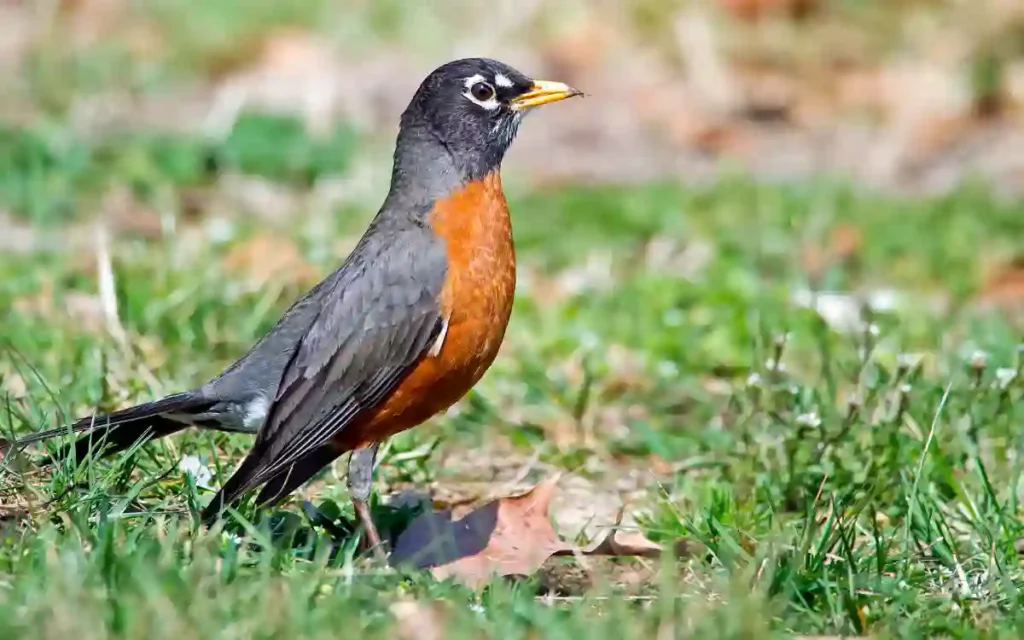
American Robins have a bold orange chest, gray-brown back, and yellow bill. They stand upright and often tilt their head while searching for food.
Size and Shape
- Length: 9–11 inches
- Wingspan: 12–16 inches
- Weight: About 2.5–3 ounces
They are larger than most backyard songbirds.
Male vs Female American Robin
FeatureMaleFemaleChest ColorDeep orangeLighter orangeHeadDarker gray to blackSofter grayOverall ToneSlightly richerMore muted
The differences are subtle. Most people cannot tell them apart unless they see both together.
Juvenile American Robin
Young robins look very different from adults.
They have:
- Spotted or streaked chests
- Brown backs
- A less defined orange belly
As they mature, the spotting fades and the orange chest becomes solid.
Where Do American Robins Live?
American Robins live across nearly all of North America.
They thrive in:
- Lawns
- Forest edges
- Parks
- Farmland
- Suburban neighborhoods
They adapt easily to human environments.
Do American Robins Migrate?
Yes. Many robins migrate.
- Northern populations move south in winter.
- Southern robins may stay year-round.
Even when they remain in winter, they often switch from lawns to wooded areas where berries are available.
What Do American Robins Eat?
Robins eat both insects and fruit.
Their diet includes:
- Earthworms
- Beetles
- Caterpillars
- Berries
- Cherries
- Holly berries
In spring and summer, they eat more insects. In fall and winter, they rely heavily on fruit.
How Robins Find Worms
Robins use sight, not sound, to locate worms.
They watch for movement in the soil and then quickly pull worms from the ground.
Nesting and Breeding Habits
Robins begin nesting early in spring.
They often raise 2–3 broods per season.
The female builds a sturdy cup-shaped nest using:
- Grass
- Twigs
- Mud
She lines it with soft materials to protect the eggs.
Eggs and Incubation
- Clutch size: 3–5 eggs
- Egg color: Bright blue
- Incubation: 12–14 days
- Fledging: About 14 days after hatching
The blue eggs are one of the most recognized features of the American Robin.
American Robin Song and Calls
Robins sing one of the first songs at dawn.
Their song sounds like:
“Cheerily, cheer up, cheer up, cheerily.”
They sing to:
- Defend territory
- Attract mates
- Communicate during breeding season
They also give sharp alarm calls when predators approach.
Behavior and Interesting Traits
Robins often:
- Run a few steps
- Stop suddenly
- Tilt their head
- Pull a worm from the ground
In winter, they form large flocks and feed on berries together.
They can become aggressive when defending nests.
Birds Often Confused with American Robin
BirdKey DifferenceVaried ThrushOrange stripe across chest, darker bodyEastern BluebirdSmaller, blue backSpotted TowheeWhite belly with rusty sides
Size and upright posture help confirm a robin quickly.
States Where You Can See the American Robin
You can see American Robins in almost every U.S. state.
They are especially common in:
- Texas
- California
- Florida
- New York
- Illinois
- Pennsylvania
- Ohio
- Michigan
- Georgia
- North Carolina
- Washington
- Colorado
Because they live across the country, they connect well to your state bird guides.
You can internally link phrases like:
- “Common birds in Texas”
- “Backyard birds in California”
- “Spring birds in New York”
Quick Facts About the American Robin
FeatureDetailScientific NameTurdus migratoriusLifespan2–6 years (can live longer)MigrationPartial migrantNest TypeMud-lined cupEgg ColorBright blue
How to Attract American Robins to Your Yard
Robins do not rely heavily on feeders.
Instead, you can attract them by:
- Keeping healthy lawns
- Planting berry-producing shrubs
- Providing shallow bird baths
- Avoiding pesticides
They prefer natural food sources.
Frequently Asked Questions
Are American Robins rare?
No. They are very common across North America.
Why do robins appear in spring?
Many migrate north in early spring. Their arrival often signals the changing season.
Do robins use bird feeders?
Rarely. They prefer worms and fruit over seed.
Why are robin eggs blue?
The blue color may help regulate temperature and camouflage the eggs.
Do robins stay in winter?
Some do. Others migrate south. Winter robins usually gather in wooded areas.
Final Thoughts
The American Robin remains one of the most recognized birds in North America. Its orange chest, blue eggs, and cheerful song make it easy to identify and enjoy.
Because it appears in nearly every state, it works perfectly in your species guide and supports your state-based bird articles.