Spotting a large hawk soaring overhead can be thrilling but figuring out which hawk you’re looking at isn’t always easy. Two of the most commonly confused raptors in North America are the Red-tailed Hawk and the Cooper’s Hawk. Both are powerful hunters, but they differ in size, shape, behavior, and hunting style.
This guide breaks down the key differences so you can confidently identify which hawk you’re seeing, whether in your backyard or high above the treetops.
Quick Comparison Table
| Feature | Red-tailed Hawk | Cooper’s Hawk |
| Size | 18–26 in; wingspan 43–56 in | 14–20 in; wingspan 24–35 in |
| Body Shape | Broad wings, stocky build, short tail | Slim, long tail, rounded wings |
| Tail | Wide, reddish tail (adults) | Long, narrow, rounded tail with dark bands |
| Flight Style | Soars in circles with slow wingbeats | Flies with quick flaps, short glides, agile through trees |
| Call | Classic raspy “kee-eee-arrr” scream | Harsh, rapid “cak-cak-cak” |
| Habitat | Open fields, highways, forest edges | Woodlands, backyards, urban parks |
| Diet | Mammals (mice, rabbits, squirrels) | Birds, small mammals |
| Hunting Style | Perch-and-wait, soaring hunter | Stealthy, fast pursuit through trees |
Appearance Differences
Red-tailed Hawk
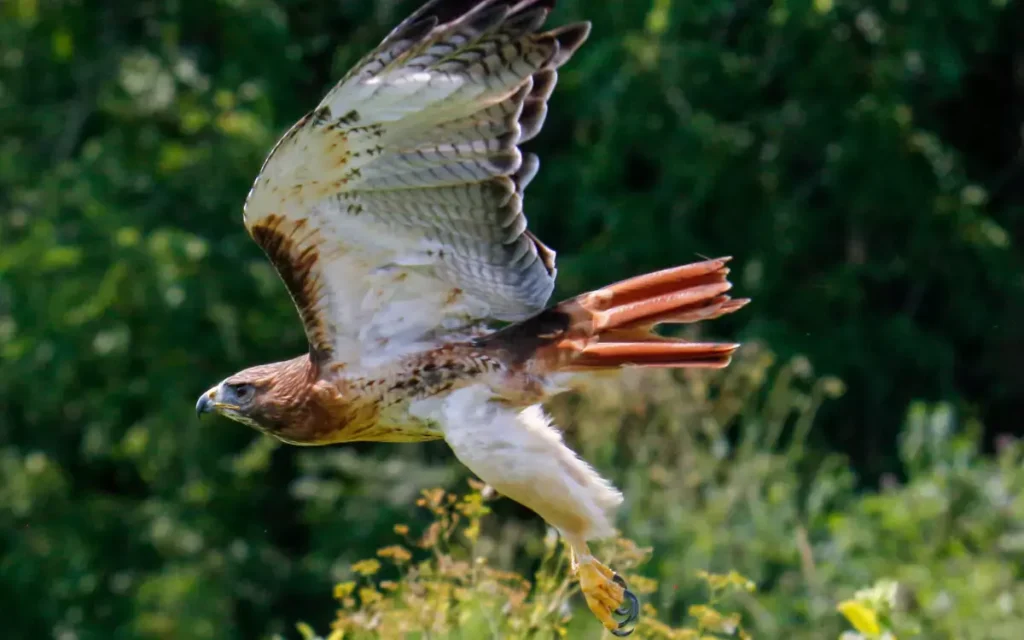
- Large and broad-bodied.
- Adults have a distinct rusty-red tail (immatures show brown, barred tails).
- Pale underparts with a dark belly band across the chest.
- Dark patagial marks (leading edge of wings) visible in flight.
Cooper’s Hawk
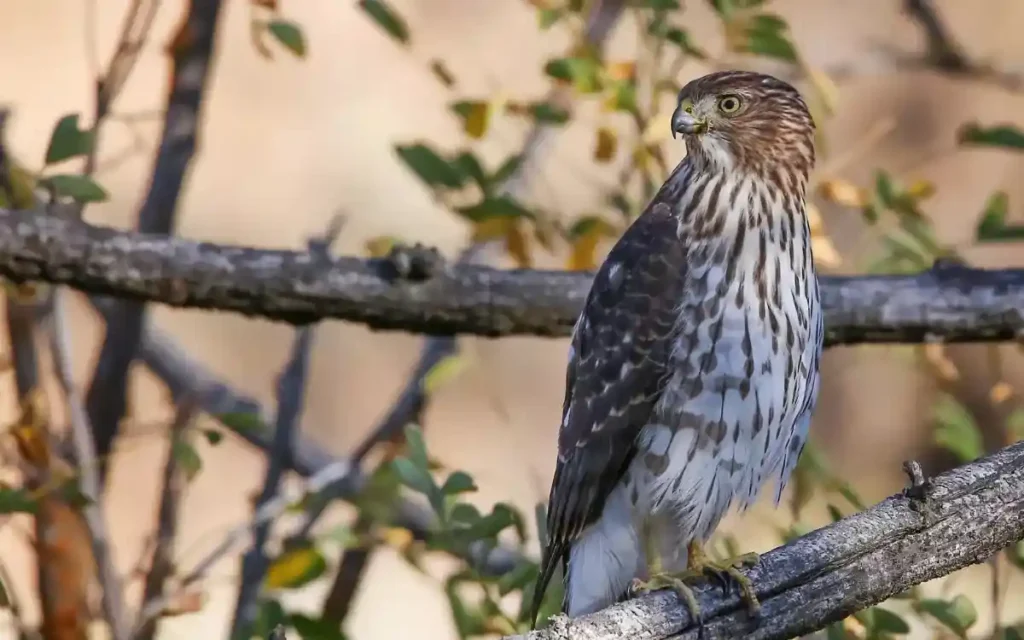
- Smaller, slimmer, built for speed.
- Long, rounded tail with thick dark bands.
- Short, rounded wings.
- Adults show blue-gray backs and rusty-barred chests; immatures are brown with streaked undersides.
Flight and Hunting Style
- Red-tailed Hawk: Known for soaring gracefully in wide circles over open land. They rely on patience, scanning from a perch or the air before diving onto prey.
- Cooper’s Hawk: Built for agility. They fly with rapid wingbeats and short glides, darting through trees to chase birds.
Calls and Sounds
- Red-tailed Hawk: Famous for its iconic, raspy scream used in movies to represent “any eagle.” Sounds like “kee-eee-arrr.”
- Cooper’s Hawk: A loud, repetitive “cak-cak-cak” often given when alarmed or during nesting season.
Habitat and Range
Red-tailed Hawk
- Widespread across North America.
- Prefers open habitats like grasslands, deserts, fields, and roadside poles.
- Often seen perched on telephone poles or soaring above highways.
Cooper’s Hawk
- Also widespread, but favors wooded habitats and suburban areas.
- Frequently hunts in backyards, where bird feeders attract prey.
Behavior and Diet
- Red-tailed Hawk: Feeds mostly on small mammals—mice, voles, rabbits, and squirrels. Less likely to go after backyard songbirds.
- Cooper’s Hawk: Specializes in bird hunting. Their agility lets them pursue doves, pigeons, and songbirds right into trees and shrubs.
Which Hawk Are You More Likely to See?
- Near highways, fields, or open country → Red-tailed Hawk.
- In wooded suburbs or near bird feeders → Cooper’s Hawk.
FAQs
How can I tell a Red-tailed Hawk from a Cooper’s Hawk in flight?
Look at the shape: Red-tailed Hawks have broad wings and short tails, soaring in circles. Cooper’s Hawks have long tails and flap-glide patterns with quick wingbeats.
Do Red-tailed Hawks ever visit backyards?
Occasionally, especially if you live near open land. But they prefer larger prey like rodents, not small feeder birds.
Why are Cooper’s Hawks often near bird feeders?
Feeders attract doves, sparrows, and finches—exactly the kind of prey Cooper’s Hawks hunt.
Are Red-tailed Hawks and Cooper’s Hawks related?
Yes, both are raptors, but they belong to different groups: Red-tailed Hawks are Buteos, while Cooper’s Hawks are Accipiters.
Which hawk is more common?
Both are widespread, but Red-tailed Hawks are the most common hawk in North America. Cooper’s Hawks are also increasing, especially in urban and suburban areas.
Final Thoughts
Both hawks are spectacular to watch, but their differences in shape, behavior, and habitat make identification possible once you know the clues. The next time you see a raptor circling the sky or zipping through the trees, you’ll have a better idea of whether you’re looking at a broad-winged Red-tailed Hawk or the sleek, agile Cooper’s Hawk.