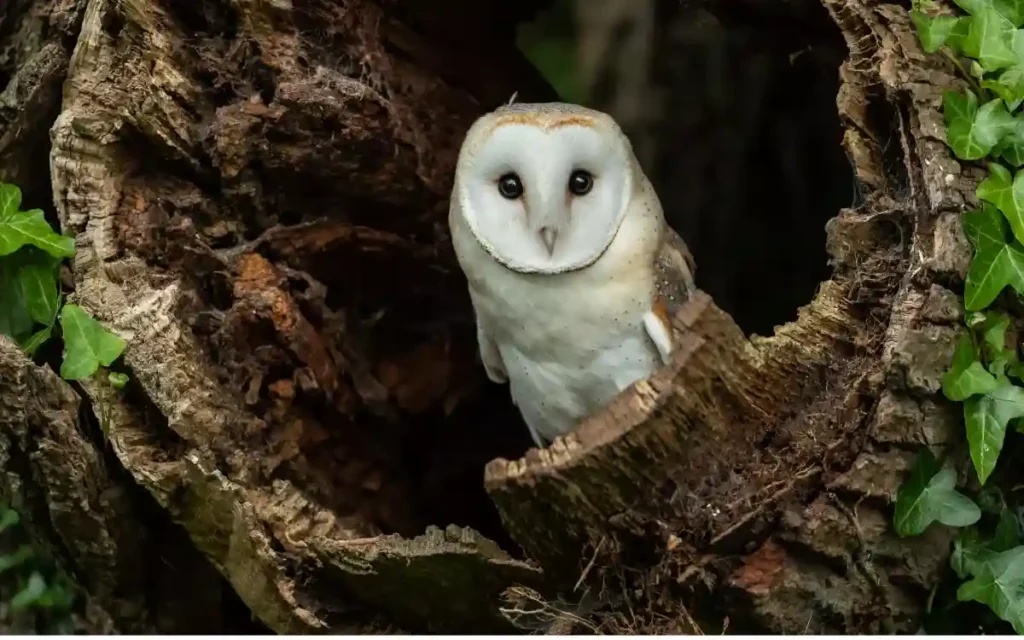
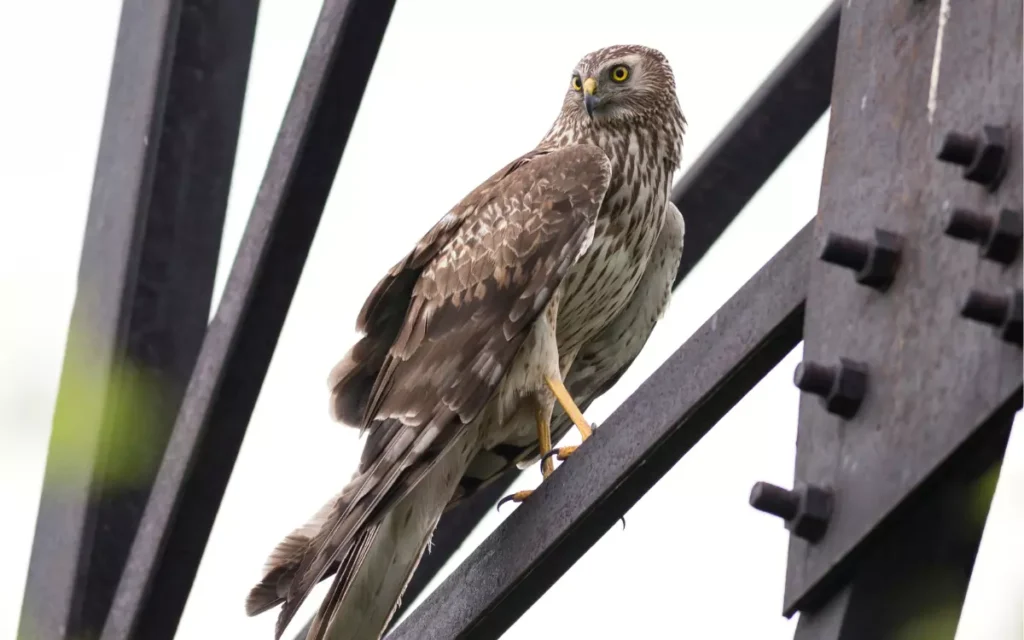
White birds are some of the easiest to spot across Connecticut’s mix of marshes, beaches, lakes, and winter fields. Whether you’re walking along the shoreline, exploring wetlands, or watching birds gather on open water, there’s a good chance you’ll run into one of these bright species. This guide covers the white birds you’re most likely to see in the state, along with quick facts to help you identify them in seconds.
Swans and Large White Waterbirds
1.Mute Swan
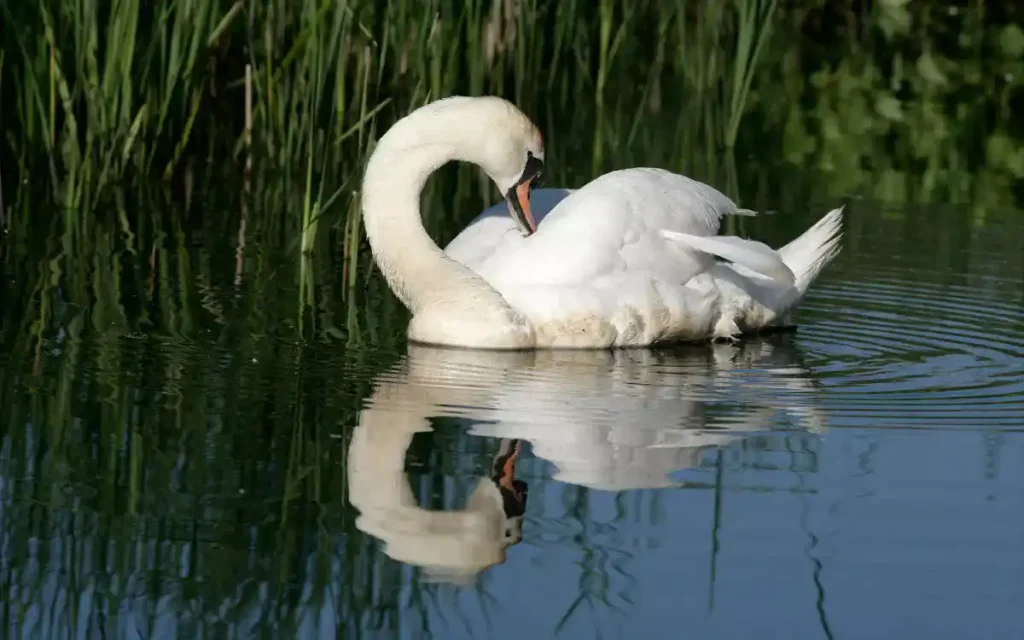
Mute Swans are a familiar part of Connecticut’s ponds and quiet lakes. Their bright white feathers, long curved neck, and graceful movement make them easy to notice. They nest near shorelines and often stay in small family groups throughout the year.
Quick Facts
- Seen statewide year-round
- Orange bill with a black knob
- Builds large shoreline nests
- Often glides on slow-moving water
2.Tundra Swan
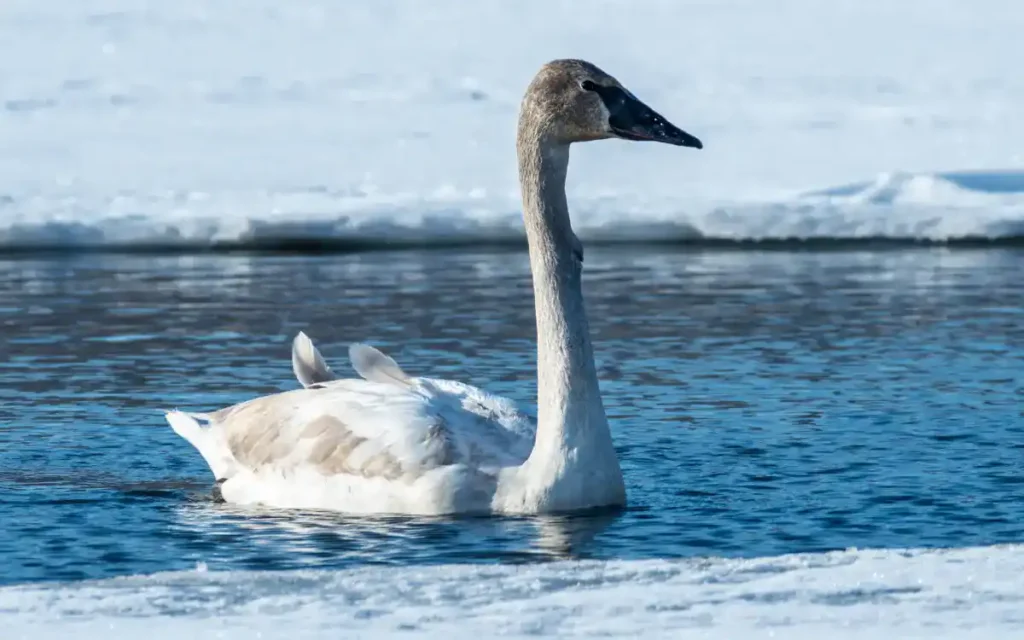
Tundra Swans don’t stay in Connecticut all year, but they pass through during migration. They have a slimmer build than Mute Swans and usually appear in groups resting on large lakes or reservoirs.
Quick Facts
- Seen mainly in late fall and early spring
- Black bill with a small yellow face patch
- Travels in vocal, close-knit flocks
- Found on open water during migration
3.Snow Goose
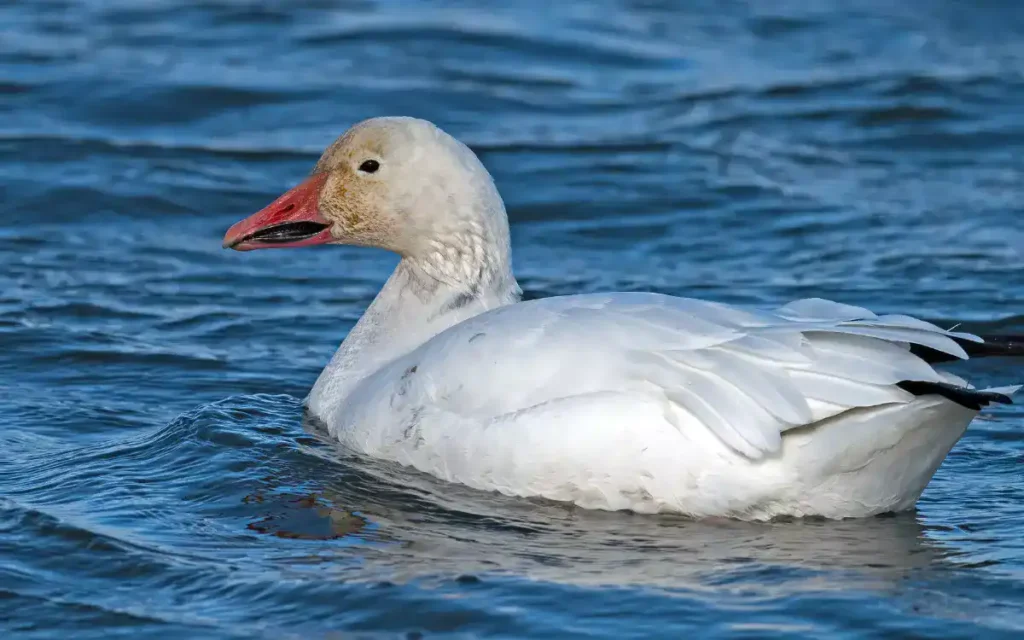
Snow Geese migrate through Connecticut in both spring and fall. They often join Canada Geese in farm fields or gather in noisy flocks near coastal areas. Adults are bright white with strong black wing tips that show clearly during flight.
Quick Facts
- Seen during spring and fall
- Comes in two forms: white and blue morph
- Feeds in open fields and grassy areas
- Often mixes with Canada Geese
Read also: 15 Shorebirds in Connecticut
White Herons and Egrets
4.Great Egret
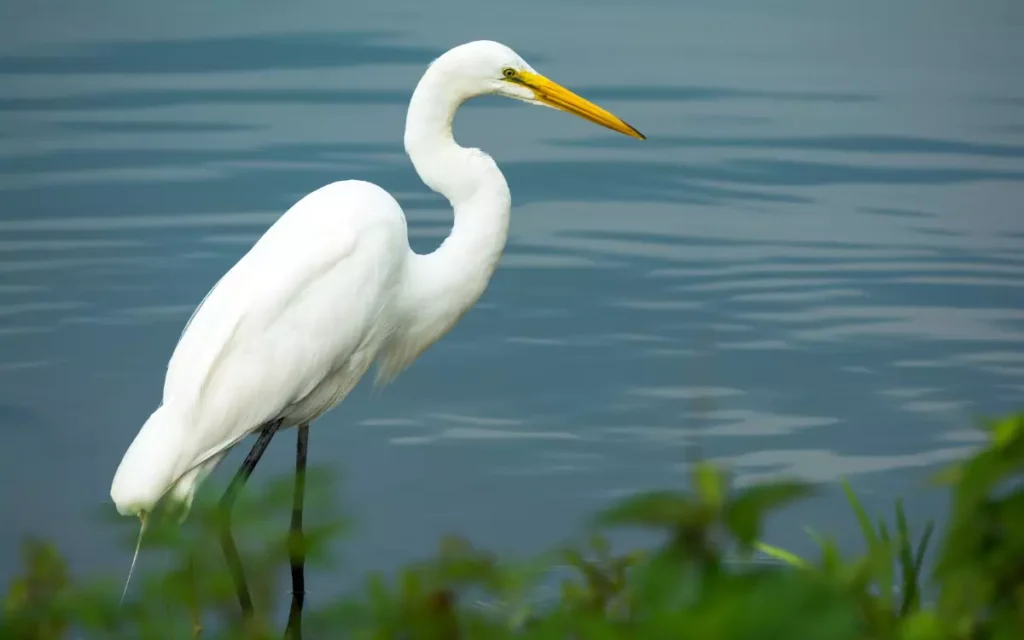
The Great Egret is tall and elegant with long white feathers and a yellow bill. This species appears in Connecticut during the warmer months, especially around marshes and shallow ponds. They stand still for long periods while watching for fish.
Quick Facts
- Seen from spring through fall
- Long yellow bill
- Black legs
- Often wades slowly through wetlands
5.Snowy Egret
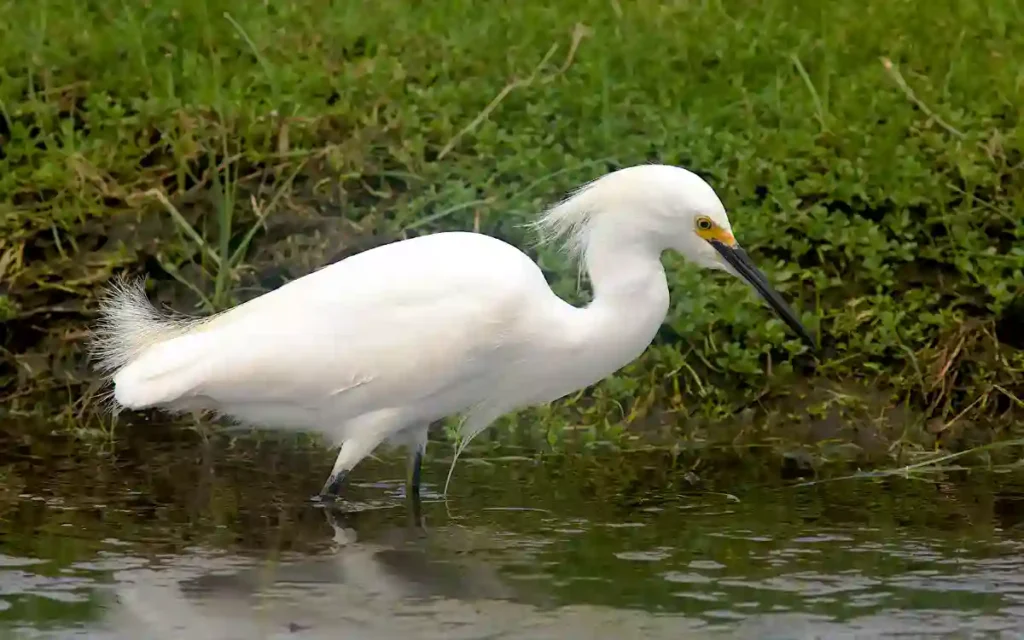
Smaller and more energetic than the Great Egret, the Snowy Egret is recognized instantly by its bright yellow feet. These birds move quickly through shallow water, stirring up prey with their feet to make it easier to catch.
Quick Facts
- Appears in marshes and coastal ponds
- Slender black bill
- Yellow feet and black legs
- More active than the Great Egret
6.Cattle Egret
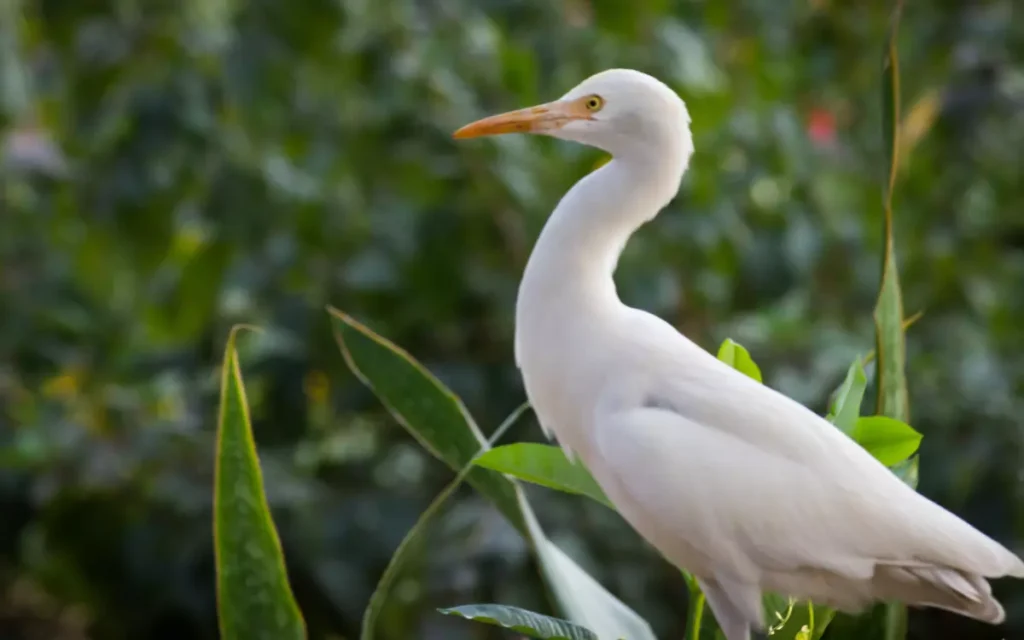
Cattle Egrets show up in Connecticut each year, though in smaller numbers. Instead of staying near water, they often wander through open fields and pastures. They are shorter and stockier compared to other white egrets.
Quick Facts
- Short neck and compact build
- Orange-buff coloring during breeding
- Follows tractors or livestock for insects
- Uncommon but regular visitor
7.Juvenile Little Blue Heron
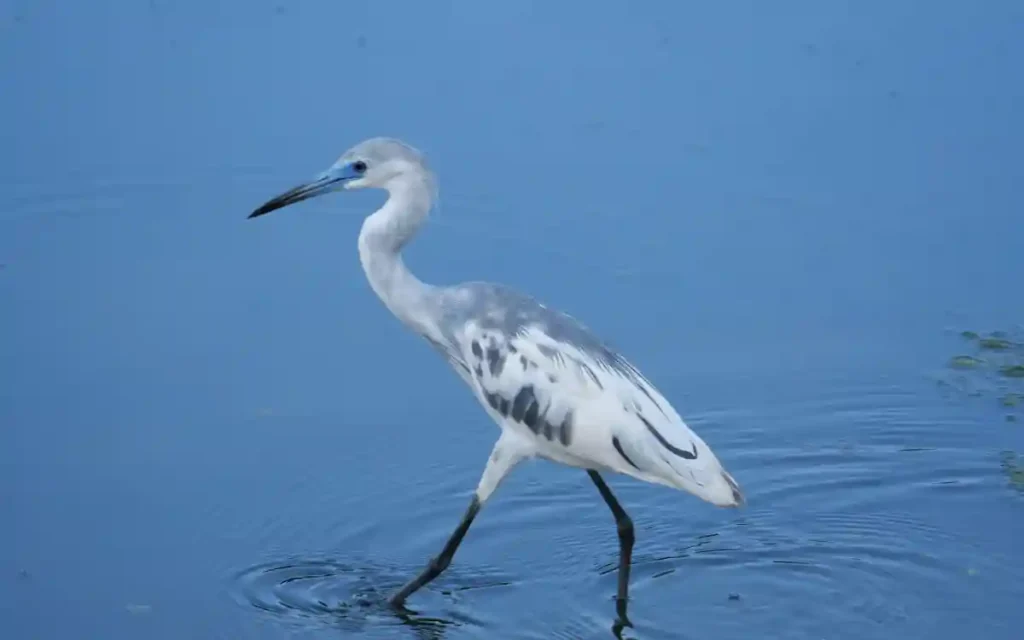
Young Little Blue Herons are fully white for their first year. These juveniles often gather with Snowy Egrets and Great Egrets in marshes. Their white plumage sometimes causes confusion, but their pale two-toned bill helps set them apart.
Quick Facts
- Seen in late summer and fall
- Pale bill with a dark tip
- Greenish legs
- Usually mixed with other wading birds
Read also: 10 Largest Birds in Connecticut
Gulls and Terns with White Plumage
8.Ring-billed Gull
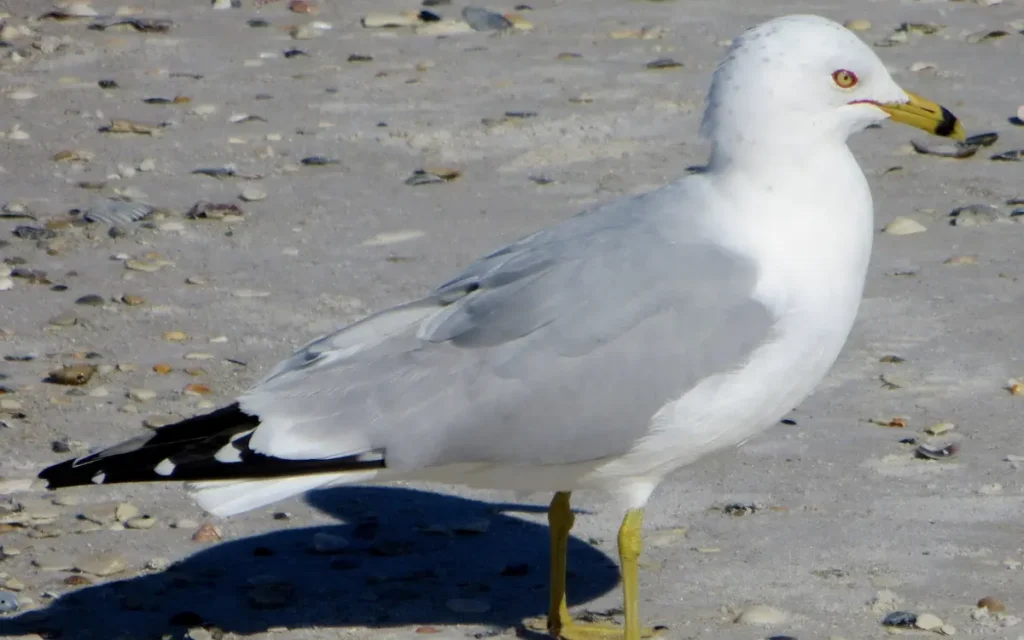
Ring-billed Gulls are one of the most common white birds in Connecticut. They are found in parking lots, beaches, parks, and lakes. Their clean white body and the black ring near the tip of their bill make them easy to identify.
Quick Facts
- Seen throughout the year
- Black ring around the bill
- Yellow legs
- Often gathers in large flocks
9.Herring Gull
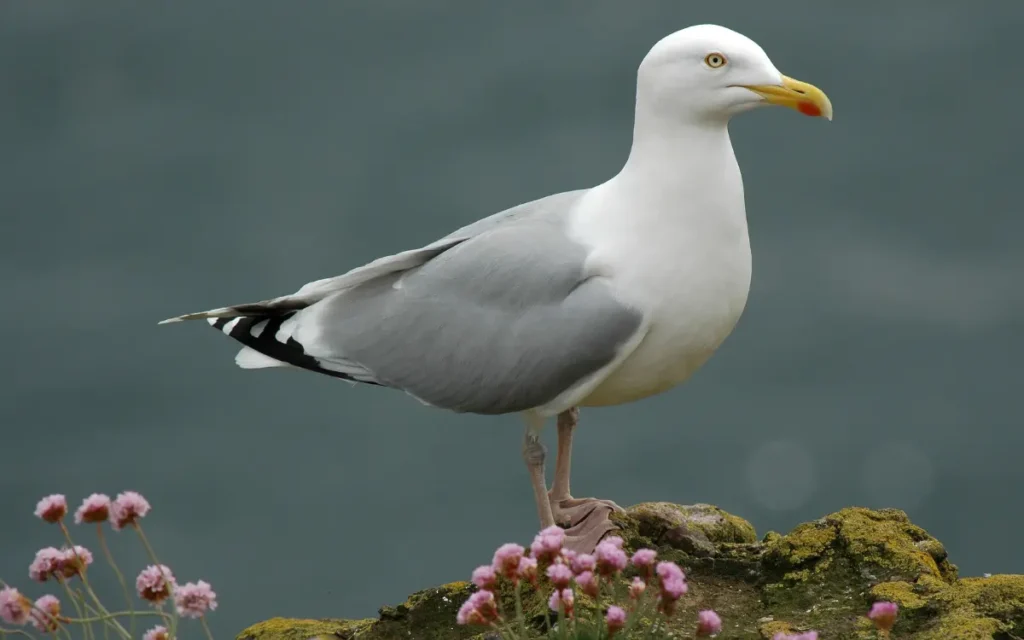
Herring Gulls are larger than Ring-billed Gulls and heavily white-bodied with light gray wings. They dominate coastlines, harbors, and rivers and can be loud and bold around food.
Quick Facts
- Year-round presence
- Pink legs
- Strong yellow bill with red spot
- Largest common gull along the shoreline
10.Great Black-backed Gull
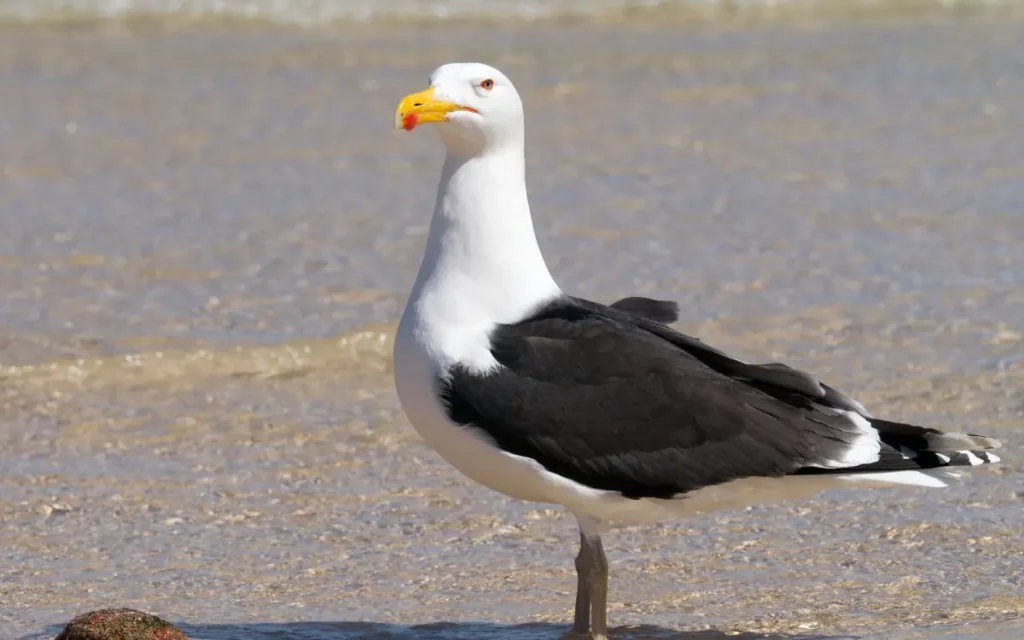
This is the biggest gull you can see in Connecticut. Their striking contrast of a white body and a dark back makes them stand out, especially when resting on rocks or pilings.
Quick Facts
- Only found in larger numbers along the coast
- Large yellow bill
- Very powerful build
- Known to prey on smaller birds
11.Bonaparte’s Gull
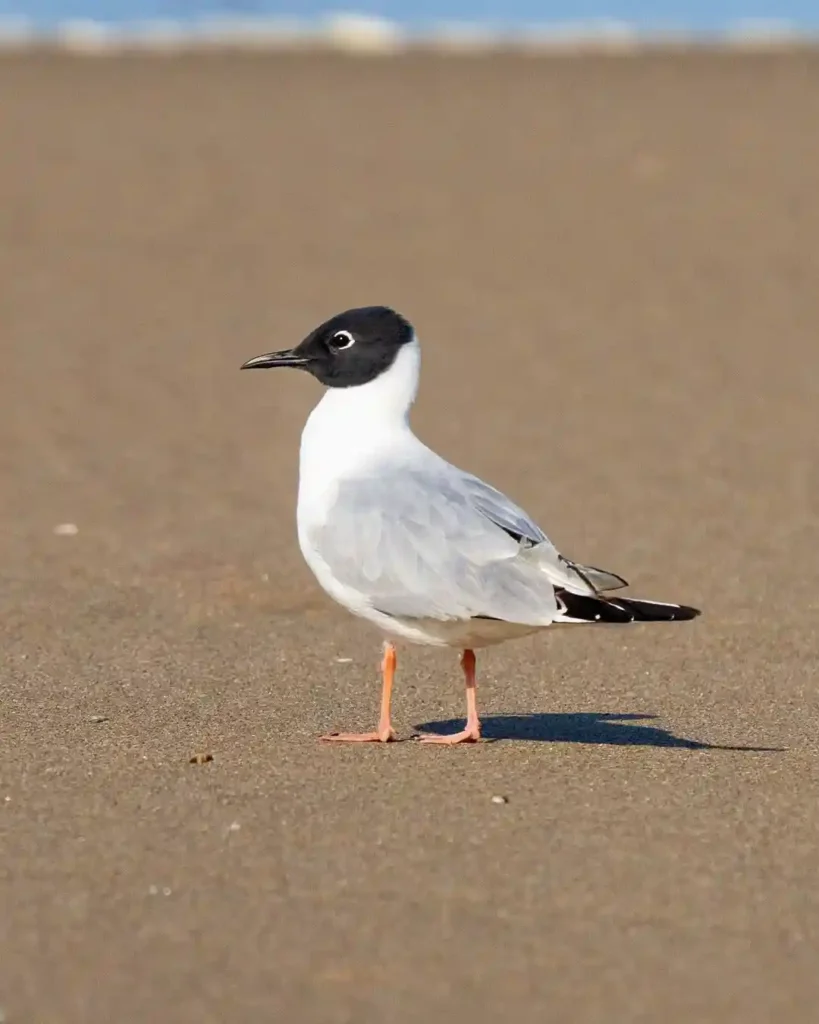
A smaller, more delicate gull, Bonaparte’s Gulls pass through Connecticut during migration. Their white body and thin black bill give them a cleaner look than other gull species.
Quick Facts
- Mostly seen in spring and fall
- Thin black bill
- Small size
- Often found in small flocks along the coast
12.Common Tern
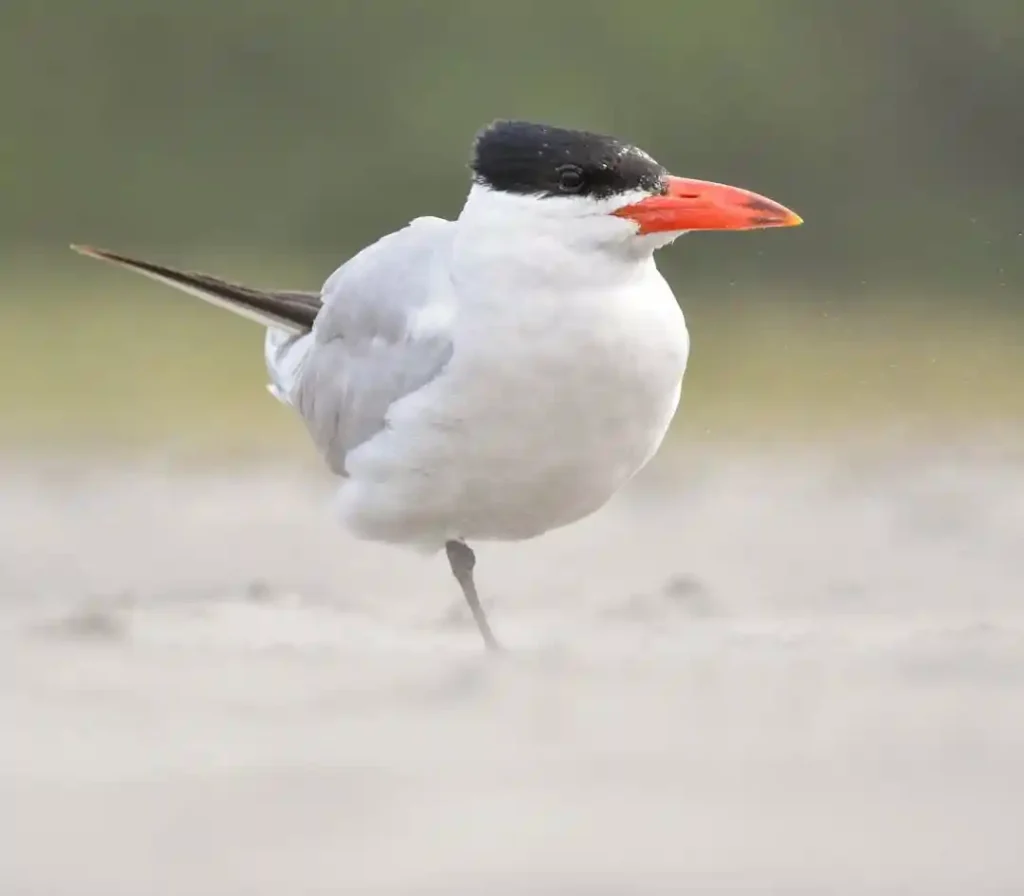
Common Terns visit Connecticut in summer. They have white undersides, a sharp orange bill with a dark tip, and a forked tail. These birds hover and dive for fish, making them fun to watch along the shoreline.
Quick Facts
- Seen in late spring and summer
- Nests in coastal colonies
- Sharp-winged flight
- Loud, high-pitched calls
Seasonal and Occasional White Birds
13.Long-tailed Duck (Winter Males)
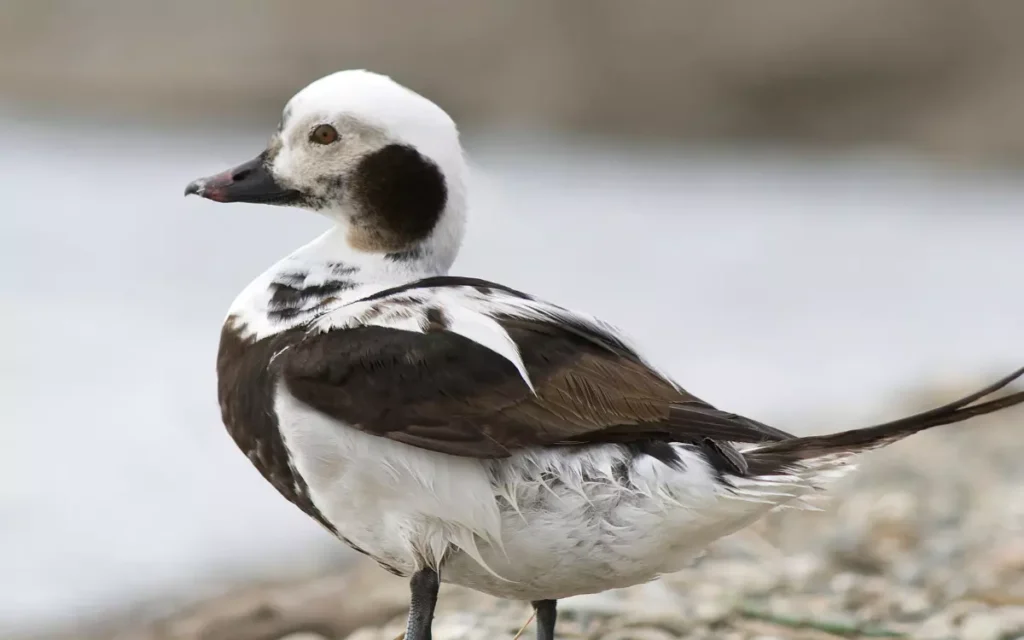
Male Long-tailed Ducks shift to mostly white plumage during winter. They stay offshore in deeper coastal waters, diving repeatedly for food.
Quick Facts
- Best seen in mid-winter
- Shows strong white patterning
- Deep-diving species
- Often far from shore
14.Snow Bunting
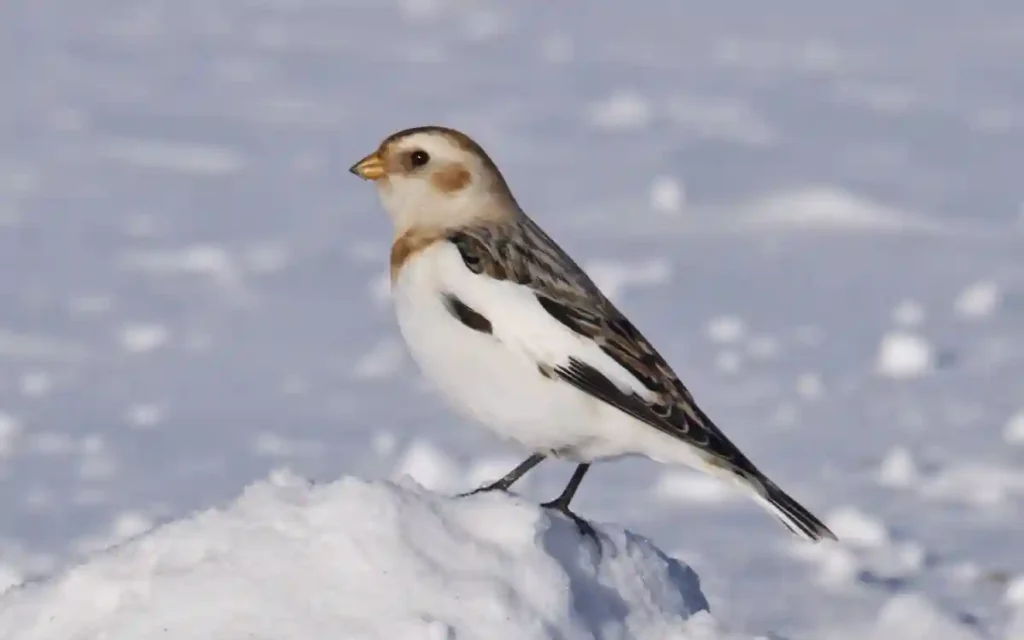
Snow Buntings spend winter in Connecticut’s open fields, shorelines, and dunes. Their white plumage brightens up cold landscapes and flashes clearly when they take flight.
Quick Facts
- Found only in winter
- Ground-feeding behavior
- Travels in flocks
- Often mixes with Horned Larks
15.Snowy Owl
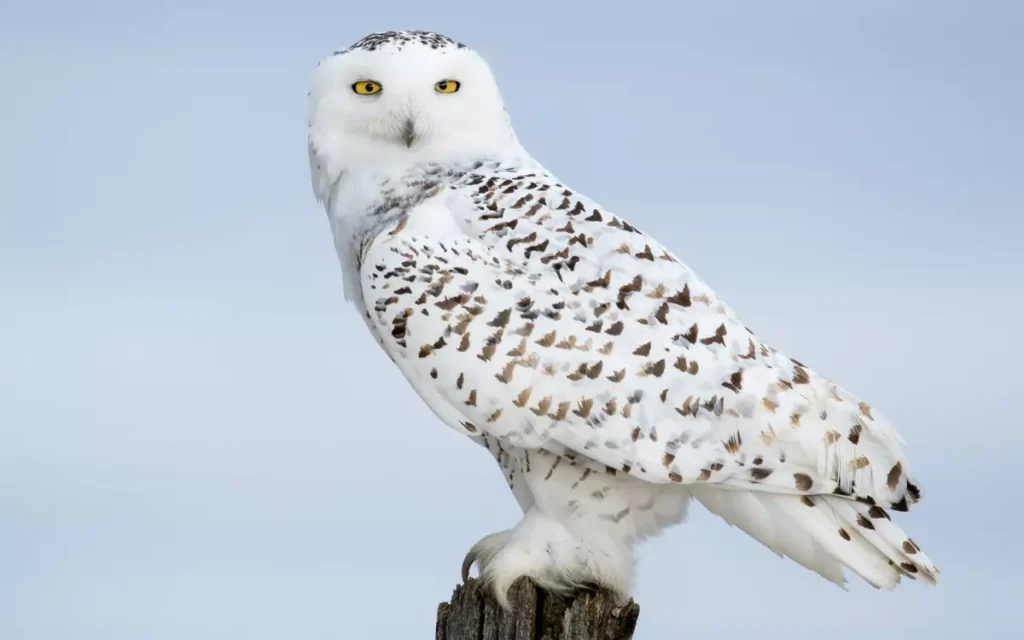
Snowy Owls appear in some winters, depending on food conditions farther north. Their large size and white plumage make them unforgettable sightings, especially around beaches and open fields.
Quick Facts
- Prefers open spaces
- Young owls may show dark speckling
- Hunts during daylight
- Not seen every winter
16.Northern Gannet

Northern Gannets are mostly white seabirds that migrate offshore. Strong winds or storms may push them closer to shore where they can be seen from beaches or coastal lookouts.
Quick Facts
- Long, pointed wings
- Black tips on wings
- Dives from impressive heights
- Best seen during migration periods
17.American White Pelican
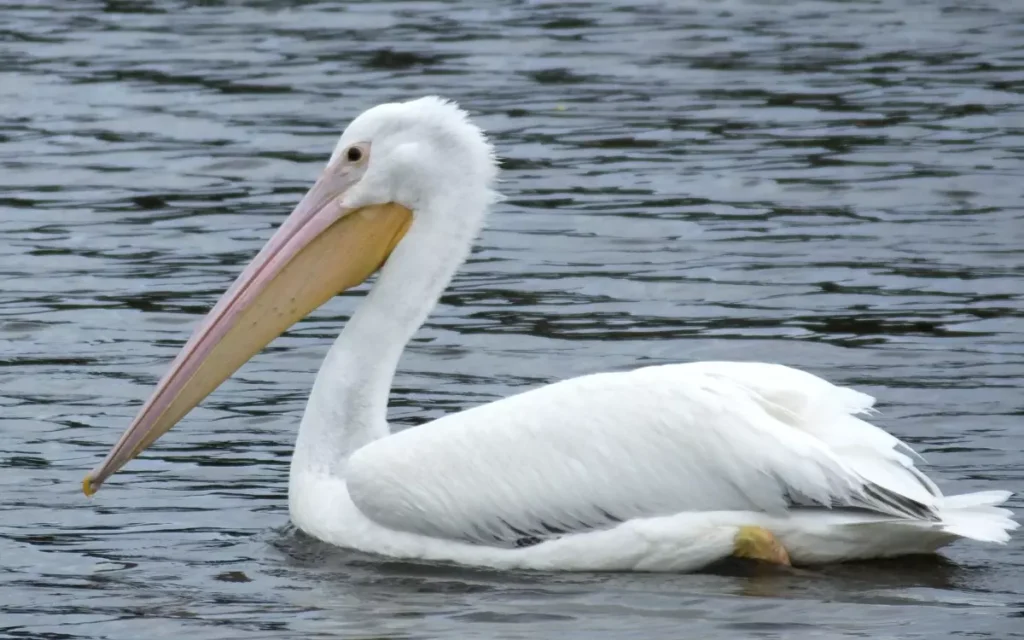
Though rare, the American White Pelican has been recorded in Connecticut several times. Its huge wingspan and white body with black flight feathers make it an unforgettable sight.
Quick Facts
- Large white body with black wingtips
- Wingspan up to 9 feet
- Feeds cooperatively in groups
- Rare but confirmed in Connecticut
Where to See White Birds in Connecticut
White birds appear in a variety of spots throughout the state. The coastline offers the best views of gulls, terns, and winter ducks. Marshes along the Connecticut River are great for egrets and herons. Open fields and beaches are the ideal places to search for Snow Buntings and the occasional Snowy Owl in winter.
Popular locations include:
- Hammonasset Beach State Park
- Milford Point
- Sherwood Island State Park
- Barn Island Wildlife Management Area
- Great Meadows Marsh
Final Thoughts
Connecticut has a wide mix of white birds across different seasons, from tall egrets and swans to energetic terns and winter visitors like Snow Buntings and Snowy Owls. With a little practice, their patterns, shapes, and behaviors become easy to recognize. Use this guide during your next walk, and you’ll start spotting these bright birds everywhere.