16 Red Birds in Florida With Identification Tips
Florida’s warm climate and diverse habitats make it one of the best places in the United States to spot colorful bird species. Among the most eye-catching are red birds, ranging from familiar backyard visitors to rare migrants that appear only briefly each year. Some are bright red from head to tail, while others show softer red, pink, or rusty tones that still draw attention.
This guide covers common, seasonal, and rare red birds found in Florida, with detailed identification tips, habitat information, seasonal behavior, and notes that help birdwatchers confidently tell one species from another.
Why Florida Has So Many Red Birds
Florida sits along major migratory routes and offers year-round food sources such as seeds, berries, insects, and flowering plants. Red coloring in birds is often linked to diet and breeding behavior. In many species, males develop stronger red tones during breeding season to attract mates, while females remain more muted for camouflage.
Some red birds live in Florida year-round, while others pass through during spring and fall migration or appear only in winter.
1. Scarlet Ibis
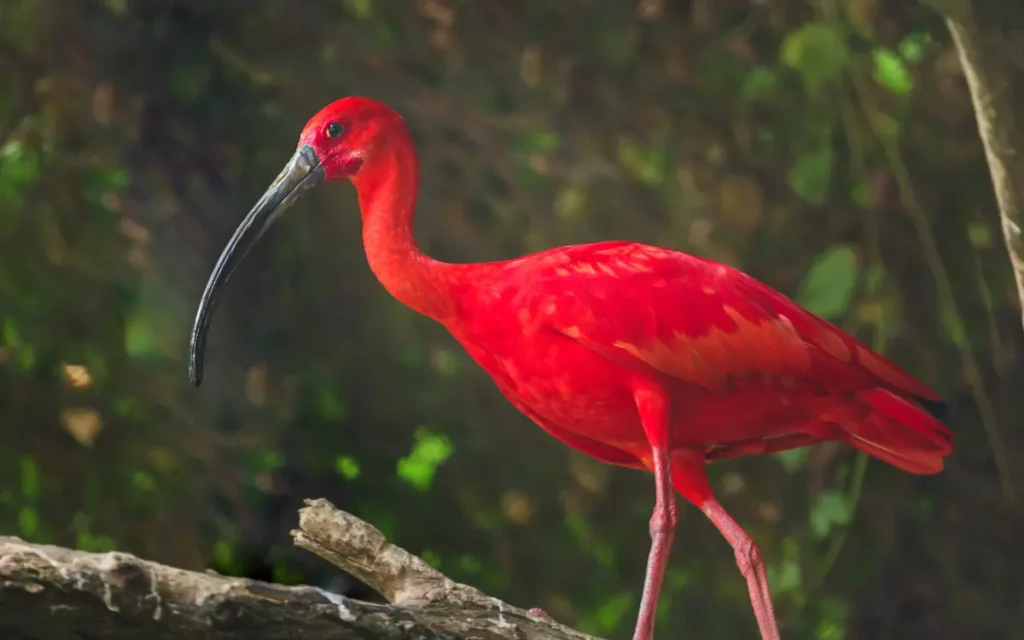
Appearance: The Scarlet Ibis is one of the most striking red birds ever reported in Florida. Adults are covered in brilliant scarlet-red feathers with black wing tips that are visible in flight. Both males and females look similar, making identification straightforward when seen.
Where found in Florida: Scarlet Ibises are extremely rare in Florida. Most sightings are reported in South Florida, particularly near wetlands, coastal marshes, and zoo-adjacent areas. Many Florida records are believed to involve escaped or released birds rather than wild populations, but sightings still generate strong interest.
Behavior & diet: This species feeds by probing mud and shallow water for crustaceans, insects, and small aquatic animals. Its diet is the reason for its intense red coloration, which comes from pigments found in shellfish.
Why it’s included: Even though it is not a regular native species, the Scarlet Ibis is frequently searched as a “red bird in Florida” due to viral photos, zoo sightings, and occasional confirmed reports. Including it helps answer real user curiosity and prevents visitors from bouncing to competitor pages.
Identification tip: No other Florida bird shows such uniform, glowing red coloration paired with a long, curved bill and wading behavior.
2. Painted Bunting
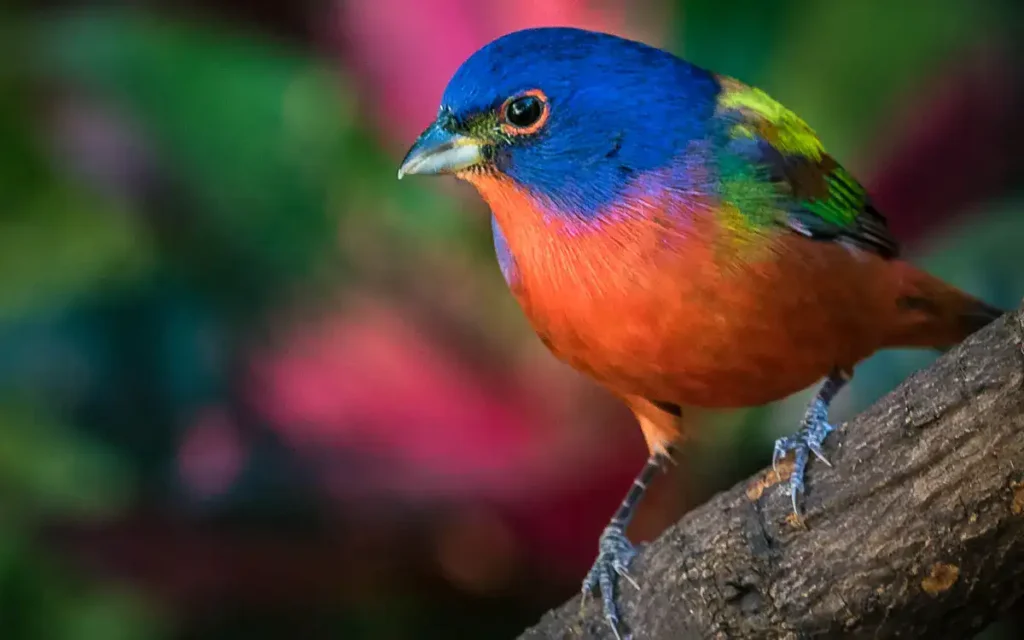
Appearance: Males show brilliant red underparts, a blue head, and green back. Females and juveniles are greenish-yellow.
Where found in Florida: Primarily North Florida and coastal scrub areas during breeding season.
Behavior & diet: Often shy and stays low in dense vegetation. Feeds on seeds and insects.
Identification tip: The red belly combined with blue and green makes males impossible to confuse with any other Florida bird.
3. Purple Finch
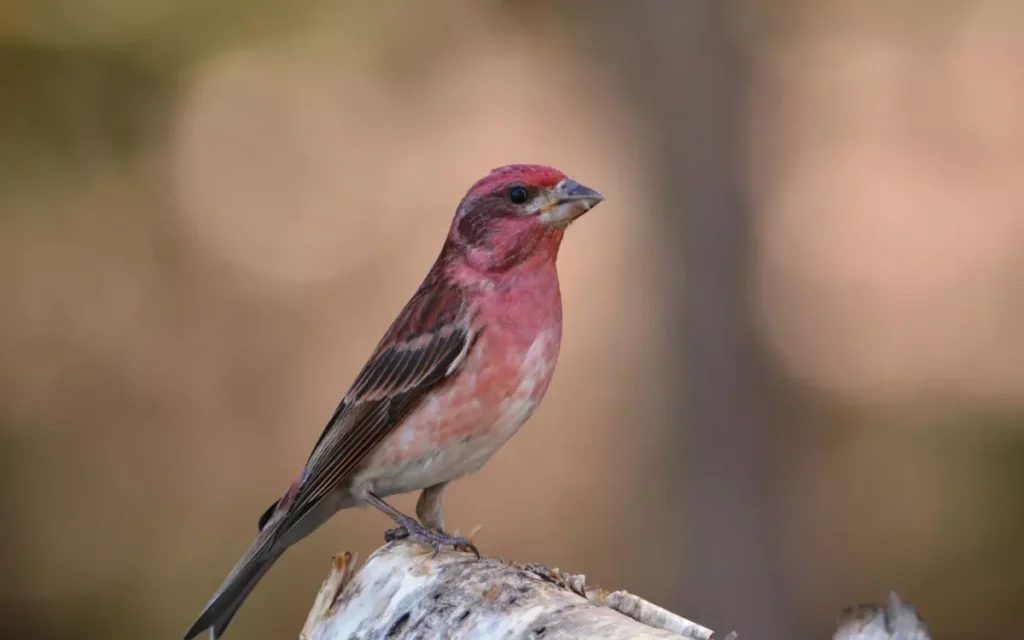
Appearance: Males appear washed in raspberry-red, strongest on the head and chest. Females show no red but have bold facial stripes.
Where found in Florida: Mostly in North Florida during winter months.
Behavior & diet: Feeds on seeds, buds, berries, and insects. Often visits feeders.
Identification tip: Bulkier body and deeper color help distinguish it from House Finches.
4. Northern Cardinal
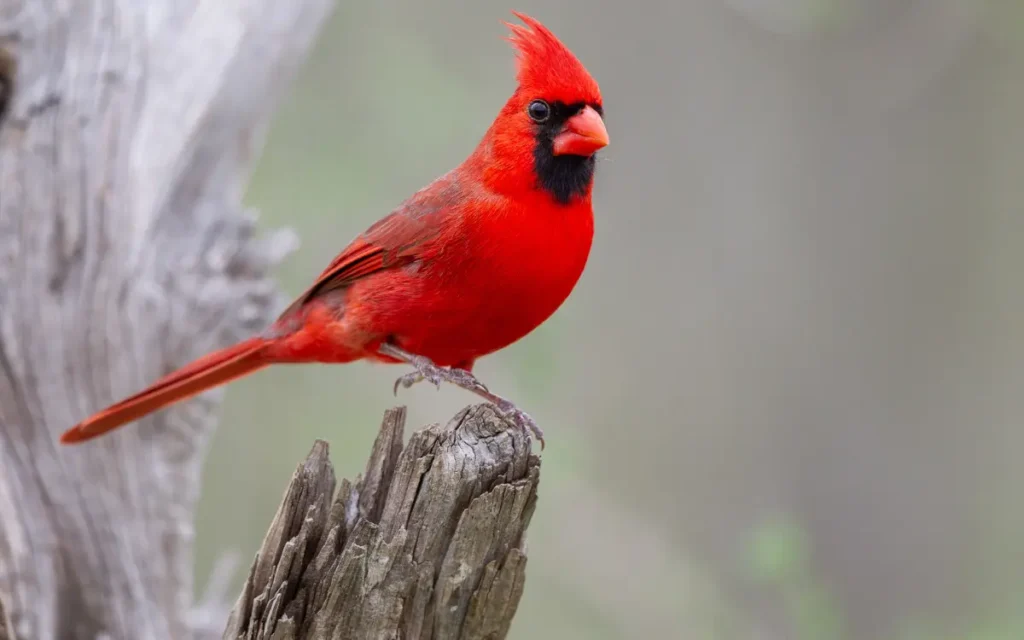
Appearance: Male Northern Cardinals are unmistakable with their bright red plumage, black face mask, and thick orange beak. Females are light brown with warm red highlights on the wings, tail, and crest.
Where found in Florida: Found statewide in backyards, parks, gardens, forests, and suburban neighborhoods.
Behavior & diet: Non-migratory and active year-round. Cardinals feed on seeds, fruits, and insects and are frequent feeder visitors.
Identification tip: The raised crest and bold facial mask make cardinals easy to recognize, even at a distance.
5. Scarlet Tanager
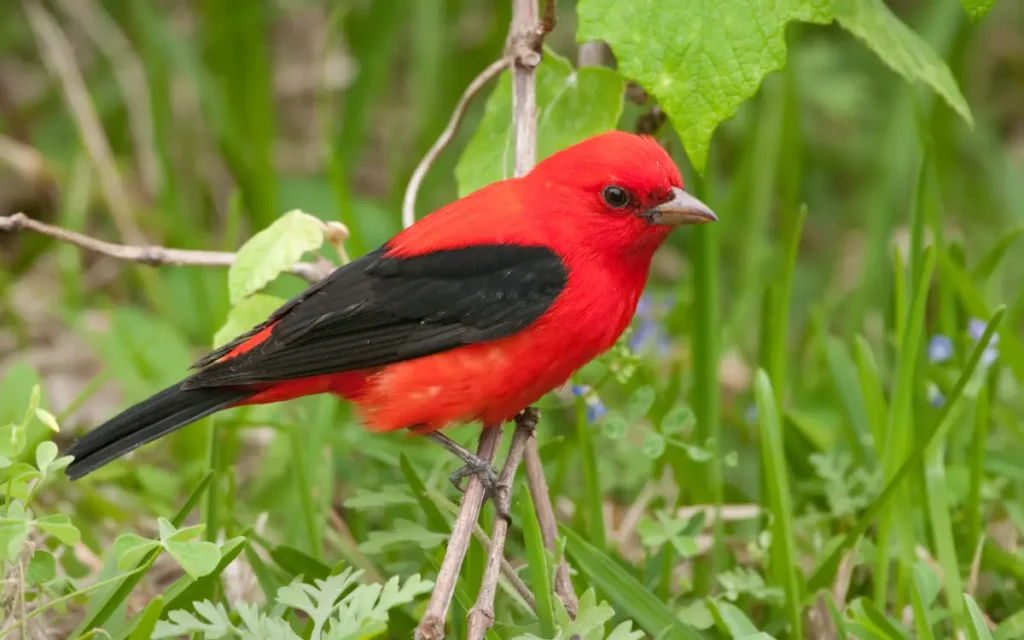
Appearance: Males are bright red with jet-black wings and tail. Females are yellow-green.
Where found in Florida: Seen mainly during spring and fall migration, especially in mature forests.
Behavior & diet: Often stays high in the canopy, feeding on insects and fruit.
Identification tip: The black wings clearly separate it from Summer Tanagers.
6. Roseate Spoonbill
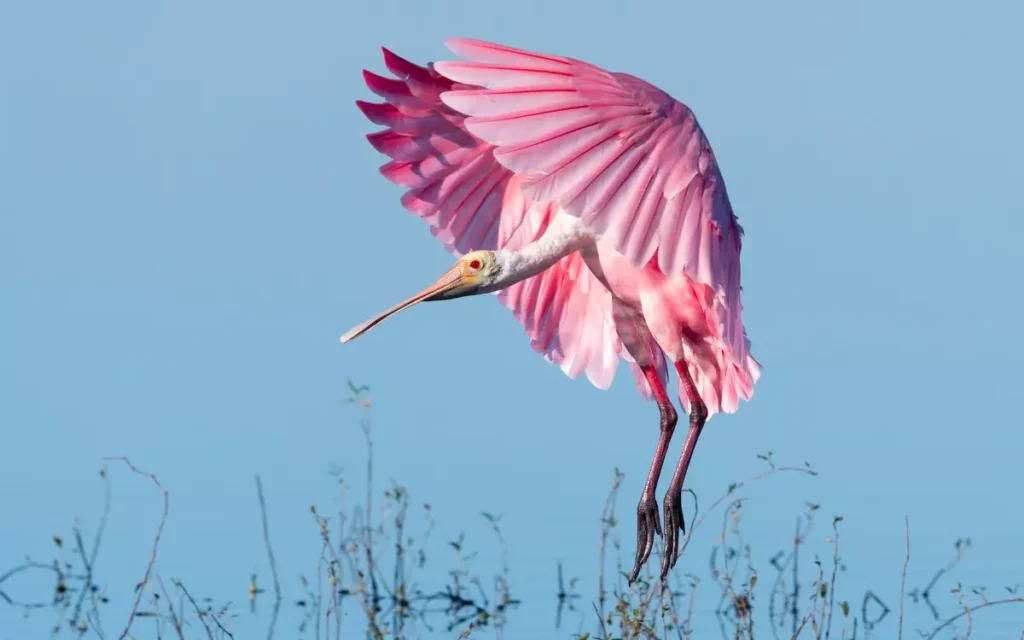
Appearance: The Roseate Spoonbill is a large wading bird with soft pink to deep rose-red plumage across the wings, back, and body. Its most distinctive feature is the long, flat, spoon-shaped bill. Adults show brighter pink and red tones, especially during breeding season, while juveniles appear paler.
Where found in Florida: Commonly found in South and Central Florida, particularly in coastal wetlands, mangroves, estuaries, marshes, and shallow bays. Florida supports one of the most stable populations of Roseate Spoonbills in the United States.
Behavior & diet: Feeds by sweeping its bill side to side through shallow water to catch small fish, crustaceans, and aquatic insects. This feeding style makes it easy to recognize even from a distance.
Why it appears red/pink: Its pink and red coloring comes directly from pigments in its diet, similar to flamingos. A richer diet results in brighter coloration.
Why it’s included: Roseate Spoonbills are one of the top reasons people search for “red birds in Florida”, especially visitors and photographers. Excluding it would leave a major gap in user intent.
Identification tip: No other Florida bird combines bright pink-red coloring with a spoon-shaped bill and wetland feeding behavior.
7. Summer Tanager
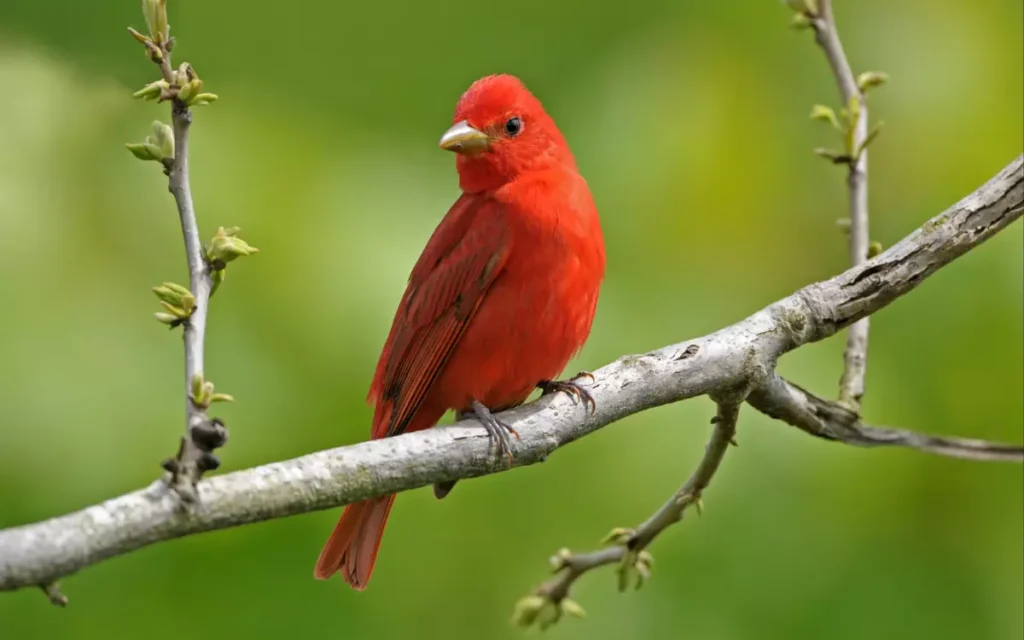
Appearance: Adult males are solid deep red with no wing bars or streaking. Females are mustard yellow to olive, lacking red entirely.
Where found in Florida: Most common in North and Central Florida during spring and summer, especially in wooded habitats.
Behavior & diet: Well known for feeding on bees and wasps, often catching them mid-air. Migrates to Central and South America for winter.
Identification tip: Unlike cardinals, Summer Tanagers have pale beaks and smoother body coloring.
8. Vermilion Flycatcher
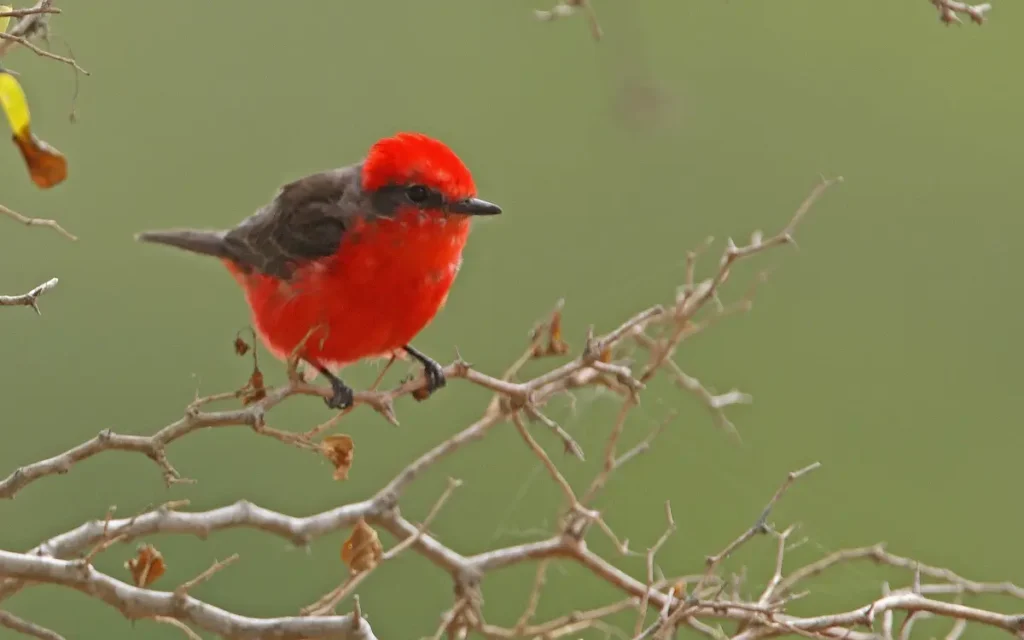
Appearance: Males display intense red on the head, chest, and belly with dark wings. Females are gray with light red shading.
Where found in Florida: Rare but occasionally spotted in open fields, wetlands, and grasslands, mainly in southern regions.
Behavior & diet: Frequently perches low and repeatedly flies out to catch insects mid-air.
Identification tip: Bright red color paired with flycatching behavior is distinctive.
9. House Finch
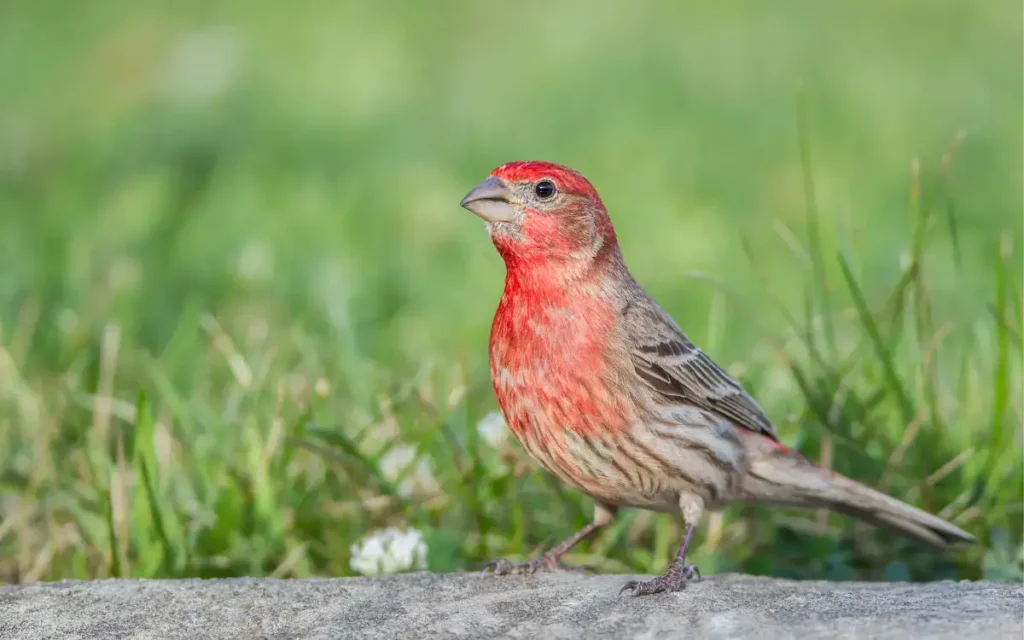
Appearance: Males have red coloring on the forehead, throat, and chest, though the shade can vary from red to orange. Females are brown and heavily streaked.
Where found in Florida: Very common in cities, suburbs, and residential areas across the state.
Behavior & diet: Highly social birds often seen in groups at feeders. Diet includes seeds, fruits, and buds.
Identification tip: Red color varies by diet, which is why some males appear pale or unevenly colored.
10. Red-headed Woodpecker
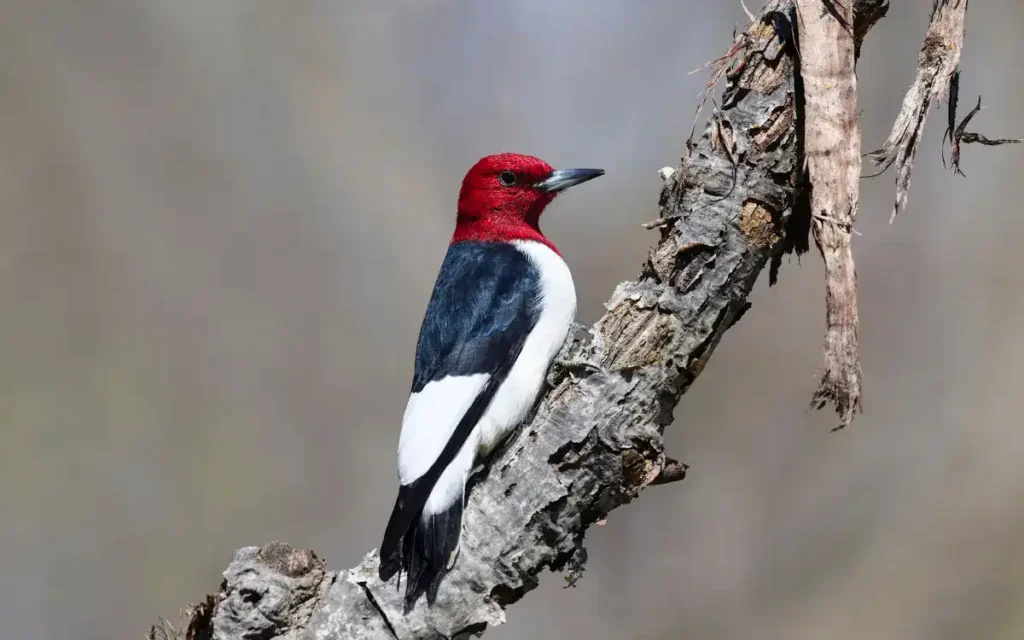
Appearance: Entire head is deep red, with a stark black-and-white body. Both sexes look alike.
Where found in Florida: Most common in North and Central Florida in open woodlands and pine savannas.
Behavior & diet: Catches insects in flight and stores food in tree crevices and fence posts.
Identification tip: The fully red head and bold color contrast make it easy to identify.
11. Red-winged Blackbird
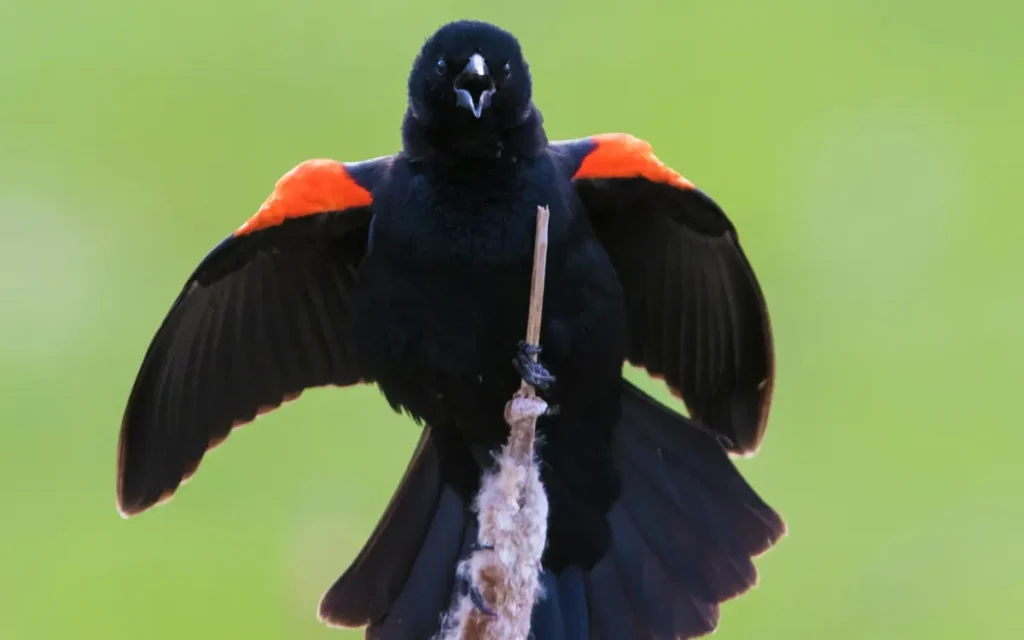
Appearance: Adult males are glossy black with bold red shoulder patches edged in yellow. These red epaulets are highly visible when the bird is perched or displaying. Females look completely different brown, heavily streaked, and without bright red often causing confusion for beginners.
Where found in Florida:Extremely common across all of Florida, especially in wetlands, marshes, roadside ditches, agricultural fields, and open grassy areas. They are present year-round in most parts of the state.
Behavior & diet:Highly social and often seen in large flocks. Males are very territorial during breeding season and frequently display their red shoulder patches while calling loudly. Diet includes seeds, grains, insects, and small aquatic creatures.
Why it’s considered a red bird:Even though its body is black, the bright red shoulder patches are one of the most noticeable red markings of any bird in Florida. This is exactly why people search for it when looking up red birds.
Identification tip:
Look for flashing red-and-yellow shoulder patches combined with loud calls and wetland habitats. No other Florida bird shows this exact pattern.
12.Red Crossbill
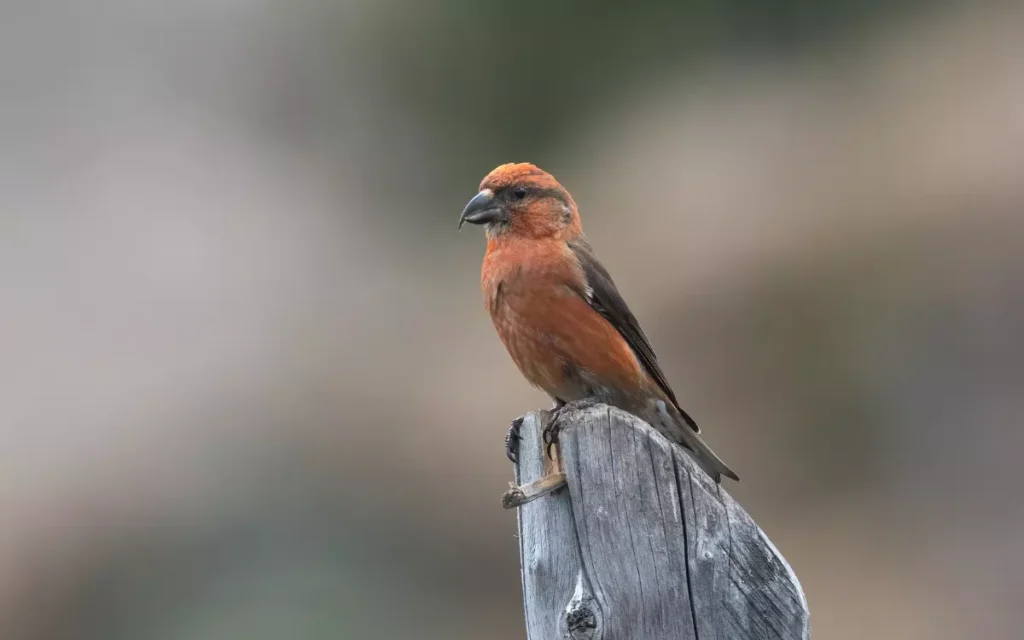
Appearance: Males are brick-red to orange-red; females are yellow-green. The crossed bill tips are unique.
Where found in Florida: Irregular winter visitor, mostly in North Florida during certain years.
Behavior & diet: Specializes in extracting seeds from pine cones using its crossed bill.
Identification tip: The unusual bill shape instantly separates it from other finches.
13.Rose-breasted Grosbeak
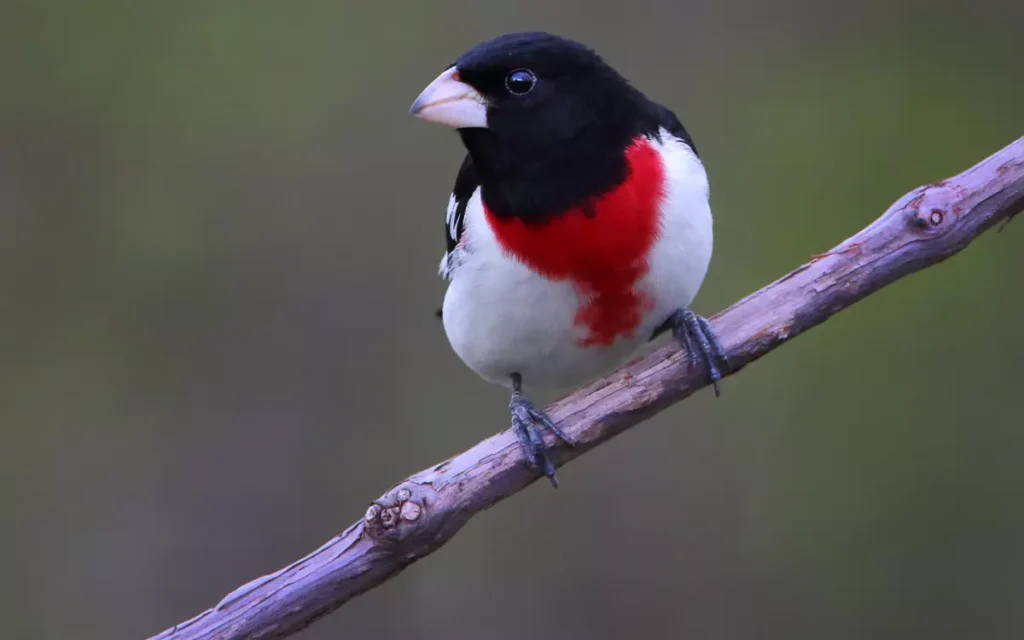
Appearance: Black and white bird with a vivid red, triangular patch on the chest. Females are brown with bold streaking.
Where found in Florida: Most often seen during spring migration in wooded areas and near feeders.
Behavior & diet: Strong beak allows it to crack seeds easily. Also feeds on insects and berries.
Identification tip: The heavy bill and sharply defined red chest patch stand out immediately.
14.Hepatic Tanager
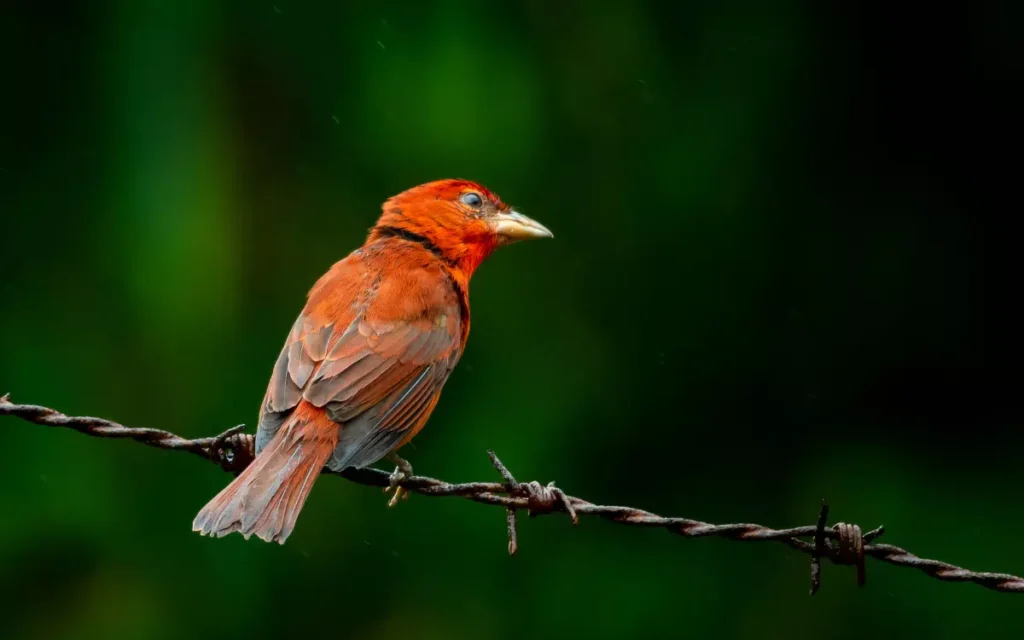
Appearance: Males are dark, brick-red with grayish wings. Females are yellow-olive.
Where found in Florida: Very rare migrant, occasionally recorded during spring.
Behavior & diet: Feeds on insects and fruits in forested habitats.
Identification tip: Darker red tone and wing contrast help distinguish it from Summer Tanagers.
15.Red-breasted Nuthatch
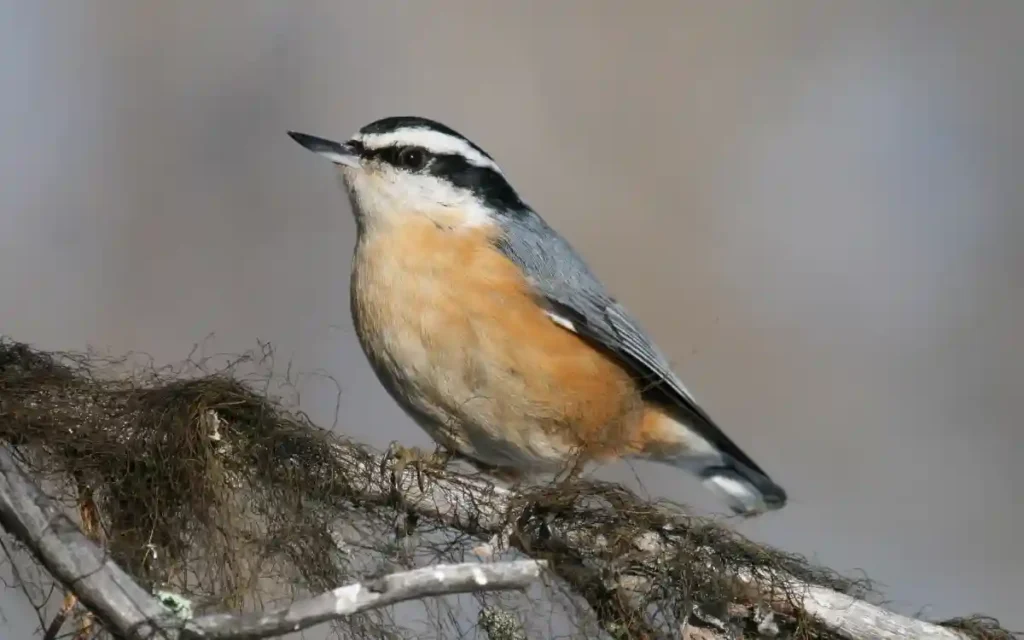
Appearance: Small bird with blue-gray upperparts, black eye stripe, and rusty red chest.
Where found in Florida: Primarily a winter visitor in North Florida, especially in pine forests.
Behavior & diet: Moves headfirst down tree trunks while searching for insects.
Identification tip: Small size and upside-down movement are key clues.
16.Pine Grosbeak
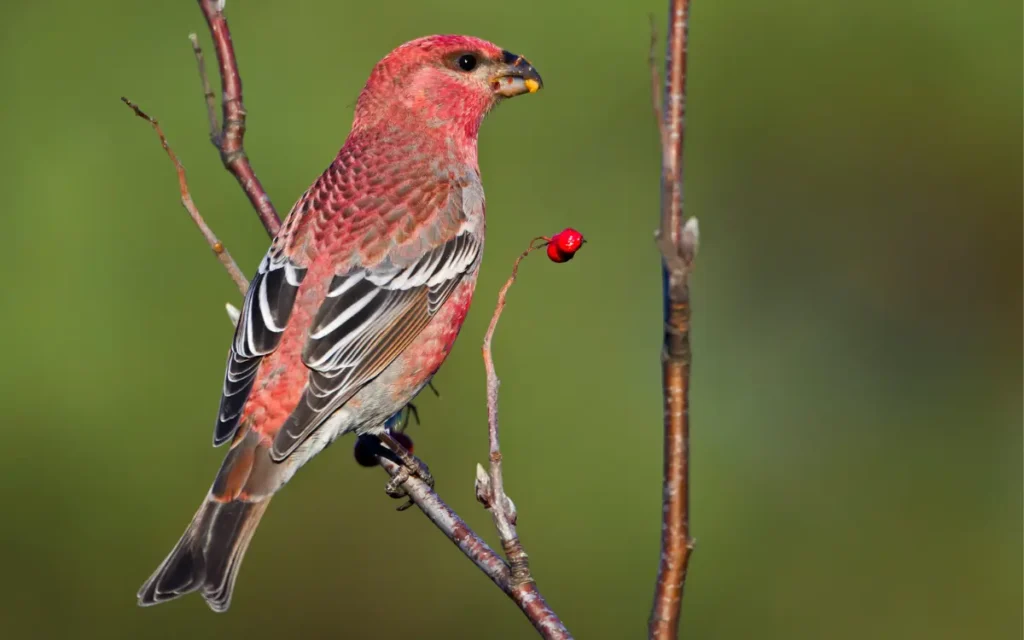
Appearance: Large finch with soft pinkish-red tones in males; females are grayish with yellow highlights.
Where found in Florida: Extremely rare winter visitor, usually during unusual weather events.
Behavior & diet: Slow-moving and calm, feeding on seeds, buds, and berries.
Identification tip: Larger size and gentle coloring separate it from smaller finches.
Quick Comparison Table
| Bird Name | Shade of Red | Frequency in Florida | Typical Habitat |
| Northern Cardinal | Bright red | Very common | Backyards |
| Summer Tanager | Deep red | Seasonal | Forests |
| Painted Bunting | Red belly | Regional | Shrubs |
| House Finch | Red chest | Common | Urban areas |
| Scarlet Tanager | Bright red | Migratory | Forest canopy |
| Rose-breasted Grosbeak | Red chest | Migratory | Woodlands |
| Purple Finch | Raspberry red | Winter visitor | Trees |
| Red-headed Woodpecker | Deep red head | Local | Open woods |
| Vermilion Flycatcher | Intense red | Rare | Open fields |
| Red Crossbill | Brick red | Irregular | Pine forests |
| Hepatic Tanager | Dark red | Very rare | Forests |
| Red-breasted Nuthatch | Rusty red | Winter visitor | Trees |
| Pine Grosbeak | Pink-red | Extremely rare | Boreal migrant |
How to Identify Red Birds Accurately
To correctly identify red birds, always consider:
- Body size and shape
- Beak type
- Habitat
- Time of year
Many species show red coloring only in males or during breeding season, which often causes confusion.
Frequently Asked Questions
What is the most common red bird in Florida?
The Northern Cardinal is the most commonly seen red bird in Florida and lives in the state year-round.
Are there red birds in Florida besides cardinals?
Yes. Florida hosts tanagers, buntings, finches, woodpeckers, and several rare red-toned species.
Do red birds migrate through Florida?
Many species, including Scarlet Tanagers and Rose-breasted Grosbeaks, pass through Florida during migration.
Are female red birds also red?
Often no. Females are usually brown, olive, or yellow with limited red coloring.
When is the best time to see red birds in Florida?
Spring and early summer are ideal, when breeding colors are strongest and migrants arrive.
Final Thoughts
From backyard cardinals to rare migratory surprises, red birds add striking beauty to Florida’s birdlife. Understanding their appearance, habits, and seasonal movements makes spotting and identifying them far more rewarding for birdwatchers at any level.