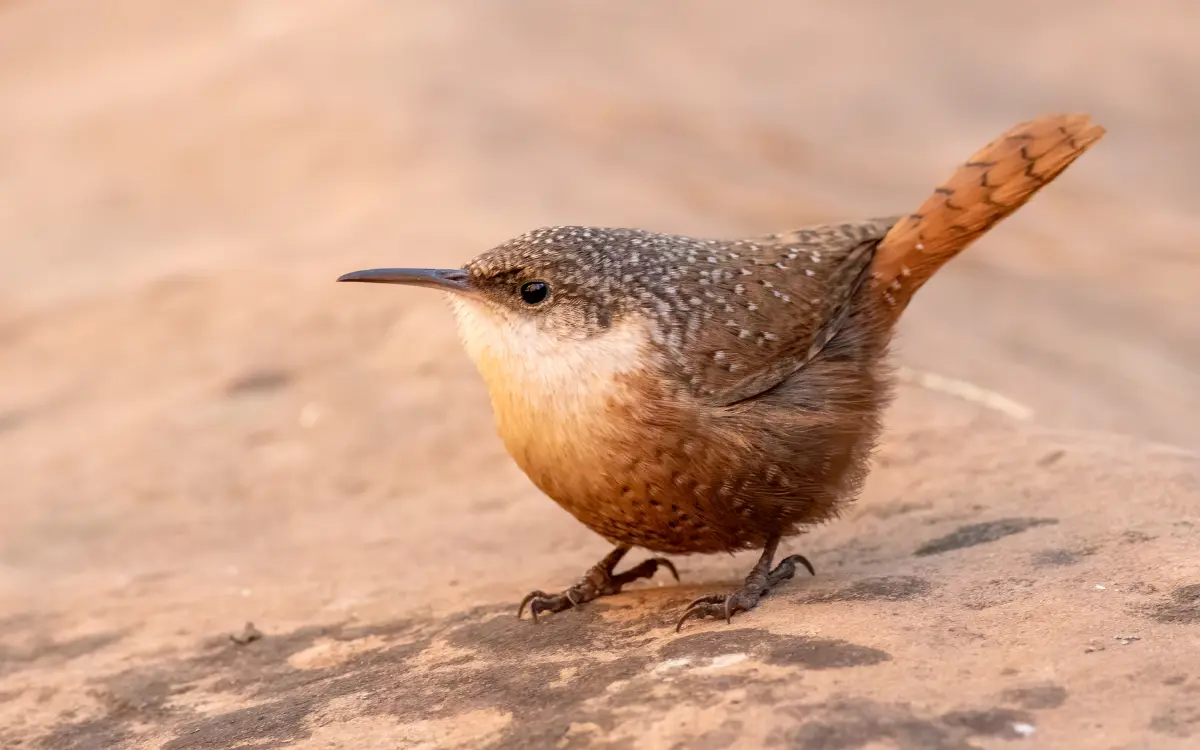
33 Winter Birds Connecticut
Winter in Connecticut doesn’t mean birds disappear, it simply changes which birds you see and how they behave. As temperatures drop and snow settles in, many species stay put, while others arrive from farther north looking for food and open water. From lively feeder visitors to hardy coastal birds, winter can actually be one of the easiest seasons to notice bird activity if you know what to look for.
This guide to winter birds in Connecticut focuses on species you’re most likely to spot between late fall and early spring. Whether you’re watching your backyard feeder, walking through wooded trails, or visiting the shoreline, these birds are regular winter residents or dependable cold-season visitors. Each bird listed below is chosen based on real winter presence, not guesswork, making this list helpful for beginners and experienced birdwatchers alike.
Common Winter Birds You’ll See Across Connecticut
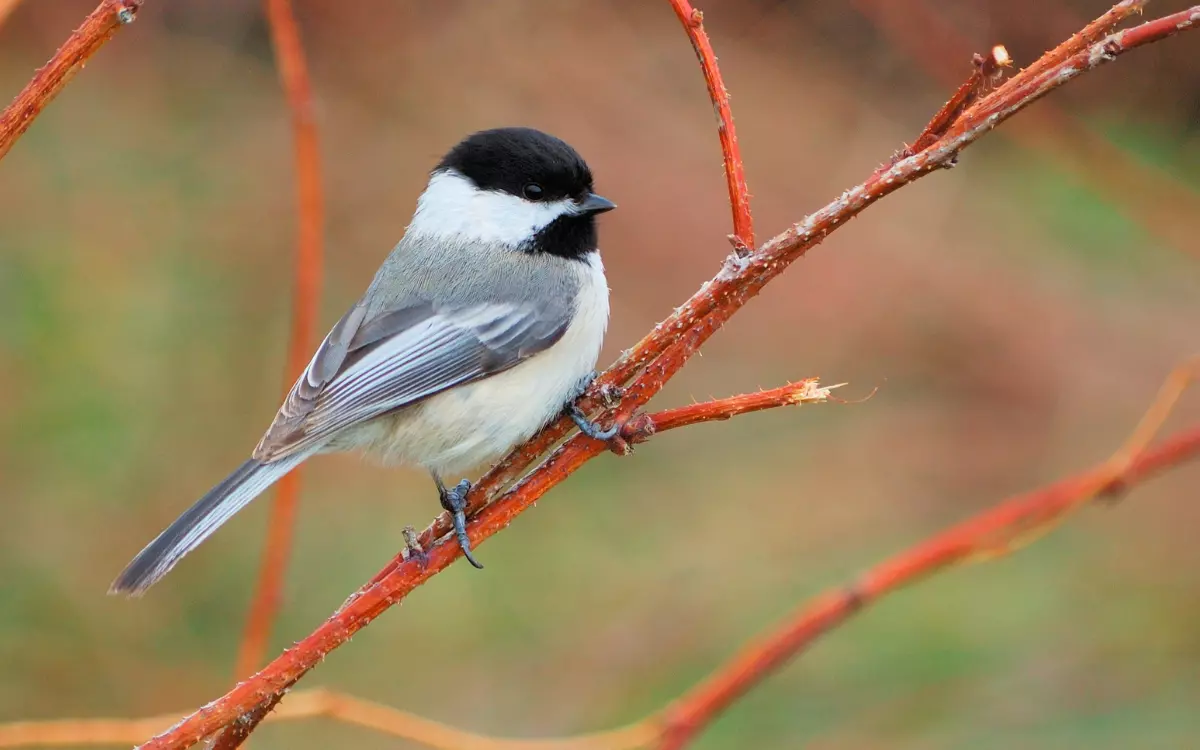
1.Black-capped Chickadee
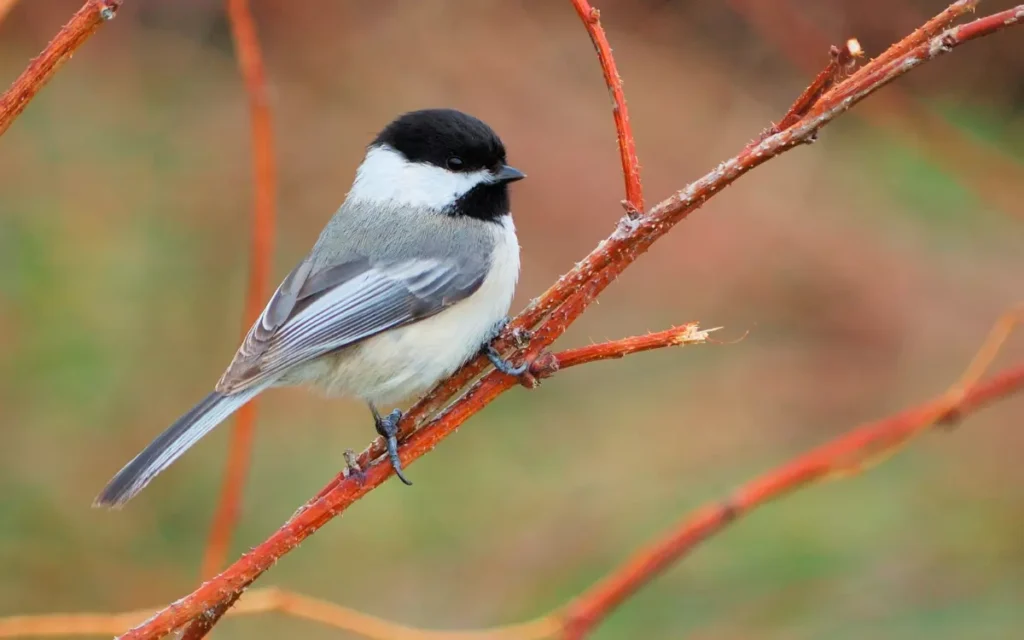
The Black-capped Chickadee is one of the most common winter birds in Connecticut and stays active even during freezing weather. You’ll often see it flitting between tree branches or stopping quickly at feeders before darting away. Its constant movement and soft calls make winter yards feel more alive.
Quick facts
- Small gray bird with a black cap and white cheeks
- Common at backyard feeders all winter
- Often seen in mixed winter flocks
- Favors sunflower seeds and suet
2.Northern Cardinal
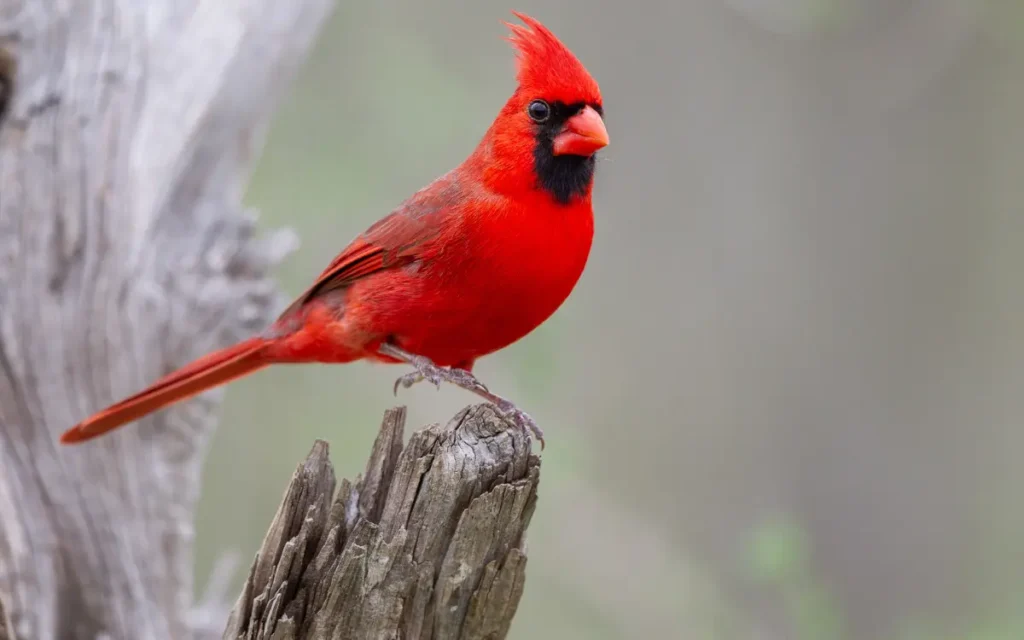
Northern Cardinals stand out in winter thanks to their bold color and steady presence. They don’t migrate, so seeing them against snow-covered branches is common across Connecticut.
Quick facts
- Bright red males, soft brown females
- Active all winter in yards and parks
- Often seen in pairs
- Enjoy sunflower seeds and berries
3.Tufted Titmouse
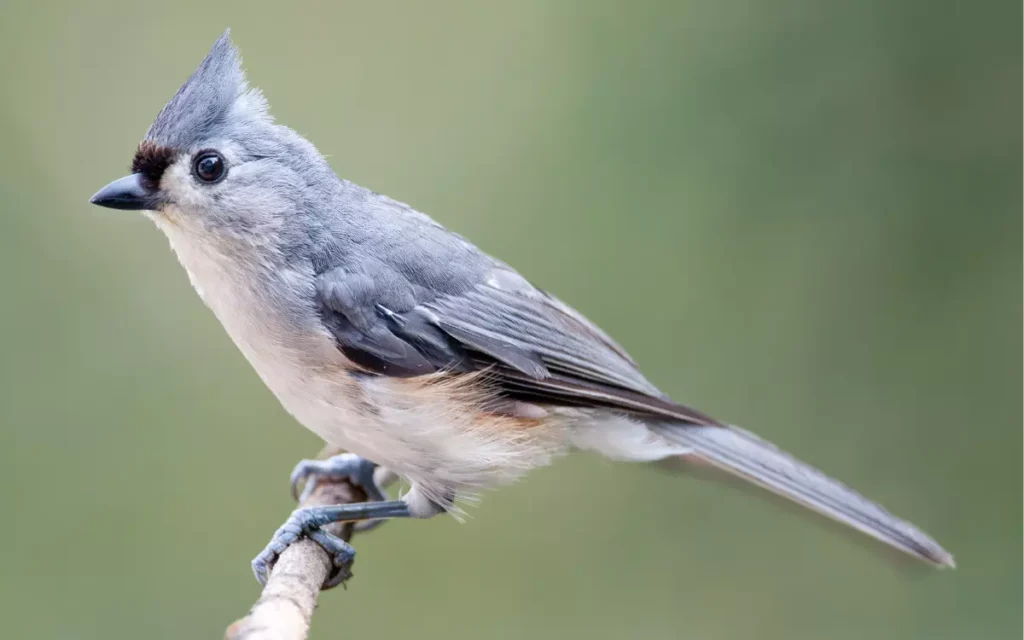
The Tufted Titmouse is energetic and curious, often visiting feeders early in the day. Its small crest and quick movements make it easy to recognize during winter walks.
Quick facts
- Gray body with a pointed crest
- Year-round resident in Connecticut
- Visits feeders frequently
- Likes seeds, nuts, and suet
4.White-breasted Nuthatch
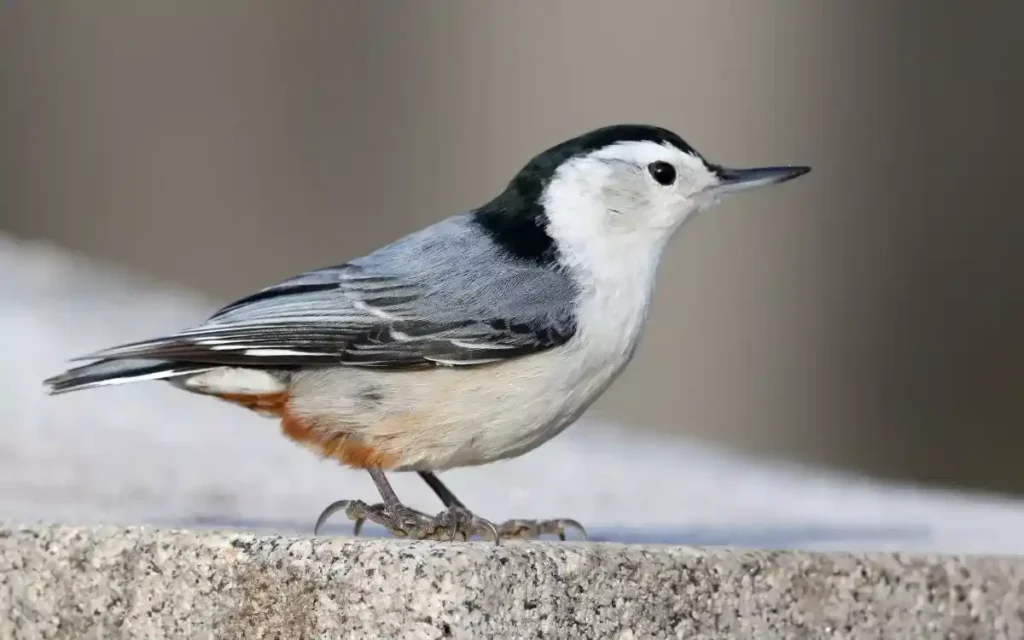
This bird is known for climbing down tree trunks headfirst. It stays active through winter and often appears alongside chickadees and titmice.
Quick facts
- White face and chest with a dark cap
- Climbs trees upside down
- Common in wooded areas and yards
- Stores food for colder days
5.Carolina Wren
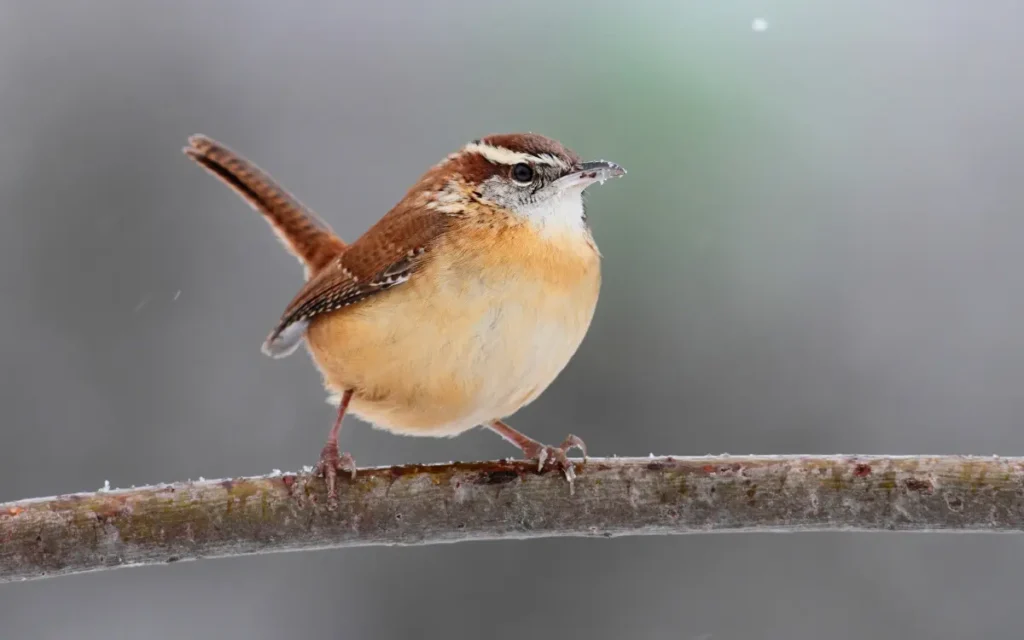
Despite its small size, the Carolina Wren is loud and confident. It remains in Connecticut through winter and often stays close to buildings for shelter.
Quick facts
- Warm brown body with a pale eyebrow stripe
- Stays active even in cold weather
- Often seen near homes
- Prefers insects, suet, and scraps
6.Dark-eyed Junco
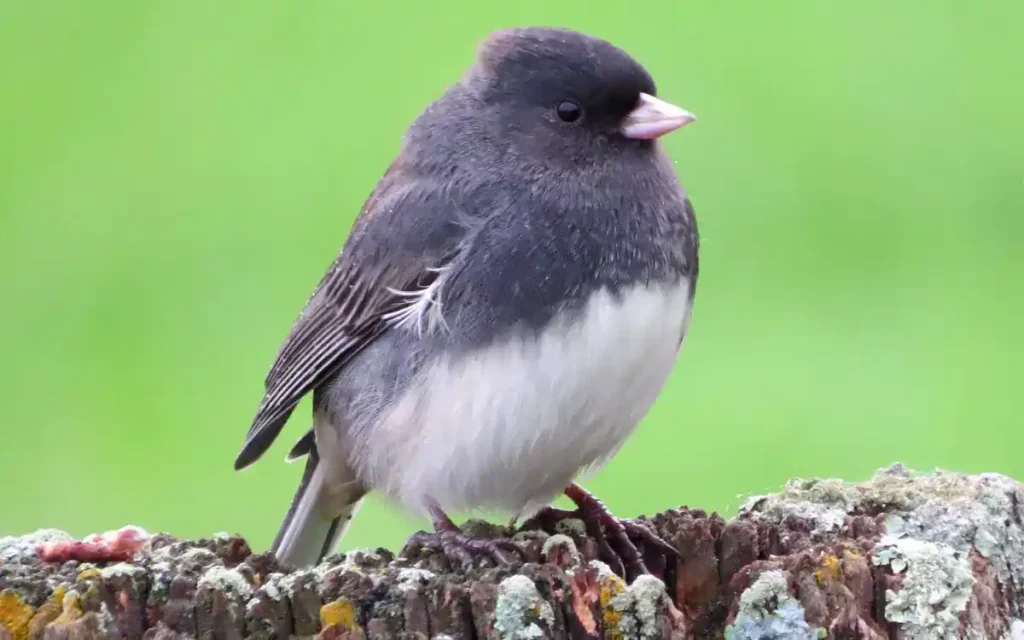
Dark-eyed Juncos are classic winter visitors, often appearing once cold weather settles in. They usually forage on the ground beneath feeders.
Quick facts
- Gray and white coloring
- Seen mostly in winter months
- Travel in small flocks
- Feed on seeds dropped on the ground
7.House Finch
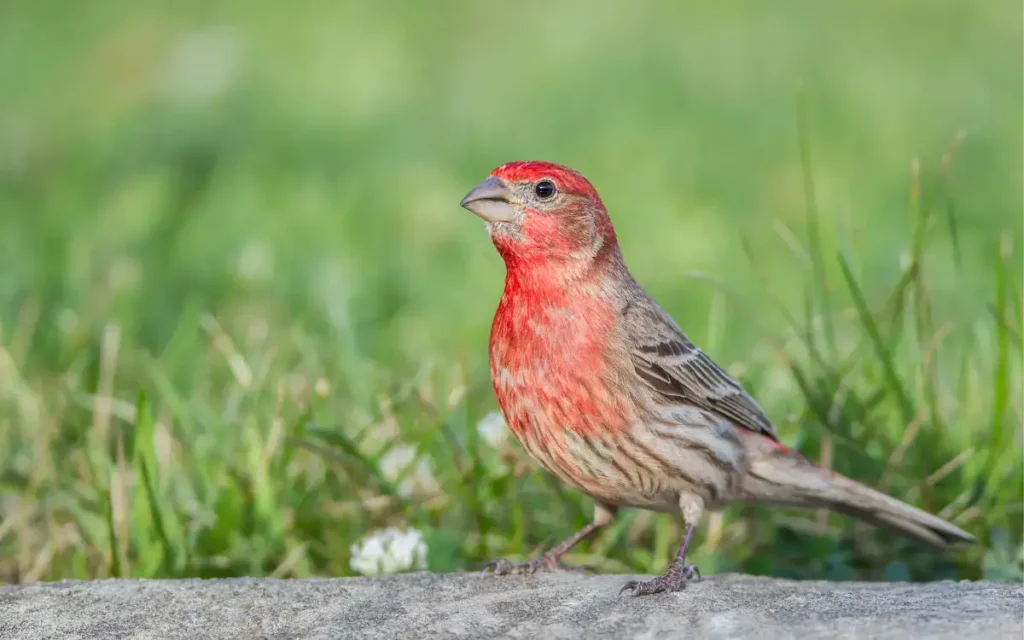
House Finches are common winter birds that adapt well to neighborhoods and towns. Their cheerful presence makes them easy to notice at feeders.
Quick facts
- Red-faced males, brown-streaked females
- Stay in Connecticut all winter
- Often gather in groups
- Enjoy sunflower and nyjer seeds
8.American Goldfinch
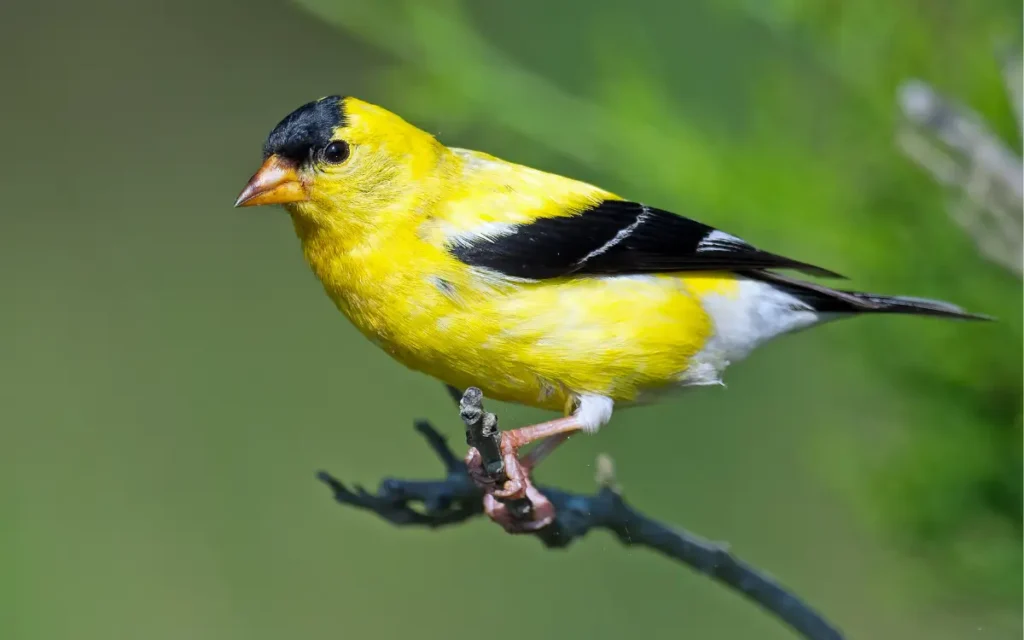
During winter, American Goldfinches lose their bright yellow color and appear more muted. They remain social birds and are often seen feeding quietly in flocks.
Quick facts
- Muted winter plumage
- Regular feeder visitors
- Active in flocks
- Prefer nyjer and sunflower seeds
9.White-throated Sparrow
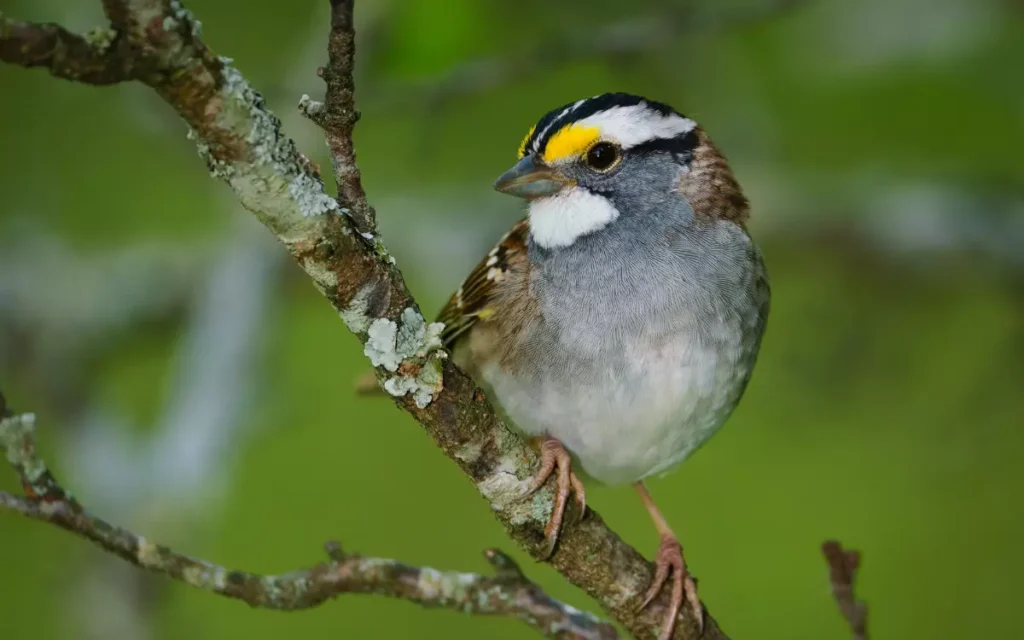
White-throated Sparrows are dependable winter visitors, often seen scratching through leaves under shrubs. Their clear markings make them easier to identify than many other sparrows.
Quick facts
- White throat patch and striped head
- Common winter visitor
- Forages mostly on the ground
- Likes seeds and sheltered areas
10.Downy Woodpecker
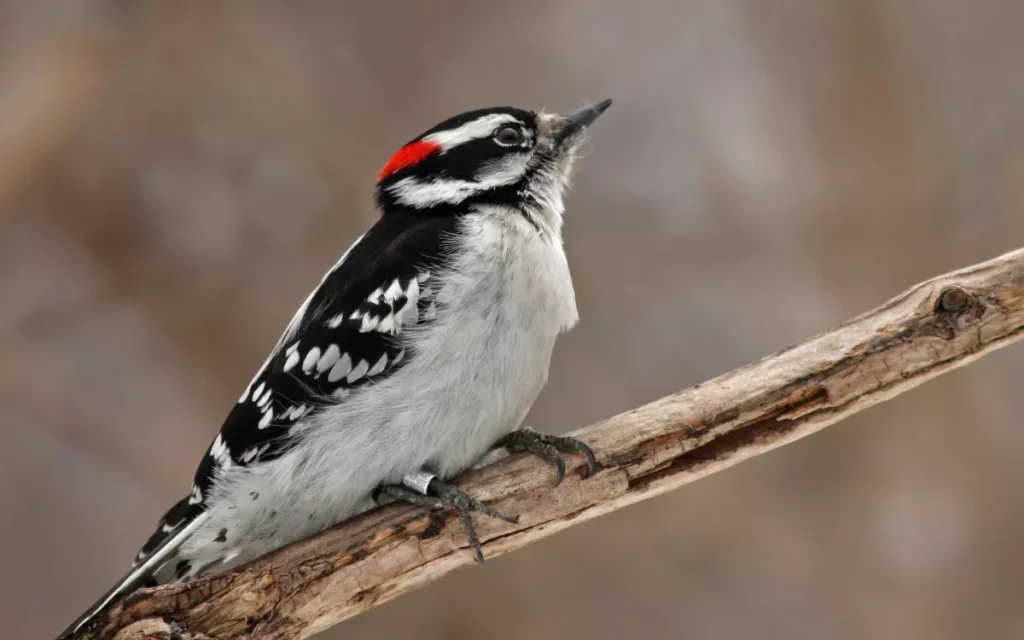
Downy Woodpeckers are the smallest common woodpeckers in Connecticut and frequent winter feeders. Their steady presence makes them easy to recognize even for beginners.
Quick facts
- Black-and-white pattern
- Smallest common woodpecker
- Visits suet feeders often
- Found in yards and forests
11.Hairy Woodpecker
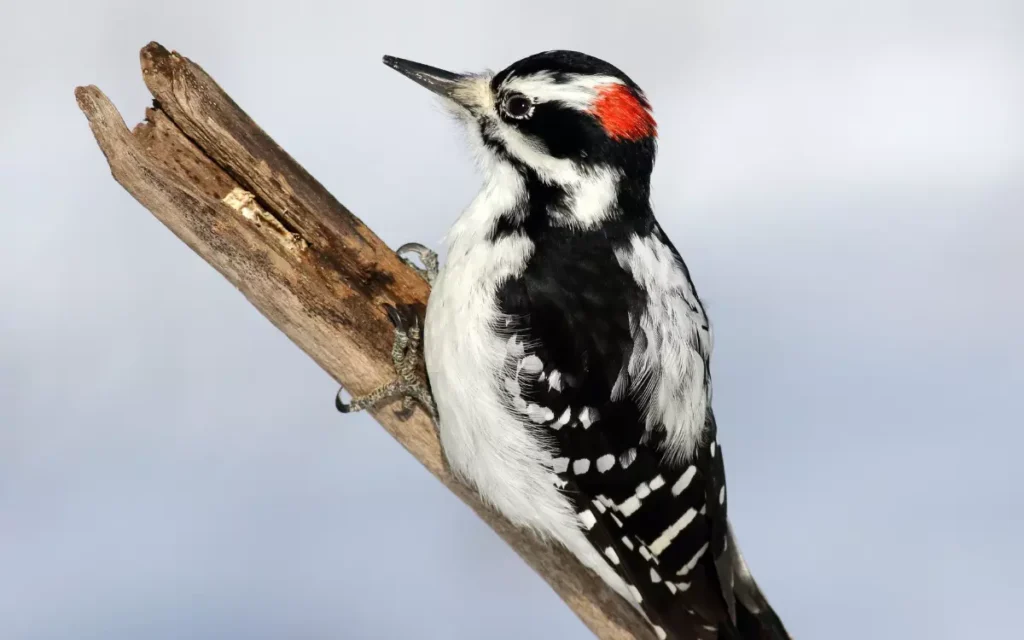
Hairy Woodpeckers are reliable winter residents that spend much of their time searching tree bark for insects. They are larger and more robust than similar species.
Quick facts
- Larger than Downy Woodpecker
- Bold black-and-white coloring
- Feeds on insects under bark
- Visits suet feeders
12.Red bellied Woodpecker
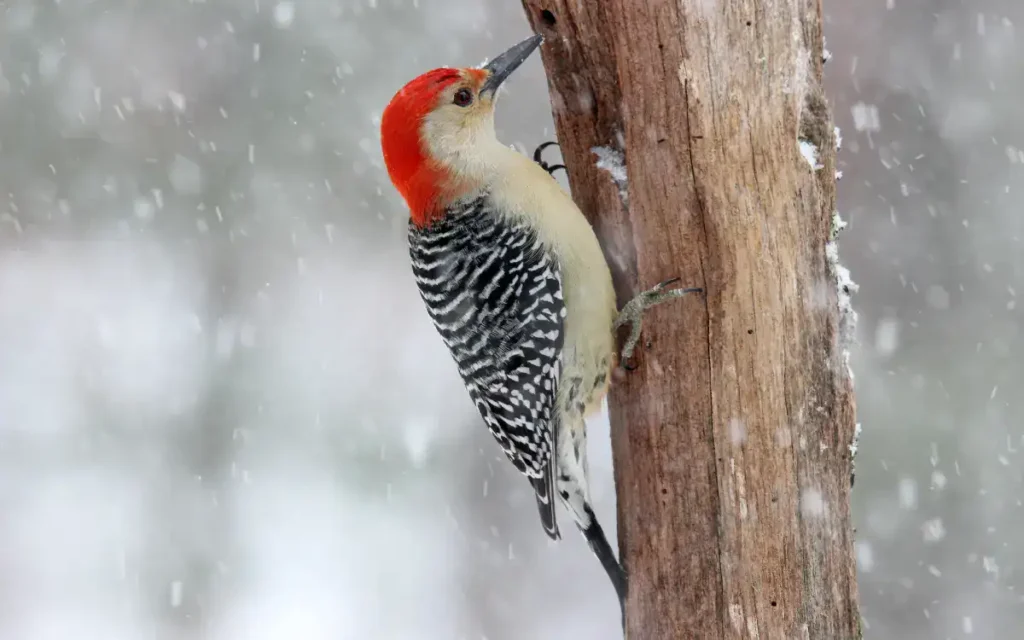
Red-bellied Woodpeckers are now common winter birds in Connecticut. They are vocal, active, and frequently visit feeders, especially suet stations, throughout the colder months.
Quick facts
- Red crown and nape
- Loud calls and strong presence
- Common at feeders
- Eats seeds, nuts, and insects
13.Blue Jay
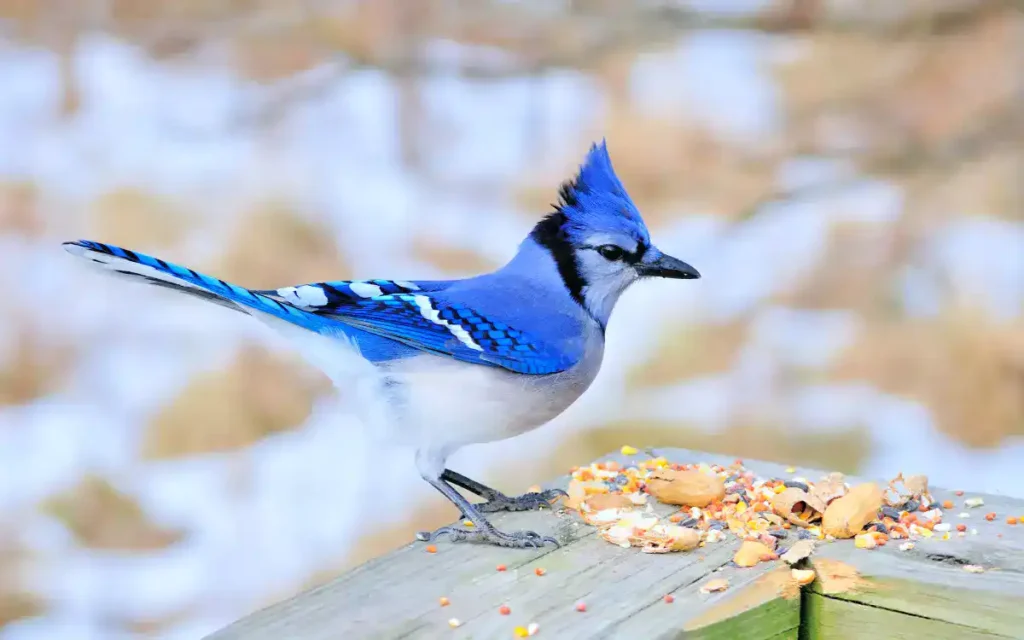
Blue Jays stay in Connecticut all winter and are often heard before they are seen. They store food in fall and rely on memory to retrieve it later, helping them survive colder months.
Quick facts
- Blue, white, and black coloring
- Year-round resident
- Stores food for winter
- Prefers peanuts and acorns
14.American Crow
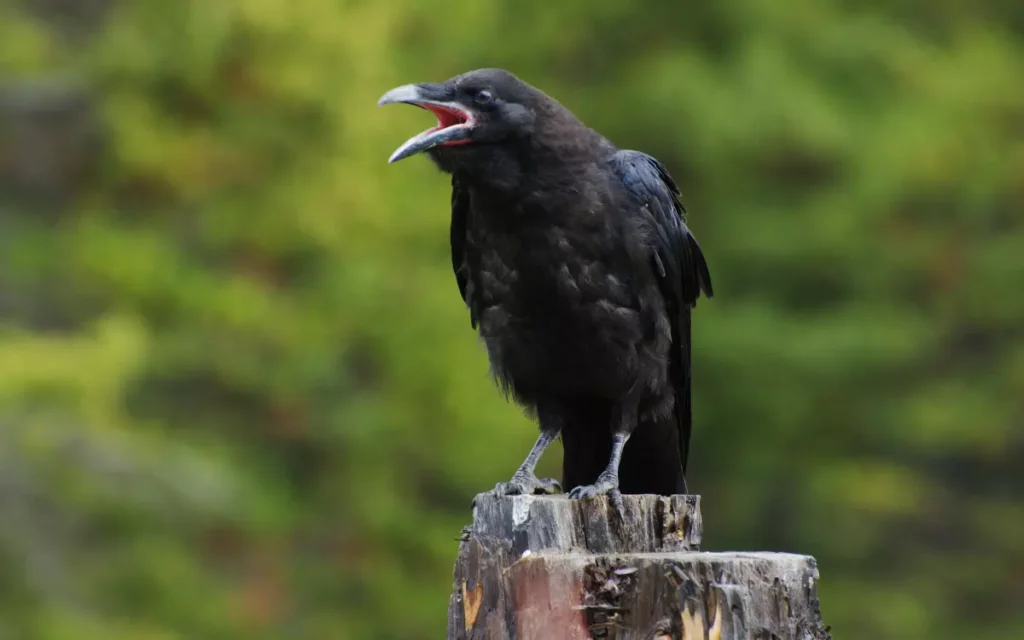
American Crows remain active throughout winter and often gather in large communal roosts. They are highly intelligent and adaptable, thriving in both rural and urban areas even during harsh weather.
Quick facts
- Large all-black bird
- Seen year-round
- Very social in winter
- Found in towns and open areas
15.Red tailed Hawk
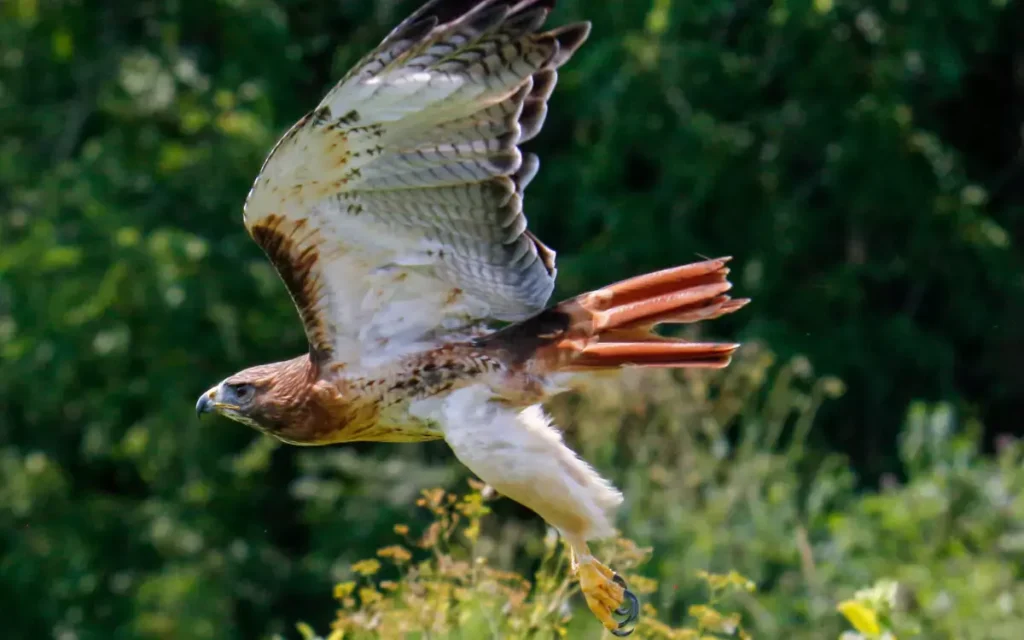
Red-tailed Hawks are the most frequently seen hawks in Connecticut during winter. They are often spotted perched along highways or soaring over open fields while searching for prey.
Quick facts
- Broad wings and red tail
- Active hunter in winter
- Seen soaring or perched
- Hunts small mammals
16.Cooper’s Hawk
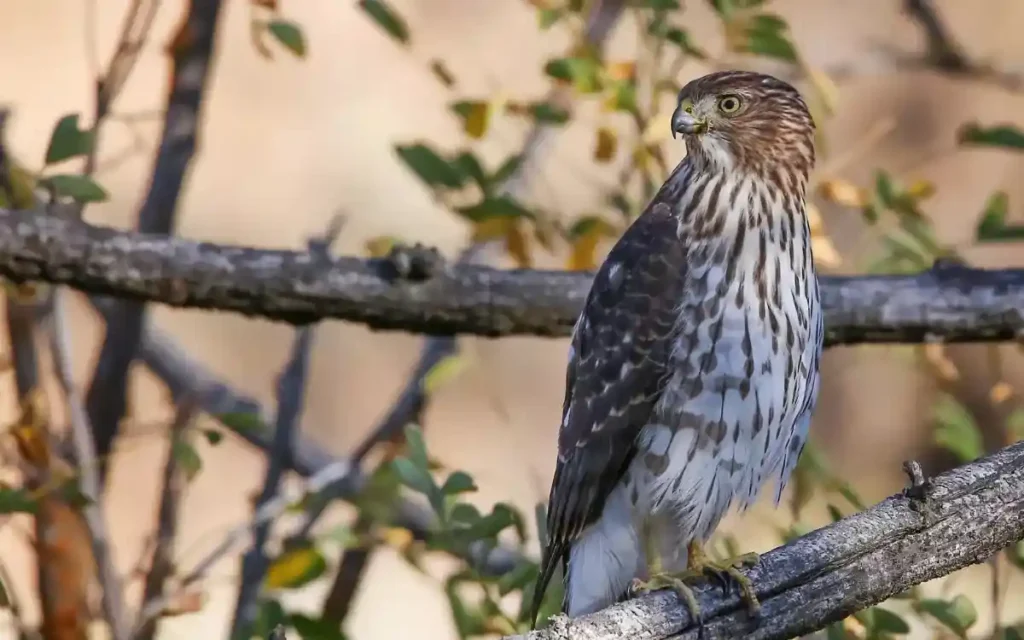
Cooper’s Hawks are common winter predators in Connecticut, especially in wooded neighborhoods. They are agile flyers and often chase smaller birds through trees and yards. Winter makes them easier to spot as prey birds gather at feeders.
Quick facts
- Medium-sized hawk
- Hunts smaller birds
- Seen in wooded neighborhoods
- Moves quickly through trees
Read also: 10 Largest Birds in Connecticut
17.Sharp shinned Hawk
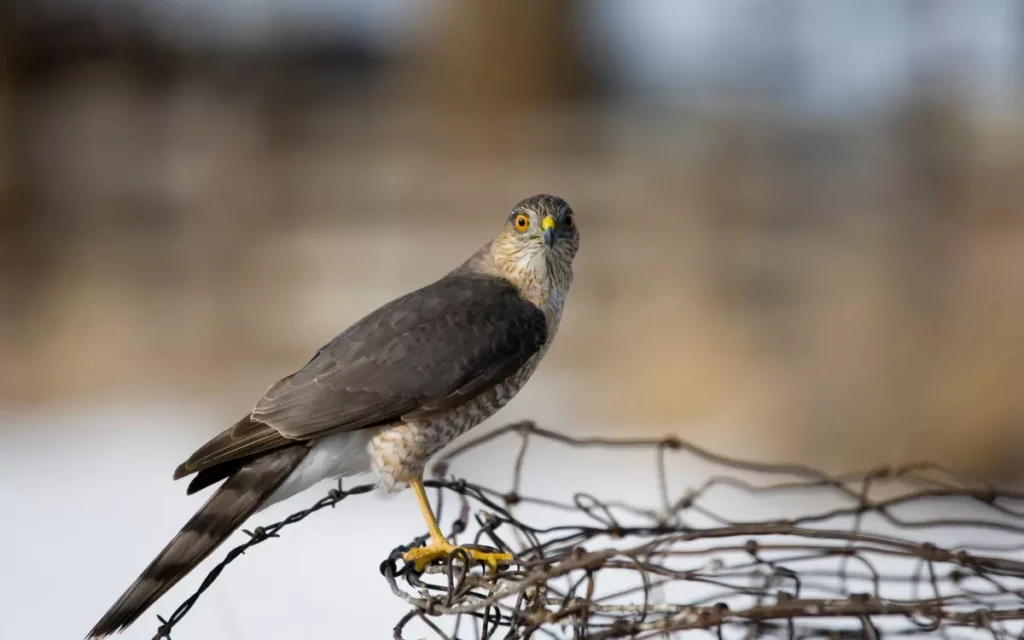
Sharp-shinned Hawks are small, fast raptors that become more visible in winter as they hunt near bird feeders. They rely on surprise and speed to catch prey and often appear suddenly before disappearing just as quickly.
Quick facts
- Slim body and short wings
- Feeds mainly on songbirds
- Appears suddenly near feeders
- Winters regularly in Connecticut
18.Eastern Bluebird
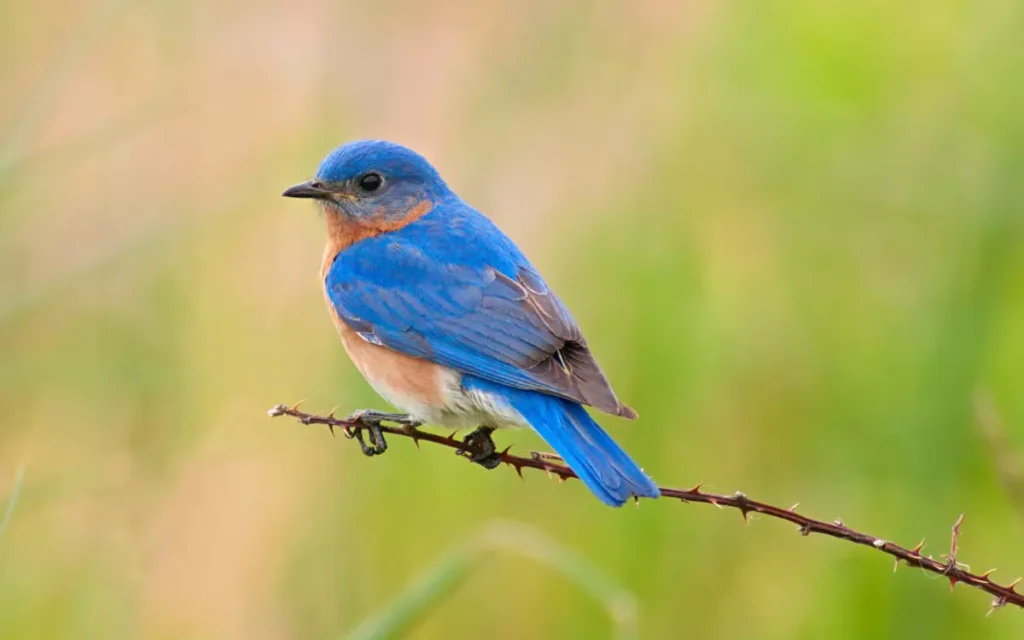
Some Eastern Bluebirds remain in Connecticut during winter, particularly in milder years. Instead of insects, they rely on berries and fruit to survive colder months. They are often seen perched quietly in open fields or along fence lines.
Quick facts
- Bright blue with orange chest
- Seen in open fields
- Eats berries in winter
- Uses nest boxes for shelter
19.Canada Goose
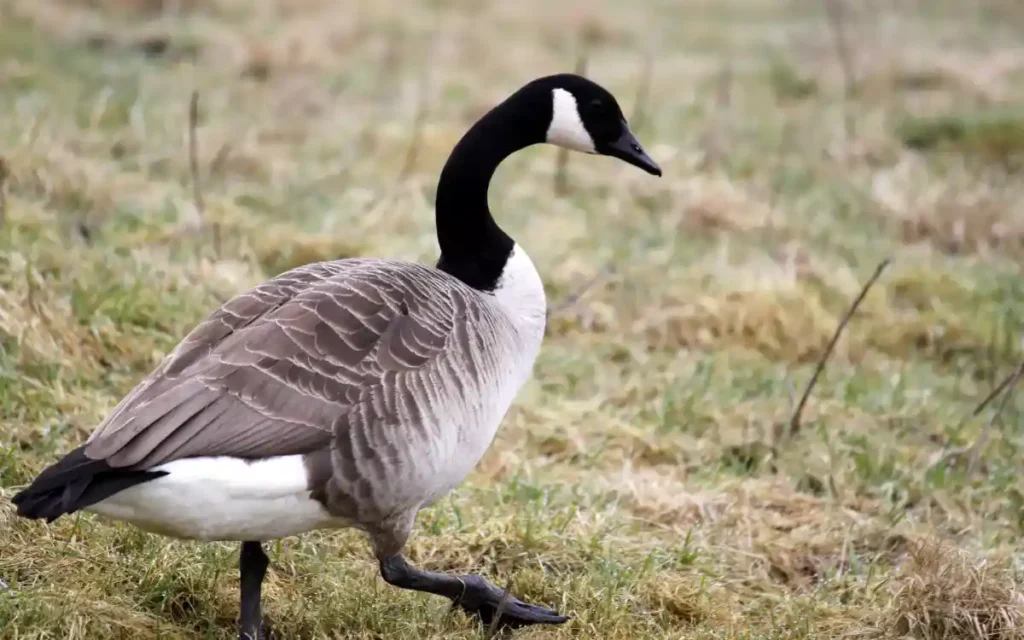
Canada Geese are a constant winter presence across Connecticut, especially near open water. Large flocks gather in fields, lakes, and rivers, where food is still accessible. Their loud calls and group behavior make them easy to notice even from a distance.
Quick facts
- Large bird with black neck
- Seen year-round
- Forms large flocks
- Found near lakes and rivers
20.American Black Duck
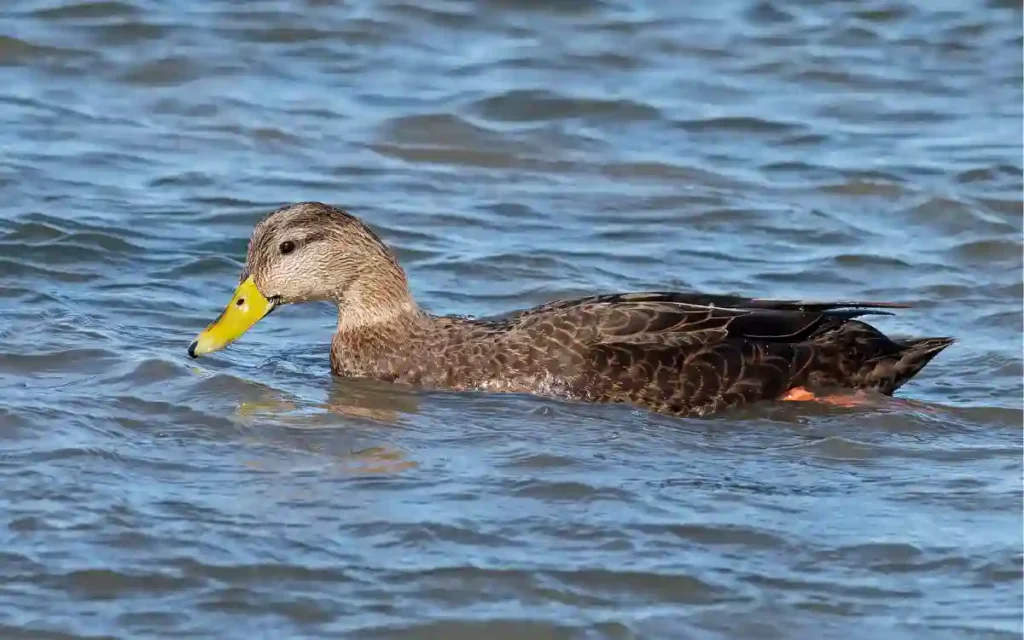
The American Black Duck is well adapted to cold conditions and remains common in Connecticut during winter. It is especially frequent in coastal wetlands and estuaries. Its darker coloring helps it blend into winter marsh landscapes.
Quick facts
- Dark brown body
- Prefers quiet wetlands
- Often mixed with other ducks
- Common in winter months
21.Mallard
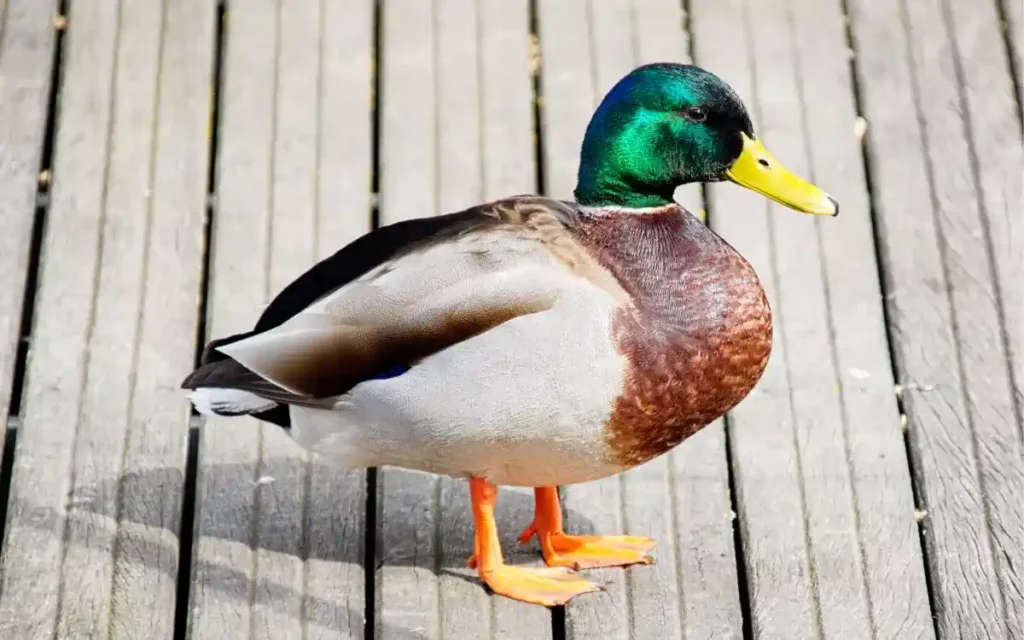
Mallards remain one of the most familiar winter ducks in Connecticut. They adapt well to cold weather and gather wherever water stays unfrozen. During winter, large mixed flocks are common, especially near rivers, ponds, and urban waterways.
Quick facts
- Green-headed males
- Adapt well to cold
- Found in ponds and rivers
- Seen year-round
22.Common Goldeneye
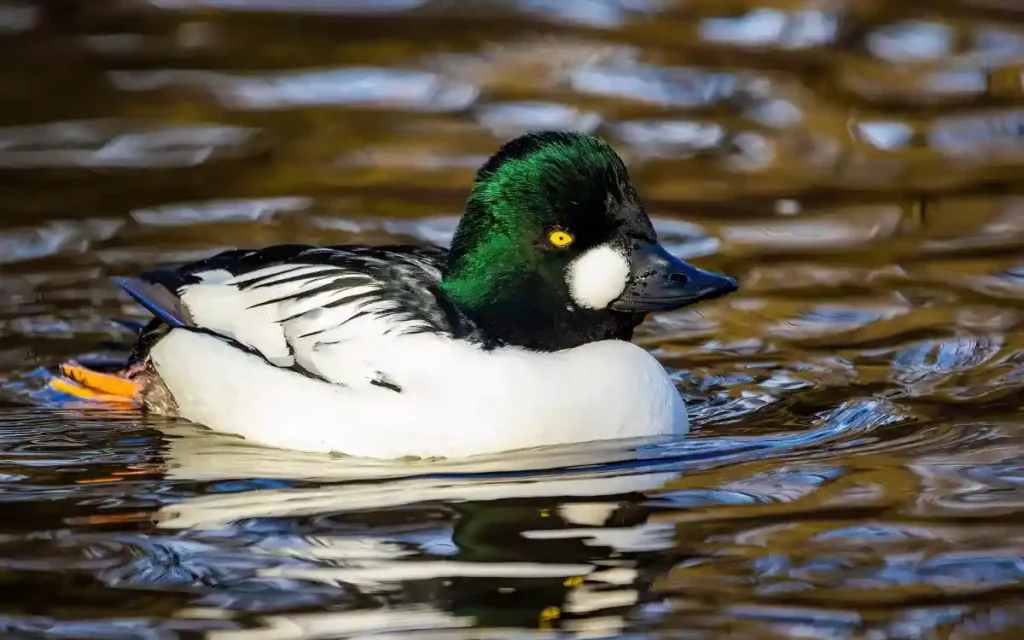
Common Goldeneyes are sturdy winter ducks often found on rivers, lakes, and coastal bays. They are strong divers and spend much of their time underwater searching for food. Their bright yellow eyes are noticeable at close range, especially in good light.
Quick facts
- Dark head with bright eye
- Seen mostly in winter
- Dives for food
- Common on open water
23.Bufflehead
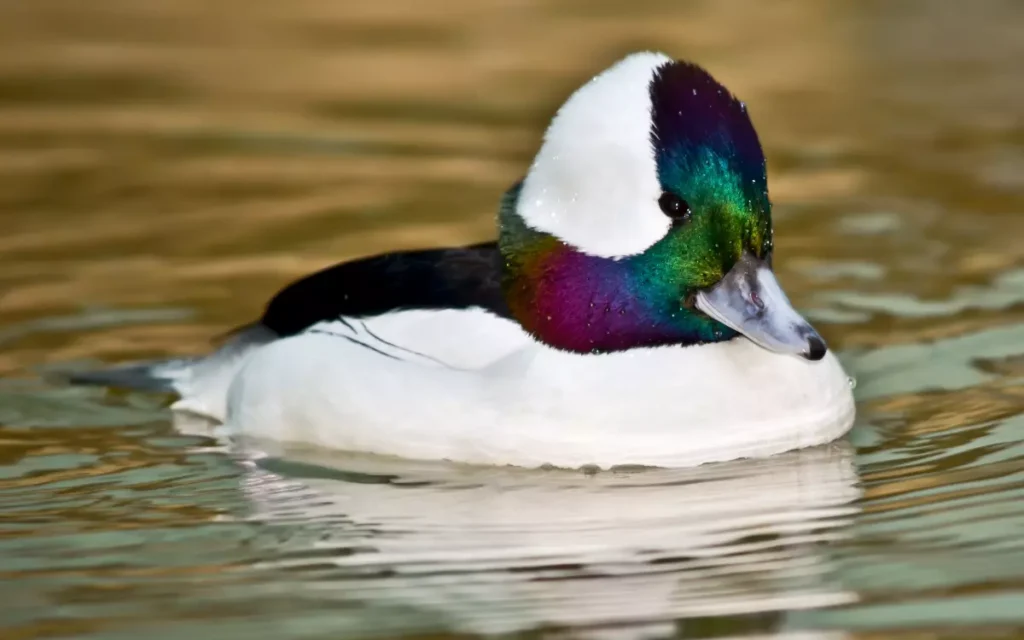
Buffleheads are compact diving ducks that appear in Connecticut during winter, especially along coastal waters and larger lakes. They dive frequently and surface quickly, making them entertaining to watch. Their bold black-and-white pattern stands out against dark winter water.
Quick facts
- Black and white plumage
- Small and compact
- Active divers
- Seen on lakes and bays
24.Hooded Merganser
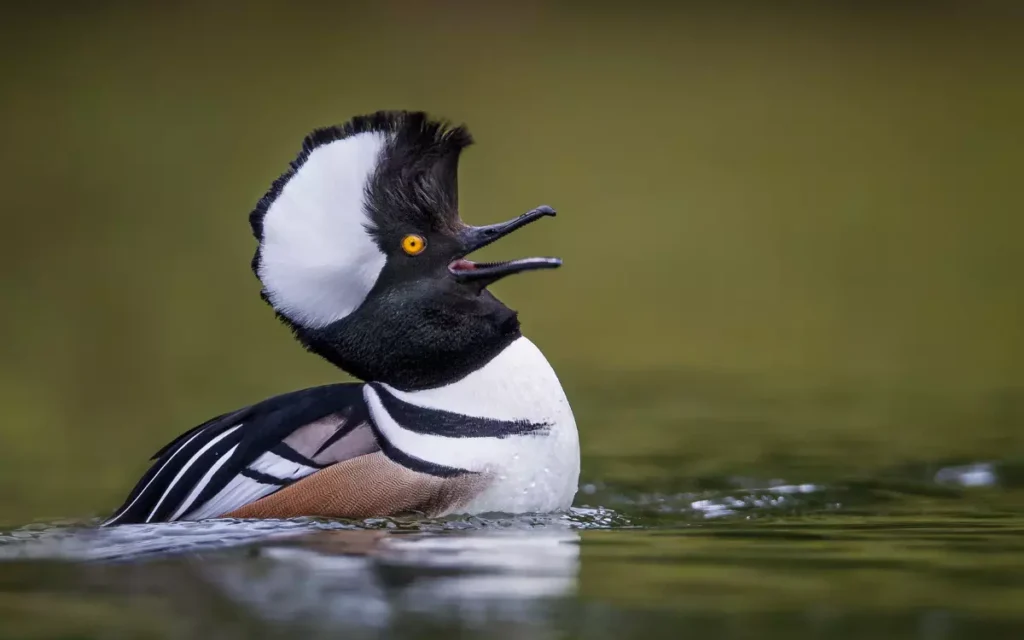
Hooded Mergansers are smaller ducks that winter in Connecticut’s quiet wetlands and wooded ponds. They are known for their striking crests, which are often folded down when swimming. These birds prefer calmer waters compared to other merganser species.
Quick facts
- Distinctive fan-shaped crest
- Winters in Connecticut
- Feeds on fish
- Seen on calm waters
25.Common Merganser
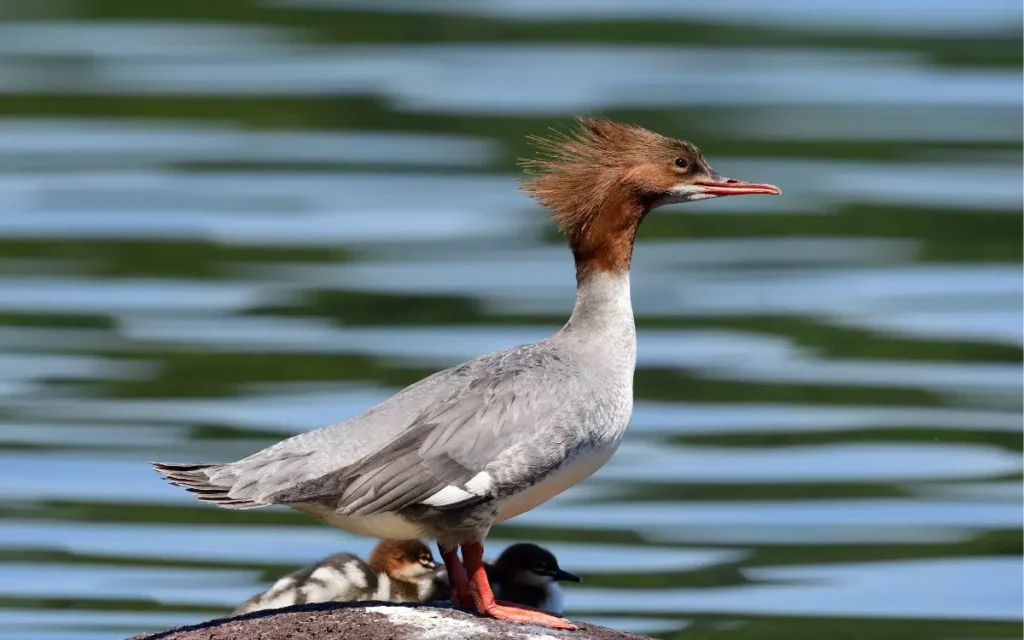
Common Mergansers are fish-eating ducks that stay in Connecticut during winter wherever open water remains. They are often seen swimming low in rivers and lakes, diving repeatedly in search of prey. Their streamlined shape makes them strong, fast swimmers.
Quick facts
- Long, narrow bill
- Seen in small groups
- Active swimmers
- Prefer flowing water
26.Great Black-backed Gull
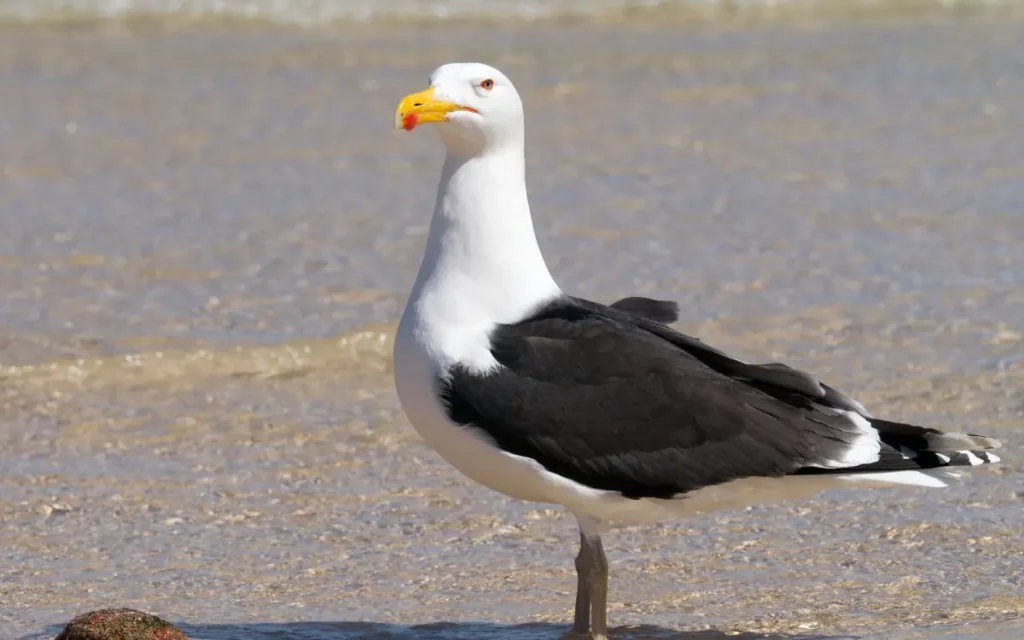
The Great Black-backed Gull is the largest gull found in Connecticut and a dominant presence along the coast in winter. Its bold black back and powerful build set it apart from other gulls, especially when gathered in mixed winter flocks.
Quick facts
- Very large gull
- Black back and white body
- Common along the coast
- Present all winter
27.Herring Gull
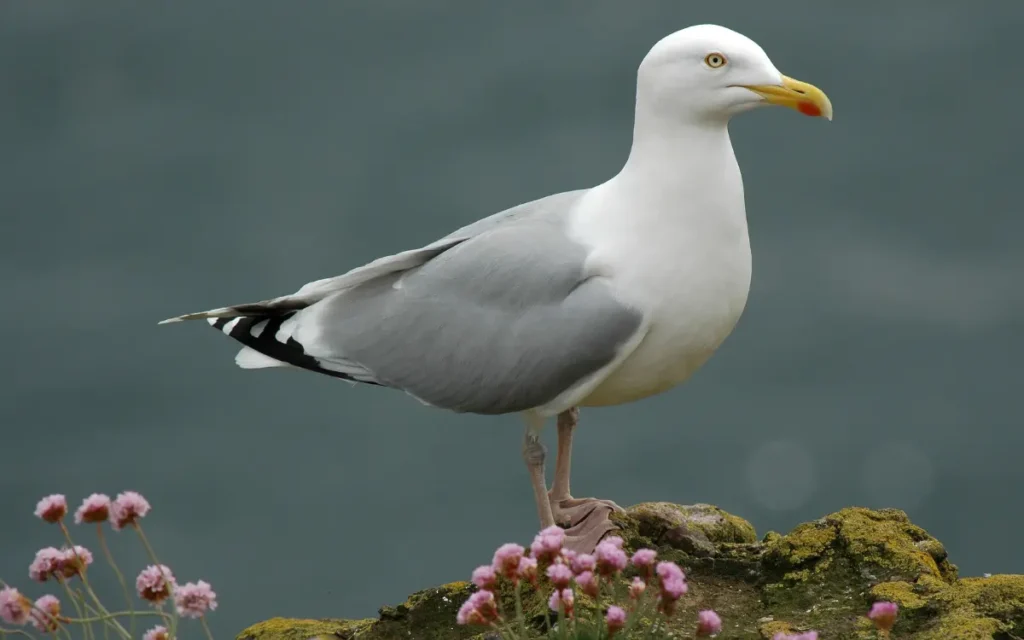
Herring Gulls are one of the most widespread winter birds in Connecticut. They adapt easily to cold conditions and can be seen along the coast, rivers, parking lots, and landfills. Their loud calls and large size make them hard to miss during winter months.
Quick facts
- Gray back with white body
- Common winter species
- Found near water and towns
- Often seen in groups
28.Snow Bunting
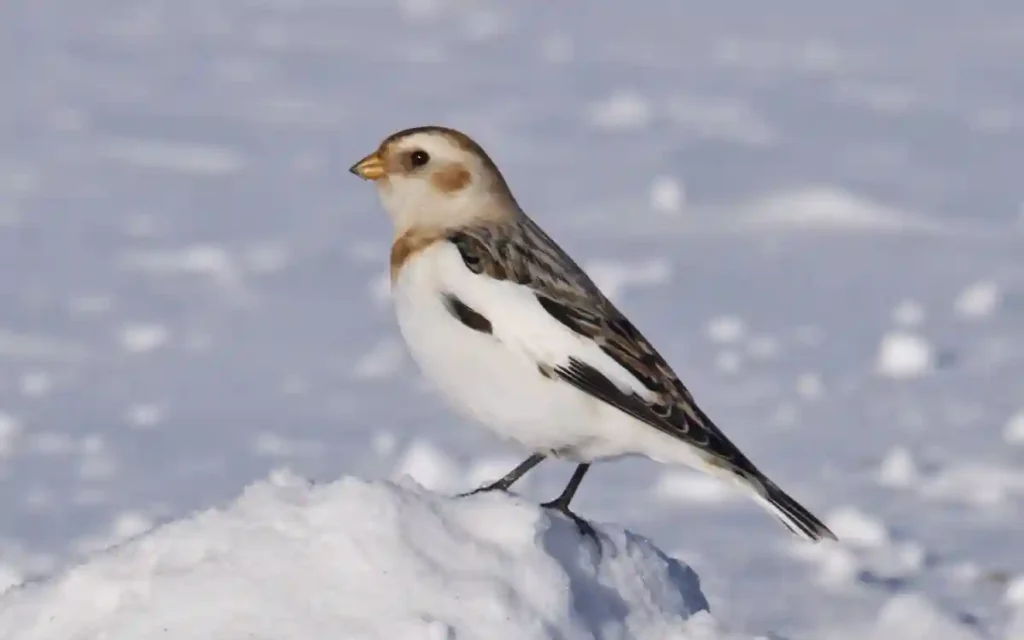
Snow Buntings are true cold-weather birds that appear in Connecticut during winter, especially after snowstorms. They prefer wide open spaces such as coastal areas, fields, and shorelines. Their pale coloring helps them blend into snowy landscapes, making them a special winter sight.
Quick facts
- White and brown coloring
- Seen mainly in winter
- Found in open fields
- Travel in flocks
29.Pine Siskin
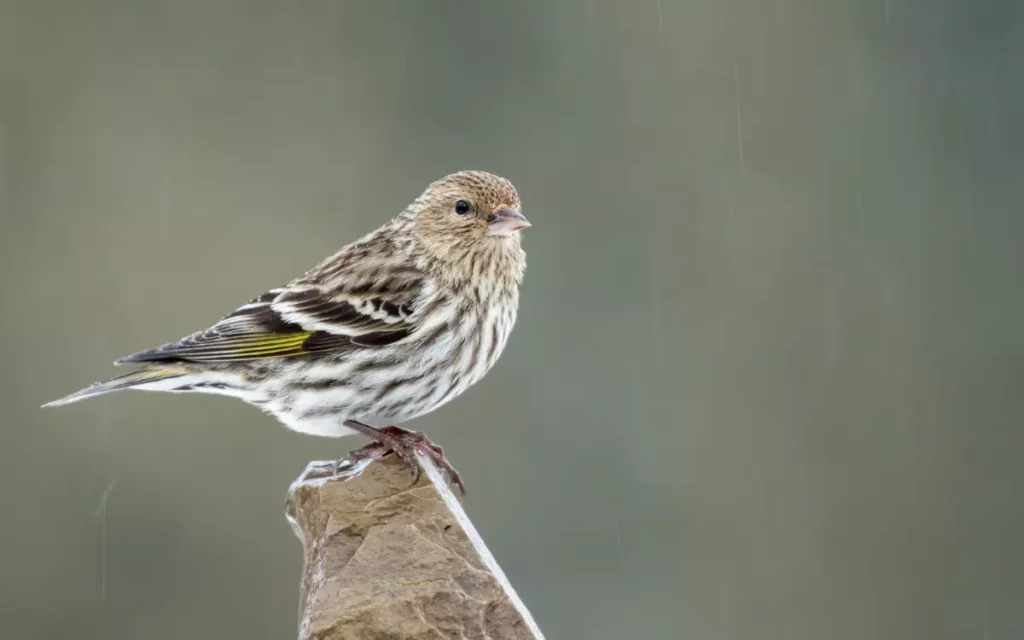
Pine Siskins are streaky finches that move south during certain winters when food supplies drop. In Connecticut, they often visit feeders and can appear in large, noisy groups. Some winters bring many siskins, while other years they may be completely absent.
Quick facts
- Small streaked finch
- Visits feeders during irruptive years
- Active and noisy
- Likes nyjer seeds
Read also: 15 Shorebirds in Connecticut
30.Common Redpoll
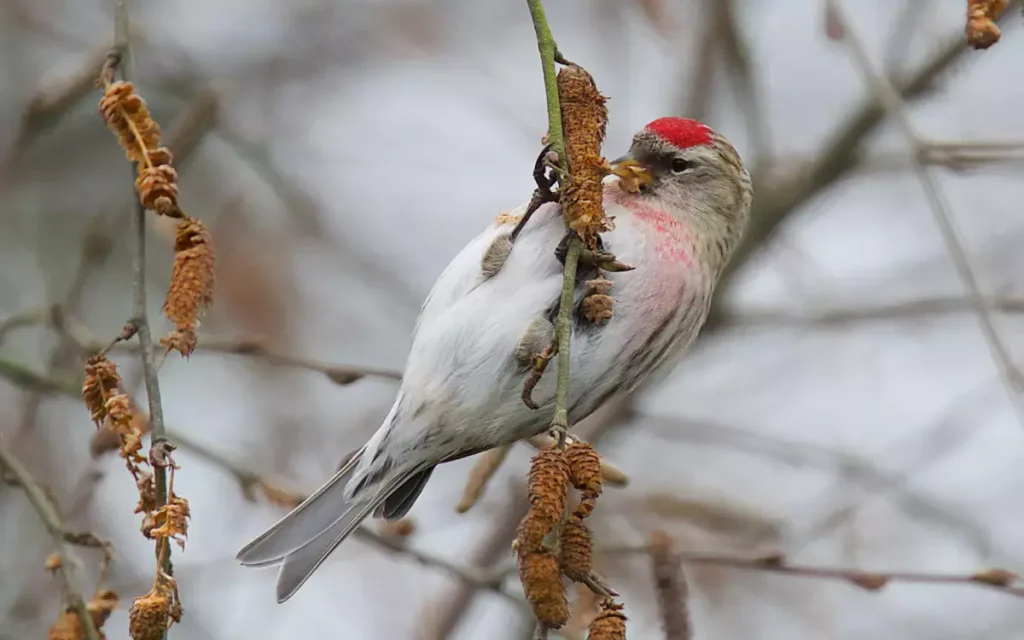
Common Redpolls are tiny finches that arrive in Connecticut during especially cold winters. They travel in energetic flocks and may suddenly appear at feeders after being absent for years. Their fast movements and constant feeding make them easy to notice once they show up.
Quick facts
- Small with red cap
- Irregular winter visitor
- Feeds on seeds
- Often mixed with other finches
31.Red Crossbill
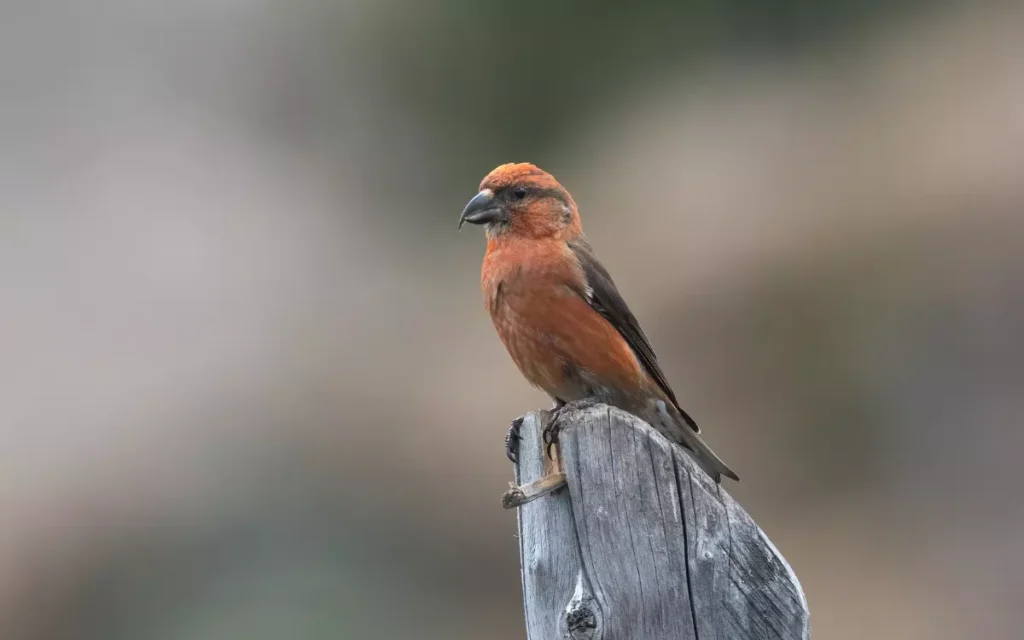
Red Crossbills are irregular winter visitors in Connecticut, appearing mainly when cone crops fail farther north. They are most often found in evergreen forests, where they move quickly from tree to tree feeding on seeds. Their presence can be unpredictable, making sightings especially memorable during winter.
Quick facts
- Crossed bill tips
- Specialized seed eater
- Seen during irruptive years
- Often found in conifers
32.Mourning Dove
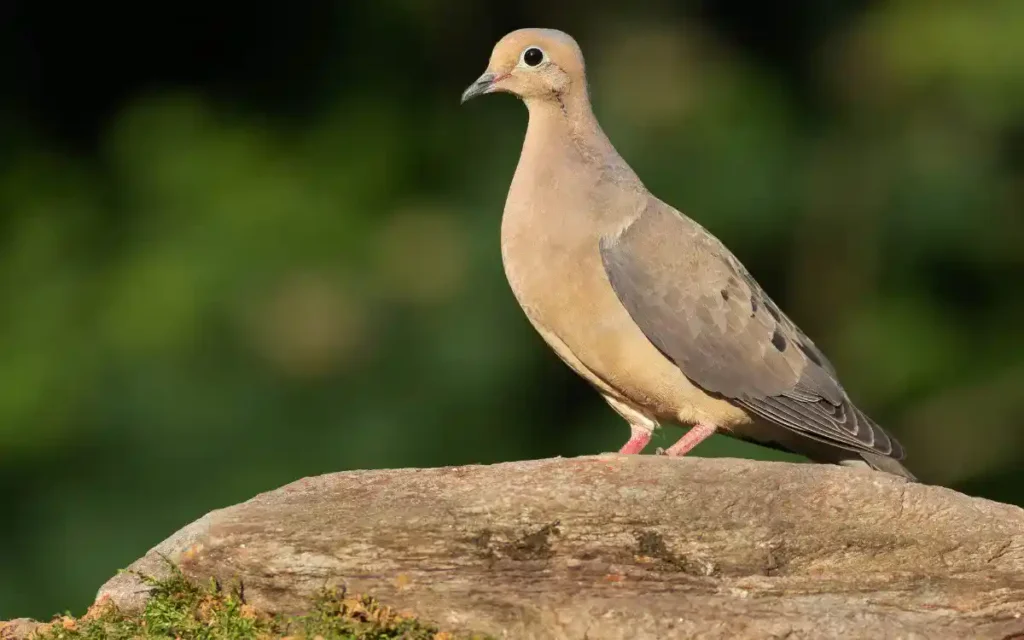
The Mourning Dove is a calm and familiar presence in Connecticut during winter, often seen resting on power lines or quietly feeding on the ground. Unlike many smaller birds, it doesn’t spend much time at feeders, but it benefits from seeds that fall beneath them. Its gentle behavior and soft movements make it easy to overlook, even though it remains active throughout the colder months.
In winter, Mourning Doves tend to move in small groups and seek sheltered areas to stay warm, such as dense trees or building ledges. They are well adapted to cold conditions and rely on their steady feeding habits rather than constant movement. Their subtle cooing calls may still be heard on milder winter days, adding a peaceful touch to quiet surroundings.
Quick facts
- Soft brown-gray body
- Gentle flight style
- Seen in winter months
- Feeds on seeds
33.American Robin
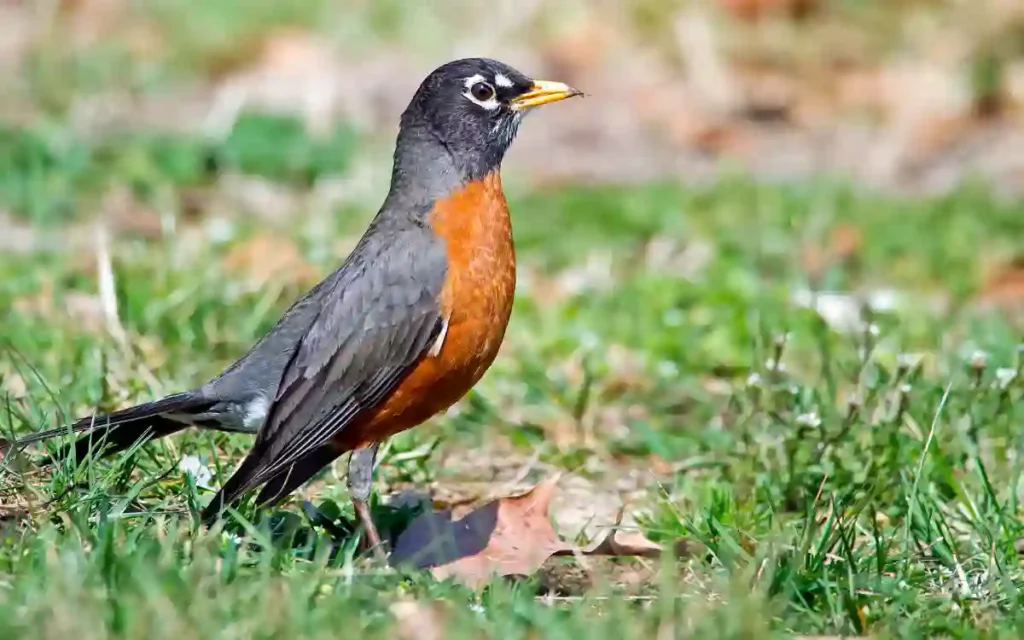
Although many people think of robins as a sign of spring, a good number of American Robins remain in Connecticut throughout winter. Instead of spreading out across lawns, they gather in loose, quiet flocks and focus on finding food that’s still available in cold weather. You’re more likely to spot them in wooded areas, parks, or near berry-producing trees than in open yards.
During winter, robins shift their diet away from insects and rely heavily on berries and small fruits. This change in behavior explains why they may seem to disappear for weeks and then suddenly reappear in groups when a good food source is found.
Quick facts
- Orange breast
- Seen in winter flocks
- Feeds on fruit
- Found in wooded areas
FAQs
What birds stay in Connecticut during winter?
Many birds remain in Connecticut all winter, including Northern Cardinals, Black-capped Chickadees, Blue Jays, White-breasted Nuthatches, and several woodpecker species. These birds are well adapted to cold weather and rely on feeders, stored food, and natural shelter to survive freezing temperatures.
What are the most common winter birds in Connecticut backyards?
The most common backyard winter birds in Connecticut include Dark-eyed Juncos, House Finches, Tufted Titmice, American Goldfinches, and Downy Woodpeckers. These species regularly visit feeders and are easy to spot near homes, parks, and suburban areas.
Are robins and bluebirds seen in Connecticut during winter?
Yes, some American Robins and Eastern Bluebirds remain in Connecticut during winter, especially in milder years. Instead of feeding on insects, they rely on berries and fruit and are often seen in flocks or perched quietly in open areas.
What ducks can be seen in Connecticut during winter?
Connecticut winters bring a variety of ducks, including Mallards, American Black Ducks, Common Mergansers, Hooded Mergansers, Buffleheads, and Common Goldeneyes. These ducks stay where water remains open, such as rivers, coastal bays, and unfrozen lakes.
Do hawks hunt near bird feeders in winter?
Yes, hawks such as Cooper’s Hawks and Sharp-shinned Hawks are more noticeable in winter because smaller birds gather at feeders. These raptors hunt songbirds and are often seen moving quickly through yards or perched nearby during colder months.