
Bird Migration: Why Birds Travel Thousands of Miles Each Year
Bird migration is the seasonal movement of birds between breeding and non-breeding areas, but that simple definition doesn’t explain how complex and precise this behavior really is. Some species travel across continents with near-perfect timing, returning to the same location every year, while others adjust their routes depending on weather, food, and environmental changes.
At its core, migration is about survival efficiency. Birds are constantly balancing energy, food availability, safety, and breeding success. Instead of staying in one place and struggling through harsh conditions, many species evolved to move when it makes sense. This movement isn’t random it follows predictable patterns shaped by millions of years of adaptation.
What makes bird migration especially interesting is that not all birds follow the same rules. Some travel thousands of kilometers nonstop, while others move in short stages. A few species don’t migrate at all, even when closely related species do. This variation is what makes migration a broad system rather than a single behavior.
Understanding migration also helps explain seasonal bird sightings. If you’ve ever noticed certain birds appearing only during winter or summer, you’re already observing migration in action. For birdwatchers and casual observers alike, knowing when and why birds move turns random sightings into something predictable and meaningful.
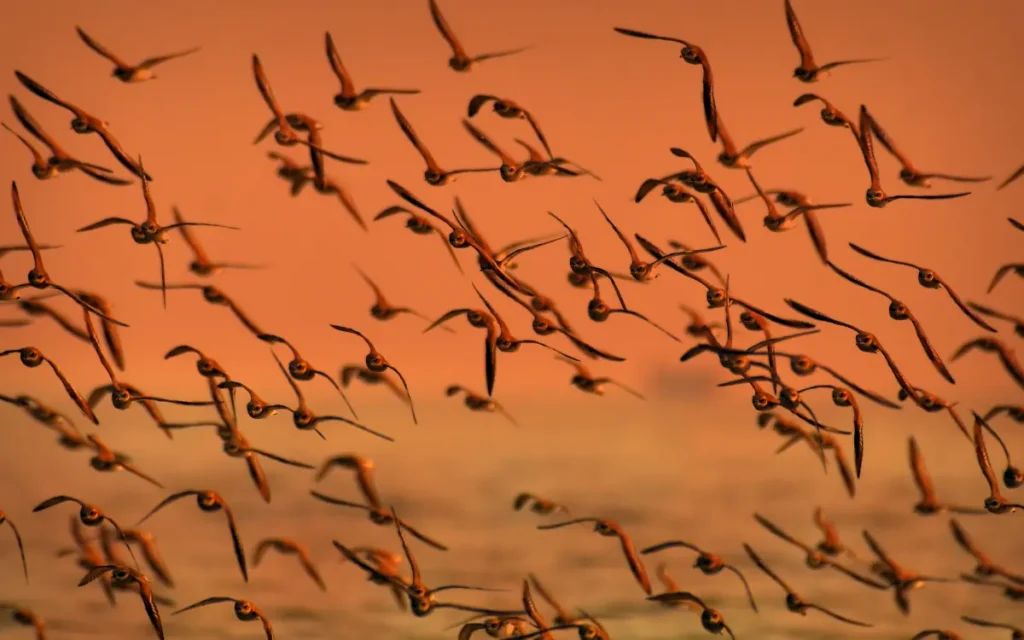
What Is Bird Migration?
Bird migration is a cyclical, seasonal movement between two main areas: a breeding region and a non-breeding (wintering) region. These journeys happen every year and are usually triggered by environmental signals like daylight changes rather than immediate weather conditions.
Unlike daily movements for feeding or short-distance relocation due to disturbance, migration involves a long-term commitment. Birds prepare in advance, store energy, and follow specific routes that often remain consistent across generations.
Another key point is that migration is not always a straight line from one place to another. Many birds follow what are known as flyways, which are broad routes shaped by geography such as coastlines, mountain ranges, and river systems. These routes provide safer travel conditions and access to food along the way.
There is also a difference between obligate migrants and facultative migrants. Obligate migrants move every year without fail because their survival depends on it. Facultative migrants, on the other hand, may choose to migrate based on environmental conditions. This flexibility is becoming more common as climates shift and habitats change.
Why Do Birds Migrate?
The most common explanation for migration is food, but that’s only part of the story. Birds migrate because staying in one place year-round often creates more competition and lower survival chances.
During spring and summer in temperate regions, food becomes abundant. Insects emerge, plants produce seeds, and days are longer. These conditions are ideal for raising young because parent birds can spend more time feeding their chicks. However, when winter approaches, these food sources disappear or become difficult to access.
Instead of adapting to scarcity, many birds move to regions where food remains available. This reduces competition and increases survival rates. But migration is not just about escaping winter it’s also about taking advantage of better breeding conditions.
Another factor is predation and population pressure. In areas where too many birds compete for the same resources, moving to a new region during breeding season gives individuals a better chance of successfully raising offspring. Less competition means more food and safer nesting opportunities.
Interestingly, migration also helps birds avoid diseases and parasites that can build up in one location. By moving between regions, birds reduce prolonged exposure to these risks, which improves long-term survival.
Explore 12 Longest Migration Bird You should know
When Do Birds Migrate?
Migration timing is controlled mainly by day length, not temperature. As days become longer or shorter, birds experience hormonal changes that trigger preparation for migration. This means birds often begin their journey before conditions become harsh, rather than reacting after the fact.
Spring migration usually happens faster than fall migration. Birds are under pressure to reach breeding grounds early because arriving first can mean better territory and higher chances of attracting a mate. This creates a sense of urgency, leading to more direct routes and fewer stops.
In contrast, fall migration is more gradual. Birds are not racing to breed, so they take longer routes with frequent stopovers to rest and refuel. This slower pace also helps young birds, who are making their first journey and need more time to navigate.
Another interesting aspect is nocturnal migration. Many small birds travel at night to avoid predators and take advantage of cooler air, which reduces energy loss. Larger birds, like raptors, prefer daytime migration because they rely on rising warm air currents (thermals) to glide and conserve energy.
Where Do Birds Migrate?
Bird migration does not happen randomly across the globe. Most species follow established pathways known as flyways, which act like natural highways in the sky. These routes are shaped by geography and provide the safest and most resource-rich paths for travel.
There are several major flyways around the world, and each one supports millions of birds every year. These routes often include critical stopover sites where birds rest and rebuild energy reserves. Wetlands, coastal areas, and forests play a key role in supporting migrating populations.
Some birds travel short distances within a region, moving from higher elevations to lower ones or from inland areas to coastal zones. Others, known as long-distance migrants, cross entire continents or even oceans. The scale of these journeys depends on species, habitat, and evolutionary history.
What makes migration routes even more impressive is their consistency. Many birds return to the exact same nesting site year after year. This level of accuracy suggests a combination of instinct, memory, and environmental awareness working together.
How Do Birds Navigate?
Bird navigation is one of the most studied aspects of migration, and it involves multiple systems working together rather than a single method.
Birds use the sun as a directional guide during the day, adjusting their path based on its position in the sky. At night, many species rely on star patterns, which they learn early in life. Experiments have shown that young birds can orient themselves correctly even in artificial environments when exposed to star maps.
Another major tool is the Earth’s magnetic field. Birds can detect magnetic signals and use them like a built-in compass. This ability allows them to maintain direction even when visual cues are limited, such as during cloudy weather.
In addition to these natural systems, birds also use landmarks and memory. Rivers, coastlines, and mountain ranges help guide experienced birds along familiar routes. Younger birds rely more on instinct, while older birds combine learned experience with natural navigation tools.

How Do Birds Prepare for Migration?
Before migration begins, birds enter a phase of intense feeding known as hyperphagia. During this time, they consume large amounts of food to build fat reserves, which act as fuel for long flights. In some cases, a bird can nearly double its body weight before starting its journey.
This stored fat is critical because it provides more energy than carbohydrates or protein. Birds rely on it to sustain long periods of flight, especially when crossing areas with little to no food, such as oceans or deserts.
Physical changes also occur. Flight muscles become stronger, and feathers are often replaced to ensure efficient flying. Behavior changes as well—many birds become restless, a condition known as zugunruhe, which signals readiness to migrate.
Challenges Birds Face During Migration
Migration is not without risks. Birds face a range of challenges that can affect survival rates during their journey.
Weather is one of the biggest factors. Strong winds, storms, and sudden temperature changes can force birds off course or drain their energy reserves. Even experienced migrants can struggle under extreme conditions.
Human activity has added new challenges. Urban development has reduced the number of safe stopover sites, making it harder for birds to find food and rest. Light pollution can confuse nocturnal migrants, causing them to collide with buildings or lose their direction.
Habitat loss is another major issue. Wetlands and forests that once supported migrating birds are disappearing, which reduces the availability of essential resources during long journeys.
Types of Bird Migration (Understanding the Variations)
Not all migration follows the same pattern. Some birds move north to south across large distances, while others shift elevation or travel within smaller regions.
Latitudinal migration is the most familiar type, where birds move between northern and southern regions depending on the season. Altitudinal migration involves moving up and down mountains rather than across continents.
Short-distance migrants stay within a general region, adjusting their location slightly as conditions change. Long-distance migrants, on the other hand, undertake extreme journeys that can span thousands of kilometers.
These variations show that migration is not a single behavior but a range of strategies shaped by environment and survival needs.
Examples of Remarkable Migratory Birds
Some birds are known for their extraordinary migration patterns. The Arctic Tern, for example, travels one of the longest migration routes in the animal kingdom, moving between polar regions each year.
The Bar-headed Goose is known for flying over the Himalayas at extremely high altitudes, where oxygen levels are low. This ability highlights how specialized some species have become.
Swallows and warblers are also well-known migrants, often traveling at night and covering large distances despite their small size. These examples help illustrate the diversity and adaptability of migratory behavior.
FAQs
Why do birds migrate instead of staying in one place?
Birds migrate mainly to follow food and improve breeding success. Staying in one place year-round often means dealing with food shortages, harsh weather, and more competition. By moving seasonally, birds can take advantage of better conditions when they need them most.
Do all birds migrate?
No, not all birds migrate. Some species are resident birds, meaning they stay in the same area throughout the year. Others are partial migrants, where only some individuals migrate while others remain depending on conditions like food and climate.
How far can birds migrate?
Migration distance varies widely. Some birds travel just a few hundred kilometers, while others, like long-distance migrants, can cover thousands of kilometers across continents and oceans in a single season.
How do birds know when to start migrating?
Birds rely mostly on changes in daylight (photoperiod) rather than temperature. As days get longer or shorter, it triggers hormonal changes that prepare them for migration, including increased feeding and restlessness.
Do birds get lost during migration?
Yes, especially young or inexperienced birds. Weather conditions like storms can also push birds off course. However, most species have strong navigation systems and can correct their direction over time.
How long does bird migration take?
It depends on the species and distance. Some birds complete migration in a few days, while others take several weeks or even months, especially if they stop frequently to rest and feed.
Why do some birds migrate at night?
Many smaller birds migrate at night to avoid predators, reduce heat stress, and fly in calmer air conditions. Night skies also help with navigation using stars.
Where do birds rest during migration?
Birds use stopover sites like wetlands, forests, and coastlines to rest and refuel. These areas are critical because birds need to rebuild energy before continuing their journey.
How high do birds fly during migration?
Most birds fly at relatively low altitudes, but some species can reach over 20,000 feet, especially when crossing mountains or avoiding weather systems.
How is climate change affecting bird migration?
Climate change is shifting migration patterns. Birds may arrive earlier or later than usual, and changes in food timing can affect breeding success. Some species are also altering their routes or shortening migration distances.
Can birds survive long flights without stopping?
Yes, some species can fly nonstop for days using stored fat as energy. These long flights usually happen when crossing large barriers like oceans or deserts.
Do birds return to the same place every year?
Many birds show strong site fidelity, meaning they return to the same nesting or wintering areas each year. This consistency helps them use familiar resources and increases survival chances.
Final Thoughts
Bird migration is not just about movement it’s about survival, timing, and adaptation. Each journey reflects a balance between environmental conditions and biological needs, shaped over generations.
Once you understand how migration works, it becomes easier to notice patterns in bird activity around you. What might seem like random appearances or disappearances is actually part of a larger, predictable system.
For anyone interested in birds, learning about migration adds a new layer of understanding. It connects local observations to global patterns, making birdwatching more engaging and meaningful.