Birds similar to an ostrich include emus, cassowaries, rheas, and kiwis. These birds share key traits like large bodies, long legs, strong running ability, and in many cases, the inability to fly.
The closest match is the emu, followed by the cassowary and rhea, all part of a group called ratites flightless birds built for speed and survival on land.
If you’re looking for ostrich-like birds, here are the most similar species based on size, behavior, and physical features.
1.Emus (Dromaius novaehollandiae):
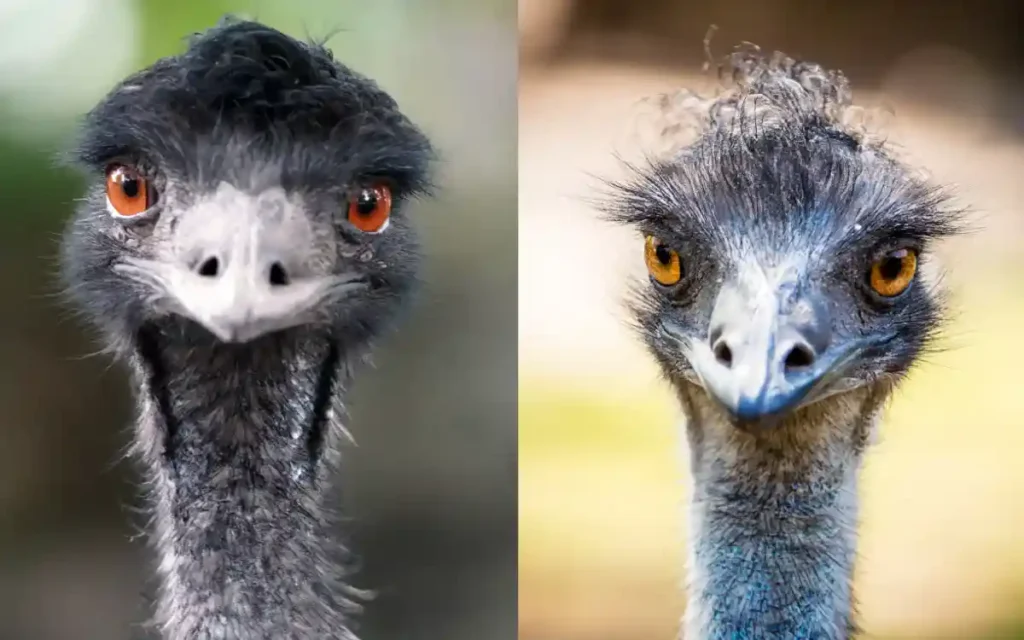
The emu is widely considered the closest bird to an ostrich because of its similar size, body shape, and behavior. Both birds are flightless and rely on their powerful legs for speed and survival in open landscapes.
Emus can grow up to 6 feet tall and are built for long-distance running, much like ostriches. They have long necks, small heads, and soft, shaggy feathers that protect them from heat. Like ostriches, emus are omnivores and can travel long distances in search of food.
Key difference: Emus are slightly smaller and have softer, double-layered feathers, while ostriches are taller and more muscular.
2.Southern Cassowary (Casuarius casuarius):
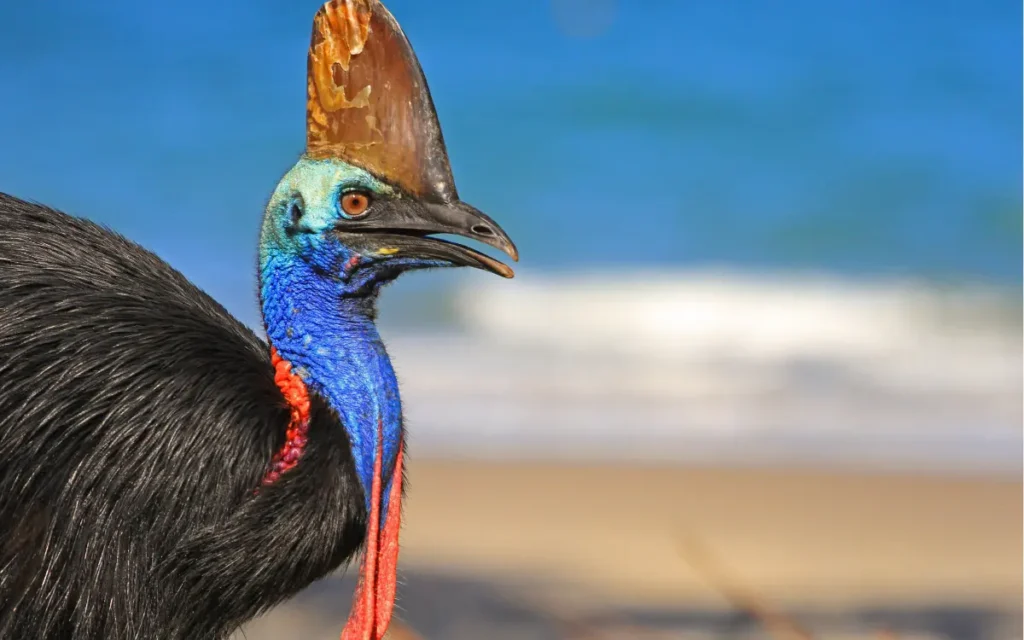
The cassowary is another large, flightless bird that shares many physical traits with the ostrich, including a heavy body, strong legs, and ground-based lifestyle. It stands up to 6 feet tall and is known for its powerful build.
Unlike ostriches, cassowaries live in dense rainforests instead of open plains. Their strong legs are not just for running—they are also used for defense, making them one of the most powerful birds in the world. The bright blue neck and helmet-like casque on their head make them easy to recognize.
Key difference: While ostriches rely on speed to escape danger, cassowaries are more defensive and territorial.
3. Greater Rhea (Rhea americana):
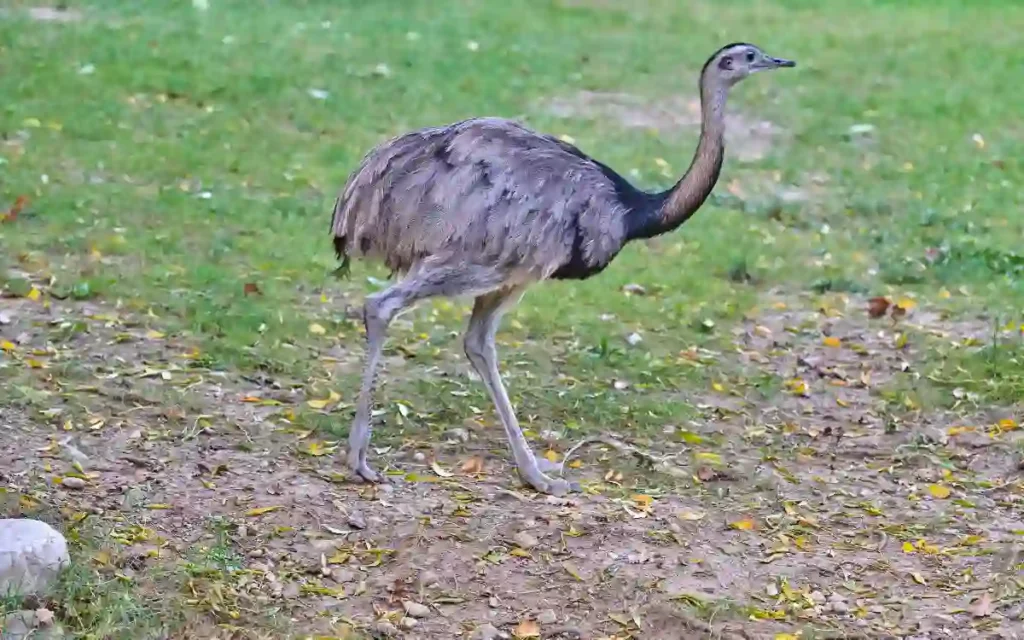
The greater rhea is often described as a smaller version of the ostrich. It shares the same long legs, long neck, and flightless nature, but has a lighter build and softer appearance.
Rheas live in grasslands and open areas across South America, where they rely on speed and awareness to avoid predators. Like ostriches, they are omnivorous and eat a mix of plants, seeds, and small animals. One unique trait is that male rheas take care of the eggs and raise the chicks.
Key difference: Rheas are shorter and less bulky than ostriches, and their wings are larger relative to their body, even though they cannot fly.
4. Kiwi (Apteryx):
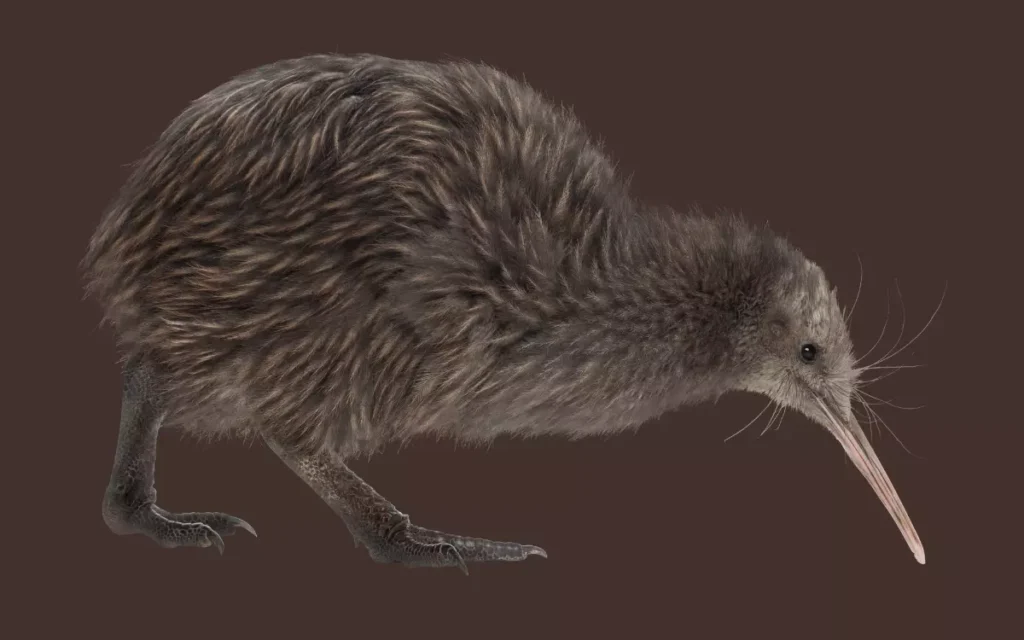
The kiwi might seem like an unusual addition, but it belongs to the same group of flightless birds as the ostrich. This connection makes it an important part of the comparison.
Unlike ostriches, kiwis are small, about the size of a chicken, and live in forests rather than open land. They have strong legs and cannot fly, but their body is compact and covered in hair-like feathers. Kiwis are also nocturnal and rely heavily on their sense of smell.
Key difference: Size is the biggest difference kiwis are tiny compared to ostriches but both share evolutionary traits as flightless birds.
5. Marabou Stork (Leptoptilos crumenifer):
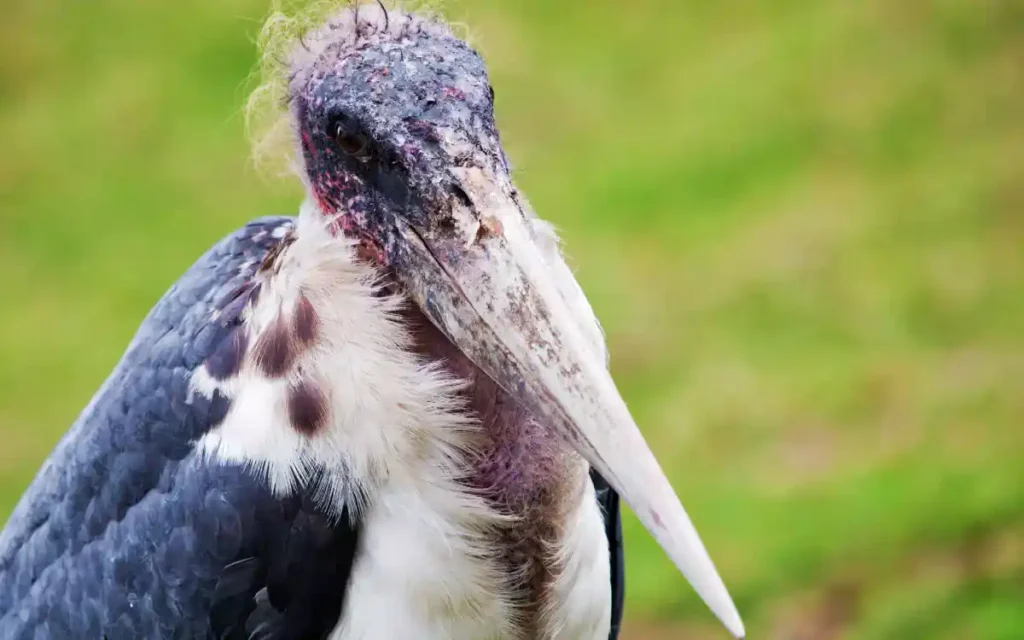
The marabou stork is a large, ground-dwelling bird that shares a similar body shape with the ostrich, especially in its long legs, long neck, and upright posture. It can grow up to 5 feet tall and often walks slowly across open areas or near water.
Like ostriches, marabou storks spend a lot of time on land and are built for walking long distances. However, they are also strong fliers and often soar high in the sky. One unique trait is their scavenging behavior—they feed on carrion and are commonly seen near human settlements.
Key difference: Unlike the fast-running ostrich, the marabou stork relies more on flight and scavenging than speed.
6. Greater Flamingo (Phoenicopterus roseus):
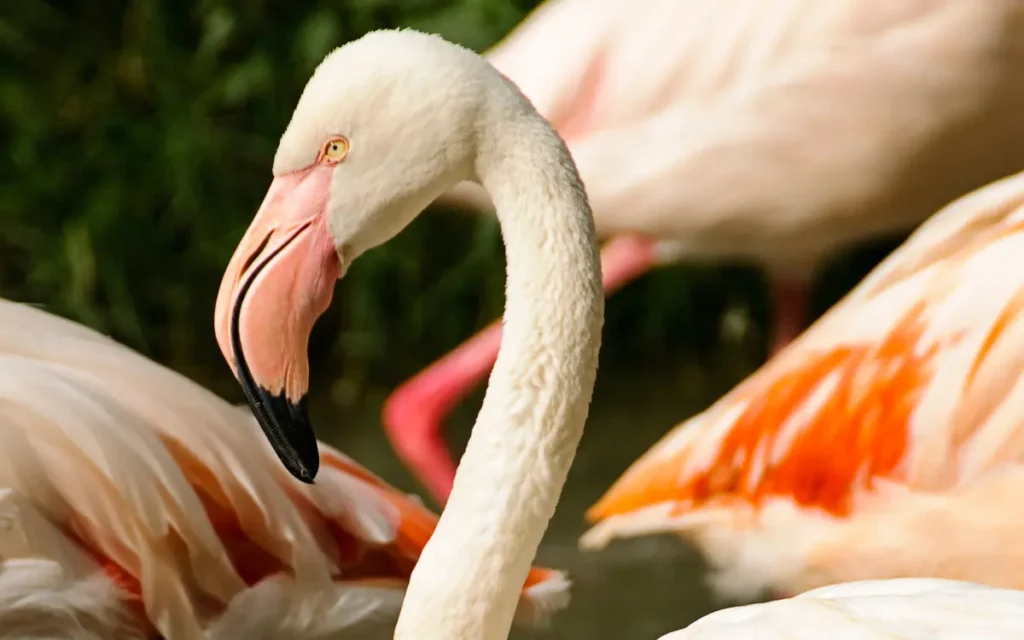
The greater flamingo shares some visual similarities with the ostrich, mainly its tall height, long legs, and long neck. These features give it a comparable silhouette, especially when standing in open areas.
Flamingos are wading birds found in lakes and wetlands, where they feed on small aquatic organisms. Their slim bodies and curved beaks set them apart from ostriches, and their pink coloration comes from their diet.
Key difference: Flamingos are lightweight, water-based birds that can fly, while ostriches are heavy, land-based runners.
7. Trumpeter Swan (Cygnus buccinator) :
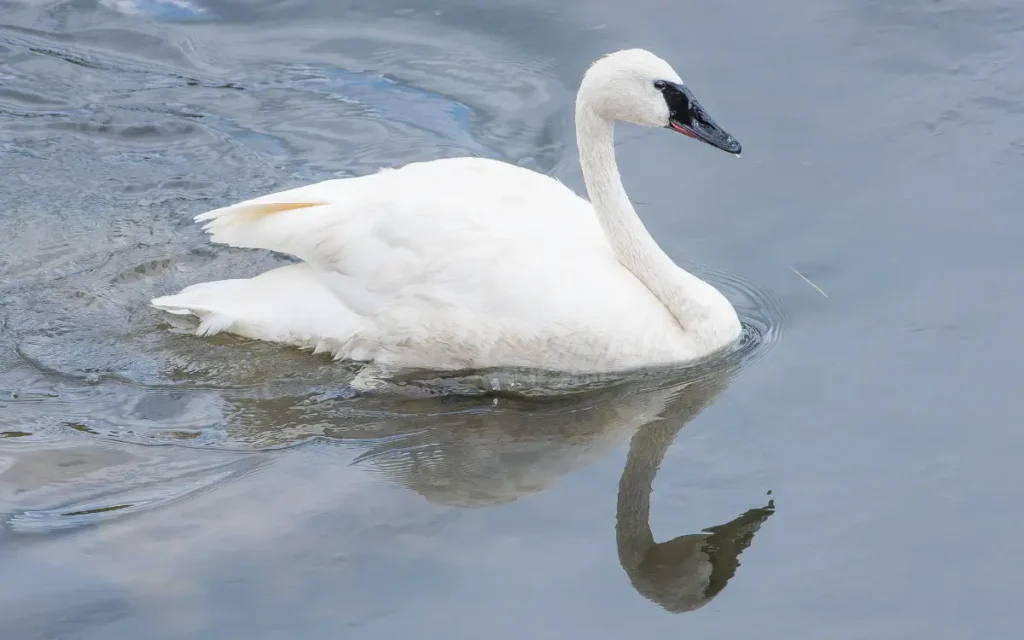
The trumpeter swan is one of the largest flying birds in North America and shares the long neck and large body size that make it somewhat comparable to an ostrich.
Swans spend most of their time in water and are strong swimmers as well as powerful fliers. Their size and graceful movement give them a commanding presence, similar to ostriches on land.
Key difference: Swans are fully aquatic and rely on flight, whereas ostriches are strictly land birds and cannot fly.
Read also: 12 Bird similar to toucan: Exploring Species
8. Whooping Crane (Grus americana):
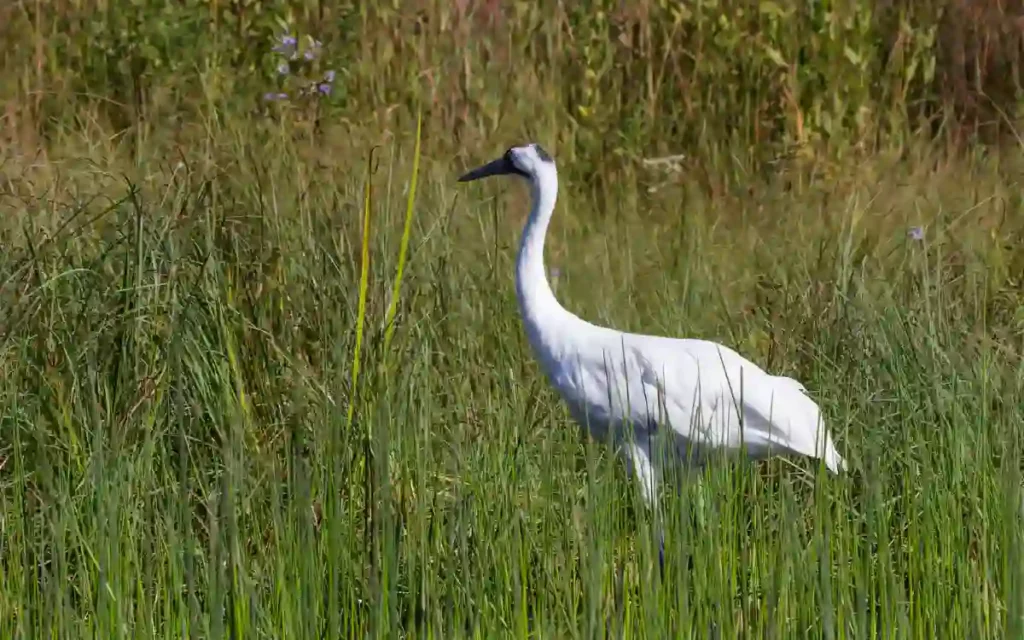
The whooping crane is another tall bird with long legs and a long neck, making it visually similar to an ostrich when standing upright. It can reach heights of around 5 feet and is one of the tallest birds in North America.
These cranes live in wetlands and open areas, feeding on small animals and plants. They are known for their elegant movements and seasonal migrations.
Key difference: Whooping cranes are skilled fliers and migrate long distances, while ostriches stay grounded and rely on running.
9. California Condor (Gymnogyps californianus):
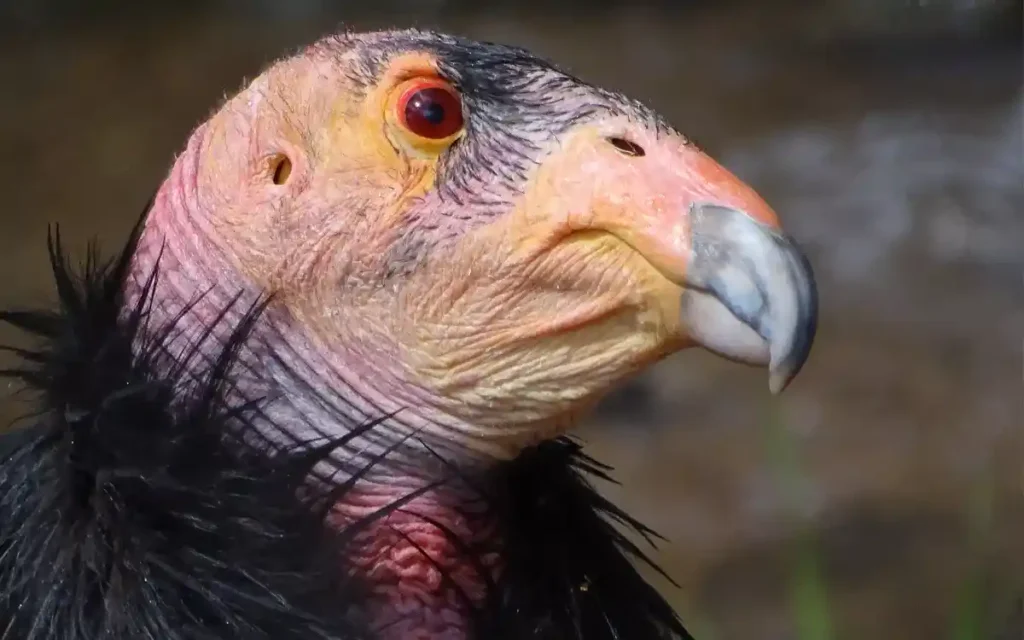
The California condor is one of the largest flying birds in the world, with a massive wingspan that gives it a powerful presence. While it doesn’t closely resemble an ostrich in shape, its size makes it worth comparing.
Condors are scavengers that soar for hours without flapping their wings, using air currents to travel long distances. They have bald heads and dark feathers, which are very different from the ostrich’s appearance.
Key difference: Condors are built for flight and soaring, while ostriches are built for running and speed.
10.Kori Bustard (Ardeotis kori):
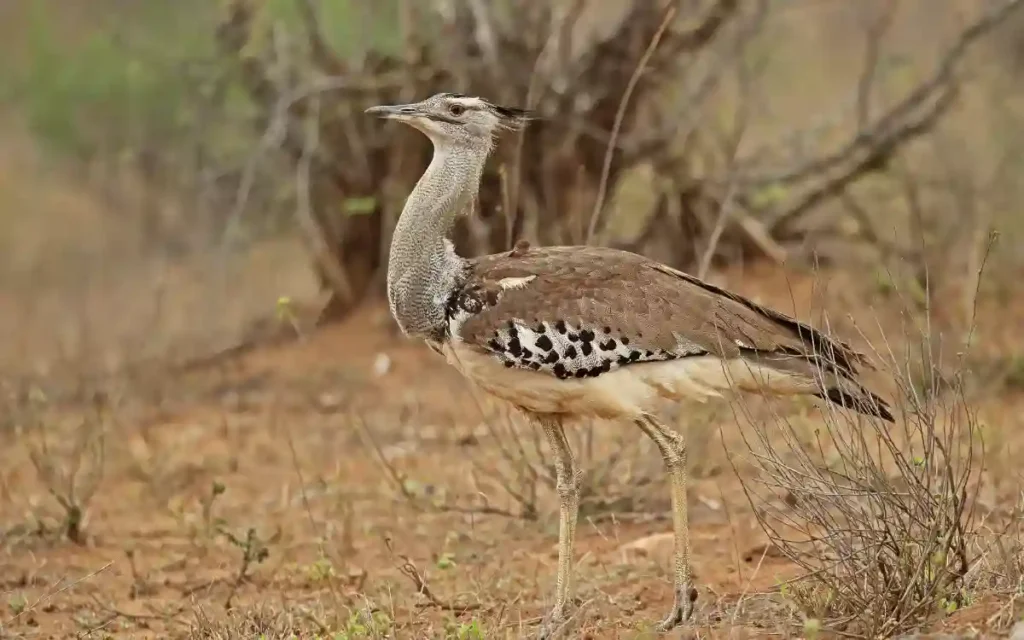
The Kori bustard is often considered the closest flying bird to an ostrich in terms of body structure. It has a heavy body, long legs, and spends much of its time walking on the ground rather than flying.
Found in African grasslands, the Kori bustard feeds on insects, small animals, and plants. Despite its size, it can fly, although it prefers to stay on land unless necessary.
Key difference: The Kori bustard can fly, while the ostrich cannot but both share a similar ground-based lifestyle.
FAQs
What bird looks most like an ostrich?
The emu is the bird that looks most like an ostrich. It shares a similar body shape, long legs, long neck, and flightless nature. Both are built for running and live in open environments, making them very close in appearance and behavior.
What are birds similar to ostriches called?
Birds similar to ostriches are known as ratites, a group of large, flightless birds. This group includes emus, cassowaries, rheas, and kiwis. They share features like strong legs, flat breastbones, and an inability to fly.
Are emus and ostriches related?
Yes, emus and ostriches are related. They both belong to the ratite group, which includes several flightless birds that evolved to live on land rather than fly. While they live on different continents, they share many physical and behavioral traits.
What is the closest living relative to the ostrich?
The emu is considered the closest living relative in terms of appearance and behavior. However, cassowaries and rheas are also closely related and share a similar evolutionary background.
Which bird is the largest flying bird similar to an ostrich?
The Kori bustard is the largest flying bird that resembles an ostrich. It has long legs, a heavy body, and spends most of its time on the ground, although it can fly when needed.
Is there a smaller version of an ostrich?
Yes, the rhea is often called a smaller version of an ostrich. It has a similar body structure but is shorter, lighter, and more social compared to the larger and more solitary ostrich.
Are there ostrich-like birds in India?
India does not have true ostrich-like ratites in the wild. However, birds like flamingos, cranes, and storks share some features such as long legs and long necks, which can make them appear similar at a glance.
Why can’t ostriches and similar birds fly?
Ostriches and other ratites cannot fly because they lack the strong chest muscles and bone structure needed for flight. Instead, they evolved powerful legs that allow them to run fast and survive on land.
What is the difference between an ostrich and a cassowary?
Both are large and flightless, but cassowaries live in forests and are more aggressive, while ostriches live in open plains and rely on speed to escape danger. Cassowaries also have a distinctive casque on their head.
What bird is similar to an ostrich but can fly?
The Kori bustard is the best example. It shares a similar body shape and ground behavior but can still fly, unlike the ostrich.