Blue Jays and Northern Cardinals are easy to tell apart once you know the basics: Blue Jays are larger, blue, loud, and bold, while Cardinals are bright red, calmer, and more focused on seeds.
These two birds often show up in the same backyards, which is why people mix them up so often. At a glance, they both have crests and strong beaks but their color, behavior, and even personality are completely different.
If you’ve ever wondered which one you’re seeing, or why one bird dominates your feeder while the other stays hidden, this guide breaks it down in a simple way. You’ll learn how to identify each bird instantly, understand their habits, and know exactly what to expect when they visit your yard.
Blue Jay vs Cardinal: Quick Differences at a Glance
If you want a fast answer before going deeper, here’s the simplest way to tell them apart:
| Feature | Blue Jay | Northern Cardinal |
| Color | Blue, black, white | Bright red (male), brown-red (female) |
| Size | Larger (9–12 in) | Slightly smaller (8–9 in) |
| Personality | Loud, bold, aggressive | Calm, territorial |
| Crest | Tall and expressive | Short and rounded |
| Beak | Strong, straight | Thick, cone-shaped (orange) |
| Sound | Harsh calls, mimicry | Clear, whistling song |
For another side-by-side comparison, see our guide on Blue Jay vs Bluebird.
Physical Differences: How to Identify Them Instantly
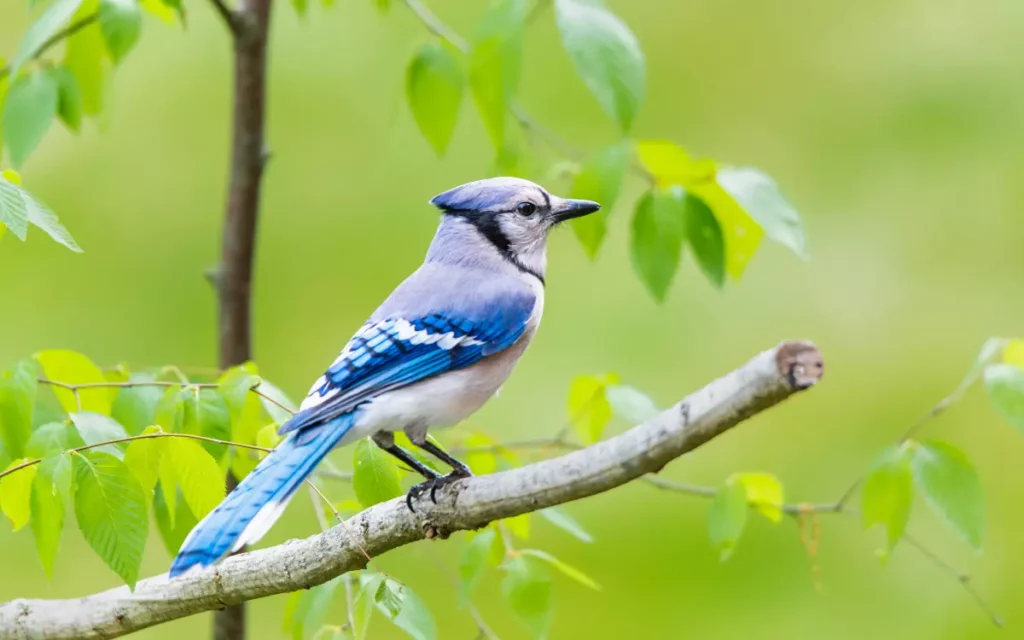
Blue Jays have a sharper, more striking look. Their bright blue feathers are mixed with white and black markings, and the black band across the chest stands out clearly. The crest on their head is tall and expressive, often raised when the bird feels alert or curious. They also appear slightly larger and more confident in their posture.
Cardinals, on the other hand, look softer and more rounded. Male Cardinals are a solid red with a black mask around the face and a bright orange beak that’s easy to notice even from a distance. Females are more subtle, with warm brown tones and touches of red on the wings and tail. Their crest is still visible but shorter and less sharp compared to a Blue Jay.
Read also:- Blue Jay Spiritual Meaning: Symbolism and Love Revealed
Habitat and Where You’ll See Them

Blue Jays are comfortable in open spaces with tall trees. You’ll often notice them in forest edges or suburban areas where mature trees are present. They don’t mind being seen and are usually quite active in visible spots.
Cardinals prefer staying closer to cover. They spend more time in dense shrubs, hedges, and low tree branches, which helps them stay protected. If your yard has thick greenery, there’s a good chance Cardinals are nearby, even if you don’t always spot them immediately.
Diet and Feeding Habits
Blue Jays have a varied diet and are known for taking advantage of whatever food is available. They eat nuts like acorns and peanuts, along with seeds, corn, and insects. In some cases, they may even eat eggs or small nestlings. One interesting trait is their habit of storing food for later use, especially during colder months.
Cardinals keep things simpler. Their diet mainly consists of seeds, particularly sunflower and safflower, along with fruits and occasional insects. Their thick beak is designed for cracking seeds, which is why they are such regular visitors at backyard feeders.
If you’re interested in other feeder-friendly species, see our article on Birds That Drink Nectar from Hummingbird Feeders.
Behavior and Personality Differences
This is where the real contrast shows up. Blue Jays are loud, active, and often take control of the space around them. They’re not afraid to chase other birds away and can be quite dominant at feeders. Their presence is usually obvious because of the noise and movement they create.
Cardinals bring a completely different feel. They are quieter and more relaxed, often seen in pairs rather than groups. Instead of competing aggressively, they tend to stay within their territory and avoid unnecessary conflict. Their behavior feels more calm and steady.
For a closer look at mimicry in action, compare Blue Jays vs Mockingbirds.
Sounds and Calls
Blue Jays are known for their loud and varied calls. Their most common sound is a sharp “jay-jay,” but they can also mimic other birds, including hawks. This ability sometimes helps them scare away smaller birds.
Cardinals are much more pleasant to listen to. Their song is made up of clear, whistling notes that are easy to recognize. Males sing more often, especially during the breeding season, and their calls add a peaceful sound to any backyard.
For species that commonly use birdhouses, check out our guide on Attract Nesting Birds.
Nesting and Breeding Habits
Blue Jays build their nests high up in trees, usually where branches provide strong support and some cover. Both the male and female take part in gathering materials like twigs, grass, and bark. The female lays around three to six eggs, and both parents stay involved in feeding and protecting the chicks. Blue Jays are especially defensive during this time and will not hesitate to chase away anything that gets too close.
Cardinals choose a very different nesting style. They prefer lower spots such as shrubs or small trees, which keep them hidden. The female handles most of the nest building, carefully shaping it with grass and leaves. One interesting behavior is that the male often feeds the female while she incubates the eggs. Cardinals can raise multiple broods in a single year, which makes them more active during breeding season.
If you want to see both species together, they are common among Backyard Birds in Texas.
Aggression and Territory
The difference in temperament becomes very clear when you watch these birds around food or nesting areas. Blue Jays tend to take control of their surroundings. They are bold, quick to react, and often chase other birds away from feeders. Their loud calls also act as warnings, making them a dominant presence in any backyard.
Cardinals are still territorial, but they handle it in a quieter way. Males defend their space mainly by singing and chasing away rivals when needed, rather than creating constant noise. You might notice a Cardinal reacting strongly to its reflection, thinking it’s another bird entering its territory. Compared to Blue Jays, their behavior feels more controlled and less chaotic.
Which Bird Will You See More in Your Backyard?
Both birds can visit the same yard, but what you see more often depends on your environment. If your space has tall trees and open areas, Blue Jays are more likely to show up and stay active. They enjoy visibility and don’t shy away from movement.
If your yard has dense shrubs, hedges, or layered greenery, Cardinals will feel more comfortable. They prefer staying close to cover and tend to move quietly between branches. Even when they are nearby, they may not always be easy to spot.
A balanced setup with both trees and shrubs, along with a mix of peanuts and sunflower seeds, gives you the best chance of attracting both birds regularly.
FAQs
What is the easiest way to tell a Blue Jay from a Cardinal?
The simplest way is by color. Blue Jays are blue with black and white markings, while Cardinals are red or brownish-red with an orange beak.
Do Blue Jays and Cardinals get along?
They can share the same space, but Blue Jays are more dominant and may push Cardinals away from feeders at times.
Which bird is more aggressive?
Blue Jays are generally more aggressive and louder, especially when defending food or territory.
Are Cardinals friendly birds?
Cardinals are not aggressive, but they are territorial. They usually avoid conflict unless another bird enters their space.
Why do Cardinals stay in one area all year?
Cardinals do not migrate, so they remain in the same region throughout the year, which is why they are consistent backyard visitors.