Blue Jays and Scrub Jays may share a name, but they live in different parts of North America and have very different personalities. Blue Jays are bold, loud, and social, while Scrub Jays are quieter, curious, and often more solitary. If you know what to look for, it’s easy to tell them apart.
Quick Comparison Table
| Feature | Blue Jay | Scrub Jay |
| Scientific Name | Cyanocitta cristata | Aphelocoma californica |
| Habitat | Forests, suburbs, and parks | Scrublands, oak woodlands, deserts |
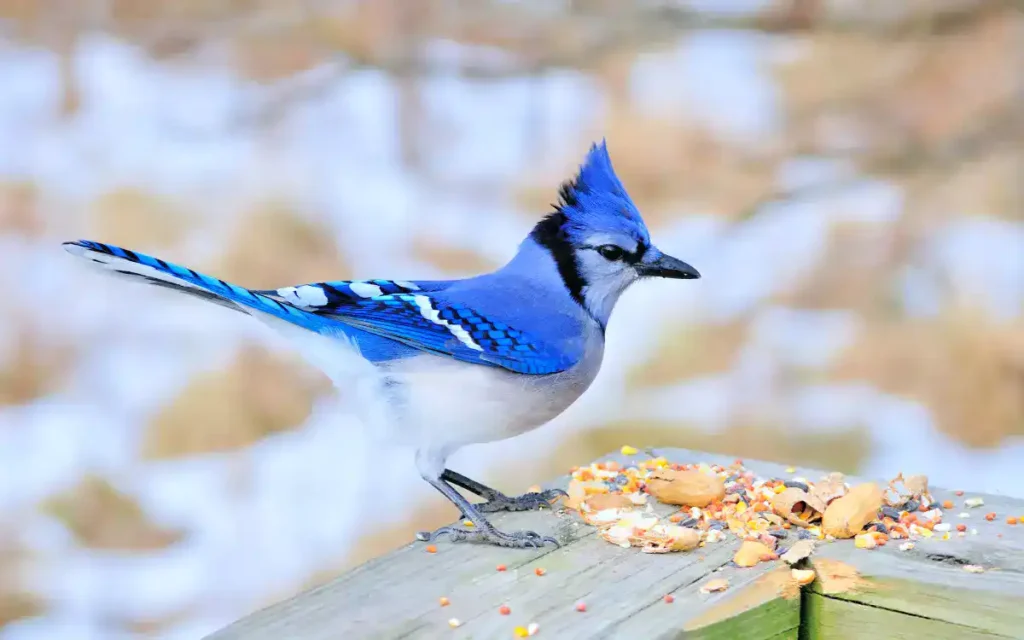
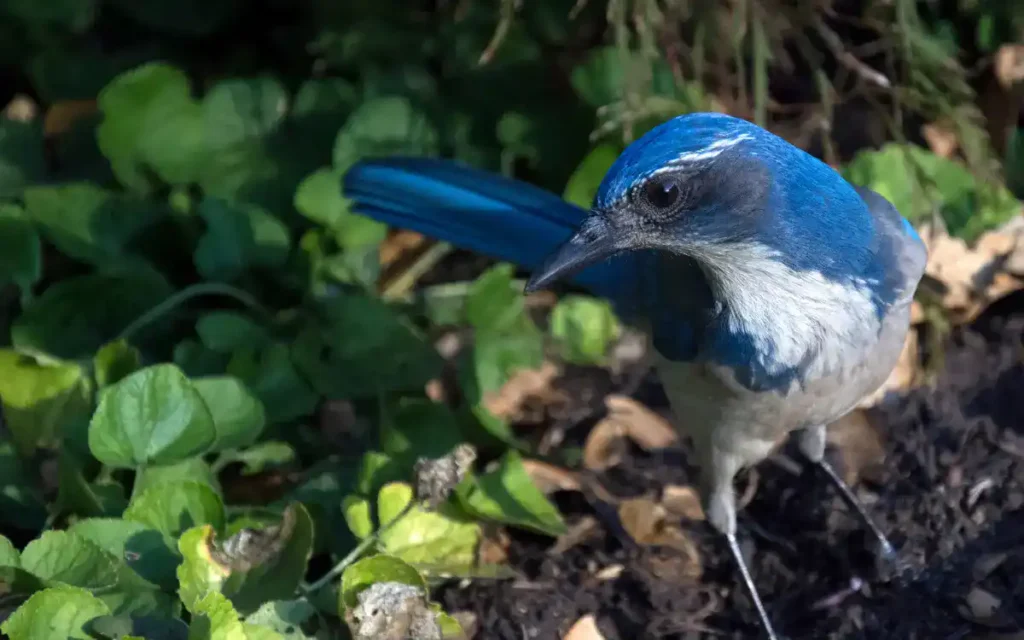
| Appearance | Blue with white chest, black crest | Blue with gray-brown chest, no crest |
| Size | 9–12 inches | 10–11 inches |
| Diet | Nuts, seeds, insects, small animals | Nuts, seeds, fruits, insects |
| Range | Eastern & Central North America | Western North America |
| Behavior | Bold, loud, social | Curious, territorial, adaptable |
| Lifespan | ~7 years | ~9 years |
Blue Jays
Blue jay sound
Blue Jays are among the most recognizable birds of the eastern and central United States. Their vivid blue plumage, black necklace, and raised crest make them stand out immediately. They typically measure between 9 and 12 inches in length, and their shimmering blue feathers are not a pigment at all, but the result of light refraction on feather structures.
Highly adaptable, Blue Jays thrive in forests, parks, and even suburban neighborhoods, especially where oak trees are present. They are opportunistic feeders, eating acorns, seeds, insects, and even small animals. Their intelligence is reflected in their ability to mimic hawks and other birds, which they sometimes use to scatter rivals at feeders.For a more detailed look at their behavior and symbolism, see our full Blue Jay Guide.
Scrub Jay
Scrub jay sound
Scrub Jays are the western counterpart to the Blue Jay. Instead of the dramatic crest and necklace, they have a more understated look: blue wings and back with gray-brown underparts. They are similar in size, usually around 10 to 11 inches long, but their coloring blends into the arid scrublands and oak woodlands where they live.
These jays are problem-solvers. They are known for remembering hundreds of food storage spots and for adapting quickly to new challenges. Unlike the highly social Blue Jay, Scrub Jays are more territorial and are often seen alone or in pairs rather than in large flocks. Their curiosity sometimes leads them to interact boldly with humans, though they are generally more cautious than their eastern relatives.
You can see how they fit in with other jay species in our guide to Types of Jays.
Key Differences
The most obvious difference between the two is appearance. Blue Jays have a crest and striking black and white markings against their blue feathers, while Scrub Jays have no crest and a muted gray chest that suits their drier habitats.
Their ranges also set them apart. Blue Jays dominate the eastern half of North America, from southern Canada through much of the United States, while Scrub Jays are found in the western states, particularly in scrubland, oak woodlands, and semi-desert regions.
Behaviorally, Blue Jays are bold and noisy, often moving in flocks and mobbing predators. Scrub Jays are territorial but less aggressive, relying on sharp calls and vigilance to protect their space. Both species cache food, a trait that makes them essential for spreading seeds and regenerating forests and scrublands.
Lifespan and Predators
Blue Jays typically live about seven years in the wild, while Scrub Jays average closer to nine. Hawks, owls, and snakes are common predators for both species. Blue Jays often fight back in groups, raising alarms and chasing away intruders, while Scrub Jays prefer to stay hidden among shrubs when danger approaches.
Symbolism and Meaning
Blue Jays are often seen as symbols of intelligence, persistence, and communication, qualities that reflect their vocal nature and strong social bonds. To explore this more deeply, visit Blue Jay Symbolism.
Scrub Jays, with their sharp memory and curious behavior, are often linked to adaptability, awareness, and resilience. Their tendency to cache and retrieve food is seen as a sign of foresight and resourcefulness.
FAQs
Are Blue Jays and Scrub Jays related?
Yes. Both belong to the Corvid family, though they occupy different regions of North America.
Do they live in the same areas?
Rarely. Blue Jays dominate the East, while Scrub Jays are found in the West. Their ranges do not overlap significantly.
Which one is louder?
Blue Jays are far noisier, producing harsh calls and mimicking other birds. Scrub Jays are more limited in their vocal range but still use sharp calls to defend their territory.
Do both species hide food?
Yes. Both cache acorns and seeds, playing an important role in replanting trees and shrubs.
Which is more aggressive?
Blue Jays are bolder and more confrontational, while Scrub Jays tend to defend their space quietly and cautiously.
Conclusion
Though they share the “jay” name, Blue Jays and Scrub Jays are distinct in both looks and behavior. One thrives in eastern forests, the other in western scrublands. One is a noisy mimic with strong family ties, the other a sharp-eyed problem-solver with extraordinary memory.
If you found this comparison helpful, you might also enjoy: