Chickadees and nuthatches often show up in the same backyard, sometimes even visiting the same feeder just minutes apart. At first glance, they can feel almost identical small size, quick movements, and a love for seeds. That’s where most beginners get confused.
But once you notice how they move and behave, the difference becomes obvious. One hops around like it’s full of energy, while the other calmly walks down tree trunks sometimes upside down. This guide gives you a clear, no-confusion breakdown so you can identify each bird instantly.
Chickadee vs Nuthatch: Quick Comparison Table
| Feature | Chickadee | Nuthatch |
| Body Shape | Round and fluffy | Compact and streamlined |
| Movement | Hops between branches | Climbs tree trunks (up & down) |
| Beak | Short and stubby | Longer and pointed |
| Behavior | Curious and social | Calm and methodical |
| Feeding Style | Takes seed and leaves | Stores and cracks seeds |
| Sound | Loud “chick-a-dee” call | Soft nasal “yank” sound |
Quick takeaway: If the bird is climbing headfirst down a tree trunk, you’re looking at a nuthatch. If it’s bouncing around branches and calling loudly, it’s a chickadee.
What Is a Chickadee?

Call:-
Chickadees are easy to recognize once you know what to look for. They have a soft, rounded body that gives them a slightly puffed-up look, especially in colder weather.
- Black cap and black throat patch (bib)
- Bright white cheeks that stand out
- Gray wings and back with a lighter belly
- Small, short beak
Their overall look feels soft and friendly, which matches their behavior.
Behavior and Personality
Chickadees are one of the most approachable backyard birds. They don’t stay still for long and are constantly moving.
- Frequently hop from branch to branch
- Often the first bird to check out feeders
- Known for being bold and curious around humans
- Travel in small flocks, especially in winter
They also have strong memory skills and can remember food locations for a long time.
Meet the Nuthatches
Call:-
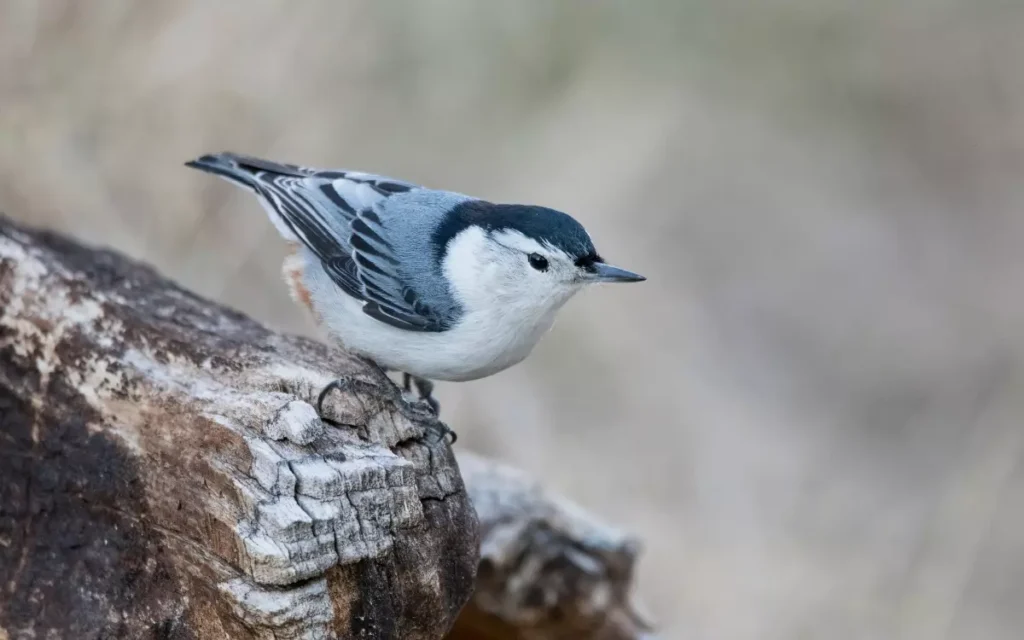
Nuthatches look a bit more structured compared to chickadees. Their body is compact, and their longer bill makes them look more purposeful.
- Blue-gray back with a pale underside
- Longer, sharper beak
- Short tail compared to body
- Strong legs and feet for gripping bark
They don’t have the same fluffy look—more sleek and balanced.
Unique Tree-Climbing Behavior
This is where nuthatches stand out instantly.
- Move headfirst down tree trunks
- Grip bark easily with strong claws
- Search for insects hidden in tree crevices
- Often spiral around trunks while feeding
This upside-down movement is the fastest way to identify a nuthatch in real life.
Key Differences Between Chickadees and Nuthatches
Movement Style (The Biggest Clue)
If you remember just one thing, make it this.
- Chickadees move in short hops between twigs and branches
- Nuthatches walk along tree trunks and can move both up and down, even upside down
You’ll almost never see a chickadee climbing a trunk the way a nuthatch does.
Feeding Habits
Both birds love seeds, but how they eat is completely different.
- Chickadees:
- Grab a seed and fly away quickly
- Eat in short bursts
- Visit feeders more frequently
- Nuthatches:
- Take seeds and jam them into bark
- Crack them open using their beak
- Often store food for later
This “store and crack” behavior is classic nuthatch behavior.
Sound and Calls
You’ll often hear a chickadee before you see it.
- Chickadees: Loud and clear
- Famous “chick-a-dee-dee-dee” call
- Very vocal throughout the day
- Nuthatches: Softer and more subtle
- Nasal “yank-yank” or “nyah” sounds
- Easy to miss if you’re not listening closely
Social Behavior
Their personalities feel very different when you watch them.
- Chickadees:
- Friendly and social
- Often move in small groups
- Mix easily with other birds
- Nuthatches:
- More independent
- Usually seen alone or in pairs
- Focused on feeding rather than interacting
How to Tell Them Apart in Your Backyard
Quick Identification Tips
- Bird hopping around branches → Chickadee
- Bird walking down a tree trunk → Nuthatch
- Loud, chatty bird → Chickadee
- Quiet bird working along bark → Nuthatch
If you spot a bird upside down, you don’t need to think twice—it’s a nuthatch.
Where to Look
- Chickadees:
- Shrubs, small branches, feeders
- Around patios and gardens
- Nuthatches:
- Tree trunks and thick branches
- Areas with mature trees
Which Bird Is More Common at Feeders?
Chickadees at Feeders
Chickadees are regular visitors and easy to attract.
- Love sunflower seeds
- Come and go quickly
- Visit multiple times a day
Nuthatches at Feeders
Nuthatches behave a bit differently.
- Stay longer at the feeder
- Carry seeds away instead of eating there
- Prefer feeders near trees
Habitat and Range Differences
| Aspect | Chickadee | Nuthatch |
| Preferred Habitat | Forest edges, suburbs, parks | Mature forests, wooded areas |
| Tree Dependence | Moderate | High |
| Adaptability | Very adaptable | Slightly more habitat-specific |
Similarities Between Chickadees and Nuthatches
Even with their differences, they share a lot.
- Both are small songbirds
- Both eat seeds and insects
- Both visit backyard feeders
- Often seen together in mixed flocks
Why They Are Often Seen Together
You’ll often notice these birds in the same area, especially in cooler months.
- They form mixed feeding flocks
- Help each other spot predators
- Increase survival by staying in groups
This is why you might see a chickadee first… and then a nuthatch appears nearby.
FAQs
What is the fastest way to tell a chickadee from a nuthatch?
Watch how it moves. Chickadees hop between branches, while nuthatches climb tree trunks—often upside down.
Do chickadees and nuthatches use the same feeders?
Yes, both are attracted to similar foods like sunflower seeds, but they behave differently when feeding.
Which bird is easier to spot for beginners?
Chickadees are easier because they are louder, more active, and less shy around people.
Do nuthatches always climb upside down?
Not always, but they are one of the few birds that can do it regularly, making it a key identification trait.
Are chickadees more social than nuthatches?
Yes, chickadees are generally more social and often travel in small groups.
Final Thoughts
Once you focus on movement and behavior, telling chickadees and nuthatches apart becomes simple. One is energetic and social, the other is calm and methodical. After a few observations, you’ll start recognizing them instantly without needing a guide.