When you see a group of waterfowl gliding across a pond, you might wonder: Is that a duck or a goose?
Though both belong to the waterfowl family (Anatidae), ducks and geese differ in size, shape, calls, and even behavior. Learning how to tell them apart not only makes birdwatching more fun, but also helps you understand their unique roles in wetland ecosystems.
Ducks
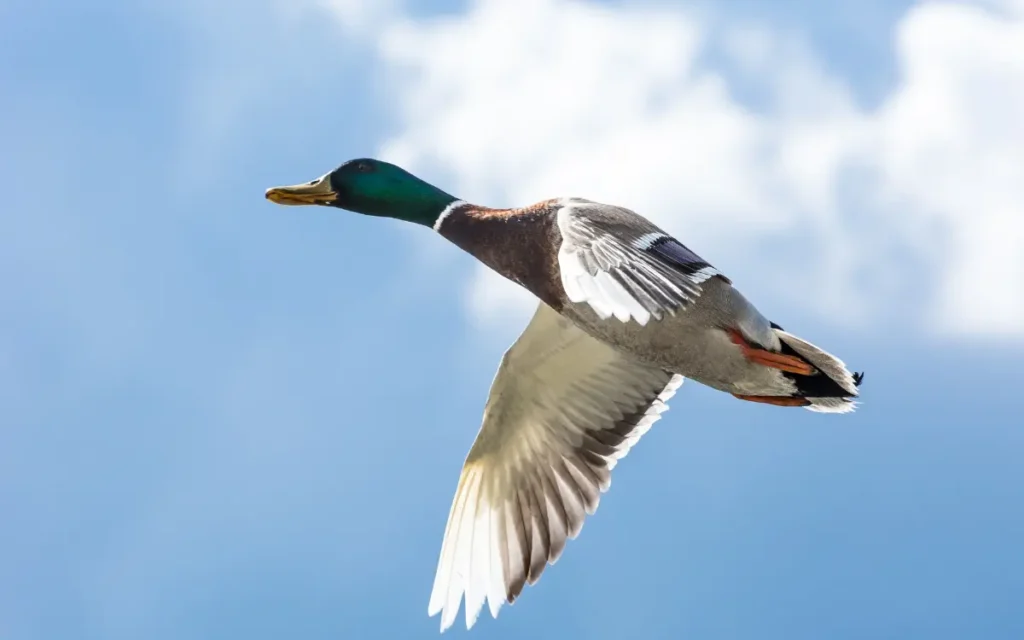
- Generally smaller and stockier
- Shorter necks and more compact bodies
- Bills are shorter, broader, often with brighter colors in males
- Many species show striking plumage differences between males and females (sexual dimorphism)
Geese
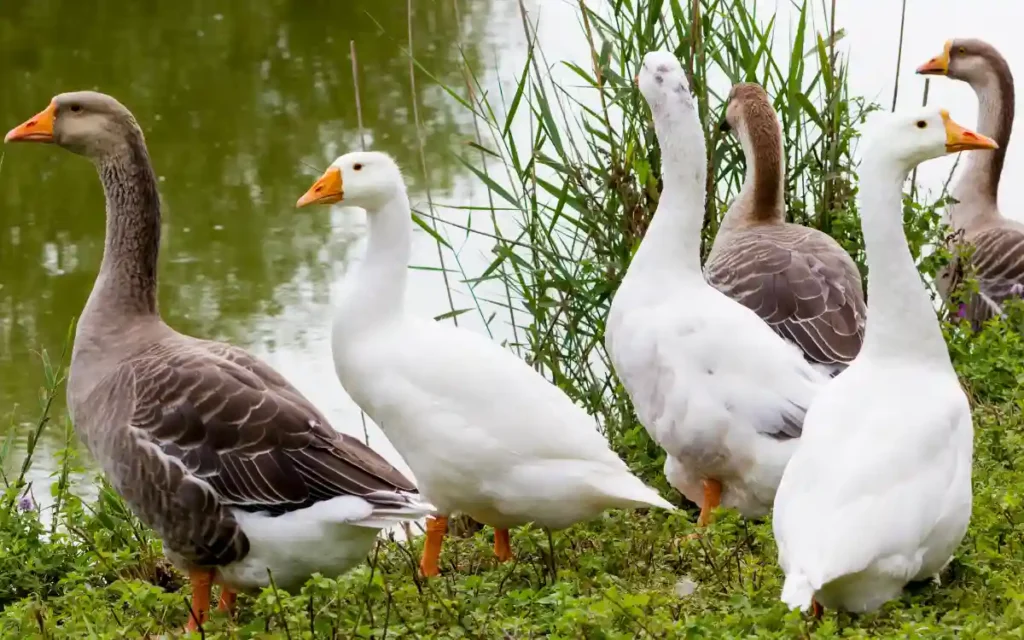
- Larger and longer-necked than ducks
- Bills are more tapered, adapted for grazing on grasses
- Plumage is usually more uniform between sexes (both look alike)
- Legs set farther forward, giving a more upright stance
Comparison Table
| Feature | Ducks | Geese |
| Average Size | 12–26 in (small-medium) | 20–45 in (large) |
| Neck Length | Short | Long |
| Bill Shape | Broad, flat, often colorful | Narrower, adapted for grazing |
| Sex Differences | Males often more colorful | Males & females look alike |
| Body Shape | Compact | Longer, heavier-bodied |
Calls and Vocalizations
- Ducks: Quacking, whistling, or squeaking depending on species (females often quack louder than males).
- Geese: Loud, honking calls often heard during migration, used for communication within flocks.
Behavior and Social Habits
Ducks
- Often found in smaller flocks or pairs
- More likely to dabble or dive for food in water
- Flexible diet: aquatic plants, insects, fish, seeds
Geese
- Known for large migratory flocks flying in V-shaped formations
- Spend more time grazing on land
- Strong family bonds; parents lead goslings for weeks after hatching
Habitat and Range
Ducks
- Found in a wide range of habitats: ponds, lakes, rivers, marshes, even city parks
- Many species are migratory, some year-round residents in mild climates
Geese
- Prefer open grassy areas near water
- Often migrate long distances between breeding and wintering grounds
- Common in wetlands, fields, and agricultural areas
Breeding and Nesting
- Ducks: Females usually handle incubation alone; nests near water in grasses or reeds
- Geese: Both parents often guard the nest; build on the ground near water or in open fields
- Goose families stay together much longer, while ducklings become independent sooner
Conservation and Human Interaction
- Ducks are heavily managed for hunting and habitat conservation programs
- Geese populations have grown in urban/suburban areas, sometimes causing conflicts (crop damage, park overgrazing)
- Both play key roles in wetland ecosystems as seed dispersers and insect controllers
Read also: Blue jay vs Cardinal: Key Difference
FAQs
How can I quickly tell a duck from a goose?
Look at size and neck length—geese are much larger with long necks, while ducks are smaller and shorter-necked.
Do ducks and geese ever live together?
Yes, they often share wetlands and ponds, though they may feed on different foods.
Which is noisier, ducks or geese?
Geese are louder, with honking calls heard over long distances. Ducks are quieter except for the familiar “quack.”
Do ducks and geese migrate?
Yes, both migrate, but geese usually travel in larger, more organized flocks.
Are ducks or geese more aggressive?
Geese are generally more territorial and protective, especially during nesting season.
Final Thoughts
Though ducks and geese are related waterfowl, their differences in size, shape, and behavior make them easy to distinguish once you know what to look for. Ducks bring color and variety to wetlands, while geese impress with their strong family bonds and migratory journeys. Both are fascinating to watch, whether in a backyard pond or during a seasonal migration.