21 Types of Wren Birds
Wrens may be tiny, but they’re full of personality and there are more than 80 species around the world. In this guide, we’ll look at 21 unique types of wrens, including their size, behavior, and where you’re most likely to see them. Whether you’re a backyard birder or just curious about these chirpy little birds, this list will help you spot and identify them with ease.
Wren Species in North America
01. Carolina Wren (Thryothorus ludovicianus)
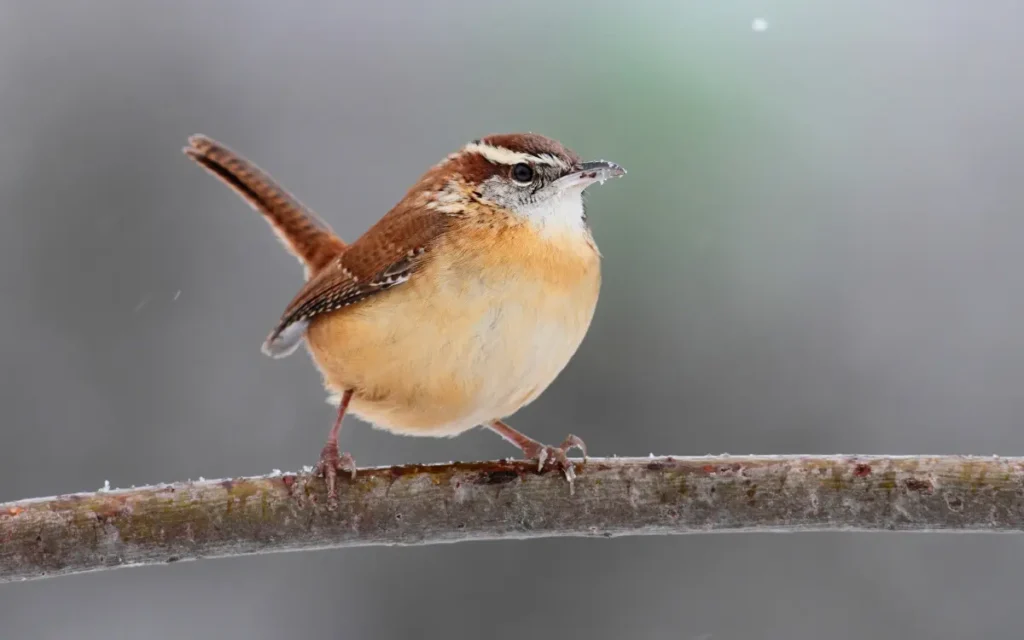
The Carolina Wren is a familiar face (and voice) throughout the southeastern United States. With its rich chestnut body, upturned tail, and bold white eyebrow stripe, it’s easy to spot if you’re paying attention — though you’ll often hear it before you see it.
These wrens are loud and proud, belting out a repeated “teakettle-teakettle” call that cuts through thick summer air. They mate for life, often sticking close to their territory year-round. Curious and opportunistic, they’ve been known to build nests in boots, hanging baskets, and even inside garages.
02. House Wren (Troglodytes aedon)
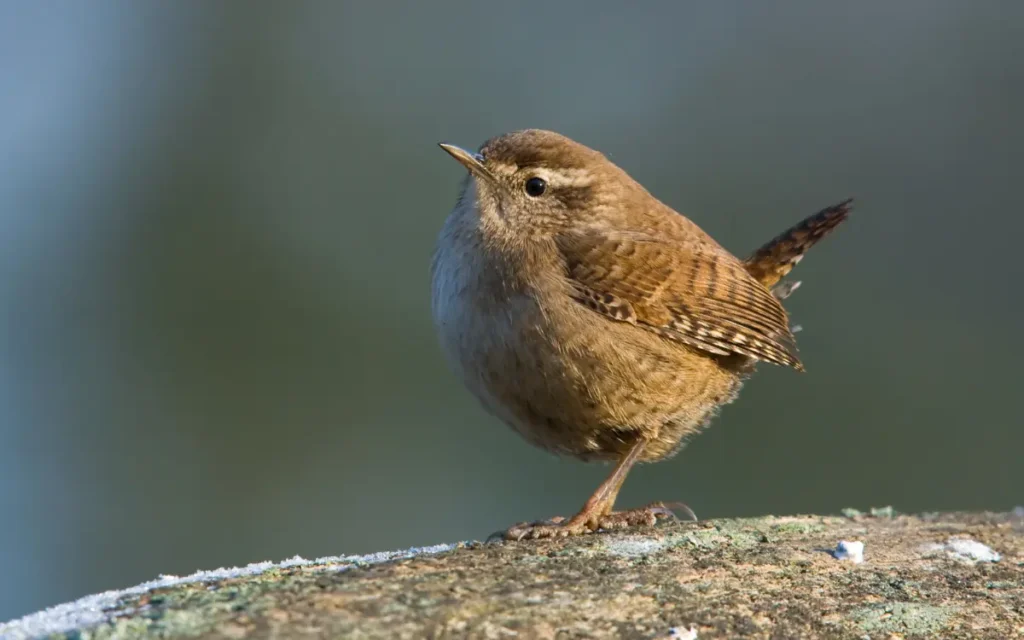
One of the most widespread wrens in the Western Hemisphere, the House Wren lives up to its name. It’s a cavity-nester and will happily take over a birdhouse, mailbox, or old woodpecker hole. Its bubbly, cheerful song is a welcome sign of spring across much of North America.
This small brown bird with a subtle eye-ring and finely barred tail is constantly on the move. Though not brightly colored, its personality makes up for it — especially during nesting season when males fiercely defend their territory, sometimes by removing eggs from nearby nests.
03. Cactus Wren (Campylorhynchus brunneicapillus)
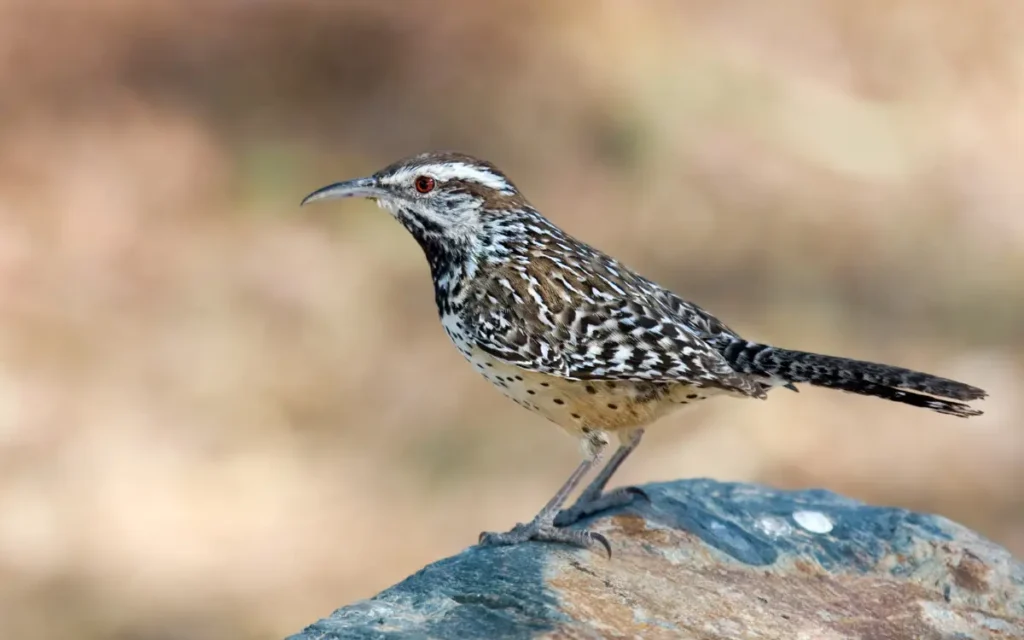
The largest wren in the U.S., the Cactus Wren thrives in hot, arid environments like the Sonoran Desert. Its bold white eyebrow, speckled chest, and raspy voice set it apart from the rest. Unlike most wrens, it doesn’t cock its tail up but lets it trail behind.
It’s the state bird of Arizona, often seen darting between cholla cactus and dry shrubs. They build football-shaped nests tucked between cactus spines — a smart way to protect against predators. Social and noisy, they’ll often call while perched atop saguaros.
04. Bewick’s Wren (Thryomanes bewickii)
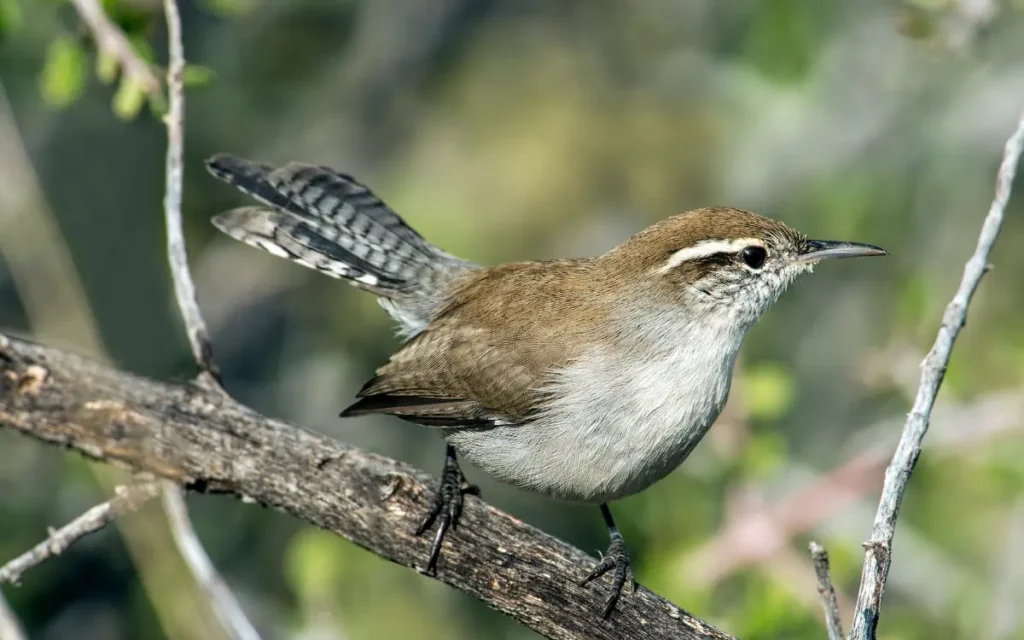
Bewick’s Wren is a western cousin to the House Wren but with a longer tail, sharper features, and more defined white eyebrow. It’s quick to wag its tail side-to-side while exploring brushy thickets, woodland edges, and even backyards.
Once common in the eastern U.S., it has mostly disappeared from that region, now favoring the Pacific coast and southwestern states. Its song is rich, varied, and often confused with other wrens. Males have large repertoires, sometimes with over 20 different variations.
05. Canyon Wren (Catherpes mexicanus)
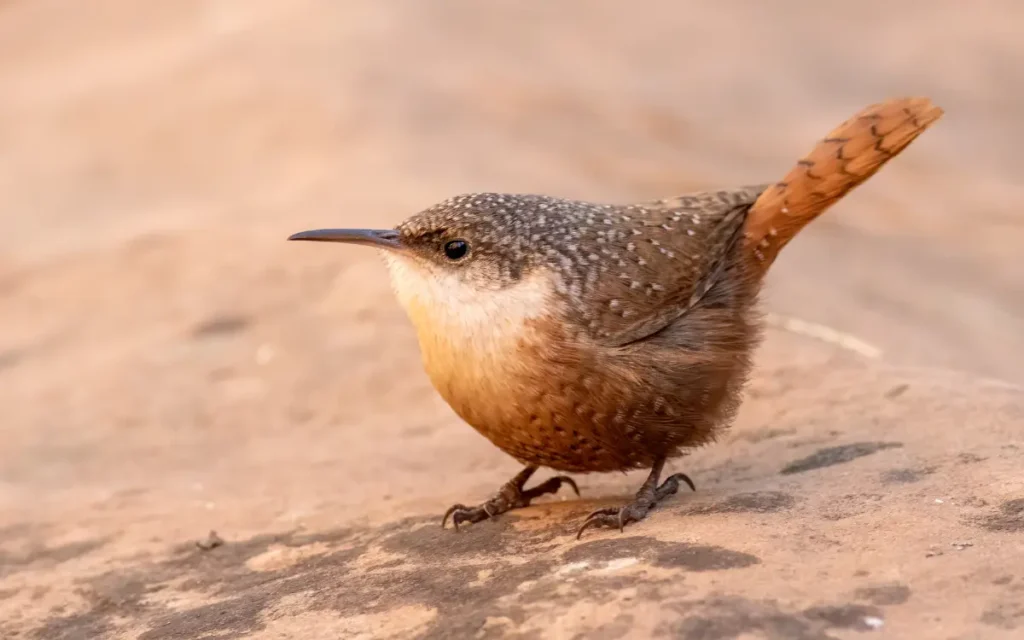
The Canyon Wren is rarely seen but easily recognized by its haunting, descending call that echoes through rocky canyons. With its rusty back, white throat, and short tail, this wren blends into the vertical cliff faces and boulder-strewn slopes it calls home.
It forages in crevices and sheer rock walls, using its slender bill to hunt for insects. Unlike many wrens, it prefers solitude and doesn’t frequent urban or suburban areas.
06. Marsh Wren (Cistothorus palustris)
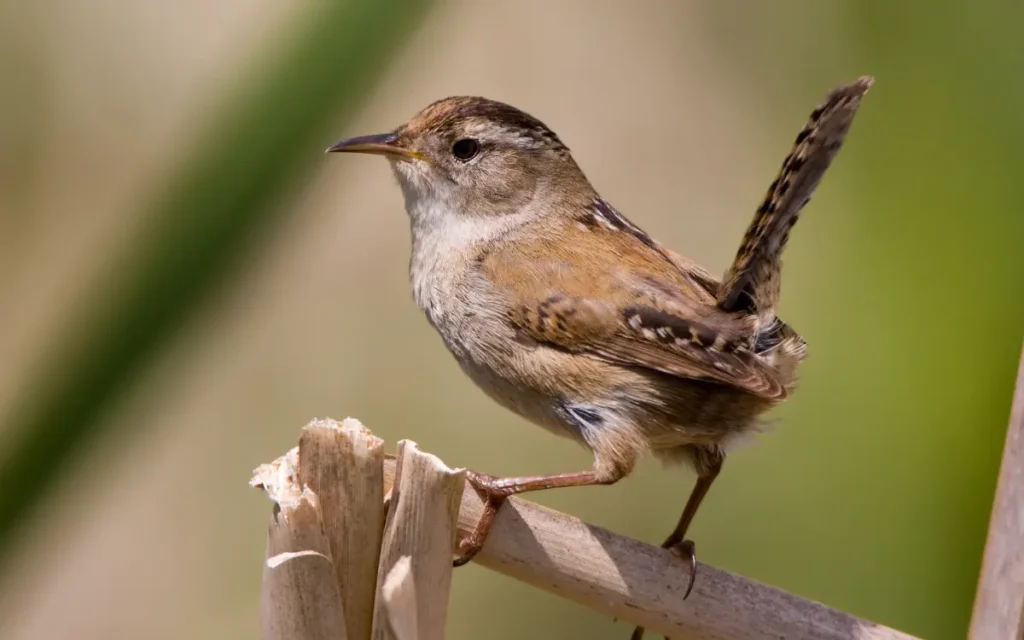
The Marsh Wren is a master of the reeds. These energetic little birds weave ball-shaped nests attached to cattails or sedges above water. Males often build several “dummy” nests to attract females or throw off predators.
Their song is rapid and mechanical, almost like a sewing machine. Marsh Wrens are fiercely territorial — males will even puncture eggs in rival nests. Despite their aggressiveness, they’re more often heard than seen, as they dart in and out of dense wetland vegetation.
Read also: 13 Types of Jays: Blue, Green, Gray & More Explained
07. Sedge Wren (Cistothorus stellaris)
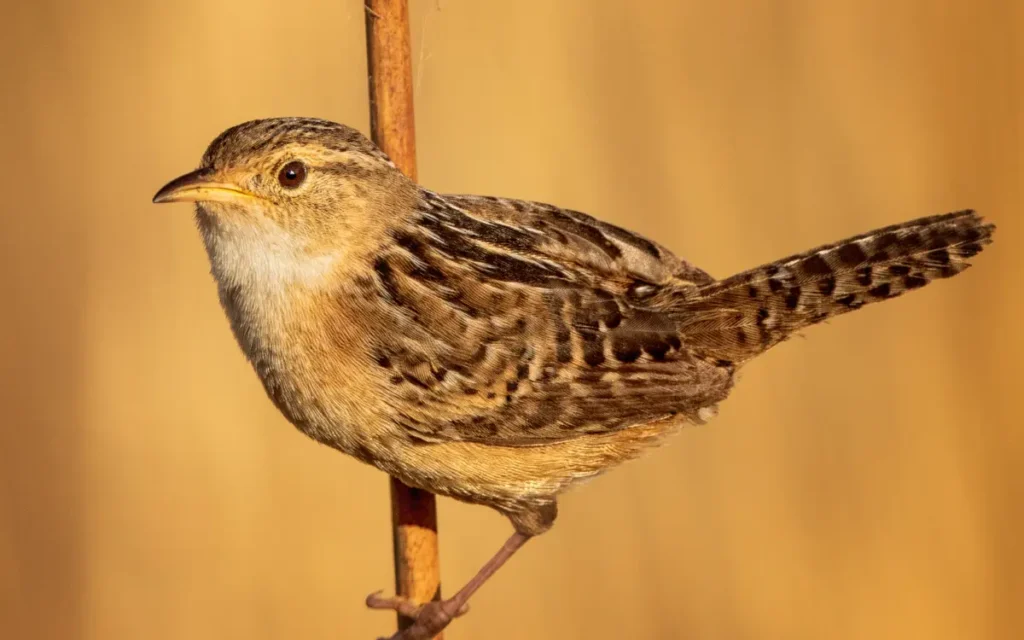
More secretive than its marsh-dwelling cousin, the Sedge Wren prefers damp meadows and grasslands. It’s a small, streaky brown bird with a faint eyebrow and a clipped, dry-sounding song.
This species is somewhat nomadic breeding in one location one year and abandoning it the next. It’s also one of the few wrens whose presence varies dramatically from season to season depending on habitat conditions.
Wrens of Central & South America
South and Central America are home to some of the world’s most fascinating wrens. These tropical species often live in dense forests and are harder to spot — but their songs and behaviors are unforgettable.
08. Song Wren (Cyphorhinus phaeocephalus)
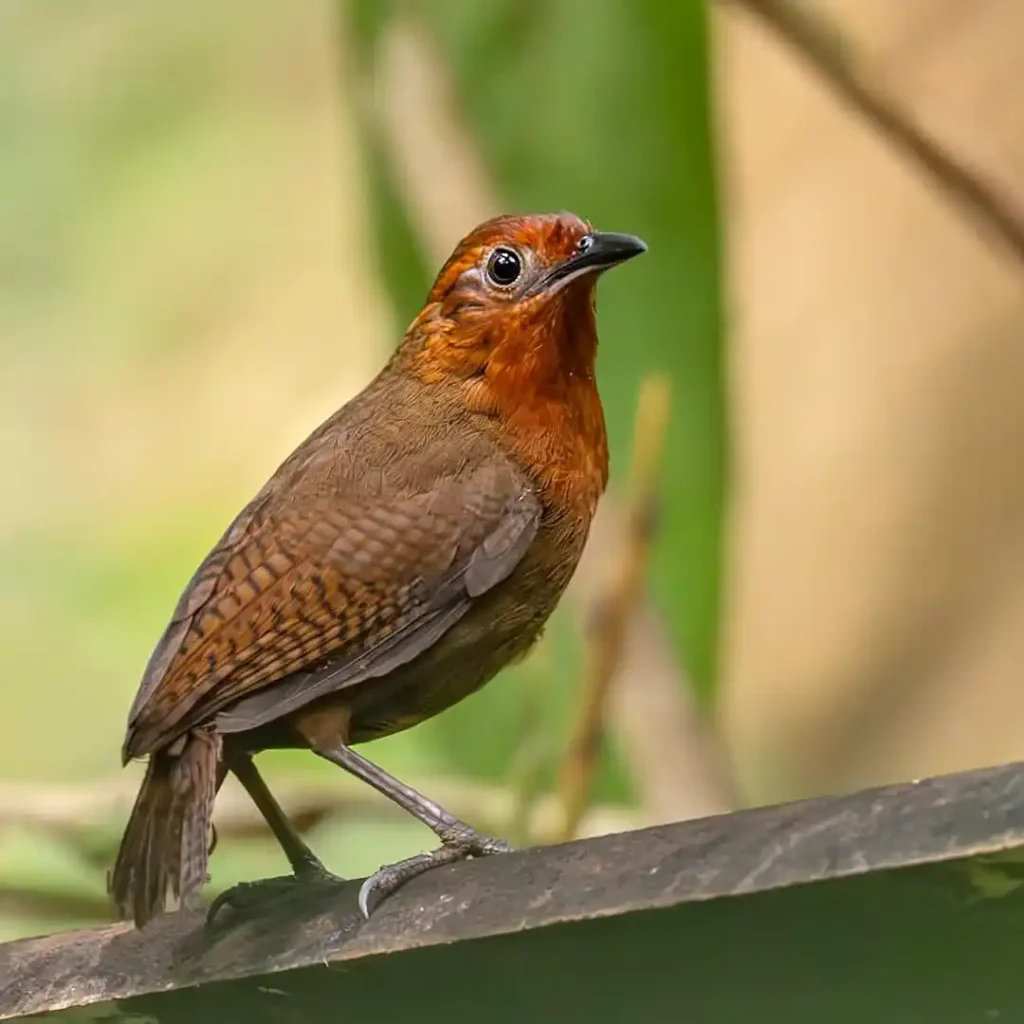
Shy and secretive, the Song Wren lives in the dense lowland rainforests of Central and South America. Its plumage is dark and fairly plain, but its call is anything but a haunting, flute-like melody that floats through the jungle understory.
They forage in pairs or family groups, quietly hopping through leaf litter in search of insects and spiders. Their beautiful songs make them a favorite among birders, even if the birds themselves stay hidden.
09. Musician Wren (Cyphorhinus arada)
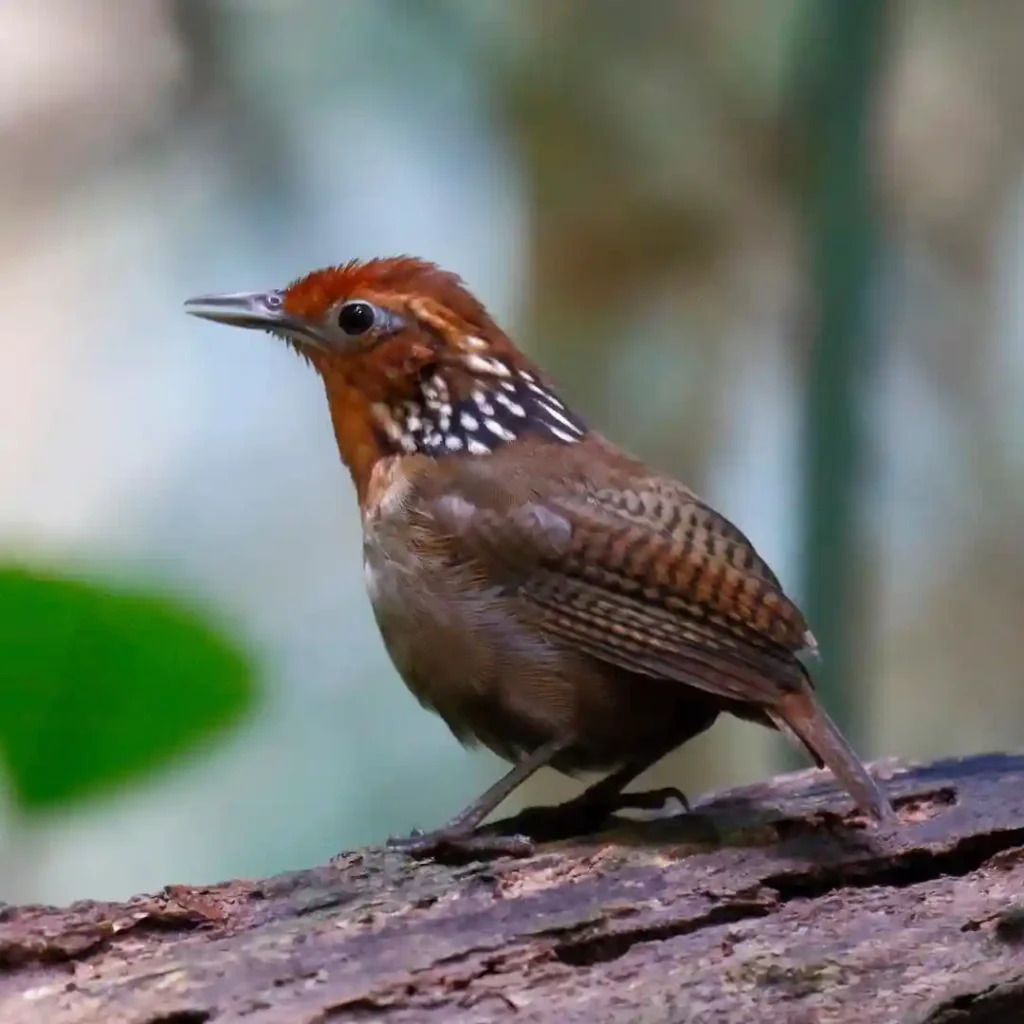
Possibly the most legendary of all wrens, the Musician Wren is revered in folklore and admired by musicians. Its song is slow, pure, and flute-like so melodic that locals once believed it brought good luck.
The bird lives deep in the Amazon rainforest and is rarely seen. Despite its low-profile appearance brown plumage with black barring it stands out thanks to its vocal beauty.
Read also: 30 Types of Warbler Birds: ID Guide
10. Thrush like Wren (Campylorhynchus turdinus)

As the name suggests, this is a larger wren that resembles a small thrush in size and stance. It’s gregarious, social, and frequently travels in mixed flocks, especially in the open woodlands and savannas of South America.
Its song is harsh and varied not musical like the Musician Wren, but excellent for communication across groups. Thrush-like Wrens are bold, often vocalizing loudly and perching in open areas.
11. Rufous Wren (Cinnycerthia unirufa)
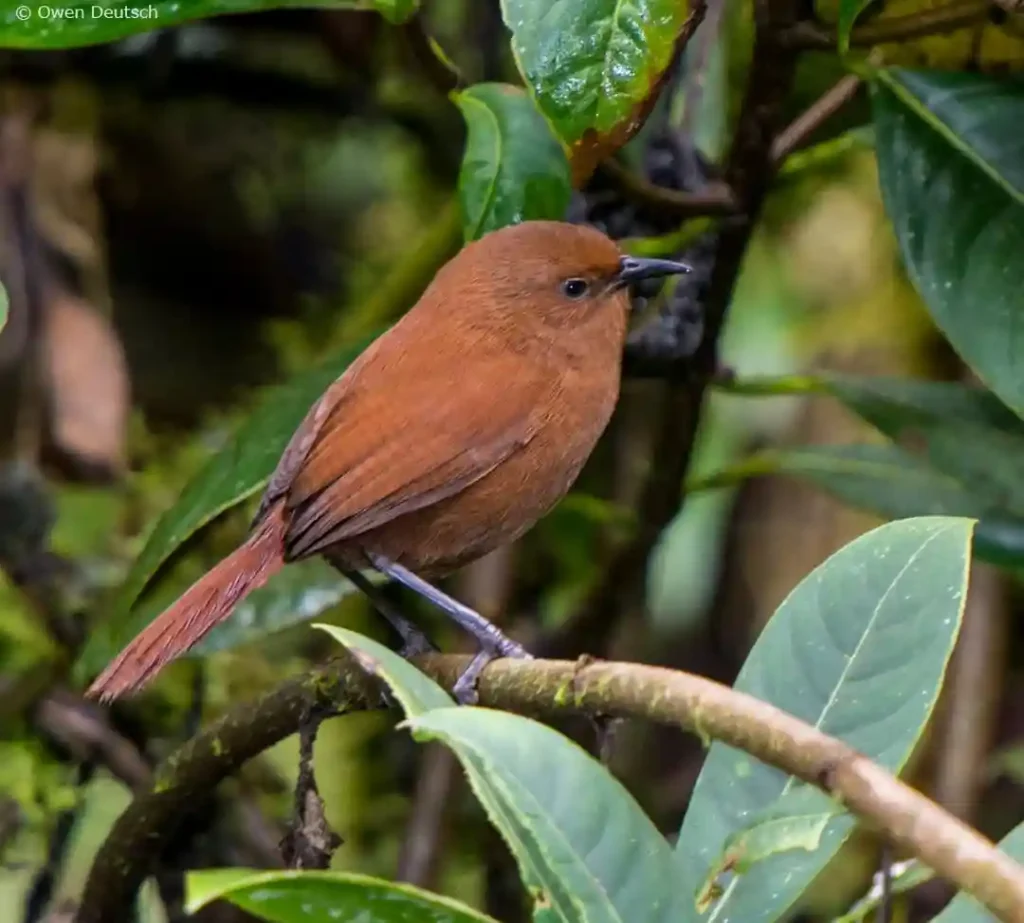
Found in the cool, misty cloud forests of the Andes, the Rufous Wren has reddish-brown plumage and a short tail, giving it a compact look. It’s typically seen in pairs or small groups moving low through the vegetation.
These wrens have a soft, varied song and are often overlooked due to their preference for thick cover. They play a vital role in Andean biodiversity, especially in mossy forest ecosystems.
12. Fulvous Wren (Cinnycerthia fulva)
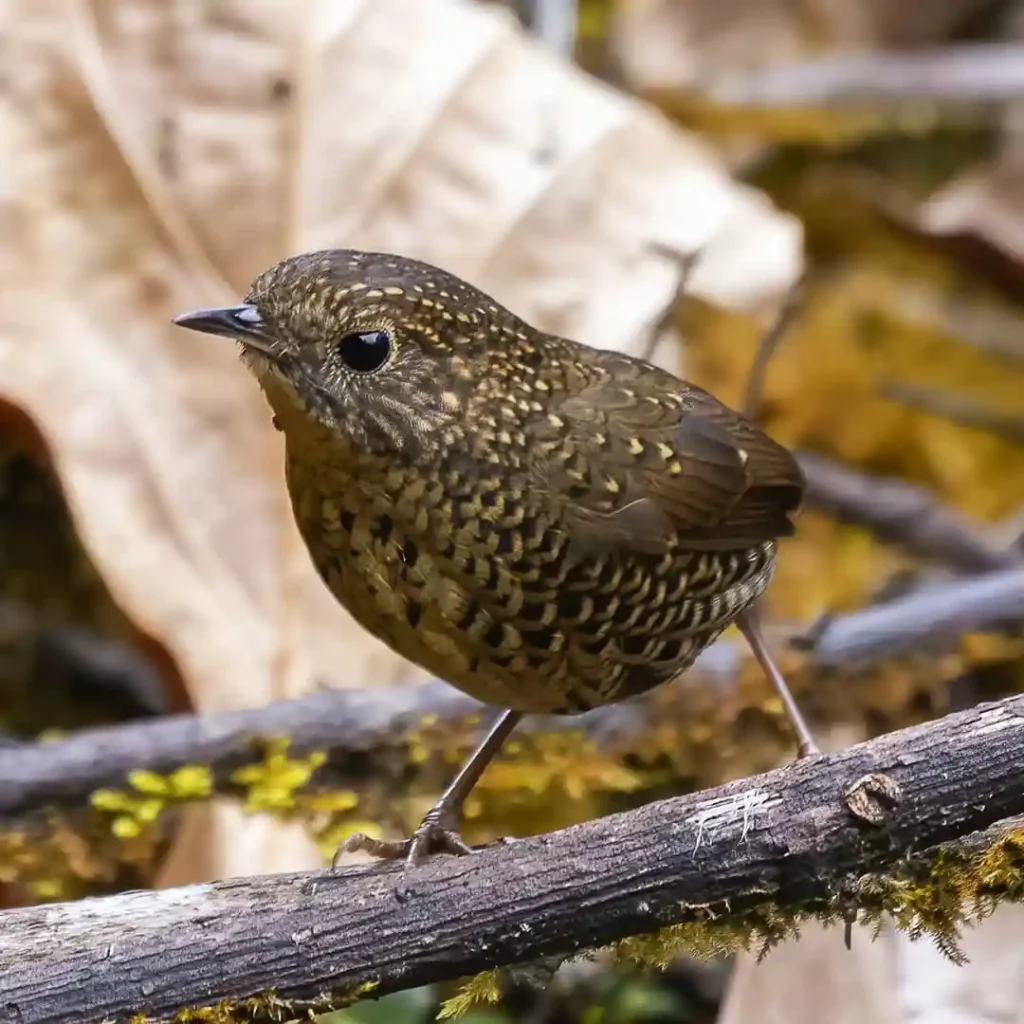
Similar to the Rufous Wren, the Fulvous Wren is a highland specialist. It is even more elusive and occupies montane forests that are often shrouded in cloud and fog.
Its song is gentle and fluting, but like many forest wrens, it is rarely seen unless you’re actively listening for it. It forages in low shrubs and often travels in pairs.
13. Northern Nightingale-Wren (Microcerculus philomela) & Southern Nightingale-Wren (Microcerculus marginatus)
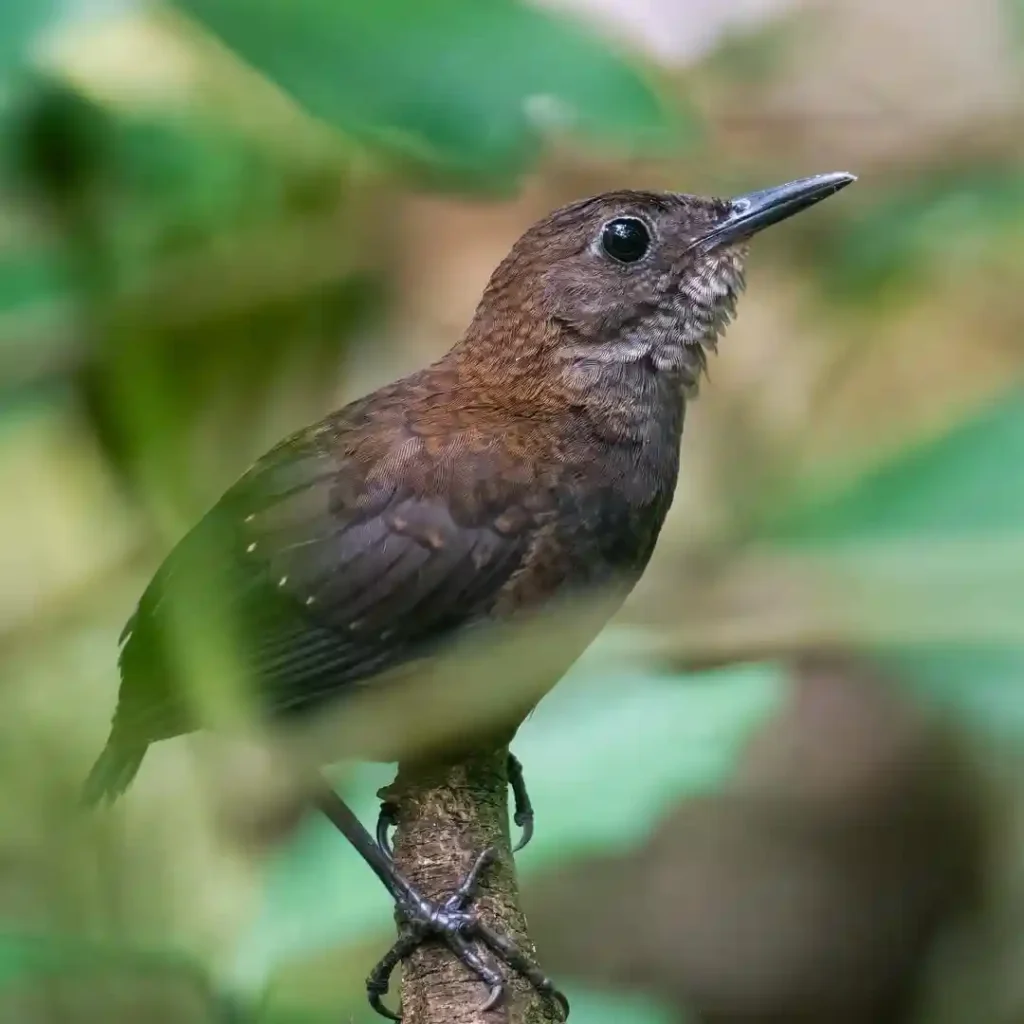
These two closely related species live in dark, humid rainforests. Their plumage is plain — mostly brown and compact but their voices are rich, eerie, and far-carrying.
They prefer dense leaf litter and thickets and are rarely seen in the open. Their songs are more likely to be heard in the early morning or during light rainfall when the forest quiets down.
Wren Genera Comparison Table
| Genus | Representative Species | Region | Notable Traits |
| Thryothorus | Carolina Wren | Southeastern U.S. | Loud song, common in backyards |
| Campylorhynchus | Cactus Wren, Bicolored Wren | U.S. Southwest, Central America | Large body, harsh call, builds large communal nests |
| Cistothorus | Marsh Wren, Sedge Wren, Apolinar’s Wren | North & South America | Lives in wetlands and grasslands, dome-shaped nests |
| Henicorhina | Grey-breasted & White-breasted Wood Wren | Central & South America | Forest specialists, complex trills, highly territorial |
| Cyphorhinus | Musician Wren, Song Wren | Amazon Basin, lowland rainforests | Melodious calls, often elusive, culturally significant |
| Microcerculus | Nightingale-Wrens | Tropical rainforests | Small, elusive, haunting vocalizations |
| Cinnycerthia | Rufous & Fulvous Wrens | Andes Mountains | High elevation, earthy tones, fluty calls |
| Odontorchilus | Grey-mantled Wren | Upper forest canopy, South America | Unique among wrens: prefers treetops instead of underbrush |
Lesser-Known or Endemic Wren Species
Some wrens live far from the spotlight — found only in small pockets of habitat, these rare or localized species are often overlooked. Yet, they’re essential to the ecosystems they inhabit and are fascinating in their own right.
Below are wrens that are endemic, range-restricted, or simply less familiar to most birders.
Read also: 20 Types of Blue Birds That Every Bird Lover Needs to Know
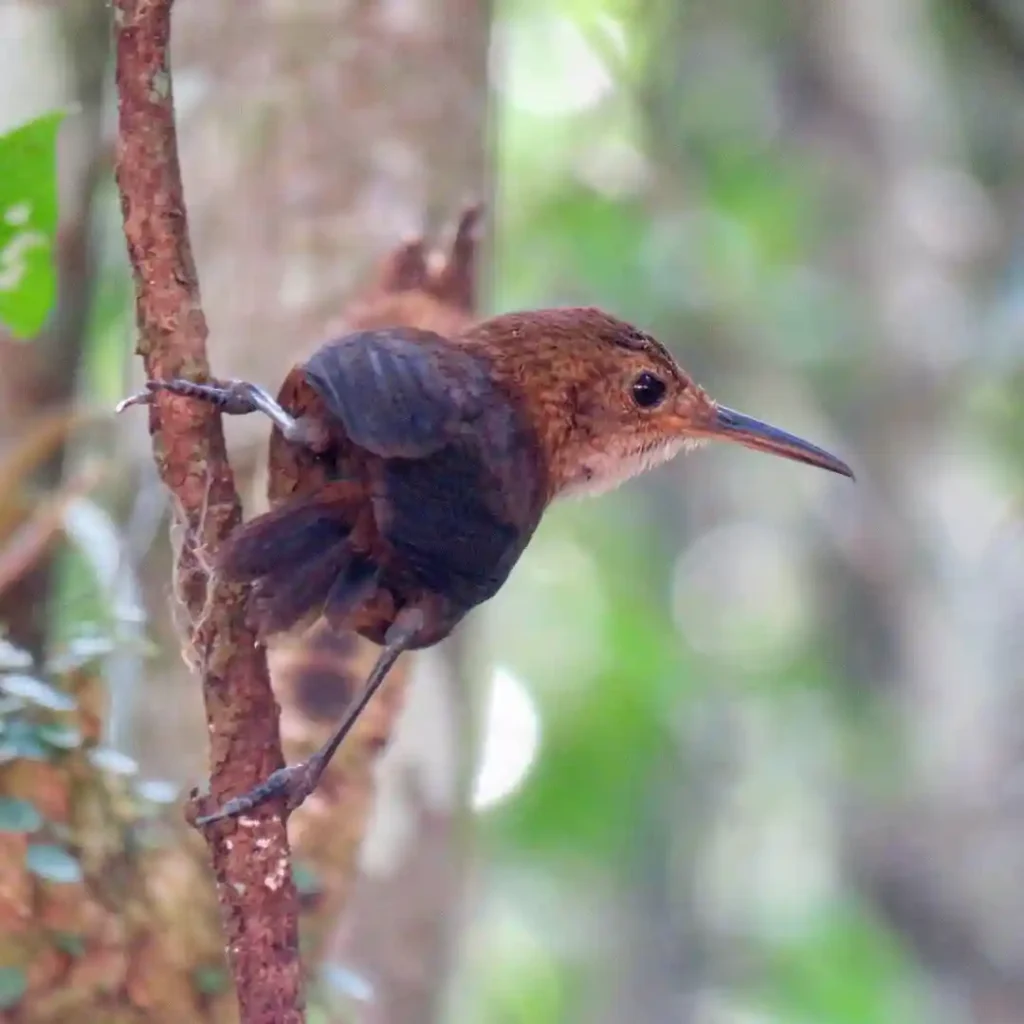
Found only in a limited area of eastern Mexico, Nava’s Wren is one of the most range-restricted birds in the world. It prefers humid limestone hills with thick undergrowth and is notoriously difficult to observe.
Its soft call is often the only clue to its presence. Habitat destruction has made it vulnerable, though conservation efforts continue.
15. Yucatán Wren (Campylorhynchus yucatanicus)
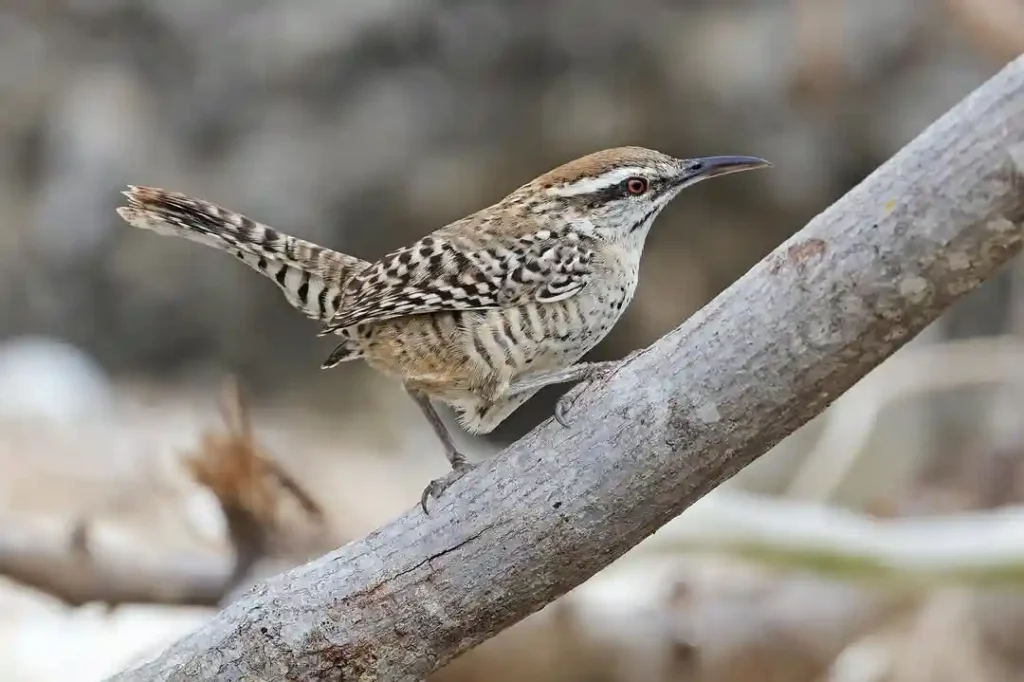
This large, pale wren is endemic to Mexico’s Yucatán Peninsula, where it inhabits scrubby dry forests and coastal brush. It’s adapted well to heat and arid terrain.
It builds large, spherical nests and has a loud, croaky voice that echoes across dry landscapes. Despite its size and noise, it’s not well known outside the region.
16. Apolinar’s Wren (Cistothorus apolinari)
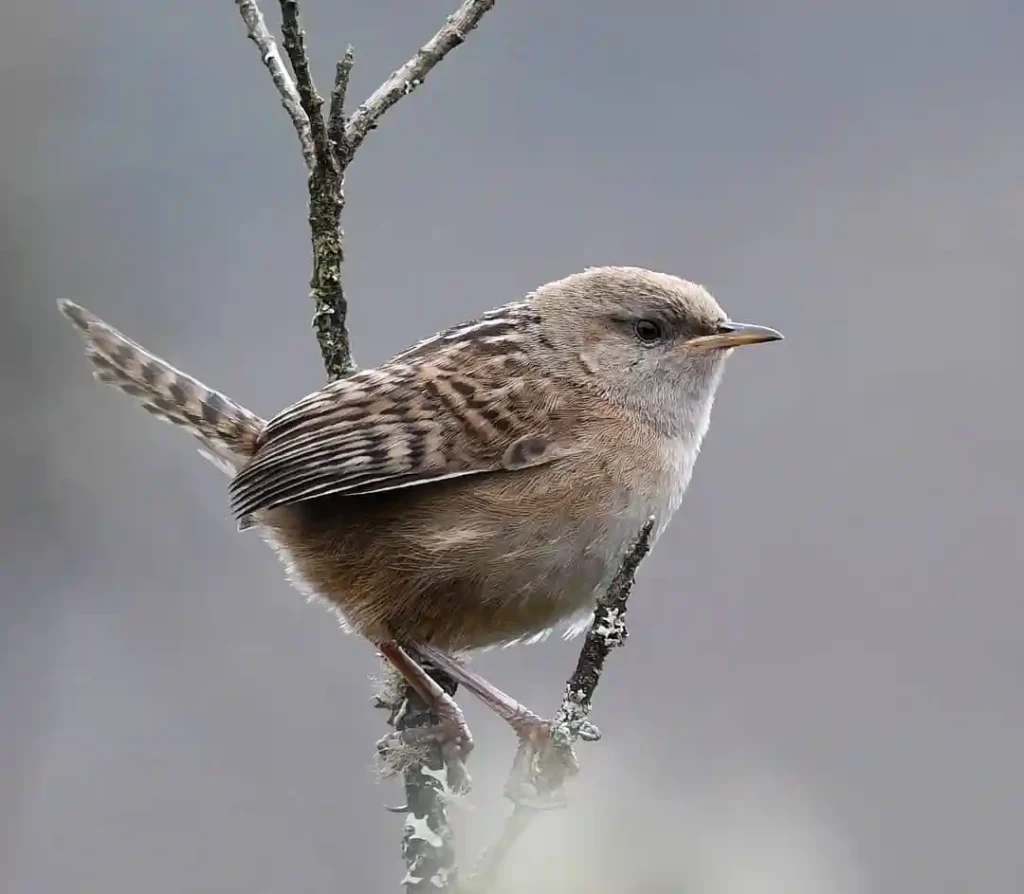
A high-altitude marsh dweller from Colombia, Apolinar’s Wren is found in páramo grasslands near lakes and bogs. It resembles the Marsh Wren in behavior but prefers colder, windier habitats.
Listed as vulnerable due to habitat loss and water pollution, it serves as a key indicator of wetland health in the Andes.
17. Peruvian Wren (Cinnycerthia peruana)

Little is known about this elusive Andean species. It prefers cool, humid cloud forests and blends easily into its mossy surroundings. Like many Cinnycerthia wrens, it forages low and sings fluty, soft phrases.
Because of its remote range, sightings are rare, and audio recordings are even rarer.
18. Flutist Wren (Microcerculus ustulatus)
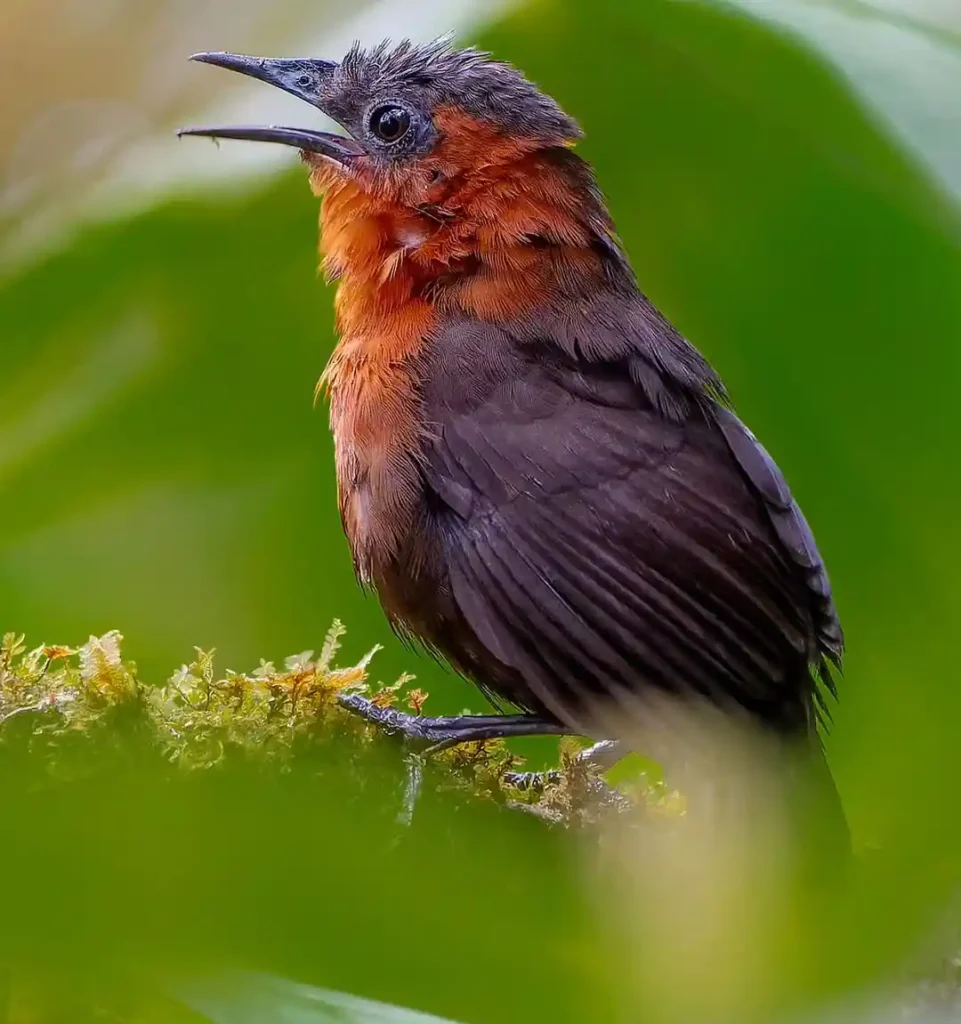
Named for its clear, flute-like voice, the Flutist Wren is a rainforest specialist in western Colombia and Ecuador. It sings from low perches, often hidden by dense leaf litter and vines.
Its song is among the most melodic in its range, making it more commonly heard than seen.
19. Southern Chestnut-breasted Wren (Cyphorhinus thoracicus)
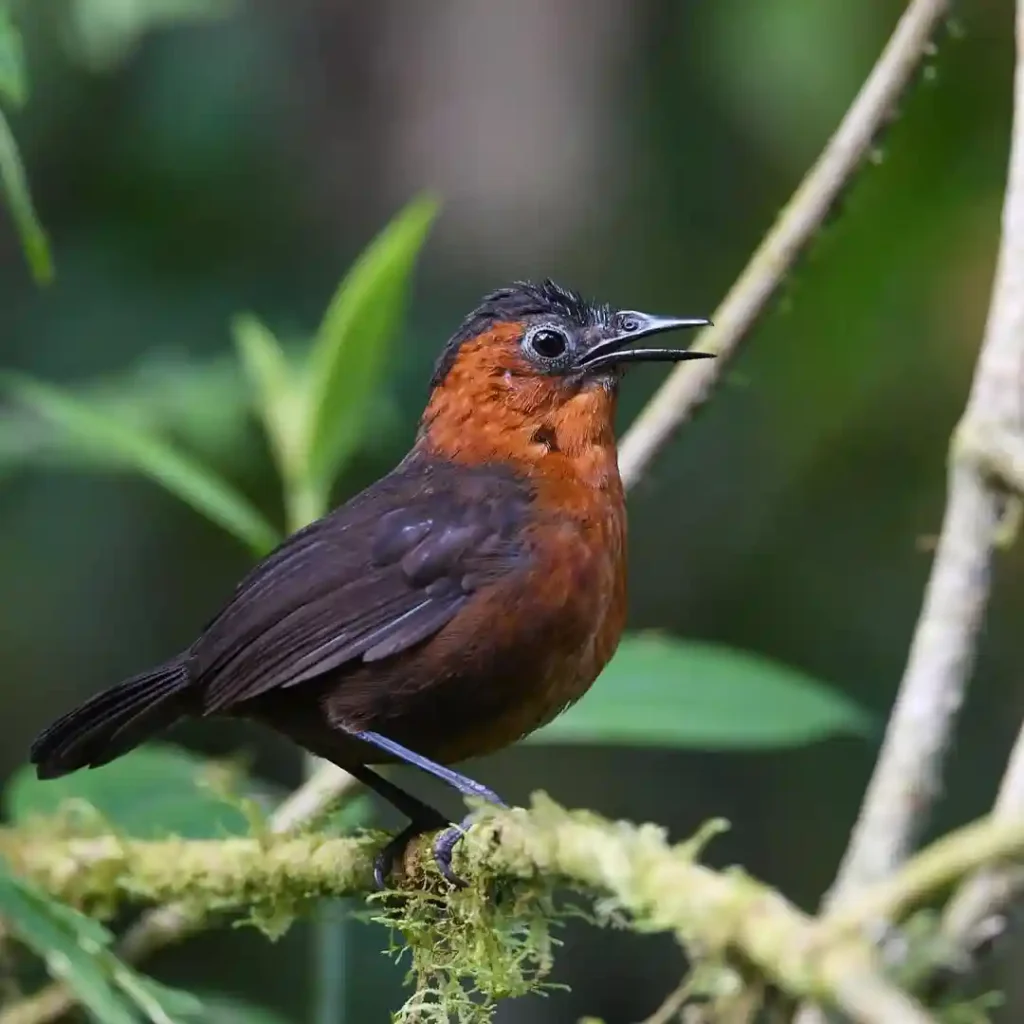
With rich rufous tones on its underparts and a haunting, variable song, this forest-dwelling wren inhabits humid slopes and valleys. It’s most active at dawn and dusk, when its fluting notes echo across the treetops.
20. Sepia brown Wren (Cinnycerthia olivascens)
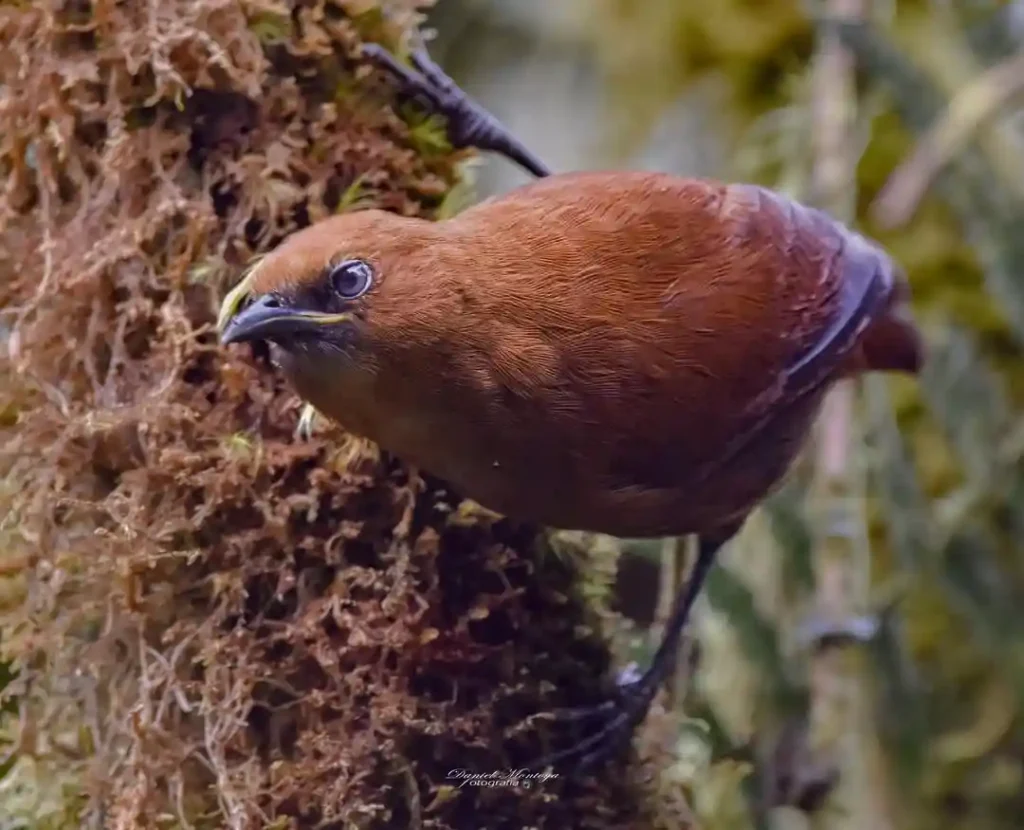
This little-known species prefers high-altitude forests with thick moss and low light. Like others in its genus, it travels in pairs and sings gentle, rising calls.
Its sepia-toned plumage camouflages perfectly in the undergrowth, making it a tough bird to spot.
21. Grey mantled Wren (Odontorchilus branickii)

Unique among wrens, the Grey-mantled Wren prefers the forest canopy instead of the ground or understory. This bird is agile, flitting through treetops in search of insects.
It’s part of a genus (Odontorchilus) that includes very few species, making it of high interest to researchers and birders alike.
Read also: 22 Types of Tit Birds
How to Identify Different Wrens
While wrens often share a few basic traits small size, brown feathers, and cocked tails each species has its own unique look, behavior, and voice. With over 80 species worldwide, here’s how to tell them apart more easily.
Size and Shape
Most wrens are small, but some are notably larger:
| Species | Approx. Length | Notes |
| House Wren | 4.3–5.1 in | Slender, short wings, constantly flicking tail |
| Carolina Wren | 5.5 in | Chunky, slightly curved bill |
| Cactus Wren | 7.1–7.5 in | Largest U.S. wren, long tail, heavy build |
| Musician Wren | ~5.5 in | Compact but full-bodied, short wings |
Plumage Details
Though most wrens are brown, look for:
- Eyebrow stripe: Prominent in Carolina and Bewick’s Wrens
Barring: House, Marsh, and Cactus Wrens show tail and wing barring - Bright throat patches: Canyon Wrens have a striking white throat
Spotted or streaked backs: Cactus Wren and Marsh Wren stand out here
Habitat Clues
Knowing where you are can narrow it down:
| Habitat | Likely Wren |
| Backyard or suburbs | House Wren, Carolina Wren |
| Desert or arid | Cactus Wren, Canyon Wren |
| Wetlands | Marsh Wren, Sedge Wren |
| Tropical rainforest | Musician Wren, Nightingale-Wrens |
| Andean highlands | Rufous Wren, Fulvous Wren |
Why Do Wrens Sing So Much?
- Territorial Claims: Males sing to ward off other males and defend nesting areas.
- Mate Attraction: A large, varied song repertoire often impresses potential mates.
- Communication: Pairs may use call notes to stay in contact while foraging.
The Most Musical Wrens
- Musician Wren: Arguably the most melodious bird in the Americas — slow, flute-like whistles used in classical music samples.
- Canyon Wren: Has a sweet descending song that echoes in canyons, often compared to water trickling down a stream.
- Winter Wren (not yet covered): Delivers a 10+ second song full of trills and tinkling notes, remarkable for such a small bird.
What birds are commonly mistaken for wrens?
Several small, brown, and active birds resemble wrens in size and behavior. The most commonly confused species include:
- Brown Creepers
- Bushtits
- Kinglets (especially Ruby-crowned Kinglet)
- Female House Sparrows
- Gnatcatchers
- Winter-plumage Warblers
FAQs
Which wren has the most beautiful song?
The Musician Wren (Cyphorhinus arada) is often considered the most melodious. Its clear, flute-like song is so unique that it’s inspired local legends and even musical compositions. In North America, the Canyon Wren is another favorite for its waterfall-like descending notes.
Are wrens aggressive?
Yes — surprisingly so! Despite their small size, wrens can be territorial and feisty, especially during breeding season. House Wrens, for example, may destroy eggs in nearby nests to reduce competition.
Do wrens migrate?
Some do, some don’t.
- House Wrens migrate from the U.S. and Canada to Central America in winter.
- Carolina Wrens are mostly year-round residents in the southeastern U.S.
- Tropical species tend to stay in one area year-round.
Which wrens are common backyard birds?
In North America, the most common backyard wrens include:
- House Wren – especially if you have birdhouses or brush piles
- Carolina Wren – known for nesting near homes and singing loudly
- Bewick’s Wren – found in the western U.S.
How can I attract wrens to my yard?
Here are a few simple ways:
- Install a nest box with a small entrance hole
- Avoid using pesticides — wrens eat insects
- Provide brush piles or dense shrubs for cover
- Place suet or mealworms during cooler months
What’s the difference between Marsh and Sedge Wrens?
| Trait | Marsh Wren | Sedge Wren |
| Habitat | Cattail marshes | Wet meadows, grassy fields |
| Song | Fast, mechanical chatter | Shorter, softer phrases |
| Range | Broader, migratory | Patchy, often nomadic |
| Appearance | Slightly larger, bolder striping | Smaller, more streaked |
Are all wrens small?
Most are small — typically between 4 and 6 inches — but some like the Cactus Wren can reach over 7 inches long. Still, all wrens are considered small-to-medium-sized songbirds.