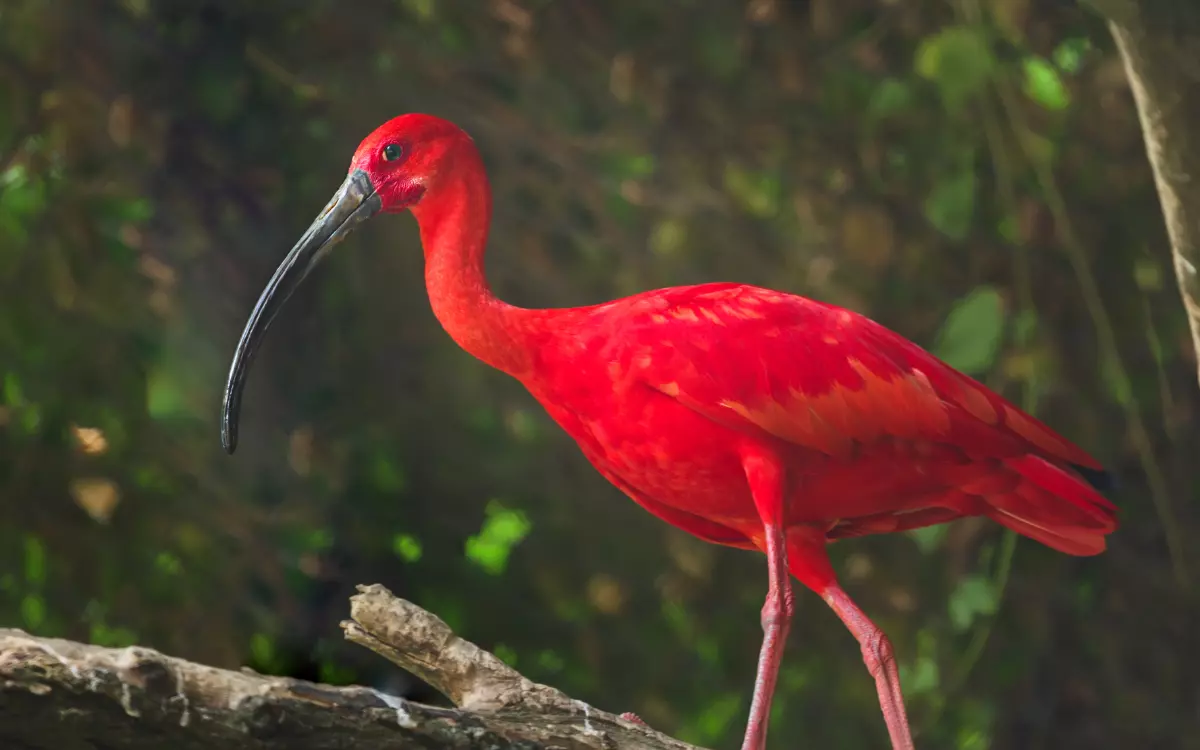
30 Common Birds in Hawaii: Easy Identification Guide
Hawaii is home to many beautiful birds, but not all of them are native to the islands. Some are rare Hawaiian endemics, some are seabirds seen near the coast, and many common backyard birds were introduced from other parts of the world.
If you are walking through a park, sitting near the beach, hiking a forest trail, or watching birds from a hotel balcony, you may see cardinals, doves, mynas, finches, shorebirds, honeycreepers, owls, and seabirds. This guide covers some of the most common birds in Hawaii, with simple tips to help you identify them by color, size, behavior, and habitat.
1. Northern Cardinal
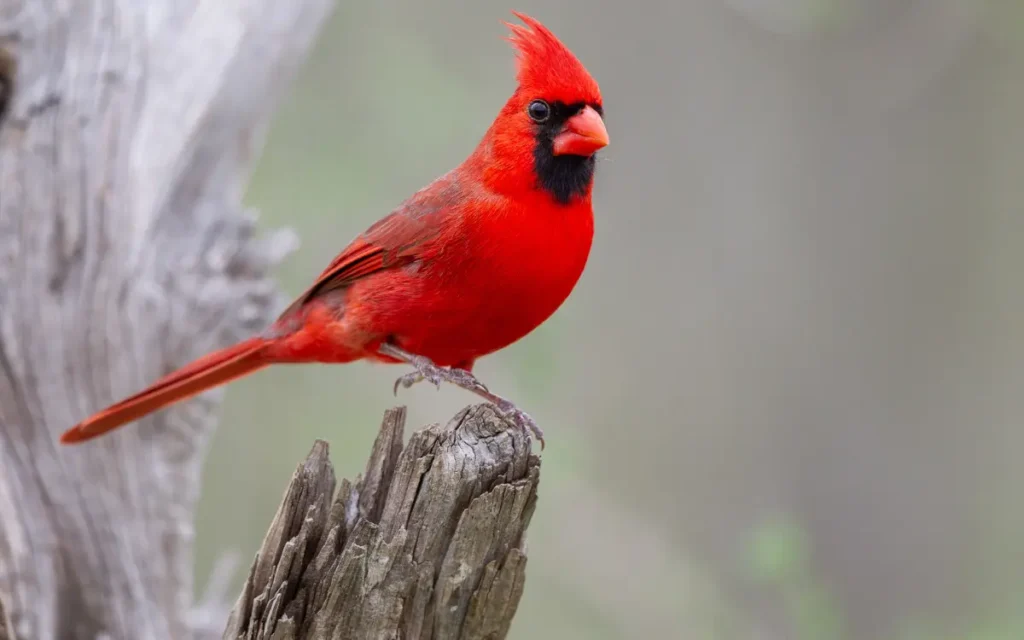
The Northern Cardinal is one of the easiest birds to recognize in Hawaii, especially the male with his bright red body, black face mask, and pointed crest. Females are softer brown with warm red tones on the wings, tail, and crest. These birds are often seen in gardens, parks, and neighborhoods, where they feed on seeds, fruit, and insects.
In Hawaii, Northern Cardinals are introduced birds, but they are now common on several islands. Their clear whistling song is often heard from trees and shrubs.
Identification tips:
- Male is bright red with a black face
- Female is tan-brown with reddish highlights
- Thick orange-red bill
- Often seen in pairs
2. Red-crested Cardinal
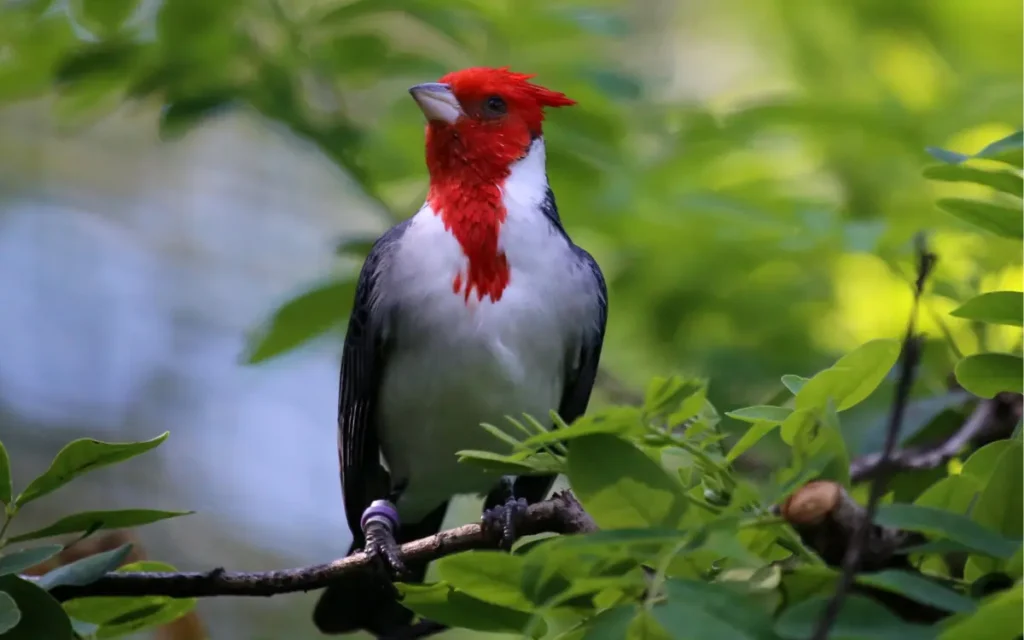
The Red-crested Cardinal is another common bird in Hawaii, but it is not closely related to the Northern Cardinal. It has a white belly, gray back, and a bright red head with a raised crest. This bird is especially common around lawns, parks, picnic areas, resorts, and beaches.
It often walks on the ground looking for seeds, crumbs, insects, and small fruits. Because of its bold look and relaxed behavior around people, many visitors notice this bird quickly.
Identification tips:
- Red head and crest
- White belly
- Gray back and wings
- Often feeds on open grass
3. Zebra Dove

The Zebra Dove is a small, gentle-looking dove often seen walking on sidewalks, lawns, and resort grounds. It has a slim body, long tail, bluish face, and fine dark barring across the neck and chest. Its soft cooing call is a familiar sound in many parts of Hawaii.
These birds are usually seen in pairs or small groups. They spend much of their time on the ground, picking up seeds and tiny food scraps.
Identification tips:
- Small dove with barred chest
- Long narrow tail
- Soft gray-brown color
- Common around people
Related article: 15 White Birds in Hawaii: Easy Identification Guide
4. Spotted Dove
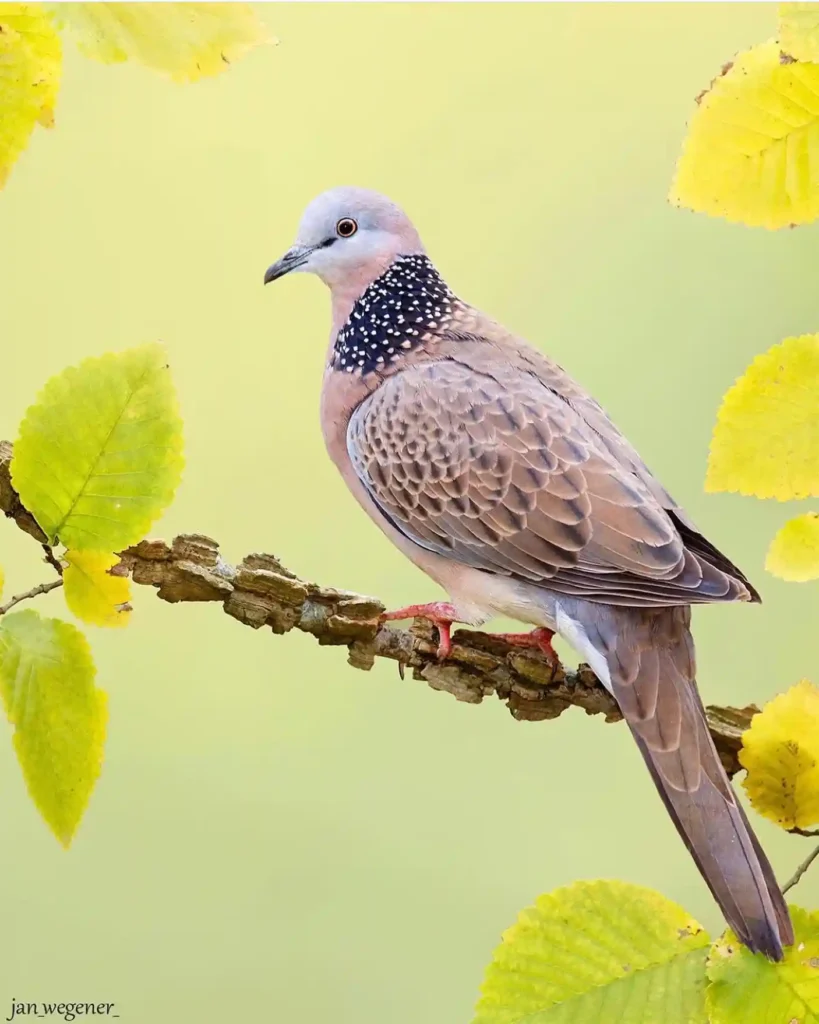
The Spotted Dove is larger than the Zebra Dove and has a soft brown body with a black patch on the back of the neck covered in white spots. It is often found in neighborhoods, parks, farms, and open wooded areas.
This dove feeds mostly on seeds and grains. It walks calmly on the ground and may gather with other doves in open areas. Its low, repeated call is easy to hear once you learn it.
Identification tips:
- Brown body
- Black-and-white spotted neck patch
- Larger than Zebra Dove
- Often seen on the ground
5. Common Myna
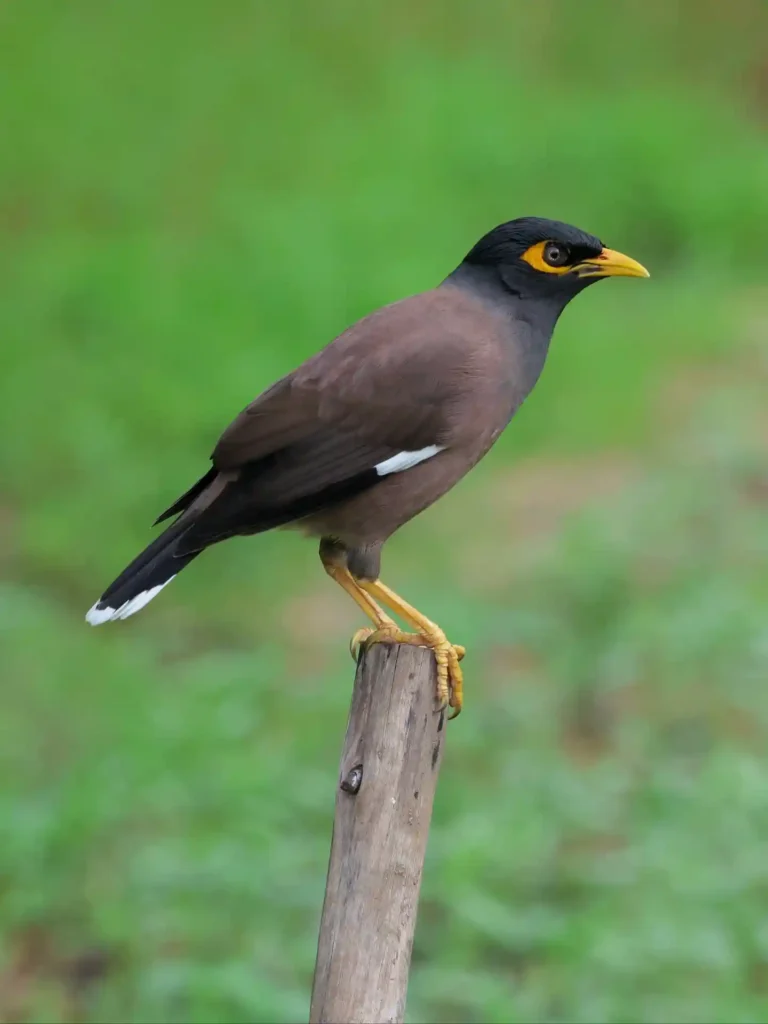
The Common Myna is one of the most familiar city birds in Hawaii. It has a brown body, black head, yellow eye patch, yellow legs, and white wing patches that show clearly in flight. These birds are smart, noisy, and confident around people.
You can see Common Mynas near parking lots, beaches, hotels, outdoor restaurants, parks, and neighborhoods. They feed on insects, fruit, scraps, and many other foods, which helps them live well in busy human areas.
Identification tips:
- Brown body and black head
- Yellow skin around the eye
- White wing patches in flight
- Loud calls and bold behavior
6. House Finch
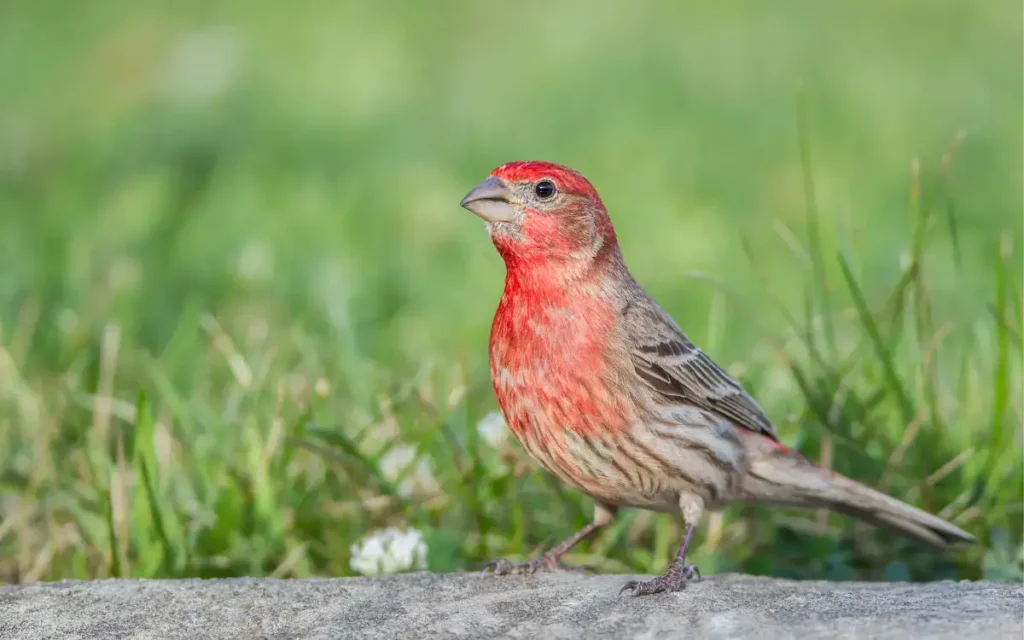
The House Finch is a small songbird often seen around gardens, towns, and dry open habitats in Hawaii. Males usually have red or orange-red coloring on the head, chest, and rump, while females are streaky brown. Their cheerful song is often heard from rooftops, wires, and trees.
House Finches eat seeds, buds, fruit, and small plant material. They are active, social birds and may gather in small flocks where food is available.
Identification tips:
- Male has red or orange face and chest
- Female is brown and streaked
- Short, thick bill
- Often perches on wires
7. House Sparrow
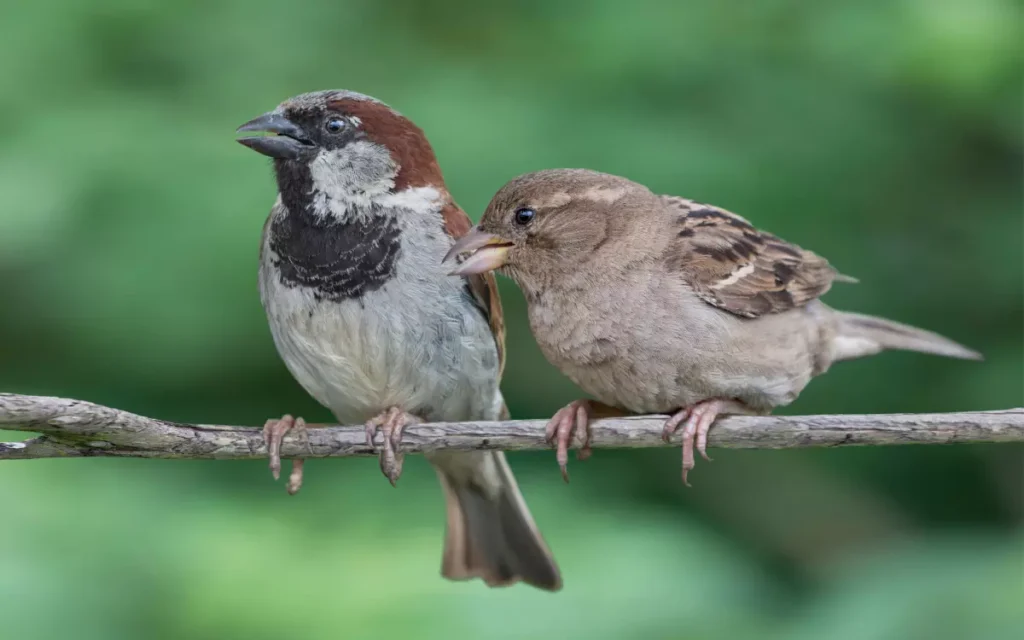
House Sparrows are small, chunky birds that are common around towns, buildings, outdoor dining areas, and farms. Males have a gray crown, black throat, brown back, and pale belly. Females are plain brown with a lighter stripe behind the eye.
These birds are not native to Hawaii, but they are widespread in many human-made spaces. They often feed on seeds, crumbs, grains, and insects.
Identification tips:
- Small and stocky
- Male has black throat patch
- Female is plain brown
- Common near buildings
8. Java Sparrow
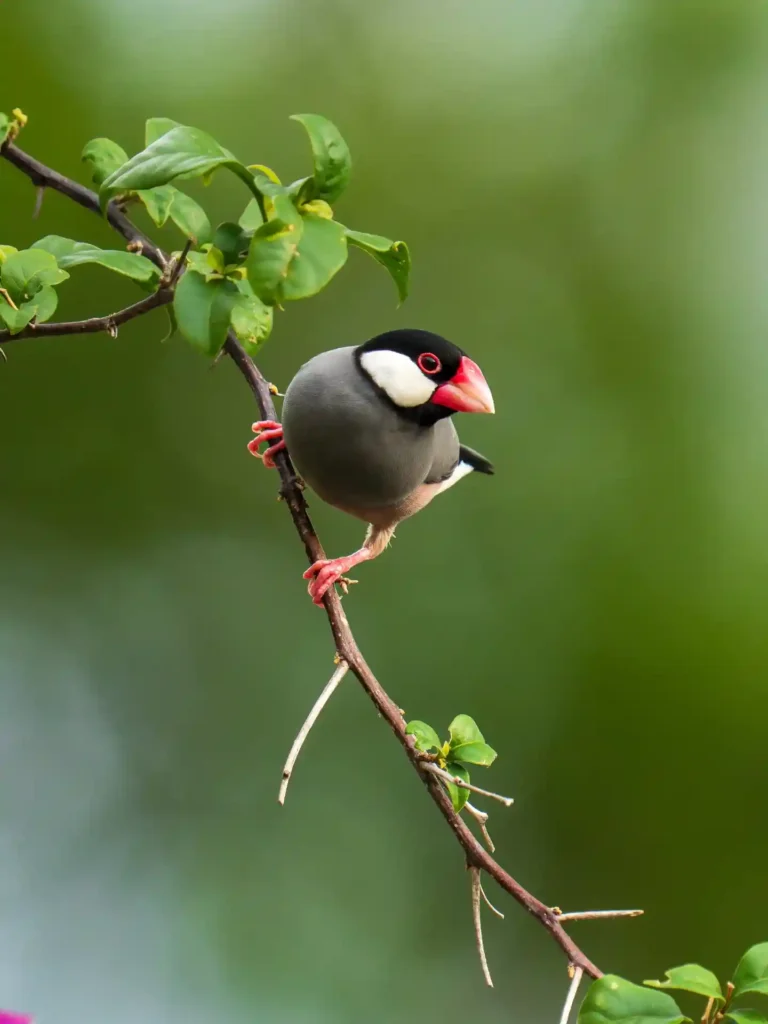
The Java Sparrow is a striking little finch with a gray body, black head, white cheek patches, pink bill, and pink legs. It is often found in grassy areas, fields, parks, and places with seed-bearing plants.
In Hawaii, Java Sparrows may form small groups and feed together on grass seeds. Their neat markings make them easier to identify than many other small birds.
Identification tips:
- Gray body
- Black head with white cheek patches
- Thick pink bill
- Often seen in small flocks
9. Pacific Golden-Plover

The Pacific Golden-Plover is a migratory shorebird that spends part of the year in Hawaii. Locally, it is often called kōlea. It can be seen on lawns, golf courses, beaches, fields, and coastal areas.
In nonbreeding plumage, it looks brownish-gold with a pale belly. Before migration, some birds develop bold black-and-white breeding plumage. These birds are known for returning to the same wintering areas each year.
Identification tips:
- Slim shorebird with golden-brown speckling
- Often stands upright on lawns
- Runs and stops while feeding
- Common in winter months
10. Cattle Egret
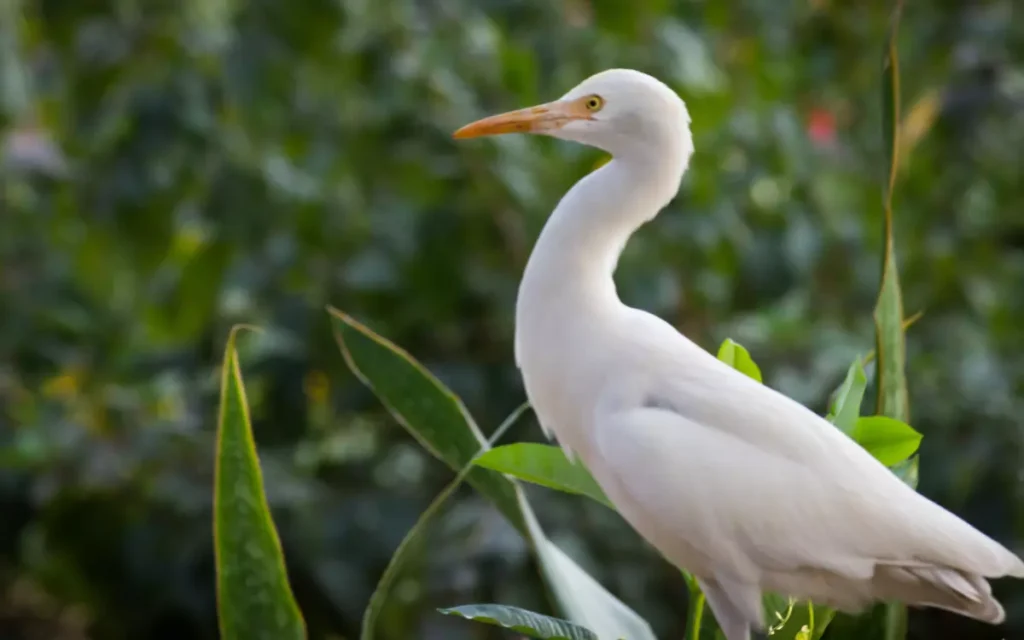
The Cattle Egret is a white heron often seen in grassy areas, pastures, roadsides, and wetlands. During breeding season, it may show buff-orange coloring on the head, chest, and back. Unlike many herons, it often feeds away from water.
Cattle Egrets follow cattle, lawn mowers, and other moving animals or machines to catch insects stirred up from the grass. They are easy to spot because of their white bodies and steady walking style.
Identification tips:
- White body
- Short yellow bill
- Buff patches during breeding season
- Common in fields and lawns
11. White Tern
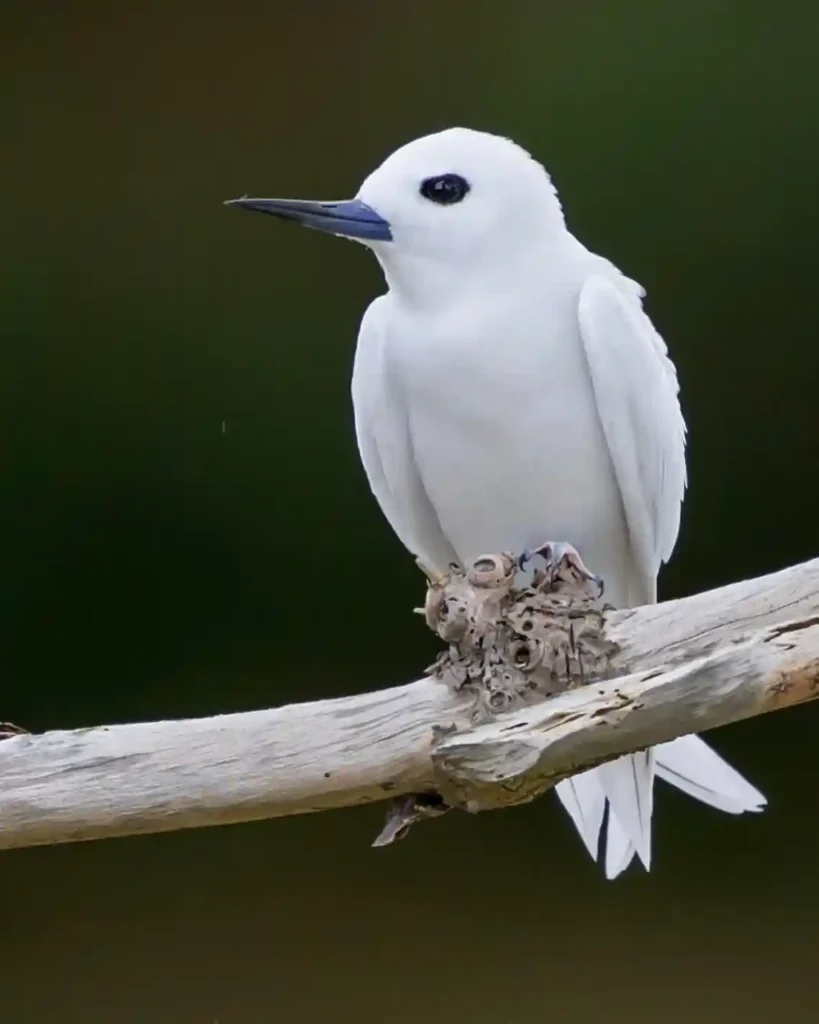
The White Tern is a graceful seabird with an all-white body, black eyes, and a slender dark bill. In Hawaii, it is often seen flying around coastal cities and nesting in trees rather than building a normal nest.
This bird is especially loved in Honolulu, where it may be seen gliding between buildings and trees. Its clean white body and smooth flight make it easy to recognize.
Identification tips:
- Pure white body
- Black eye and dark bill
- Smooth, floating flight
- Often seen near coastal trees
12. Red-footed Booby
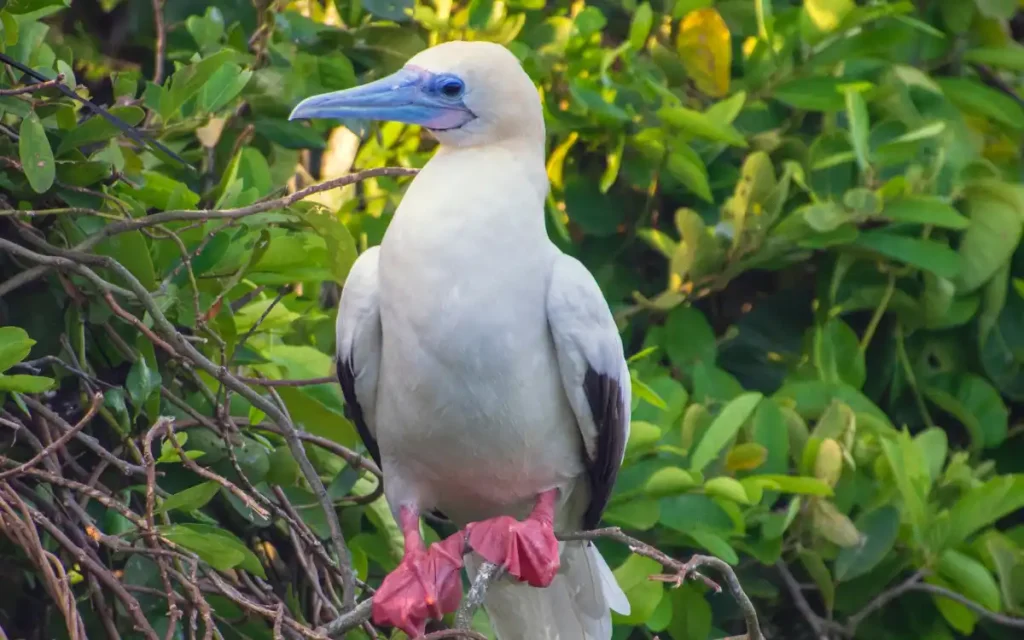
The Red-footed Booby is a seabird often seen around cliffs, offshore islands, and marine areas. Adults can vary in color, but many have pale bodies, dark wing edges, blue bills, and bright red feet.
These birds are strong ocean flyers and feed by catching fish and squid. They nest in colonies, often in shrubs or trees near the coast. You are more likely to see them in protected seabird areas than in city parks.
Identification tips:
- Red feet
- Long pointed wings
- Pale or brown body forms
- Seen near cliffs and ocean areas
13. Great Frigatebird

The Great Frigatebird is a large seabird with long angular wings and a deeply forked tail. Males are black with a red throat pouch that can inflate during display. Females usually have white on the chest.
These birds are often seen soaring high over the ocean and coastlines. They rarely land on the water because their feathers are not suited for floating like many seabirds.
Identification tips:
- Huge wingspan
- Forked tail
- Black body
- Often soars without much flapping
14. Hawaiian Coot
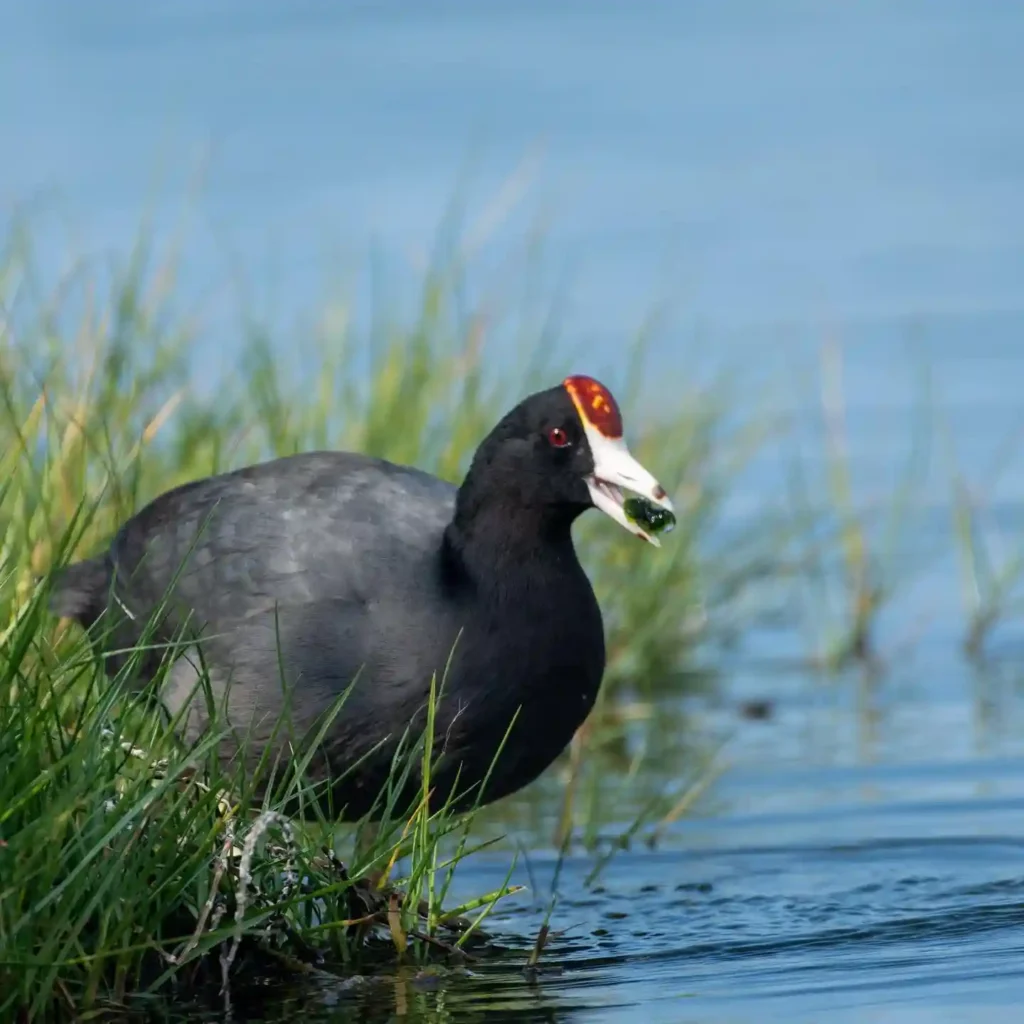
The Hawaiian Coot is a waterbird found in wetlands, ponds, marshes, and protected water areas. It has a dark body, white bill, and a pale frontal shield above the bill. It swims like a duck but is not a duck.
This native Hawaiian bird feeds on aquatic plants, insects, and small water creatures. It may be seen swimming in open water or walking near marsh plants.
Identification tips:
- Dark gray to black body
- White bill and forehead shield
- Rounded body shape
- Found in freshwater wetlands
15. Hawaiian Stilt
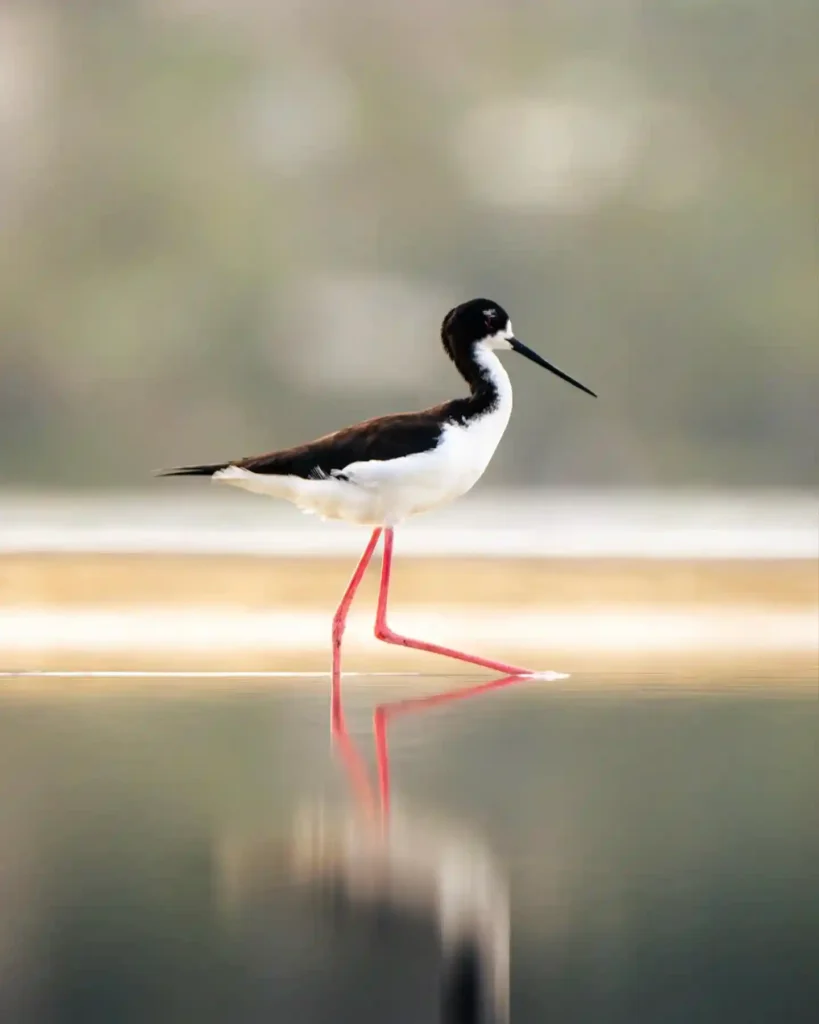
The Hawaiian Stilt is a slender wetland bird with very long pink legs, a black back, white underside, and thin black bill. It is often seen in shallow ponds, mudflats, marshes, and coastal wetlands.
This bird walks through shallow water while searching for insects, small crustaceans, and other tiny aquatic animals. Its long legs and neat black-and-white pattern make it one of the easiest Hawaiian wetland birds to identify.
Identification tips:
- Very long pink legs
- Black back and white belly
- Thin straight bill
- Walks in shallow water
16. Hawaiian Duck
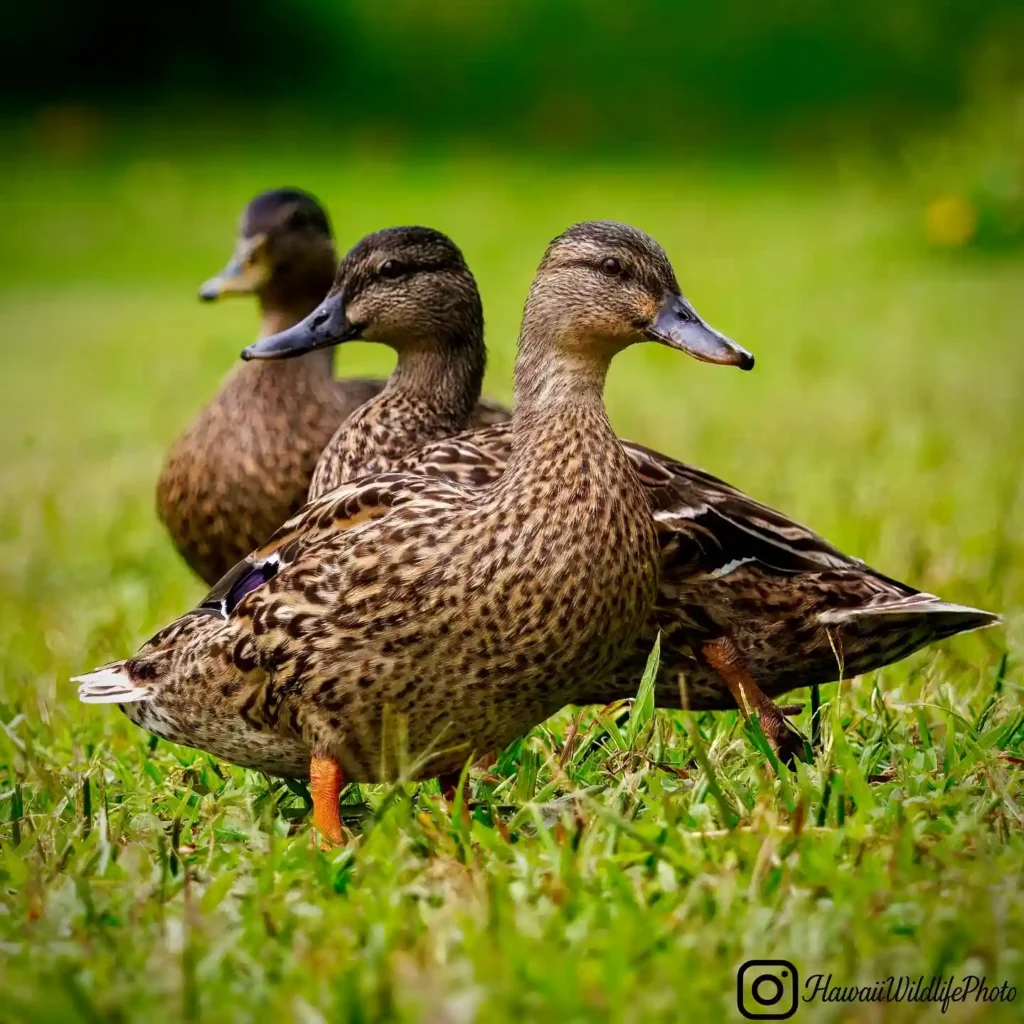
The Hawaiian Duck, also called koloa maoli, is a native duck found in wetlands, ponds, streams, and marshy areas. It looks somewhat like a female Mallard, with mottled brown feathers and an orange or dark bill.
This bird can be hard to identify because hybrid ducks may look similar. True Hawaiian Ducks are an important native species and are mostly found in quieter wetland habitats.
Identification tips:
- Mottled brown body
- Medium-sized duck
- Found in wetlands and streams
- Similar to female Mallard
17. Nene, Hawaiian Goose
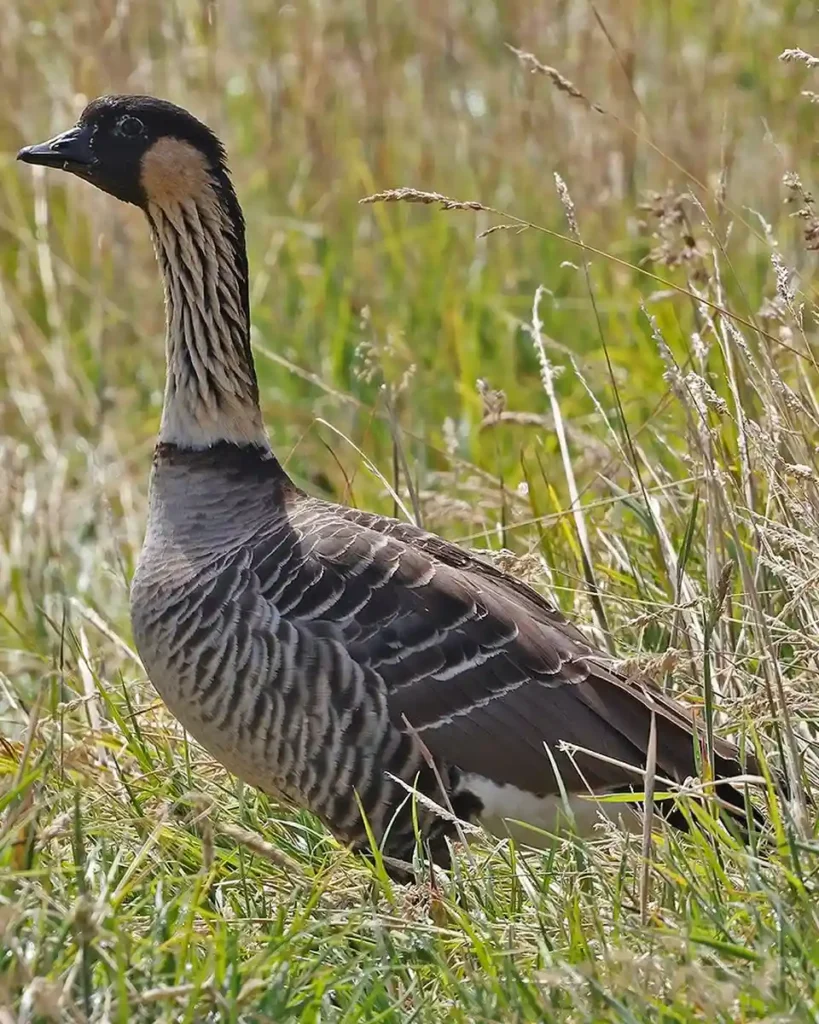
The Nene is Hawaii’s state bird and one of the most famous native birds in the islands. It has a gray-brown body, black face, cream-colored neck with dark grooves, and strong legs made for walking on rough ground.
Nene are often seen in grasslands, parks, golf courses, lava fields, and protected areas. Unlike many geese, they spend much time on land and are adapted to Hawaii’s volcanic landscapes.
Identification tips:
- Hawaii’s state bird
- Black face and striped neck
- Medium-sized goose
- Often walks on grass or lava fields
18. Hawaiian Hawk
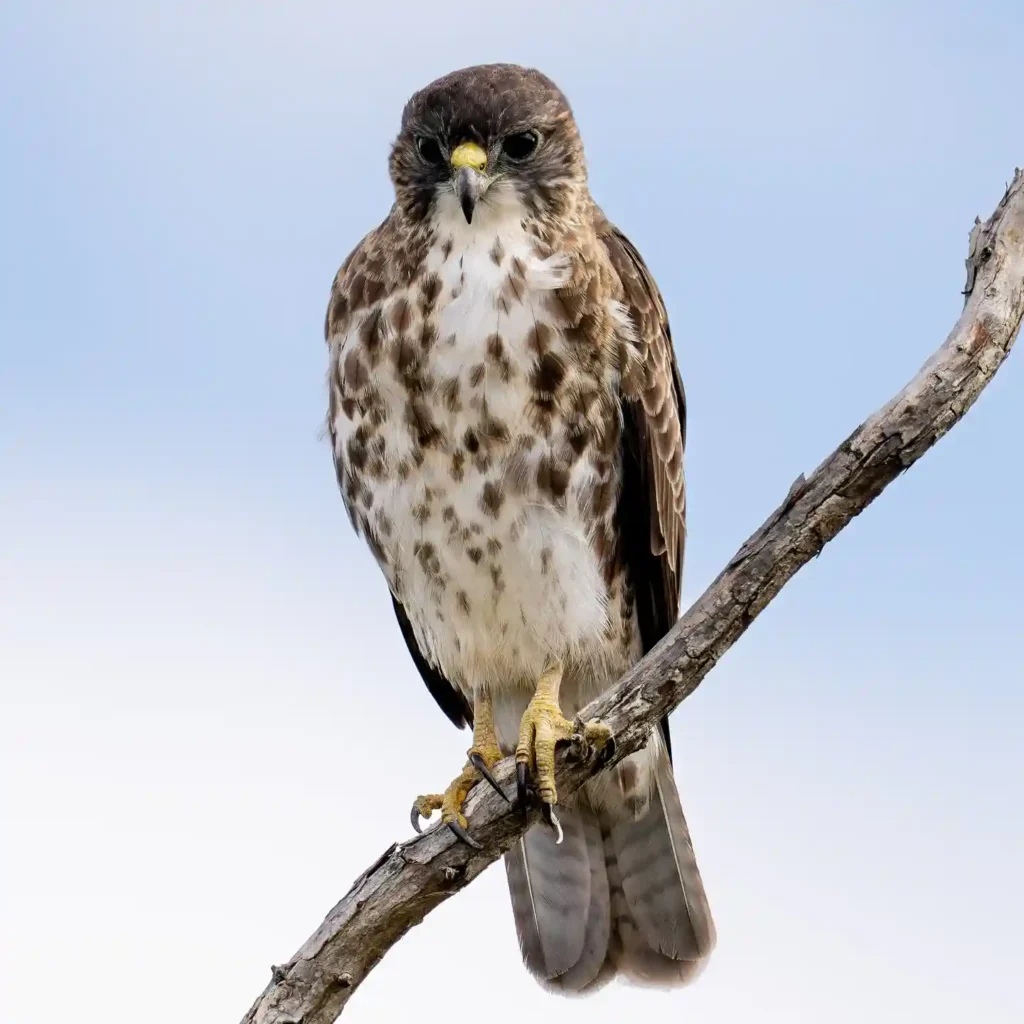
The Hawaiian Hawk, also called ʻio, is a native raptor found mainly on the Big Island. It may be dark brown overall or lighter with pale underparts. This hawk soars over forests, fields, and open country while searching for prey.
It feeds on birds, insects, rodents, and small animals. Since it is the only hawk native to Hawaii, seeing one can be a special moment for birdwatchers.
Identification tips:
- Broad wings
- Soaring flight
- Dark or pale color forms
- Mostly associated with Hawaiʻi Island
19. Hawaiian Short-eared Owl
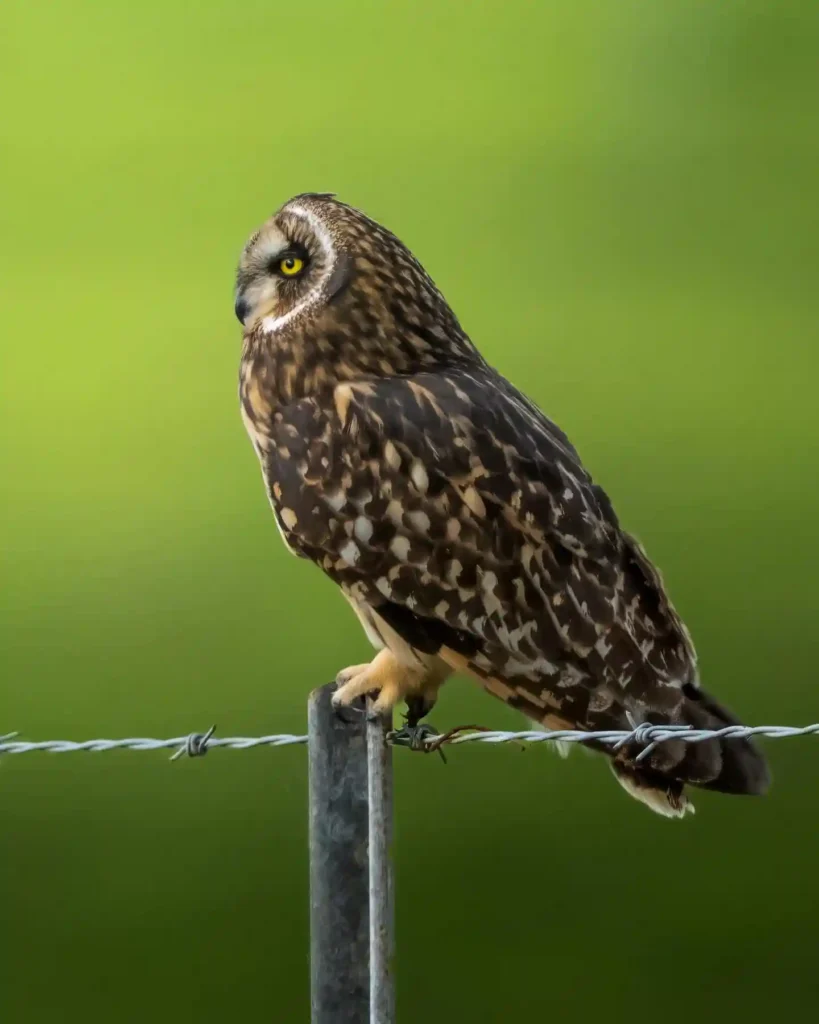
The Hawaiian Short-eared Owl, known as pueo, is a native owl often seen during the day, unlike many owls that hunt mostly at night. It has a rounded face, streaky brown body, and long wings.
Pueo are usually found in grasslands, fields, open slopes, and farmlands. They fly low over open areas while hunting rodents, insects, and small birds.
Identification tips:
- Often active during daylight
- Brown streaky body
- Rounded owl face
- Flies low over open land
20. Apapane
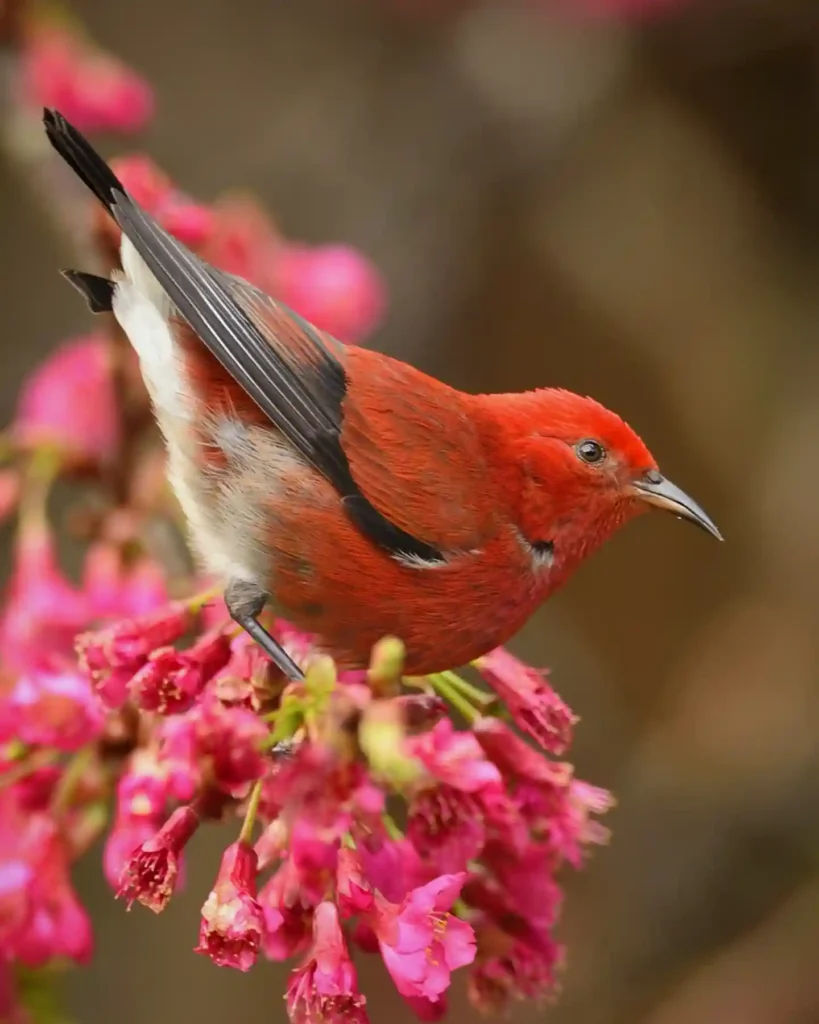
The ʻApapane is a small native Hawaiian honeycreeper with bright red feathers, black wings, and a white lower belly. It is often found in native forests, especially where ʻōhiʻa lehua trees grow.
These birds feed heavily on nectar and are important pollinators for native Hawaiian plants. Their calls and songs are common sounds in healthier native forest areas.
Identification tips:
- Red body
- Black wings and tail
- White lower belly
- Often seen in native forests
21. ʻIʻiwi
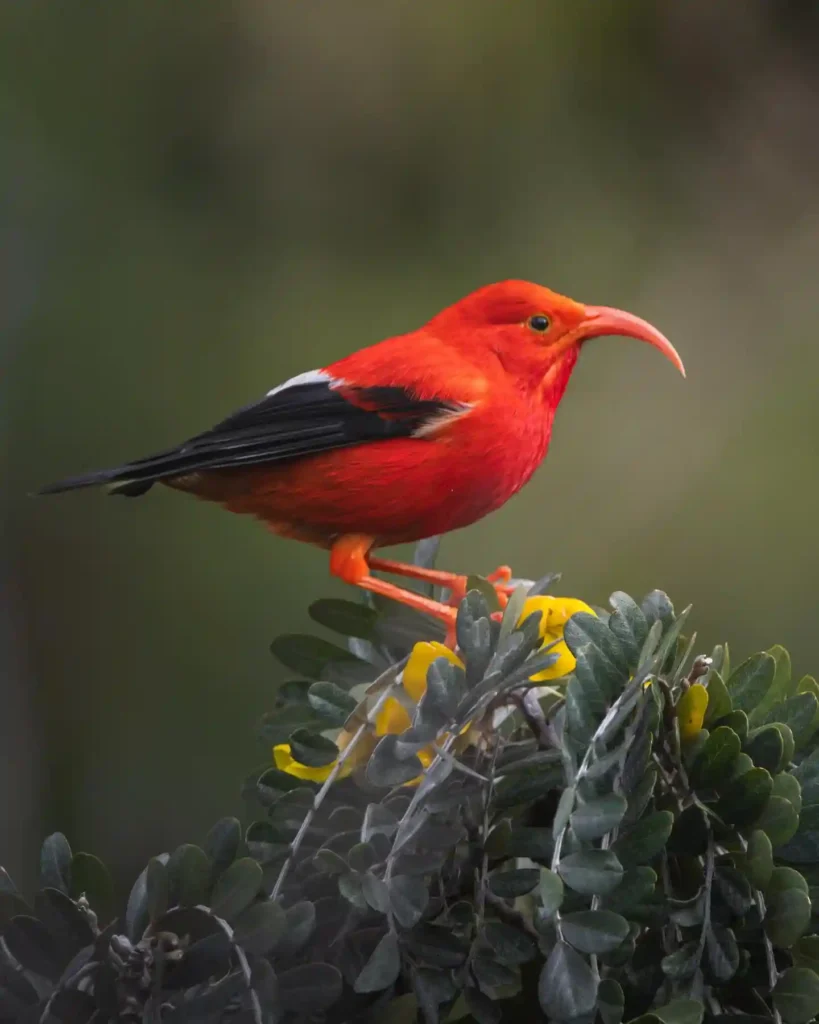
The ʻIʻiwi is one of Hawaii’s most beautiful native honeycreepers. It has a red body, black wings, and a long curved salmon-colored bill made for feeding from tubular flowers.
This bird is mostly found in higher-elevation native forests, where cooler temperatures help protect it from mosquito-borne diseases. Its curved bill and bright red body make it easy to separate from many other forest birds.
Identification tips:
- Red body
- Long curved bill
- Black wings
- Usually found in native forest
22. Amakihi

The ʻAmakihi is a small native honeycreeper with olive-green to yellowish coloring and a slightly curved bill. It is more adaptable than some Hawaiian honeycreepers and may be seen in native forests, woodlands, and sometimes gardens.
It feeds on nectar, insects, and small fruits. Because of its softer coloring, it may be harder to notice than the red honeycreepers, but its active movement gives it away.
Identification tips:
- Small greenish-yellow bird
- Slightly curved bill
- Active in trees and shrubs
- Feeds on nectar and insects
23. White-rumped Shama
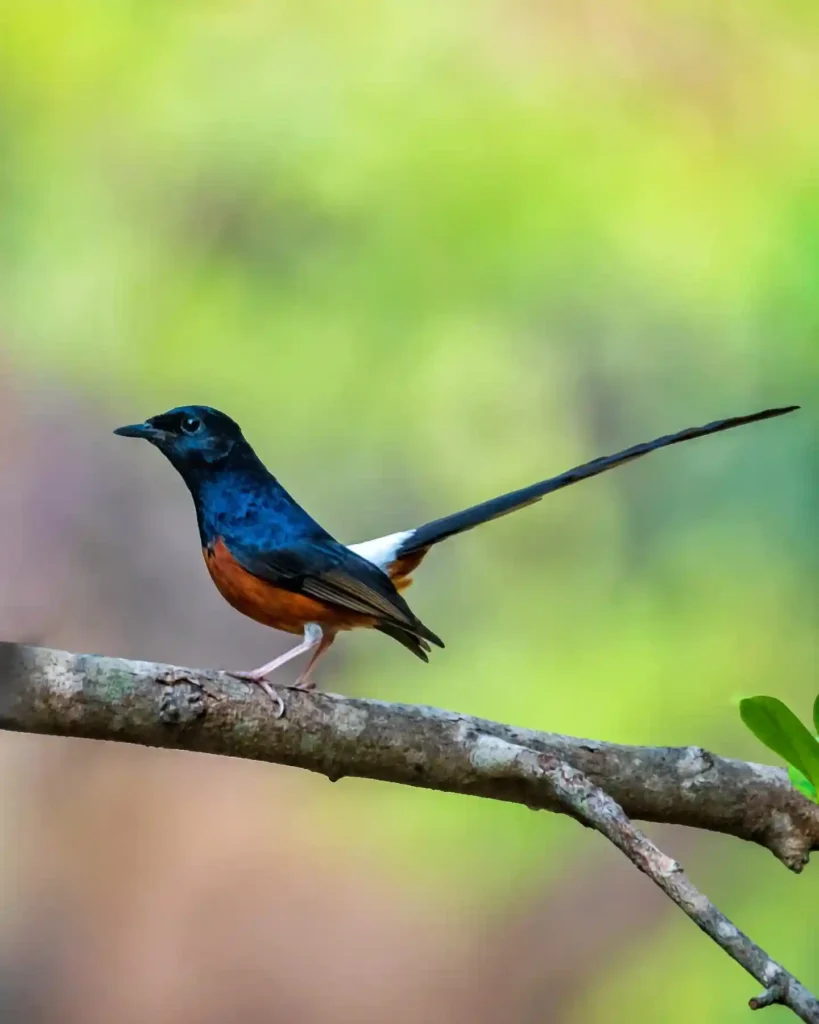
The White-rumped Shama is a songbird with a glossy dark head and back, orange-brown belly, long tail, and white rump. It is known for its rich, musical song and is often heard before it is seen.
This introduced bird lives in forests, gardens, valleys, and shaded areas. It usually stays low in vegetation, hopping through branches and leaf litter while searching for insects.
Identification tips:
- Dark upper body
- Orange-brown underparts
- Long tail
- White rump visible in flight
24. Japanese White-eye

The Japanese White-eye is a tiny greenish bird with a clear white ring around the eye. It is very common in gardens, parks, forests, and flowering trees across Hawaii.
These birds move quickly in small flocks, feeding on nectar, fruit, and insects. Their small size and constant movement can make them tricky to follow, but the white eye-ring is a strong clue.
Identification tips:
- Small greenish body
- White ring around eye
- Often in groups
- Quick movement in trees
25. Saffron Finch
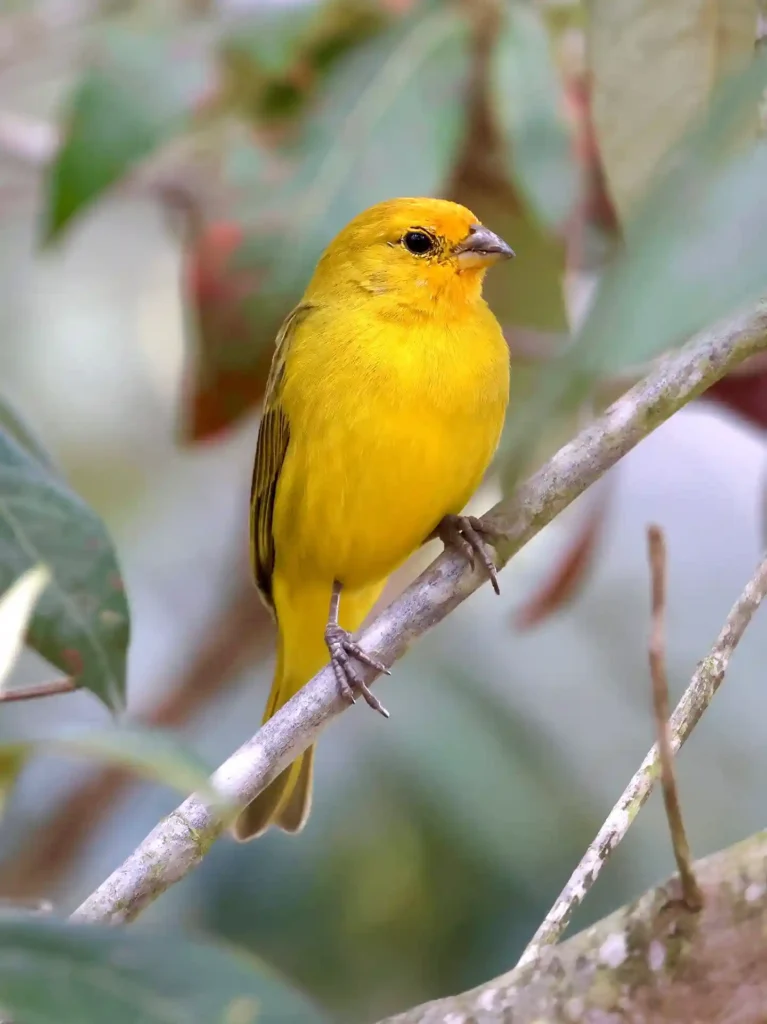
The Saffron Finch is a bright yellow songbird often seen in dry grassy areas, roadsides, open parks, and lawns. Males are usually more golden-yellow with an orange wash on the face, while females may appear duller.
These birds feed mainly on seeds and often walk or hop on the ground. Their sunny color makes them easy to notice against grass, dirt, or pavement.
Identification tips:
- Yellow body
- Orange face in many males
- Short seed-eating bill
- Often feeds on the ground
26. Rock Pigeon
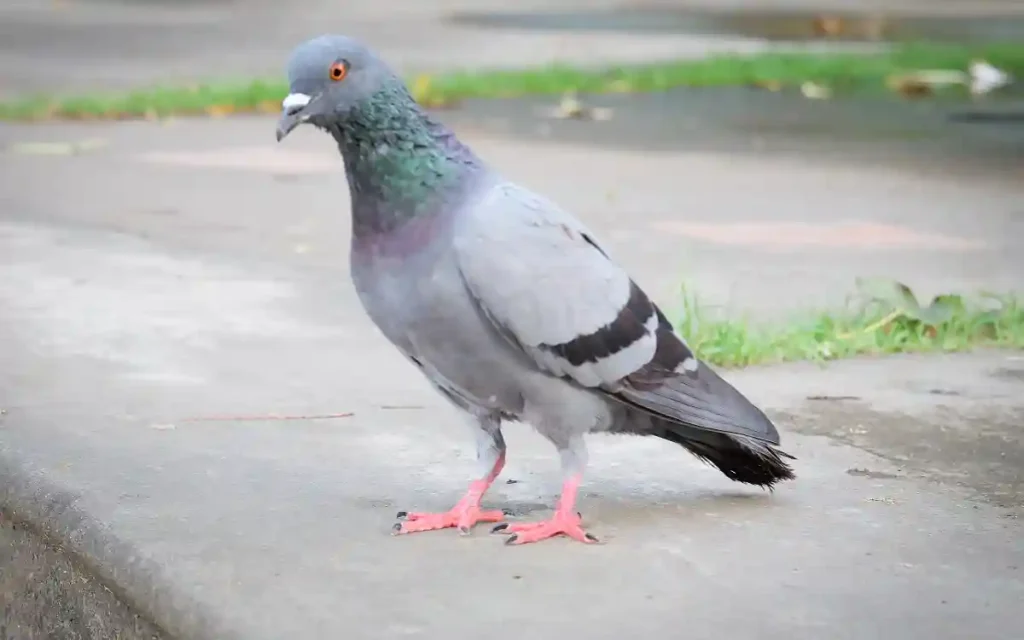
The Rock Pigeon is common in cities, harbors, parks, and town centers. Most have gray bodies, two dark wing bars, and shiny green-purple coloring on the neck, though many color forms exist.
These birds are usually seen walking on pavement, gathering near food sources, or nesting on buildings. While they are often overlooked, they are one of the easiest birds to find in urban Hawaii.
Identification tips:
- Chunky gray pigeon
- Dark wing bars
- Shiny neck feathers
- Common in cities and towns
27. Barn Owl

The Barn Owl is a pale owl with a heart-shaped face, long wings, and silent flight. In Hawaii, it is usually found around farmlands, grasslands, open fields, and roadsides, especially at dusk or night.
Barn Owls hunt rodents and other small animals. When flying, they may look ghostly because of their pale underside and smooth wingbeats.
Identification tips:
- Heart-shaped pale face
- Light underside
- Long wings
- Usually active at night
28. Black-crowned Night Heron
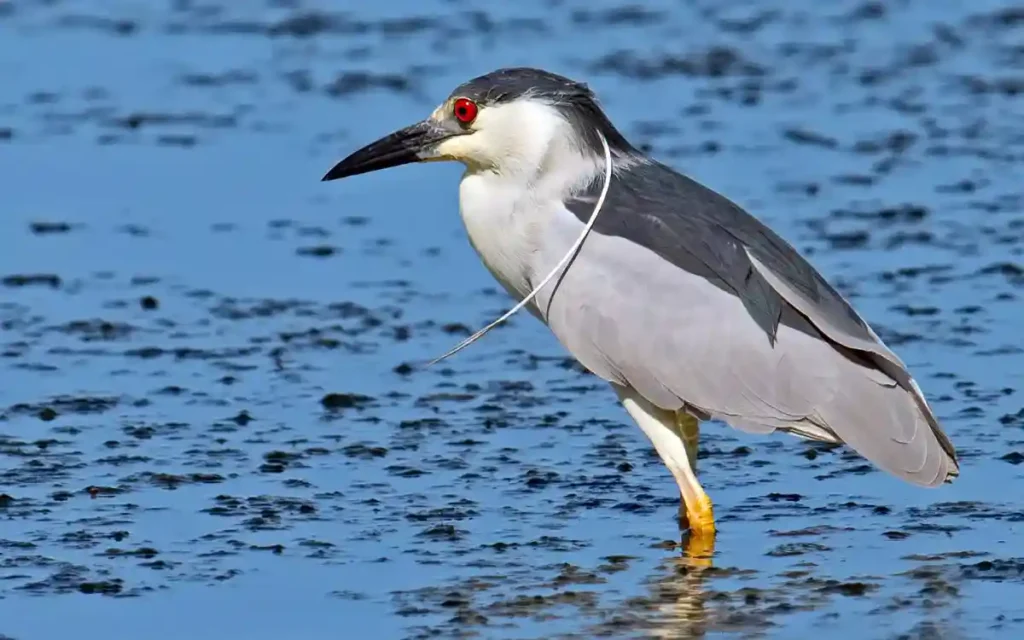
The Black-crowned Night Heron is a stocky waterbird found near wetlands, streams, fishponds, marshes, and shorelines. Adults have a black crown and back, gray wings, red eyes, and pale underparts. Young birds are brown and streaky.
These herons often stand still near water while waiting to catch fish, crabs, insects, and other small prey. They are most active in the evening and at night but can also be seen during the day.
Identification tips:
- Stocky heron shape
- Black crown on adults
- Red eyes
- Often stands still near water
29. Wandering Tattler
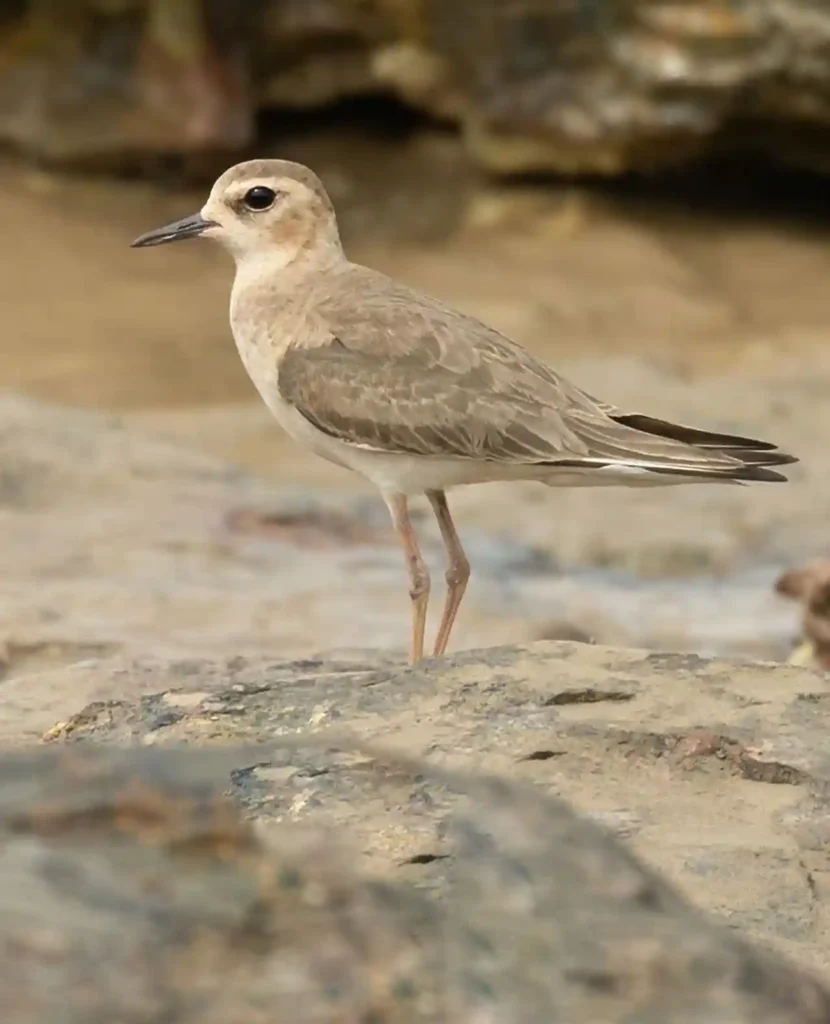
The Wandering Tattler is a medium-sized shorebird often seen along rocky coastlines, tide pools, beaches, and seawalls. In nonbreeding plumage, it looks mostly gray above with a pale underside. During breeding season, it has barring underneath.
This bird walks along rocks and edges of waves, searching for small marine animals. Its plain gray look may seem simple at first, but its coastal behavior helps with identification.
Identification tips:
- Gray shorebird
- Found on rocky shores
- Bobs slightly while walking
- Feeds near waves and tide pools
Native vs Introduced Birds in Hawaii
Many birds people see daily in Hawaii are introduced species. Birds like Common Mynas, Zebra Doves, Red-crested Cardinals, House Sparrows, and Java Sparrows are now common, but they did not originally come from Hawaii.
Native birds include Nene, Hawaiian Coot, Hawaiian Stilt, Hawaiian Duck, Hawaiian Hawk, Pueo, ʻApapane, ʻIʻiwi, and ʻAmakihi. These birds are especially important because many Hawaiian native birds are found nowhere else in the world.
FAQs
What is the most common bird in Hawaii?
Some of the most commonly seen birds in Hawaii include the Common Myna, Zebra Dove, Red-crested Cardinal, House Finch, and Japanese White-eye. In towns and tourist areas, Common Mynas and Zebra Doves are especially easy to find.
What is Hawaii’s state bird?
Hawaii’s state bird is the Nene, also called the Hawaiian Goose. It is a native goose adapted to Hawaii’s grasslands, shrublands, and lava fields.
Are cardinals native to Hawaii?
No, Northern Cardinals and Red-crested Cardinals are not native to Hawaii. They were introduced, but both are now common in many areas.
What small yellow birds are common in Hawaii?
Saffron Finches and ʻAmakihi are two yellowish birds seen in Hawaii. Saffron Finches are often found in dry open areas, while ʻAmakihi are native honeycreepers usually seen in forests and wooded habitats.
What white birds are common in Hawaii?
Common white birds in Hawaii include Cattle Egrets and White Terns. Cattle Egrets are often seen in grass and fields, while White Terns are coastal seabirds that may nest in trees.
What birds are native to Hawaii?
Native birds in Hawaii include Nene, Hawaiian Coot, Hawaiian Stilt, Hawaiian Duck, Hawaiian Hawk, Pueo, ʻApapane, ʻIʻiwi, and ʻAmakihi. Many native species depend on protected forests and wetlands.
Why are there so many introduced birds in Hawaii?
Many introduced birds were brought to Hawaii in the past for decoration, pest control, or by accident. Over time, some adapted well to towns, farms, gardens, and open areas.