10 Types of Kingfishers: Species, Identification
Kingfishers are some of the most colorful and interesting birds in the world. While many people picture a small blue bird sitting beside a river, the kingfisher family includes large woodland species, tropical coastal birds, and forest hunters found across several continents.
Some kingfishers mainly catch fish, while others feed on insects, frogs, crabs, reptiles, or small mammals. Their long pointed bills, fast dives, and strong eyesight make them skilled hunters in many different habitats.
Below are 10 beautiful types of kingfishers explained in more depth, including identification details, habitat, behavior, and quick facts for birdwatchers.
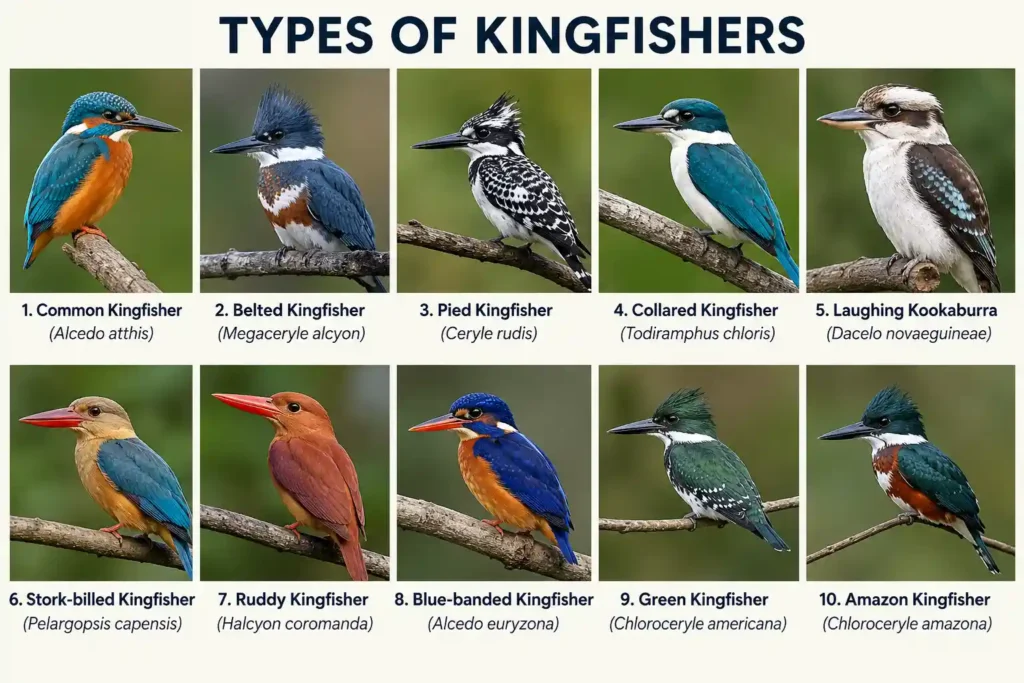
1. Common Kingfisher (Alcedo atthis)

The Common Kingfisher is one of the most recognizable kingfishers in the world. Its glowing blue upperparts and rich orange underparts make it stand out near rivers and streams. Even though its colors look bright in sunlight, this bird can disappear easily among reflections and shadows near water.
This species is small and compact with a short tail, large head, and long black bill. It usually hunts by sitting quietly above the water and watching for movement below. Once it spots a fish, it dives quickly and returns to a perch to swallow its catch headfirst.
Common Kingfishers are found across Europe, Asia, and parts of North Africa. They prefer clean freshwater habitats with plenty of small fish and exposed perches. During winter, some birds move toward coastal areas or unfrozen waterways when inland water freezes.
Birdwatchers often notice them first because of their fast low flight over water. Their sharp whistle-like call is another helpful clue when trying to locate them.
Quick Facts
- Size: Around 6 to 7 inches long
- Habitat: Rivers, streams, ponds, canals
- Diet: Small fish, insects, aquatic invertebrates
- Main Colors: Bright blue and orange
- Best ID Feature: Electric-blue back and fast flight
2. Belted Kingfisher (Megaceryle alcyon)
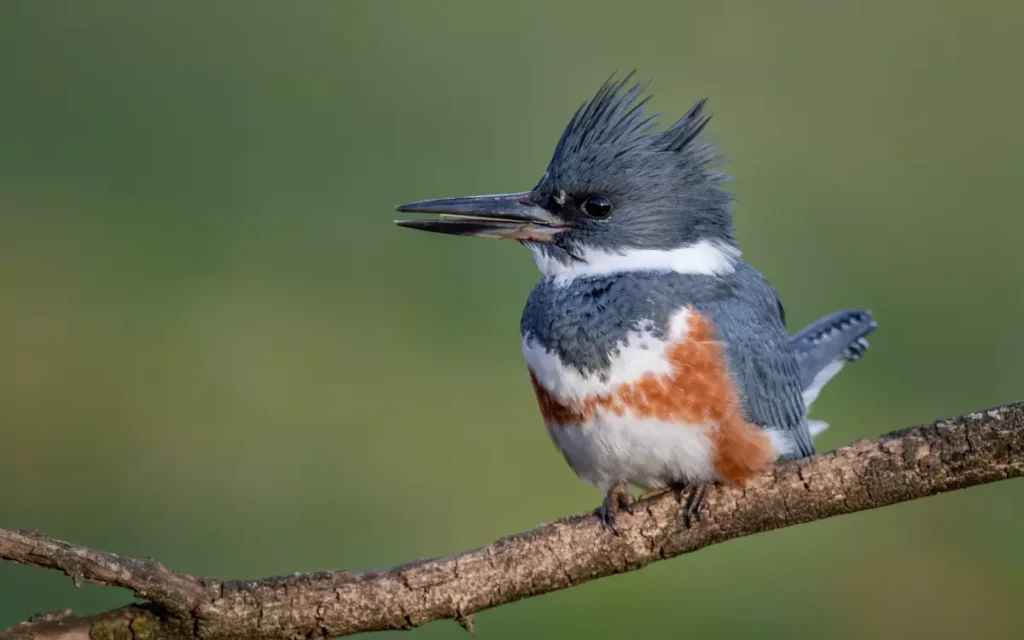
The Belted Kingfisher is a large and powerful North American kingfisher known for its shaggy crest and loud rattling calls. It has a blue-gray body, white collar, and heavy pointed bill designed for catching fish.
Unlike many bird species, the female Belted Kingfisher is actually more colorful than the male. Females have an extra rusty band across the belly, which helps separate them from males in the field.
This species lives around lakes, rivers, marshes, ponds, and coastlines. It often sits on utility wires, dead branches, or docks while searching for prey below. Once it spots movement, it dives headfirst into the water with surprising force.
Belted Kingfishers also have interesting nesting habits. They dig long tunnels into sandy or muddy banks where they raise their chicks safely away from predators.
Quick Facts
- Size: Around 11 to 14 inches long
- Habitat: Lakes, rivers, wetlands, coasts
- Diet: Fish, crayfish, amphibians
- Main Colors: Blue-gray and white
- Best ID Feature: Shaggy crest and rattling call
3. Pied Kingfisher (Ceryle rudis)

The Pied Kingfisher looks very different from most kingfishers because of its bold black-and-white plumage. Instead of bright blue or green feathers, this species has a striking patterned appearance that makes it easier to identify from a distance.
It is commonly found across Africa and parts of Asia near rivers, lakes, reservoirs, and wetlands. One of its most impressive behaviors is hovering. The bird can remain nearly still in the air while scanning the water below before diving after fish.
Pied Kingfishers are highly active hunters and often spend much of the day flying, hovering, and calling loudly. They usually hunt small fish but may also eat aquatic insects and crustaceans.
Their social behavior also stands out. Unlike many solitary kingfishers, Pied Kingfishers may gather in small groups and sometimes nest in colonies along riverbanks.
Quick Facts
- Size: Around 10 to 12 inches long
- Habitat: Rivers, wetlands, lakes
- Diet: Small fish and aquatic prey
- Main Colors: Black and white
- Best ID Feature: Hovering flight style
4. Collared Kingfisher (Todiramphus chloris)
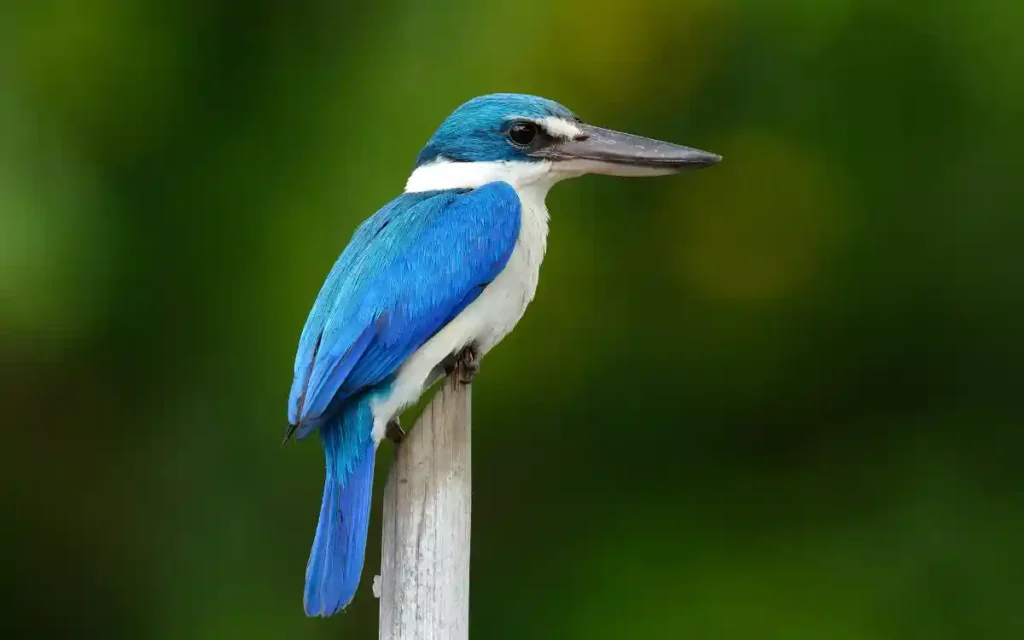
The Collared Kingfisher is a tropical species often linked with mangroves and coastal forests. It has blue-green upperparts, a white collar, and a thick dark bill that gives it a bold appearance.
This bird is found across Southeast Asia, northern Australia, and many Pacific islands. Unlike fish-focused kingfishers, it eats a much wider variety of prey. It hunts insects, crabs, lizards, frogs, and small fish depending on where it lives.
Collared Kingfishers are often noisy birds with repeated harsh calls echoing through mangroves and coastal woodlands. They usually perch in open areas where they can quickly swoop down onto prey.
Their ability to survive in coastal habitats makes them different from river-only kingfishers. Some populations are even comfortable near villages, gardens, and urban shorelines.
Quick Facts
- Size: Around 9 to 11 inches long
- Habitat: Mangroves, coasts, forests
- Diet: Crabs, insects, fish, reptiles
- Main Colors: Blue-green and white
- Best ID Feature: Bright white collar
5. Laughing Kookaburra (Dacelo novaeguineae)
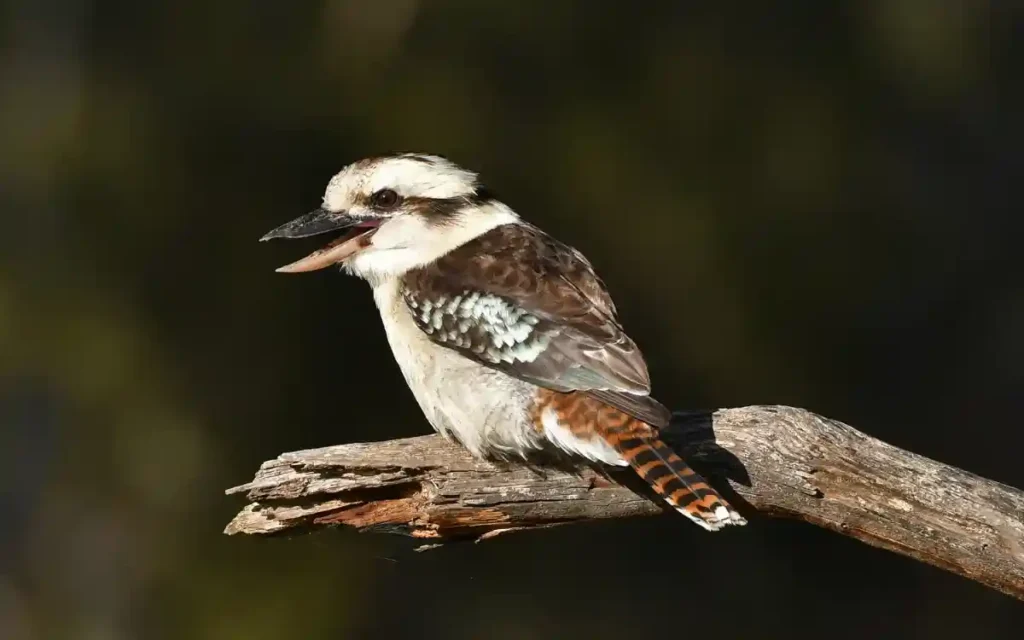
The Laughing Kookaburra is one of the most famous members of the kingfisher family. Native to Australia, it is best known for its loud call that sounds like human laughter echoing through forests and woodlands.
Unlike smaller river kingfishers, kookaburras are large, heavy-bodied birds with broad heads and strong bills. Their brown-and-white feathers help them blend into tree bark and dry woodland environments.
These birds are skilled hunters and eat much more than fish. They feed on snakes, insects, lizards, frogs, mice, and other small animals. Kookaburras often sit still for long periods before suddenly dropping onto prey.
They are highly territorial and frequently call together in family groups. Their laughing chorus helps warn other birds to stay away from their territory.
Quick Facts
- Size: Around 15 to 18 inches long
- Habitat: Woodland, forests, parks
- Diet: Reptiles, insects, small mammals
- Main Colors: Brown and white
- Best ID Feature: Loud laughing call
6. Stork-billed Kingfisher (Pelargopsis capensis)
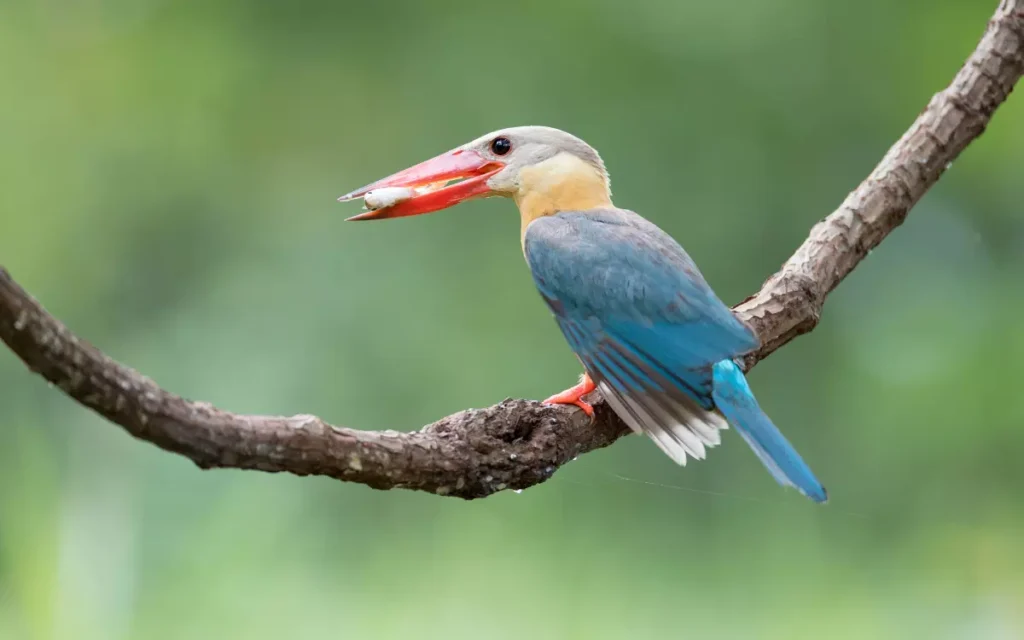
The Stork-billed Kingfisher is one of the largest and most powerful kingfishers in Asia. Its giant red bill immediately grabs attention and helps separate it from smaller species.
This bird has greenish-blue wings, buff underparts, and a pale brown head. It lives near rivers, lakes, mangroves, swamps, and forest waterways.
Because of its large size, it can hunt bigger prey than many other kingfishers. Fish are important in its diet, but it also catches frogs, crabs, rodents, and reptiles.
Stork-billed Kingfishers are often solitary and prefer quiet habitats. Their deep calls carry across wetlands and forest edges, especially early in the morning.
Quick Facts
- Size: Around 13 to 15 inches long
- Habitat: Wetlands, mangroves, rivers
- Diet: Fish, frogs, reptiles
- Main Colors: Blue-green, buff, red bill
- Best ID Feature: Massive bright-red bill
7. Ruddy Kingfisher (Halcyon coromanda)
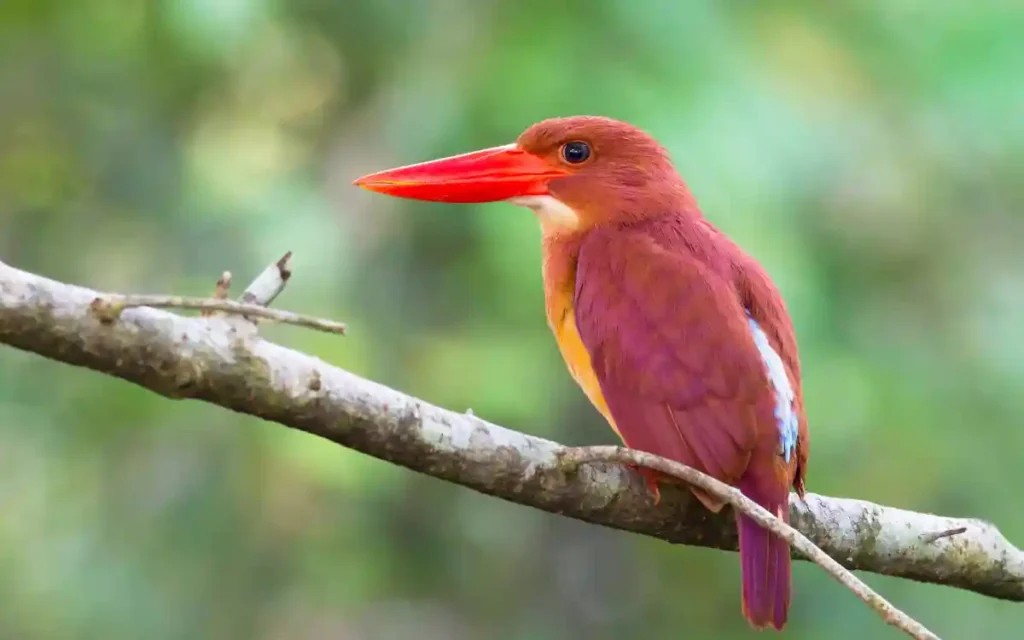
The Ruddy Kingfisher is a beautiful reddish-brown species found across parts of East and Southeast Asia. It has a rich chestnut body, bright red bill, and red legs that give it a warm tropical appearance.
This bird usually lives in forests, mangroves, wooded wetlands, and shaded streams. Compared with open-water kingfishers, it spends more time hidden inside dense vegetation.
Ruddy Kingfishers feed on insects, frogs, crabs, and small aquatic animals. Their calls are often heard before the bird is actually seen because they can remain hidden among thick leaves and branches.
During migration seasons, some populations travel long distances between breeding and wintering grounds.
Quick Facts
- Size: Around 10 to 11 inches long
- Habitat: Forests, mangroves, wetlands
- Diet: Insects, frogs, crabs
- Main Colors: Chestnut-red body
- Best ID Feature: Bright red bill and warm plumage
Related article: 19 Birds That Start With K
8. Blue-banded Kingfisher (Alcedo euryzona)
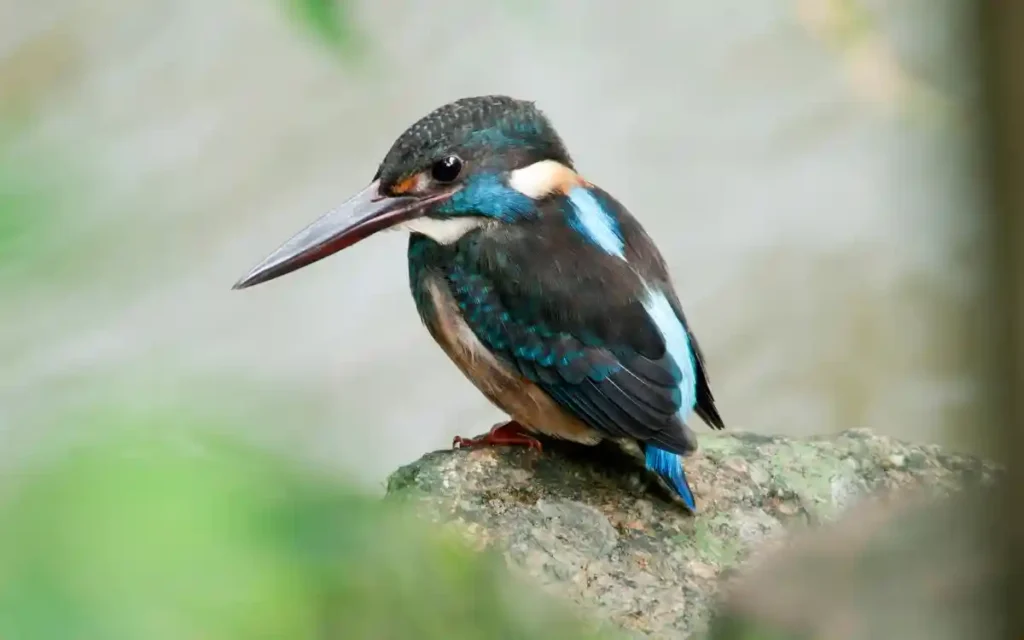
The Blue-banded Kingfisher is a striking forest species known for its rich blue upperparts and orange underparts. It is mostly found near shaded streams and tropical forest waterways in Southeast Asia.
This kingfisher prefers quiet forest habitats rather than open rivers or lakes. Because of this, many people rarely see it unless they specifically search forest streams.
It hunts from low branches above the water and catches fish, insects, and aquatic prey. Its deep blue coloration can look almost glowing in filtered sunlight.
Habitat loss has reduced some local populations because forest waterways are sensitive to logging and environmental changes.
Quick Facts
- Size: Around 8 inches long
- Habitat: Forest streams
- Diet: Fish and aquatic insects
- Main Colors: Deep blue and orange
- Best ID Feature: Dark blue upperparts
9. Green Kingfisher (Chloroceryle americana)
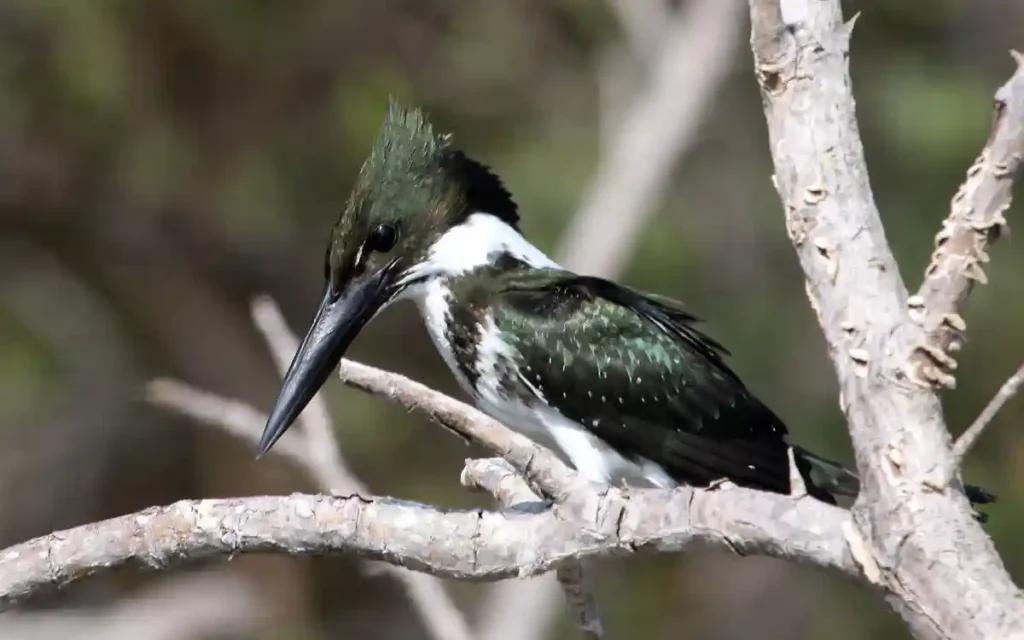
The Green Kingfisher is a small species found in the Americas. It has metallic green upperparts, white markings, and a compact shape that helps it blend into riverside vegetation.
This bird hunts by sitting close to the water before diving quickly after small fish. It often stays near quiet streams, ponds, canals, and marshes with overhanging branches.
Male Green Kingfishers usually show a rusty chest band, while females have more white and green markings underneath. Their small size makes them harder to spot compared with larger kingfishers.
Even though they are tiny, they are fast and skilled hunters.
Quick Facts
- Size: Around 7 to 8 inches long
- Habitat: Streams, marshes, ponds
- Diet: Small fish and insects
- Main Colors: Green and white
- Best ID Feature: Small size and green back
10. Amazon Kingfisher (Chloroceryle amazona)
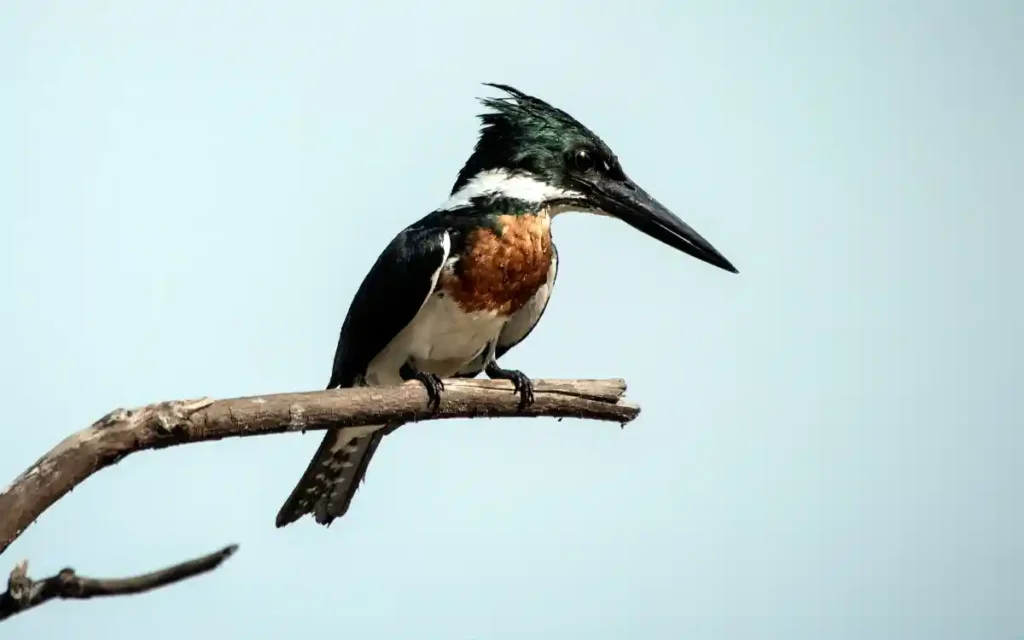
The Amazon Kingfisher is a larger relative of the Green Kingfisher and is found across much of Central and South America. It has dark green upperparts, a white collar, and a heavy pointed bill.
This species prefers rivers, lakes, wetlands, and forest waterways where fish are abundant. It usually hunts from exposed branches and repeatedly returns to favorite perches.
Males have a rusty chest band, while females show green spotting on the breast area. Compared with smaller kingfishers, the Amazon Kingfisher looks bulkier and more powerful.
Its loud calls and active hunting behavior make it easier to notice around tropical waterways.
Quick Facts
- Size: Around 11 to 12 inches long
- Habitat: Rivers, lakes, wetlands
- Diet: Fish and aquatic prey
- Main Colors: Green and white
- Best ID Feature: Large green body and white collar
FAQs
What is the rarest kingfisher?
Several island kingfishers are considered rare due to habitat loss and limited range. Some forest kingfishers are also difficult to spot in the wild.
Do kingfishers migrate?
Some species migrate seasonally, while others stay in the same area all year depending on climate and food supply.
Why are kingfishers so colorful?
Their bright feathers help with communication, mating displays, and species recognition. Structural feather coloration also creates their glowing blue appearance.
Are kingfishers good at fishing?
Yes. Many species are highly skilled fish hunters with excellent eyesight and fast diving abilities.
How many types of kingfishers exist?
There are around 90 known kingfisher species worldwide, ranging from tiny river hunters to large woodland birds.