15 Yellow Birds in Georgia
Georgia is a great state for spotting yellow birds because it has pine forests, wetlands, open fields, backyard feeders, river woods, and coastal migration routes. Some yellow birds live in Georgia all year, while others pass through during migration or arrive in spring to breed.
The easiest yellow bird to recognize is usually the American Goldfinch, but Georgia also has many yellow warblers, orioles, and tanagers that can confuse beginners. The key is to look at where the bird is, what season it appears, and how the yellow color is placed on the body.
1. American Goldfinch
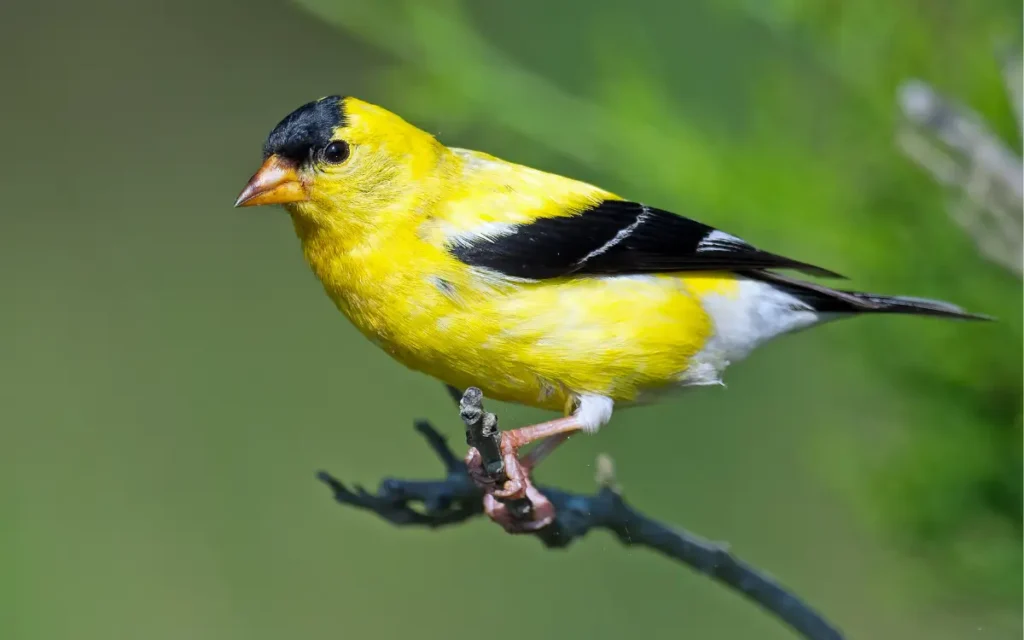
The American Goldfinch is one of the most familiar yellow birds in Georgia, especially for people who feed birds at home. Breeding males are bright yellow with a black forehead, black wings, and white wing bars. Females and winter birds are much duller, often looking olive, tan, or pale yellow.
In Georgia, American Goldfinches can be seen throughout the year, but they look brightest in spring and summer. They love weedy fields, gardens, open wood edges, and backyard feeders. If you have native seed plants or feeders with sunflower chips or nyjer seed, this is one of the yellow birds most likely to visit.
Quick ID points:
- Small finch with a short cone-shaped bill
- Breeding male is bright yellow with black wings
- Often flies in a bouncy, dipping pattern
- Common around feeders, fields, and gardens
- Less colorful in winter
Best places to see it in Georgia: Backyards, roadsides, open fields, parks, gardens, and weedy areas.
2. Pine Warbler
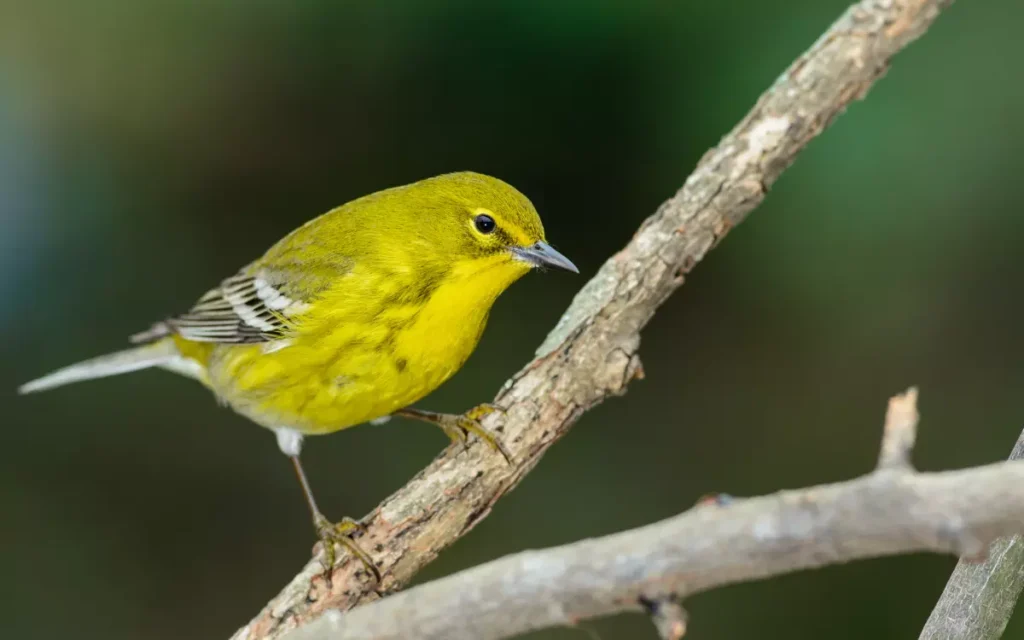
The Pine Warbler is one of the best yellow birds to know in Georgia because it is present year-round in many parts of the state. It is not always fully bright yellow, but many birds show a soft yellow throat, breast, and face. Some individuals look more olive or grayish, especially females and young birds.
As the name suggests, Pine Warblers are strongly tied to pine trees. In Georgia, they are often found in pine forests, mixed woods, wooded neighborhoods, and parks with mature pines. Unlike many warblers, Pine Warblers may also come to feeders, especially for suet, mealworms, or seed mixes.
Quick ID points:
- Soft yellow throat and breast
- Olive back with pale wing bars
- Often found high in pine trees
- Can visit backyard feeders
- One of Georgia’s easier warblers to find
Best places to see it in Georgia: Pine forests, pine-heavy yards, parks, woodland edges, and mixed forests.
3. Yellow Warbler
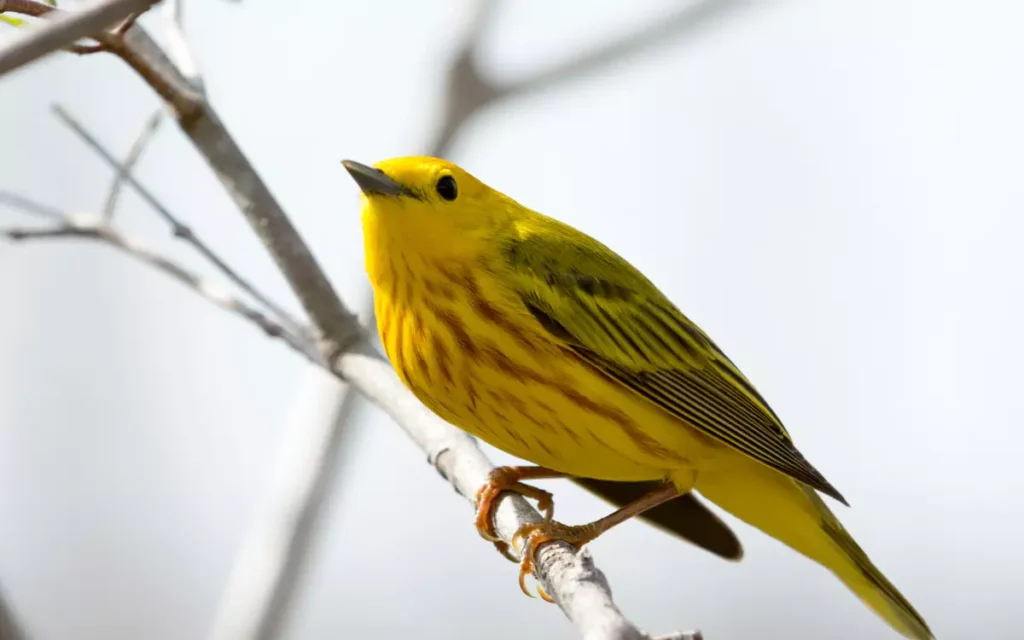
The Yellow Warbler is one of the brightest yellow birds that may appear in Georgia during spring and fall migration, and some can be found during the breeding season in suitable habitat. Males are rich yellow with rusty-red streaks on the chest, while females are usually softer yellow without strong streaking.
This bird often stays near wet areas, shrubby edges, young trees, and streamside growth. It moves quickly through leaves while picking insects from branches. Because many warblers are yellow, look for the Yellow Warbler’s overall yellow body and plain rounded look. It does not have the bold black mask of a Common Yellowthroat or the white belly of a Yellow-throated Warbler.
Quick ID points:
- Mostly yellow from head to tail
- Males may show reddish streaks on the chest
- Small, active bird in shrubs and small trees
- Often seen during migration
- Prefers wet edges and young growth
Best places to see it in Georgia: Wet thickets, stream edges, young woodland, marsh edges, and migration hotspots.
4. Common Yellowthroat
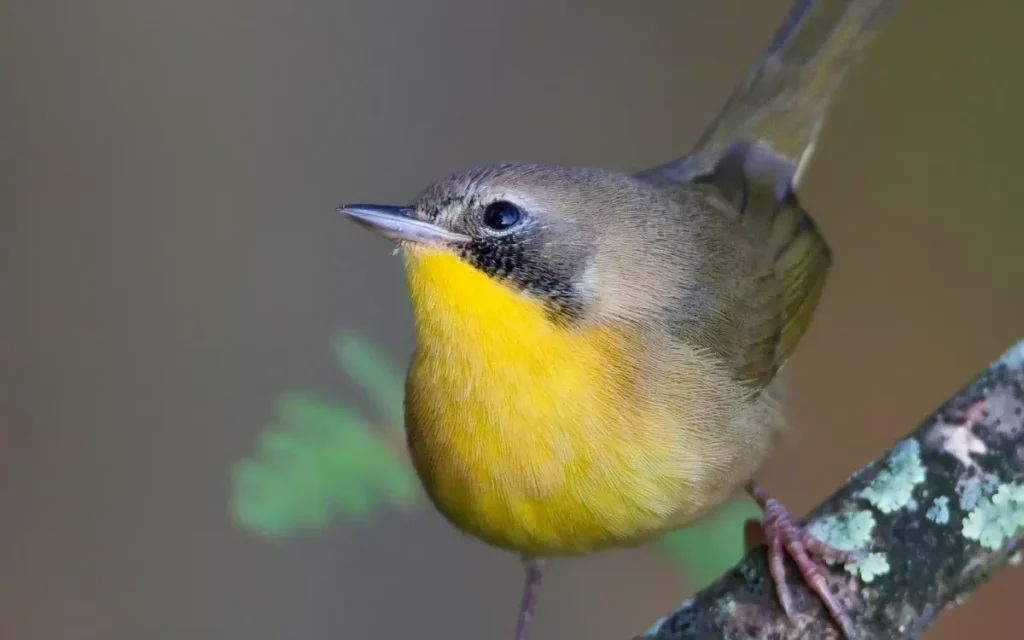
The Common Yellowthroat is a small warbler with a bright yellow throat and chest. Adult males are easy to recognize because they have a black face mask bordered by pale gray or white. Females do not have the black mask, so they can look like plain olive-yellow birds hiding in thick grass or reeds.
In Georgia, Common Yellowthroats are usually found in marshes, wet fields, brushy ditches, pond edges, and thick grassy areas. They often stay low, so you may hear their song before you see them. If a small yellow bird pops out of reeds or low weeds and quickly disappears again, Common Yellowthroat is a strong possibility.
Quick ID points:
- Male has a black mask and yellow throat
- Female is olive-brown above with yellow below
- Often stays low in dense plants
- Common in wet, brushy habitat
- More often heard than clearly seen
Best places to see it in Georgia: Marshes, pond edges, wet fields, grassy ditches, and shrubby wetlands.
5. Northern Parula
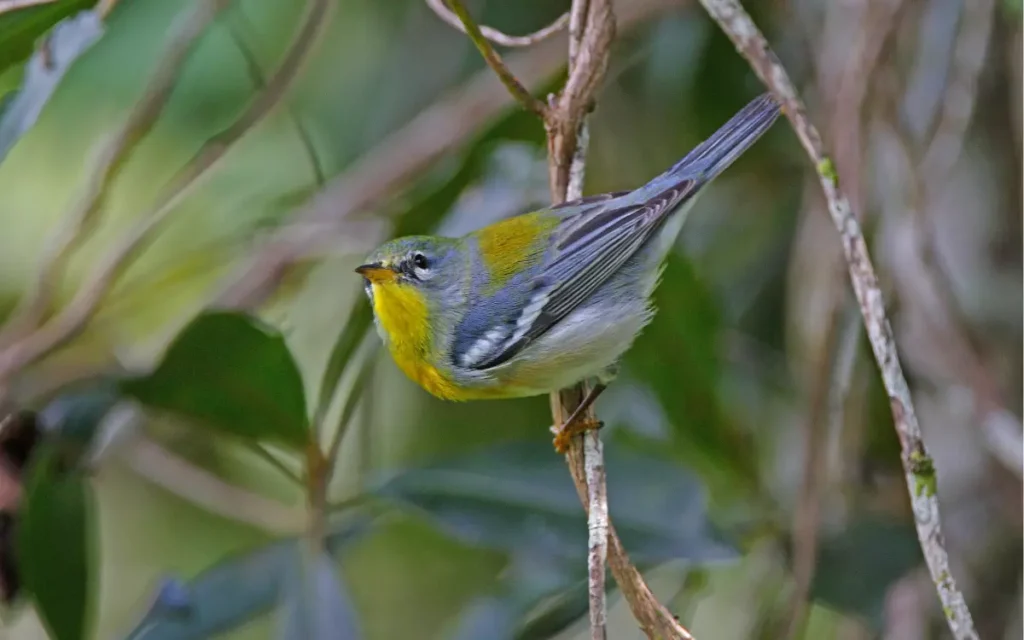
The Northern Parula is a small warbler with a bluish-gray back, yellow throat, and white belly. It is one of the more colorful spring birds in Georgia, but it can be tricky to see because it often stays high in the forest canopy. Males may show a dark band across the chest, while females are softer and less marked.
Northern Parulas are often found in mature forests, especially where there is moss, lichens, or humid woodland habitat. In Georgia, they are common during spring and summer in the right areas. Their rising buzzy song is often the easiest clue that one is nearby.
Quick ID points:
- Tiny warbler with yellow throat and chest
- Bluish-gray upperparts
- Often high in trees
- Males may have a dark chest band
- Common spring and summer forest bird
Best places to see it in Georgia: Mature forests, river woods, shaded parks, wooded trails, and canopy-rich areas.
6. Prothonotary Warbler
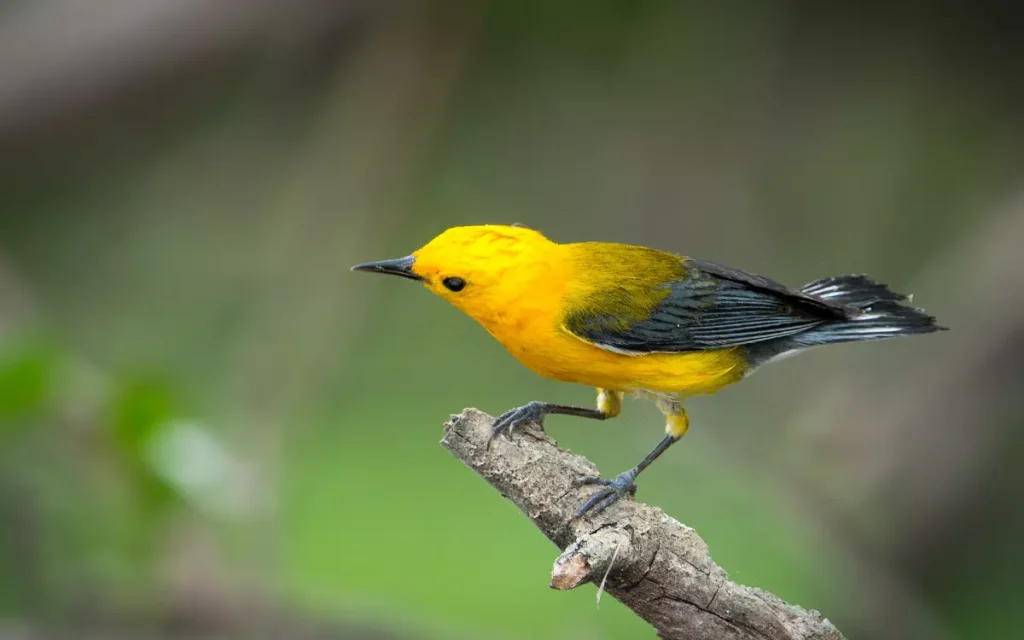
The Prothonotary Warbler is one of the most beautiful yellow birds in Georgia. It has a rich golden-yellow head and body, blue-gray wings, and a clean, bright look that stands out in shaded swamp habitat. Unlike many warblers that stay high in the trees, this bird is often seen lower near water.
In Georgia, Prothonotary Warblers are strongly linked to wooded wetlands, swamps, flooded forests, and river bottoms. They nest in cavities, which is unusual for warblers. If you are walking near a swampy area in spring or summer and see a glowing yellow bird near dark water, this species should be near the top of your list.
Quick ID points:
- Golden-yellow head and chest
- Blue-gray wings
- Often found near water
- Nests in tree cavities
- One of the brightest yellow warblers in Georgia
Best places to see it in Georgia: Swamps, river bottoms, flooded forests, cypress areas, and wooded wetlands.
7. Prairie Warbler
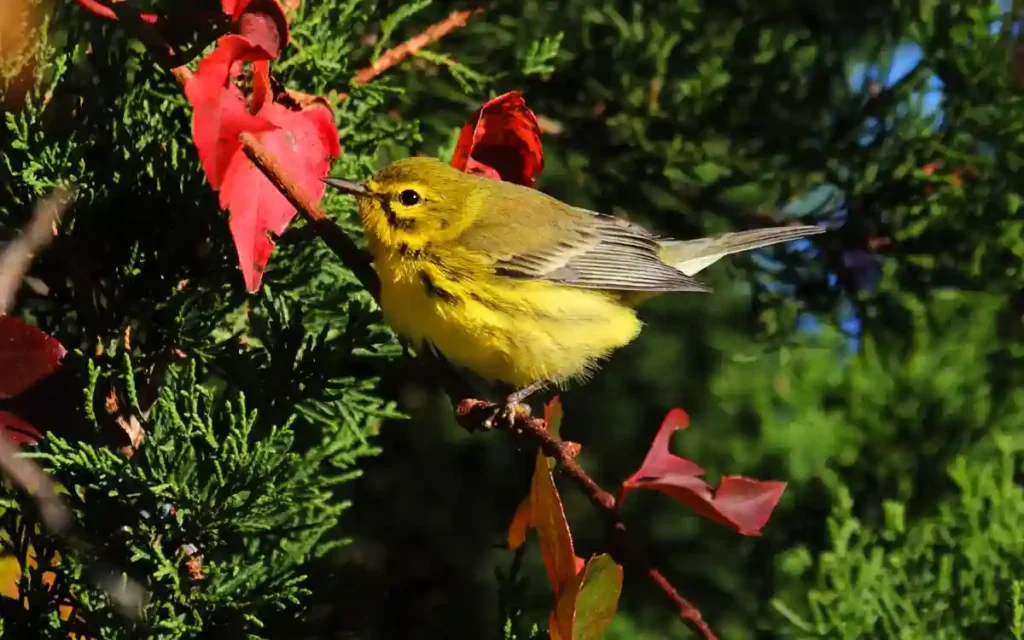
The Prairie Warbler is a small yellow warbler with dark streaks along the sides and an olive back. Despite its name, it is not only found in open prairie. In Georgia, it often lives in shrubby fields, young pine stands, brushy clearings, and early-growth habitats.
This bird is active and often flicks its tail as it moves through low branches. Males have a yellow face with dark facial markings, which helps separate them from plainer yellow birds. Prairie Warblers are good birds to include in a Georgia yellow bird article because they add habitat variety beyond feeders and wetlands.
Quick ID points:
- Yellow underside with dark side streaks
- Olive back
- Often flicks tail
- Likes shrubs, young trees, and brushy fields
- More common in spring and summer
Best places to see it in Georgia: Young pine areas, shrubby fields, powerline cuts, forest edges, and old clearings.
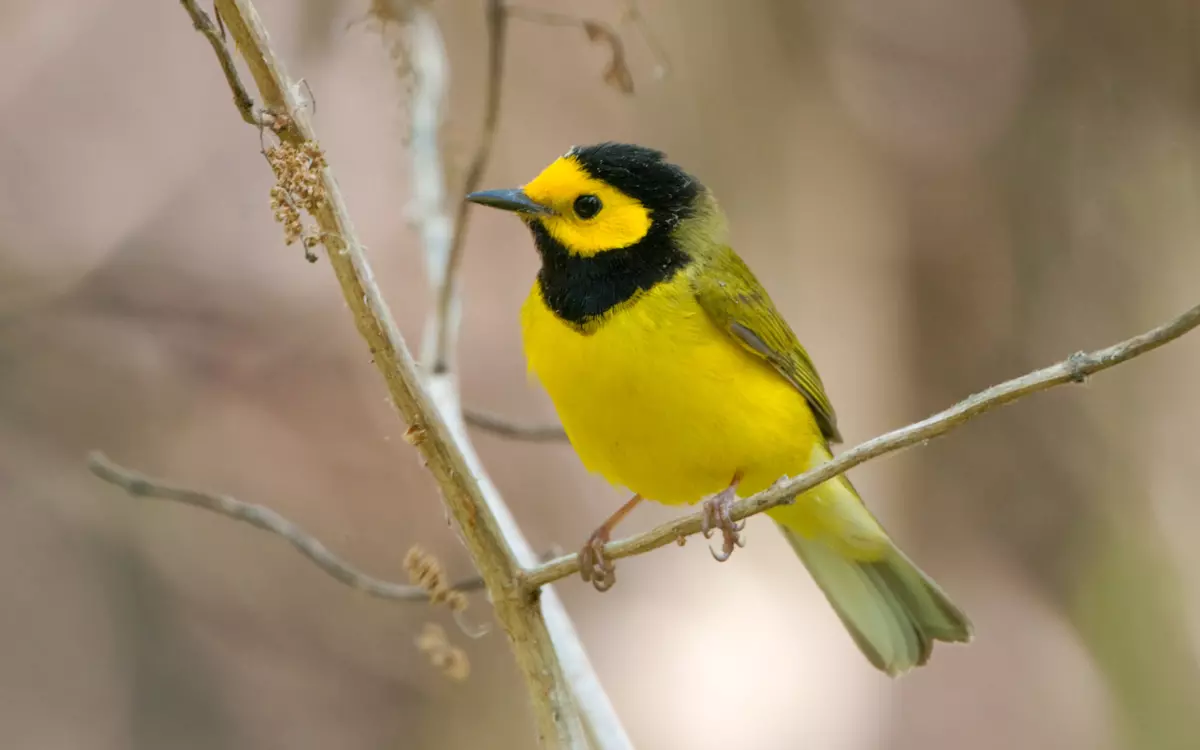
8. Hooded Warbler
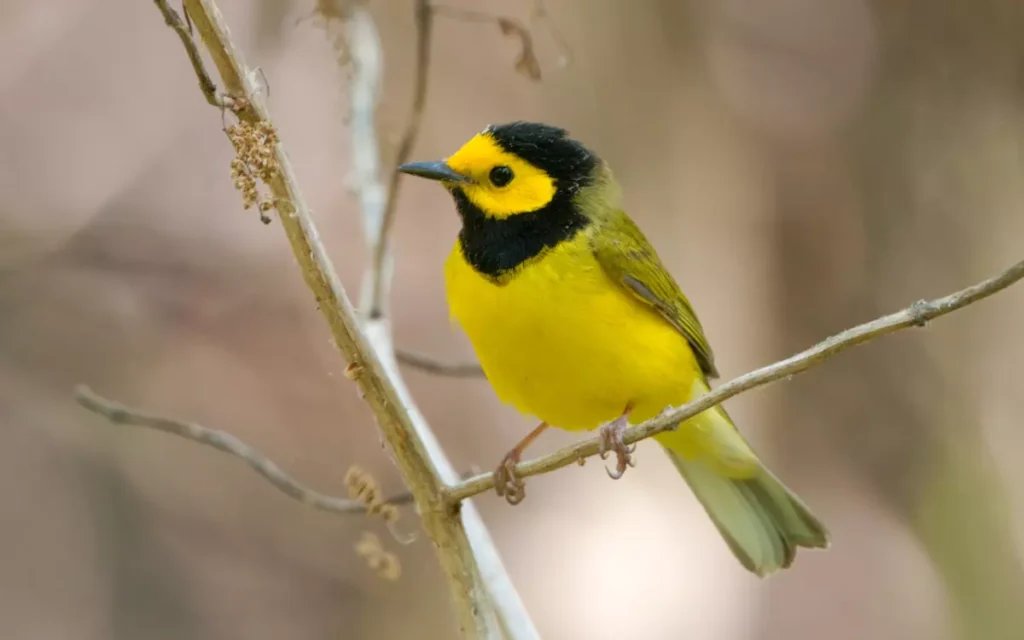
The Hooded Warbler is a bright yellow forest bird with a bold look. Adult males have a black hood around a yellow face, making them one of the easiest warblers to recognize when seen clearly. Females may show a weaker hood or little dark marking, but they still have yellow underparts and an active forest-floor style.
In Georgia, Hooded Warblers prefer shaded forests with thick understory. They often stay low, hopping through shrubs and leafy growth rather than staying high in the canopy. This makes them easier to see than some warblers, but they still move quickly and can disappear into cover.
Quick ID points:
- Male has black hood and yellow face
- Bright yellow underparts
- Often stays low in shady forest
- Likes thick understory
- More common in spring and summer
Best places to see it in Georgia: Shady hardwood forests, wooded ravines, thick understory, and forest trails.
9. Kentucky Warbler
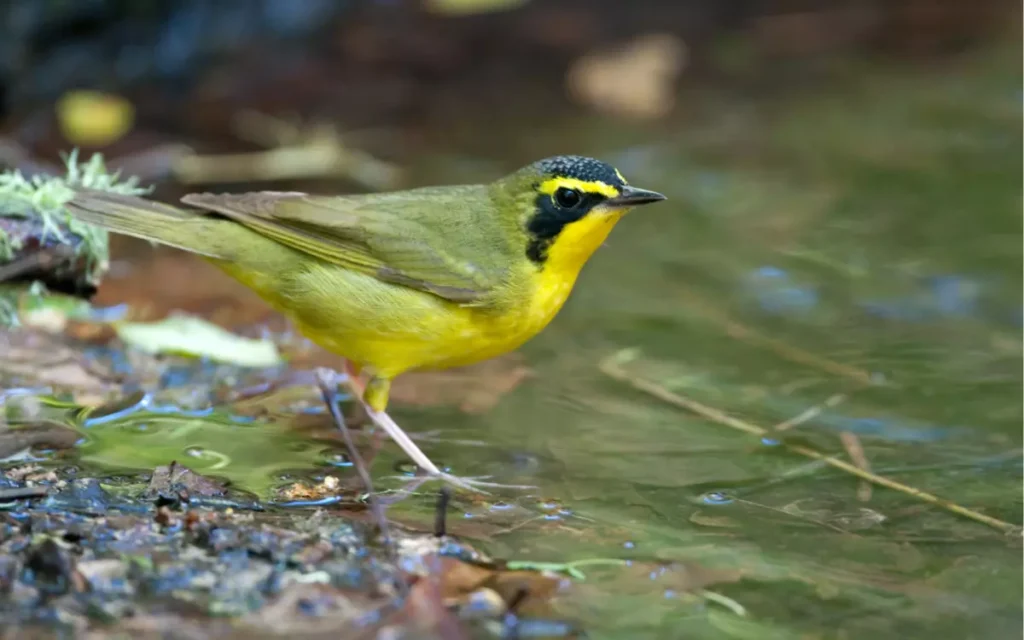
The Kentucky Warbler is a yellow bird of dense, leafy forests. It has bright yellow underparts, olive upperparts, and a bold face pattern with dark marks around the eyes. It is not as easy to spot as some other yellow birds because it often stays near the ground in thick cover.
In Georgia, Kentucky Warblers are usually found in moist forests, ravines, and areas with heavy understory. They walk and hop through leaf litter while searching for insects. Because they stay low and hidden, birders often identify them by sound first. For a beginner, this bird may be harder to find, but it belongs in a complete Georgia yellow bird list.
Quick ID points:
- Yellow underparts with olive back
- Bold dark face markings
- Stays low near the forest floor
- Prefers dense, moist woods
- Often hidden in thick plants
Best places to see it in Georgia: Moist woodlands, shaded ravines, bottomland forest, and thick understory.
10. Yellow-throated Warbler
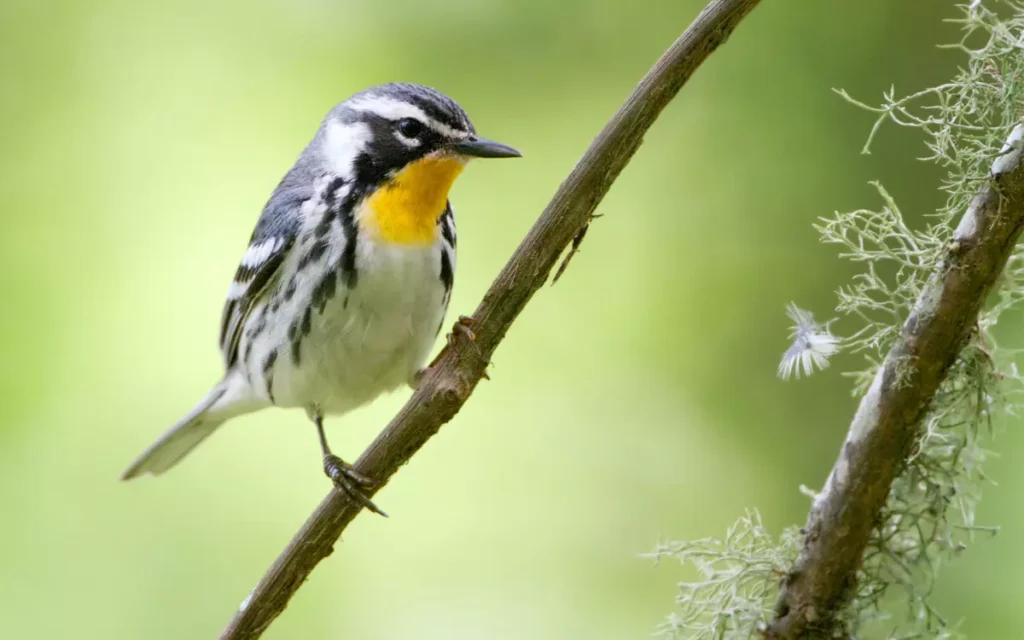
The Yellow-throated Warbler is a sharp-looking bird with a bright yellow throat, black-and-white face pattern, gray back, and white belly. Unlike fully yellow birds, this species has yellow mainly on the throat and upper chest, so it is important to look at the full pattern.
In Georgia, Yellow-throated Warblers can be found in pine forests, river woods, and tall trees. They often climb along branches and trunks, almost like a tiny nuthatch. They may stay high in the canopy, so binoculars help. This is a great bird to include because its yellow throat makes it easy to name, but its body pattern prevents confusion with goldfinches or other warblers.
Quick ID points:
- Bright yellow throat
- Black-and-white face pattern
- Gray back and white belly
- Often climbs along branches
- Found in pines and river woods
Best places to see it in Georgia: Pine forests, tall hardwoods, river corridors, wooded parks, and swamp edges.
11. Blue-winged Warbler
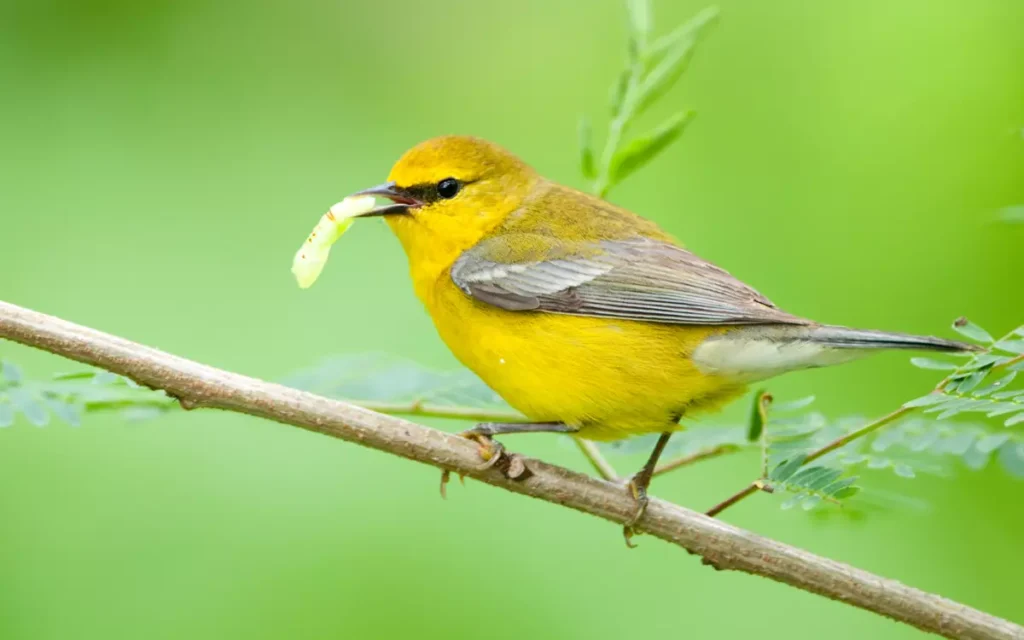
The Blue-winged Warbler is a yellow-bodied bird with blue-gray wings and a thin black line through the eye. It has a clean, neat appearance compared with streakier warblers. In Georgia, it is more likely during migration and in suitable brushy breeding habitat.
This bird prefers shrubby fields, overgrown edges, young forest, and open areas with scattered trees. Because it is small and active, it can be easy to miss. Its blue-gray wings are one of the best clues, especially when paired with the yellow body and dark eye line.
Quick ID points:
- Yellow body
- Blue-gray wings
- Thin dark eye line
- Likes brushy open habitat
- Often seen during spring migration
Best places to see it in Georgia: Brushy fields, woodland edges, overgrown clearings, and migration areas.
12. Canada Warbler
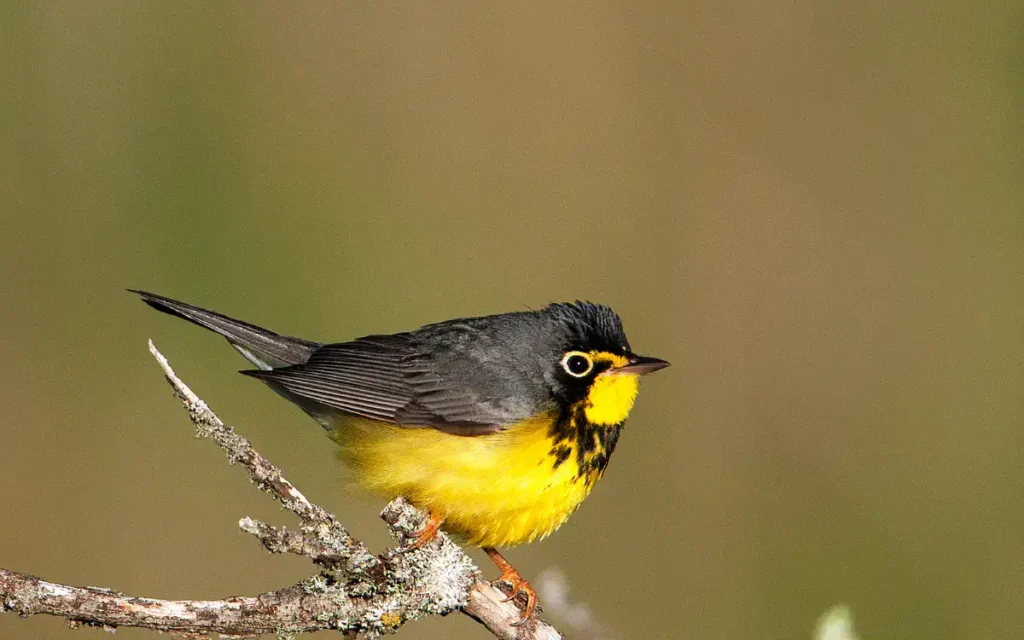
The Canada Warbler is a small yellow bird that passes through Georgia mainly during migration. It has a bright yellow chest and belly with a dark “necklace” of streaks across the upper chest. The back is grayish, and the face often looks alert and bright-eyed.
This is not usually a backyard feeder bird. In Georgia, Canada Warblers are more likely in damp woods, shaded thickets, and migration hotspots during spring and fall. Because they do not stay in Georgia all year, timing matters. Birders are most likely to find them during migration windows when many warblers are moving through the state.
Quick ID points:
- Yellow chest and belly
- Dark necklace-like chest marks
- Grayish upperparts
- Mostly a migration bird in Georgia
- Often found in damp wooded areas
Best places to see it in Georgia: Wooded ravines, damp forests, shaded thickets, and spring or fall migration hotspots.
13. Female Summer Tanager
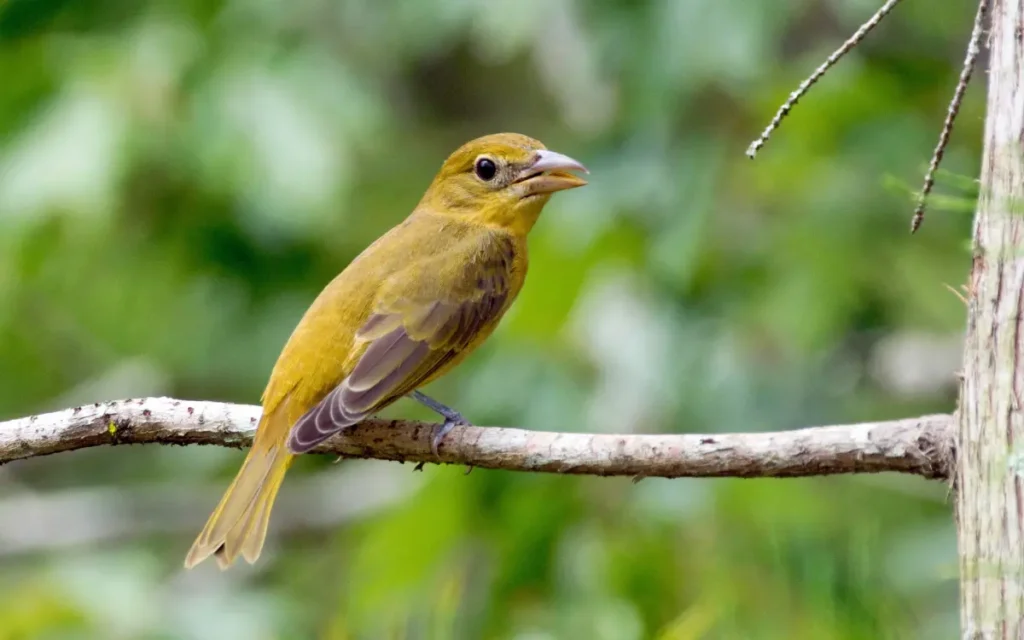
The female Summer Tanager is often yellow to olive-yellow, which makes it very different from the bright red male. Many people searching for yellow birds in Georgia may not realize they are looking at a female tanager. She has a longer body shape than most warblers and a thicker bill.
In Georgia, Summer Tanagers are found in open woods, forest edges, parks, and mature trees during the warmer months. They often feed on insects, including bees and wasps. Females can look plain at first, but their yellow-green coloring, sturdy bill, and slower movement can help separate them from small warblers.
Quick ID points:
- Female is yellow to olive-yellow
- Male is red, not yellow
- Thicker bill than warblers
- Found in open woods and edges
- Common in warmer months
Best places to see it in Georgia: Open forests, wooded neighborhoods, parks, forest edges, and mature trees.
14. Female Orchard Oriole
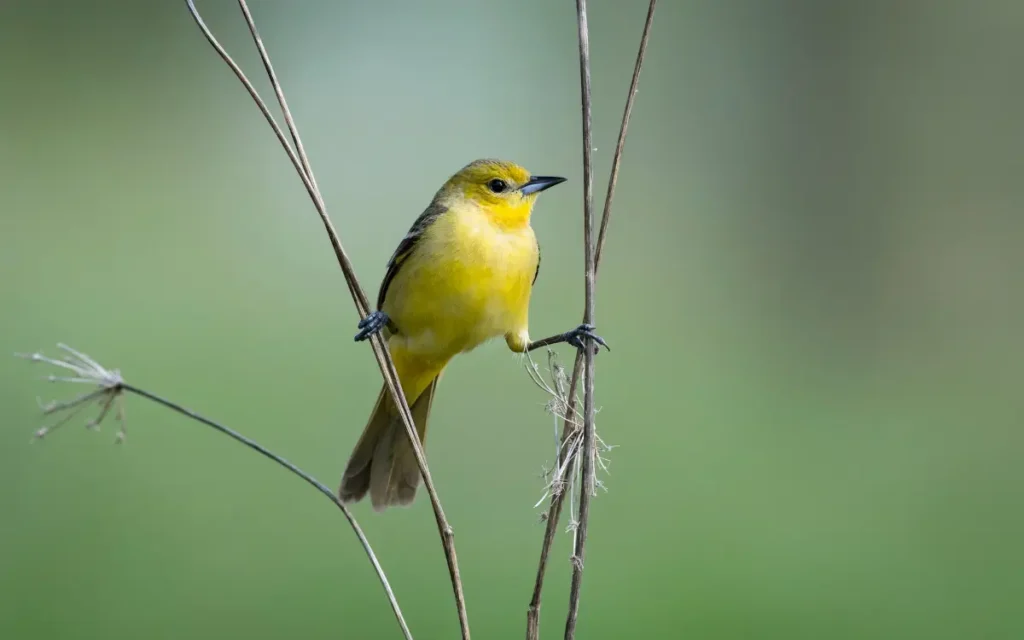
The female Orchard Oriole is a yellow-green bird with a slim body and pointed bill. Males are dark chestnut and black, but females look much brighter and can easily be mistaken for other yellow birds. Young males may also show yellowish tones before they mature.
In Georgia, Orchard Orioles are usually seen in spring and summer. They prefer orchards, open woods, parks, farms, and areas with scattered trees. They may feed on insects, nectar, and fruit. Their slim shape and oriole-like bill help separate them from warblers and finches.
Quick ID points:
- Female is yellow-green
- Slim body and pointed bill
- Male is dark chestnut and black
- Often found in open tree-filled areas
- More common in spring and summer
Best places to see it in Georgia: Orchards, farms, parks, open woods, woodland edges, and flowering trees.
15. Female Baltimore Oriole
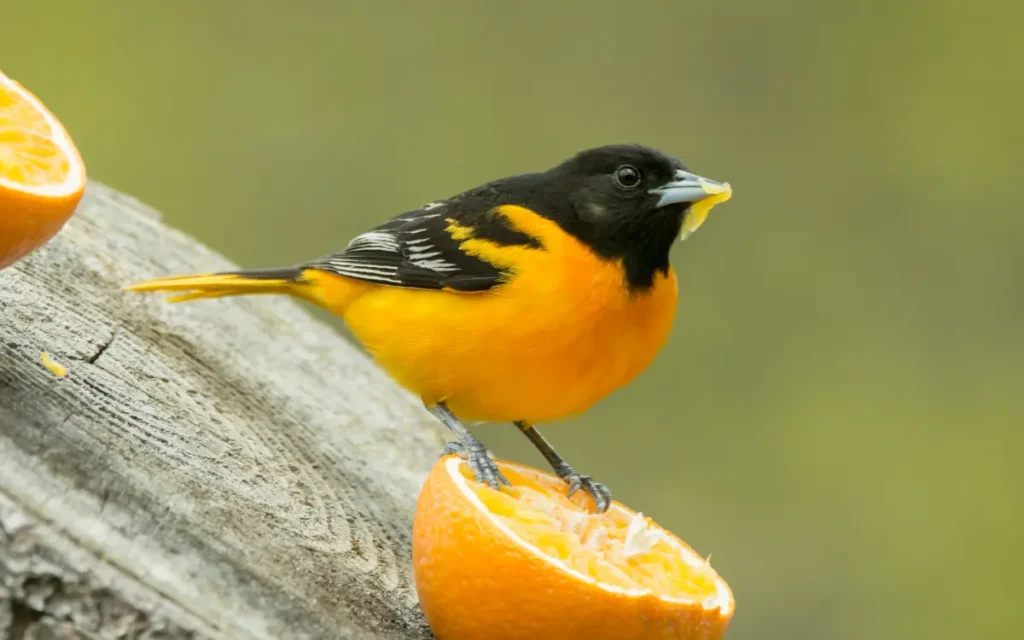
The female Baltimore Oriole can appear yellow-orange underneath with a brownish or olive back. Males are bright orange and black, but females are softer and can look yellow, especially in certain light. This makes them a good match for people trying to identify yellow birds in Georgia.
Baltimore Orioles pass through Georgia during migration, and some may be seen in summer in suitable areas. They often stay in tall trees, parks, woodland edges, and yards with fruiting or flowering trees. They may visit feeders for orange halves, jelly, or nectar, especially during migration.
Quick ID points:
- Female has yellow-orange underparts
- Brownish or olive upperparts
- Pointed oriole bill
- Often seen in trees, not low grass
- May visit fruit or nectar feeders
Best places to see it in Georgia: Parks, wooded neighborhoods, tall trees, forest edges, and migration-friendly yards.
FAQs
What is the most common yellow bird in Georgia?
The American Goldfinch is one of the most common yellow birds in Georgia, especially around feeders, open fields, gardens, and weedy areas. Pine Warblers are also common, especially where pine trees are present.
What yellow birds stay in Georgia all year?
Two good examples are the American Goldfinch and Pine Warbler. Goldfinches may look duller in winter, while Pine Warblers can be seen in pine woods throughout the year.
What small yellow bird comes to feeders in Georgia?
The American Goldfinch is the small yellow bird most likely to visit feeders. Pine Warblers may also visit feeders, especially for suet or seed, but goldfinches are the classic yellow feeder bird.
What yellow bird lives in pine trees in Georgia?
The Pine Warbler is the main yellow bird linked to pine trees in Georgia. Yellow-throated Warblers can also be found in pine areas, but Pine Warblers are more strongly tied to pine habitat.
Are all yellow birds in Georgia warblers?
No. Many yellow birds in Georgia are warblers, but not all of them. Goldfinches, orioles, and female Summer Tanagers can also look yellow.
Why do some yellow birds look dull in winter?
Some birds, especially American Goldfinches, change into duller nonbreeding plumage during winter. A bright yellow male goldfinch in summer may look olive-brown or pale yellow in winter.
What is the brightest yellow bird in Georgia?
The Prothonotary Warbler is one of the brightest yellow birds in Georgia. The male American Goldfinch is also very bright during breeding season, especially in spring and summer.
Final Thoughts
For a strong Georgia bird article, start with the birds readers are most likely to know, such as American Goldfinch, Pine Warbler, and Common Yellowthroat. Then include the more seasonal warblers, orioles, and female tanagers to make the guide more complete.
The best way to identify yellow birds in Georgia is to look at three things together: season, habitat, and body pattern. A yellow bird at a feeder is often a goldfinch, a yellow bird in pine trees may be a Pine Warbler, and a golden bird near swamp water could be a Prothonotary Warbler.