17 Gray Birds in Georgia
Georgia has many gray birds, from small backyard visitors to large wetland birds and birds of prey. Some are easy to spot at feeders, while others are more likely around lakes, fields, pine woods, marshes, or city streets.
Gray birds can be tricky because many are not fully gray. Some look blue-gray, brown-gray, slate-gray, or pale gray depending on the light, season, and age. The best way to identify them is to check their size, bill shape, habitat, behavior, and any extra markings like wing bars, crests, masks, or white patches.
1. Northern Mockingbird
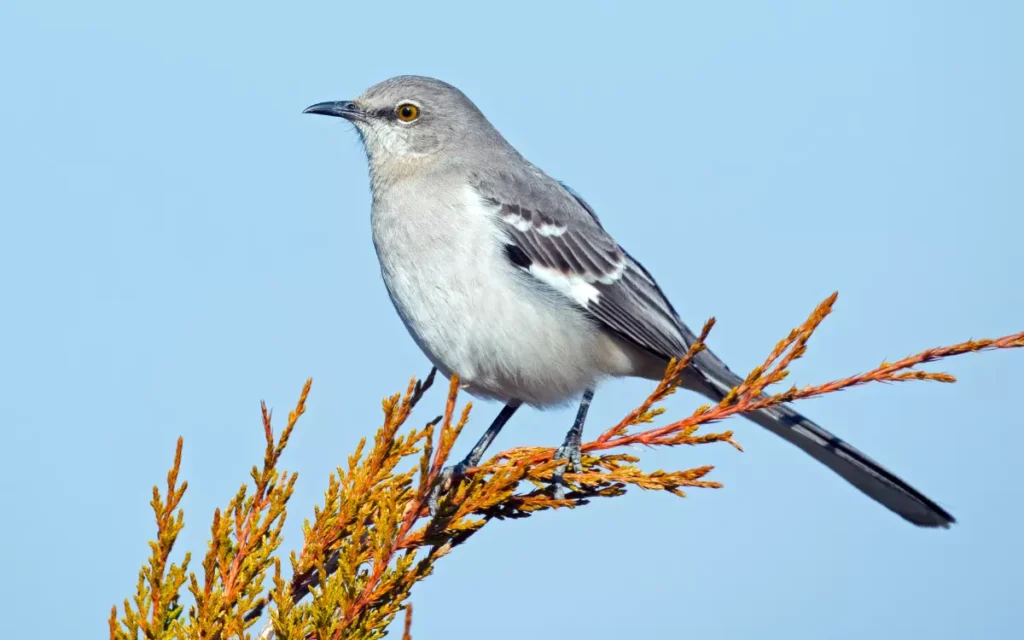
The Northern Mockingbird is one of the most common gray birds in Georgia and one of the easiest to recognize once you know its shape. It has a slim gray body, pale underside, long tail, and bold white patches on the wings that flash when it flies.
You will often see mockingbirds on fences, rooftops, power lines, shrubs, and open lawns. They are confident birds and may chase away crows, cats, hawks, or anything that gets too close to their nest. Their song is also a major clue because they repeat phrases and copy other birds, alarms, and outdoor sounds.
Quick ID points:
- Medium-sized gray songbird
- Long tail and slim body
- White wing patches show clearly in flight
- Often perches in the open
- Known for copying other bird songs
Best places to see it in Georgia: Neighborhoods, parks, yards, parking lots, farms, roadsides, and open areas with shrubs.
2. Tufted Titmouse
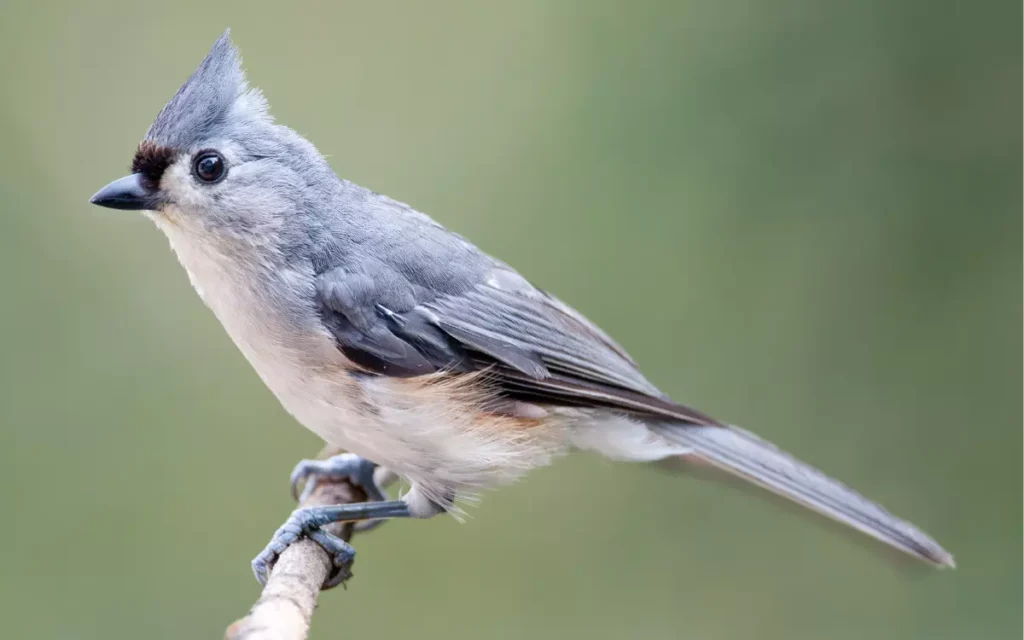
The Tufted Titmouse is a small gray bird with a soft crest on its head, dark eyes, and pale underside. It is one of the most common feeder birds in Georgia, especially in wooded yards and suburban neighborhoods with mature trees.
This bird often moves quickly from branch to branch, grabs a seed, and flies away to eat it somewhere safer. Its gray crest gives it a rounded, curious look, which makes it easier to separate from chickadees and nuthatches. You may also notice a warm peachy color along its sides.
Quick ID points:
- Small gray bird with a crest
- Pale belly with peachy sides
- Large dark eyes
- Common at feeders
- Often travels with chickadees and nuthatches
Best places to see it in Georgia: Wooded backyards, feeders, parks, oak woods, pine-hardwood forests, and suburban trees.
3. Carolina Chickadee
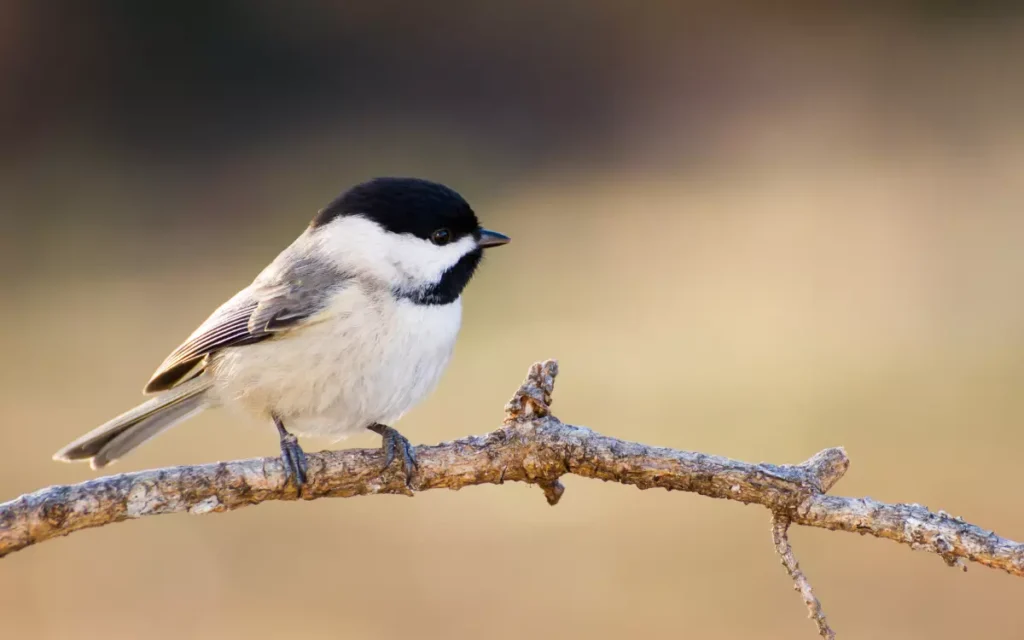
The Carolina Chickadee is a tiny gray bird with a black cap, black throat, white cheeks, and gray wings. It is active, bold, and easy to attract to backyard feeders in Georgia. Although it is not fully gray, its back and wings often make it appear gray when it moves through trees.
Carolina Chickadees are social birds and often join mixed flocks with titmice, nuthatches, woodpeckers, and small warblers. They are quick feeders, usually taking one seed at a time before flying to a nearby branch. Their small size, black-and-white head, and curious behavior make them one of the easiest gray birds to identify.
Quick ID points:
- Tiny bird with gray back and wings
- Black cap and black throat
- White cheeks
- Common at feeders
- Often moves in small mixed flocks
Best places to see it in Georgia: Backyard feeders, wooded neighborhoods, parks, forest edges, and mixed woodlands.
4. White-breasted Nuthatch
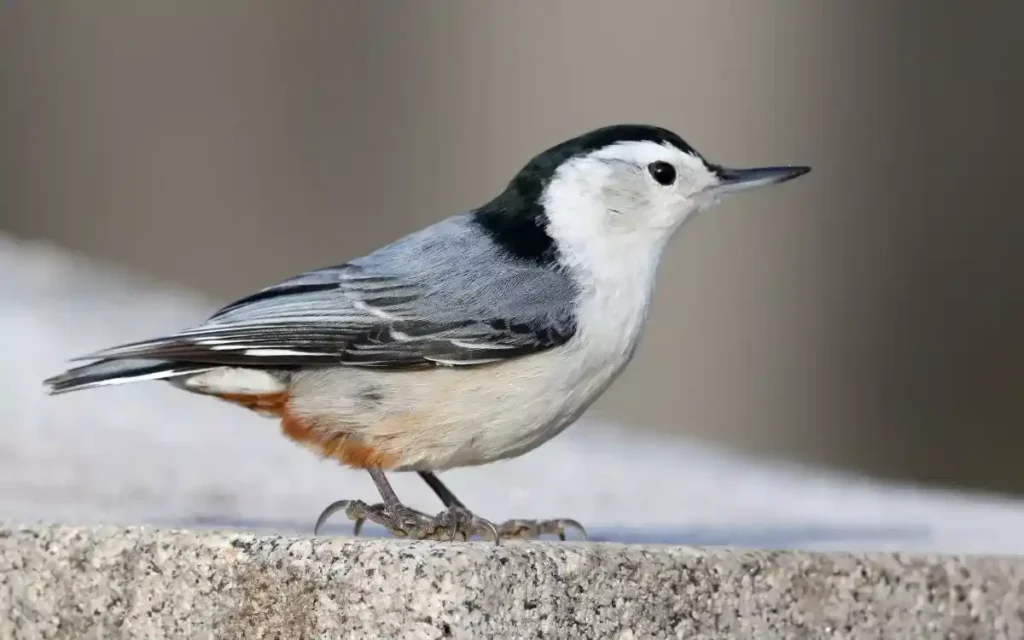
The White-breasted Nuthatch is a small gray-and-white bird often seen climbing down tree trunks headfirst. It has a blue-gray back, white face and belly, black cap, and a long pointed bill. Its tree-climbing behavior is one of the easiest ways to identify it.
In Georgia, White-breasted Nuthatches are usually found in mature woods, parks, and older neighborhoods with large trees. They also visit feeders for sunflower seeds, peanuts, and suet. Unlike chickadees and titmice, nuthatches often creep along bark, searching cracks for insects and hidden food.
Quick ID points:
- Blue-gray back and white underside
- Often climbs down tree trunks headfirst
- Long pointed bill
- Black cap
- Visits feeders with seeds or suet
Best places to see it in Georgia: Mature forests, wooded parks, old neighborhoods, oak trees, and backyard feeders.
5. Blue-gray Gnatcatcher
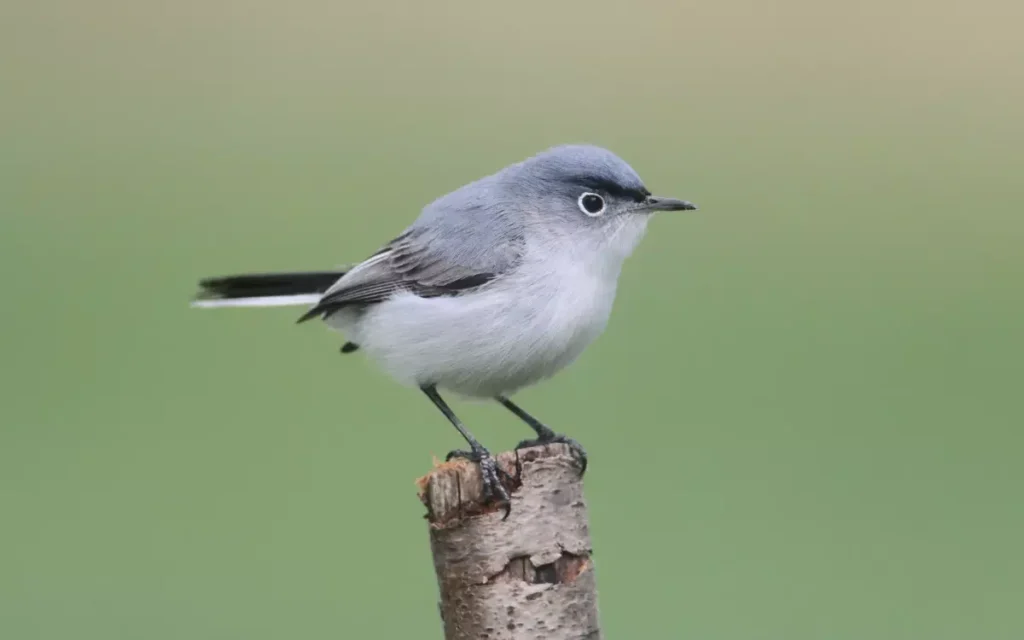
The Blue-gray Gnatcatcher is a tiny, active bird with blue-gray upperparts, pale underparts, a long tail, and a thin bill. It is much smaller than a mockingbird and moves quickly through leaves while searching for small insects.
In Georgia, Blue-gray Gnatcatchers are common during spring and summer in woodlands, forest edges, parks, and streamside trees. They often flick their long tail from side to side. Their high, thin calls can be heard before you get a clear look. They are small, but their constant movement makes them easier to notice once you know what to watch for.
Quick ID points:
- Tiny blue-gray bird
- Long tail often flicked around
- Thin bill
- Very active in trees
- Common in spring and summer
Best places to see it in Georgia: Woodlands, river edges, forest trails, parks, shade trees, and mixed forests.
6. Eastern Phoebe
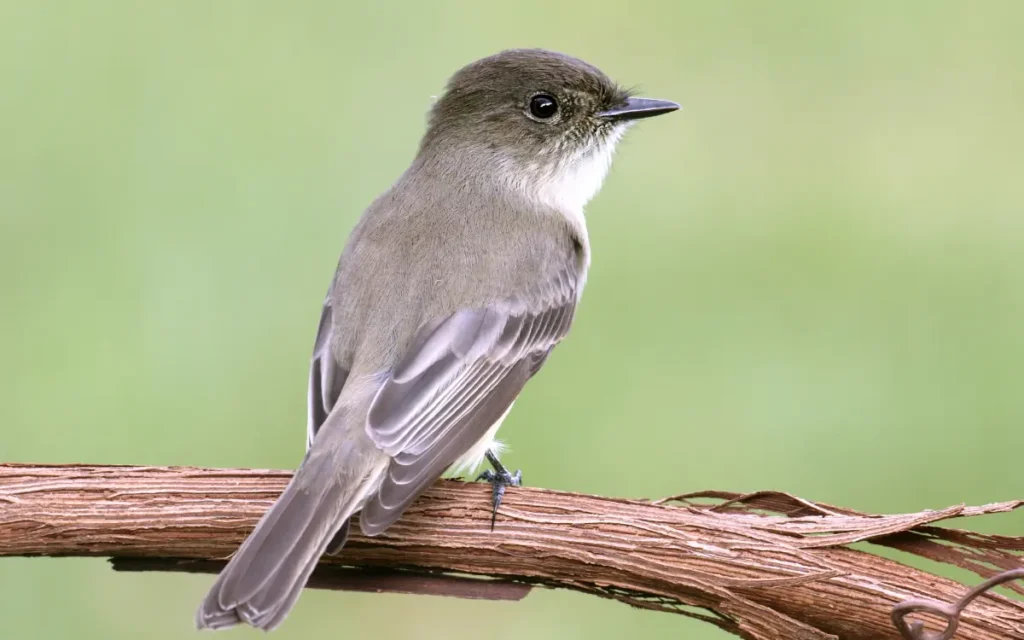
The Eastern Phoebe is a gray-brown flycatcher with a pale belly, dark head, and habit of wagging its tail while perched. It often sits on low branches, fence posts, bridges, porches, and shed roofs before flying out to catch insects.
In Georgia, Eastern Phoebes can be found in many areas, especially near buildings, water, woodland edges, and open spaces with perches. They are not flashy birds, but their behavior makes them easier to identify. If you see a plain gray-brown bird repeatedly flying out from the same perch and returning, it may be an Eastern Phoebe.
Quick ID points:
- Plain gray-brown flycatcher
- Pale belly
- Often wags or dips its tail
- Catches insects from a perch
- Common near bridges, porches, and edges
Best places to see it in Georgia: Woodland edges, bridges, barns, porches, streams, parks, and open yards.
7. Gray Catbird
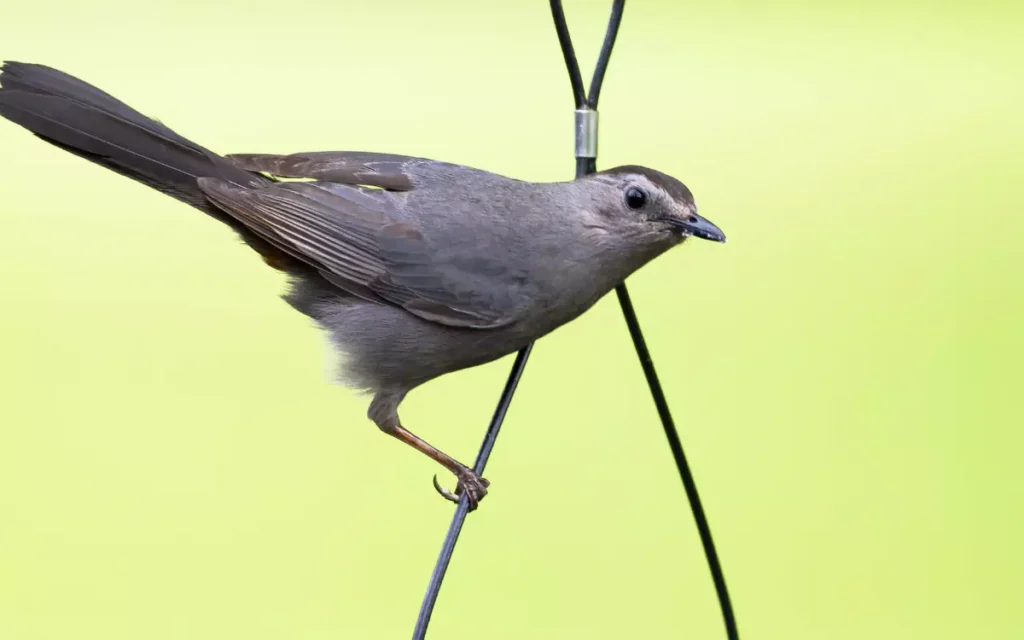
The Gray Catbird is a slate-gray bird with a black cap and rusty patch under the tail. It is named for its cat-like call, which can sound like a soft “meow” coming from thick shrubs. This bird is often heard before it is seen.
In Georgia, Gray Catbirds are most common during spring, summer, and migration. They like thickets, hedges, brushy gardens, woodland edges, and fruiting shrubs. They are related to mockingbirds and can also copy sounds, though they usually stay more hidden. The smooth gray body and black cap make them easy to identify when they step into view.
Quick ID points:
- Slate-gray body
- Black cap
- Rusty patch under the tail
- Cat-like call
- Often hides in shrubs and thickets
Best places to see it in Georgia: Brushy gardens, hedges, thickets, woodland edges, parks, and fruiting shrubs.
8. Loggerhead Shrike

The Loggerhead Shrike is a gray bird with a black mask, white underparts, and hooked bill. It may look like a small songbird at first, but it behaves more like a tiny predator. It hunts insects, lizards, small birds, and rodents from exposed perches.
In Georgia, Loggerhead Shrikes are usually found in open country, fence lines, farms, roadsides, pastures, and fields. One of their unusual habits is storing prey on thorns or barbed wire. Their gray back, black mask, and bold posture make them stand out when perched on wires or fence posts.
Quick ID points:
- Gray back with black mask
- White underside
- Hooked bill
- Often perches on fences or wires
- Hunts insects and small animals
Best places to see it in Georgia: Open fields, farms, pastures, roadsides, fence rows, and rural landscapes.
9. Mourning Dove
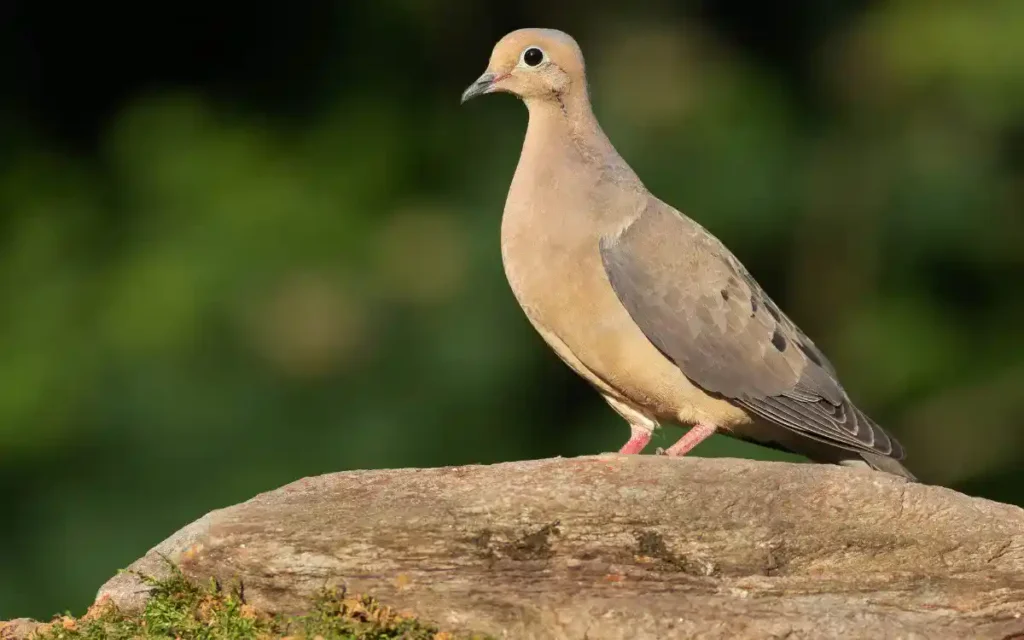
The Mourning Dove is a pale gray-brown bird with a small head, long pointed tail, and soft body shape. It is one of the most common birds in Georgia and is often seen walking on the ground, sitting on power lines, or flying quickly from yards and fields.
Mourning Doves are seed-eaters, so they often feed on open ground below feeders or in grassy areas. Their soft, sad-sounding call is another clue. When they fly, their wings make a noticeable whistling sound. Although they may look more tan than gray in bright light, many people describe them as gray birds.
Quick ID points:
- Pale gray-brown body
- Long pointed tail
- Small head
- Often feeds on the ground
- Wings whistle during takeoff
Best places to see it in Georgia: Backyards, fields, roadsides, farms, power lines, parks, and open ground.
10. Rock Pigeon
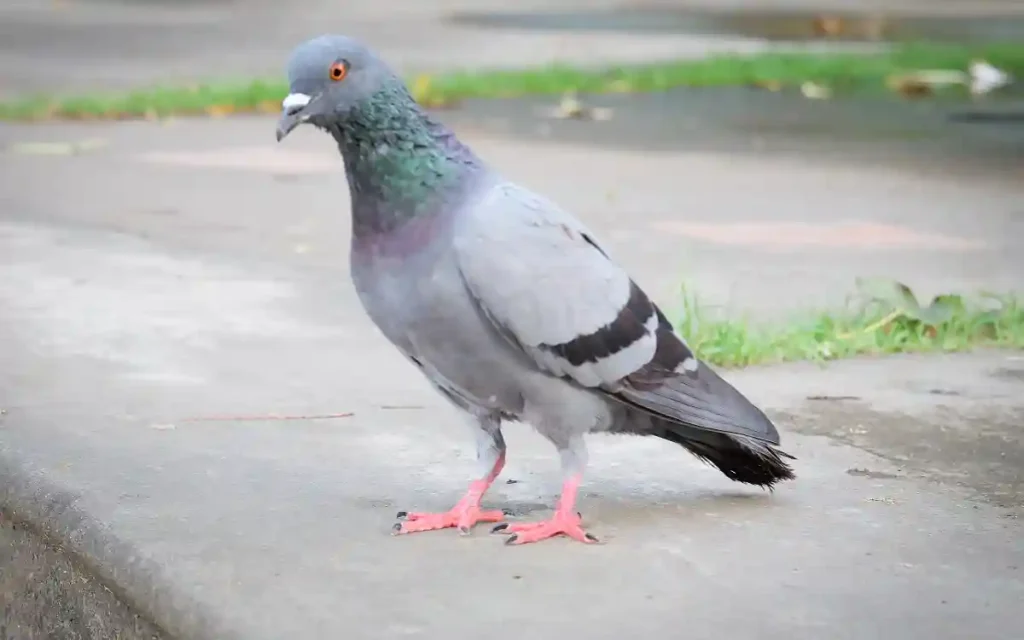
The Rock Pigeon is a common gray bird in Georgia’s towns and cities. It usually has a gray body, darker wing bars, and a shiny neck that may look green or purple in sunlight. Some pigeons are much lighter, darker, brown, white, or mixed because city pigeons come in many color forms.
Rock Pigeons are often found around buildings, parking lots, bridges, sidewalks, farms, and grain areas. They walk with a bobbing head motion and often gather in groups. Even though they are common, they are worth including because many people searching for gray birds are seeing pigeons in urban places.
Quick ID points:
- Stocky gray bird
- Dark wing bars
- Shiny neck patch in many birds
- Common in cities and towns
- Often found in flocks
Best places to see it in Georgia: Cities, parking lots, rooftops, bridges, farms, train stations, and downtown areas.
11. Dark-eyed Junco
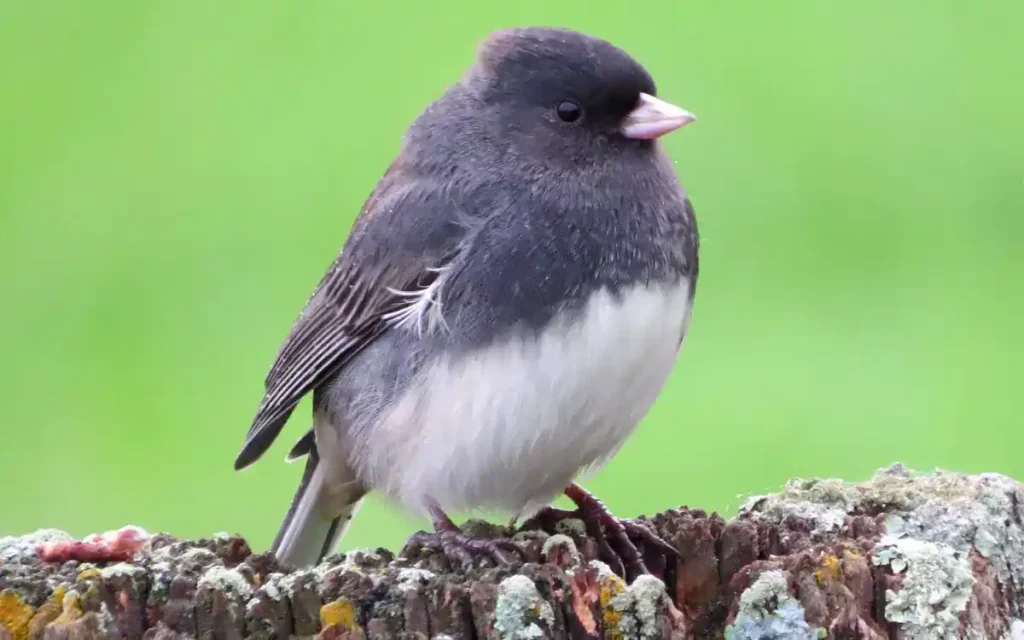
The Dark-eyed Junco is a winter visitor in much of Georgia. Many juncos seen in the East are slate-gray above with a pale belly and white outer tail feathers. They are often called “snowbirds” because they appear in colder months.
In Georgia, Dark-eyed Juncos are often seen on or near the ground under feeders, along woodland edges, and in brushy yards. They hop while searching for seeds and may flash white tail feathers as they fly away. If you see a small gray bird feeding on the ground in winter, this is one of the first birds to check.
Quick ID points:
- Small slate-gray bird
- Pale belly
- White outer tail feathers
- Mostly seen in winter
- Feeds on the ground
Best places to see it in Georgia: Backyards, feeders, woodland edges, brush piles, parks, and mountain areas in colder months.
12. Eastern Kingbird
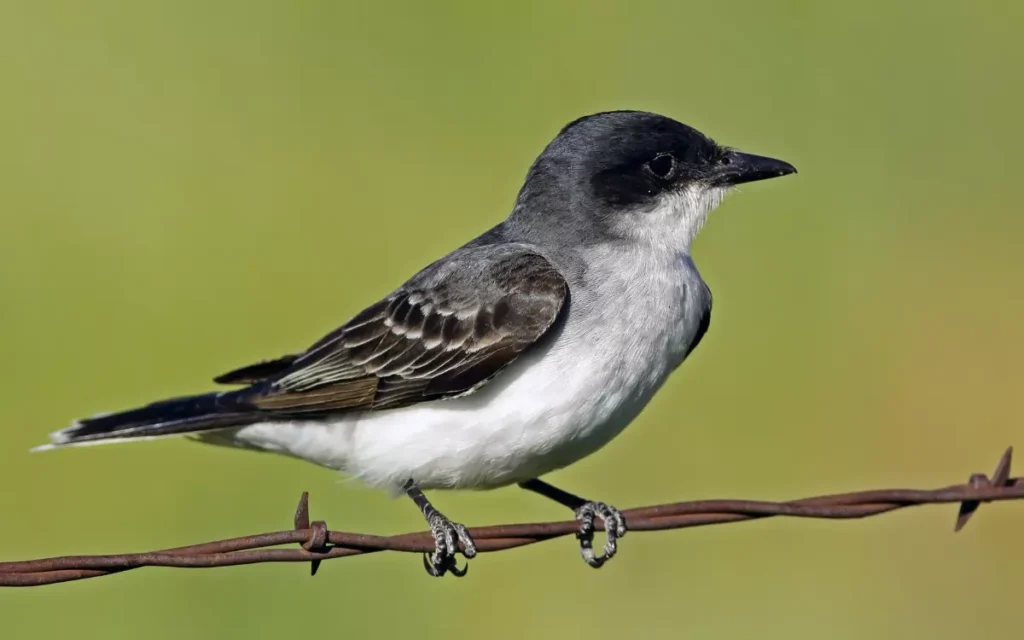
The Eastern Kingbird is a dark gray flycatcher with a white belly and a white tip on its tail. It often perches on wires, fence posts, or exposed branches before flying out to catch insects. Its clean gray-and-white pattern makes it easier to identify than many plain flycatchers.
In Georgia, Eastern Kingbirds are most common in spring and summer. They prefer open fields, pastures, farms, lake edges, and other places with scattered perches. They are bold birds and may chase crows, hawks, or other birds that come too close to their nesting area.
Quick ID points:
- Dark gray upperparts
- White belly
- White tail tip
- Often perches in open areas
- Catches flying insects
Best places to see it in Georgia: Open fields, farms, pastures, fence lines, lake edges, and power lines.
13. Great Blue Heron
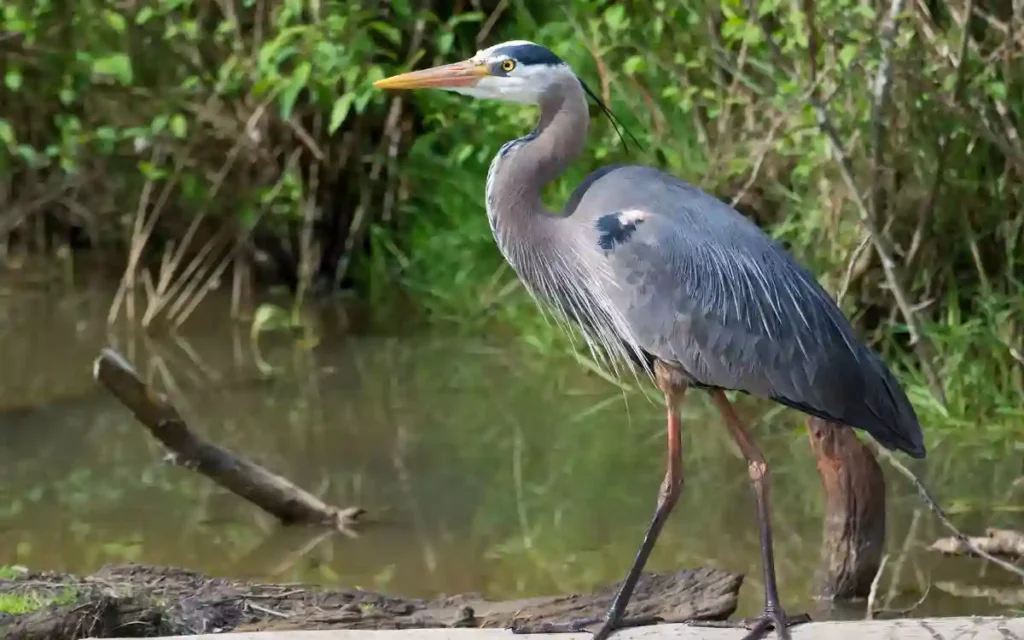
The Great Blue Heron is one of the largest gray birds in Georgia. It has long legs, a long neck, a dagger-like bill, and blue-gray feathers. You will often see it standing still at the edge of water, waiting to catch fish, frogs, snakes, or other small animals.
This bird is common around lakes, ponds, rivers, marshes, and coastal areas. In flight, it folds its neck into an S-shape and beats its broad wings slowly. Its size alone separates it from most other gray birds in Georgia.
Quick ID points:
- Very large blue-gray wading bird
- Long legs and long neck
- Dagger-like bill
- Often stands still near water
- Flies with neck folded
Best places to see it in Georgia: Ponds, lakes, rivers, marshes, wetlands, coastal areas, and drainage ponds.
14. Sandhill Crane
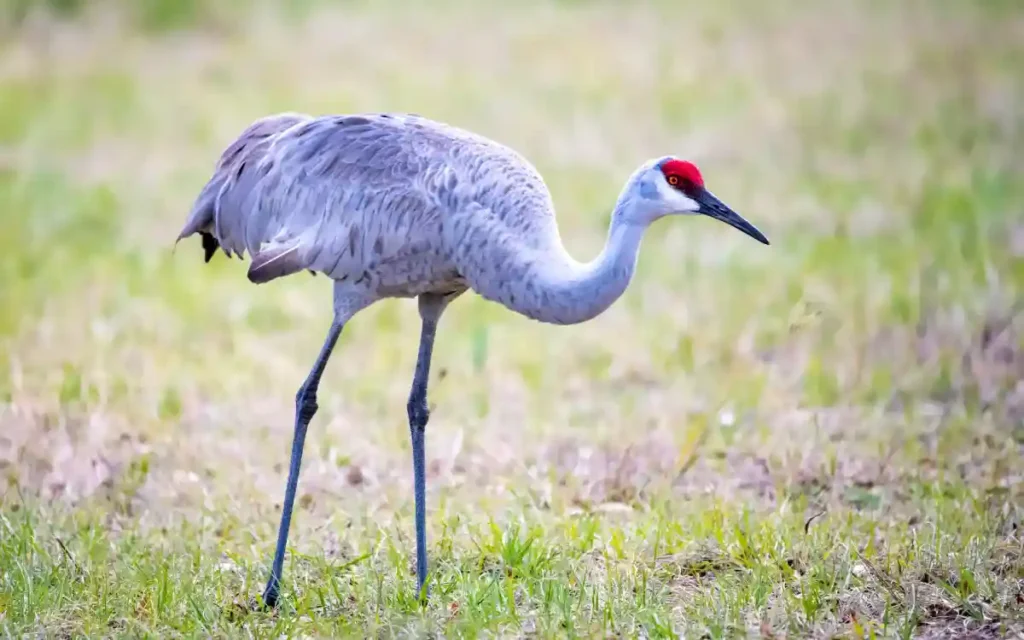
The Sandhill Crane is a tall gray bird with long legs, a long neck, and a red patch on the forehead. It is much larger than a heron and often seen in open wetlands, fields, or flying in groups with loud rolling calls.
In Georgia, Sandhill Cranes are mostly seasonal or local, depending on location and migration timing. They may be seen during winter or migration in suitable open habitats. Their gray body, upright walking style, and loud calls make them memorable. Unlike herons, cranes usually fly with their necks stretched straight out.
Quick ID points:
- Tall gray bird with long neck
- Red patch on forehead
- Loud rolling calls
- Often seen in groups
- Flies with neck stretched out
Best places to see it in Georgia: Wetlands, open fields, marsh edges, wildlife refuges, and migration flyover areas.
15. Mississippi Kite

The Mississippi Kite is a graceful gray raptor with long pointed wings, pale gray head, darker gray body, and smooth flight. In Georgia, it is usually seen during the warmer months. It often circles high in the sky while catching insects in flight.
Mississippi Kites may nest in open woods, wooded neighborhoods, parks, and towns, especially where mature trees are present. They are slimmer and more elegant than many hawks. From below, they can look pale and smooth, with long wings and a long tail. Their gray coloring makes them one of Georgia’s most attractive birds of prey.
Quick ID points:
- Slim gray raptor
- Long pointed wings
- Smooth, graceful flight
- Often catches insects in the air
- More common in spring and summer
Best places to see it in Georgia: Open woods, towns with mature trees, parks, river areas, and skies over neighborhoods.
16. Cooper’s Hawk
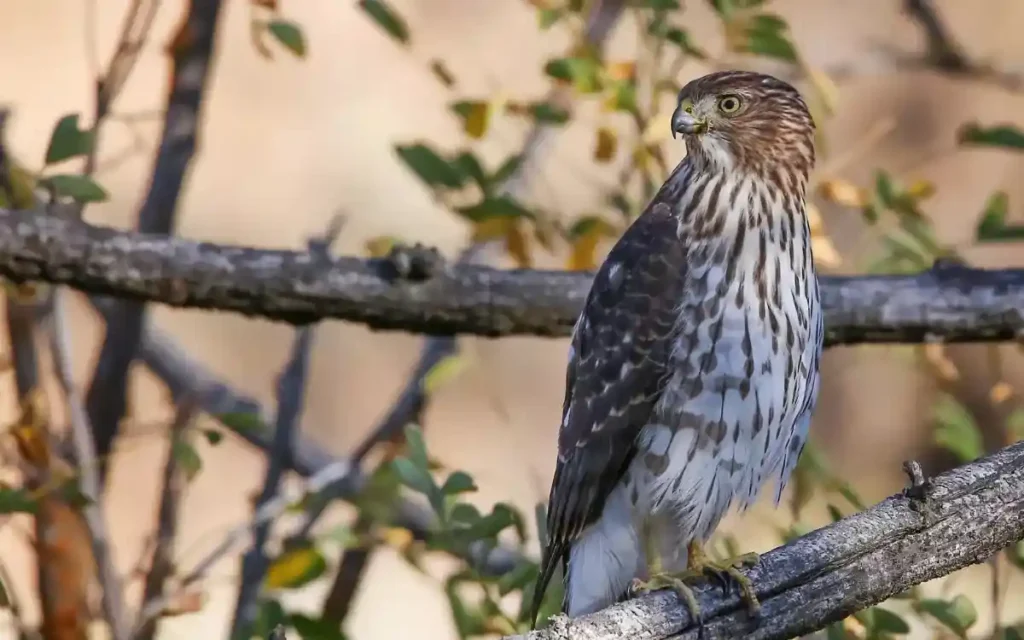
The Cooper’s Hawk is a medium-sized bird of prey with a slate-gray back, rounded wings, long tail, and reddish barring on the chest in adults. Young birds are browner, so not every Cooper’s Hawk will look gray at first glance.
In Georgia, Cooper’s Hawks are found in forests, suburbs, parks, and wooded neighborhoods. They are skilled hunters and often chase birds through trees with quick turns. Many backyard bird watchers notice them near feeders because feeders attract small birds, and small birds attract hawks.
Quick ID points:
- Slate-gray back on adults
- Long tail with bands
- Rounded wings
- Fast hunter through trees
- Often appears near bird feeders
Best places to see it in Georgia: Woodlands, suburbs, parks, backyard trees, forest edges, and neighborhoods with feeders.
17. Northern Harrier
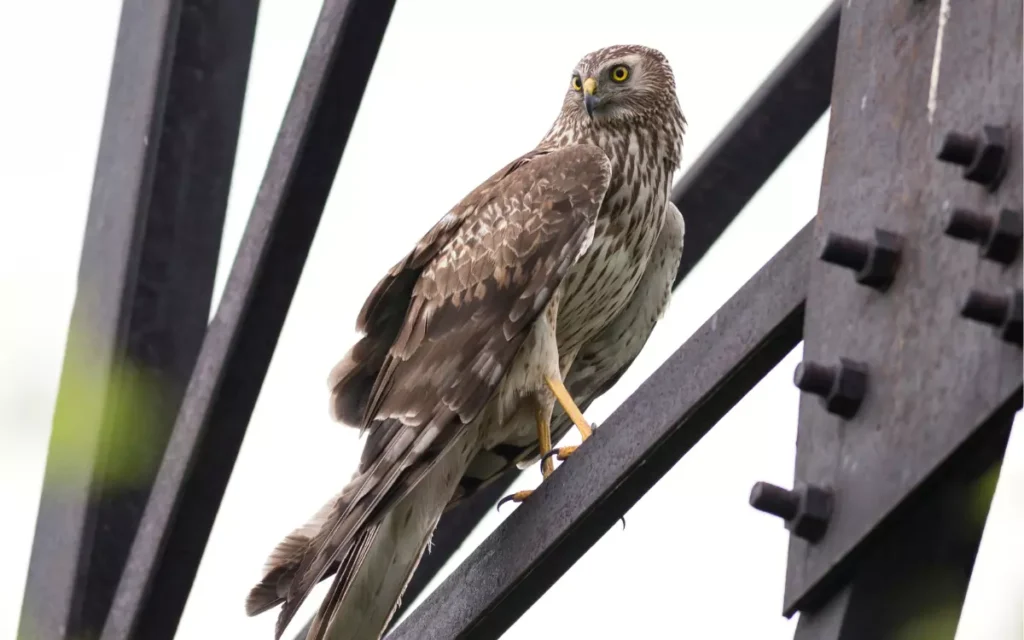
The Northern Harrier is a slim hawk often seen flying low over marshes and fields. Adult males are pale gray above, while females and young birds are brown. One of the best field marks is the white rump patch, which can flash as the bird glides low over open land.
In Georgia, Northern Harriers are mostly winter birds. They prefer open habitats, including marshes, grasslands, wet fields, and coastal areas. Their owl-like face helps them listen for prey while flying. If you see a gray hawk floating low over a field in winter, it may be a male Northern Harrier.
Quick ID points:
- Male is pale gray
- White rump patch
- Long wings and long tail
- Flies low over fields and marshes
- Mostly seen in winter
Best places to see it in Georgia: Marshes, grasslands, wet fields, coastal flats, and open winter habitats.
FAQs
What is the most common gray bird in Georgia?
The Northern Mockingbird is one of the most common gray birds in Georgia. It is often seen in yards, parks, neighborhoods, parking lots, and open areas with shrubs.
What small gray bird visits feeders in Georgia?
The Tufted Titmouse, Carolina Chickadee, and White-breasted Nuthatch are small gray birds that often visit feeders in Georgia.
What gray bird in Georgia has a crest?
The Tufted Titmouse is a small gray bird with a noticeable crest. It is common in wooded yards and often visits feeders.
What gray bird in Georgia has a black mask?
The Loggerhead Shrike is a gray bird with a bold black mask. Northern Mockingbirds can show dark facial markings, but the Loggerhead Shrike has the clearest mask.
What large gray bird is found near water in Georgia?
The Great Blue Heron is the large gray-blue bird often seen near ponds, lakes, rivers, marshes, and wetlands in Georgia.
What gray bird is common in Georgia cities?
The Rock Pigeon is one of the most common gray birds in Georgia cities and towns. It is often seen around buildings, sidewalks, rooftops, and parking lots.
What gray bird appears in Georgia during winter?
The Dark-eyed Junco and Northern Harrier are good winter examples. Juncos are small ground-feeding birds, while Northern Harriers are hawks of fields and marshes.