21 Small Birds in Georgia
Georgia has many small birds that show up in backyards, pine woods, parks, wetlands, fields, and garden shrubs. Some are year-round residents, while others appear mainly in winter, spring migration, or the warmer breeding season.
The easiest way to identify small birds in Georgia is to look at size, color, bill shape, tail movement, and habitat. A tiny black-capped bird at a feeder may be a Carolina Chickadee. A small brown bird singing loudly from shrubs may be a Carolina Wren. A tiny bird hovering near flowers is almost always a Ruby-throated Hummingbird.
1. Carolina Chickadee
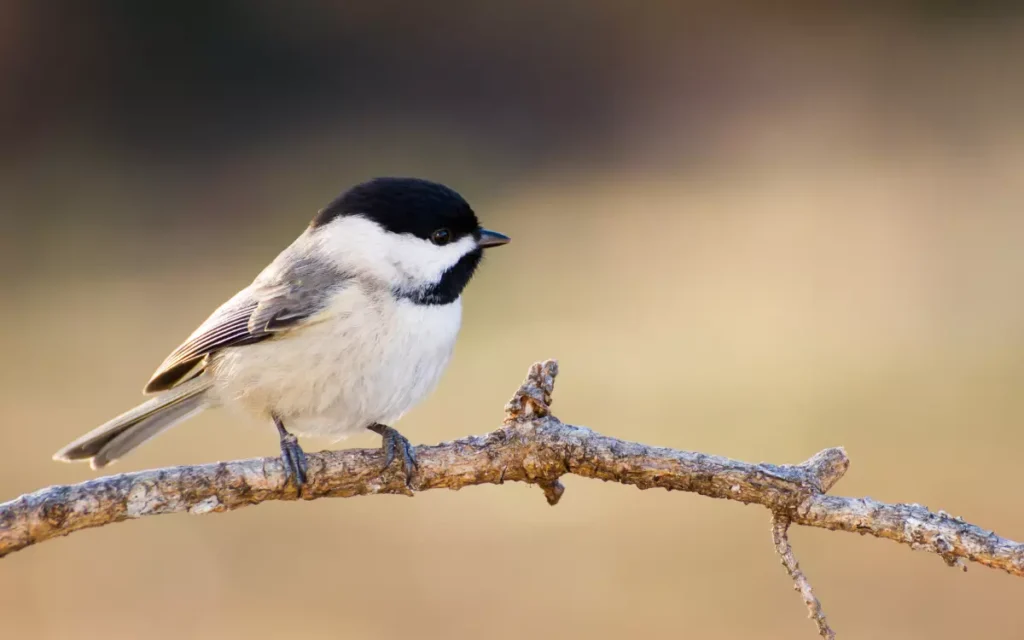
The Carolina Chickadee is one of the most familiar small birds in Georgia. It has a black cap, black throat, white cheeks, gray back, and pale underside. Even though it is tiny, it is bold around feeders and often comes close to homes.
You will often see Carolina Chickadees grabbing one seed at a time, then flying to a nearby branch to eat it. They are active, curious birds and often move with Tufted Titmice, nuthatches, and small woodpeckers. Their quick movements and black-and-white head pattern make them easier to identify than many other small gray birds.
Quick ID points:
- Tiny bird with black cap and white cheeks
- Gray back and pale belly
- Common at feeders
- Often travels with titmice and nuthatches
- Gives a familiar “chick-a-dee-dee” call
Best places to see it in Georgia: Backyard feeders, wooded neighborhoods, parks, forest edges, oak trees, and mixed woods.
2. Tufted Titmouse
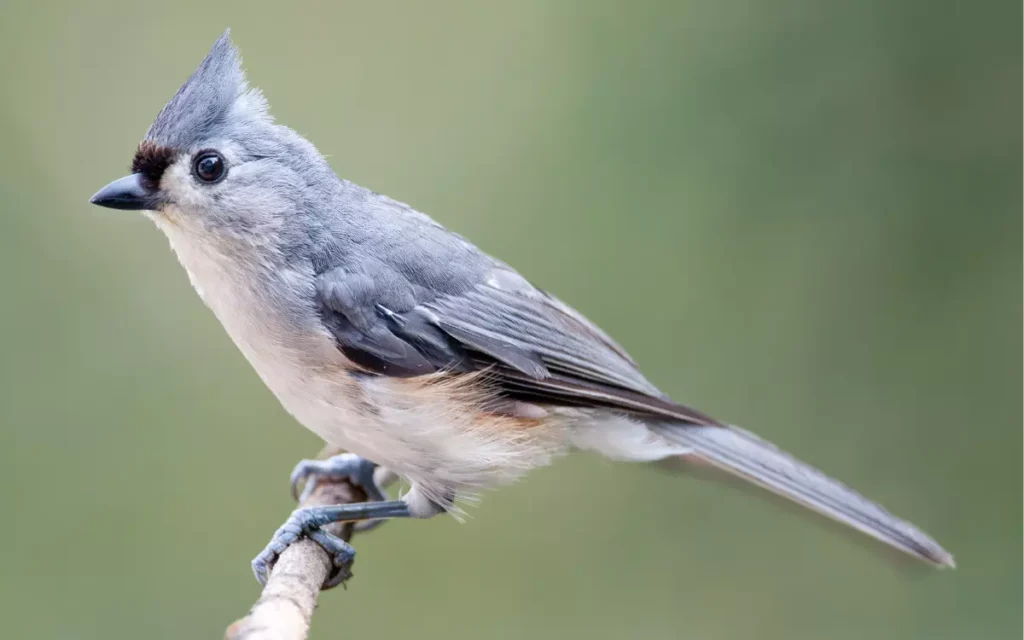
The Tufted Titmouse is a small gray bird with a soft crest, large dark eyes, and pale underside. It is one of the easiest small birds to notice at feeders because of its rounded head and confident behavior.
In Georgia, Tufted Titmice are common in wooded yards, suburbs, parks, and mature forests. They often pick up sunflower seeds and carry them away to crack open. Their gray crest is the best field mark, but you may also notice a peachy color along the sides.
Quick ID points:
- Small gray bird with a crest
- Pale belly with peachy sides
- Large dark eyes
- Common feeder visitor
- Often seen with chickadees
Best places to see it in Georgia: Wooded yards, feeders, oak woods, mixed forests, parks, and suburban trees.
3. Carolina Wren
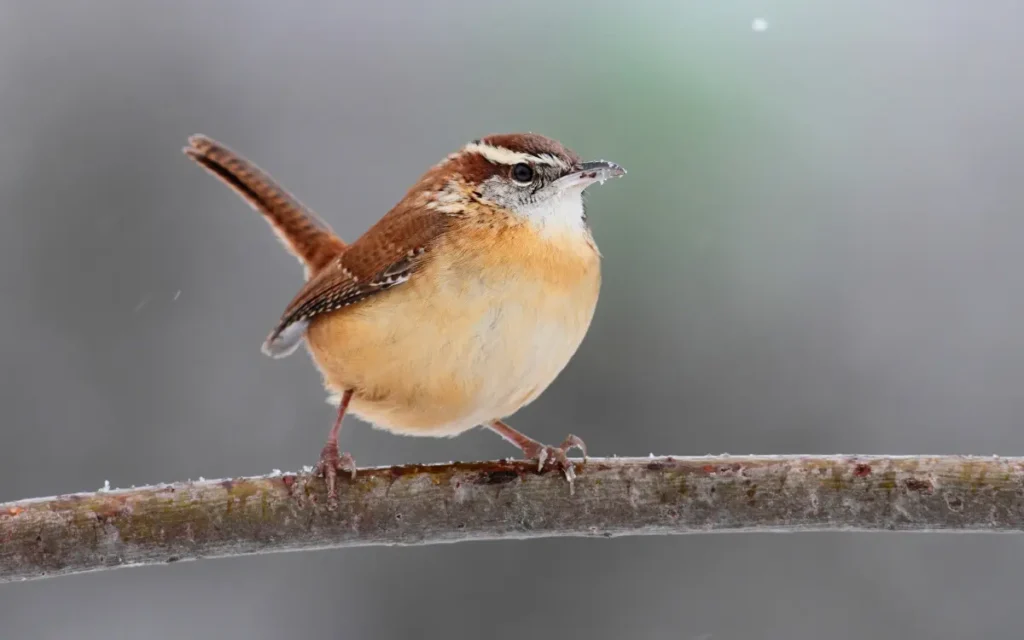
The Carolina Wren is a small brown bird with a warm rusty body, curved bill, long tail, and pale eyebrow stripe. It is one of the loudest small birds in Georgia, and its song can carry across a yard even though the bird itself is tiny.
Carolina Wrens love thick cover. You may see them around shrubs, brush piles, porches, garages, woodpiles, and garden edges. They often cock their tail upward while moving through low plants. Because they are bold and curious, they may nest close to homes in flowerpots, hanging baskets, or sheltered corners.
Quick ID points:
- Small warm brown bird
- Pale eyebrow stripe
- Curved bill
- Loud song for its size
- Often keeps tail raised
Best places to see it in Georgia: Backyards, shrubs, porches, brush piles, hedges, garden edges, and wooded neighborhoods.
4. House Finch
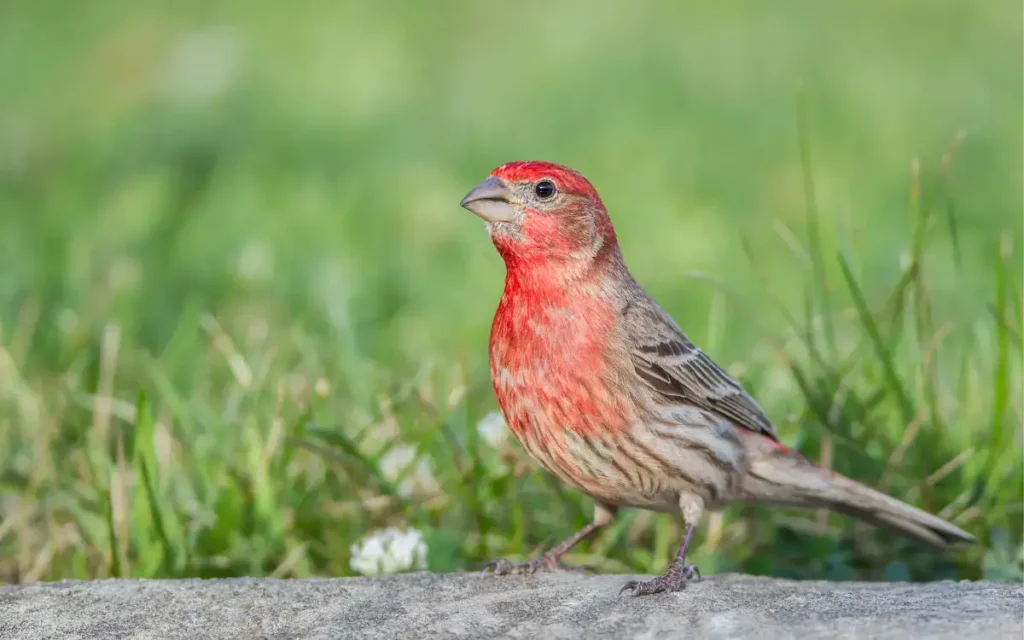
The House Finch is a small finch often seen in Georgia neighborhoods, towns, and backyard feeders. Males usually have red on the head, throat, and chest, while females are brown and streaky. This difference can make males and females look like separate species to beginners.
House Finches often gather in small groups at feeders and may sing from rooftops, trees, or wires. Their short, thick bill is designed for seeds. They are common around people and can be found in both urban and suburban areas.
Quick ID points:
- Small finch with thick seed-eating bill
- Male has red head and chest
- Female is brown and streaked
- Often seen in groups
- Common in towns and backyards
Best places to see it in Georgia: Feeders, rooftops, shrubs, towns, farms, parking lots, and neighborhood trees.
Learn more 15 White Birds in Georgia
5. American Goldfinch
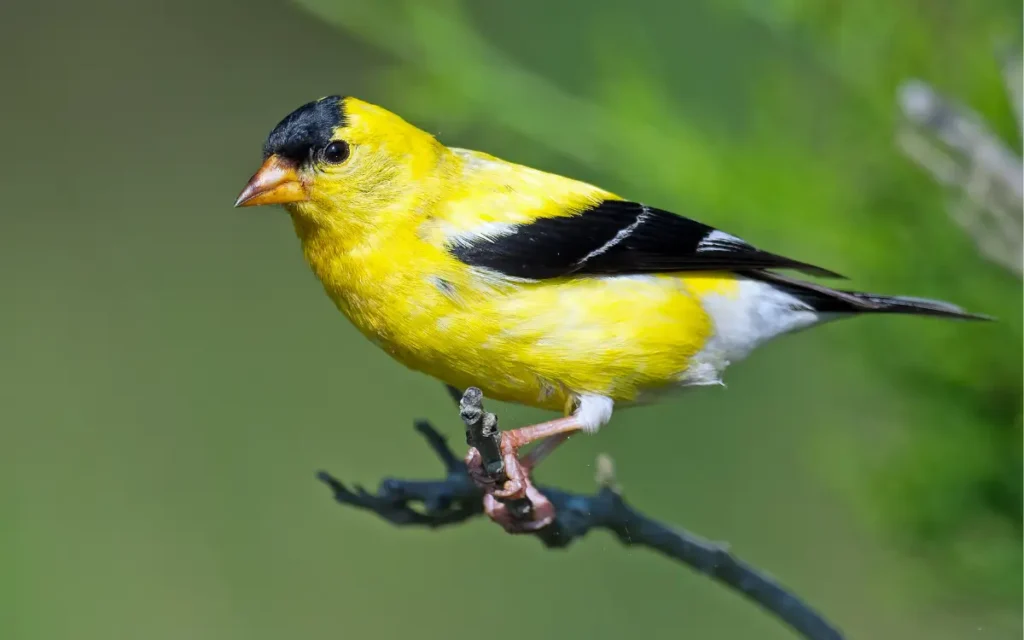
The American Goldfinch is a small finch that can look bright yellow in summer and dull olive-brown in winter. Breeding males have a bright yellow body, black wings, and a black forehead. Females and nonbreeding birds are much softer in color.
In Georgia, American Goldfinches are often seen at feeders, gardens, weedy fields, and open edges. They love seeds, especially sunflower chips, nyjer seed, and natural seed heads from plants. Their bouncy flight pattern is another helpful clue.
Quick ID points:
- Small seed-eating bird
- Breeding male is bright yellow
- Black wings with pale wing bars
- Duller in winter
- Often flies in a bouncy pattern
Best places to see it in Georgia: Backyard feeders, gardens, open fields, roadsides, parks, and weedy areas.
6. Chipping Sparrow
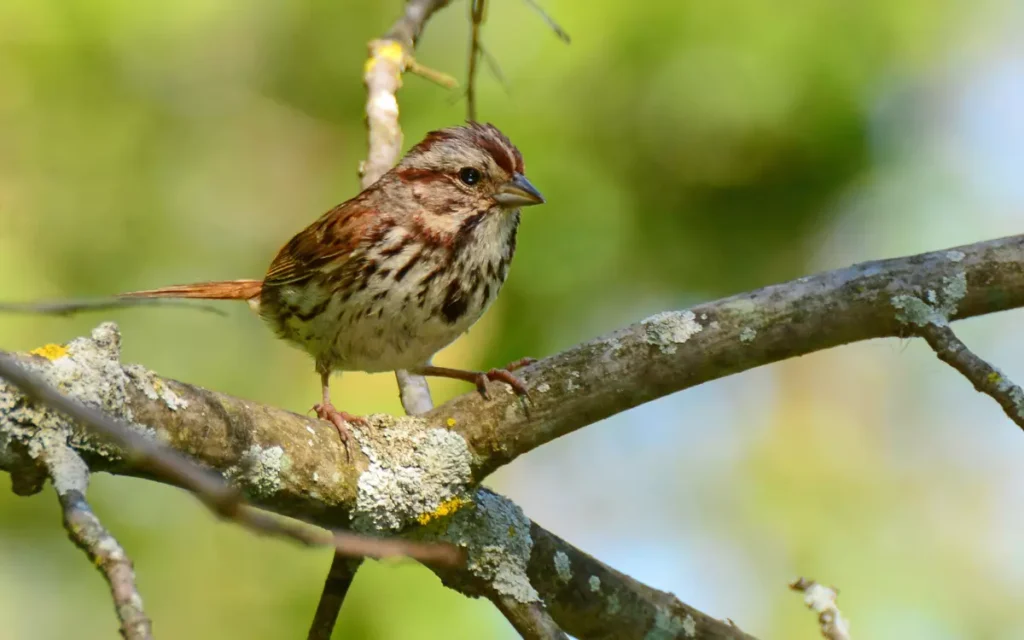
The Chipping Sparrow is a small, neat-looking sparrow with a rusty cap, pale eyebrow, grayish face, and slim body. It often looks cleaner and less heavily streaked than many other sparrows, which makes it easier to identify.
In Georgia, Chipping Sparrows are often found on lawns, golf courses, parks, pine edges, farms, and open woods. They feed on seeds and small insects, usually on or near the ground. In winter, they may gather in flocks and look duller than they do in breeding season.
Quick ID points:
- Small slim sparrow
- Rusty cap in breeding season
- Pale eyebrow line
- Clean grayish face
- Often feeds on lawns or open ground
Best places to see it in Georgia: Lawns, parks, pine woods, farms, open yards, roadsides, and golf courses.
7. Song Sparrow
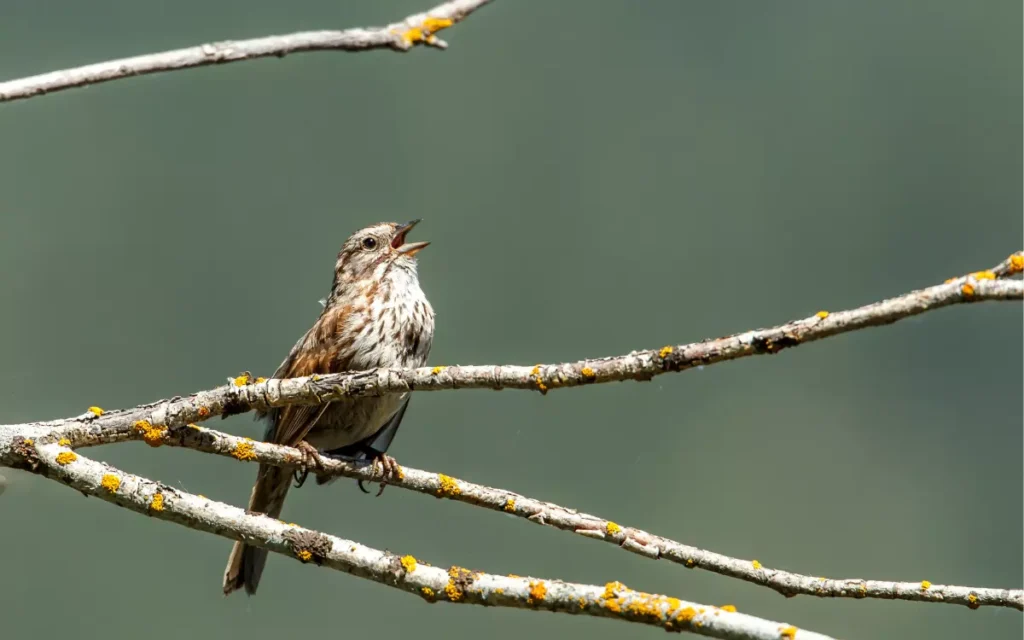
The Song Sparrow is a small brown bird with heavy streaking on the chest and often a dark spot in the center of the breast. It can look plain at first, but the streaked chest is one of the best ways to recognize it.
In Georgia, Song Sparrows are often found around shrubs, wet edges, brushy fields, ditch lines, and thick garden cover. They spend a lot of time low to the ground, scratching for seeds and insects. Their song is rich and musical, which helps separate them from other small brown birds.
Quick ID points:
- Small brown sparrow
- Streaked chest
- Often has a central breast spot
- Likes shrubs and wet edges
- Usually stays low
Best places to see it in Georgia: Brushy fields, wetland edges, shrubs, garden borders, ditches, and weedy areas.
8. Dark-eyed Junco
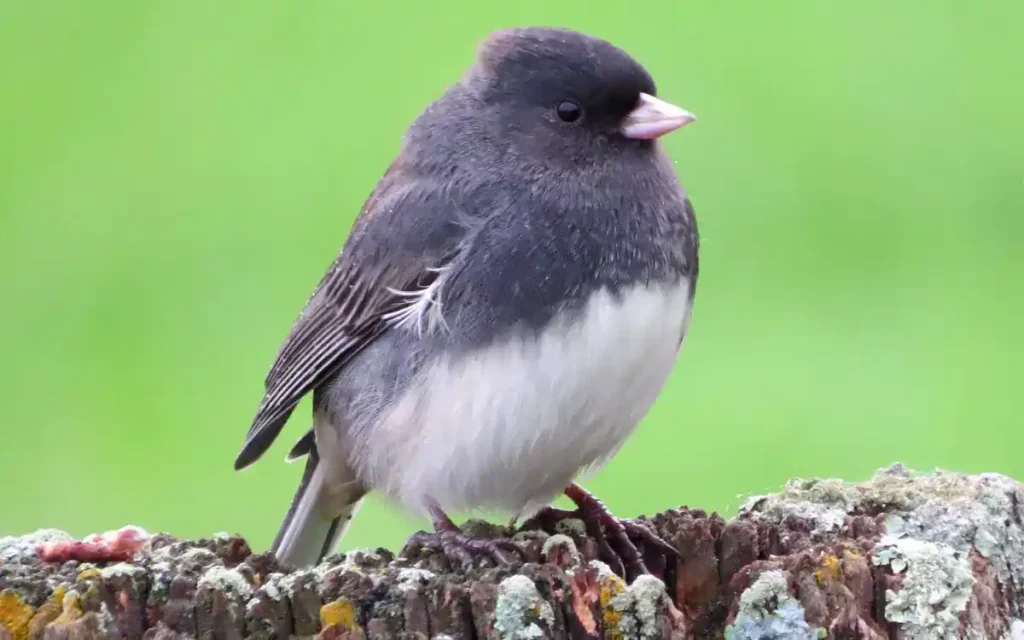
The Dark-eyed Junco is a small winter bird in Georgia. In the eastern form, it often has a slate-gray head and back, pale belly, and white outer tail feathers. Many people call juncos “snowbirds” because they arrive when the weather gets colder.
Dark-eyed Juncos often feed on the ground under feeders or along woodland edges. They hop through leaves and low grass while searching for seeds. If a small gray bird flashes white tail feathers as it flies away in winter, it may be a junco.
Quick ID points:
- Small gray-and-white bird
- Pale belly
- White outer tail feathers
- Mostly seen in winter
- Feeds on the ground
Best places to see it in Georgia: Woodland edges, feeders, leaf litter, brushy yards, parks, and mountain areas.
9. White-breasted Nuthatch
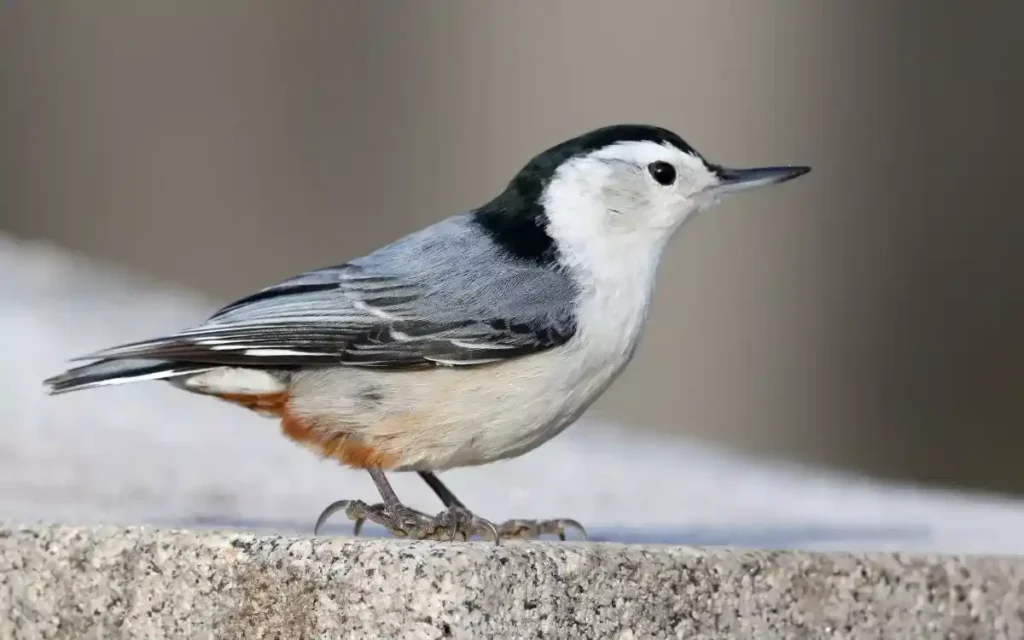
The White-breasted Nuthatch is a small bird with a blue-gray back, white face and belly, black cap, and long pointed bill. Its most helpful behavior is climbing down tree trunks headfirst, something few other backyard birds do so often.
In Georgia, White-breasted Nuthatches are most common in mature forests, wooded parks, and older neighborhoods with large trees. They also visit feeders for sunflower seeds, peanuts, and suet. Their nasal call is another good clue when they are hidden on bark.
Quick ID points:
- Blue-gray back and white underside
- Black cap
- Long pointed bill
- Climbs down tree trunks headfirst
- Visits feeders
Best places to see it in Georgia: Mature woods, oak trees, wooded parks, feeders, and older neighborhoods.
10. Brown-headed Nuthatch
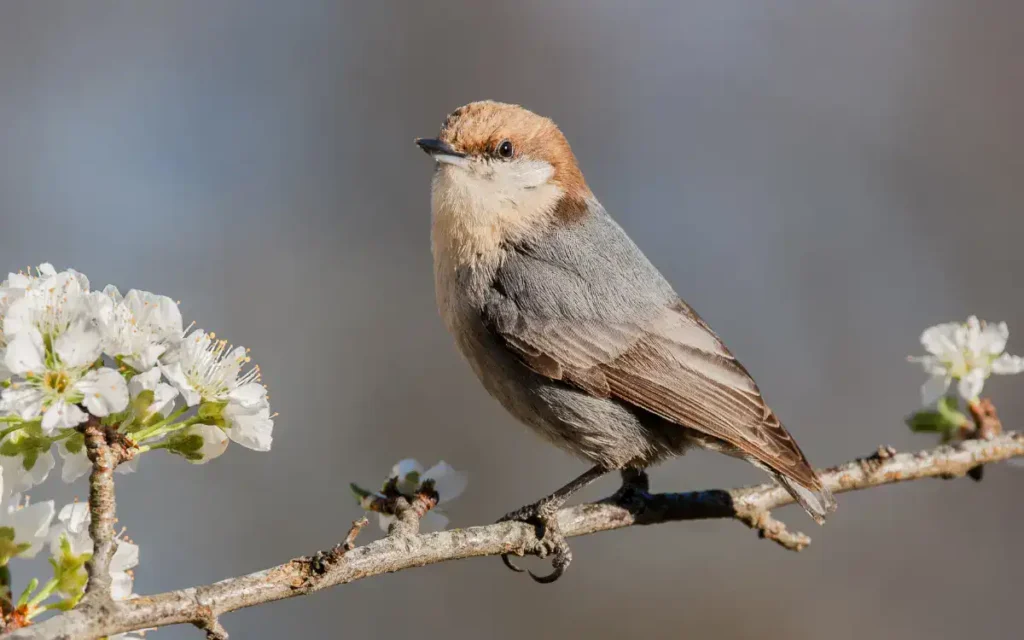
The Brown-headed Nuthatch is a tiny bird of pine woods and one of the most useful species to include in a Georgia small birds article. It has a brown cap, bluish-gray back, pale underside, and short tail. It is smaller than the White-breasted Nuthatch and much more tied to pine habitat.
This bird often creeps along pine bark, searching for insects and seeds. It may also visit feeders, especially near pine trees. Its squeaky call sounds a bit like a tiny rubber duck, which can help you notice it before you see it.
Quick ID points:
- Very small nuthatch
- Brown cap
- Blue-gray back
- Strongly linked to pine trees
- Squeaky call
Best places to see it in Georgia: Pine forests, pine-heavy yards, parks with pines, and mixed pine woods.
11. Blue-gray Gnatcatcher
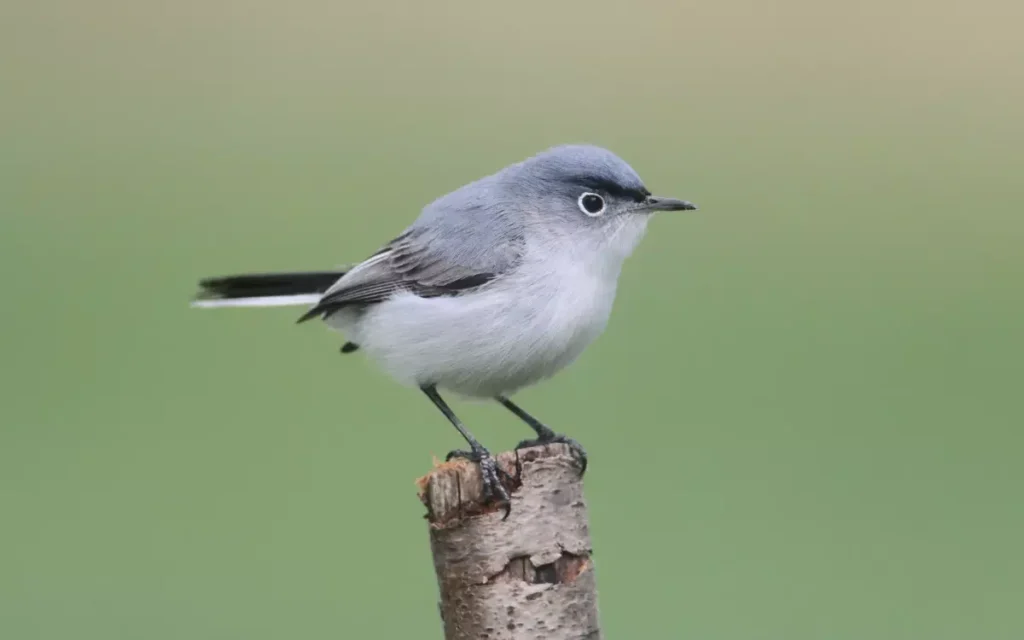
The Blue-gray Gnatcatcher is a tiny bird with blue-gray upperparts, pale underparts, a long tail, and thin bill. It is very active and often flicks its tail while moving through leaves.
In Georgia, Blue-gray Gnatcatchers are common in spring and summer around woods, edges, parks, and streamside trees. They feed on tiny insects and rarely sit still for long. Their slim shape and long tail make them stand out from kinglets and warblers.
Quick ID points:
- Tiny blue-gray bird
- Long tail
- Thin bill
- Constantly active
- Often flicks tail
Best places to see it in Georgia: Woodlands, wooded parks, forest edges, streamside trees, and shaded yards.
12. Ruby-crowned Kinglet

The Ruby-crowned Kinglet is a tiny winter bird in Georgia. It has olive-gray coloring, a white eye ring, and a small bill. Males have a red crown patch, but it is usually hidden unless the bird is excited.
These birds move quickly through shrubs and trees, often flicking their wings as they search for insects. Because they are so small and active, they can be hard to follow. In winter, they are common in parks, yards, woodland edges, and brushy places.
Quick ID points:
- Tiny olive-gray bird
- White eye ring
- Hidden red crown on males
- Flicks wings often
- Common in winter
Best places to see it in Georgia: Shrubs, wooded yards, parks, forest edges, hedges, and brushy areas.
13. Golden-crowned Kinglet
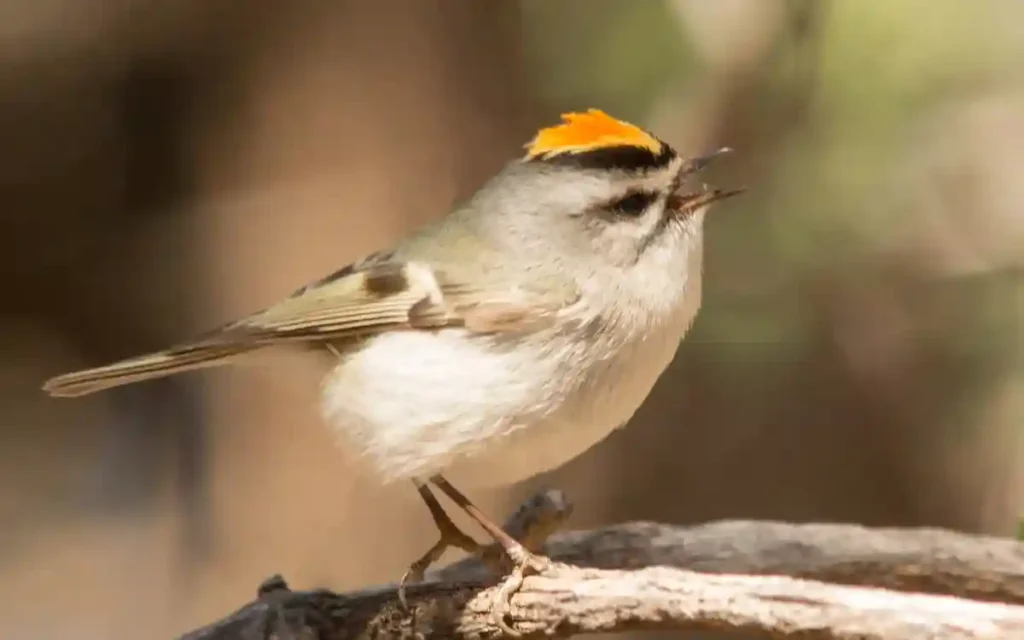
The Golden-crowned Kinglet is another tiny winter bird in Georgia, especially in wooded areas with conifers or mixed forest. It has a small body, short bill, wing bars, and a yellow to orange crown stripe.
This bird is even smaller-looking than many warblers and can be tricky to see because it moves quickly through branches. It often feeds high in trees, searching bark and needles for insects. The crown stripe is the best mark when you get a clear view.
Quick ID points:
- Very tiny bird
- Yellow-orange crown stripe
- Wing bars
- Often in conifers
- Seen mostly in winter
Best places to see it in Georgia: Conifers, pine woods, mixed forests, mountain woods, parks, and wooded trails.
14. Eastern Phoebe
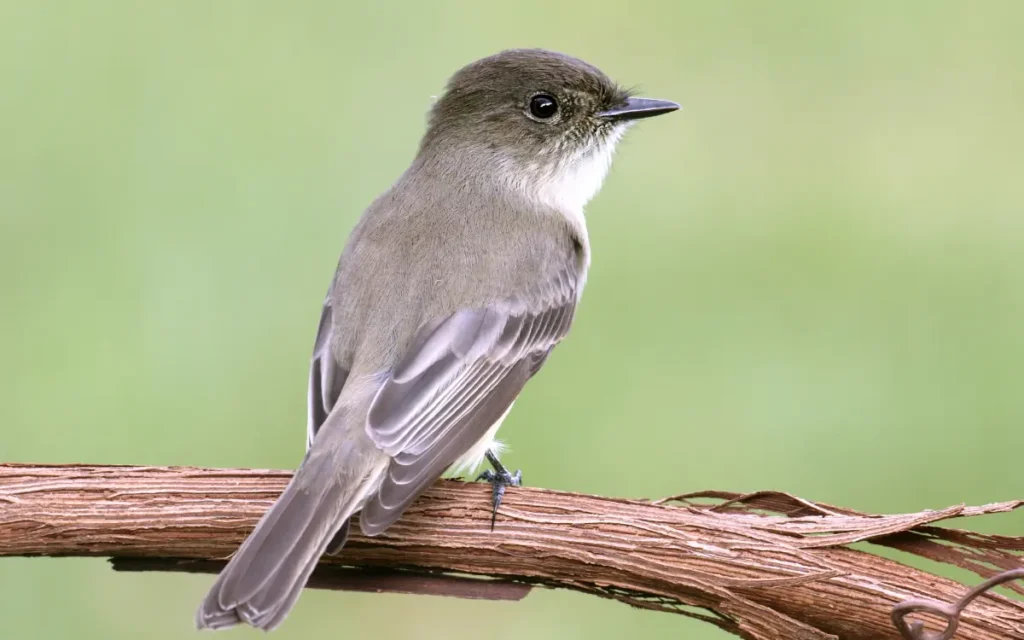
The Eastern Phoebe is a small gray-brown flycatcher with a pale belly and a habit of dipping its tail while perched. It often waits on a low branch, fence, porch rail, bridge, or shed roof before flying out to catch insects.
In Georgia, Eastern Phoebes can be found around homes, water, bridges, woodland edges, and open areas with perches. They are plain birds, but their behavior is a big clue. A small bird that repeatedly flies out and returns to the same perch may be an Eastern Phoebe.
Quick ID points:
- Small gray-brown flycatcher
- Pale underside
- Dips or wags tail
- Catches insects from a perch
- Often near buildings or bridges
Best places to see it in Georgia: Porches, bridges, barns, streams, woodland edges, parks, and open yards.
15. Downy Woodpecker
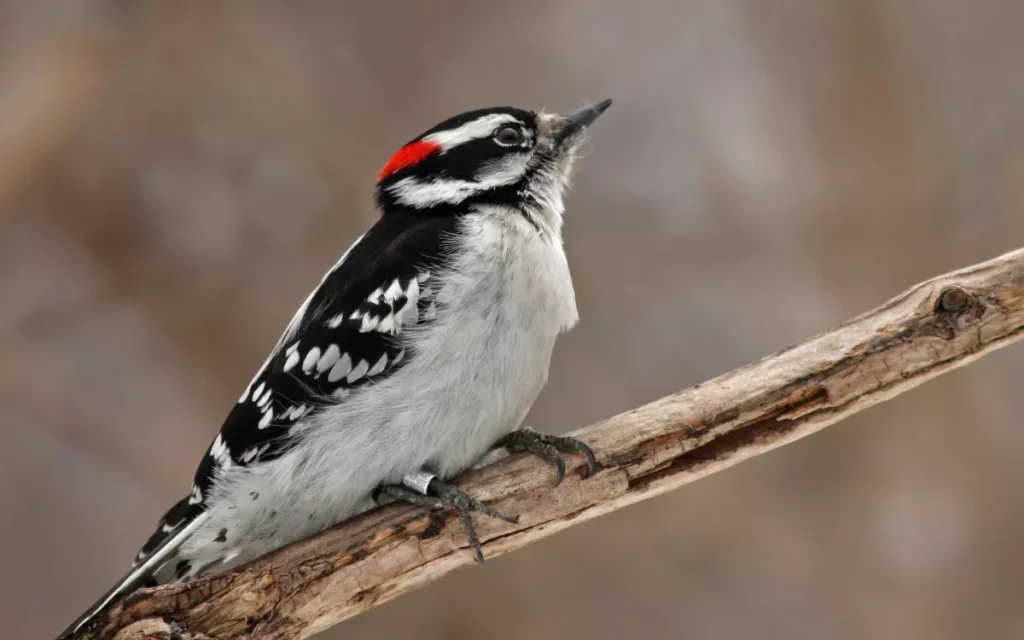
The Downy Woodpecker is the smallest common woodpecker in Georgia. It has black-and-white markings, a white back patch, and a short bill. Males have a small red patch on the back of the head, while females do not.
Downy Woodpeckers are common in wooded yards, parks, forests, and orchards. They often visit suet feeders and may climb small branches, fence posts, or tree trunks. Their small size and short bill help separate them from the larger Hairy Woodpecker.
Quick ID points:
- Small black-and-white woodpecker
- Short bill
- White patch on back
- Male has small red head patch
- Visits suet feeders
Best places to see it in Georgia: Backyards, feeders, wooded parks, orchards, forests, and suburban trees.
16. Yellow-rumped Warbler
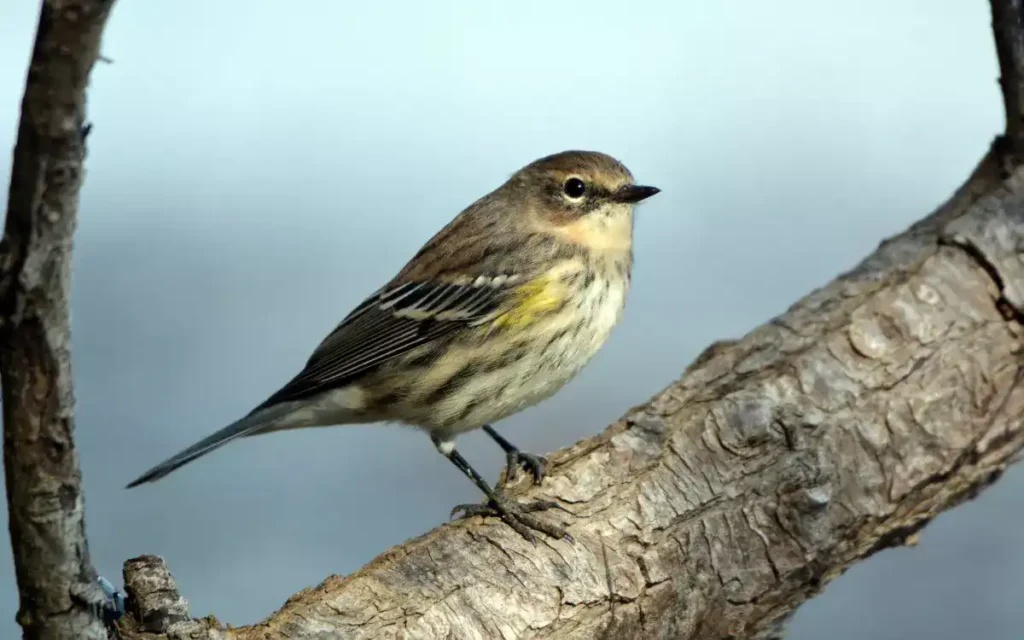
The Yellow-rumped Warbler is one of the most common winter warblers in Georgia. It is a small bird with gray-brown upperparts, streaking, and yellow patches on the rump, sides, and sometimes crown. The yellow rump patch is the easiest clue.
Unlike many warblers that migrate through quickly, Yellow-rumped Warblers can be seen in Georgia during colder months. They feed on insects, berries, and waxy fruits, which helps them stay through winter. They often move in groups through shrubs, trees, fields, and woodland edges.
Quick ID points:
- Small winter warbler
- Yellow rump patch
- Streaked sides
- Often seen in flocks
- Eats berries as well as insects
Best places to see it in Georgia: Shrubs, forest edges, fields, parks, bayberry areas, and wooded neighborhoods.
17. Pine Warbler
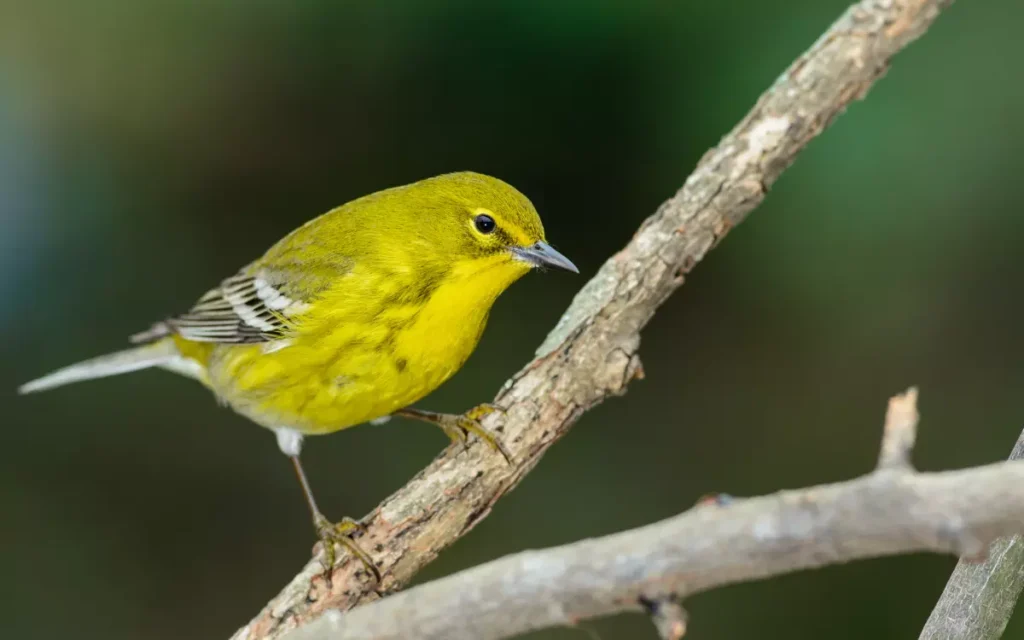
The Pine Warbler is a small yellowish bird strongly linked to pine trees. It has an olive back, pale wing bars, and yellow throat or breast. Some birds look bright yellow, while others look duller depending on sex, age, and season.
In Georgia, Pine Warblers are present all year in many pine-heavy areas. They are easier to find than many warblers because they sing from pine trees and may also visit feeders. They eat insects, seeds, and sometimes suet.
Quick ID points:
- Small warbler with yellowish breast
- Olive back
- Pale wing bars
- Strongly tied to pine trees
- Can visit feeders
Best places to see it in Georgia: Pine forests, pine-heavy yards, mixed woods, parks, and feeders near pines.
18. Common Yellowthroat
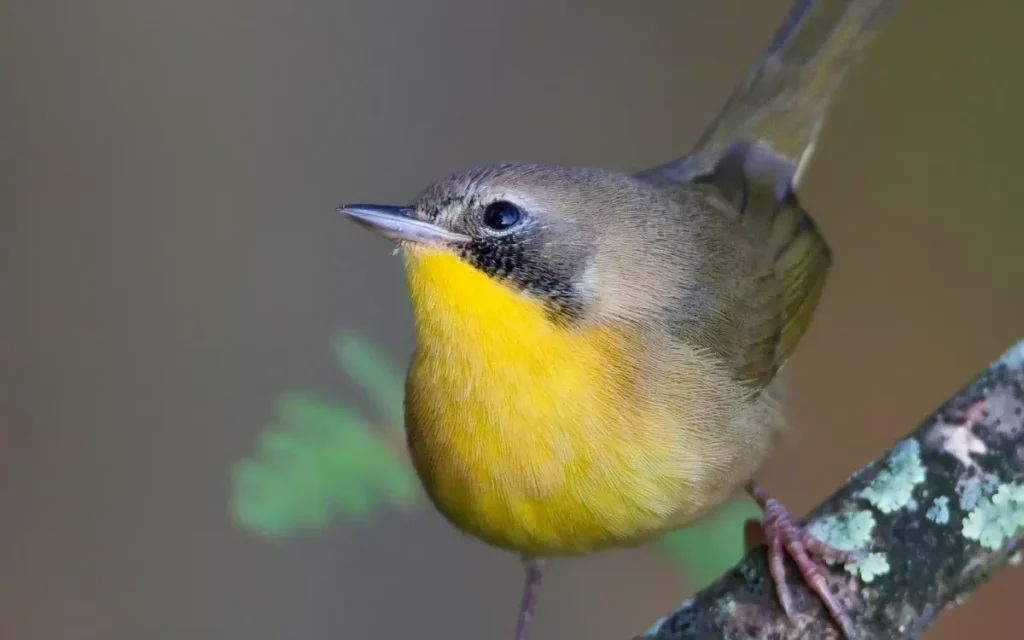
The Common Yellowthroat is a small warbler often found low in marshes, wet grass, and thick vegetation. Males have a yellow throat and chest with a black mask. Females are olive-brown above with yellow below and no black mask.
This bird can be hard to see because it stays hidden in reeds, weeds, and low shrubs. In Georgia, it is most likely during spring and summer in wet, brushy habitat. If a small yellow bird pops up from grass and quickly drops back down, Common Yellowthroat is a good possibility.
Quick ID points:
- Small yellowish warbler
- Male has black mask
- Female is plainer yellow-brown
- Stays low in thick plants
- Common in wet grassy areas
Best places to see it in Georgia: Marshes, pond edges, wet fields, grassy ditches, and shrubby wetlands.
19. Northern Parula
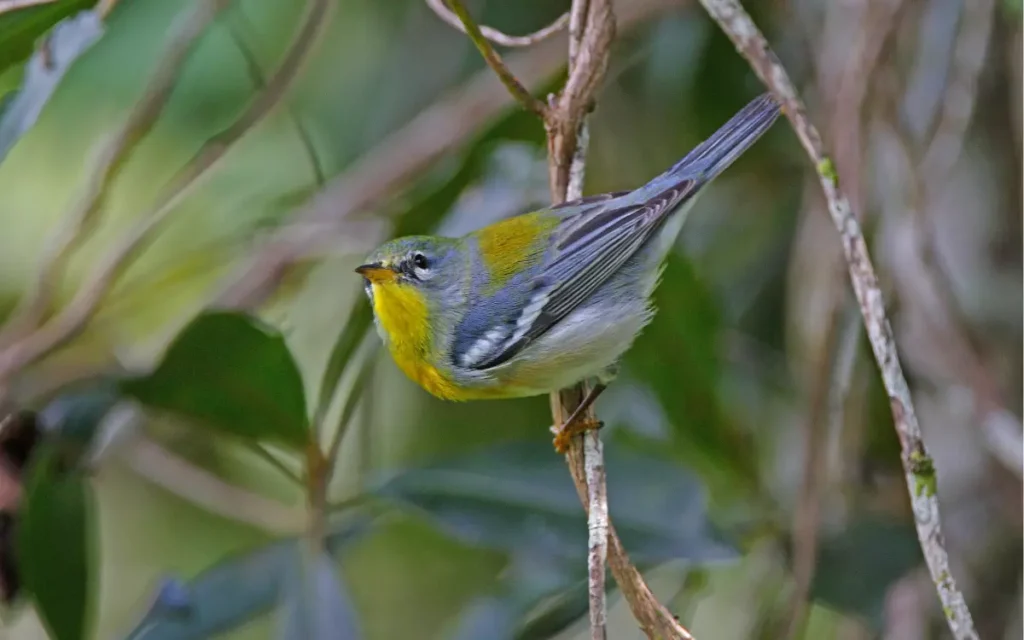
The Northern Parula is a small warbler with blue-gray upperparts, yellow throat, white belly, and a short tail. Males may show a dark band across the chest. It is colorful but often hard to see because it stays high in the forest canopy.
In Georgia, Northern Parulas are common in spring and summer in mature forests and wooded areas. Their buzzy rising song often gives them away before you spot them. They feed on insects among leaves and small branches.
Quick ID points:
- Small blue-gray warbler
- Yellow throat and chest
- White belly
- Often high in trees
- Common spring and summer forest bird
Best places to see it in Georgia: Mature forests, wooded parks, river woods, shaded trails, and canopy-rich areas.
20. Ruby-throated Hummingbird
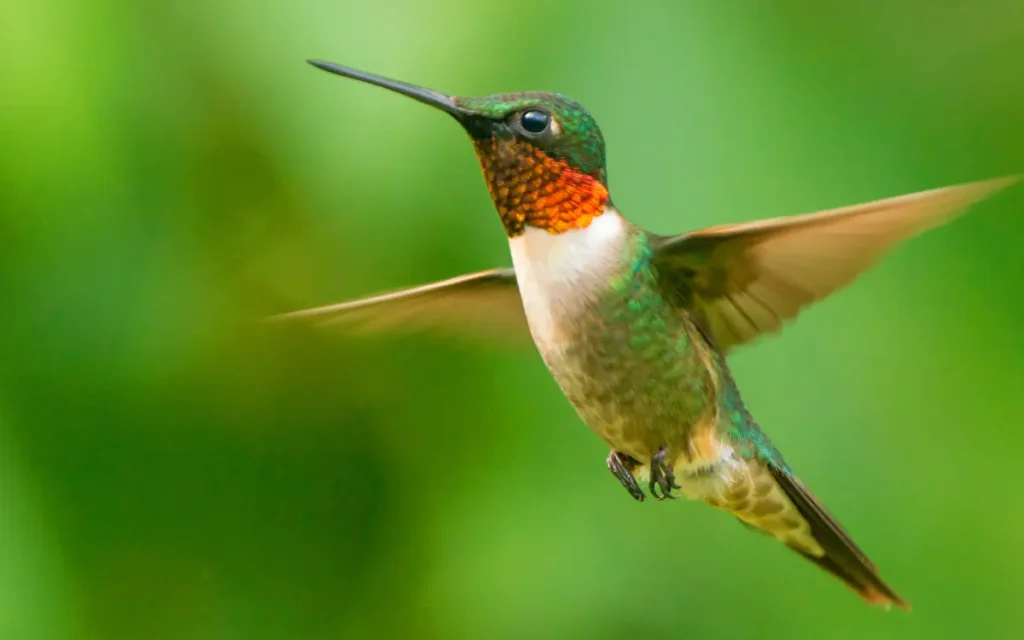
The Ruby-throated Hummingbird is the smallest bird most people see in Georgia. Males have a shiny red throat, green back, and pale underside. Females lack the red throat and are usually green above and pale below.
These hummingbirds arrive in Georgia during the warmer months and visit nectar feeders, tubular flowers, gardens, and woodland edges. Their wings beat so fast they look like a blur. If you see a tiny bird hovering in place, it is almost certainly a hummingbird.
Quick ID points:
- Tiny hovering bird
- Male has red throat
- Green back
- Visits nectar feeders and flowers
- Fast wingbeats
Best places to see it in Georgia: Flower gardens, feeders, woodland edges, parks, yards, and native plant beds.
21. House Wren
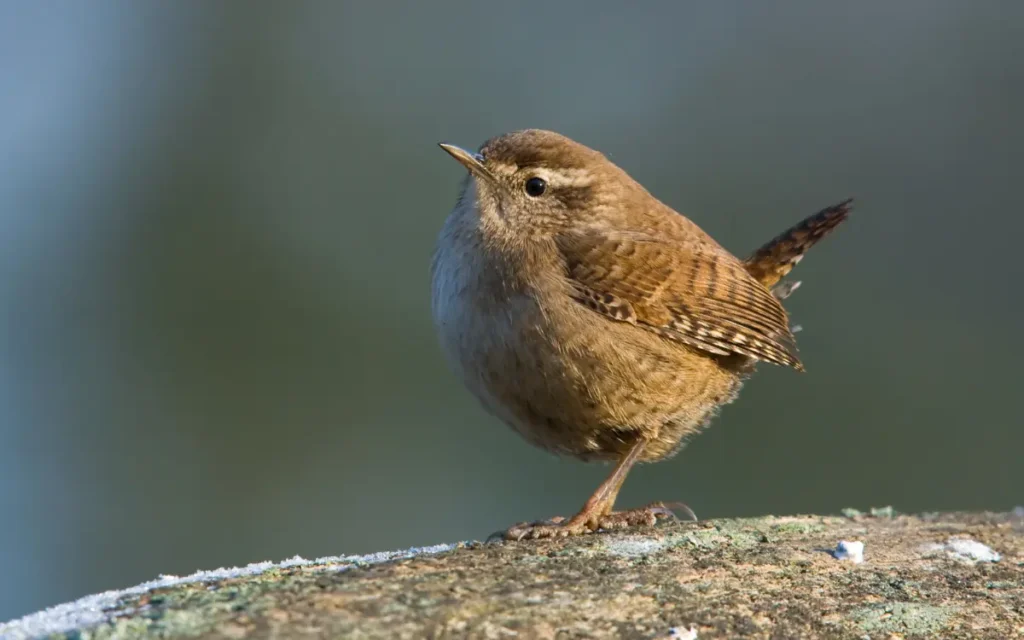
The House Wren is a small brown bird with a short tail that is often held upward. It has a plain brown body with subtle barring and a lively, bubbling song. It is less boldly marked than the Carolina Wren and usually looks smaller and plainer.
In Georgia, House Wrens are seen mostly during the warmer months and migration. They like brush piles, gardens, wooded edges, shrubs, and nest boxes. They move quickly through low cover, hunting insects and spiders.
Quick ID points:
- Small plain brown bird
- Short tail often held up
- Lively song
- Likes brush and garden edges
- Uses nest boxes
Best places to see it in Georgia: Gardens, brush piles, shrubs, woodland edges, parks, and nest box areas.
FAQs About Small Birds in Georgia
What is the most common small bird in Georgia?
The Carolina Chickadee, Tufted Titmouse, and Carolina Wren are among the most common small birds in Georgia yards and wooded neighborhoods. They are easy to see around feeders, shrubs, and trees.
What tiny bird visits feeders in Georgia?
The Carolina Chickadee is one of the most common tiny feeder birds in Georgia. It has a black cap, white cheeks, gray back, and quick movements.
What small gray bird has a crest in Georgia?
The Tufted Titmouse is a small gray bird with a crest. It often visits feeders and wooded yards, especially where there are mature trees.
What small brown bird is common in Georgia yards?
The Carolina Wren is a common small brown bird in Georgia. It has a warm brown body, pale eyebrow stripe, curved bill, and very loud song.
What is the smallest bird in Georgia?
The Ruby-throated Hummingbird is one of the smallest birds seen in Georgia. It is tiny, fast, and often visits nectar feeders and tubular flowers during the warmer months.
What small yellow bird is common in Georgia?
The American Goldfinch and Pine Warbler are two common small yellow birds in Georgia. Goldfinches often visit feeders, while Pine Warblers are common around pine trees.
What small birds are seen in Georgia during winter?
Common small winter birds in Georgia include Dark-eyed Juncos, Ruby-crowned Kinglets, Golden-crowned Kinglets, Yellow-rumped Warblers, and several sparrows.
Final Thoughts
Small birds in Georgia can be easier to identify when you start with where you saw them. A tiny bird at a feeder may be a Carolina Chickadee, Tufted Titmouse, House Finch, or American Goldfinch. A small bird in pine trees may be a Pine Warbler or Brown-headed Nuthatch. A tiny bird hovering near flowers is usually a Ruby-throated Hummingbird.
For the best article, place common backyard birds first, then add winter visitors, warblers, wrens, and pine-woods birds. That structure helps beginners while still giving bird lovers enough detail to keep reading.