26 Birds That Start With N (Names, Pictures & Facts)
Looking for birds that start with N? There are plenty to choose from, and some have names you probably already know.
The Northern Cardinal, Northern Mockingbird, and Nightingale are familiar examples. But there are also less familiar birds, such as the Nicobar Pigeon, Nankeen Kestrel, and Night Parrot.
You’ll find colorful songbirds, ducks, owls, seabirds, and even a Hawaiian goose on this list.
Here are 26 birds whose names begin with N, with their scientific names, where they live, and a few details to help you recognize them.
Quick List of 27 Birds That Start With N
If you just need a bird name for a quiz, school project, or alphabet game, start here.
| Bird name | Scientific name | Where it’s found |
| 1. Northern Cardinal | Cardinalis cardinalis | North America |
| 2. Northern Mockingbird | Mimus polyglottos | North and Central America |
| 3. Northern Pintail | Anas acuta | Northern Hemisphere |
| 4. Nankeen Kestrel | Falco cenchroides | Australia and New Guinea |
| 5. Nazca Booby | Sula granti | Eastern Pacific |
| 6. Nankeen Night Heron | Nycticorax caledonicus | Australia and nearby regions |
| 7. Northern Shoveler | Spatula clypeata | Northern Hemisphere |
| 8. Northern Fulmar | Fulmarus glacialis | North Atlantic and North Pacific |
| 9. Northern Gannet | Morus bassanus | North Atlantic |
| 10. Nicobar Pigeon | Caloenas nicobarica | Southeast Asian islands |
| 11. Northern Flicker | Colaptes auratus | North America |
| 12. Northern Harrier | Circus hudsonius | North America |
| 13. Nuttall’s Woodpecker | Dryobates nuttallii | California and Baja California |
| 14. Nashville Warbler | Leiothlypis ruficapilla | North and Central America |
| 15. Northern Potoo | Nyctibius jamaicensis | Mexico and Central America |
| 16. Northern Wheatear | Oenanthe oenanthe | Eurasia, northern North America, and Africa |
| 17. Northern Lapwing | Vanellus vanellus | Europe, Asia, and parts of Africa |
| 18. Northern Saw-whet Owl | Aegolius acadicus | North America |
| 19. Northern Hawk Owl | Surnia ulula | Northern forests of North America and Eurasia |
| 20. Northern Jacana | Jacana spinosa | Mexico and Central America |
| 21. Nene | Branta sandvicensis | Hawaii |
| 22. Nanday Parakeet | Aratinga nenday | South America |
| 23. New Zealand Falcon | Falco novaeseelandiae | New Zealand |
| 24. Northern Parula | Setophaga americana | North and Central America |
| 25. Night Parrot | Pezoporus occidentalis | Australia |
| 26. Nightingale | Luscinia megarhynchos | Europe, western Asia, and Africa |
| 27. Nuthatch | Sitta europaea | Europe and Asia |
The names Nightingale and Nuthatch are also used more broadly. The scientific names in this table identify the particular species described below.
1.Northern Cardinal
Scientific name: Cardinalis cardinalis
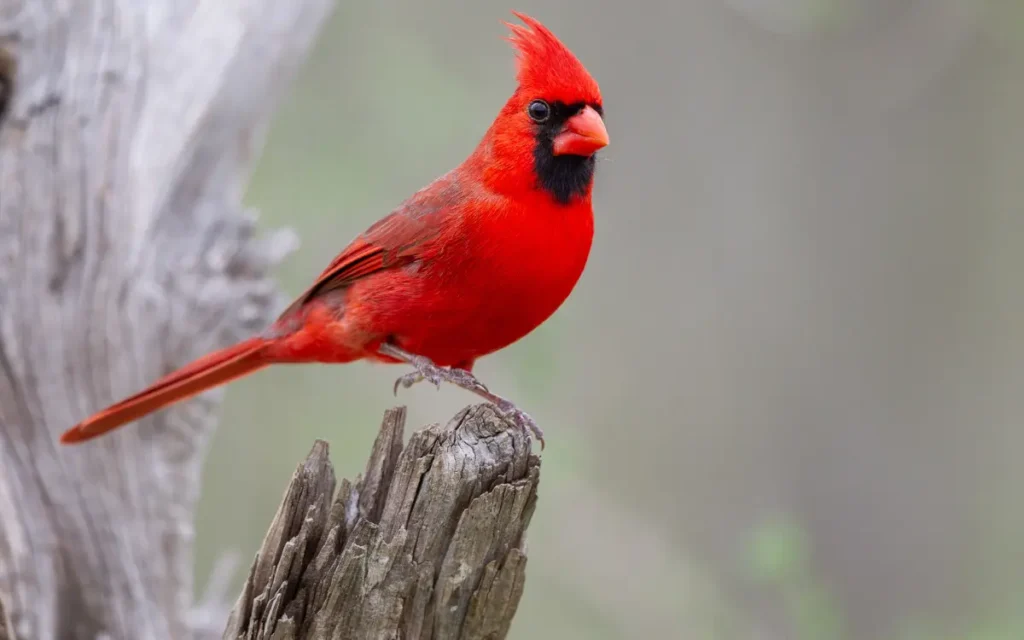
The Northern Cardinal is one of the easiest birds to recognize in North America.
Adult males have bright red feathers, black markings around the face, and a pointed crest. Females are mostly brown, with reddish wings, tails, and crests.
These birds are common in gardens, parks, woodland edges, and neighborhoods across much of the eastern and central United States and parts of Mexico.
How to recognize one: Look for the pointed crest and thick reddish-orange bill.
One interesting thing about Northern Cardinals is that both males and females can sing. They also stay in their home areas throughout the year rather than making regular seasonal migrations.
2.Northern Mockingbird
Scientific name: Mimus polyglottos
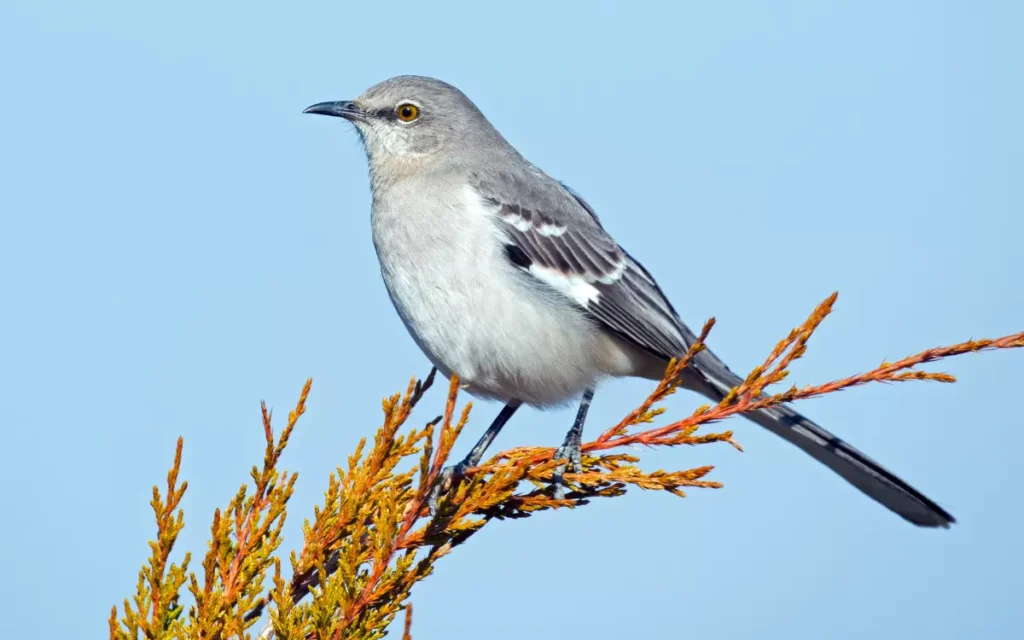
The Northern Mockingbird is famous for copying sounds.
It can imitate the songs of other birds and may also repeat sounds it hears around its surroundings.
This medium-sized songbird has gray feathers, a long tail, and white patches on its wings that become noticeable when it flies.
Northern Mockingbirds are common in open neighborhoods, parks, fields, and gardens across much of the southern United States, Mexico, and nearby regions.
How to recognize one: Look for a gray bird with a long tail, white wing patches, and a habit of singing from exposed perches.
A mockingbird may repeat the same phrase several times before switching to another sound.
3.Northern Pintail
Scientific name: Anas acuta
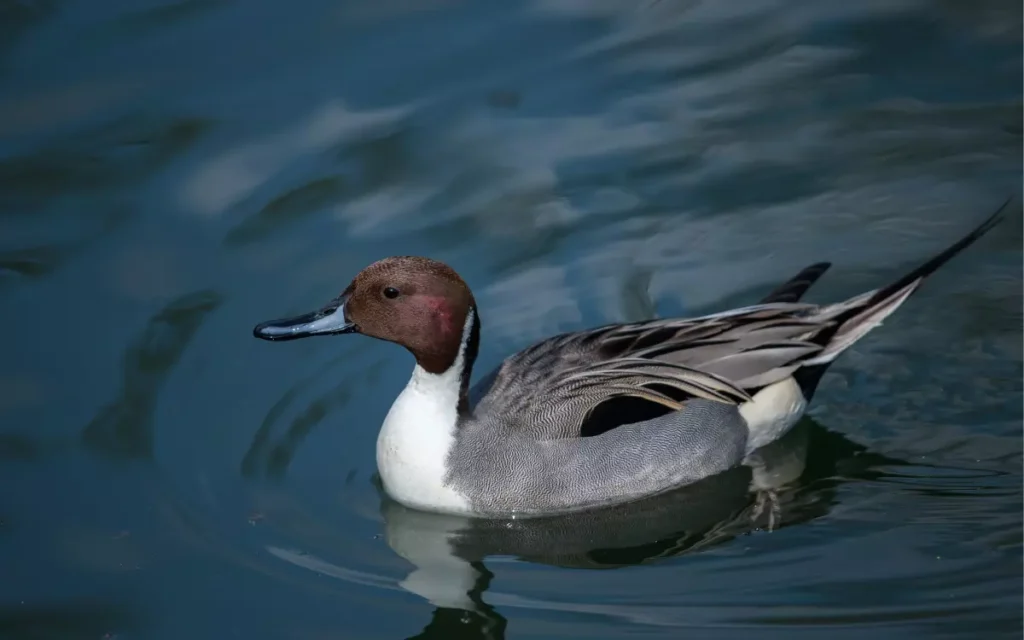
The Northern Pintail is a graceful-looking duck with a long neck and a slim body.
Breeding males have chocolate-brown heads, white necks and chests, and long, pointed central tail feathers.
Females are mostly brown with patterned feathers and shorter tails.
These ducks live in wetlands across much of the Northern Hemisphere. Many breed in northern regions and travel south during winter.
How to recognize one: Look for the long, slender neck and pointed tail, especially on males.
Northern Pintails often feed in shallow water by tipping forward to reach aquatic plants, seeds, and small animals.
4.Nankeen Kestrel

Scientific name: Falco cenchroides
The Nankeen Kestrel is a small falcon commonly seen in open Australian landscapes.
It has reddish-brown upperparts, pale underparts with dark streaks, and long, pointed wings.
These birds hunt around grasslands, farms, roadsides, and open woodland.
One of their best-known habits is hovering above the ground while searching for food.
How to recognize one: Watch for a small falcon remaining almost stationary in the air while beating its wings rapidly.
Once it spots prey, it may drop toward the ground to catch an insect, lizard, or small mammal.
5.Nazca Booby

Scientific name: Sula granti
The Nazca Booby is a large seabird found in the eastern Pacific Ocean, particularly around the Galápagos Islands.
Adult birds have mostly white feathers, black flight feathers, a dark face, and a pinkish-orange bill.
They spend much of their time at sea looking for fish.
When hunting, Nazca Boobies plunge into the water from above to catch prey.
How to recognize one: Look for a large white seabird with black wingtips and a coral-pink to orange bill.
Nazca Boobies look very similar to Masked Boobies. Adult bill color is one of the best ways to separate them, although young birds can be harder to identify.
6.Nankeen Night Heron
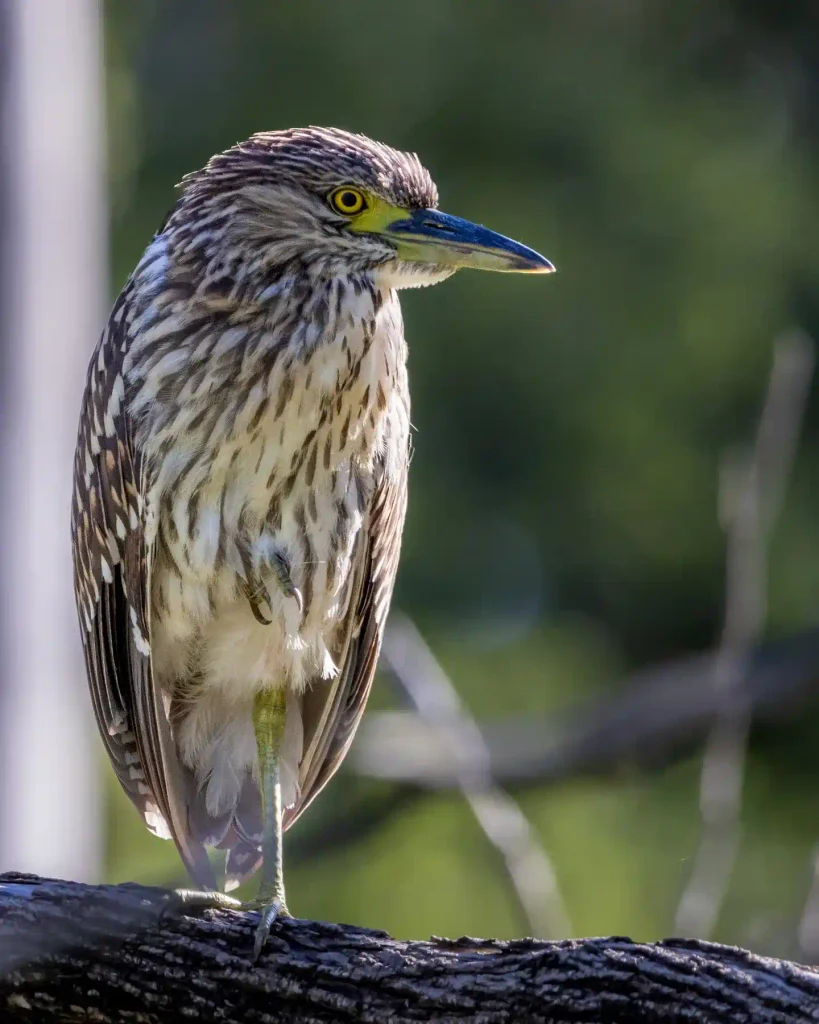
Scientific name: Nycticorax caledonicus
The Nankeen Night Heron is a stocky waterbird found across much of Australia and nearby regions.
Adults have rich cinnamon-brown upperparts, pale underparts, a black crown, and yellow legs.
Their short necks and rounded bodies give them a rather hunched appearance.
These herons usually rest in sheltered trees during the day and become more active around dusk.
How to recognize one: Look for the reddish-brown body, black crown, and relatively short legs.
Nankeen Night Herons feed around shallow water, catching fish, insects, and other small aquatic animals.
7.Northern Shoveler
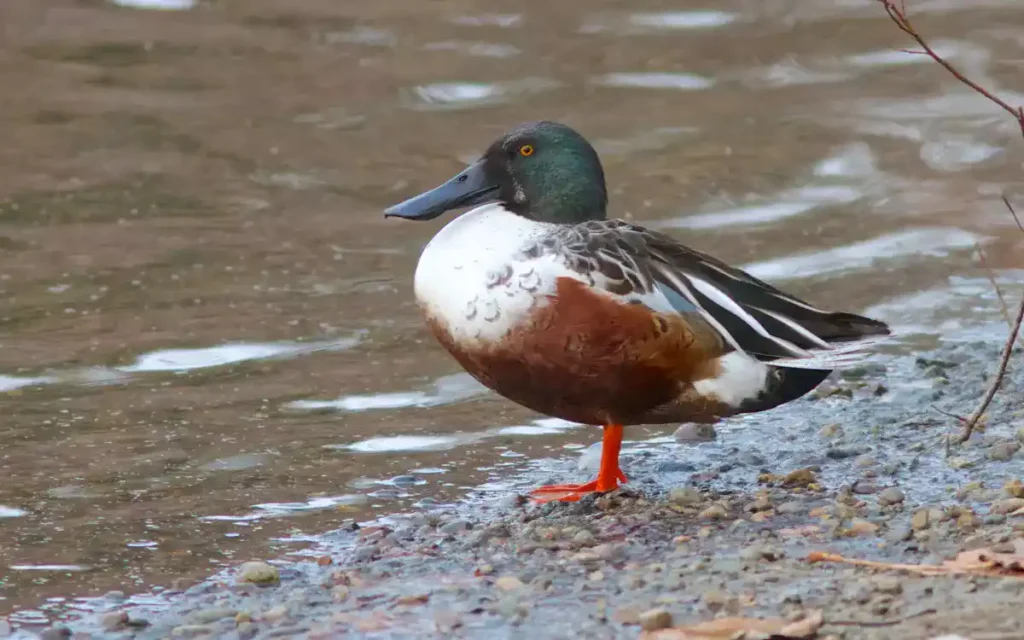
Scientific name: Spatula clypeata
The Northern Shoveler is a duck with one feature that’s almost impossible to miss: its enormous spoon-shaped bill.
Breeding males have dark green heads, white chests, and reddish-brown sides.
Females are mostly brown and patterned, but they share the same wide bill.
Northern Shovelers occur in wetlands across North America, Europe, and Asia.
How to recognize one: Focus on the broad, flattened bill. It’s much wider at the tip than the bill of most other ducks.
Shovelers use their bills to strain small food particles and aquatic animals from the water.
8.Northern Fulmar

Scientific name: Fulmarus glacialis
The Northern Fulmar looks a little like a gull, but it belongs to a different group of seabirds.
It has a thick body, broad wings, and a short, sturdy bill with tube-like nostrils.
Northern Fulmars live across the North Atlantic and North Pacific Oceans, where they spend much of their lives over open water.
They eat fish, squid, and other marine animals.
How to recognize one: Look for a gull-like seabird with a thick neck, stiff-winged flight, and a noticeable tube on top of its bill.
Northern Fulmars have another unusual defense. When threatened, they can eject oily stomach contents toward an attacker.
9.Northern Gannet

Scientific name: Morus bassanus
The Northern Gannet is one of the largest seabirds in the North Atlantic.
Adult birds have white bodies, black wingtips, long pointed bills, and pale golden coloring around the head.
Their hunting style is what makes them particularly interesting.
A gannet may circle above the ocean, spot a fish, fold back its wings, and plunge into the water.
How to recognize one: Look for a large white seabird with long wings and black tips, often flying over coastal waters.
Northern Gannets breed in large colonies on cliffs and offshore islands.
10.Nicobar Pigeon

Scientific name: Caloenas nicobarica
The Nicobar Pigeon looks quite different from the pigeons you might see in a city.
It has metallic green and bronze feathers, long feathers hanging around its neck, and a short white tail.
These birds live on islands across parts of Southeast Asia and the surrounding region.
They often feed on the ground, searching for seeds, fruits, and other available food.
How to recognize one: Look for the long, glossy neck feathers and contrasting white tail.
The Nicobar Pigeon is also one of the closest living relatives of the extinct dodo, making it an interesting bird from an evolutionary point of view.
11.Northern Flicker
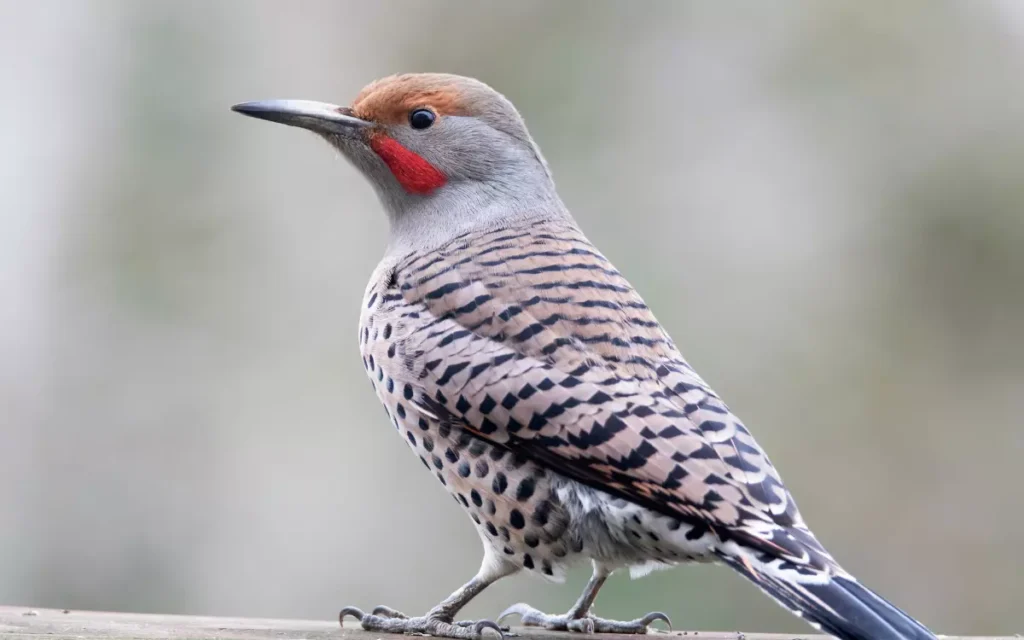
Scientific name: Colaptes auratus
The Northern Flicker is a woodpecker that often spends time on the ground.
Unlike many woodpeckers that search tree trunks for insects, flickers frequently hunt for ants in lawns and open areas.
They have brownish bodies, black spots across the underparts, a black chest crescent, and a white rump that’s noticeable in flight.
Some populations have yellow beneath their wings and tails, while others have red.
How to recognize one: Look for the spotted belly, black chest marking, and white rump.
If you see a large woodpecker hopping across your lawn and searching for ants, it could be a Northern Flicker.
Learn more a to z bird list form here.
12.Northern Harrier
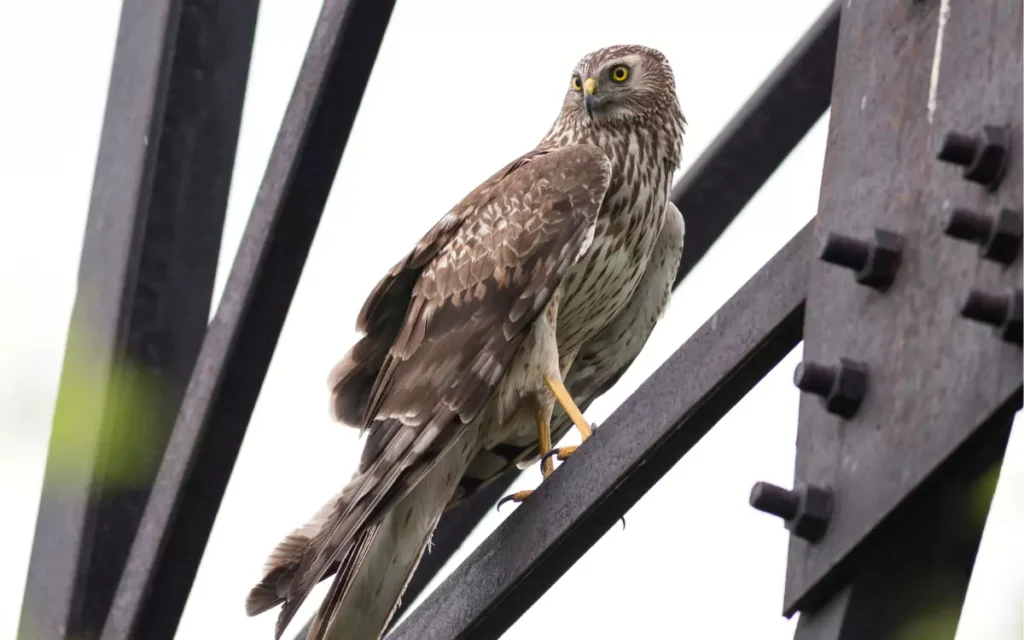
Scientific name: Circus hudsonius
The Northern Harrier is a slim hawk often seen flying low over grasslands, fields, and marshes.
It has long wings, a long tail, and a white patch just above the tail that’s easy to see in flight.
Adult males are mostly gray, while females and young birds are brown.
How to recognize one: Watch for a hawk gliding low with its wings held in a shallow V shape.
Northern Harriers have owl-like facial features that help them locate prey using sound as well as sight.
They mainly hunt small mammals and birds.
13.Nuttall’s Woodpecker

Scientific name: Dryobates nuttallii
Nuttall’s Woodpecker is a small black-and-white woodpecker found mainly in California and parts of Baja California.
It has a barred black-and-white back, a patterned face, and a relatively short bill.
Adult males have a red patch on the crown, while females lack the red coloring.
These birds are strongly associated with oak woodlands.
How to recognize one: Look for a small woodpecker with closely spaced black-and-white bars across its back.
Nuttall’s Woodpeckers search tree bark and branches for insects, often moving quickly through oak trees.
14.Nashville Warbler
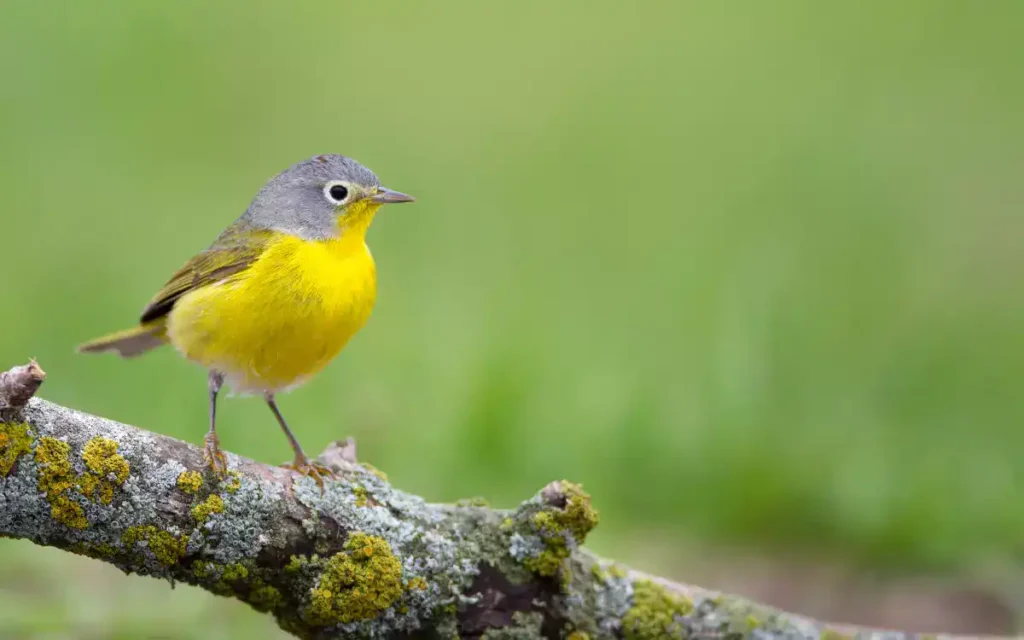
Scientific name: Leiothlypis ruficapilla
Despite its name, the Nashville Warbler isn’t a bird you’re especially likely to find breeding around Nashville.
It was named after the city because an early specimen was collected there.
This small songbird has a gray head, white eye-ring, yellow underparts, and olive-green upperparts.
Males may have a rusty patch on the crown, although it’s often hidden.
How to recognize one: Look for a small yellow-bellied warbler with a gray head and a clean white ring around the eye.
Nashville Warblers breed in parts of North America and migrate south for winter.
15.Northern Potoo

Scientific name: Nyctibius jamaicensis
The Northern Potoo is a nighttime bird with an impressive ability to blend into its surroundings.
During the day, it often sits almost motionless on a branch or broken tree stump.
Its brown and gray feathers look so much like bark that the bird can be difficult to notice.
Northern Potoos live in parts of Mexico and Central America.
How to recognize one: Look for a long-bodied, bark-colored bird sitting upright on a branch, often with its eyes nearly closed.
At night, Northern Potoos catch flying insects using their wide mouths.
16.Northern Wheatear

Scientific name: Oenanthe oenanthe
The Northern Wheatear is a small bird with a remarkable migration.
It breeds across parts of northern Europe and Asia, as well as Alaska and northeastern Canada.
During the nonbreeding season, these birds travel to Africa.
Adult males in breeding plumage have gray upperparts, a black facial mask, and pale underparts.
How to recognize one: Look for the white rump and bold black-and-white tail pattern, which are especially noticeable when the bird flies.
Northern Wheatears usually feed on the ground in open areas, catching insects and other small invertebrates.
17.Northern Lapwing

Scientific name: Vanellus vanellus
The Northern Lapwing is a distinctive shorebird found across Europe and parts of Asia.
It has a black-and-white head, a long, thin crest, and dark upperparts that can appear green or purple in sunlight.
These birds live in open farmland, wet meadows, and other grassy habitats.
Their flight can look quite unusual because of their broad, rounded wings.
How to recognize one: Look for the long head crest and broad wings.
Northern Lapwings are also called peewits, a name based on the sound of their calls.
18.Northern Saw whet Owl
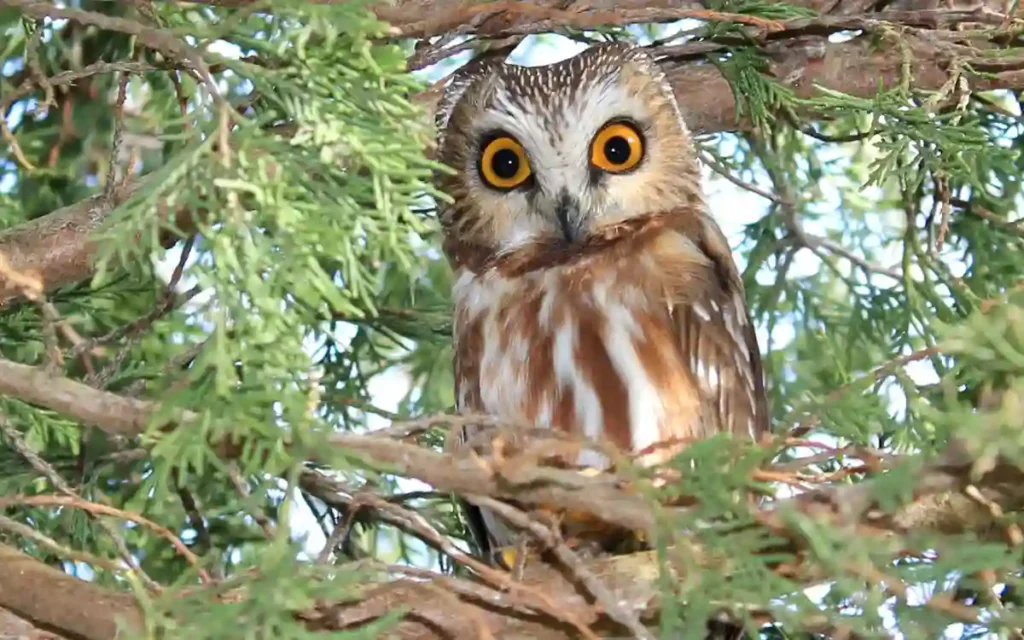
Scientific name: Aegolius acadicus
The Northern Saw-whet Owl is a tiny owl found in North America.
It has a round head, yellow eyes, a pale facial disk, and brown feathers with white spots.
These owls are mostly active at night and can be difficult to spot because they often rest quietly in dense trees during the day.
How to recognize one: Look for a small, round-headed owl without ear tufts and with bright yellow eyes.
Northern Saw-whet Owls are known for their repeated, high-pitched calls, which can sound like a steady series of whistles.
19.Northern Hawk Owl

Scientific name: Surnia ulula
The Northern Hawk Owl is unusual because it often hunts during daylight hours.
It lives in northern forests across parts of North America, Europe, and Asia.
This owl has a rounded head, yellow eyes, a long tail, and brown-and-white markings.
Its long tail and hunting style give it a somewhat hawk-like appearance.
How to recognize one: Look for a long-tailed owl sitting on an exposed treetop or scanning an open area.
Northern Hawk Owls hunt small mammals and birds, using their sharp vision and hearing to locate prey.
20.Northern Jacana

Scientific name: Jacana spinosa
The Northern Jacana is a tropical waterbird with unusually long toes.
It has a dark head and neck, chestnut-colored body, yellow bill, and bright yellow forehead shield.
These birds live around freshwater wetlands in Mexico and Central America.
Their long toes spread their weight across floating leaves, allowing them to walk over aquatic vegetation.
How to recognize one: Look for the long toes, dark head, and yellow bill and forehead shield.
Female Northern Jacanas are larger than males, and males handle much of the incubation and chick care.
21. Nene (Hawaiian Goose)
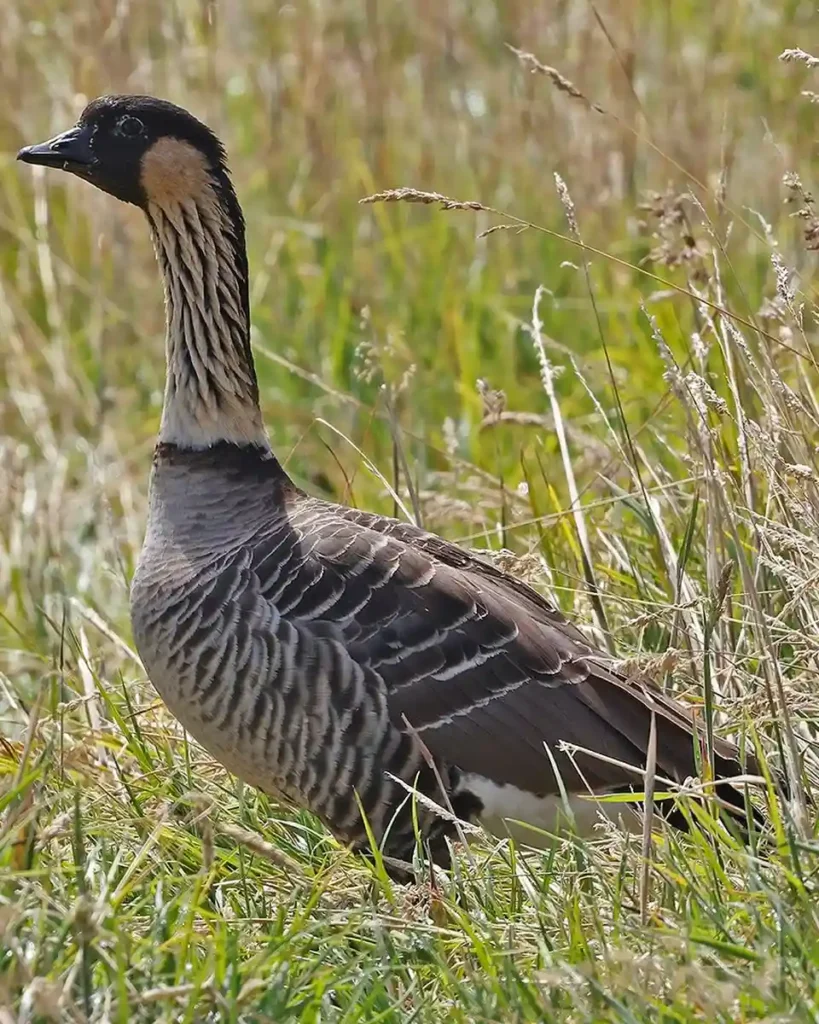
Scientific name: Branta sandvicensis
The Nene is a goose found naturally only in Hawaii.
It’s also Hawaii’s state bird.
Nenes have dark faces, pale cheeks, and cream-colored necks marked with black lines.
Unlike many geese that spend much of their time swimming, Nenes are well adapted to walking on land.
Their feet have less webbing than those of many other geese.
How to recognize one: Look for a medium-sized goose with a dark head and patterned cream-colored neck.
Nenes feed on grasses, leaves, seeds, and other plant material. Conservation work has helped their populations recover from very low numbers.
22. Nanday Parakeet
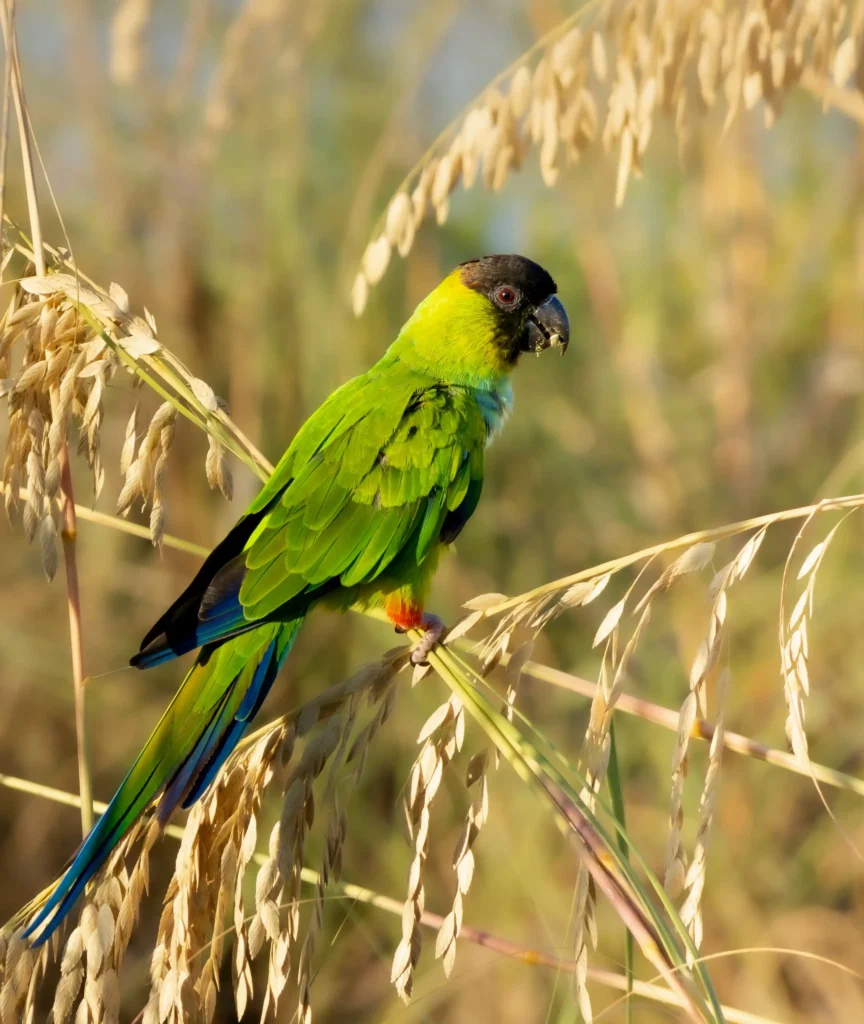
Scientific name: Aratinga nenday
The Nanday Parakeet is a colorful parrot native to parts of South America.
It has a black head, green body, pale bill, and reddish markings on the legs.
These birds are social and often travel in noisy groups.
They feed on seeds, fruits, nuts, and other plant foods.
How to recognize one: Look for the black head contrasting with a bright green body and long tail.
Nanday Parakeets have also established introduced populations in some places outside their native range, including parts of Florida.
23. New Zealand Falcon
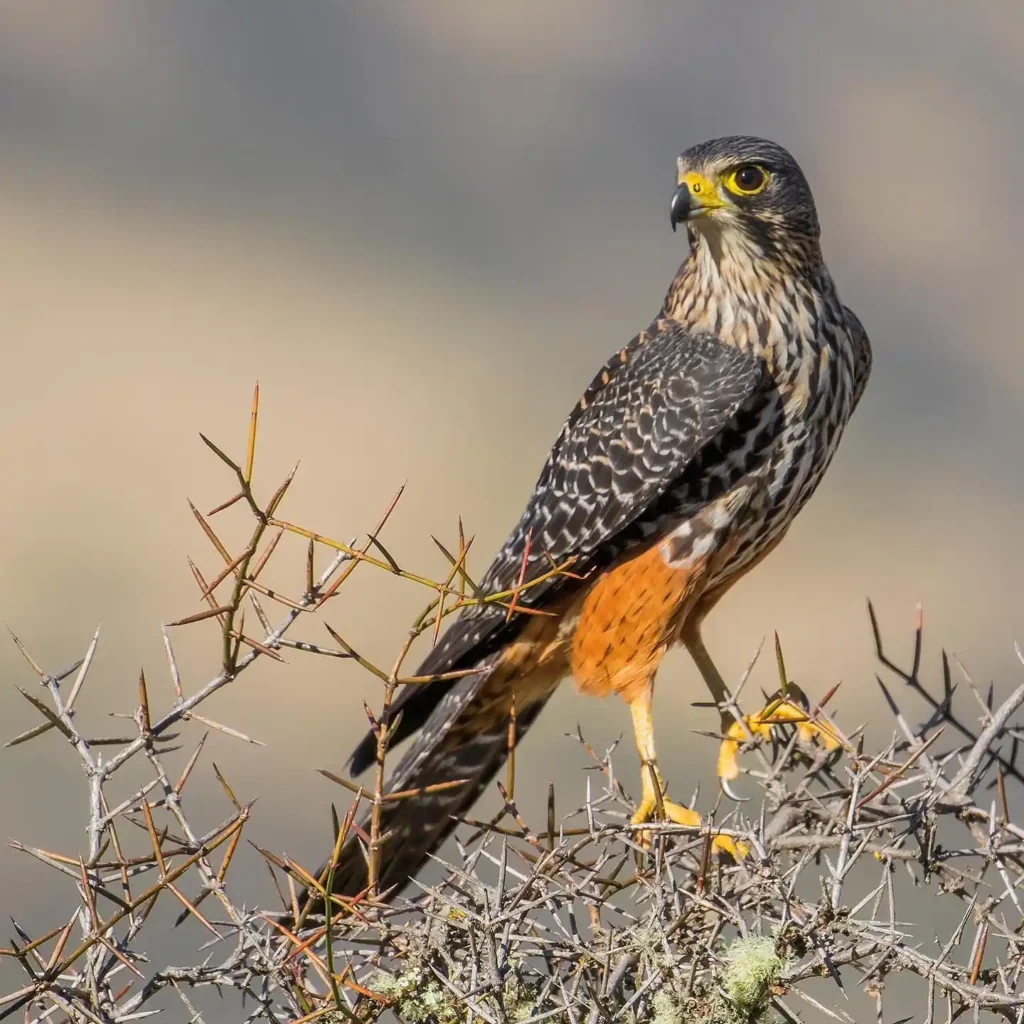
Scientific name: Falco novaeseelandiae
The New Zealand Falcon, also called kārearea, is a bird of prey found only in New Zealand.
It has dark brown upperparts, streaked underparts, pointed wings, and a long tail.
These falcons hunt birds and other small animals, often surprising prey with fast, direct flights.
You may find them around forests, open country, and mountainous areas, depending on the region.
How to recognize one: Look for a compact falcon with pointed wings, a strongly patterned chest, and a fast hunting flight.
The New Zealand Falcon is different from the larger birds of prey sometimes mistaken for it.
24. Northern Parula
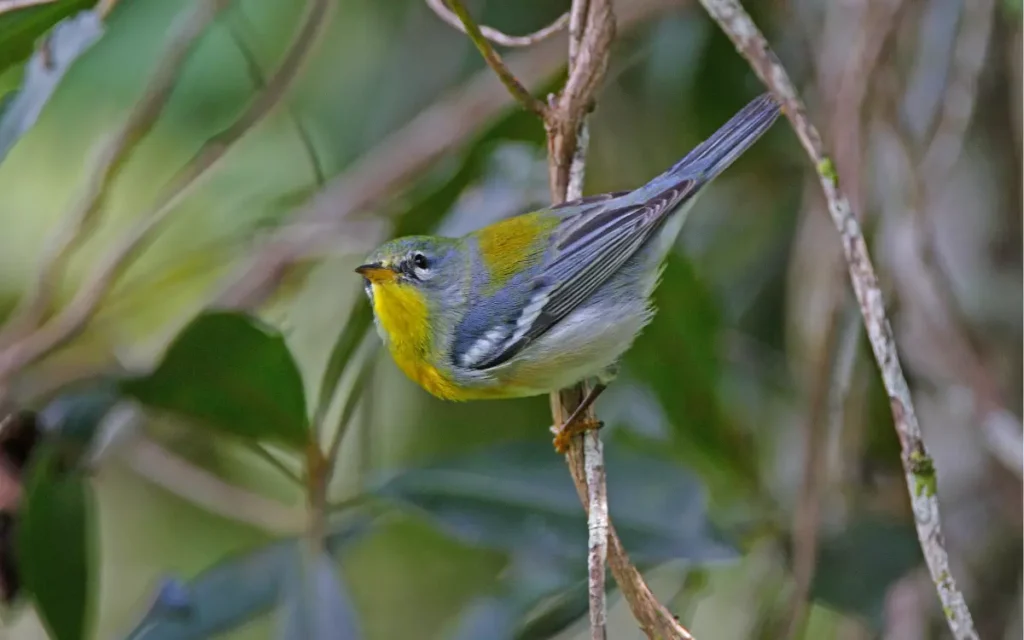
Scientific name: Setophaga americana
The Northern Parula is one of the smaller warblers found in eastern North America.
It has blue-gray upperparts, a yellow throat and chest, white eye crescents, and a short tail.
Adult males often have a dark and chestnut-colored band across the upper breast.
These birds spend much of their time searching for insects among leaves and small branches.
How to recognize one: Look for the white eye crescents, yellow throat, and small size.
Northern Parulas are especially associated with forests containing Spanish moss or hanging lichens, which they may use when nesting.
25. Nightingale

Scientific name: Luscinia megarhynchos
The Nightingale is a small brown songbird best known for its singing.
It doesn’t have particularly bright feathers. Its upperparts are warm brown, its underside is paler, and its tail is slightly reddish.
What makes this bird memorable is its voice.
Male Nightingales produce rich songs with whistles, trills, and repeated notes.
These birds breed across parts of Europe and western Asia, then migrate to Africa for the nonbreeding season.
How to recognize one: Look for a rather plain brown bird with a reddish tail, and listen for its strong, varied song.
Despite the name, Nightingales don’t sing only at night. They also sing during the day.
26. Nuthatch
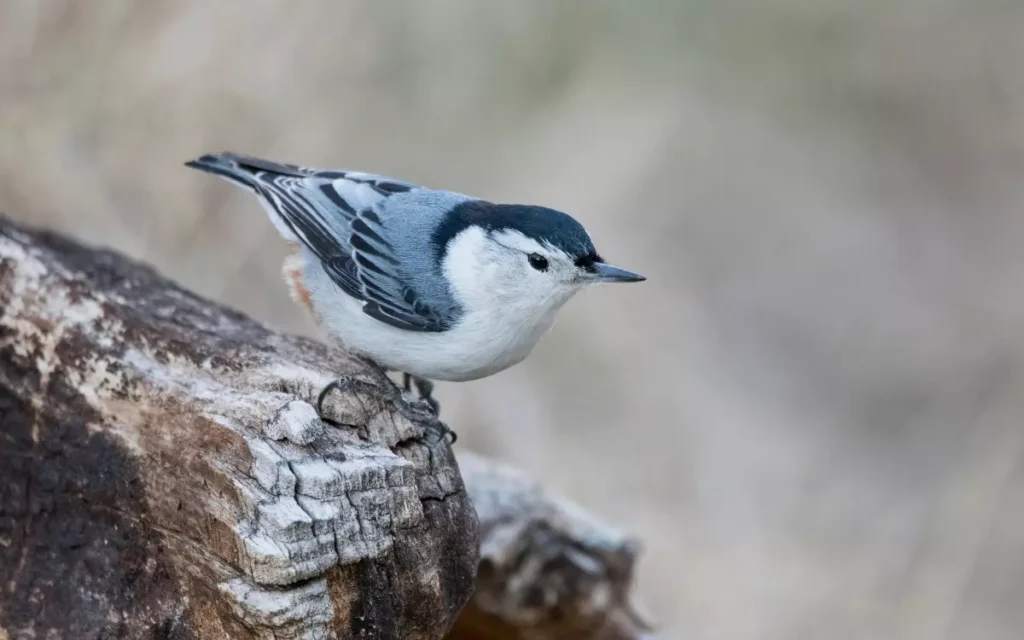
Scientific name: Sitta europaea
Nuthatches are small woodland birds known for climbing along tree trunks.
The Eurasian Nuthatch, described here, has blue-gray upperparts, pale underparts, warm chestnut coloring along its sides, and a black stripe through the eye.
It lives in woodlands, parks, and mature gardens across Europe and parts of Asia.
How to recognize one: Look for a small bird moving up or down a tree trunk, sometimes headfirst.
Nuthatches search bark for insects and spiders. They also eat seeds and nuts, especially during colder months.
Unlike woodpeckers, they don’t need to brace themselves with a stiff tail while climbing.
Are All Birds That Start With N From North America?
No. Birds beginning with N live in many different parts of the world.
Several have names beginning with Northern, including the Northern Cardinal, Northern Pintail, and Northern Harrier.
But the letter N also includes birds from Australia, New Zealand, Hawaii, Africa, Europe, and Asia.
The Nankeen Kestrel lives in Australia, the Nicobar Pigeon is found around Southeast Asian islands, and the Nene is native to Hawaii.
The Nightingale breeds in parts of Europe and Asia and spends the nonbreeding season in Africa.
That’s why the first letter of a bird’s name doesn’t tell you where the bird lives.
What Do Bird Names Beginning With N Tell Us?
Bird names can come from several different things.
Some describe where the bird lives, while others describe its appearance, sound, or behavior.
For example, Northern often helps distinguish a species from a related bird with a different range.
Night appears in names such as Night Parrot because the bird is mostly active after dark.
The Nanday Parakeet’s name comes from a traditional name for the bird, while the Nuttall’s Woodpecker is named after naturalist Thomas Nuttall.
Names can be useful starting points, but they don’t always tell the full story.
A Northern Saw-whet Owl doesn’t live only in the far north, and a Nashville Warbler isn’t limited to Nashville.
Frequently Asked Questions
What are five birds that start with N?
Five examples are the Northern Cardinal, Northern Mockingbird, Northern Pintail, Nightingale, and Nuthatch.
What is a common bird that starts with N?
The Northern Cardinal is a familiar backyard bird in much of eastern and central North America. The Northern Mockingbird is another common example in many southern areas.
Is there a bird called Nene?
Yes. The Nene, also called the Hawaiian Goose, is a real bird found naturally only in Hawaii. It’s also the state’s official bird.
What bird starting with N is known for singing?
The Nightingale is famous for its rich, varied song. Northern Mockingbirds are also known for singing and copying other sounds.
Are there owls that start with N?
Yes. Examples include the Northern Saw-whet Owl and Northern Hawk Owl. The Northern Saw-whet Owl is small and mostly active at night, while the Northern Hawk Owl often hunts during daylight hours.
What is a rare bird that starts with N?
The Night Parrot is a rare Australian bird. It lives in remote dry habitats and is difficult to observe because it is mostly active at night.
What bird starts with N and has a long neck?
The Northern Pintail is one example. This duck has a slender neck, and breeding males have long, pointed tail feathers.