26 Birds That Start With O: Names, Pictures & Interesting Facts
Looking for birds that start with O? The Ostrich and Osprey might come to mind first, but there are plenty of others worth knowing.
Some have colorful feathers, like the Orange-breasted Bunting and Orchard Oriole. Others are a little unusual. The Oilbird uses echolocation to find its way in dark caves, while the Ovenbird builds a nest that looks like a tiny oven.
And then there’s the Orange-bellied Parrot, one of Australia’s rarest birds.
Here are 26 birds whose names begin with O, along with their scientific names, where they live, and a few easy ways to recognize them.
Quick List of 27 Birds That Start With O
Need a bird name for a quiz, school project, or alphabet game? Here’s the full list.
| Bird name | Scientific name | Where it’s found |
| 1. Osprey | Pandion haliaetus | Much of the world |
| 2. Ostrich | Struthio camelus | Africa |
| 3. Oriental Magpie-Robin | Copsychus saularis | South and Southeast Asia |
| 4. Orange-winged Amazon | Amazona amazonica | South America |
| 5. Oriental Pied Hornbill | Anthracoceros albirostris | South and Southeast Asia |
| 6. Ovenbird | Seiurus aurocapilla | Americas |
| 7. Orchard Oriole | Icterus spurius | North and Central America |
| 8. Olive-backed Sunbird | Cinnyris jugularis | Parts of Southeast Asia |
| 9. Orange-breasted Bunting | Passerina leclancherii | Mexico |
| 10. Oriental Dollarbird | Eurystomus orientalis | Asia and Australasia |
| 11. Oilbird | Steatornis caripensis | Northern South America |
| 12. Orange Bishop | Euplectes franciscanus | Africa |
| 13. Olive Warbler | Peucedramus taeniatus | Southwestern North and Central America |
| 14. Orange Chat | Epthianura aurifrons | Australia |
| 15. Ocellated Turkey | Meleagris ocellata | Yucatán Peninsula and nearby areas |
| 16. Oriental Skylark | Alauda gulgula | Asia |
| 17. Orange-crowned Warbler | Leiothlypis celata | North and Central America |
| 18. Olive-sided Flycatcher | Contopus cooperi | Americas |
| 19. Orange-bellied Parrot | Neophema chrysogaster | Australia |
| 20. Oriental Cuckoo | Cuculus optatus | Asia and Australasia |
| 21. Oak Titmouse | Baeolophus inornatus | Western North America |
| 22. Olive Sparrow | Arremonops rufivirgatus | Texas to Central America |
| 23. Okinawa Rail | Hypotaenidia okinawae | Okinawa, Japan |
| 24. Okarito Brown Kiwi | Apteryx rowi | New Zealand |
| 25. Orange-headed Thrush | Geokichla citrina | South and Southeast Asia |
| 26. Oriental Bay Owl | Phodilus badius | South and Southeast Asia |
| 27. Orinoco Goose | Neochen jubata | South America |
Bird names and classifications sometimes change as scientists learn more about different species. That’s especially true for the Olive-backed Sunbird group.
1.Osprey
Scientific name: Pandion haliaetus
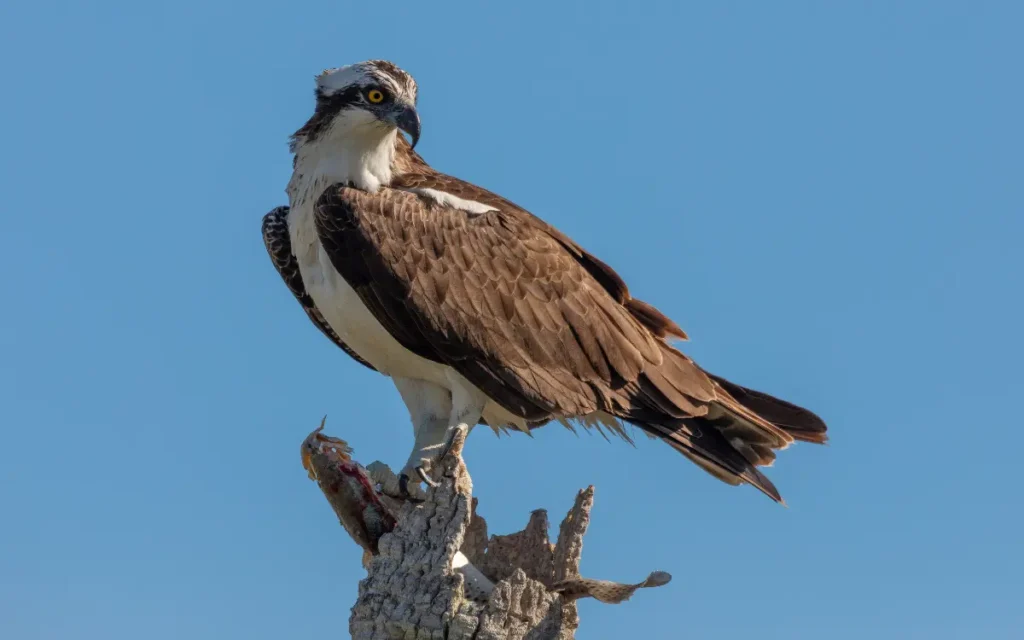
The Osprey is a large bird of prey that spends much of its time around water.
You might see one flying over a lake, hovering briefly, and then diving toward the surface to catch a fish.
Ospreys have brown backs, white underparts, long wings, and a dark stripe running through each eye.
They live near rivers, lakes, wetlands, and coastal waters across much of the world.
How to recognize one: Look for a large raptor with long, angled wings and white underparts.
One of the Osprey’s most interesting features is its reversible outer toes, which help it grip slippery fish.
2.Ostrich

Scientific name: Struthio camelus
The Ostrich is the largest living bird in the world.
It’s also the heaviest, with adults sometimes standing around 9 feet tall.
Ostriches can’t fly, but their powerful legs make them excellent runners. They can sprint at speeds of about 43 mph (70 km/h).
These birds live in African grasslands, savannas, and other open habitats.
Adult males usually have black-and-white feathers, while females are mostly grayish-brown.
How to recognize one: Look for the enormous body, long bare neck, and powerful legs.
Ostriches also lay the largest eggs of any living bird.
3.Oriental Magpie-Robin

Scientific name: Copsychus saularis
The Oriental Magpie-Robin is a small songbird found across South and Southeast Asia.
Adult males are mostly black with white markings on their wings and belly. Females usually look grayer.
These birds are familiar visitors to gardens, parks, and wooded areas.
You may see one sitting on a branch with its tail raised while singing a series of clear, musical notes.
How to recognize one: Look for the long tail, black-and-white feathers, and upright posture.
Despite its name, the Oriental Magpie-Robin isn’t closely related to the American Robin.
4.Orange winged Amazon

Scientific name: Amazona amazonica
The Orange-winged Amazon is a green parrot native to northern South America.
At first glance, it looks mostly green, but orange patches appear on its wings when it flies.
It also has yellow and blue markings around its head.
These parrots live in tropical forests, woodlands, and areas with plenty of fruiting trees.
They often travel in pairs or noisy groups.
How to recognize one: Look for a medium-sized green parrot with orange wing patches and a short, square tail.
Orange-winged Amazons are vocal birds, making loud calls to communicate with others.
5.Oriental Pied Hornbill

Scientific name: Anthracoceros albirostris
The Oriental Pied Hornbill is a large, black-and-white bird found in parts of South and Southeast Asia.
Its most noticeable feature is its large, curved bill with a raised structure on top called a casque.
These hornbills spend much of their time in trees, searching for fruit, insects, and other small animals.
They also have an unusual nesting habit.
During nesting, the female stays inside a tree cavity and helps seal the entrance, leaving a narrow opening through which the male can deliver food.
How to recognize one: Look for the oversized pale bill, dark casque, and black-and-white body.
6.Ovenbird

Scientific name: Seiurus aurocapilla
The Ovenbird is a small woodland songbird that spends much of its time walking through leaf litter.
It has olive-brown upperparts, a white belly marked with dark streaks, and an orange stripe on its crown.
Ovenbirds breed in forests across parts of North America and spend the colder months farther south.
Their name comes from their unusual nests.
They build dome-shaped nests on the ground, with a side entrance that makes them resemble old-fashioned outdoor ovens.
How to recognize one: Look for a small, thrush-like bird walking through leaves with a bold orange crown stripe.
Its loud song is often remembered as a repeated “teacher, teacher, teacher” sound.
7. Orchard Oriole
Scientific name: Icterus spurius
The Orchard Oriole is one of the smallest orioles found in North America.
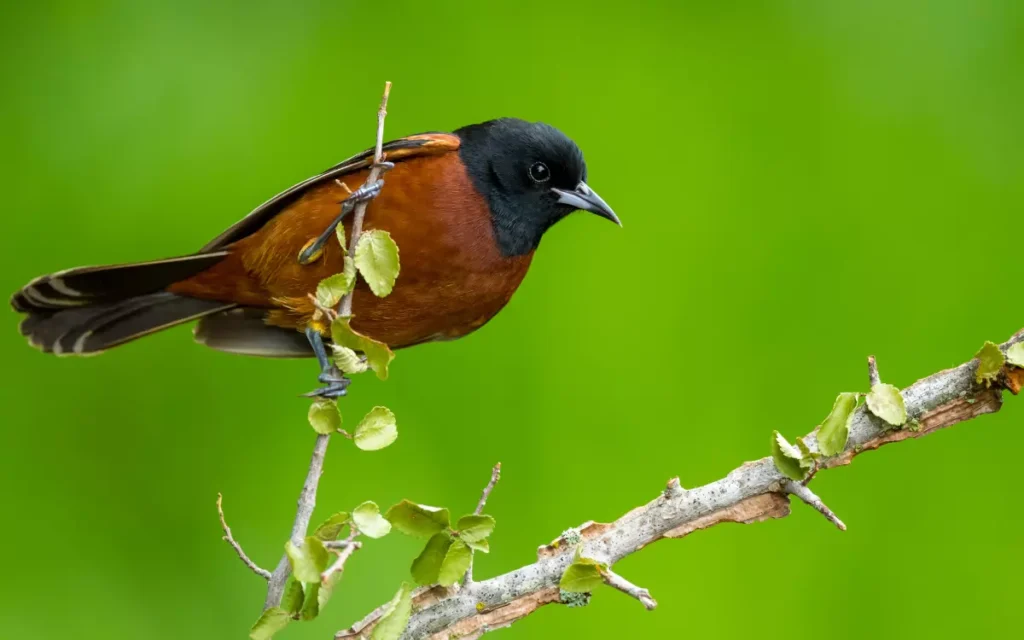
Adult males have black heads and upperparts with rich chestnut-colored underparts.
Females look completely different. They’re mostly yellowish-green, with pale wing bars.
These birds breed in open woodlands, orchards, parks, and areas with scattered trees.
They eat insects, fruit, and nectar.
How to recognize one: Look for a small oriole with a black head and deep chestnut body, rather than the brighter orange coloring of a Baltimore Oriole.
Orchard Orioles also weave hanging nests from grasses and other plant fibers.
8.Olive backed Sunbird

Scientific name: Cinnyris jugularis
The Olive-backed Sunbird is a small nectar-feeding bird with olive-green upperparts and a yellow underside.
Males can have a shiny, dark throat patch that catches the light.
These birds use their slender, curved bills to reach nectar inside flowers. They also catch insects and spiders.
They may visit flowering gardens and trees in parts of Southeast Asia.
How to recognize one: Look for a tiny bird with a curved bill, olive back, and yellow belly.
One detail worth knowing is that the Olive-backed Sunbird was historically treated as part of a larger group of similar birds.
Some newer checklists call Cinnyris jugularis the Garden Sunbird and recognize related birds, such as the Ornate Sunbird, as separate species.
9.Orange breasted Bunting

Scientific name: Passerina leclancherii
The Orange-breasted Bunting is a colorful songbird found in Mexico.
Adult males have bright blue upperparts and orange underparts, making them hard to miss when seen in good light.
Females are much less colorful, with olive-green and yellowish feathers.
These buntings live in dry forests, scrublands, and areas with scattered shrubs.
They feed mainly on seeds and insects.
How to recognize one: Look for the strong contrast between blue and orange on adult males.
Because females look so different, checking the bird’s location and bill shape can help with identification.
10.Oriental Dollarbird

Scientific name: Eurystomus orientalis
The Oriental Dollarbird is a stocky bird with dark blue-green feathers and a bright orange-red bill.
It lives in parts of Asia and Australasia, often around woodland edges and open country with scattered trees.
Dollarbirds are known for catching insects in flight.
They may sit on an exposed branch, watch for prey, and then fly out to catch it.
How to recognize one: Look for the broad head, short neck, bright bill, and blue-green feathers.
The bird gets its name from pale circular patches on its wings that can resemble coins when it flies.
11.Oilbird

Scientific name: Steatornis caripensis
The Oilbird is one of the stranger birds on this list.
It lives in parts of northern South America and spends much of its daytime resting in dark caves.
Unlike many birds active at night, Oilbirds feed mainly on fruit.
They leave their caves after dark to search for fruiting trees.
How to recognize one: Look for a large, brown bird with pale spots, long wings, and a hooked bill.
Oilbirds can use echolocation to find their way around dark caves.
They make clicking sounds and use the returning echoes to avoid obstacles.
12.Orange Bishop

Scientific name: Euplectes franciscanus
The Orange Bishop, also called the Northern Red Bishop, is a small African songbird.
During the breeding season, males develop bright orange-red and black feathers.
Females and nonbreeding males are much duller, with brown, streaked plumage.
These birds are commonly associated with grasslands, wetlands, and areas with tall vegetation.
They feed mainly on seeds.
How to recognize one: Look for a small, finch-like bird with bright orange-red and black breeding plumage.
Male Orange Bishops use display flights and noticeable breeding colors to attract females.
13.Olive Warbler

Scientific name: Peucedramus taeniatus
The Olive Warbler is a small songbird found in mountain forests of the southwestern United States, Mexico, and parts of Central America.
Males have gray bodies with orange coloring on their heads and upper breasts.
Females have more yellowish coloring.
These birds spend much of their time searching conifer branches for insects.
How to recognize one: Look for the orange head on males, pale wing bars, and a preference for high mountain forests.
Despite its name, the Olive Warbler belongs to its own bird family, Peucedramidae.
14.Orange Chat

Scientific name: Epthianura aurifrons
The Orange Chat is a small Australian bird that lives in dry, open country.
Breeding males have bright orange-yellow underparts and a dark band across the chest.
Females are much plainer, with brownish and pale yellow feathers.
These birds often live around saltbush, low shrubs, and dry grasslands.
They’re also known for moving between areas as conditions change.
How to recognize one: Look for the bright orange-yellow body and dark breast band on a male.
Orange Chats feed on insects and other small invertebrates, often searching near the ground.
15.Ocellated Turkey

Scientific name: Meleagris ocellata
The Ocellated Turkey is a wild turkey found around the Yucatán Peninsula and nearby parts of Central America.
It’s smaller than the familiar Wild Turkey found across North America.
Its feathers are also much more colorful, with shiny green, bronze, and blue tones.
The tail has large, eye-like spots that give the bird its name.
How to recognize one: Look for the metallic feathers, bright blue head, and rounded eye-like tail markings.
Ocellated Turkeys spend much of their time on the ground, searching for seeds, fruits, insects, and other food.
16.Oriental Skylark

Scientific name: Alauda gulgula
The Oriental Skylark is a small brown songbird found in grasslands and open fields across parts of Asia.
Its streaked feathers help it blend into dry grass and soil.
These birds usually search the ground for seeds and insects.
But they’re especially interesting during the breeding season.
Males may rise into the air and sing while flying high above their territories.
How to recognize one: Look for a streaked brown bird with a small crest, often found in open grassy areas.
You may hear its song before spotting the bird itself.
17.Orange crowned Warbler
Scientific name: Leiothlypis celata
The Orange-crowned Warbler is a small songbird found across parts of North and Central America.
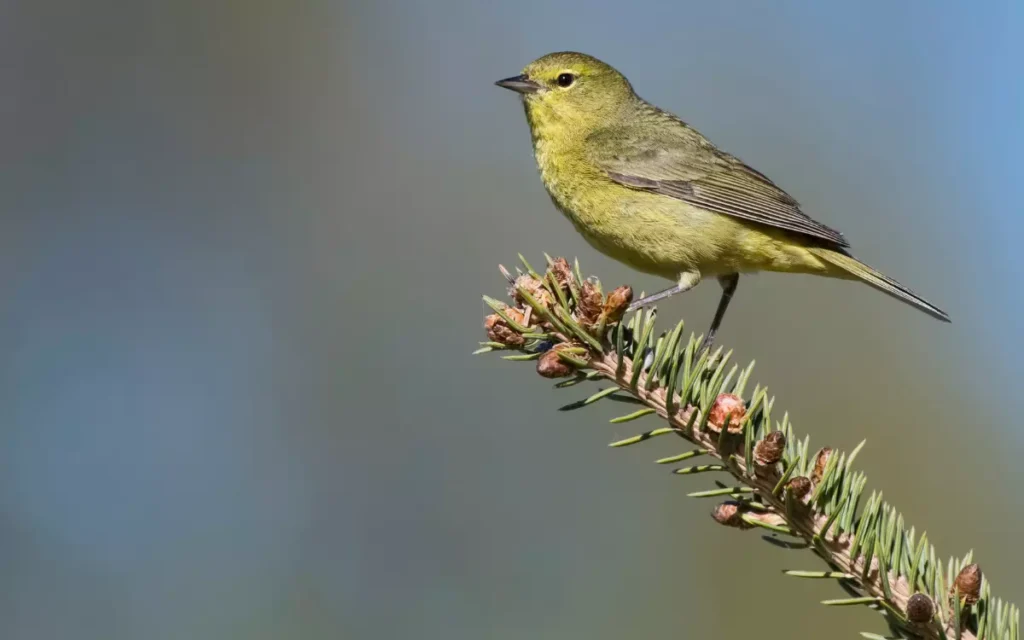
Despite its name, it usually doesn’t look very orange.
Most of its feathers are olive-green or dull yellowish, and the orange crown patch is often hidden.
These birds search shrubs and trees for insects.
They’re often seen moving quickly through branches and leaves.
How to recognize one: Look for a small, plain olive-colored warbler with a slender bill and faint facial markings.
Don’t worry if you can’t see the orange crown. It’s frequently difficult to spot, even when you’re looking directly at the bird.
18.Olive sided Flycatcher
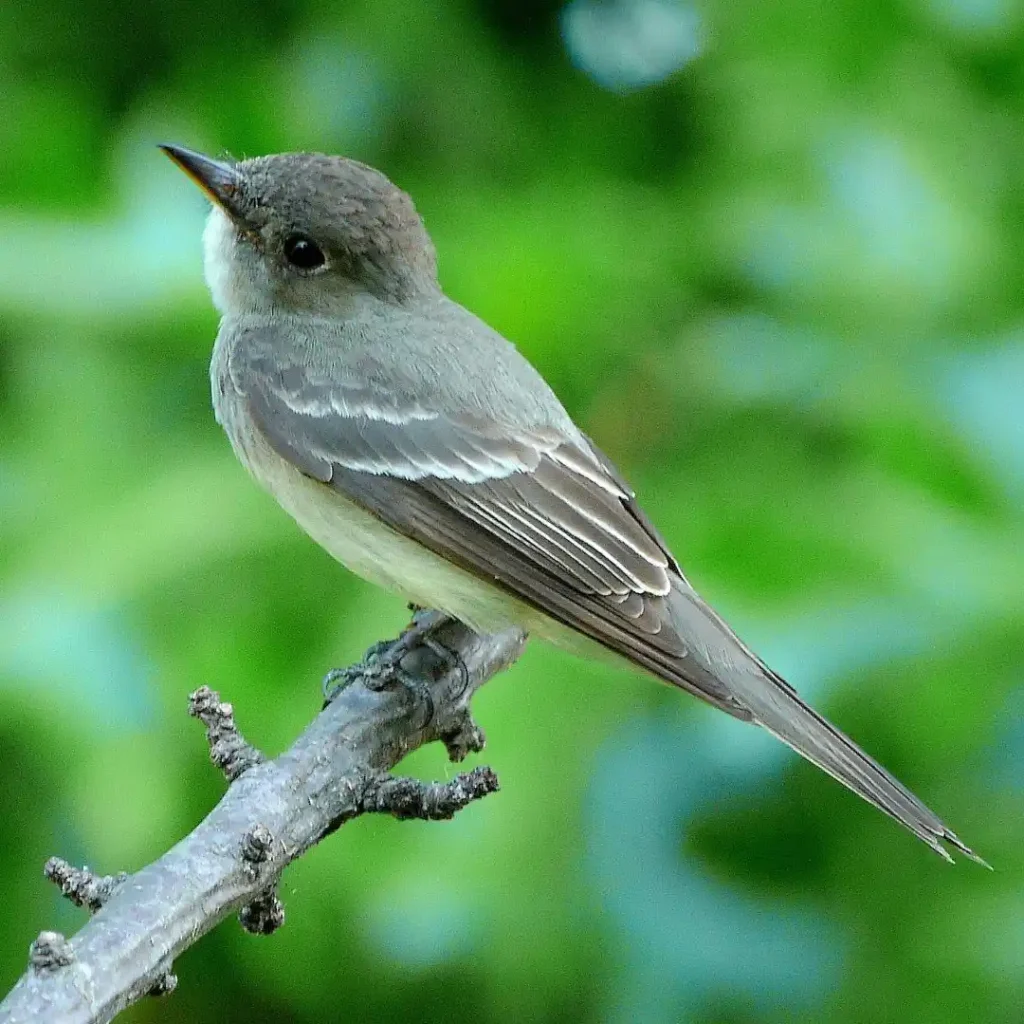
Scientific name: Contopus cooperi
The Olive-sided Flycatcher is a medium-sized songbird that breeds in forests across parts of North America.
It has dark grayish-olive upperparts, a pale belly, and dark markings along its sides.
Those markings create the appearance of a dark vest.
These birds often perch near the tops of tall trees or on exposed dead branches.
From there, they fly out to catch insects and return to a perch.
How to recognize one: Look for the dark vest-like sides, broad bill, and habit of sitting high on exposed branches.
Its song is often remembered as sounding like “quick, three beers.”
19.Orange bellied Parrot

Scientific name: Neophema chrysogaster
The Orange-bellied Parrot is a small, critically endangered Australian parrot.
It has green upperparts, yellowish underparts, blue markings around the forehead, and a small orange patch on the belly.
These birds breed in southwestern Tasmania and migrate across Bass Strait to coastal areas of southeastern mainland Australia for winter.
How to recognize one: Look for a small green parrot with blue facial markings and an orange belly patch.
The Orange-bellied Parrot has faced severe population declines.
Conservation programs involving captive breeding, habitat protection, and the release of birds have helped the population recover from extremely low numbers.
However, the species remains at serious risk.
20.Oriental Cuckoo

Scientific name: Cuculus optatus
The Oriental Cuckoo is a migratory bird found across parts of Asia and Australasia.
It has gray upperparts, pale underparts with dark bars, and a long tail.
At first glance, it can resemble a small hawk.
These cuckoos mainly feed on insects, especially caterpillars.
How to recognize one: Look for the gray back, barred belly, long tail, and slender shape.
Like many cuckoos, the Oriental Cuckoo is a brood parasite.
Instead of raising its own chicks in a nest it builds, the female lays eggs in the nests of other bird species.
21. Oak Titmouse

Scientific name: Baeolophus inornatus
The Oak Titmouse is a small gray songbird found in oak woodlands of western North America.
It’s especially familiar in parts of California.
This bird doesn’t have flashy colors, but its small pointed crest makes it easy to recognize.
Oak Titmice spend much of their time searching leaves and branches for insects.
They also eat seeds and may visit backyard feeders.
How to recognize one: Look for a plain gray bird with a small crest and short, strong bill.
These birds often form long-lasting pairs and defend their territories throughout the year.
22. Olive Sparrow
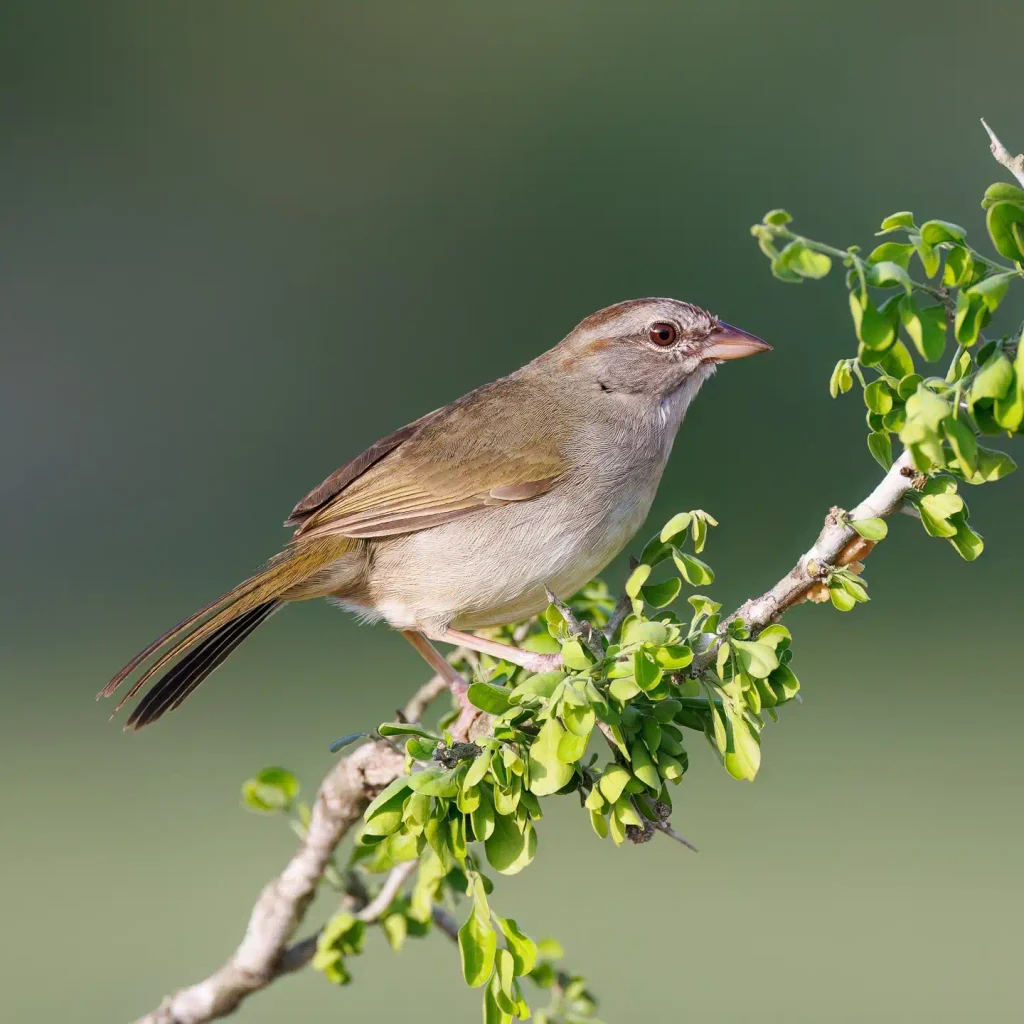
Scientific name: Arremonops rufivirgatus
The Olive Sparrow is a rather plain-looking bird found from southern Texas through Mexico and into Central America.
It has olive-brown upperparts, a grayish head with darker markings, and pale underparts.
These birds prefer dense shrubs and brushy vegetation.
They’re more likely to be heard singing from cover than seen sitting in the open.
How to recognize one: Look for the olive-colored back, patterned gray head, and habit of staying close to thick vegetation.
Olive Sparrows feed on seeds, insects, and other small food items found around the ground.
23. Okinawa Rail
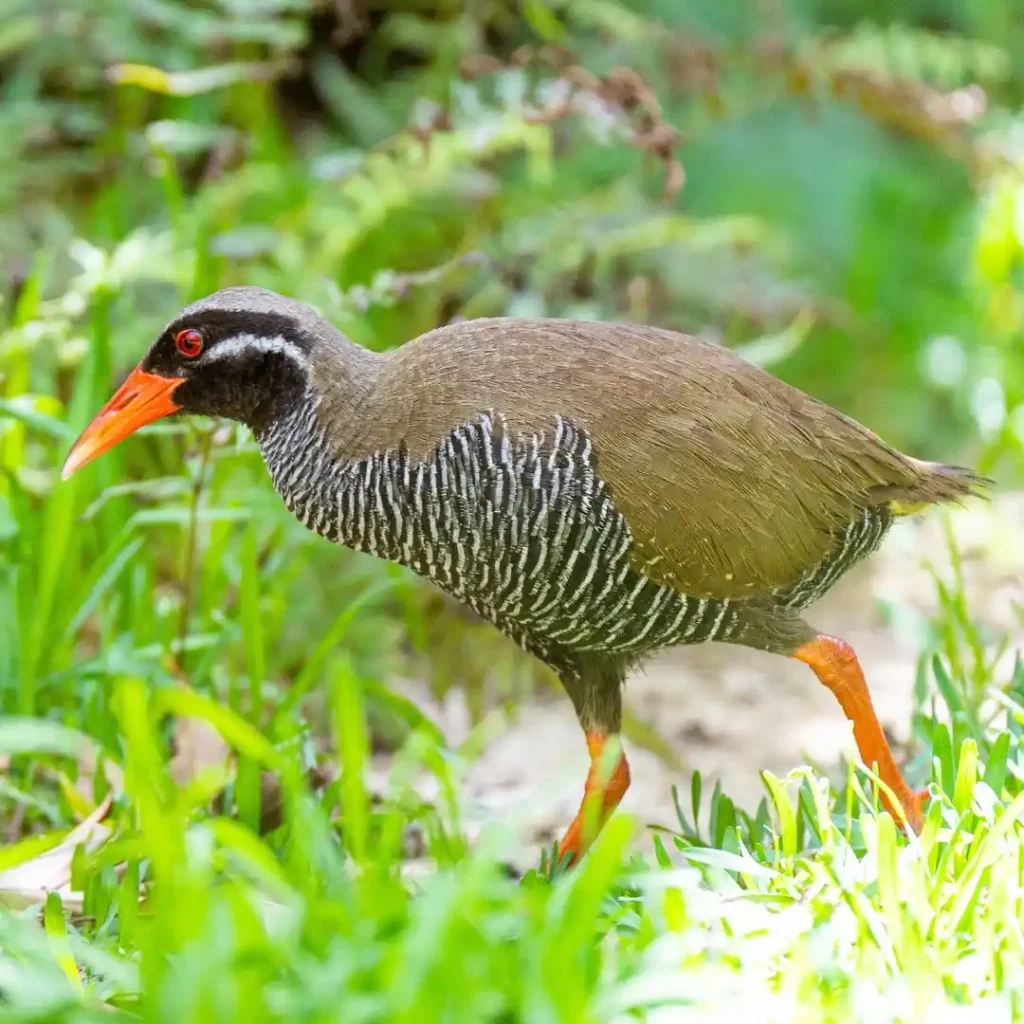
Scientific name: Hypotaenidia okinawae
The Okinawa Rail is a rare bird found only on Okinawa Island in Japan.
It has a dark head, reddish bill, brown upperparts, and black-and-white barred underparts.
This bird lives in forested areas, especially in the northern part of the island.
It spends much of its time on the ground and has very limited flying ability.
How to recognize one: Look for the bright red bill and legs, dark head, and barred belly.
The Okinawa Rail faces threats from habitat changes, introduced predators, and road accidents.
24. Orange headed Thrush
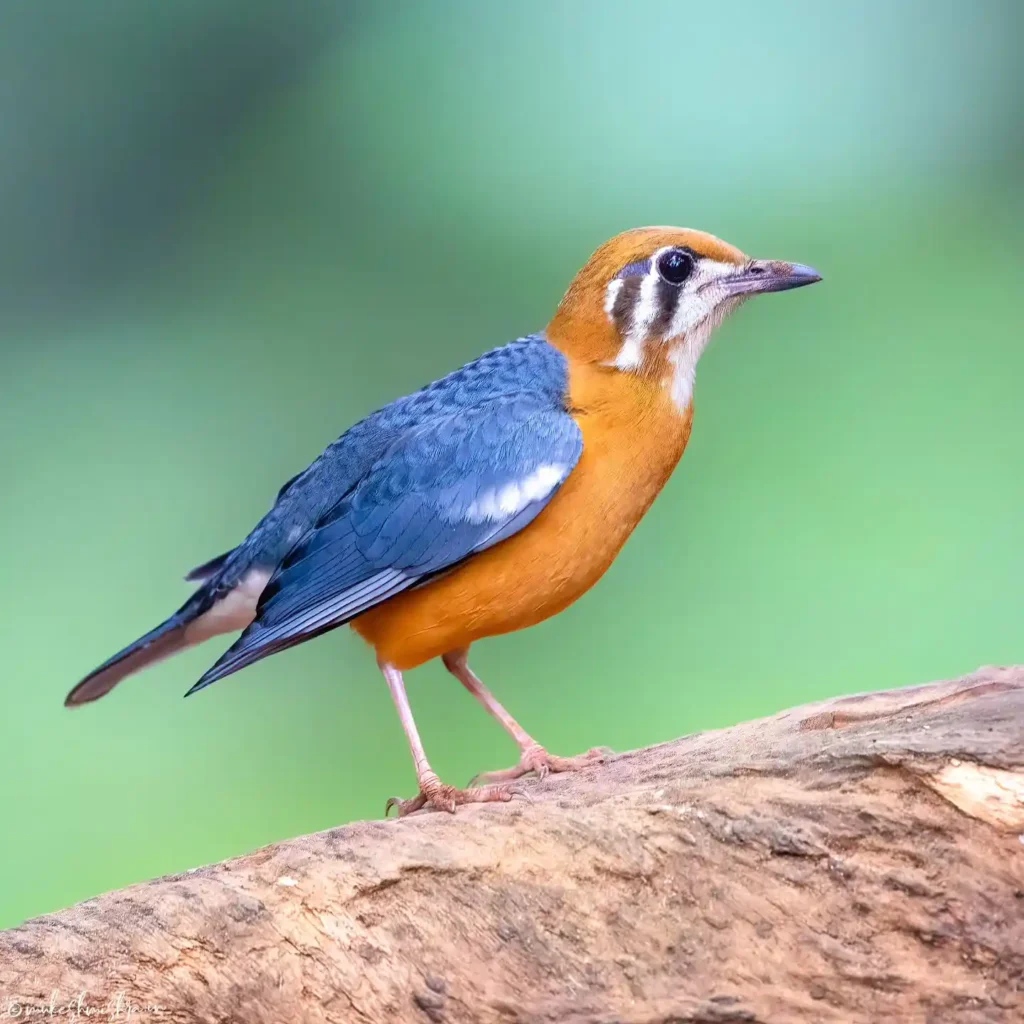
Scientific name: Geokichla citrina
The Orange-headed Thrush is a colorful forest bird found across parts of South and Southeast Asia.
Adult males have bright orange heads and underparts with grayish upperparts.
Females have browner upperparts and can look less colorful.
These birds often stay on or near the forest floor, where they search for insects, worms, and other food.
How to recognize one: Look for the bright orange head and chest contrasting with gray wings and back.
Orange-headed Thrushes can be shy, often remaining in shaded areas beneath trees.
25. Oriental Bay Owl
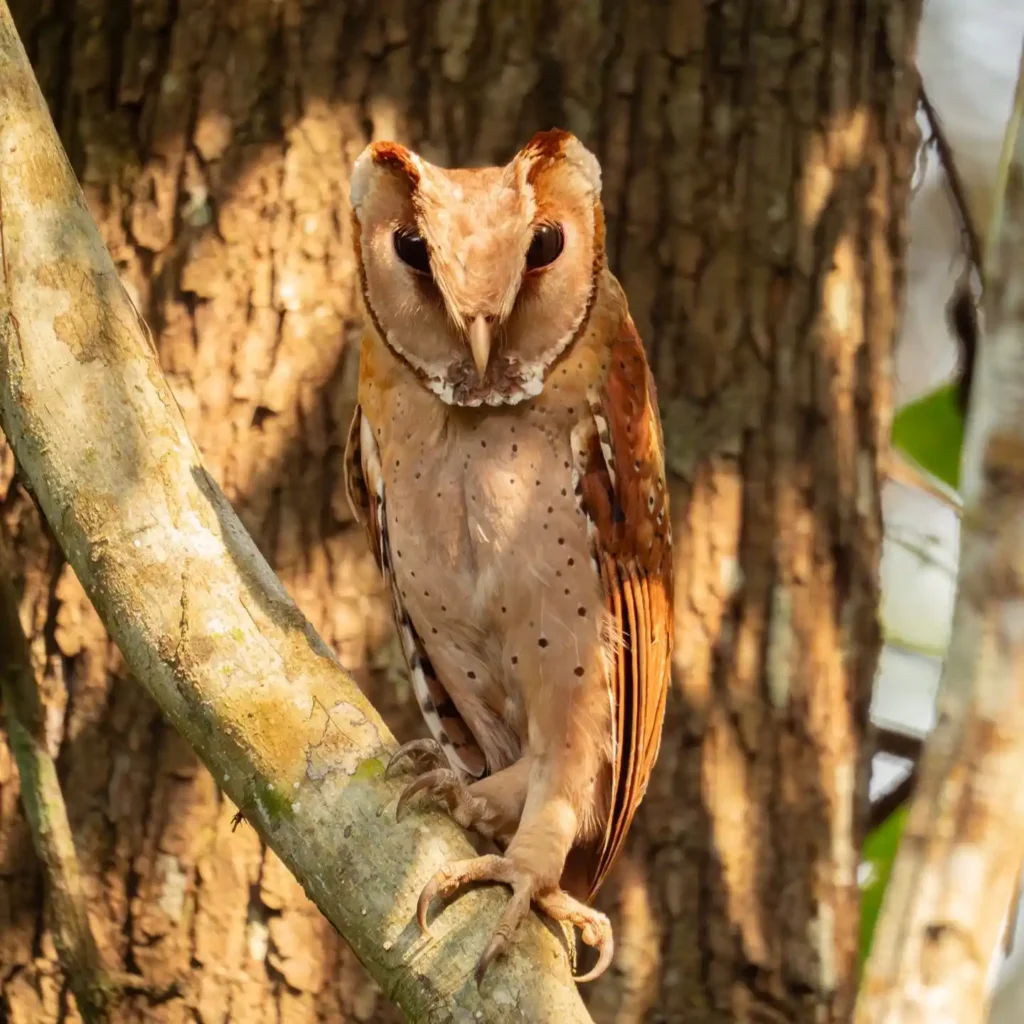
havardeggen
Scientific name: Phodilus badius
The Oriental Bay Owl is an unusual owl found in parts of South and Southeast Asia.
It has a heart-shaped face, dark eyes, and warm reddish-brown feathers.
Its facial markings give it a very different appearance from familiar round-faced owls.
These birds mostly live in forests and wooded habitats.
They’re active at night and feed on small animals.
How to recognize one: Look for the reddish coloring and distinctive heart-shaped facial disk.
Because Oriental Bay Owls are secretive and mainly nocturnal, they’re much more likely to be heard than seen.
26. Orinoco Goose
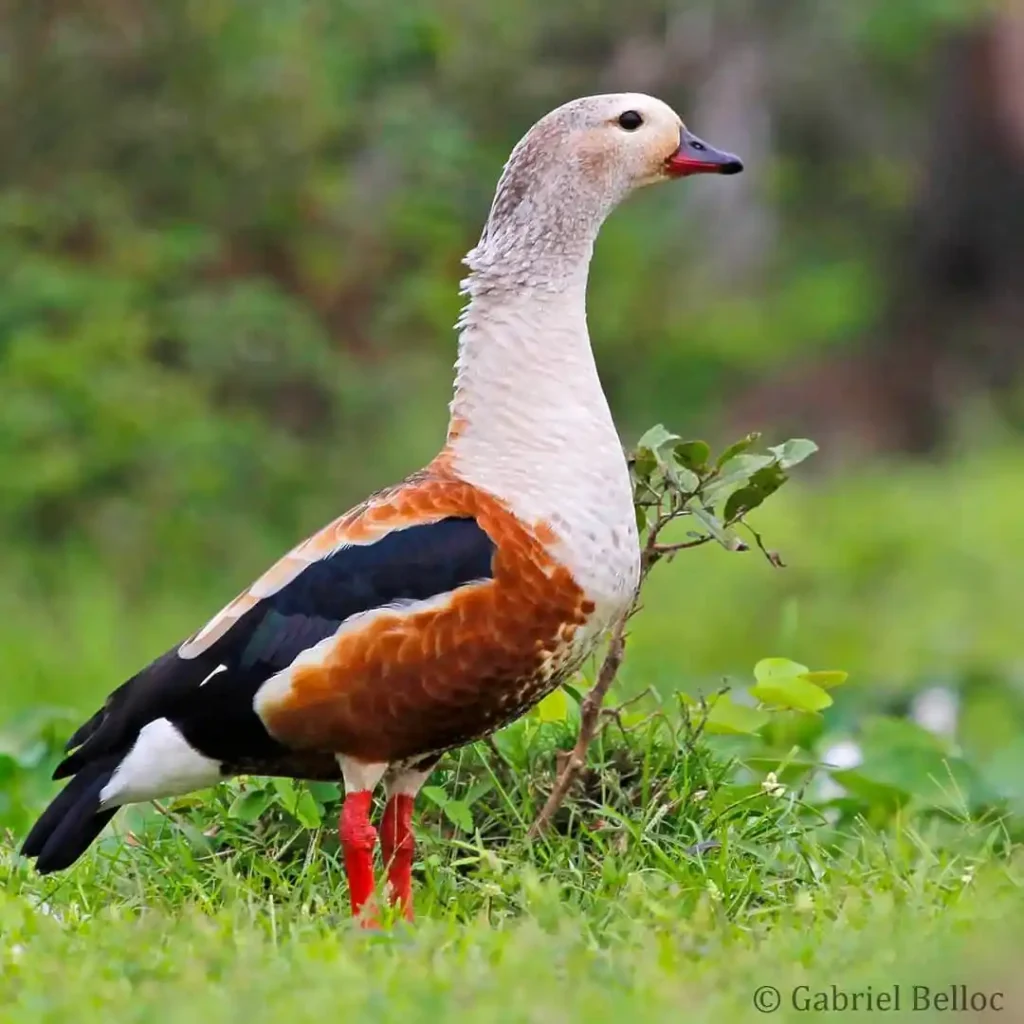
Scientific name: Neochen jubata
The Orinoco Goose is a waterbird found around rivers and wetlands in tropical South America.
It has a pale head and body, chestnut-colored sides, dark wings, and reddish legs.
Although it’s called a goose, it spends plenty of time walking and feeding on land.
These birds often live near riverbanks, sandbars, and open wetland areas.
How to recognize one: Look for the pale head, rusty sides, dark wings, and long reddish legs.
Orinoco Geese are often seen in pairs, especially around suitable riverside habitats.
Easy Birds That Start With O to Remember
If you’re learning bird names for a quiz or alphabet game, these examples are useful.
| Category | Bird name |
| Bird of prey | Osprey |
| Flightless bird | Ostrich |
| Owl | Oriental Bay Owl |
| Colorful songbird | Orange-breasted Bunting |
| Parrot | Orange-winged Amazon |
| Seabird | Oilbird is not a seabird; use Osprey for a fish-catching bird instead |
| Woodlands | Oak Titmouse |
| Waterbird | Orinoco Goose |
| Rare bird | Orange-bellied Parrot |
| Ground-dwelling bird | Okinawa Rail |
| North American songbird | Orchard Oriole |
| Nocturnal bird | Oilbird |
For a simple answer, Osprey, Ostrich, Ovenbird, and Orchard Oriole are good names to remember.
If you’d like a less familiar answer, try Okinawa Rail, Orange Chat, or Oriental Dollarbird.
Are All Birds That Start With O Orange?
No. Many of them aren’t orange at all.
The Oak Titmouse is mostly gray, the Oriental Magpie-Robin is black and white, and the Okinawa Rail has dark brown and barred feathers.
Some O-named birds are mostly green, including the Orange-winged Amazon.
The first letter of a bird’s name doesn’t always describe its color.
Sometimes it refers to its habitat, appearance, behavior, or the place where it was first described.
What Is the Largest Bird That Starts With O?
The Ostrich is the largest living bird that starts with O.
In fact, it’s the largest living bird of any name.
Adult ostriches can stand around 9 feet tall and weigh well over 200 pounds.
They can’t fly, but their strong legs allow them to run faster than any other living bird.
The Osprey is another large bird beginning with O, but it’s much smaller than an Ostrich and is built for flight and fishing.
Which Birds Starting With O Are Rare?
Some birds on this list are difficult to see because they have small populations or limited habitats.
The Orange-bellied Parrot is critically endangered and depends on ongoing conservation work.
The Okinawa Rail lives only on Okinawa Island, while the Okarito Brown Kiwi has a small natural range in New Zealand.
Other birds, such as the Oilbird and Oriental Bay Owl, may be hard to spot because of their nocturnal habits rather than because they’re equally rare.
So being difficult to find doesn’t always mean a bird is endangered.
Final Thoughts
Birds that start with O include some familiar names and some pretty unusual ones.
The Ostrich is famous for its size, the Osprey for catching fish, and the Ovenbird for building a dome-shaped nest.
For a more colorful example, there’s the Orchard Oriole or Orange-breasted Bunting.
And if you’re interested in birds with unusual habits, the Oilbird and Okarito Brown Kiwi are worth remembering.
You can find more names in our A to Z bird names list or continue with birds that start with N.
Frequently Asked Questions
What are five birds that start with O?
Five examples are Osprey, Ostrich, Ovenbird, Orchard Oriole, and Orange-crowned Warbler.
Is there a bird called an Ovenbird?
Yes. The Ovenbird is a small North American songbird named for its dome-shaped nest, which resembles a traditional oven.
What is a common bird that starts with O?
The Osprey is a widely distributed bird of prey found near water across much of the world. The Orchard Oriole is another familiar example in parts of North America during its breeding season.
Is there an owl that starts with O?
Yes. The Oriental Bay Owl is a species found in South and Southeast Asia. It has reddish-brown feathers and a heart-shaped face.
What is the biggest bird that starts with O?
The Ostrich is the biggest. It’s also the largest living bird in the world.
What bird that starts with O can’t fly?
The Ostrich can’t fly. The Okarito Brown Kiwi is another flightless bird, while the Okinawa Rail has very limited flying ability.
What is a colorful bird that starts with O?
The Orange-breasted Bunting is a good example. Adult males have bright blue upperparts and orange underparts.
Is an Oriole a bird that starts with O?
Yes. Oriole is a bird-group name beginning with O. For a specific species whose full name starts with O, Orchard Oriole is a good example. Baltimore Oriole is another oriole, but its full common name starts with B.