23 Birds That Start With Y
Looking for birds that start with Y? You’re in luck. There are more of them than you might expect.
Some are easy to recognize, like the Yellow Warbler and Yellow-headed Blackbird. Others, such as the Yucatan Jay and Yungas Pygmy-Owl, have names that might be new to you.
And not all of these birds are yellow. You’ll find woodpeckers, penguins, parrots, seabirds, and even a small owl on this list.
Here are 23 real birds whose common names begin with Y, along with where they live and what makes each one different.
1. Yellow Warbler
Scientific name: Setophaga petechia
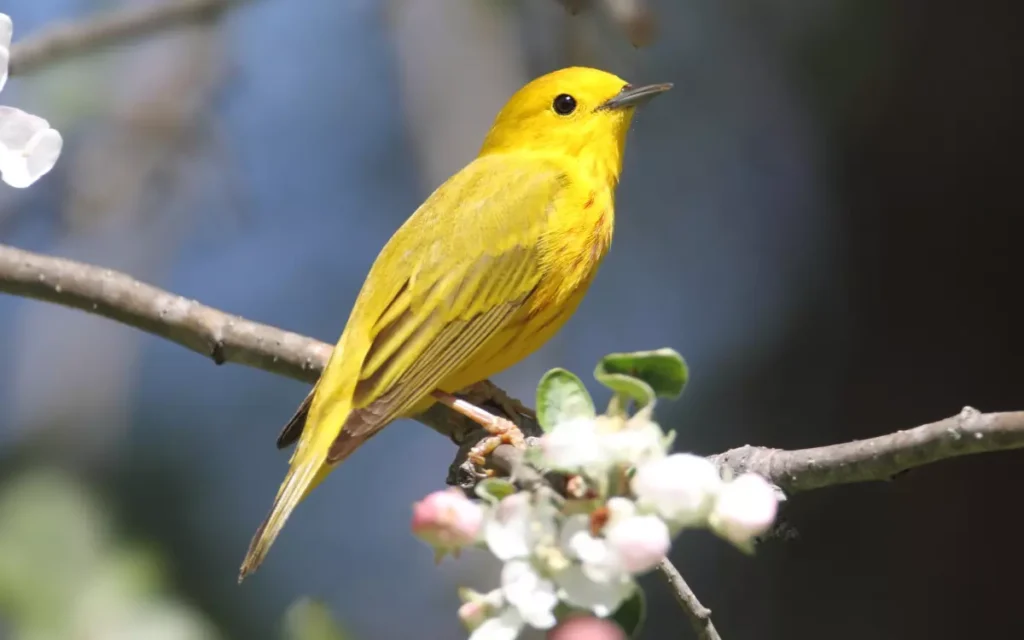
If you’re looking for a small yellow bird, the Yellow Warbler is a good place to start.
Male Yellow Warblers have bright yellow feathers with reddish streaks across their chests. Females usually look a little paler and have less noticeable streaking.
These songbirds breed across much of North America, especially around shrubs, wetlands, and streamside vegetation. Many spend the colder months farther south.
How to recognize one: Look for a small bird with a thin bill, a yellow face, and yellow feathers extending into the tail.
Yellow Warblers mostly eat insects, which they pick from leaves and branches.
2. Yellow billed Cuckoo

Scientific name: Coccyzus americanus
You might hear a Yellow-billed Cuckoo long before you see it.
These secretive birds spend much of their time hidden among leaves, searching for caterpillars and other insects.
They have a slender body, brown upperparts, white underparts, and a long tail with white spots underneath.
Their name comes from the yellow coloring on the lower part of the bill.
Yellow-billed Cuckoos breed in wooded habitats across parts of North America and migrate to South America for the nonbreeding season.
They’re sometimes called rain crows because of a traditional belief that their calls are linked with approaching rain.
3. Yellow throated Warbler
AScientific name: Setophaga dominica
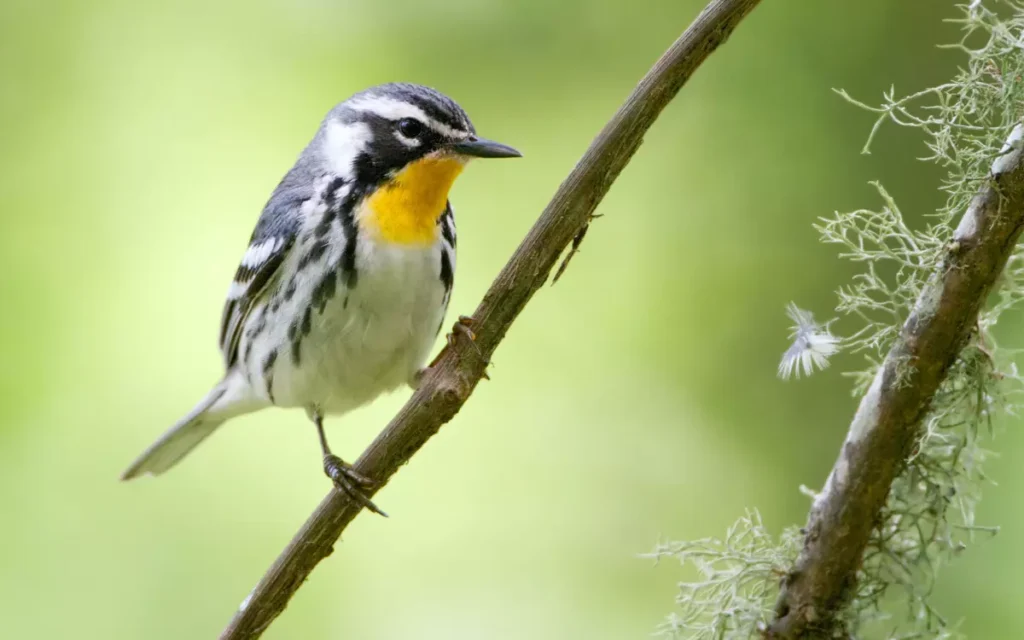
This little warbler is named for the bright yellow patch on its throat.
It has a gray back, white belly, black facial markings, and a white stripe above each eye.
Yellow-throated Warblers are associated with tall forests in the southeastern United States, especially pine woods and areas with large trees near water.
You’ll often find them searching high branches for insects.
How to recognize one: Look for the combination of a yellow throat, white eyebrow, and black markings around the face.
Unlike a Yellow Warbler, this species isn’t yellow all over.
4. Yellow-rumped Warbler
Scientific name: Setophaga coronata
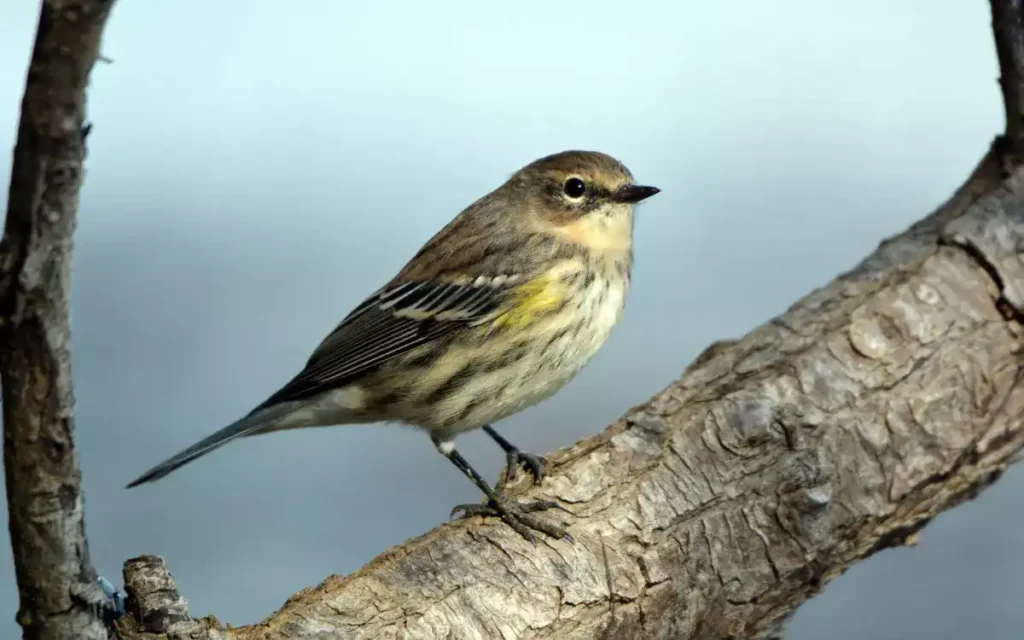
The Yellow-rumped Warbler has one feature that gives its identity away: a yellow patch just above the tail.
You might not notice it when the bird is sitting still, but it often becomes visible when the bird moves or flies.
These warblers breed mainly in northern forests and spend the colder months farther south. They’re among the warblers you can still spot in parts of the United States during winter.
Their diet is another interesting feature. While many warblers depend heavily on insects, Yellow-rumped Warblers also eat berries, including waxy fruits such as bayberries.
How to recognize one: Check the rump first, then look for yellow patches on the sides and sometimes the crown.
5. Yellow eyed Penguin

Scientific name: Megadyptes antipodes
The Yellow-eyed Penguin, also called hoiho, lives in New Zealand.
It has pale yellow eyes and a yellow band of feathers that wraps around the back of its head.
Its body is mostly slate-gray above and white underneath.
Unlike penguins that gather in dense nesting colonies, Yellow-eyed Penguins usually nest in more secluded spots where they have some privacy from neighboring pairs.
These penguins face threats from disease, predators, human disturbance, and changes in their marine environment.
How to recognize one: The pale yellow eyes and headband are its most recognizable features.
6. Yellow bellied Sapsucker
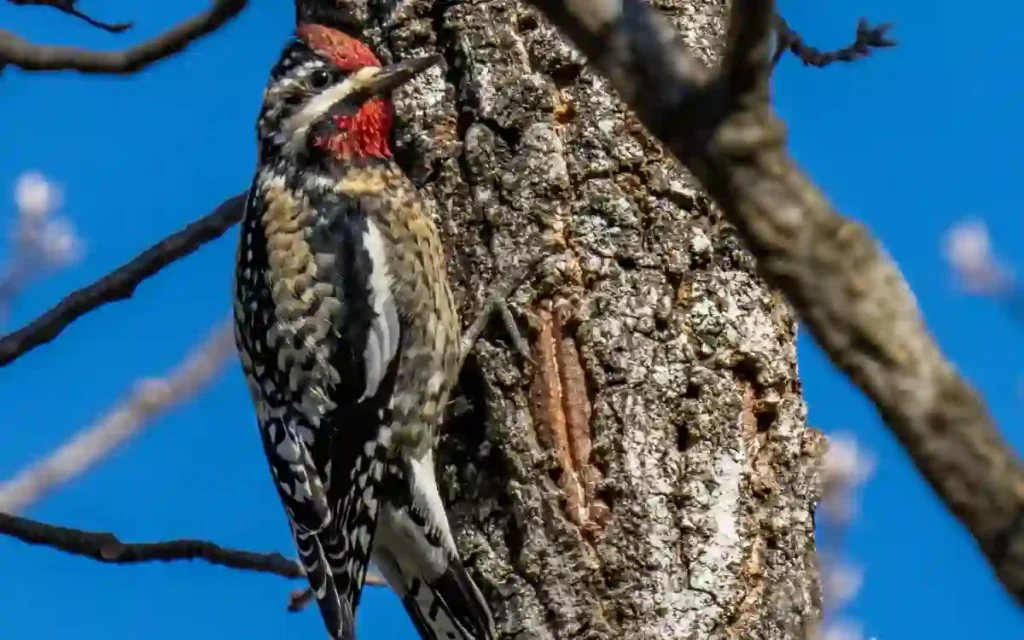
Scientific name: Sphyrapicus varius
Here’s a woodpecker with an unusual way of getting food.
The Yellow-bellied Sapsucker drills rows of small holes in tree bark. Sap collects in these openings, allowing the bird to feed on it.
Insects may also get trapped in the sticky sap.
These woodpeckers have black-and-white markings, a red crown, and pale yellowish underparts.
How to recognize one: Look for neat rows of holes in a tree and a woodpecker with a red crown and bold black-and-white face.
Despite its name, the yellow coloring on its belly can be quite faint.
7. Yellow faced Honeyeater

Scientific name: Caligavis chrysops
The Yellow-faced Honeyeater is a small Australian bird with a narrow yellow stripe running across the side of its face.
Its other feathers are mostly grayish-brown and olive.
These birds feed on nectar and insects, often moving quickly through flowering trees.
They’re found in eastern and southeastern Australia.
One of their best-known habits is migration. Large groups travel along eastern Australia during seasonal movements.
How to recognize one: Look for the yellow facial stripe bordered by darker markings and a slightly curved bill.
Read also: 5 Birds That Start With X
8. Yellow vented Bulbul

Scientific name: Pycnonotus goiavier
The Yellow-vented Bulbul is a familiar garden bird in parts of Southeast Asia.
It has olive-brown upperparts, a white face, and yellow feathers underneath its tail.
That yellow patch is called the vent, which explains the name.
These bulbuls are comfortable around people and often live in parks, gardens, and towns.
They feed on fruits, nectar, and insects.
How to recognize one: Look for the white face, dark markings near the eyes, small crest, and yellow feathers below the tail.
You may hear its bubbling calls before noticing it in a tree.
9. Yellow headed Blackbird

Scientific name: Xanthocephalus xanthocephalus
Few blackbirds have a color pattern quite like this one.
Adult males have a golden-yellow head and chest, a black body, and white patches on their wings.
Females look very different. They’re mostly brown, with softer yellow coloring around the head and chest.
Yellow-headed Blackbirds breed in freshwater wetlands across western and central North America.
They often gather around cattails and other tall marsh plants.
How to recognize one: A male’s yellow head is the easiest clue. For females, look for a large blackbird shape with a dull yellow throat and chest.
Their song is rather rough and squeaky, quite different from the gentle whistles of many songbirds.
10. Yellow crowned Night Heron
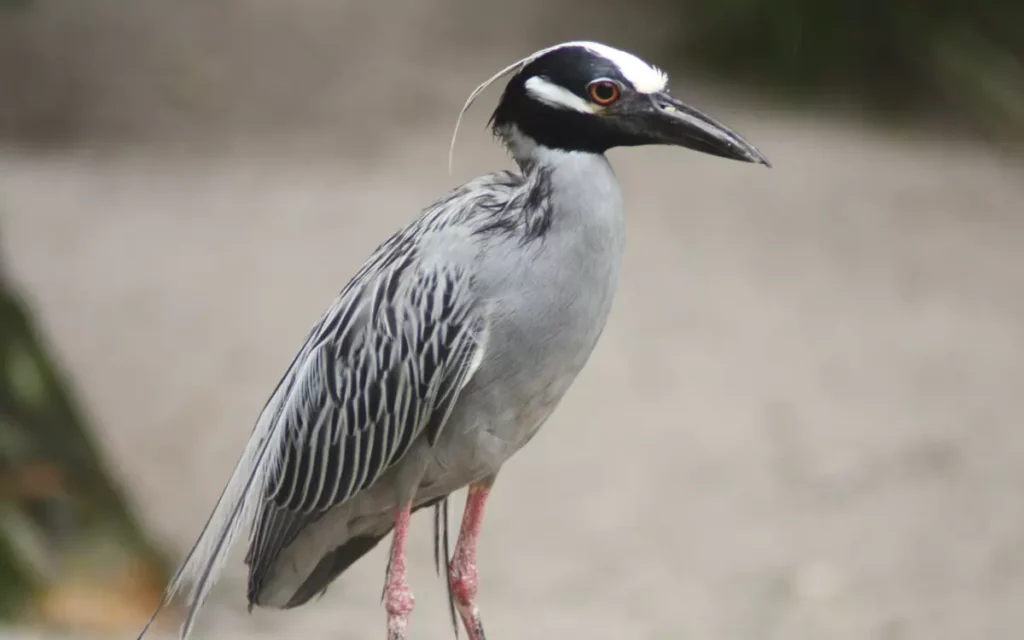
Scientific name: Nyctanassa violacea
The Yellow-crowned Night Heron is a stocky waterbird with gray feathers, a black-and-white face, and a pale yellow crown.
Unlike taller, slimmer herons, it has a thick neck and a large head.
You can find this bird in coastal wetlands, mangroves, marshes, and other wet areas in the Americas.
Crabs and crayfish make up a large part of its diet.
How to recognize one: Look for the bold white cheek markings, thick black bill, and gray body.
Despite the name, these herons don’t hunt only at night. They may feed during daylight hours, too.
11. Yellow billed Magpie

Scientific name: Pica nuttalli
The Yellow-billed Magpie has a rather special home.
It’s found naturally only in California, where it lives in open oak woodlands and nearby agricultural areas.
At first glance, it looks similar to a Black-billed Magpie. Both have long tails and black-and-white plumage with shiny blue-green feathers.
The easiest difference is the bill.
How to recognize one: A Yellow-billed Magpie has a bright yellow bill and yellow skin around its eyes.
These birds often gather in social groups, and pairs build large, covered nests in trees.
12. Yellow Rail
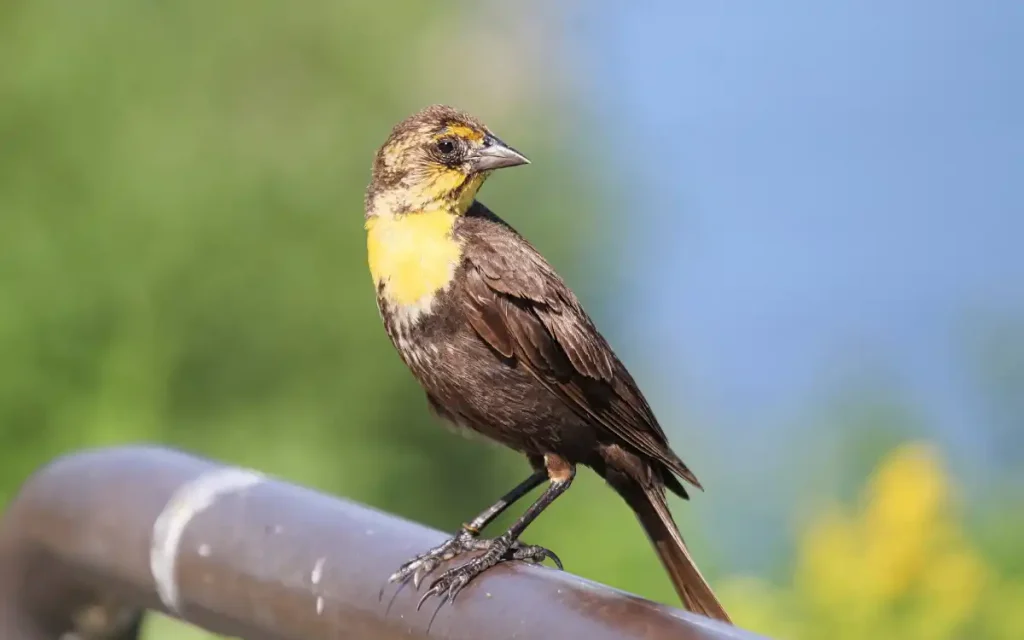
Scientific name: Coturnicops noveboracensis
The Yellow Rail is one of those birds you could walk right past without knowing it’s there.
This tiny marsh bird spends most of its time hidden among thick grasses and sedges.
Its brown and yellowish feathers help it blend into wetland vegetation.
Yellow Rails occur in North America, breeding in suitable northern wetlands and wintering farther south.
How to recognize one: Look for a small, round-bodied rail with a short bill, streaked upperparts, and white patches on the wings when it flies.
You’re more likely to hear its clicking call than get a clear view of the bird.
13. Yellow billed Stork
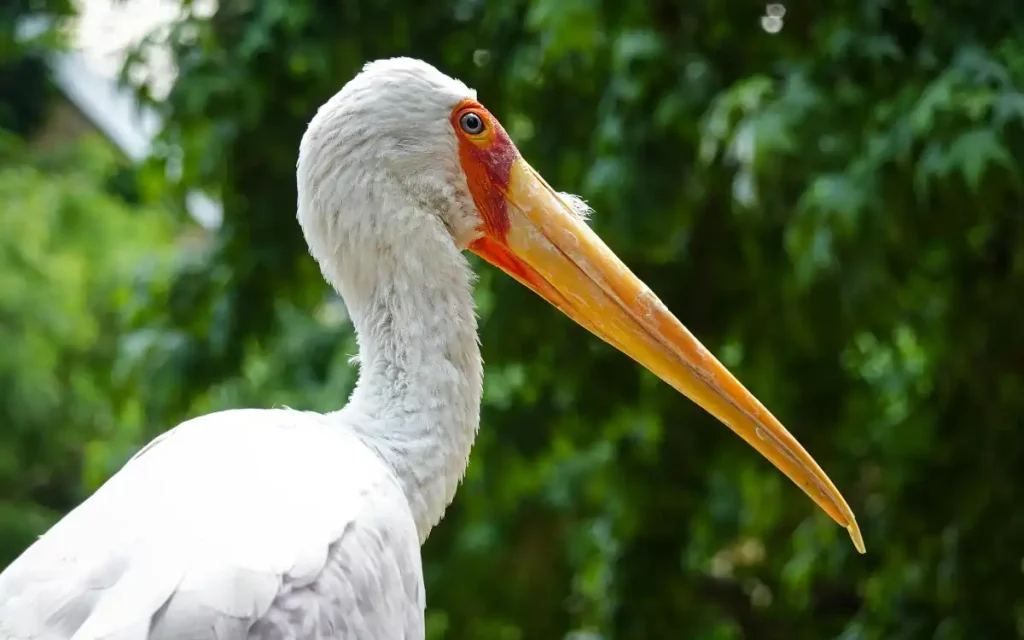
Scientific name: Mycteria ibis
The Yellow-billed Stork is a tall African waterbird with long legs and a large yellow bill.
Adults have mostly white feathers, black flight feathers, and reddish skin around the face.
These storks live near lakes, rivers, wetlands, and shallow floodplains.
They feed mainly on fish and other small aquatic animals.
How to recognize one: Look for the long yellow bill, white body, black wings, and pinkish legs.
When feeding, they move through shallow water with their bills partly open, feeling for prey.
14. Yellow eared Parrot
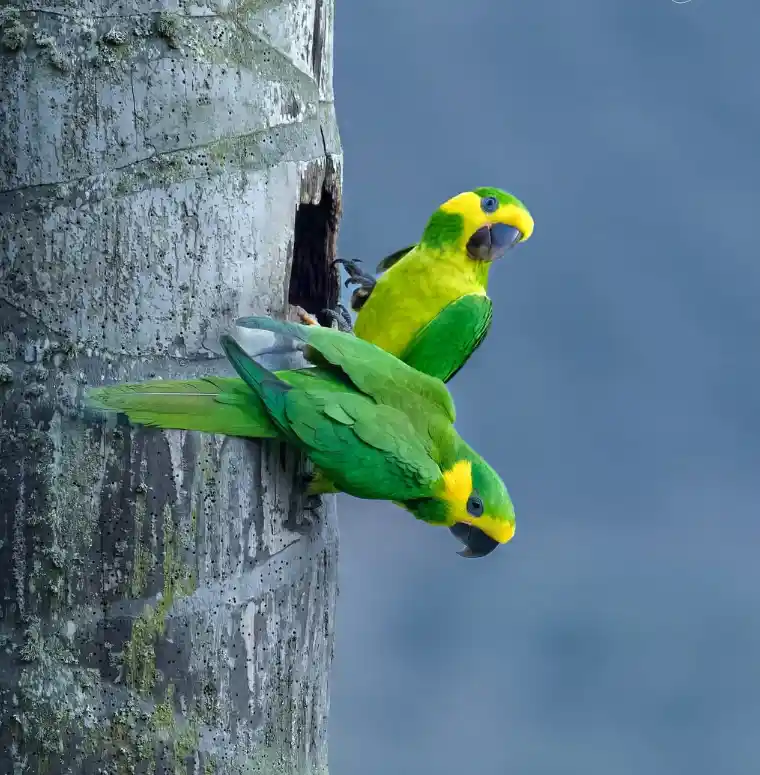
Scientific name: Ognorhynchus icterotis
The Yellow-eared Parrot is a green parrot from the Andes of Colombia.
It has a yellowish face and markings around the sides of its head.
This species is closely connected with mountain forests and wax palms, which provide important nesting and feeding resources.
The Yellow-eared Parrot suffered a serious population decline, but conservation work has helped protect surviving groups.
How to recognize one: Look for a mostly green parrot with yellow facial markings and a long, pointed tail.
Its close connection with wax palms makes it an especially interesting bird.
15. Yellow footed Green Pigeon
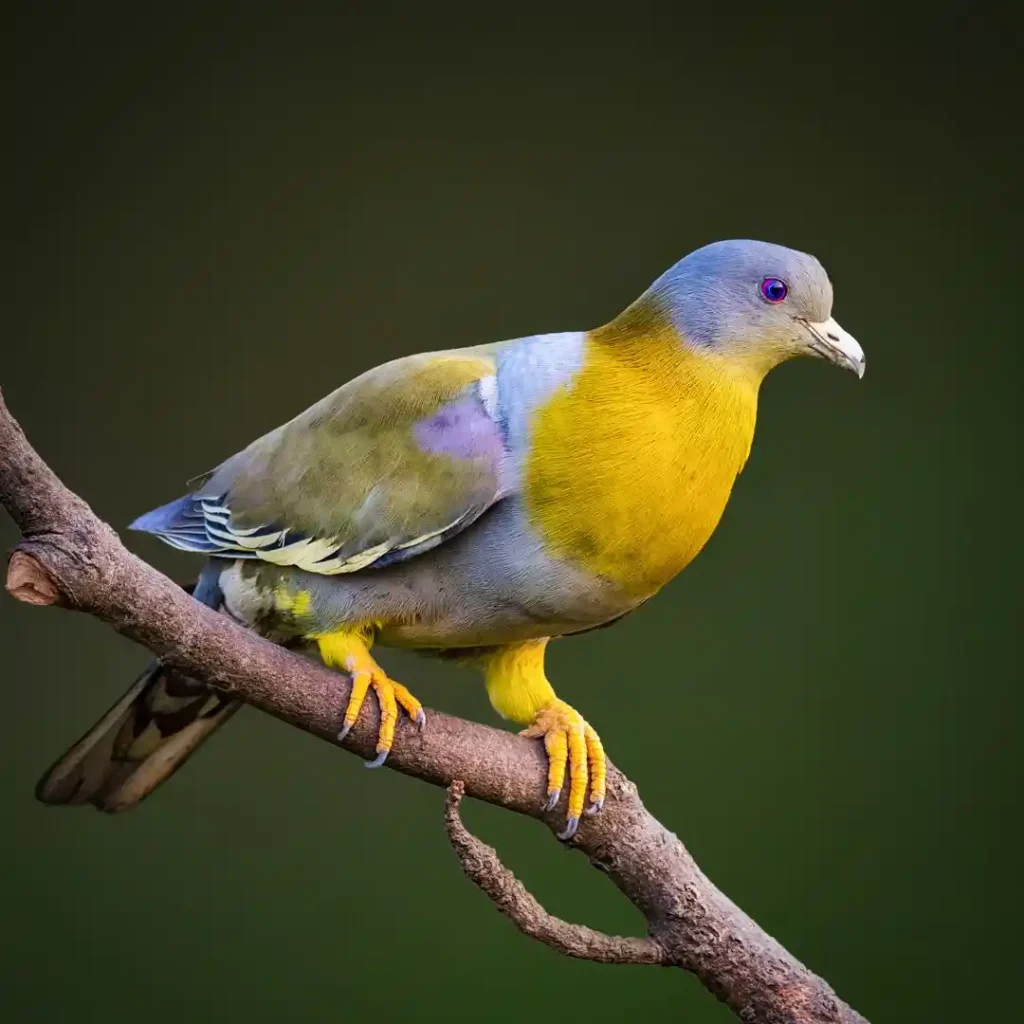
Scientific name: Treron phoenicopterus
The Yellow-footed Green Pigeon is found across parts of the Indian subcontinent.
It has yellow legs, green plumage, and a grayish head. Males may show a purplish patch on the shoulder.
These pigeons spend much of their time in trees, eating figs and other fruits.
They’re often found in small groups and can be difficult to notice among green leaves.
How to recognize one: Look for yellow feet, a gray head, and a green body.
Unlike the Rock Pigeons commonly seen in cities, green pigeons are much more closely tied to trees and fruiting plants.
16. Yellow throated Toucan
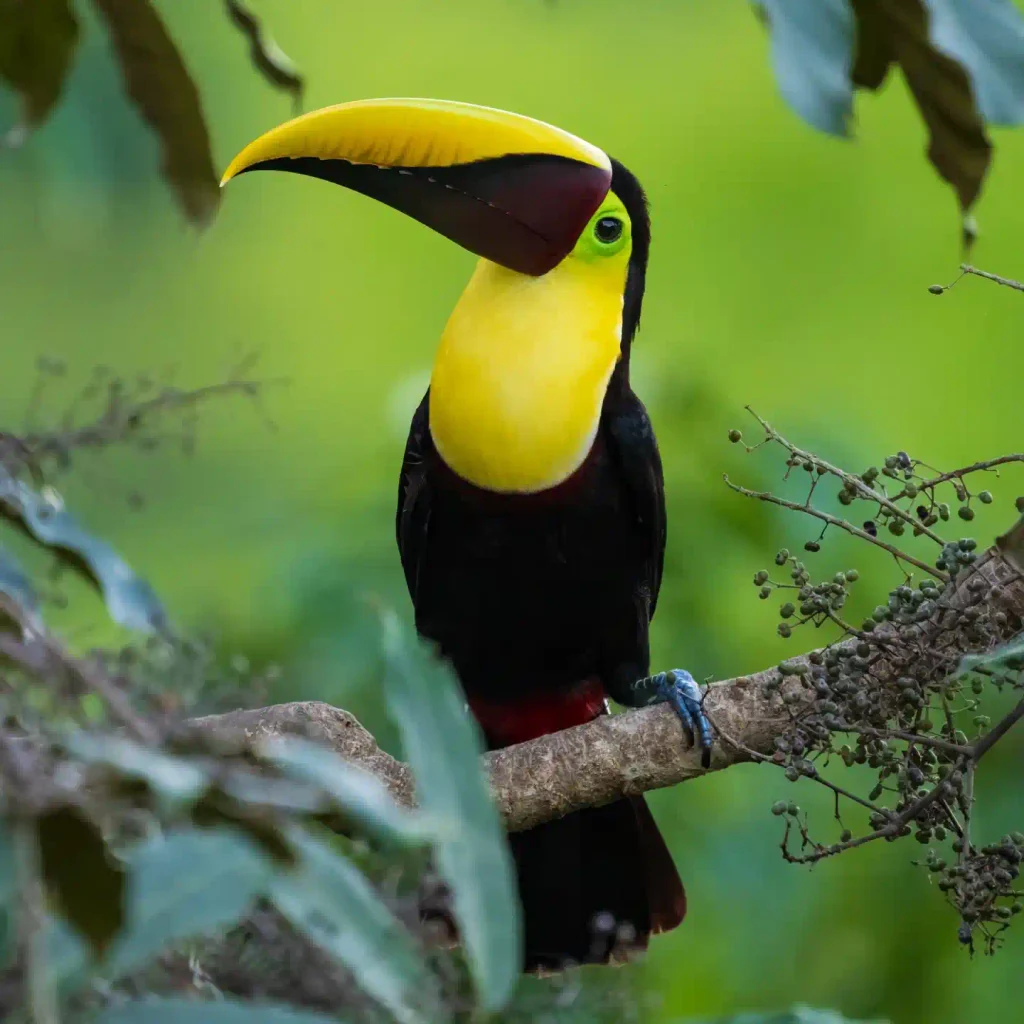
Scientific name: Ramphastos ambiguus
The Yellow-throated Toucan is a large rainforest bird found in Central and northern South America.
It has a mostly black body, bright yellow throat, and a large bill.
Like other toucans, it uses its bill to reach fruit growing on branches.
Fruit makes up much of its diet, although it may eat other foods when available.
How to recognize one: Look for the long bill, black body, and broad yellow throat and chest.
It’s a good reminder that not every bird with a yellow name is a small songbird.
17. Yellow head
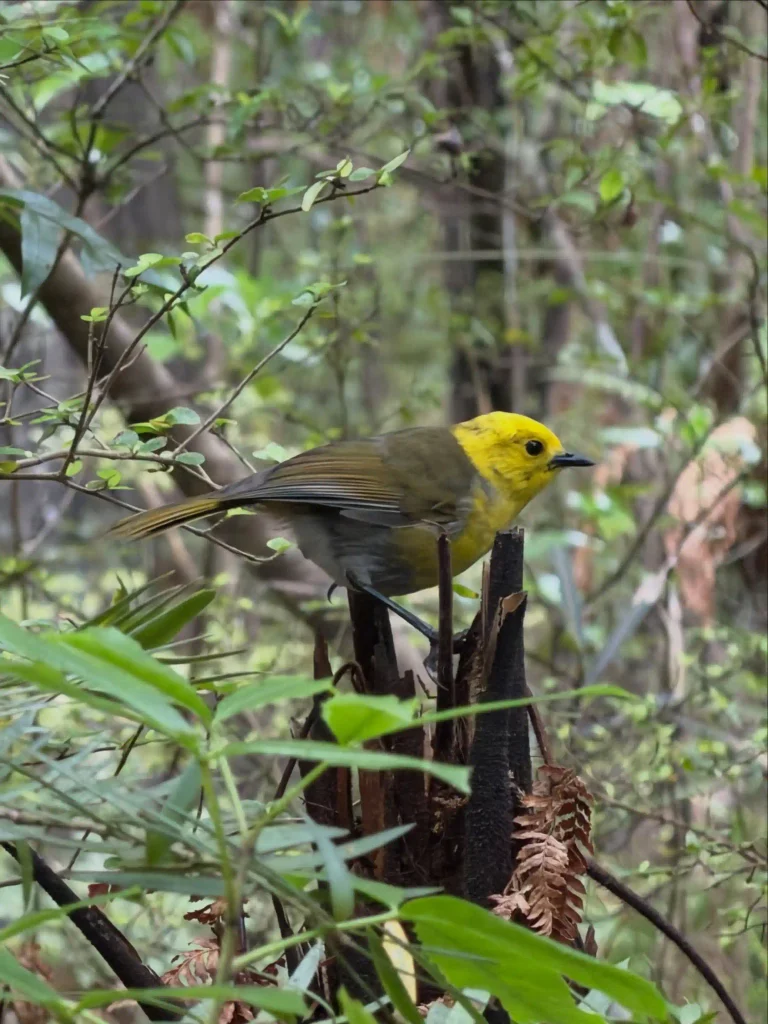
Scientific name: Mohoua ochrocephala
The Yellowhead, also called mohua, is a small forest bird found in New Zealand.
It has a bright yellow head and breast, a brown back, and darker wings.
These birds move through native forests searching for insects and other small invertebrates.
They often feed high in the trees, where their calls can help birdwatchers locate them.
How to recognize one: Look for a golden-yellow head, brown upperparts, and a small, active body.
Yellowheads have lost much of their former range, partly because introduced predators threaten their nests.
Birds That Start With Y but Not “Yellow”
Most of the birds above have names beginning with “Yellow,” but the letter Y has a few other interesting examples.
These next five are worth knowing, especially if you’re trying to find bird names that aren’t based on color.
18. Yucatan Jay
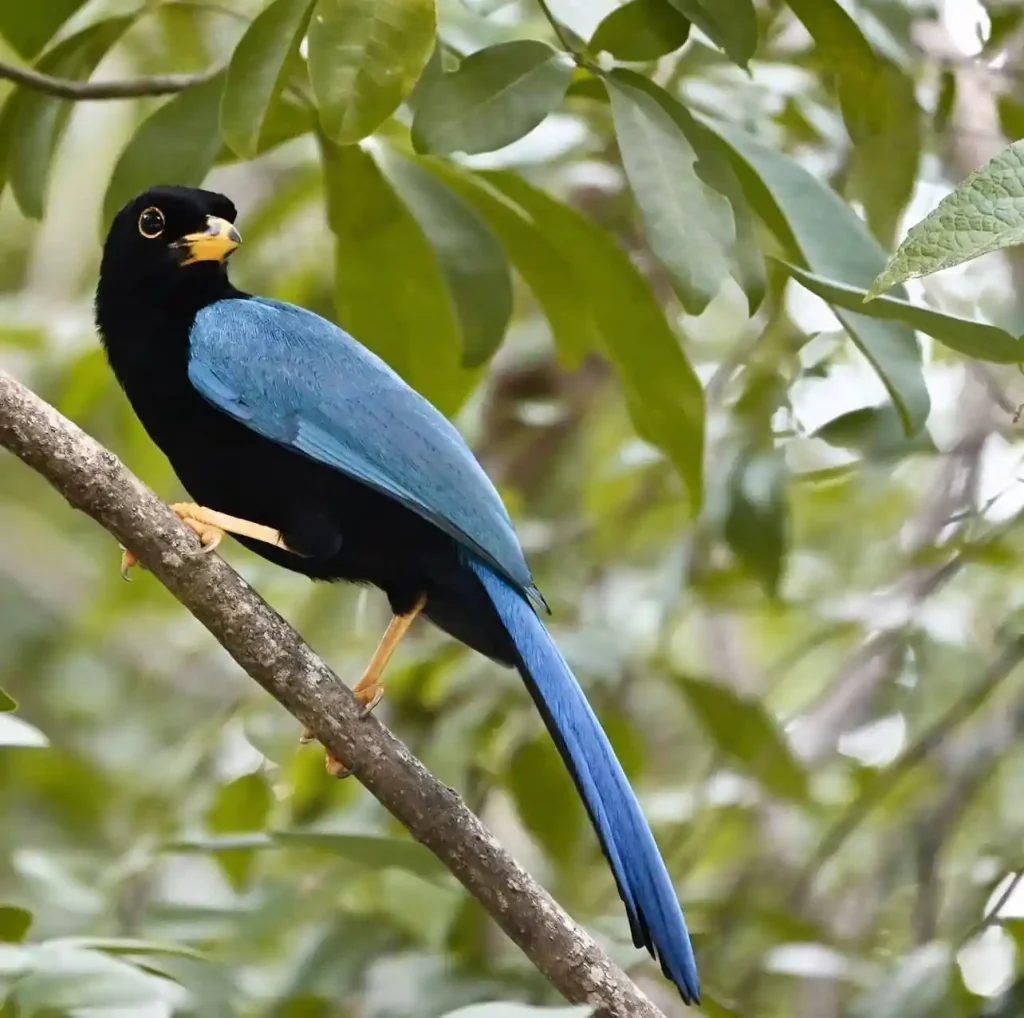
Scientific name: Cyanocorax yucatanicus
The Yucatan Jay lives in the Yucatan Peninsula and nearby areas of Mexico and Central America.
Adults have blue wings and tails, dark heads and bodies, and yellowish legs.
Young birds can look surprisingly different, with pale heads and yellow bills.
These social jays often move around in noisy groups.
How to recognize one: Look for a blue-and-black jay with yellow-orange legs.
If you see a similar bird with a pale head and yellow bill, it may be a younger Yucatan Jay.
19. Yucatan Woodpecker
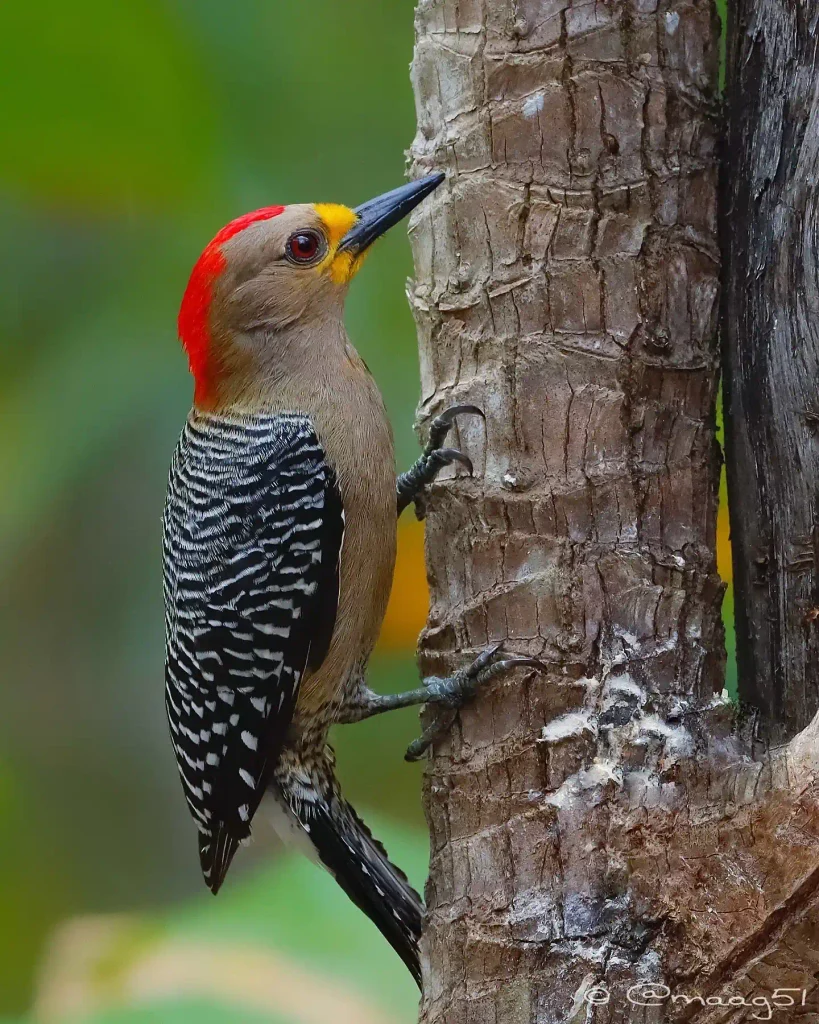
Scientific name: Melanerpes pygmaeus
The Yucatan Woodpecker is a relatively small woodpecker found around the Yucatan Peninsula.
It has black-and-white barred upperparts, pale underparts, and red coloring on the head, which varies between males and females.
These woodpeckers search trees for insects and other food.
How to recognize one: Look for a small woodpecker with barred wings and a pale face.
Its size and head pattern can help separate it from the larger Golden-fronted Woodpecker found in parts of the same region.
20. Yemen Serin
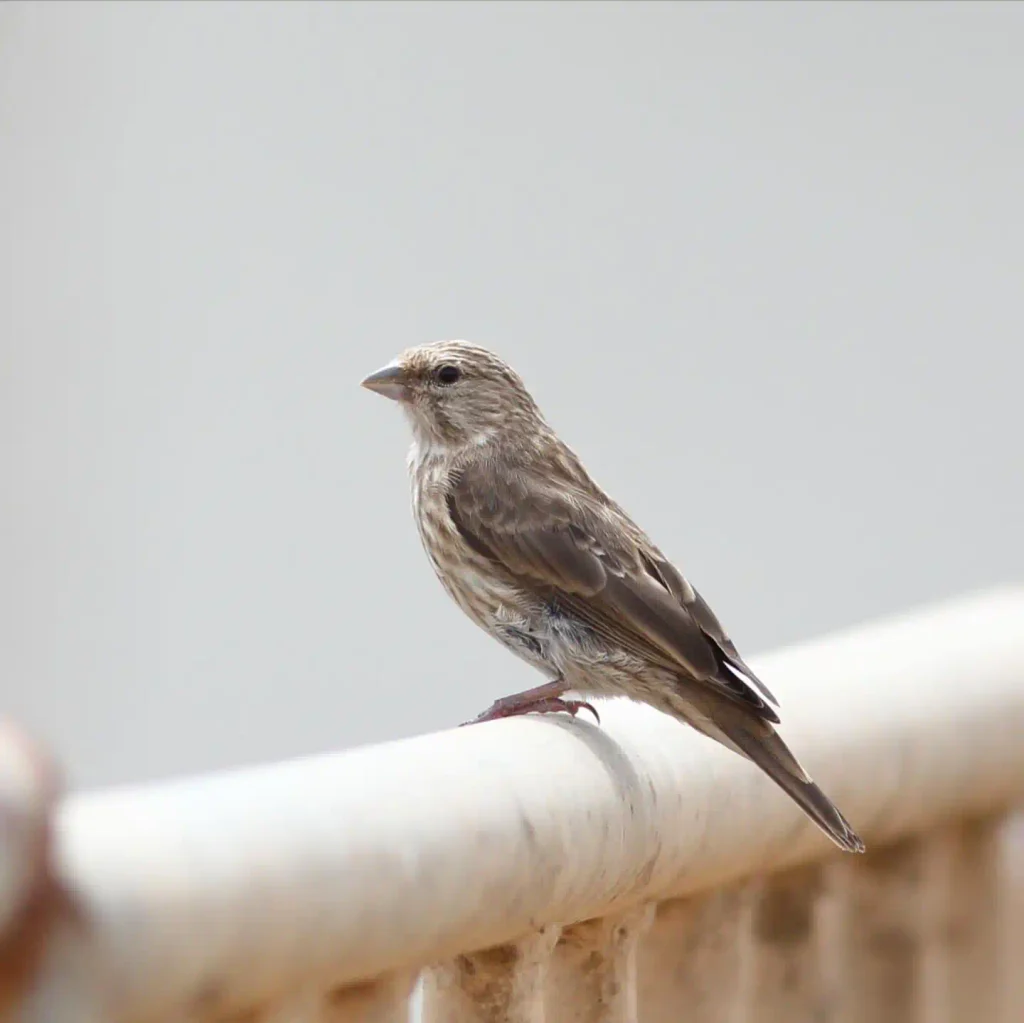
Scientific name: Crithagra menachensis
The Yemen Serin is a small finch-like bird from the southwestern Arabian Peninsula.
It lives mainly in mountainous areas, including rocky slopes and open highland habitats.
Its feathers are fairly understated, with brownish and grayish tones that help it blend into the landscape.
Like other serins, it has a short, seed-eating bill.
How to recognize one: Look for a compact songbird with a small conical bill and streaked, earthy-colored plumage.
It’s a good example of a bird whose Y name comes from a place rather than a feather color.
21. Yungas Pygmy Owl
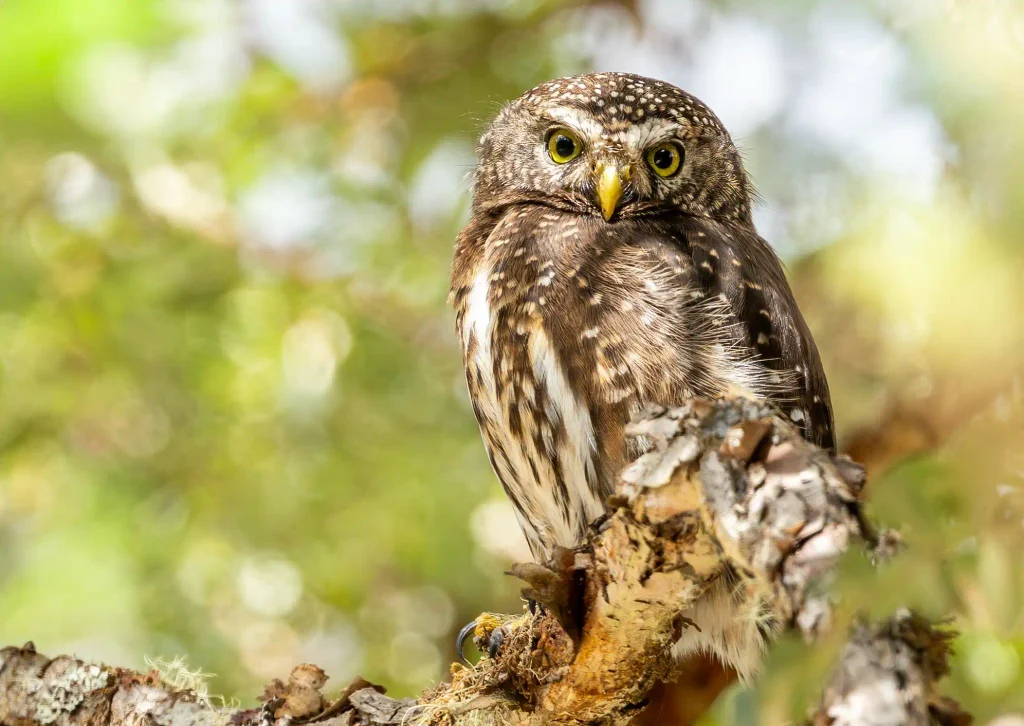
Scientific name: Glaucidium bolivianum
The Yungas Pygmy-Owl is a small owl found in mountain forests of the South American Andes.
Despite its tiny size, it’s an active hunter.
It has a rounded head, a short tail, and pale spots on its feathers.
Like some other pygmy-owls, it has markings on the back of its head that resemble a second pair of eyes.
These are sometimes called false eyes.
How to recognize one: Look for a small, round-headed owl with spotted feathers and no obvious ear tufts.
It may be active around dawn and dusk, rather than only in complete darkness.
22. Yellowhammer
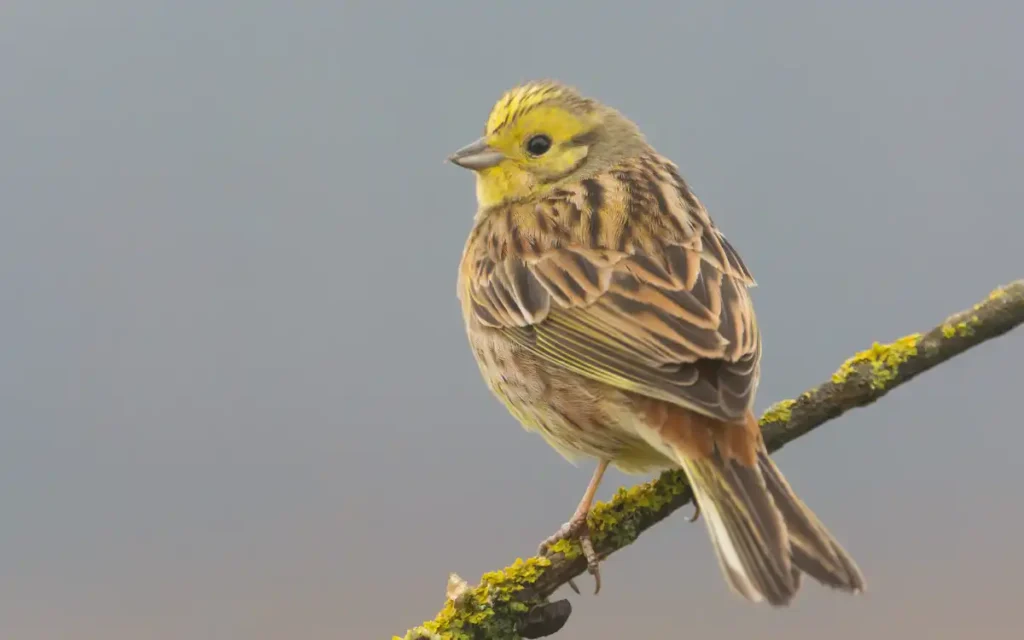
Scientific name: Emberiza citrinella
The Yellowhammer is a bunting found across much of Europe and parts of Asia.
Adult males have bright yellow heads, streaked brown backs, and warm chestnut coloring near the lower back.
Females are generally duller and more heavily streaked.
Yellowhammers prefer farmland, grassy areas, hedgerows, and open countryside.
They often perch on bushes or fence posts while singing.
How to recognize one: Look for a yellow-headed, sparrow-like bird with a short, thick bill.
One thing to remember: in parts of North America, people also use “yellowhammer” as a nickname for the Northern Flicker. That’s a different bird from the European Yellowhammer.
23. Yellow legged Gull
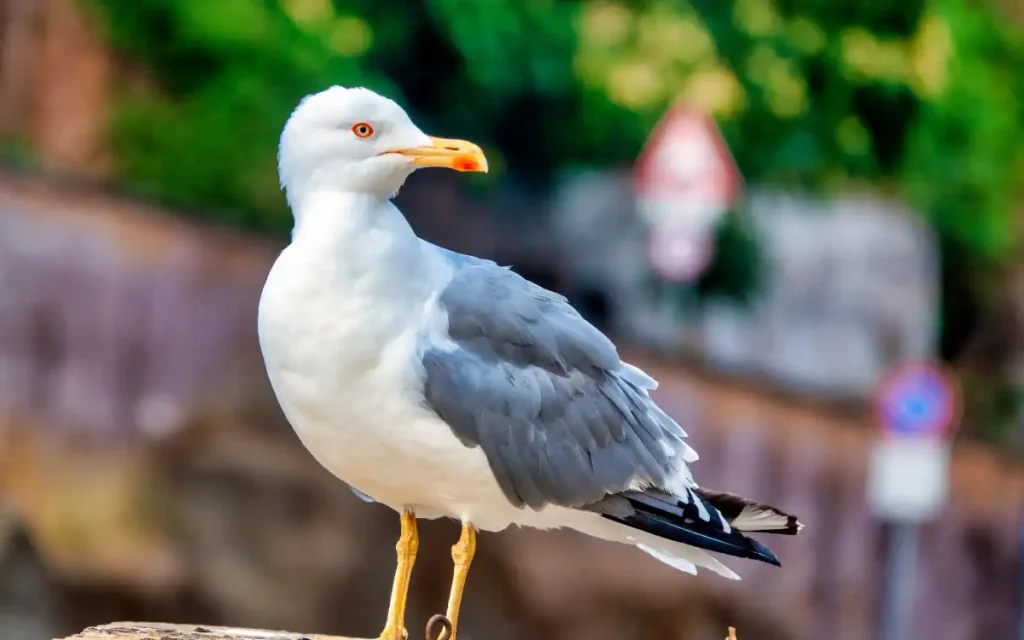
Scientific name: Larus michahellis
Yellow-legged Gulls are large seabirds found around the Mediterranean and other parts of Europe.
Adult birds have white heads and underparts, gray backs, black wingtips, and yellow legs.
Their yellow bills have a red spot near the tip.
These gulls are adaptable feeders. They eat fish, invertebrates, and other available food, and they often visit harbors and urban areas.
How to recognize one: Check the yellow legs, red spot on the bill, and gray upperparts.
Don’t rely on leg color alone, though. Several gull species look similar, and young birds can have very different plumage.
How to Remember Birds That Start With Y
If you’re learning bird names for a quiz or an alphabet challenge, you don’t need to memorize all 25 at once.
Start with a few easy examples:
| Category | Bird name |
| Small songbird | Yellow Warbler |
| Bird of prey | Yungas Pygmy-Owl |
| Waterbird | Yellow-crowned Night Heron |
| Penguin | Yellow-eyed Penguin |
| Parrot | Yellow-eared Parrot |
| Woodpecker | Yucatan Woodpecker |
| Seabird | Yelkouan Shearwater |
| Blackbird | Yellow-headed Blackbird |
| Pigeon | Yellow-footed Green Pigeon |
| Bird from New Zealand | Yellowhead |
The Yellow Warbler is probably one of the easiest names to remember. But if you want an answer that’s a little less obvious, try Yucatan Jay or Yelkouan Shearwater.
Are All Birds That Start With Y Yellow?
No. Many bird names beginning with Y refer to yellow markings, but others are named after places.
For example, the Yucatan Jay is mostly blue and black, while the Yungas Pygmy-Owl has brownish or grayish feathers.
Some birds have only a tiny yellow marking, such as the Yellow-rumped Warbler.
So a bird doesn’t need to have an entirely yellow body for its name to start with Y.
If you’re interested in feather colors, you can also read our guide to yellow birds.
Final Thoughts
The letter Y gives us quite a mix of birds, from tiny warblers to large storks and cockatoos.
If you only need a quick example, Yellow Warbler and Yellowhammer are easy names to remember.
For something less familiar, the Yucatan Jay, Yemen Serin, and Yelkouan Shearwater are good choices.
You can find more names in our A to Z bird list, or continue with birds that start with X and birds that start with Z.
Frequently Asked Questions
What are five birds that start with Y?
Five examples are the Yellow Warbler, Yellow-rumped Warbler, Yellowhammer, Yellow-eyed Penguin, and Yucatan Jay.
What is a common bird that starts with Y?
The Yellow Warbler is a familiar breeding bird in many parts of North America. The Yellow-rumped Warbler is another widespread example.
Is there an owl that starts with Y?
Yes. The Yungas Pygmy-Owl is a small owl found in mountain forests of the South American Andes.
What bird starts with Y but isn’t yellow?
The Yucatan Jay is a good example. It has blue-and-black plumage, although young birds can have yellow bills.
Are there rare birds that start with Y?
Yes. The Yellow-eyed Penguin is one example. It has a limited range in New Zealand and faces several conservation threats.
What is the difference between a Yellowhammer and a Yellow-bellied Sapsucker?
The Yellowhammer is a bunting native to Eurasia, while the Yellow-bellied Sapsucker is a North American woodpecker. They’re unrelated birds with different feeding habits and appearances.


