26 Backyard Birds in Texas Identification
Texas backyards can host far more than cardinals and mockingbirds. Depending on where you live, you may see desert birds, woodland songbirds, winter sparrows, hummingbirds, doves, woodpeckers, and even the occasional owl.
The easiest way to identify a Texas backyard bird is to check four things: size, color pattern, feeding location, and season. A bird scratching under your feeder in January, for example, belongs to a different group than one catching insects over your lawn in July.
This guide covers 26 backyard birds found across Texas, with simple identification clues, regional notes, calls, and the best ways to attract each one.
1. House Sparrow

Male House Sparrows have gray crowns, white cheeks, chestnut necks, and black throat patches. Females are plain brown with pale eyebrow stripes.
This introduced species is strongly tied to people. It nests in roof gaps, signs, vents, and other cavities around homes, farms, stores, and parking areas.
- Scientific name: Passer domesticus
- Size: 5.9–6.7 inches
- Best ID clue: Chunky body and short, thick bill
- Food: Seeds, grain, scraps, and insects
- Attract with: Millet and cracked corn
- Feeding level: Almost any feeder
House Sparrows can take over nest boxes intended for native birds. Monitor your boxes instead of leaving them unchecked.
Read also: House Sparrow vs Chickadee: How to Tell These Small Birds Apart
2. Mourning Dove
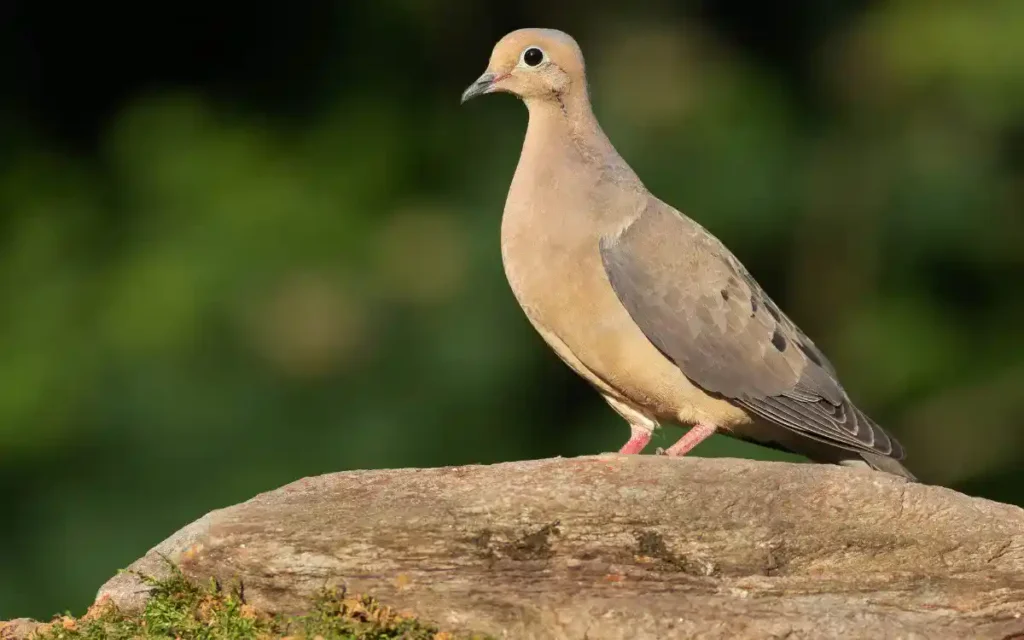
Sleek and gentle, Mourning Doves are among the most peaceful birds you’ll see in your backyard. Their soft “coo-oo” calls and swift, whistling takeoffs are instantly recognizable. These doves are slim with a pale brown color, and they love foraging for millet or cracked corn beneath feeders or in open yards.
Quick Facts:
- Scientific Name: Zenaida macroura
- Size: 9–13 inches
- Habitat: Urban parks, grasslands, rooftops
- Diet: Seeds, grains
- Behavior: Ground feeders, calm, fast fliers
3. Blue Jay

Bold, loud, and strikingly beautiful, the Blue Jay commands attention. Its brilliant blue feathers and loud screeches make it one of the easiest backyard birds to recognize. Blue Jays are highly intelligent and enjoy caching food like acorns and peanuts. They’re also known to mimic hawks to scare other birds away from feeders.
Quick Facts:
- Scientific Name: Cyanocitta cristata
- Size: 9–12 inches
- Habitat: Forests, neighborhoods, city parks
- Diet: Nuts, seeds, insects, fruit
- Behavior: Vocal, smart, territorial
Read also: 13 Types of Jays
4. Carolina Chickadee
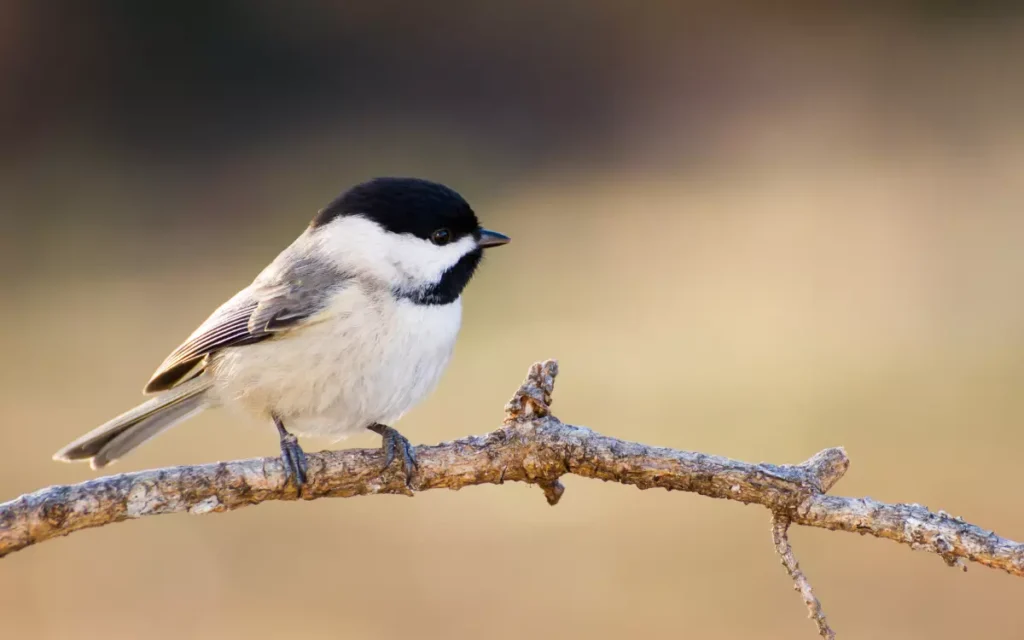
The Carolina Chickadee is a tiny gray bird with a black cap, black throat, and bright white cheeks. It frequently hangs upside down while searching leaves and branches for insects.
Its familiar call sounds like “chick-a-dee-dee-dee.” Its whistled song is commonly written as “fee-bee, fee-bay.”
- Scientific name: Poecile carolinensis
- Size: 3.9–4.7 inches
- Best ID clue: Black cap and bib separated by white cheeks
- Food: Insects, seeds, and berries
- Attract with: Sunflower chips, peanuts, and suet
- Feeding level: Tube, hopper, or suet cage
Carolina Chickadees are mainly found in eastern and parts of central Texas. They may use a properly sized nest box.
5. Red-bellied Woodpecker
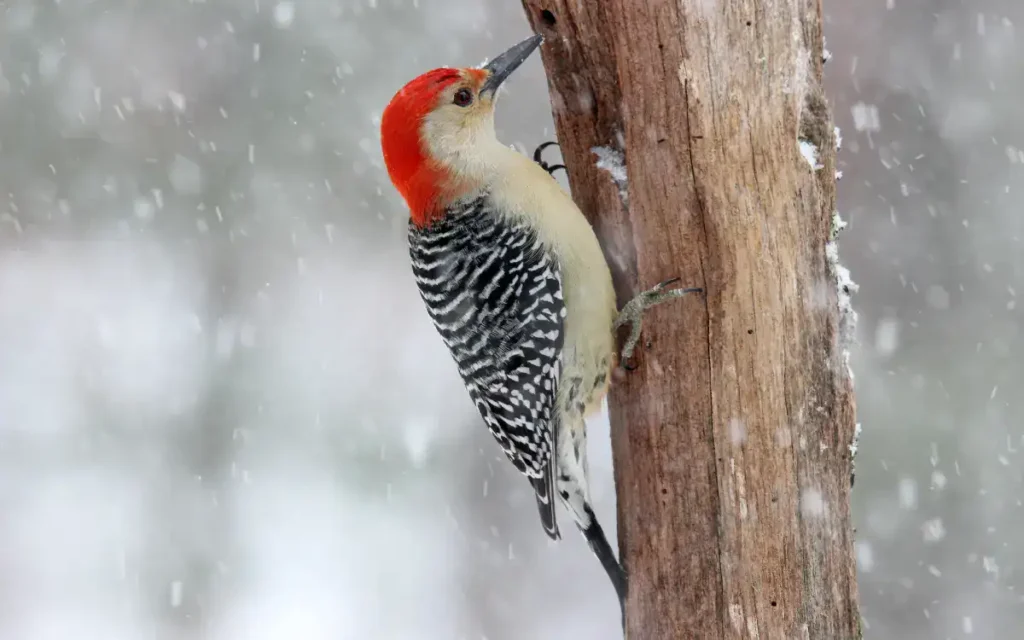
The Red-bellied Woodpecker has a black-and-white barred back, pale face, and red crown or nape. The red belly patch is small and often hidden against a tree.
This is one of the more common woodpeckers in eastern Texas. Its rolling “churr” call may be heard before the bird comes into view.
- Scientific name: Melanerpes carolinus
- Size: 9.1–10.6 inches
- Best ID clue: Zebra-like back and red head marking
- Food: Insects, nuts, fruit, and seeds
- Attract with: Suet, peanuts, sunflower seed, and fruit
- Feeding level: Suet cage or platform
Males have red from the bill to the back of the head. Females have a gray crown between red forehead and nape patches.
6. American Goldfinch
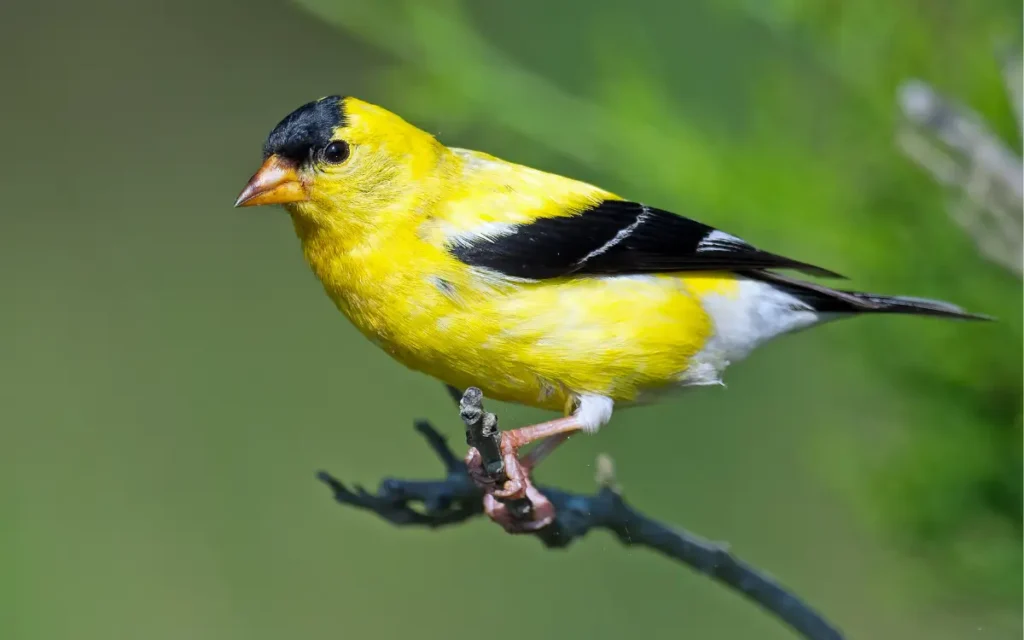
A breeding male American Goldfinch is bright yellow with a black forehead and black wings. Females and winter birds are dull olive-brown with black wings and pale wing bars.
Most Texans see larger numbers during the cooler months. Goldfinches often feed upside down on seed heads or cling to nyjer feeders.
- Scientific name: Spinus tristis
- Size: 4.3–5.1 inches
- Best ID clue: Black wings with pale bars
- Food: Thistle, sunflower, and other small seeds
- Attract with: Nyjer and sunflower hearts
- Feeding level: Tube or mesh feeder
Leave coneflower and sunflower seed heads standing after they dry.
7. Downy Woodpecker
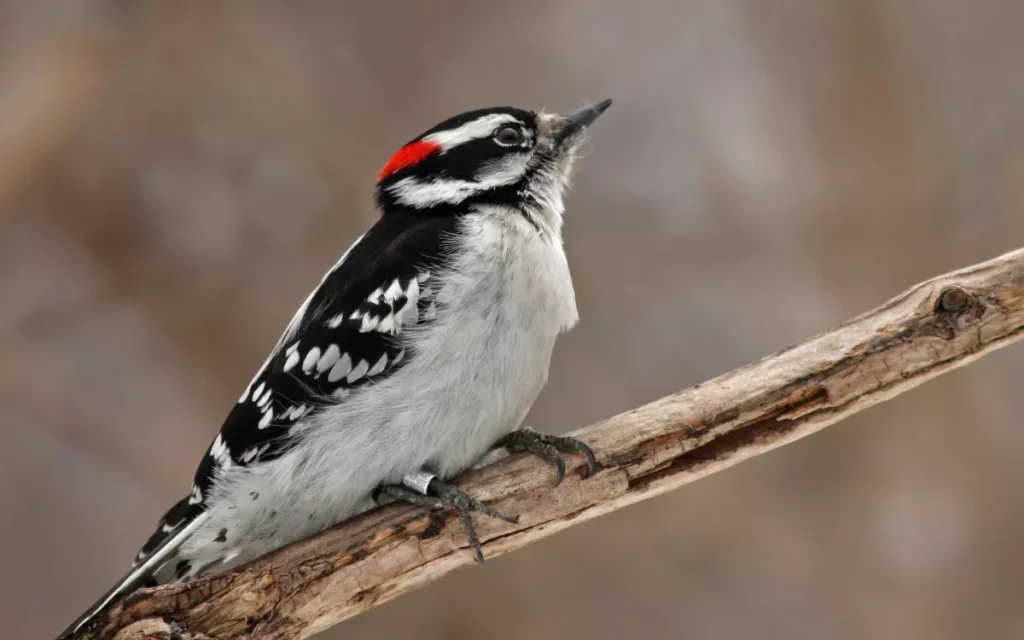
The Downy Woodpecker is a small black-and-white bird with a white back patch and a short bill. Males have a small red patch on the back of the head.
It is more common in eastern Texas and wooded parts of the state. Compare it with the larger Hairy Woodpecker, which has a much longer bill.
- Scientific name: Dryobates pubescens
- Size: 5.5–6.7 inches
- Best ID clue: Tiny size and short bill
- Food: Insects, seeds, and suet
- Attract with: Suet, peanut pieces, and sunflower seed
- Feeding level: Suet cage or tree trunk
Downy Woodpeckers often join winter flocks with chickadees, titmice, and kinglets.
8. Carolina Wren
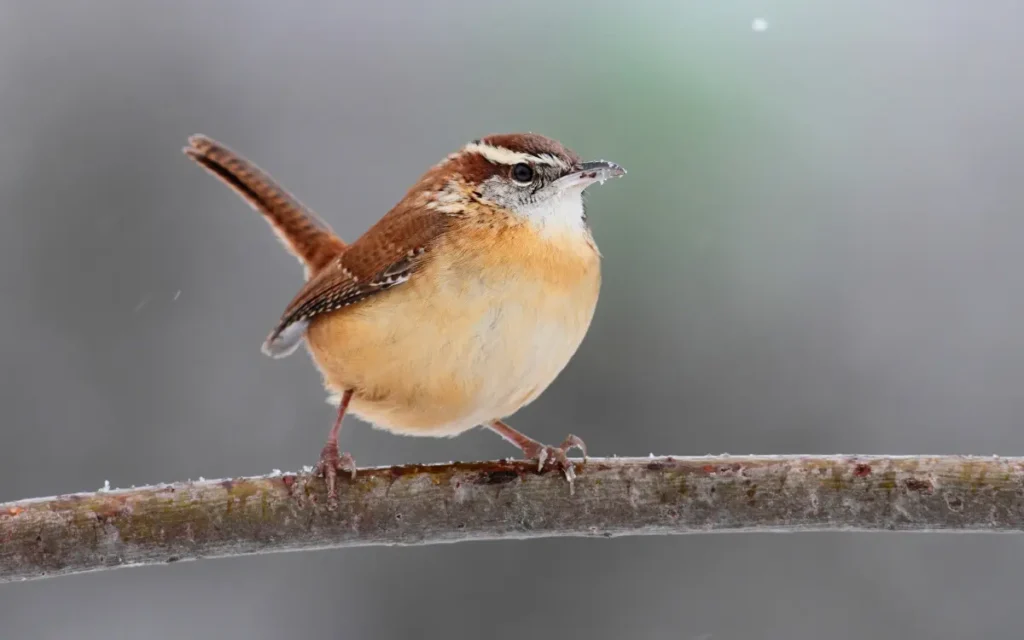
Carolina Wrens are small, warm brown birds with bold white eyebrow stripes and tails often held upright. Their round bodies and curved bills help separate them from sparrows.
Their song is far louder than their size suggests. Many people hear it as “tea-kettle, tea-kettle, tea-kettle.”
- Scientific name: Thryothorus ludovicianus
- Size: 4.7–5.5 inches
- Best ID clue: White eyebrow and raised tail
- Food: Insects, spiders, and small amounts of fruit
- Attract with: Mealworms, suet, dense plants, and brush
- Feeding level: Low platforms and sheltered areas
Carolina Wrens sometimes nest in boots, hanging baskets, garages, shelves, and other odd spaces near homes.
9. American Robin
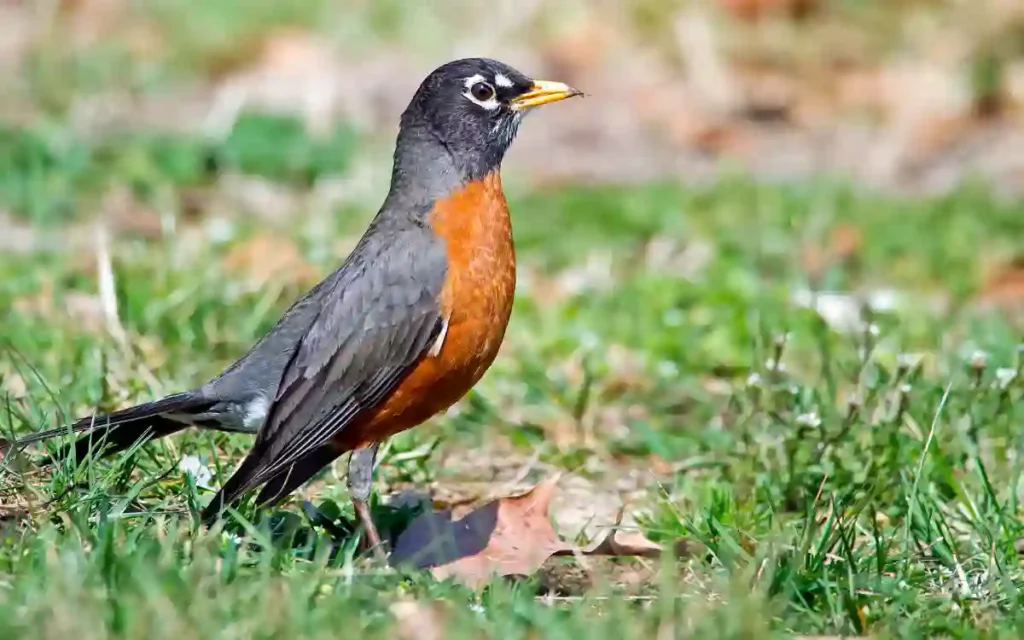
American Robins have dark backs, orange breasts, yellow bills, and white marks around the eyes. They often run across lawns, stop, and tilt their heads while searching for insects.
Robins can occur throughout the year in parts of Texas, but their numbers often rise sharply during fall and winter. Large flocks may descend on berry-producing trees.
- Scientific name: Turdus migratorius
- Size: 7.9–11 inches
- Best ID clue: Orange breast and yellow bill
- Food: Insects, earthworms, berries, and fruit
- Attract with: Water, berry shrubs, and open lawn
- Feeding level: Ground and fruiting trees
Robins rarely eat ordinary feeder seed.
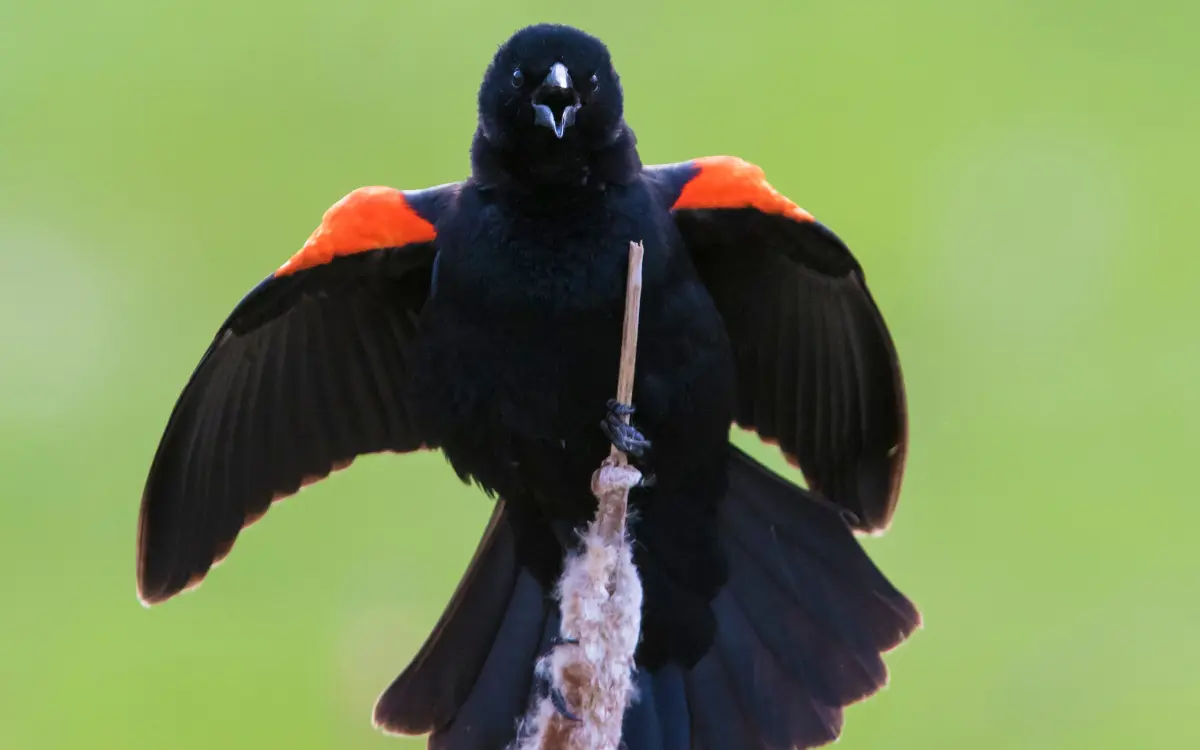
10. Red-winged Blackbird
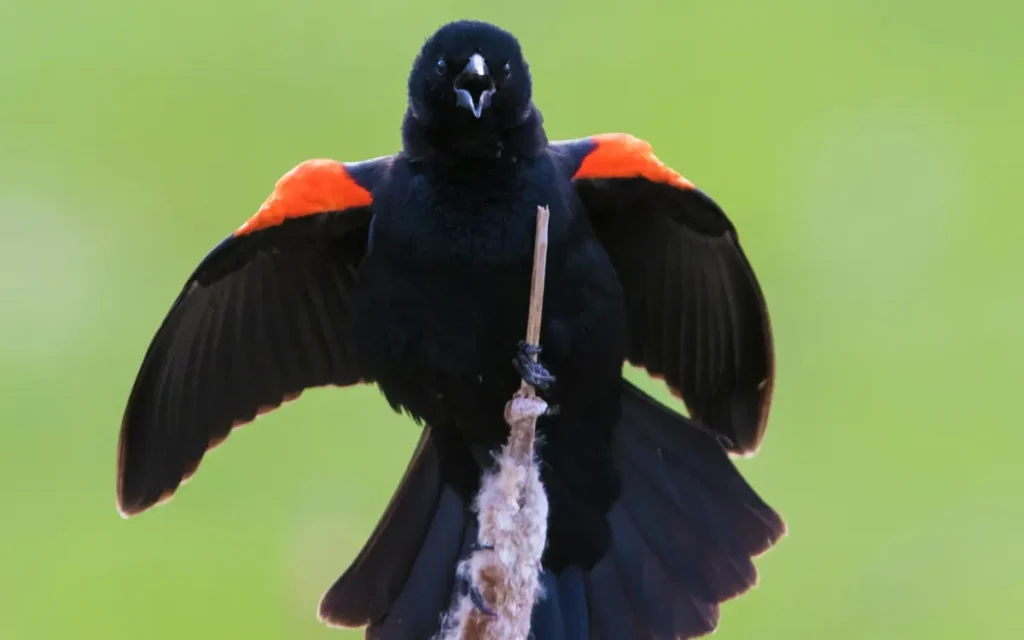
Adult males are black with red-and-yellow shoulder patches. Females look completely different: brown, heavily streaked, and shaped like large sparrows.
They are strongly associated with wetlands but may visit yards near ponds, fields, and drainage areas.
- Scientific name: Agelaius phoeniceus
- Size: 6.7–9.1 inches
- Best ID clue: Red shoulder patch on male
- Food: Seeds, grain, and insects
- Attract with: Sunflower seed, cracked corn, and millet
- Feeding level: Ground or platform
In winter, they may arrive in large mixed blackbird flocks.
11. Brown-headed Cowbird
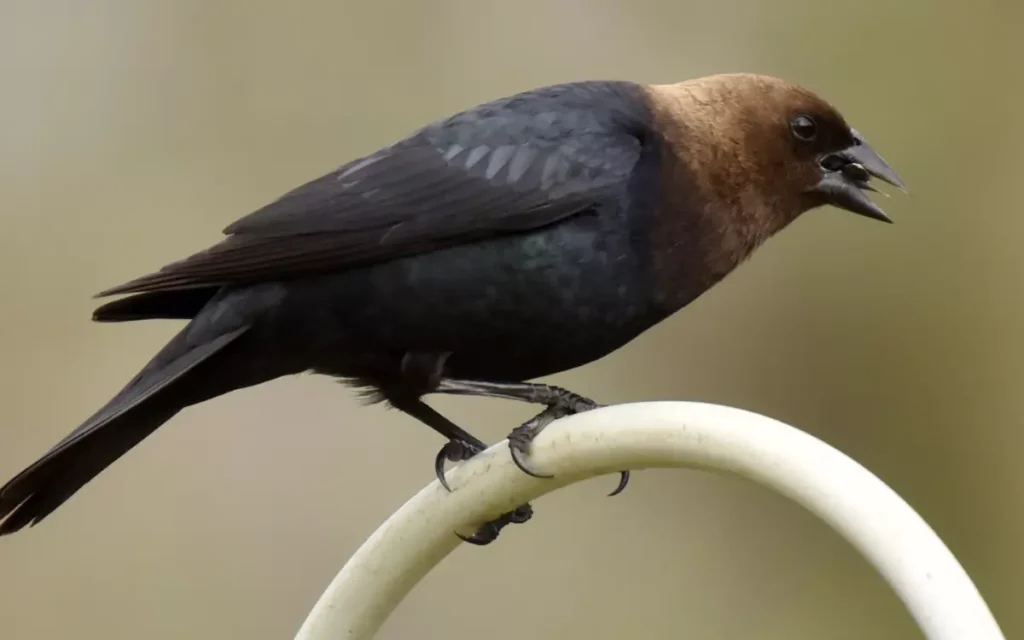
Male Brown-headed Cowbirds have glossy black bodies and brown heads. Females are plain gray-brown with thick, finch-like bills.
Cowbirds don’t build nests. Females lay eggs in the nests of other bird species, leaving the host parents to raise the chick.
- Scientific name: Molothrus ater
- Size: 6.3–8.7 inches
- Best ID clue: Brown head on an otherwise black male
- Food: Seeds and insects
- Attract with: Millet, cracked corn, and sunflower seed
- Feeding level: Ground or platform
They may occur year-round, but their numbers and flocking behavior change with the season.
12. American Crow
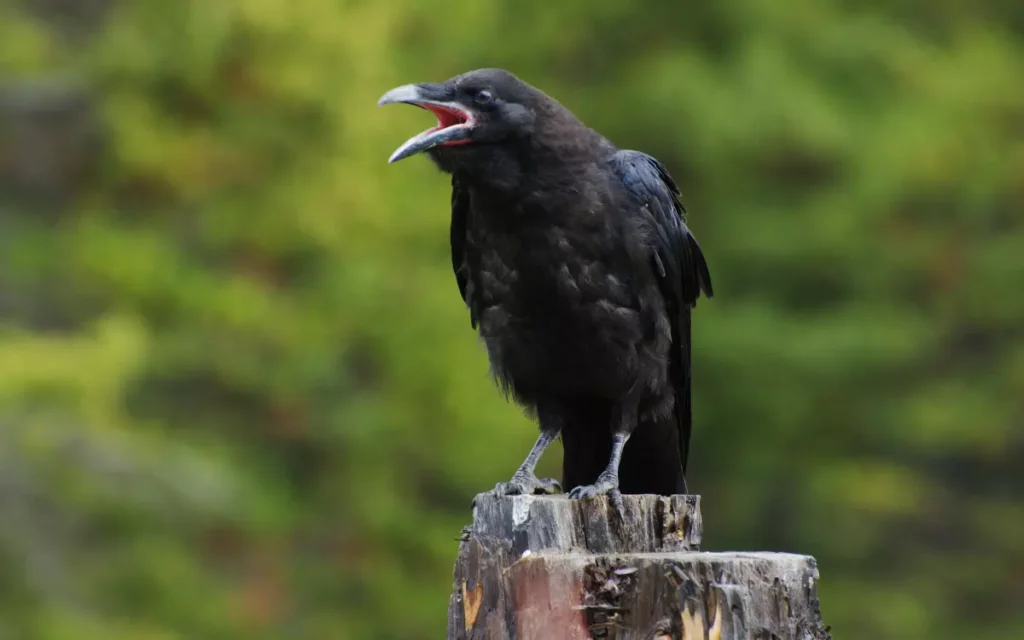
American Crows are large, entirely black birds with heavy bills and broad wings. Their familiar call is a clear series of “caws.”
They usually travel in pairs, family groups, or larger flocks. On the ground, they walk rather than hop.
- Scientific name: Corvus brachyrhynchos
- Size: 15.8–20.9 inches
- Best ID clue: Large size, fan-shaped tail, and “caw”
- Food: Insects, seeds, fruit, carrion, eggs, and scraps
- Attract with: Open lawns, water, and large trees
- Feeding level: Ground
In coastal areas, Fish Crows can look nearly identical. Voice is usually more useful than appearance for separating them.
13. Cedar Waxwing
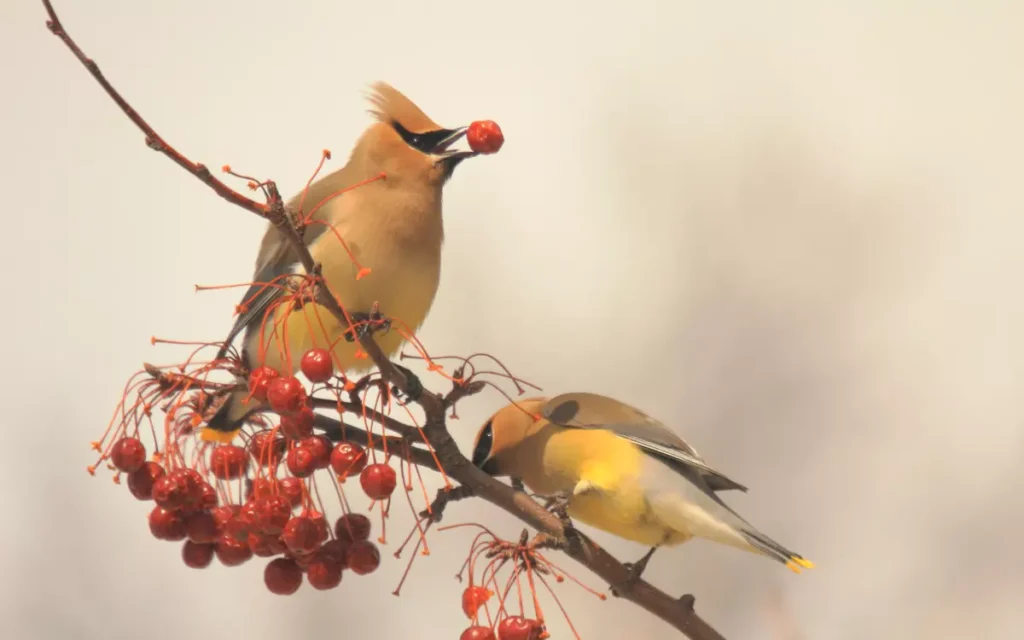
Cedar Waxwings are sleek tan-gray birds with pointed crests, black masks, yellow tail tips, and smooth-looking feathers. Some adults have small red, wax-like marks on their wings.
They travel in flocks and may strip a fruiting tree within hours.
- Scientific name: Bombycilla cedrorum
- Size: 5.5–6.7 inches
- Best ID clue: Black mask and yellow-tipped tail
- Food: Berries, fruit, and flying insects
- Attract with: Native fruiting trees and water
- Feeding level: Fruiting trees
They don’t regularly use seed feeders. Planting native berries gives you a much better chance of seeing them.
14. Eastern Bluebird
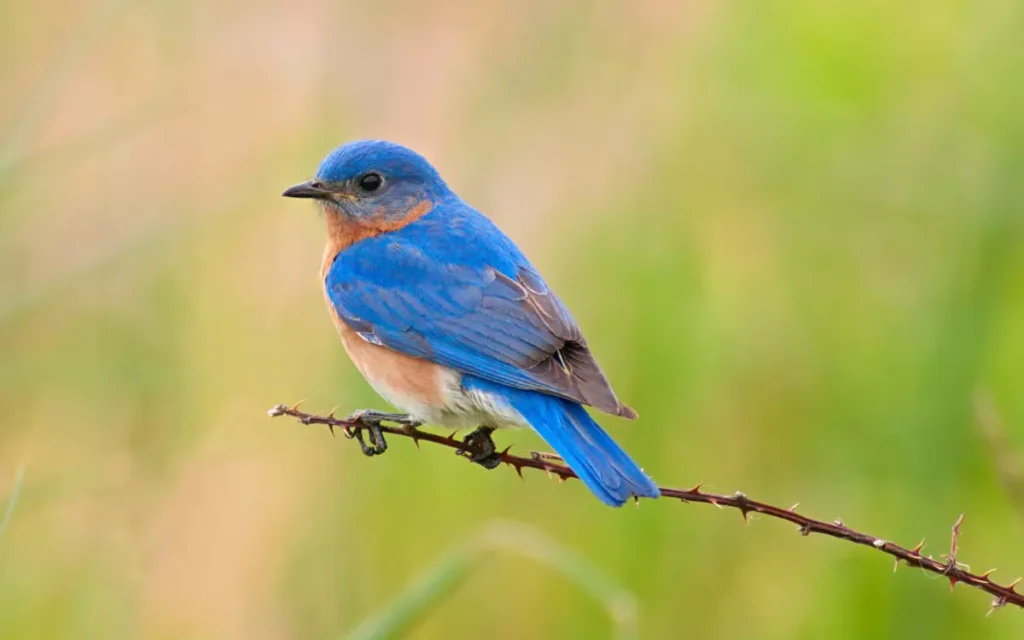
Male Eastern Bluebirds have deep blue backs and rusty-orange chests. Females have grayish heads and backs with softer blue wings and tails.
They sit upright on low branches, fences, and nest boxes before dropping to the ground for insects.
- Scientific name: Sialia sialis
- Size: 6.3–8.3 inches
- Best ID clue: Blue upperparts and rusty chest
- Food: Insects, berries, and mealworms
- Attract with: A proper nest box, mealworms, and open lawn
- Feeding level: Low platform or mealworm feeder
Texas Parks and Wildlife provides species-specific dimensions for Bluebird, chickadee, wren, and other birdhouses. Use the correct entrance size rather than buying a decorative box. Texas nest-box guide
15. Ruby-throated Hummingbird
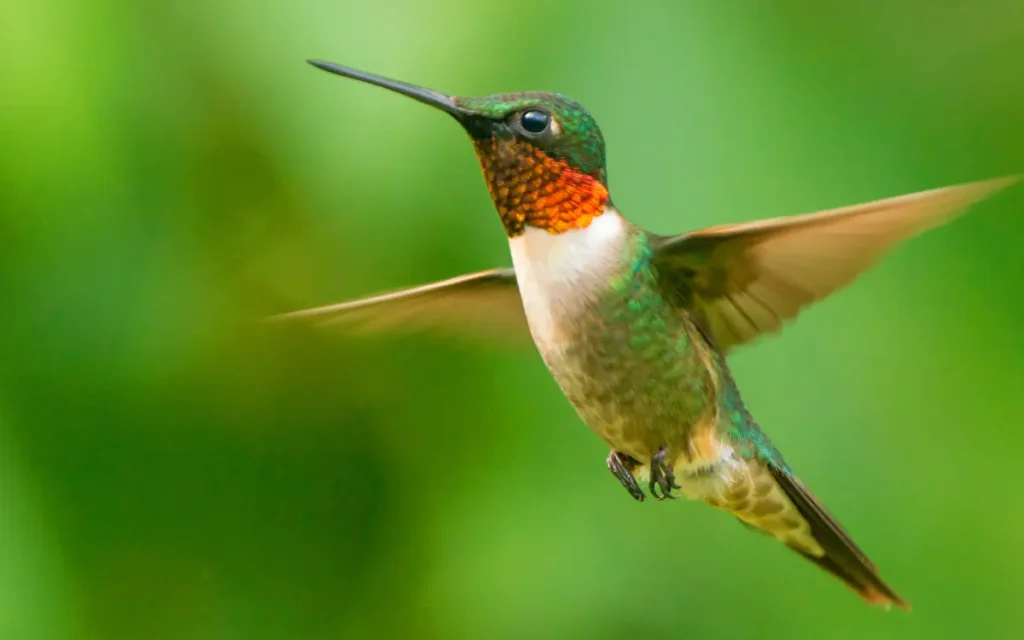
Adult males have bright red throat patches that may look black in poor light. Females have white throats and green backs.
Ruby-throated Hummingbirds are most common in eastern Texas, though migrants cross other parts of the state.
- Scientific name: Archilochus colubris
- Size: 2.8–3.5 inches
- Best ID clue: Red throat on male; clean white throat on female
- Food: Flower nectar and small insects
- Attract with: Native flowers and sugar-water feeders
- Feeding level: Nectar feeders and flowers
Use plain white sugar mixed with water at a ratio of one part sugar to four parts water. Don’t add red dye.
16. Eurasian Collared-Dove

This introduced dove is pale gray-brown with a narrow black collar across the back of its neck. Its tail is broad and square rather than sharply pointed.
Eurasian Collared-Doves are especially common around farms, grain storage areas, towns, and open neighborhoods.
- Scientific name: Streptopelia decaocto
- Size: 11.4–11.8 inches
- Best ID clue: Black neck collar and square tail
- Food: Seeds and grain
- Attract with: Millet, cracked corn, and sunflower seed
- Feeding level: Ground or platform
Its three-part coo is sometimes heard as “coo-COO-cook.”
17. Eastern Phoebe
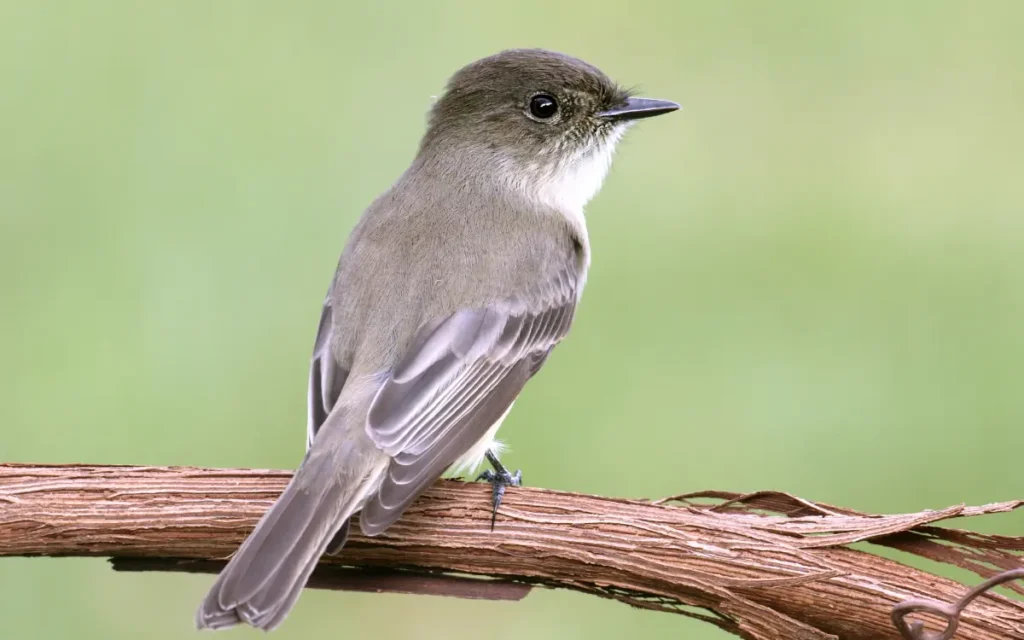
The Eastern Phoebe is a plain gray-brown flycatcher with a dark head, pale belly, and no obvious wing bars. Its habit of repeatedly lowering and raising its tail is the quickest clue.
It catches insects by flying from a low perch and returning to the same spot.
- Scientific name: Sayornis phoebe
- Size: 5.5–6.7 inches
- Best ID clue: Constant tail dipping
- Food: Flying insects and spiders
- Attract with: Insect-friendly plants, water, and a nesting shelf
- Feeding level: Open perches
Phoebes frequently build mud-and-grass nests under porches, bridges, and roof overhangs.
18. Inca Dove

The Inca Dove is a small, slender dove covered with dark-edged feathers that create a scaly pattern. Its long tail shows rusty red wing patches and white edges in flight.
It is most common in southern and central Texas, though its distribution can change following severe winters.
- Scientific name: Columbina inca
- Size: 7.1–9.1 inches
- Best ID clue: Scaly plumage and long tail
- Food: Small seeds and grain
- Attract with: White millet scattered on clean ground
- Feeding level: Ground
Its soft call is often written as “no-hope,” repeated several times.
19. Dark-eyed Junco
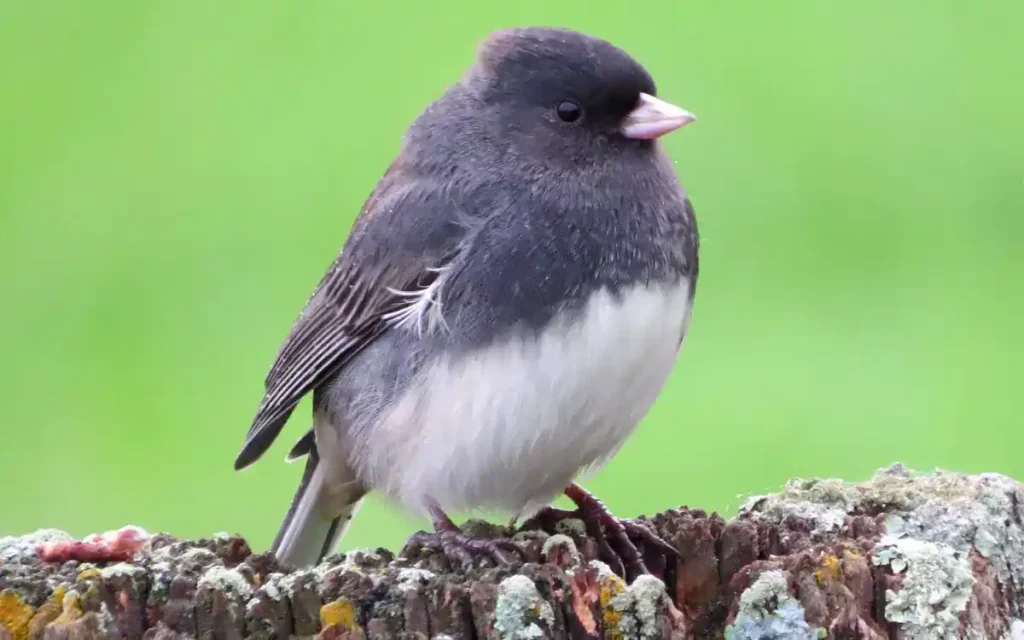
Dark-eyed Juncos are small winter sparrows with pale bills, dark upperparts, and white outer tail feathers. Their appearance varies because several regional forms can occur in Texas.
They usually feed on the ground in small flocks, scratching among fallen leaves or collecting seed under feeders.
- Scientific name: Junco hyemalis
- Size: 5.5–6.3 inches
- Best ID clue: Pale bill and white outer tail feathers
- Food: Seeds and insects
- Attract with: Millet and sunflower chips
- Feeding level: Ground or low platform
Leaving a little leaf litter under shrubs gives them a natural place to forage.
20. Chipping Sparrow
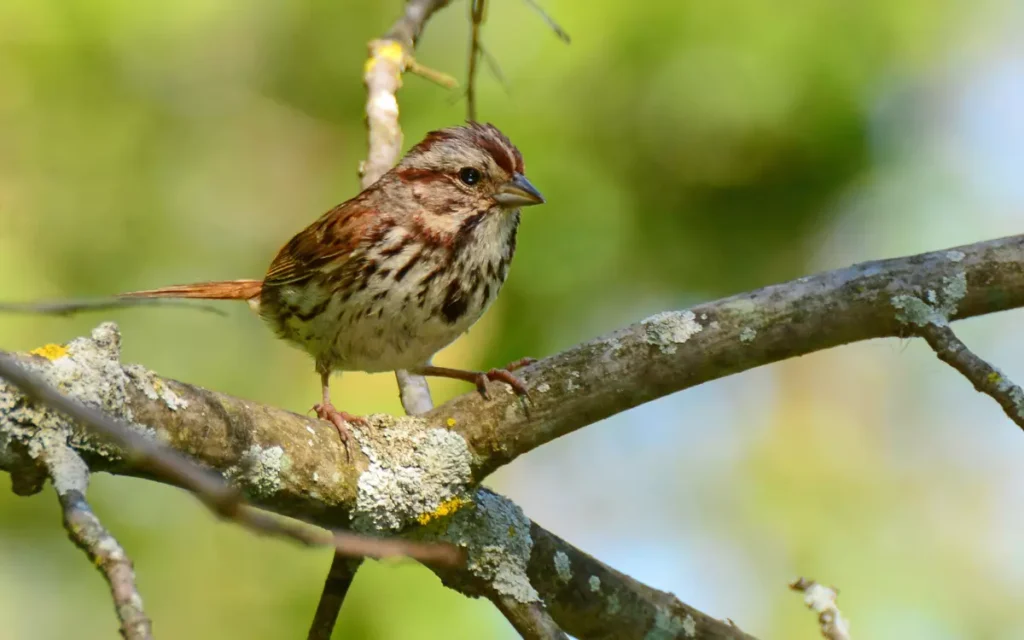
Breeding Chipping Sparrows have rusty caps, white eyebrows, black eye lines, and clean gray underparts.
Winter birds lose the sharp head pattern and become browner. Their small size and plain chest help separate them from heavily streaked sparrows.
- Scientific name: Spizella passerina
- Size: 4.7–5.9 inches
- Best ID clue: Rusty cap and clear gray chest
- Food: Grass seeds and insects
- Attract with: Millet and sunflower chips
- Feeding level: Ground or platform
Their song is a fast, dry trill that can continue from the same exposed perch.
21. Painted Bunting
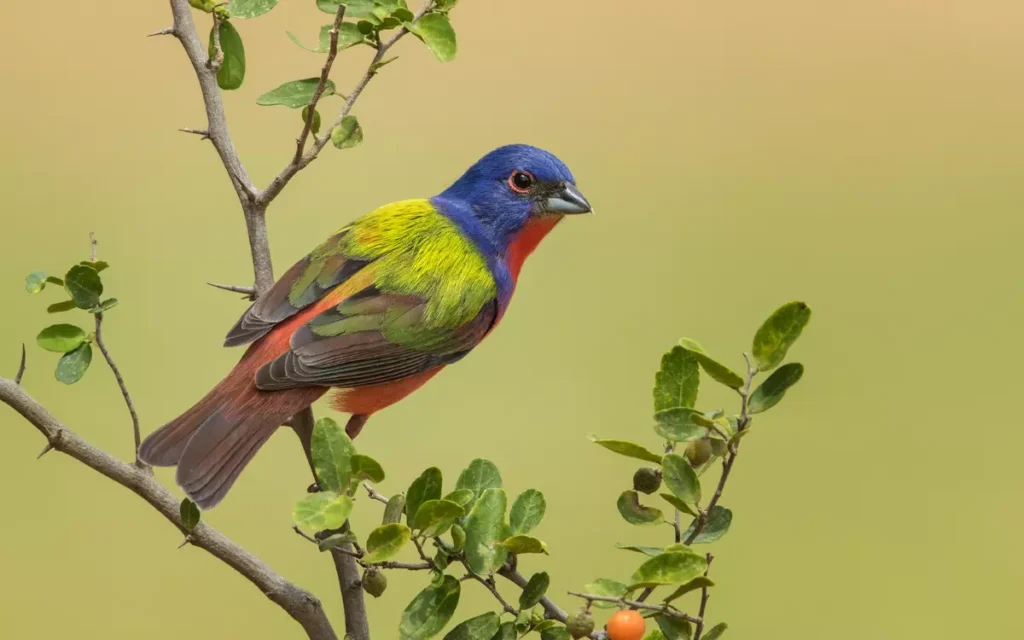
Adult male Painted Buntings combine blue heads, green backs, and red underparts. Females and young birds are bright yellow-green.
Males sometimes sing from exposed perches, but both sexes quickly disappear into thick vegetation.
- Scientific name: Passerina ciris
- Size: 4.7–5.1 inches
- Best ID clue: Multicolored male or nearly all-green female
- Food: Seeds and insects
- Attract with: White millet, native grasses, and dense cover
- Feeding level: Low platform or ground
Painted Buntings are mainly spring and summer birds in Texas. Migration timing and local abundance vary by region.
22. Northern Flicker
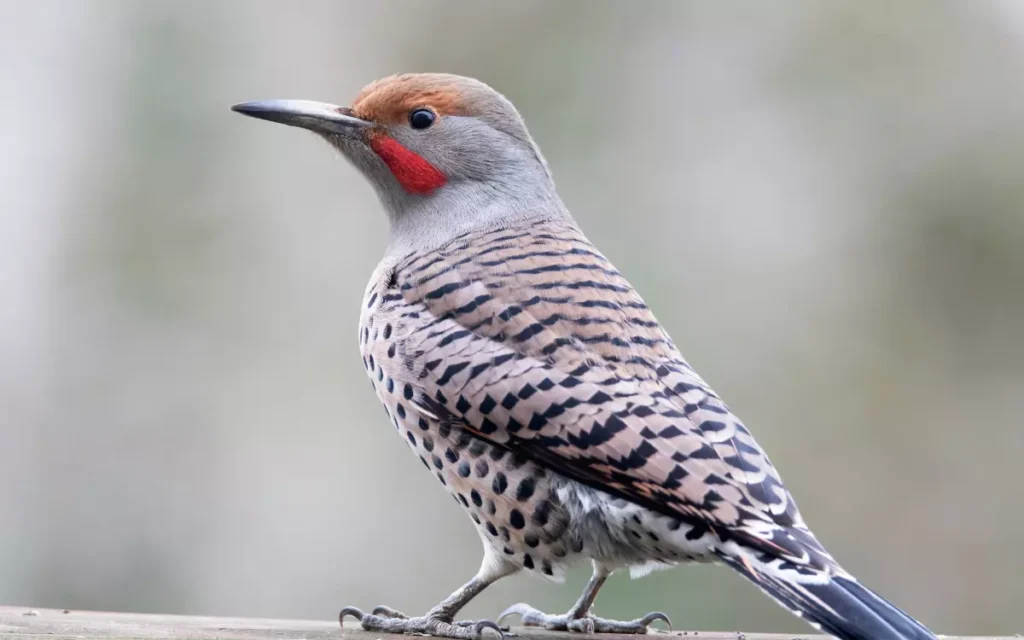
Northern Flickers are large brown woodpeckers with spotted underparts, black chest crescents, and white rumps visible in flight.
Yellow-shafted Flickers are expected in eastern Texas, while red-shafted birds become more likely in western Texas. Intergrades can show mixed traits.
- Scientific name: Colaptes auratus
- Size: 11–12.2 inches
- Best ID clue: Spotted belly, black chest crescent, and white rump
- Food: Ants, beetles, berries, and seeds
- Attract with: Suet, open ground, and mature trees
- Feeding level: Ground and tree trunks
Unlike many woodpeckers, flickers spend considerable time on lawns hunting ants.
21. Great Blue Heron
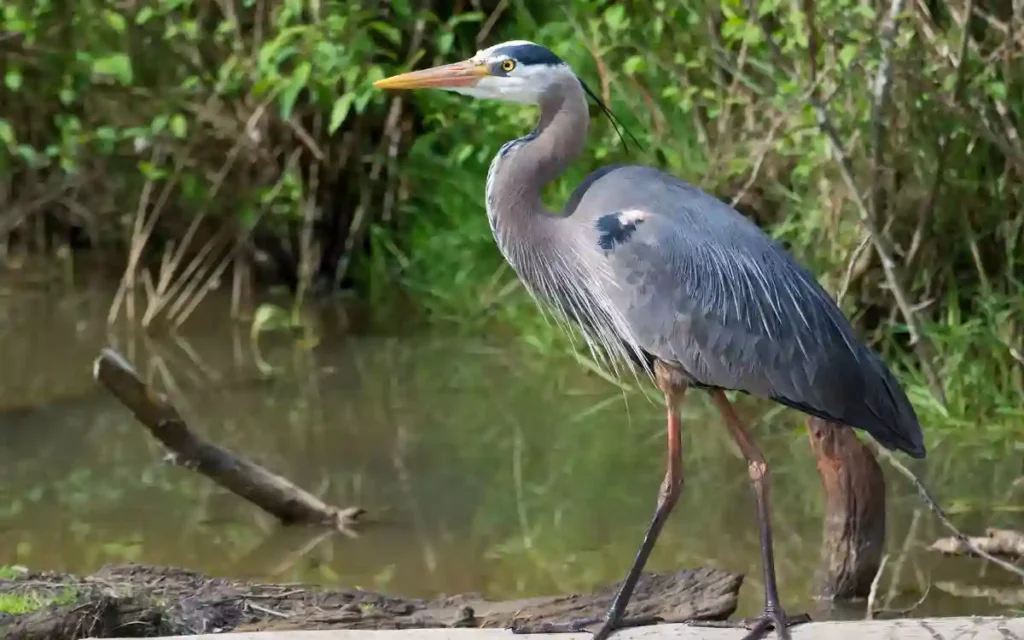
A Great Blue Heron is a very large gray-blue bird with long legs, a long pointed bill, and a folded S-shaped neck.
It may visit yards containing ponds, creeks, or drainage channels. During flight, it pulls its neck back rather than stretching it forward.
- Scientific name: Ardea herodias
- Size: 38–54 inches
- Best ID clue: Huge size and folded neck in flight
- Food: Fish, frogs, snakes, insects, and small mammals
- Attract with: Natural ponds and healthy wetland edges
- Feeding level: Shallow water
Homeowners with fish ponds may see the bird as an unwanted visitor. Humane pond netting and hiding spaces for fish are safer than harming the heron.
22. Red-headed Woodpecker
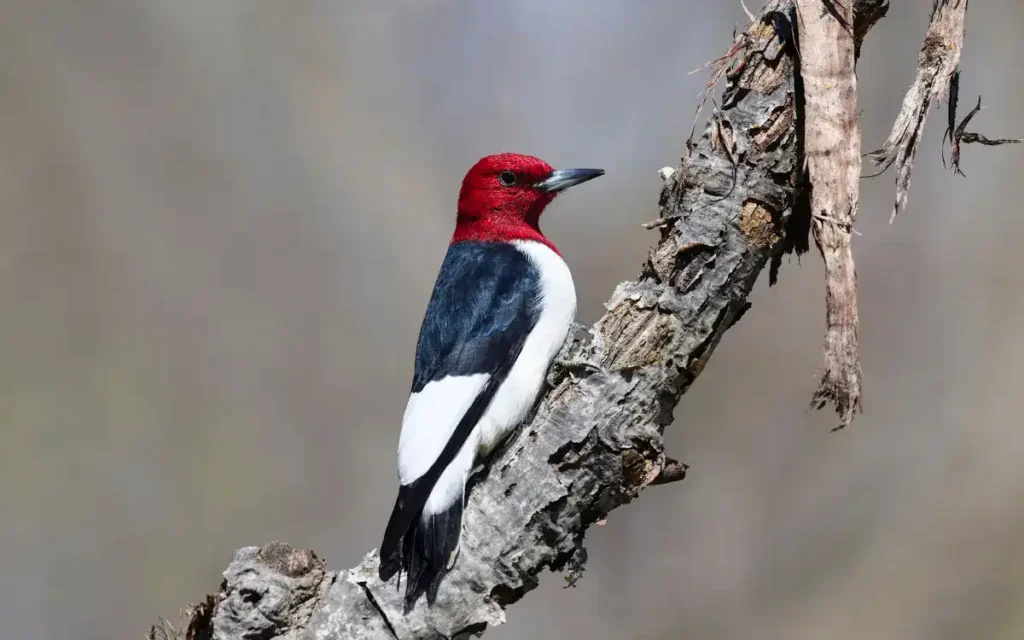
Adult Red-headed Woodpeckers have fully red heads, white bellies, black backs, and large white wing panels.
Young birds have brownish heads and backs but retain the bold wing pattern. This species is local rather than equally common across Texas.
- Scientific name: Melanerpes erythrocephalus
- Size: 7.5–9.1 inches
- Best ID clue: Entirely red adult head
- Food: Insects, nuts, seeds, fruit, and small animals
- Attract with: Suet, peanuts, and dead tree habitat
- Feeding level: Tree trunks and platforms
Leaving a safe standing dead tree can provide nesting and food-storage sites.
23. Barn Swallow
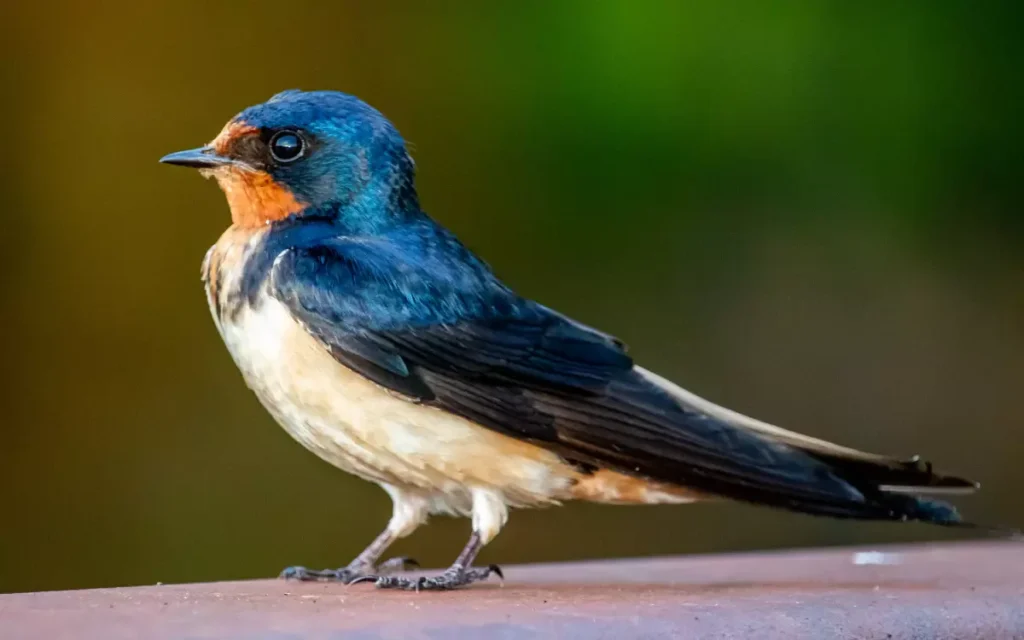
Barn Swallows have dark blue backs, rusty faces and throats, pale underparts, and deeply forked tails. They catch insects while flying over yards, fields, ponds, and roads.
They often build mud nests on porches, barns, bridges, and protected ledges.
- Scientific name: Hirundo rustica
- Size: 5.9–7.5 inches
- Best ID clue: Long forked tail
- Food: Flying insects
- Attract with: Open airspace, mud, and insect-friendly planting
- Feeding level: Feeds in flight
Barn Swallows don’t visit seed feeders. Reducing pesticide use is a better way to support them.
24. Barred Owl
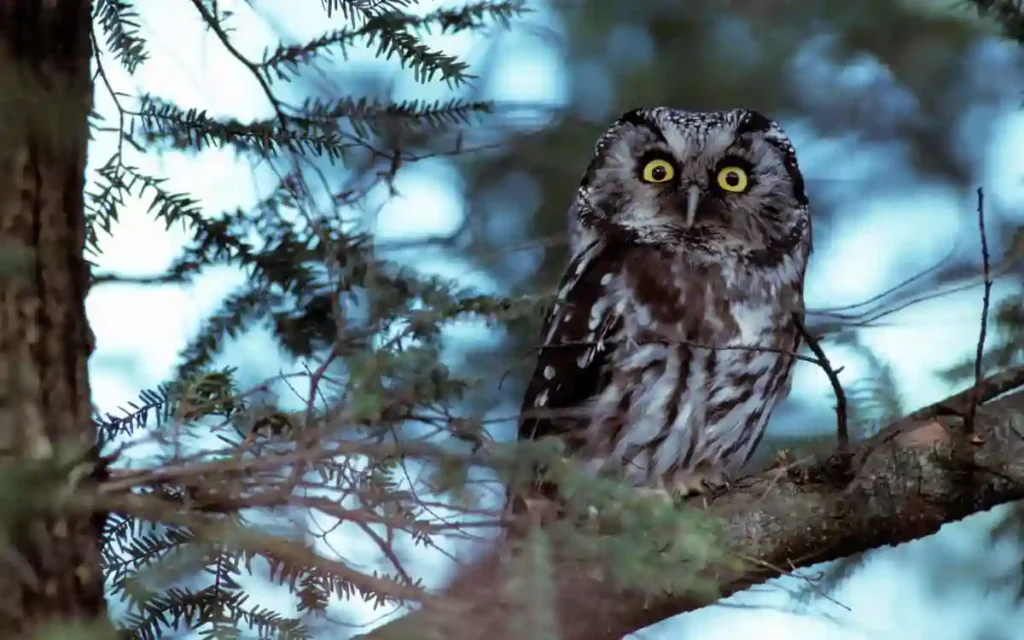
Barred Owls are large, round-headed owls with dark eyes, brown-and-white striped upper chests, and vertical streaks below.
Their best-known call sounds like “Who cooks for you? Who cooks for you-all?” They are mainly found in wooded eastern Texas, especially near water.
- Scientific name: Strix varia
- Size: 16.9–19.7 inches
- Best ID clue: Dark eyes and no ear tufts
- Food: Rodents, birds, frogs, and other small animals
- Attract with: Mature trees and undisturbed wooded habitat
- Feeding level: Hunts from trees
Avoid rodent poison, which can harm owls after they eat poisoned prey.
25. Rufous Hummingbird
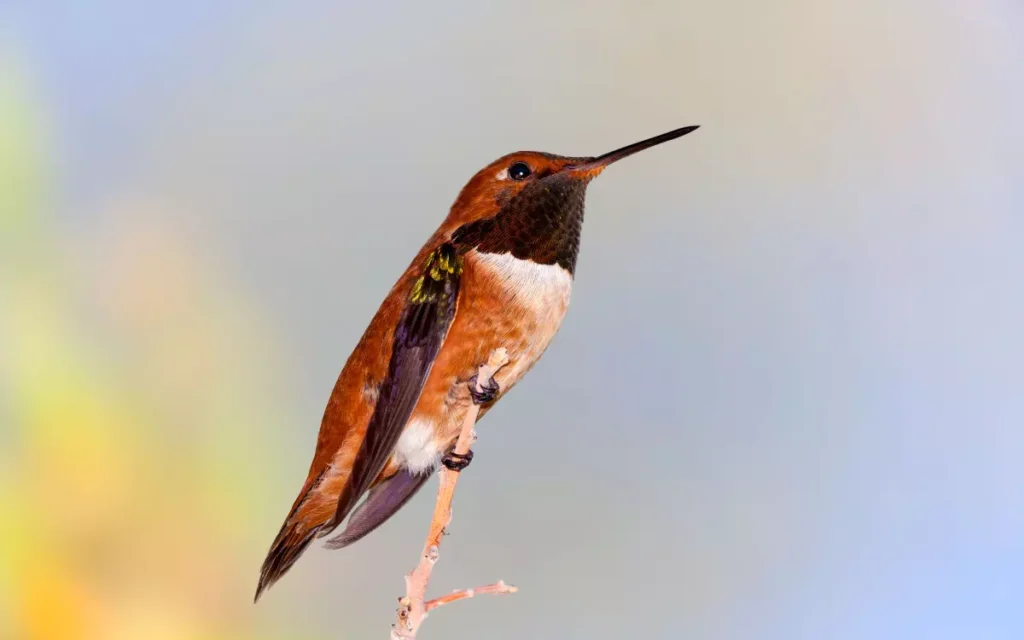
Adult male Rufous Hummingbirds are orange-rufous with bright orange-red throats. Females and young birds are green above with rufous color along the sides and tail.
In Texas, they are most often found during fall migration and winter rather than summer.
- Scientific name: Selasphorus rufus
- Size: 2.8–3.5 inches
- Best ID clue: Rufous sides and tail
- Food: Nectar and insects
- Attract with: A clean hummingbird feeder
- Feeding level: Nectar feeders and flowers
Leaving one feeder available into winter may help a late or wintering hummingbird. Clean it regularly even during cool weather.
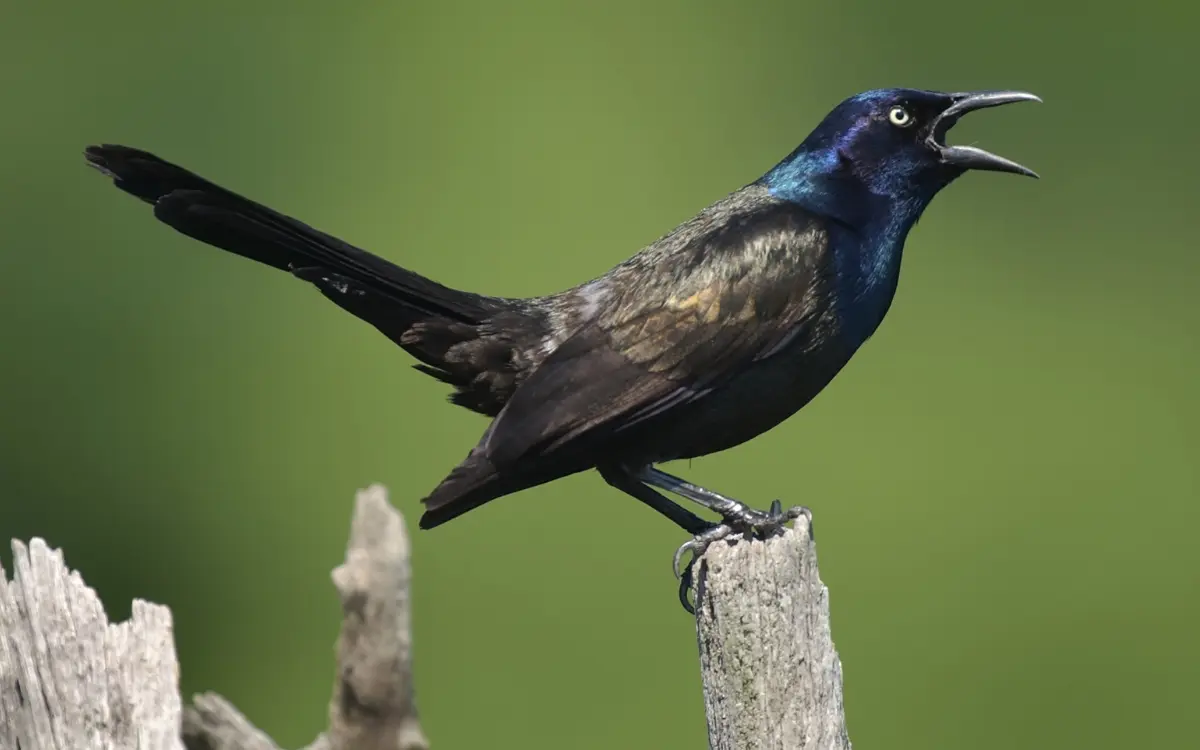
26. Common Grackle

A Common Grackle has a shorter tail than a Great-tailed Grackle but is still larger than most blackbirds. Adult males have yellow eyes and glossy purple or bronze plumage.
Common Grackles are more likely in eastern and northern Texas. They walk across lawns searching for beetles, seeds, and other food.
- Scientific name: Quiscalus quiscula
- Size: 11–13.4 inches
- Best ID clue: Long bill, yellow eye, and medium-length tail
- Food: Insects, grain, fruit, seeds, and small animals
- Attract with: Platform feeders and ground seed
- Feeding level: Ground or platform
If the tail looks almost as long as the body, check for a Great-tailed Grackle instead.