Blue Jay Spiritual Meaning: What It Means When You See One
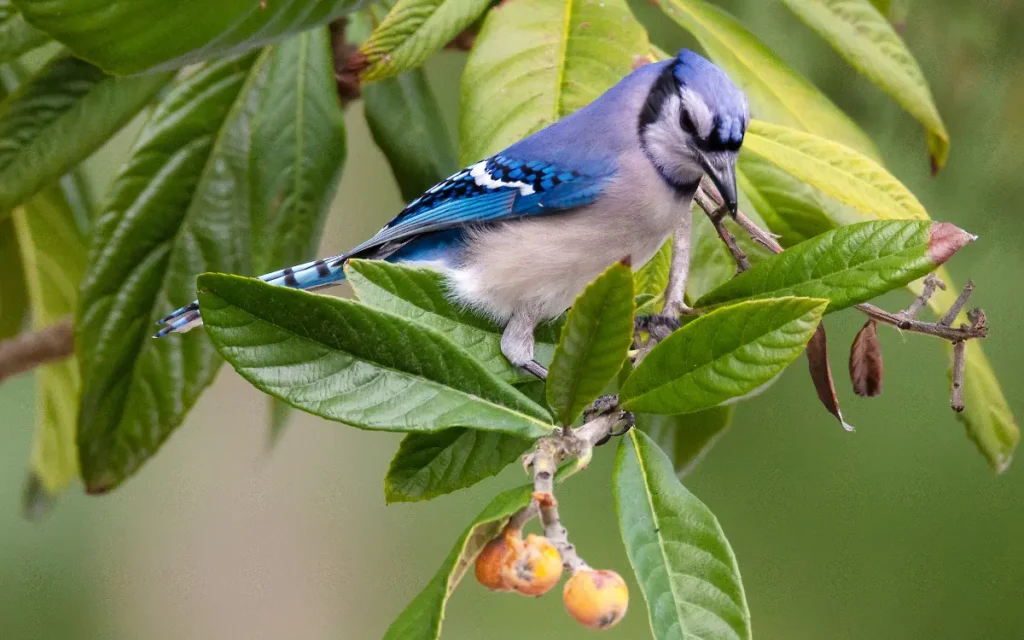
A Blue Jay is not the kind of bird you miss. It calls loudly, flashes blue through the trees, and often acts like it owns the yard.
So when one keeps showing up near your home, window, path, or feeder, it can feel personal.
Spiritually, the Blue Jay is often linked with communication, confidence, protection, truth, loyalty, and awareness. Its message is not quiet or soft. It often feels like a push to speak clearly, pay attention, and stop ignoring what your instincts already know.
Blue Jays are naturally loud, alert, and protective birds. Cornell notes that they are often detected by their noisy calls, and Audubon says they may attack with loud calls when a nest is threatened. That real behavior is one reason people connect them with courage, warning, and protection.
Blue Jay Spiritual Meaning at a Glance
| Blue Jay Encounter | Possible Spiritual Meaning |
| Blue Jay visiting your yard | Protection, awareness, communication |
| Blue Jay near your window | A message needs your attention |
| Blue Jay calling loudly | Speak up or listen closely |
| Blue Jay crossing your path | Confidence, direction, courage |
| Seeing two Blue Jays | Loyalty, partnership, family energy |
| Blue Jay in a dream | Truth, voice, warning, or clarity |
| Blue Jay feather | Courage, guidance, self-expression |
| Blue Jay after loss | Comfort, strength, or a reminder of love |
What Does a Blue Jay Symbolize?
A Blue Jay often symbolizes truth, boldness, communication, intelligence, and protection.
This meaning comes partly from how the bird acts in real life. Blue Jays are not shy. They call loudly, warn other birds, defend nesting areas, and move with strong presence.
Spiritually, seeing one may be a reminder to ask:
| Question | Why It Matters |
| Am I speaking honestly? | Blue Jays are tied to voice and truth |
| Am I ignoring a warning sign? | Their calls often draw attention |
| Do I need stronger boundaries? | They are protective around nests |
| Am I hiding my confidence? | Their bold behavior stands out |
| Who deserves my loyalty? | Blue Jays are often seen around pairs or family groups |
A Blue Jay does not have to mean something dramatic. Sometimes its message is simple: pay attention, use your voice, and stop shrinking yourself.
Blue Jay as a Sign of Communication
The Blue Jay is one of the strongest bird symbols for communication.
Its calls are not gentle background noise. They cut through the yard. Cornell says Blue Jays make many calls, including a loud “jeer,” clear whistles, gurgling sounds, and even mimicry of hawks.
Spiritually, this can point to your own voice.
Maybe there is something you need to say. Maybe you have been quiet to avoid tension. Maybe someone around you is not being clear, and your instincts are picking up on it.
A Blue Jay sighting can be a reminder to speak with honesty, not harshness. Clear words do not have to be cruel. They just need to be true.
Blue Jay Meaning: Confidence and Courage
Blue Jays carry bold energy. They are small compared with hawks and many other birds, but they do not act weak.
That is why many people see them as a sign of courage.
If a Blue Jay appears when you are doubting yourself, it may feel like a reminder to stand taller. Not louder for the sake of being loud. Just more willing to be seen and heard.
This meaning fits moments when you are:
| Situation | Blue Jay Message |
| Avoiding a hard conversation | Speak clearly |
| Feeling overlooked | Take up space |
| Doubting your decision | Trust your judgment |
| Letting people cross your boundaries | Protect your peace |
| Waiting for permission | Move with confidence |
The Blue Jay’s energy is direct. It says: do not disappear just to keep everyone comfortable.
Blue Jay as a Symbol of Protection
A Blue Jay near your home is often seen as a protective sign.
In nature, Blue Jays are alert birds. They can warn loudly when something feels wrong. Around the nest, they may become quiet and hidden, but if a threat comes close, Audubon notes they can respond with loud calls.
Spiritually, this connects Blue Jays with guarding your space.
A Blue Jay may remind you to protect:
| Area of Life | What Protection May Mean |
| Home | Keeping your space calm and safe |
| Relationships | Not letting others drain you |
| Emotions | Taking your feelings seriously |
| Time | Saying no when needed |
| Energy | Staying away from constant drama |
This does not mean you should become closed off. It means your peace matters.
Blue Jay Spiritual Meaning in Love
In love, a Blue Jay often points to loyalty, honesty, and better communication.
It may appear when something needs to be said in a relationship. That could be a loving conversation, a boundary, an apology, or a truth that has been pushed aside.
| Love Situation | Possible Meaning |
| Single person sees a Blue Jay | Be honest about what you want |
| Couple sees a Blue Jay | Communication needs care |
| Two Blue Jays appear together | Loyalty, teamwork, shared protection |
| Blue Jay calls near you | Something unspoken may need attention |
| Blue Jay visits often | A repeated reminder to trust your voice |
A Blue Jay does not always mean conflict. Sometimes it points to stronger trust. Good relationships need clear words, not guessing games.
Blue Jay Meaning After Someone Dies
Many people feel comfort when a bird appears after the loss of someone they love.
A Blue Jay may be seen as a sign of strength, protection, or reassurance. Some people take it as a reminder that love does not vanish just because someone is no longer physically present.
This is a personal belief. There is no way to prove that a Blue Jay is a direct message from a loved one. But if seeing one brings comfort, peace, or courage during grief, that meaning can still be deeply important.
The Blue Jay’s message in this moment may be:
| Blue Jay Visit After Loss | Possible Meaning |
| Appears near your home | You are being reminded of love and protection |
| Calls loudly nearby | Pay attention to a memory or feeling |
| Visits repeatedly | Comfort, strength, or emotional support |
| Lands near a meaningful place | A personal reminder of connection |
Blue Jay at Your Window Meaning
A Blue Jay at your window can feel very direct. Since windows sit between the inside and outside world, people often read this as a sign of awareness or a message trying to reach you.
| Window Encounter | Possible Meaning |
| Blue Jay sitting near window | Pause and notice what is happening around you |
| Blue Jay tapping window | Something needs your attention |
| Blue Jay calling outside window | Speak up or listen carefully |
| Blue Jay visiting often | A repeated reminder about courage or boundaries |
There is also a natural explanation. Birds may see reflections in windows, notice food nearby, or use trees and ledges around your home.
The spiritual meaning does not have to cancel the real reason. Both can exist together: the bird has a natural behavior, and you may still find personal meaning in the timing.
Blue Jay Crossing Your Path Meaning
A Blue Jay crossing your path is often seen as a sign of direction, confidence, and awareness.
It may show up when you are about to make a choice or when you have been second-guessing yourself. The message is not always “go faster.” Sometimes it is “look closer before you move.”
This meaning fits especially well if you have been dealing with:
| Life Moment | Possible Message |
| A decision | Trust your instincts, but stay alert |
| A conversation | Say what needs to be said |
| A new start | Move with more confidence |
| A stressful situation | Protect your peace |
| A confusing relationship | Watch actions, not only words |
Seeing Two Blue Jays Meaning
Seeing two Blue Jays can represent partnership, loyalty, teamwork, and family bonds.
Blue Jays are often seen in pairs or small groups, and resident birds may also associate in flocks. Cornell notes that they can gather in loose flocks during migration and may associate in flocks as residents.
Spiritually, two Blue Jays may point to a relationship where communication matters. It could be romantic, family-based, or connected to friendship.
The message may be simple: strong bonds need honesty and protection.
Blue Jay Feather Spiritual Meaning
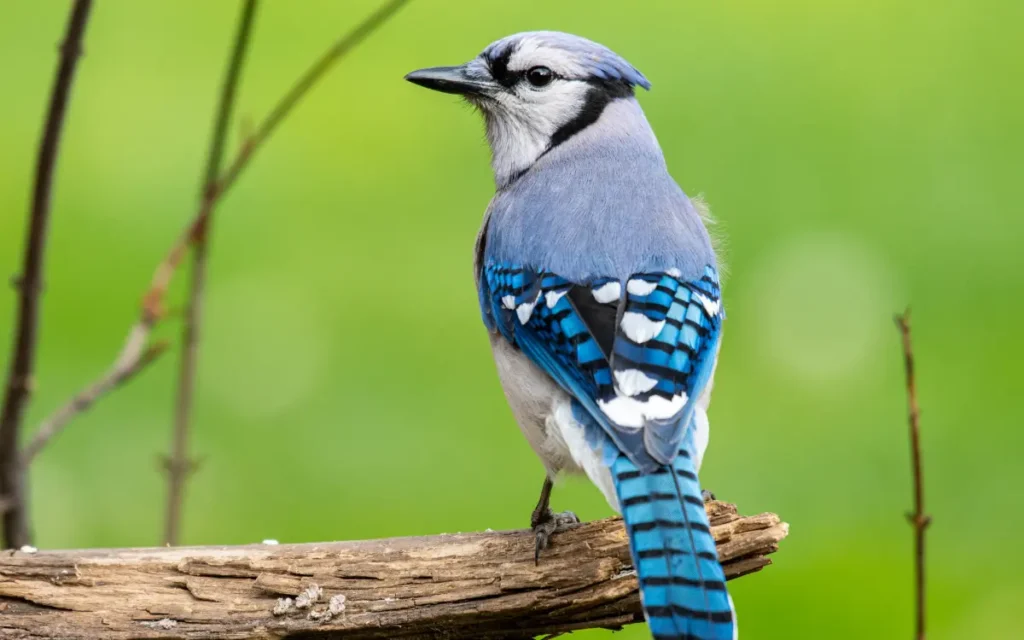
Finding a Blue Jay feather is often linked with courage, truth, and self-expression.
Blue is commonly connected with communication and calm thinking. The darker markings can represent boundaries, protection, and awareness. The white areas may bring a sense of peace or comfort.
| Feather Detail | Possible Meaning |
| Blue color | Communication, clarity, self-expression |
| Black markings | Protection, boundaries, strength |
| White markings | Peace, hope, comfort |
| Mixed pattern | Balance between honesty and caution |
A feather can feel like a small reminder to use your voice wisely. Not every truth needs to be shouted, but the right truth should not be buried.
Blue Jay Dream Meaning
Dreaming of a Blue Jay often connects to communication, truth, warning, confidence, or social energy.
The meaning depends on what the bird is doing in the dream.
Dreaming of a Blue Jay Calling
A calling Blue Jay in a dream may mean something needs attention. It can point to a message, warning, or truth you have been avoiding.
It may also suggest that you need to speak up in waking life.
Dreaming of a Flying Blue Jay
A flying Blue Jay can represent freedom, movement, and confidence. It may suggest that you are ready to move past fear or step into a more open version of yourself.
Dreaming of an Injured Blue Jay
An injured Blue Jay may symbolize blocked communication, fear of speaking, or feeling unheard.
This kind of dream may show up when you are holding back your feelings or feeling pressure to stay quiet.
Dreaming of Many Blue Jays
Many Blue Jays in a dream may point to social noise, gossip, group pressure, or a busy emotional environment.
It may be a sign to choose your words carefully and listen before reacting.
Blue Jay Biblical Meaning
Blue Jays are not directly named in the Bible.
Still, some people connect them with biblical themes like watchfulness, truth, wisdom, protection, and careful speech.
A Blue Jay’s loud voice may remind readers of the power of words. Its alert behavior may connect with staying watchful. Its protective nature may bring to mind care for home and family.
The safest way to frame this is simple: the Blue Jay is not a specific biblical symbol, but its behavior can remind people of spiritual lessons about speech, courage, and awareness.
Blue Jay Native American Meaning
Blue Jay meanings vary across Native cultures and traditions, so it is not accurate to give one single meaning for all tribes.
In some stories, jays may be linked with intelligence, noise, trickster energy, warning, or bold behavior. But these meanings depend on the specific culture and story.
For a respectful article, avoid saying “Native Americans believe…” as if all traditions are the same. A better approach is:
| Better Wording | Why It Works |
| “Meanings vary by tribe and tradition.” | Avoids overgeneralizing |
| “In some stories…” | Leaves room for difference |
| “The Blue Jay may be seen as…” | Does not claim one fixed meaning |
| “Specific meanings should be understood within their own culture.” | Shows respect |

Is Seeing a Blue Jay a Good Sign?
Many people see a Blue Jay as a good sign.
It can represent confidence, clear communication, protection, loyalty, and sharper awareness. It may appear when you need to stop doubting yourself or when you need to say something honestly.
But a Blue Jay can also feel like a warning sign. Not always a bad warning. More like a nudge to pay attention.
A Blue Jay may be telling you:
| Message | Meaning |
| Speak up | Your voice matters |
| Stay alert | Something needs attention |
| Protect your peace | Set better boundaries |
| Trust your instincts | You already sense the truth |
| Be loyal wisely | Not everyone deserves your energy |
What Should You Do When You See a Blue Jay?
When a Blue Jay appears, pause for a moment. Notice what was happening around you and what you were thinking about.
You can ask yourself:
| Question | What It May Reveal |
| What was I thinking when I saw it? | The message may connect to that thought |
| Was the bird quiet or calling? | Quiet may suggest watching; calling may suggest speaking |
| Did it appear once or repeatedly? | Repeated visits may feel more personal |
| Am I avoiding a conversation? | Blue Jay energy often points to communication |
| Do I need better boundaries? | Blue Jays carry protective symbolism |
The meaning is not always huge. Sometimes the reminder is small but useful: be honest, stay aware, and trust your voice.
Blue Jay Spiritual Meaning vs Real Bird Behavior
The best spiritual meanings feel stronger when they connect to the real bird.
| Real Blue Jay Behavior | Spiritual Connection |
| Loud calls | Communication and truth |
| Mimics hawks | Warning, awareness, strategy |
| Protects nesting area | Family protection and boundaries |
| Visits feeders | Familiar presence near home |
| Social behavior | Loyalty and group energy |
| Blue coloring | Calm expression and clear speech |
| Bold personality | Confidence and courage |
Blue Jays make a wide range of sounds, and Cornell notes that they may mimic hawks, especially Red-shouldered Hawks. That makes their symbolic link with warning and awareness easy to understand.
FAQs
What does it mean when a Blue Jay visits you?
A Blue Jay visiting you is often seen as a sign of communication, courage, awareness, or protection. It may be a reminder to speak honestly or pay attention to something around you.
Is a Blue Jay a good omen?
Many people see a Blue Jay as a good omen because it represents confidence, loyalty, truth, and protection. It may also remind you to stay alert and use your voice wisely.
What does a Blue Jay mean spiritually in love?
In love, a Blue Jay can symbolize honest communication, loyalty, and stronger emotional boundaries. It may appear when something needs to be discussed clearly.
What does it mean when a Blue Jay comes to your window?
A Blue Jay at your window may mean something needs your attention. It can symbolize awareness, a message, or a reminder to speak up. There may also be a natural reason, such as reflections, food, or nearby perches.
What does it mean when you see two Blue Jays?
Two Blue Jays often symbolize partnership, family connection, teamwork, and loyalty. They may also point to the need for better communication in a close relationship.
What does a Blue Jay feather mean spiritually?
A Blue Jay feather is often connected with courage, truth, communication, protection, and guidance. Its blue color can represent clear expression, while its darker markings may symbolize boundaries.
Are Blue Jays messengers from loved ones?
Some people believe Blue Jays can appear as signs of comfort after losing someone they love. This is a personal belief, but many find peace in seeing a Blue Jay during grief.
What does it mean if a Blue Jay keeps appearing?
A repeated Blue Jay visit may feel like a stronger reminder to pay attention. It may point to communication, confidence, protection, or a situation where you need to trust your instincts.
What does hearing a Blue Jay mean?
Hearing a Blue Jay may symbolize a message, warning, or the need to speak clearly. Since Blue Jays are naturally vocal birds, their call often connects with voice and awareness.
What does a Blue Jay mean in dreams?
A Blue Jay in a dream may represent truth, communication, confidence, warning, or social energy. The meaning depends on whether the bird is calling, flying, watching, or appearing in a group.