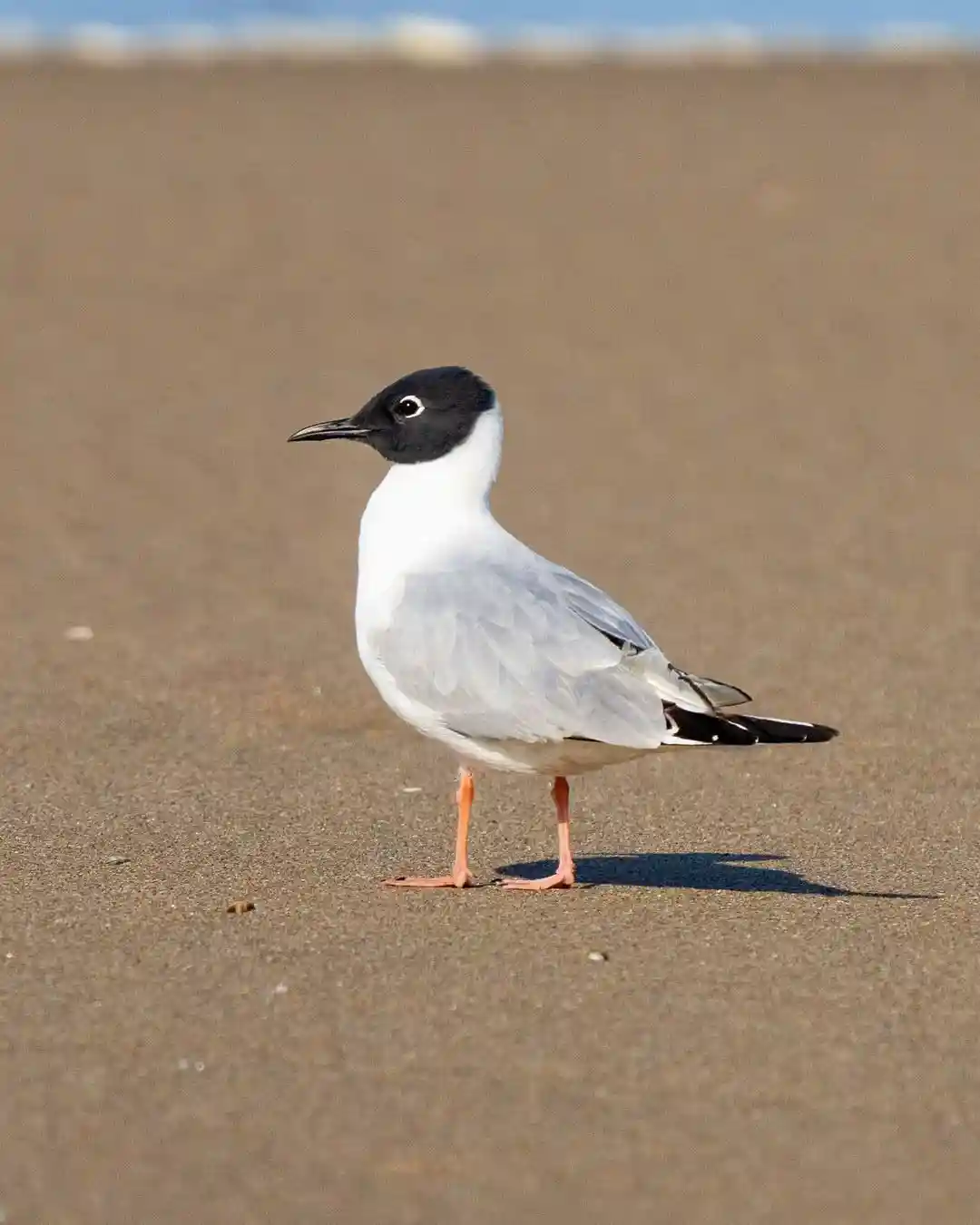
15 White Birds in Georgia
Georgia has many white birds, especially around marshes, ponds, rivers, farms, beaches, and coastal islands. Some are large wading birds like egrets and ibises, while others are gulls, terns, doves, and seasonal visitors.
This guide will help you identify the most common white birds in Georgia, where to find them, and how to tell similar-looking species apart.
1. Great Egret
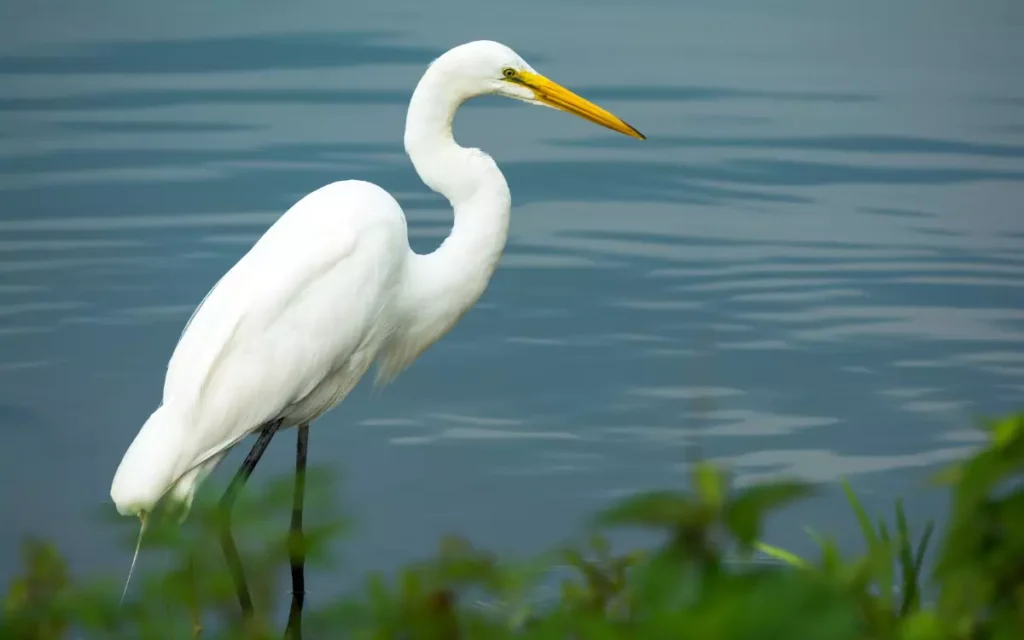
The Great Egret is one of the easiest white birds to recognize in Georgia. It is tall, slim, and fully white, with a long yellow bill and black legs. You will often see it standing still in shallow water before striking at fish, frogs, or small aquatic animals.
Great Egrets are common around lakes, rivers, marshes, rice fields, ponds, and coastal wetlands. In flight, they tuck their long neck into an S-shape while their legs trail behind the body. Cornell describes Great Egrets as tall, long-legged wading birds with long necks and dagger-like bills.
Best ID tips:
- Long yellow bill
- Black legs and feet
- Much taller than Snowy Egret
- Slow, graceful walking style
2. Snowy Egret
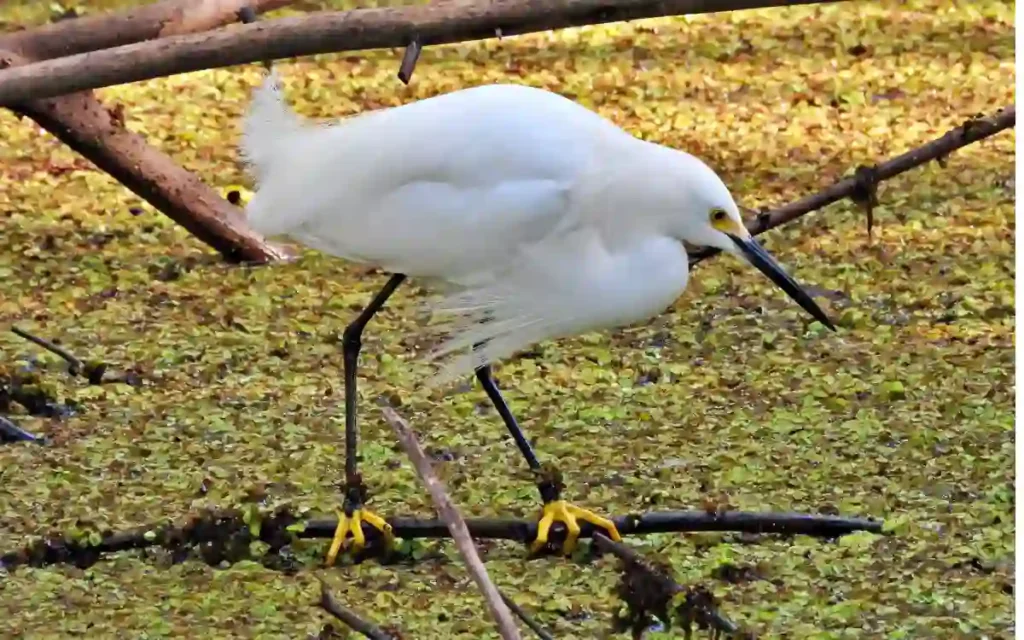
The Snowy Egret is smaller and more delicate than the Great Egret. It has a slim black bill, black legs, and bright yellow feet. Those yellow feet are one of the fastest ways to identify it.
In Georgia, Snowy Egrets are often seen along the coast, in tidal marshes, shallow ponds, mudflats, and wet ditches. They are more active hunters than Great Egrets and may run, stir the water with their feet, or chase small fish.
Best ID tips:
- Black bill
- Yellow feet
- Smaller than Great Egret
- More energetic feeding style
Learn more 17 Gray Birds in Georgia
3. Cattle Egret
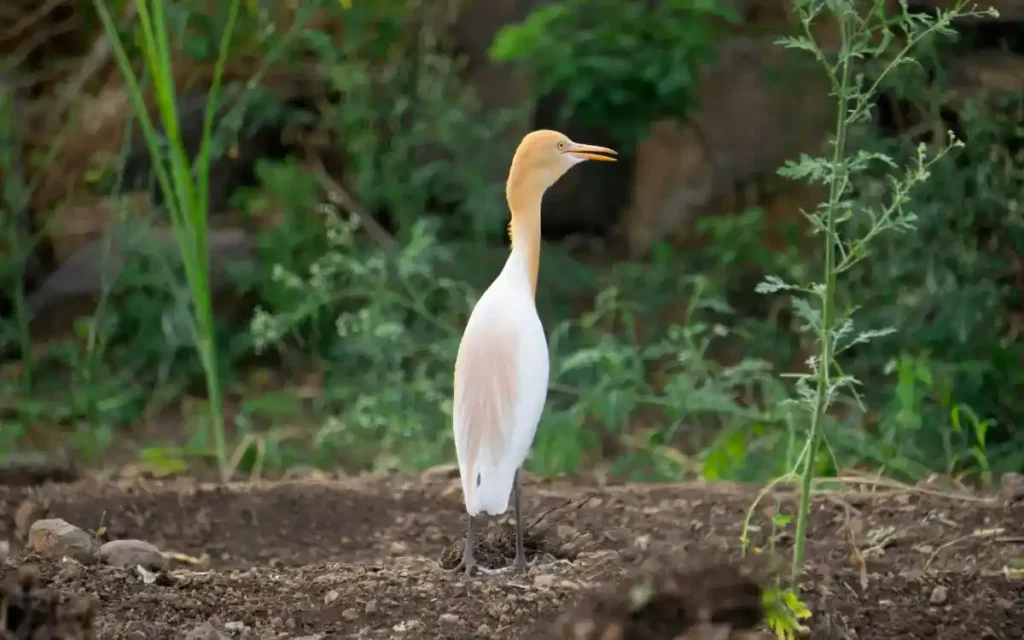
The Cattle Egret is a small, stocky white egret often seen away from water. Unlike many other white wading birds, it spends a lot of time in pastures, fields, roadsides, and farms.
In breeding season, adults show buff-orange patches on the head, chest, and back. Outside breeding season, they look mostly white. They often follow cattle, tractors, or mowing equipment because insects get flushed from the grass. Cornell notes that Cattle Egrets are often found in agricultural areas near wetlands and commonly associate with cows and other large animals.
Best ID tips:
- Short neck for an egret
- Often in fields, not just water
- Buff-orange patches in breeding season
- Compact body shape
4. White Ibis
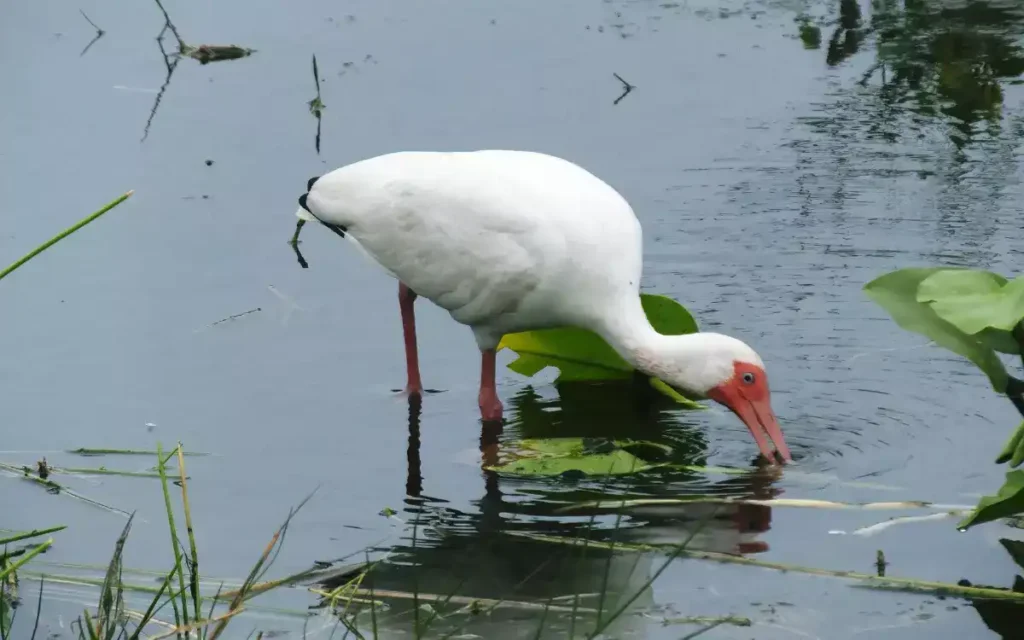
The White Ibis is one of the most recognizable white birds in Georgia because of its long, curved red-orange bill. Adults are mostly white with black wingtips that are easiest to see in flight.
White Ibises are common in coastal Georgia, wetlands, marshes, mudflats, and shallow ponds. They often feed in groups, probing soft mud for insects, crayfish, small fish, and other tiny animals. Cornell describes White Ibises as white birds with red legs and curved red bills that gather in shallow wetlands and estuaries in the southeastern United States.
Best ID tips:
- Curved red-orange bill
- Red legs
- Black wingtips in flight
- Often seen in groups
5. Wood Stork
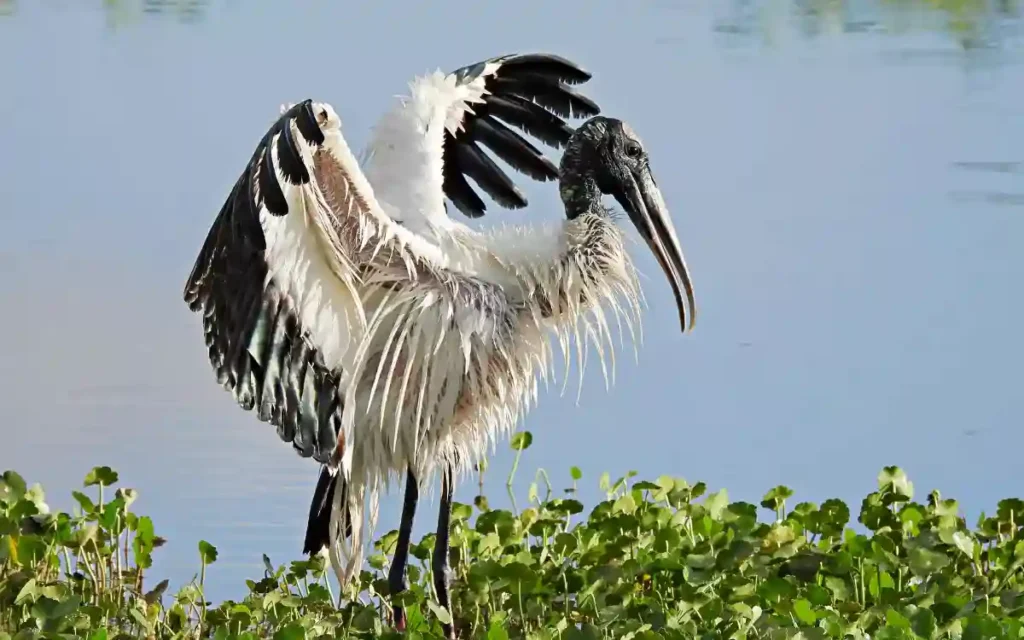
The Wood Stork is a large white wading bird with black flight feathers and a bare, dark head. At a distance, it may look like a huge white bird with black wing edges.
Wood Storks prefer wetlands, swamps, marshes, and shallow feeding areas. In Georgia, they are especially tied to the coastal plain and wetland habitats. They feed by moving their open bill through shallow water and snapping it shut when they feel prey.
Best ID tips:
- Very large size
- Bald-looking dark head
- White body with black wing feathers
- Heavy downcurved bill
6. Ring-billed Gull
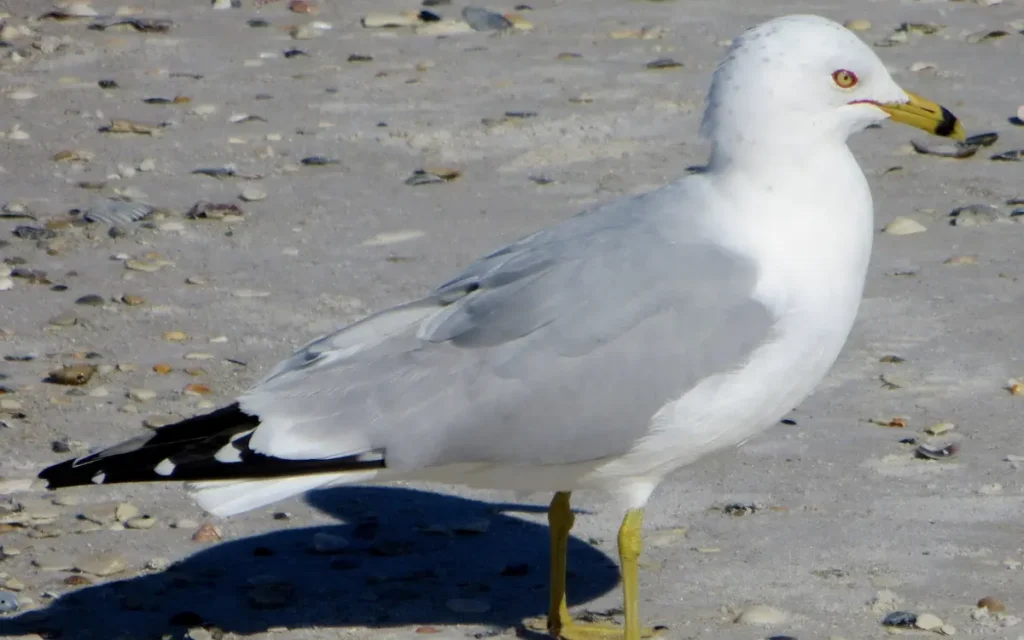
The Ring-billed Gull is a common white and gray gull seen in many parts of Georgia, including inland lakes, rivers, parking lots, beaches, and reservoirs. Adults have a white head and body, gray wings, yellow legs, and a yellow bill with a black ring near the tip.
They are not fully white, but they often appear white from a distance, especially when standing in groups. In winter, the head may show grayish streaking.
Best ID tips:
- Black ring around yellow bill
- Gray wings
- White head and body
- Common inland and coastal gull
7. Laughing Gull
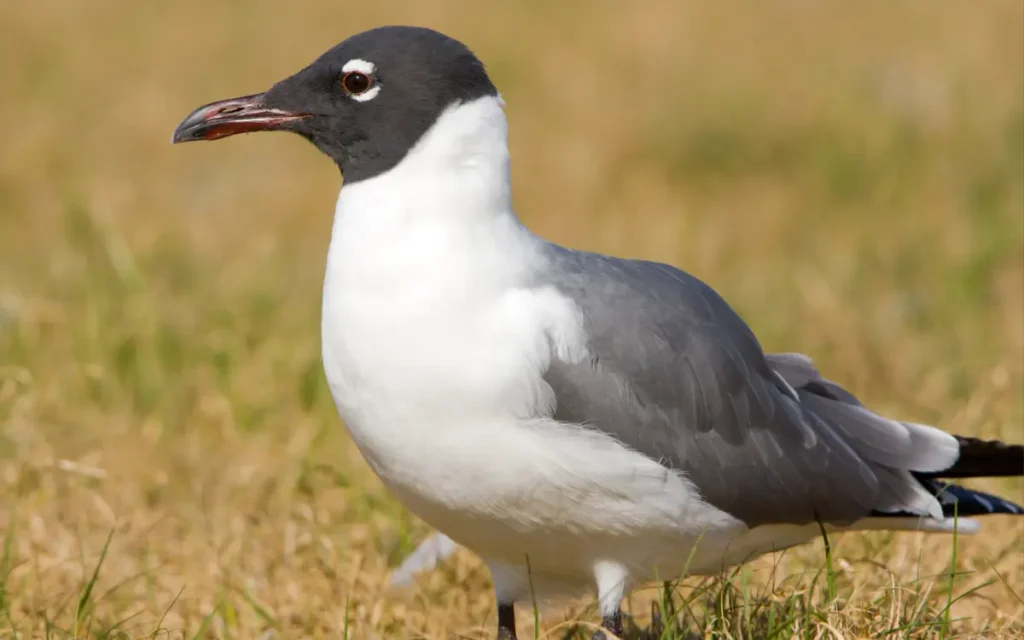
The Laughing Gull is common along the Georgia coast. In breeding season, adults have a black head, white underside, gray wings, and reddish bill. Outside breeding season, the head becomes mostly white with darker smudges.
You may see Laughing Gulls around beaches, piers, docks, seafood areas, salt marshes, and coastal parking lots. Their call sounds like a laughing “ha-ha-ha,” which is where the name comes from.
Best ID tips:
- Coastal gull
- Black head in breeding season
- White underside
- Loud laughing call
Learn more 21 Small Birds in Georgia
8. Royal Tern
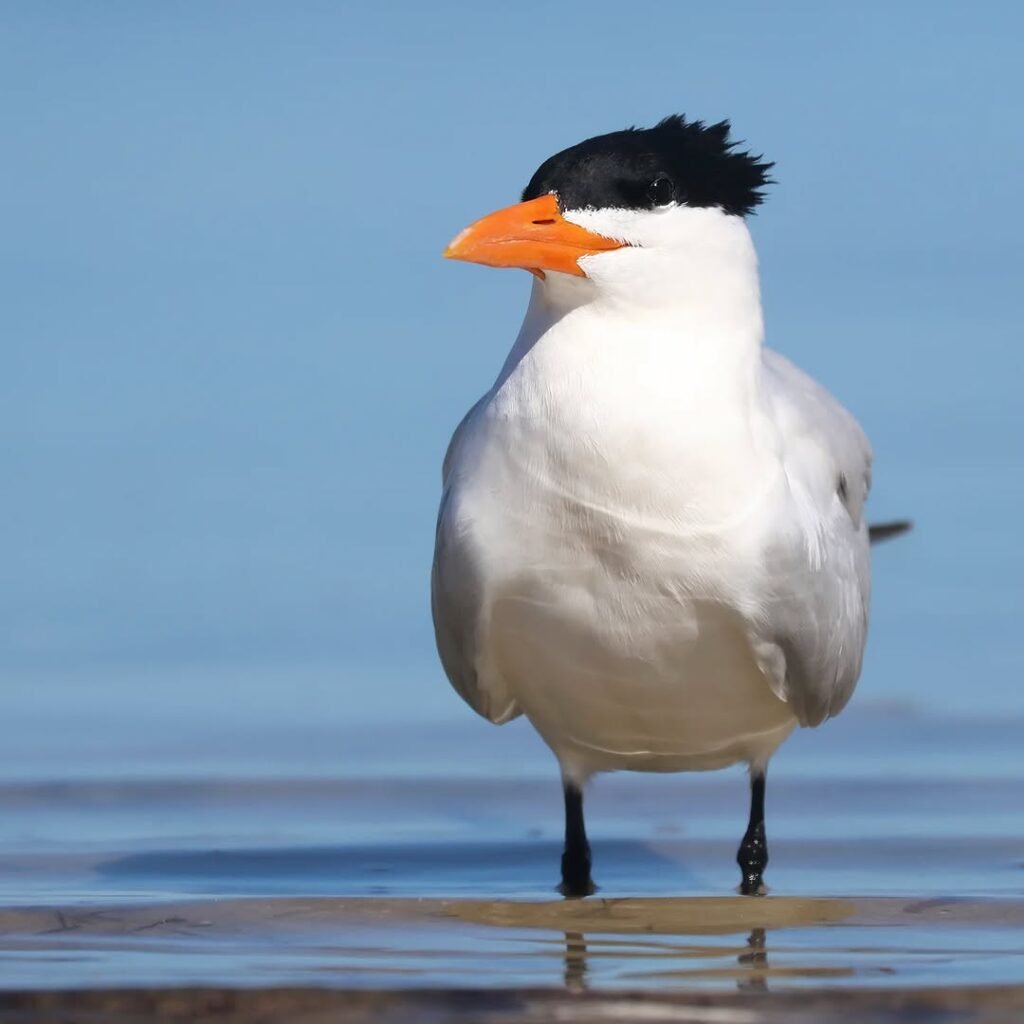
The Royal Tern is a white coastal bird with a pale body, gray upperwings, orange bill, and shaggy black crest. It is larger than many other terns and often rests in groups on beaches, sandbars, and coastal islands.
In Georgia, Royal Terns are best looked for along the Atlantic coast. They dive for fish and often fly with steady wingbeats over the ocean or tidal channels.
Best ID tips:
- Bright orange bill
- Shaggy black crest
- White body with gray wings
- Coastal beaches and sandbars
9. Forster’s Tern
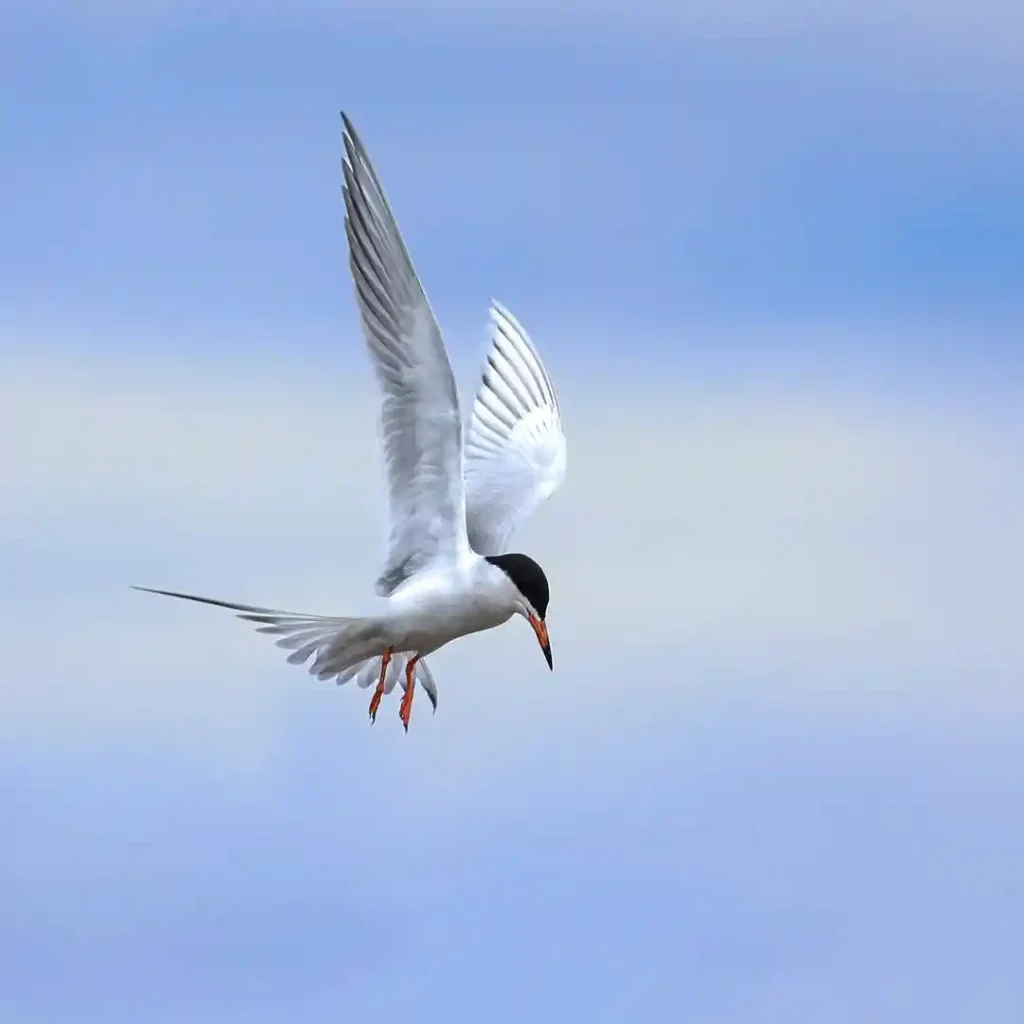
The Forster’s Tern is a slim white and gray bird with pointed wings and a forked tail. During breeding season, it has a black cap. In winter, the head becomes mostly white with a dark ear patch.
In Georgia, Forster’s Terns can be found around marshes, lakes, coastal waters, and tidal areas. They often hover briefly before diving for small fish.
Best ID tips:
- Slim body
- Forked tail
- Black cap in breeding season
- Dark ear patch in winter
10. Rock Pigeon
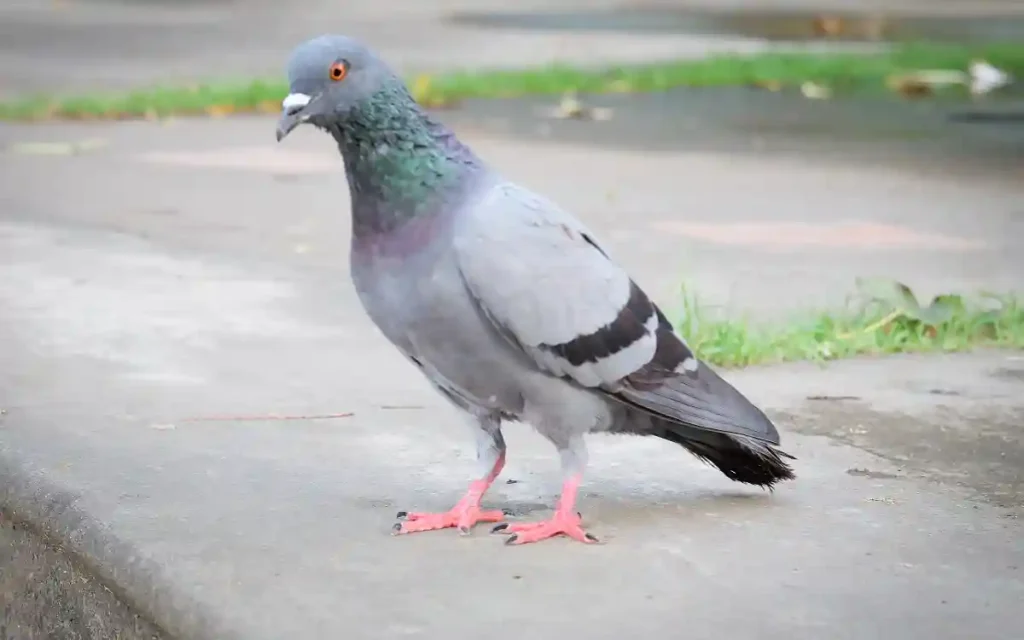
The Rock Pigeon is common in Georgia cities and towns. While many are gray, some are white, partly white, or pale due to domestic ancestry. You may see them on rooftops, bridges, farms, parking lots, and downtown buildings.
White pigeons can be confused with doves, but pigeons are usually chunkier, with shorter necks and stronger wingbeats.
Best ID tips:
- Common in cities
- Can be white, gray, brown, or mixed
- Stocky body
- Often gathers in flocks
11. Eurasian Collared-Dove

The Eurasian Collared-Dove is a pale gray-white dove with a slim black collar on the back of the neck. It is common in towns, suburbs, farms, and open neighborhoods across Georgia.
It looks softer and paler than many native doves. Its call is a repeated “coo-COO-coo,” often heard from rooftops, power lines, or trees.
Best ID tips:
- Pale gray-white body
- Thin black neck collar
- Long squared tail
- Common near people
12. American White Pelican
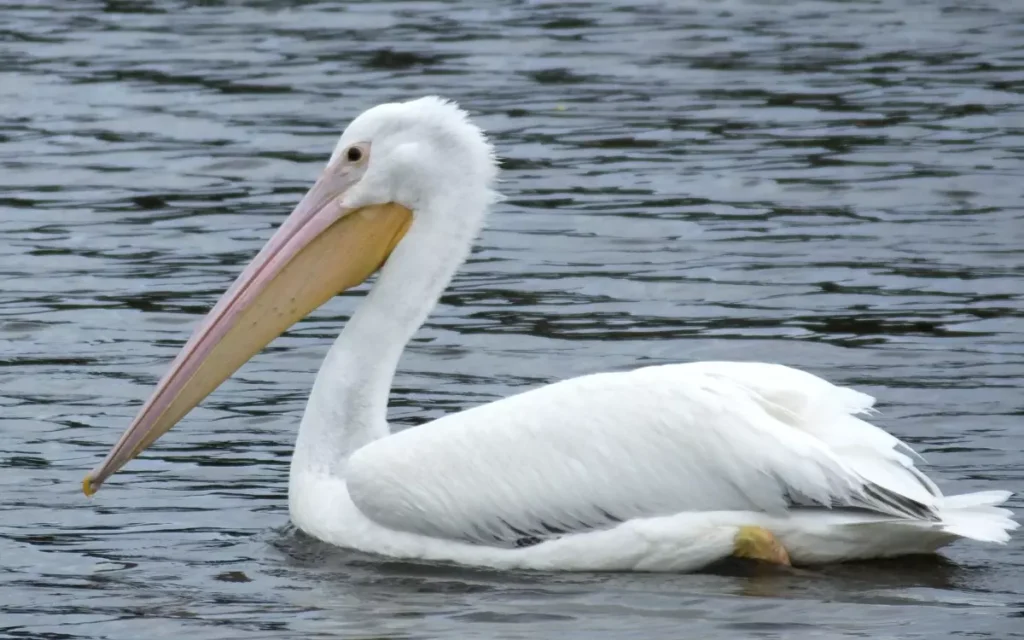
The American White Pelican is a huge white waterbird with a massive bill and black flight feathers. It is much larger than gulls, geese, or egrets.
In Georgia, American White Pelicans are more likely during migration or winter, especially on large lakes, reservoirs, coastal waters, and open wetlands. Unlike Brown Pelicans, they usually do not plunge-dive. They often feed while swimming in groups.
Best ID tips:
- Huge white body
- Massive orange bill
- Black wing edges in flight
- Often floats in groups
13. Mute Swan
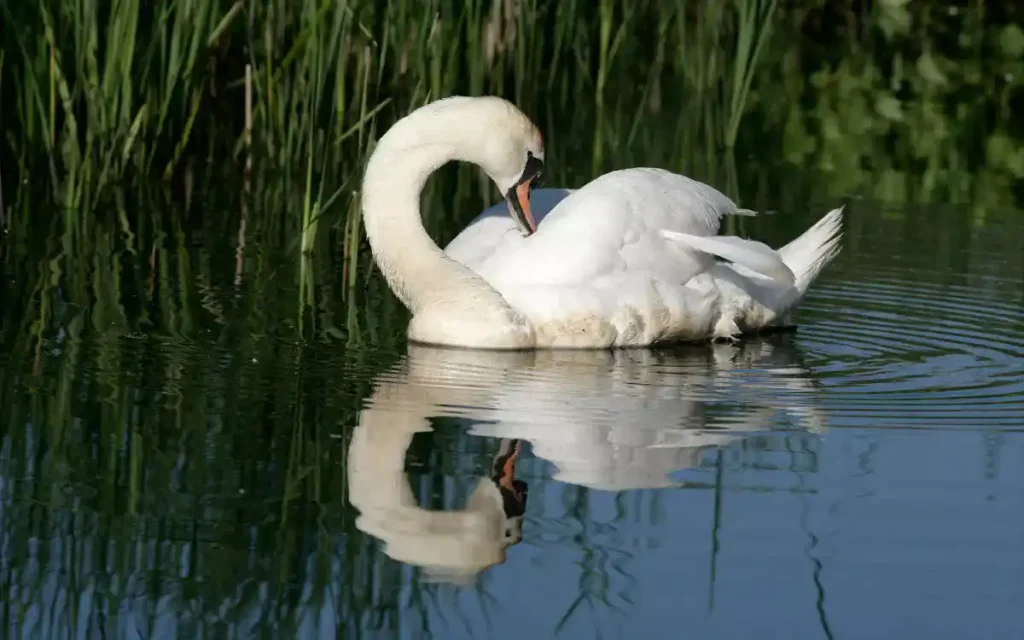
The Mute Swan is a large white waterbird with a long curved neck and orange bill. It is often seen on ponds, lakes, and park waters, though many Georgia sightings may involve introduced or managed birds rather than truly wild populations.
Mute Swans are much larger than geese and have a graceful shape. They often hold the neck in a curved position and may raise their wings slightly while swimming.
Best ID tips:
- Large white body
- Long curved neck
- Orange bill with black knob
- Usually on ponds or lakes
14. Snow Goose
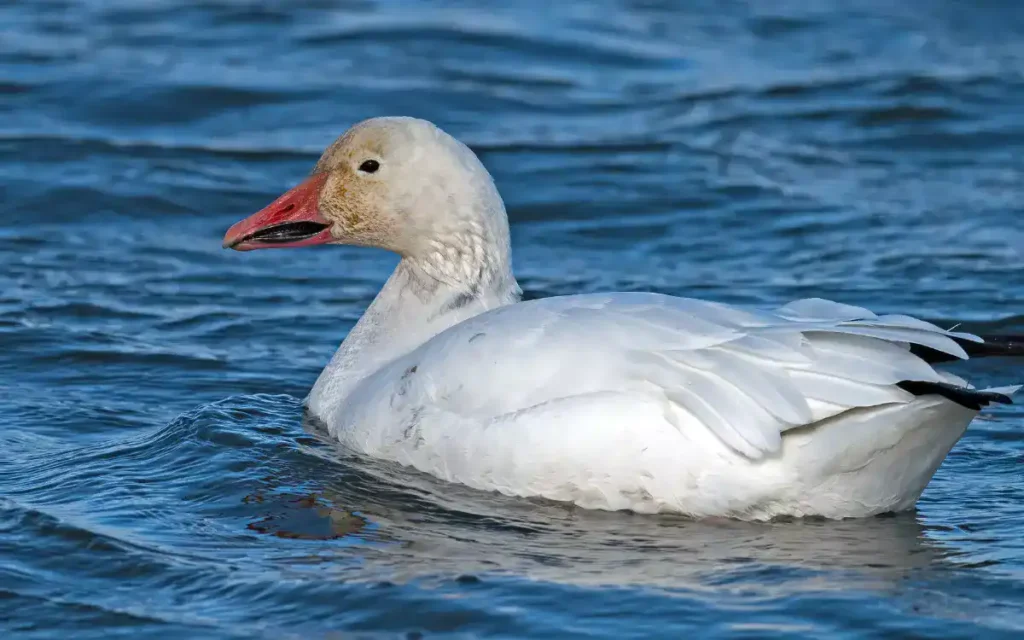
The Snow Goose is a white goose with black wingtips. It is not as common as Canada Goose in Georgia, but it can appear during migration or winter in fields, wetlands, lakes, and refuge areas.
Some Snow Geese are blue-gray morphs, but the classic white morph is easier to notice. In flight, the black wingtips help separate it from domestic white geese.
Best ID tips:
- White goose shape
- Black wingtips
- Pink bill
- Usually seen in winter or migration
Learn more 19 Shorebirds in Georgia
15. Little Blue Heron Juvenile
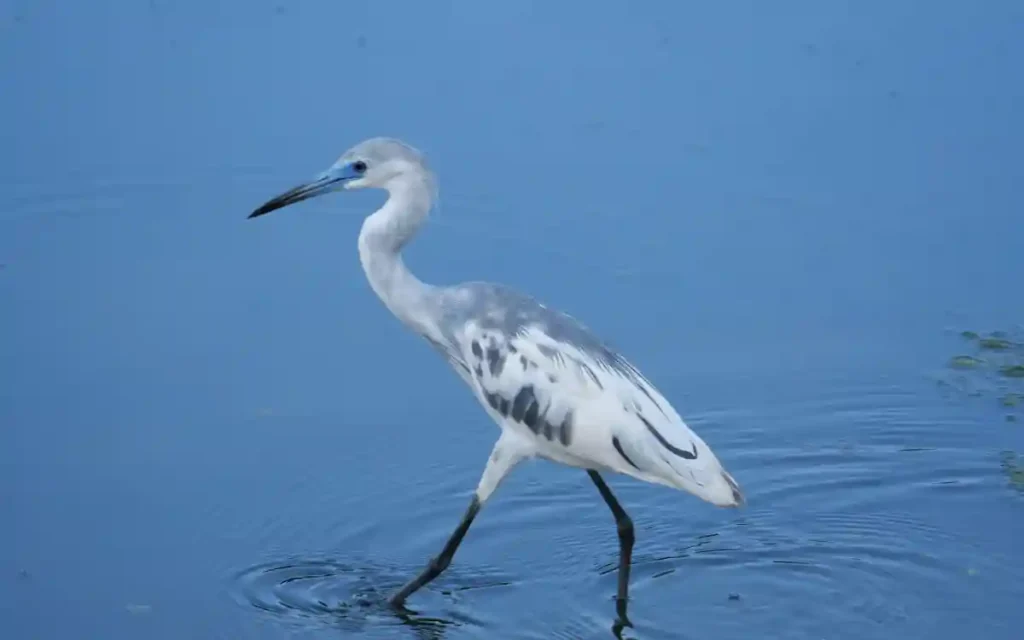
The adult Little Blue Heron is slate-blue, but young birds are white. This causes confusion with Snowy Egrets and other small white herons.
Juvenile Little Blue Herons usually have a pale bill with a darker tip and dull greenish legs. They also move more slowly than Snowy Egrets. As they mature, they become patchy white and blue before turning fully dark as adults.
Best ID tips:
- Juveniles are white
- Pale bill with dark tip
- Dull legs, not bright yellow feet
- Turns blue-gray with age
White Egret vs White Ibis: Easy Difference
| Feature | White Egret | White Ibis |
| Bill Shape | Straight and spear-like | Long and curved downward |
| Leg Color | Black or dark, depending on species | Red or pinkish-red |
| Feeding Style | Strikes at prey in water | Probes mud with bill |
| Body Shape | Long neck, slim body | Chunkier body, shorter neck |
| Flight Look | Neck tucked in | Neck stretched forward |
The easiest rule: if the bill is curved downward, it is likely a White Ibis. If the bill is straight like a spear, it is likely an egret or heron.
Best Places to See White Birds in Georgia
White birds are easier to find near water, but some species also use farms, fields, and city areas.
Good habitats include:
- Coastal marshes
- Tidal creeks
- Beaches and sandbars
- Lakes and reservoirs
- Farm ponds
- Wet fields
- Swamps
- City parks
- Rivers and mudflats
For coastal birds, places near Savannah, Tybee Island, Jekyll Island, St. Simons Island, and marsh areas along the Georgia coast can be useful. For inland white birds, check ponds, lakes, wet pastures, and wildlife refuges.
How to Identify White Birds in Georgia
White birds can look similar, especially from a distance. Instead of looking only at color, focus on body shape, bill shape, leg color, and habitat.
Look at the Bill
A yellow straight bill often points to Great Egret.
A black straight bill with yellow feet points to Snowy Egret.
A curved red-orange bill points to White Ibis.
A huge bill points to pelican or stork.
Check the Legs and Feet
Yellow feet are a strong Snowy Egret clue.
Red legs suggest White Ibis.
Black legs often fit Great Egret.
Shorter pale or dark legs may fit gulls, terns, or doves.
Notice the Habitat
A white bird in a cow pasture may be a Cattle Egret.
A white bird probing mud in a group may be a White Ibis.
A white bird on a beach with an orange bill may be a Royal Tern.
A huge white bird circling over water may be an American White Pelican.
FAQs
What are the most common white birds in Georgia?
The most common white birds in Georgia include Great Egret, Snowy Egret, Cattle Egret, White Ibis, Ring-billed Gull, Laughing Gull, Eurasian Collared-Dove, and Rock Pigeon.
What is the large white bird in Georgia wetlands?
It is often a Great Egret, Wood Stork, or American White Pelican. Great Egrets are tall and slim with yellow bills. Wood Storks are larger with dark heads. American White Pelicans are huge with massive bills.
What white bird in Georgia has a curved red bill?
That bird is usually a White Ibis. Adults are mostly white with red legs, a curved red-orange bill, and black wingtips visible in flight.
What white bird in Georgia has yellow feet?
A white bird with yellow feet is usually a Snowy Egret. It also has a black bill and black legs.
Are there white herons in Georgia?
Yes. Georgia has several white or partly white heron-type birds, including Great Egret, Snowy Egret, Cattle Egret, and juvenile Little Blue Heron. Some rare white morph herons may appear, but most white heron sightings are one of the common egret species.
What white birds are seen on Georgia beaches?
Common white or mostly white beach birds in Georgia include Royal Terns, Forster’s Terns, Laughing Gulls, Ring-billed Gulls, and sometimes American White Pelicans.
Are white pigeons common in Georgia?
Yes, white or partly white Rock Pigeons are common in towns and cities. They are often domestic or mixed-color pigeons rather than a separate wild species.