
Birds in Hawaii: Identification Guide for Birdwatchers
Hawaii is unlike any other state for birdwatching. Isolated in the middle of the Pacific for millions of years, the islands evolved a set of birds found nowhere else on Earth — from tiny, colorful honeycreepers in high rainforest to seabird colonies on remote cliffs. At the same time, decades of introduced species mean many of the birds you’ll see in a backyard or park aren’t native at all.
That mix makes Hawaii birding genuinely different from the mainland. You can find native endemics found on no other island, alongside familiar backyard birds that were brought over from Asia, Africa, or South America and now thrive here.
This page is your Hawaii bird hub. Use it to learn common birds, understand the difference between native and introduced species, explore habitats by island, find birdwatching spots, and open our Hawaii bird guides as more pages are added.
Explore more states from here: 50 State Bird Guides
Hawaii Birding Overview
| Hawaii Birding Fact | Details |
| State bird | Nene (Hawaiian Goose) |
| State bird year | 1957 |
| Best birding months | Year-round; October–April is peak for seabirds and migrants |
| Strong birding habitats | Rainforest, high-elevation forest, lava fields, coastal cliffs, wetlands, backyards |
| Good for beginners? | Yes for introduced/backyard species; native endemics often require higher elevation or guided access |
Native vs. Introduced: Why Hawaii Birding Is Different
Most U.S. states have one bird community shaped by climate and habitat. Hawaii effectively has two.
Native and endemic birds — species like the honeycreepers — evolved in isolation and exist nowhere else in the world. Many are now rare, restricted to high-elevation forest, and considered vulnerable or endangered due to habitat loss, avian malaria, and introduced predators.
Introduced birds — brought to the islands over the last two centuries — now dominate low-elevation areas, towns, parks, and backyards. Species like the Zebra Dove, Common Myna, and Japanese White-eye are what most visitors and residents actually see day to day.
Understanding this split is the single most useful thing for identifying birds in Hawaii.
Common Birds Found in Hawaii
Nene (Hawaiian Goose)
The Nene is Hawaii’s state bird and a conservation success story — it was brought back from fewer than 30 birds in the 1950s. It has a black face and head, a buff-and-black striped neck, and reduced webbing on its feet, an adaptation to walking on lava rock rather than swimming.
Look for it on Haleakala, Big Island lava fields, and Kauai grasslands.
I’iwi
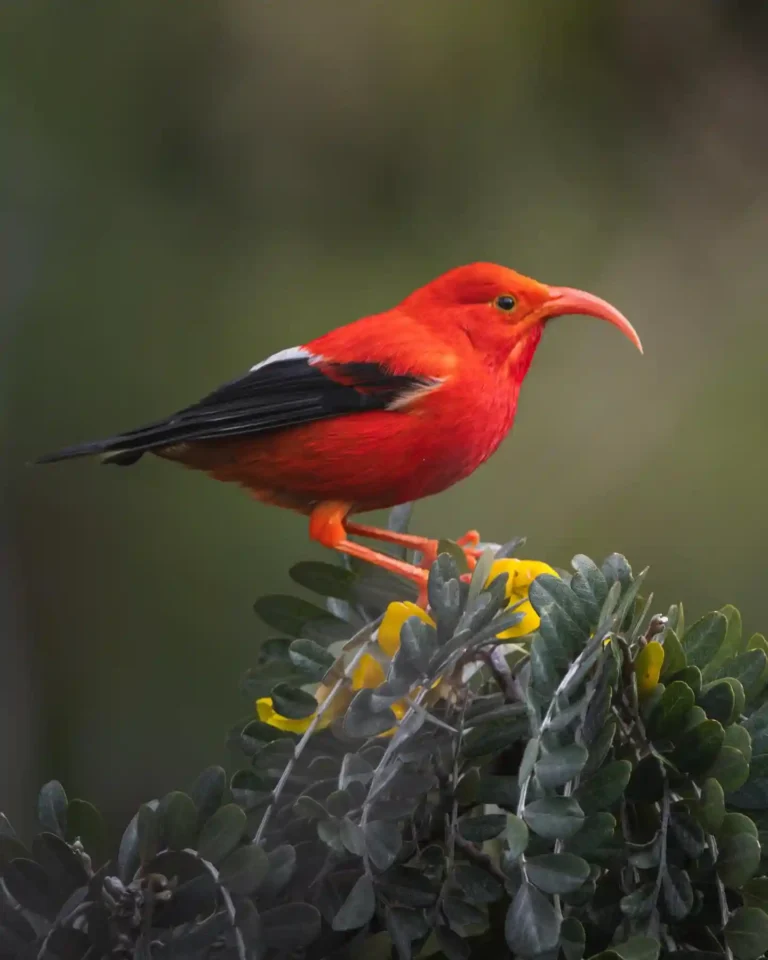
The I’iwi is one of Hawaii’s best-known native honeycreepers — bright scarlet with black wings and a long, curved salmon-colored bill adapted for feeding on tubular native flowers like ohia lehua.
It’s now largely restricted to higher-elevation forest, where cooler temperatures limit mosquito-borne avian malaria.
Apapane
The Apapane is a small, active honeycreeper with deep red plumage, a black bill, and white undertail feathers. It’s one of the more common native forest birds and feeds heavily on ohia blossoms.
Its fast, erratic flight and constant chatter make it easier to notice than most other native species.
Hawaiian Hawk (‘Io)
The ‘Io is Hawaii’s only native hawk, found exclusively on the Big Island. It comes in both light and dark color forms and is considered culturally significant in Hawaiian tradition.
Look for it soaring over forest edges, pastures, and open country.
Zebra Dove
An introduced species now extremely common across low-elevation Hawaii. Small, gray-brown, with fine black-and-white barring on the neck and chest.
Often seen walking on sidewalks, parking lots, and lawns — one of the easiest birds to see anywhere in the islands.
Japanese White-eye
A small, olive-green bird with a distinctive white ring around the eye. Introduced from Asia, it’s now one of the most abundant birds in Hawaii’s forests and gardens alike.
Red-crested Cardinal
Not a true cardinal — introduced from South America. Gray-and-white body with a bright red head and crest. Common in parks, gardens, and open lawns across most islands.
Laysan Albatross
A large native seabird with a white body, dark upperwings, and a pink bill. Nests in large colonies on Kauai and Oahu during winter months, performing elaborate courtship dances on the ground.
Birds in Hawaii by Habitat
| Habitat | Birds You May See |
| Backyards and towns | Zebra Dove, Japanese White-eye, Common Myna, Red-crested Cardinal, House Finch |
| High-elevation native forest | I’iwi, Apapane, Hawaii Amakihi, ‘Elepaio, Hawaiian Hawk |
| Lava fields and dry shrubland | Nene, Pacific Golden-Plover, Chukar |
| Wetlands and taro fields | Hawaiian Coot, Hawaiian Stilt, Hawaiian Duck (Koloa), Black-crowned Night-Heron |
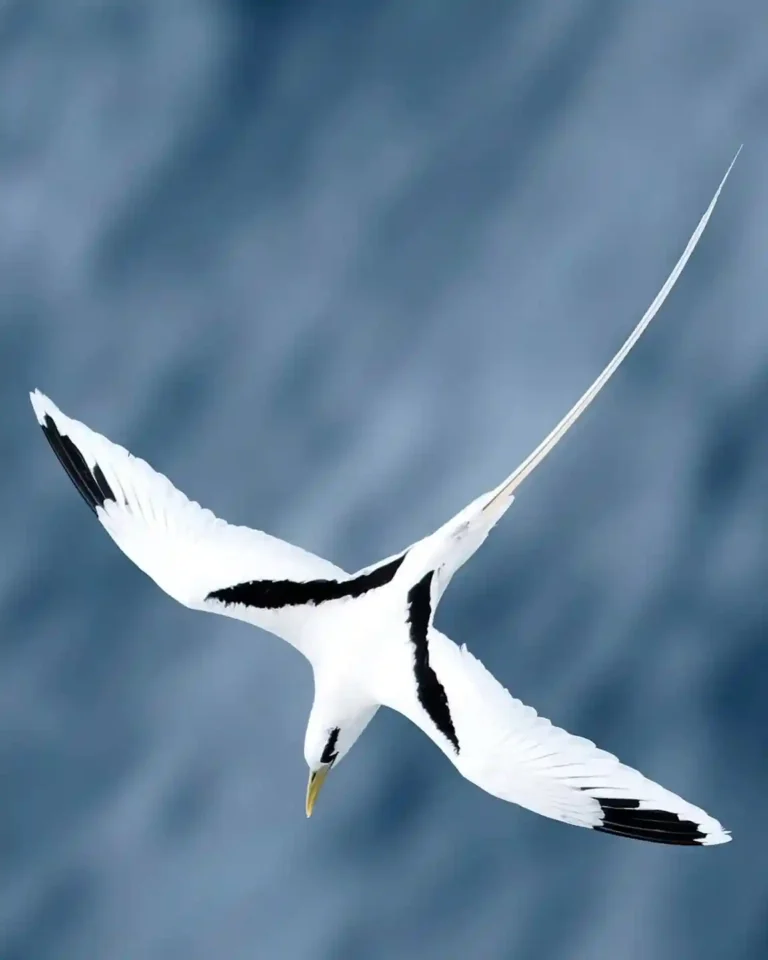
| Coastal cliffs and seabird colonies | Laysan Albatross, Red-footed Booby, Great Frigatebird, White Tern, tropicbirds |
| Open grassland and pasture | Nene, Chukar, Ring-necked Pheasant, Erckel’s Francolin |
Explore Hawaii Bird Species Guides
Use these Hawaii guides when you want to learn more about a specific bird group. Add or update links here as sub-guides are published.
(No sub-guides published yet — placeholder for honeycreepers, seabirds, Hawaii backyard birds, and endangered native species guides.)
Best Time to Watch Birds in Hawaii
Unlike mainland states, Hawaii doesn’t have a true winter — so birding is productive year-round. The clearest seasonal pattern is seabird nesting and shorebird migration.
| Season | What to Look For |
| Fall–Winter (Oct–Feb) | Seabirds returning to nesting colonies, migratory shorebirds arriving from Alaska |
| Winter–Spring (Dec–Apr) | Peak seabird courtship and nesting activity, Kolea (Pacific Golden-Plover) present |
| Spring–Summer (Apr–Aug) | Native forest birds most active and vocal at higher elevations |
| Summer (May–Aug) | Many shorebirds depart for Alaska breeding grounds; seabird chicks fledging |
Fall and Winter
This is peak season for seabirds. Laysan Albatross and other pelagic species return to coastal colonies to court and nest, and shorebirds like the Pacific Golden-Plover arrive from breeding grounds in Alaska to spend the winter on lawns, golf courses, and coastlines across the islands.
Spring and Summer
Native forest birds are most vocal and active during these months, making it the best window for honeycreeper watching at higher elevations. By late summer, most wintering shorebirds have departed north again.
Best Bird Watching Spots in Hawaii
Hakalau Forest National Wildlife Refuge (Big Island)
One of the best sites in the state for native honeycreepers, including I’iwi, Apapane, and Hawaii Amakihi. High-elevation ohia and koa forest with restricted public access — visits typically require a guided tour.
Kilauea Point National Wildlife Refuge (Kauai)
A premier seabird site with nesting Laysan Albatross, Red-footed Boobies, and Great Frigatebirds on dramatic coastal cliffs. Easy public access makes it one of the best beginner-friendly spots in Hawaii.
James Campbell National Wildlife Refuge (Oahu)
Wetland habitat supporting native waterbirds including the Hawaiian Stilt, Hawaiian Coot, and Hawaiian Duck — all endangered endemic species.
Hanalei National Wildlife Refuge (Kauai)
Taro fields and wetlands hosting Hawaii’s endangered native waterbirds alongside migratory shorebirds in winter.
Haleakala National Park (Maui)
High-elevation shrubland and native forest home to Nene and native forest birds, with dramatic volcanic terrain.
Backyard Birding Tips for Hawaii
| What to Add | Birds It May Attract |
| Fruit and nectar feeders | Japanese White-eye, House Finch, Northern Cardinal |
| Seed feeders | Zebra Dove, House Finch, Java Sparrow |
| Native flowering plants (ohia, hibiscus) | Nectar-feeding introduced birds, occasional native species at higher elevations |
| Open lawn areas | Zebra Dove, Red-crested Cardinal, Common Myna |
| Water source | Doves, cardinals, mynas |
Most backyard birding in Hawaii, especially below a few thousand feet, will attract introduced species rather than natives — native birds are largely restricted to higher-elevation forest reserves.
Simple Hawaii Bird Identification Tips
| Clue | What to Notice |
| Elevation | Low elevation = mostly introduced species; high forest = native species more likely |
| Color | Bright red or orange plumage often signals a native honeycreeper (I’iwi, Apapane) |
| Bill shape | Curved, specialized bills often indicate a honeycreeper adapted to a specific flower |
| Habitat | Backyard/town vs. native forest vs. coastal cliff vs. wetland |
| Sound | Native forest birds are often heard before seen in dense canopy |
| Behavior | Ground-walking (Zebra Dove), soaring (Hawaiian Hawk), nectar-feeding (honeycreepers) |
Elevation is the single most useful clue in Hawaii — many low-elevation areas simply don’t have native species present at all due to avian malaria risk.
Hawaii Birding Ethics and Local Resources
Hawaii’s native bird populations are especially fragile, and several species featured on this page are federally listed as endangered. Extra care matters here more than in most states.
Good birding habits:
- Stay on marked trails in native forest reserves to avoid spreading invasive plant seeds.
- Clean boots/gear between hikes to prevent spreading avian disease and invasive species between forest areas.
- Do not approach nesting seabirds or native waterbirds.
- Respect refuge access rules — some native forest sites require permits or guided access.
- Never feed wild birds human food.
- Support refuge and conservation programs protecting remaining native habitat.
For planning, Hawaii’s Department of Land and Natural Resources and the U.S. Fish and Wildlife Service maintain current refuge access and trail information.
FAQs
What is the state bird of Hawaii?
The state bird of Hawaii is the Nene, or Hawaiian Goose. It was adopted as the official state bird in 1957 and remains an endangered species under active conservation management.
What birds are common in Hawaii backyards?
Common backyard birds in Hawaii include the Zebra Dove, Japanese White-eye, Common Myna, Red-crested Cardinal, and House Finch — nearly all of which are introduced species rather than native Hawaiian birds.
Are there native birds you can see without a guide?
Yes, though most require some elevation gain. The Nene can be seen at Haleakala National Park and parts of the Big Island, and seabirds like the Laysan Albatross are viewable at accessible coastal refuges like Kilauea Point.
Why are so many Hawaiian birds endangered?
Habitat loss, introduced predators (rats, cats, mongoose), and avian malaria spread by introduced mosquitoes have caused severe declines in native bird populations, especially at lower elevations where mosquitoes thrive.
What is the best time to see seabirds in Hawaii?
Winter through early spring (roughly October through April) is best, when species like the Laysan Albatross return to coastal colonies to court and nest.
Where should beginners watch birds in Hawaii?
Beginners can start with easily accessible sites like Kilauea Point National Wildlife Refuge on Kauai for seabirds, or any backyard/park setting for common introduced species. Native forest birding at sites like Hakalau typically requires a guided tour.