30 Birds With Orange Chests
Orange-chested birds are some of the easiest birds to notice because their warm breast color stands out against trees, grass, feeders, and open sky. Some have a full rusty-orange belly, like the American Robin, while others show orange only on the throat, sides, or upper chest, such as the Blackburnian Warbler or Barn Swallow.
This color can look different depending on the bird’s sex, age, season, and lighting. A male Baltimore Oriole may look bright orange and black, while a female can appear softer yellow-orange. A Red-breasted Nuthatch has a rusty-orange underside, but a Rufous Hummingbird may flash orange so quickly that you only notice it for a second.
In this guide, you’ll find different birds with orange chests, along with simple color notes to help you tell them apart. Whether you saw an orange-breasted bird in your backyard, near a forest trail, at a feeder, or during migration, this list will help you narrow down the right bird by its chest color, body pattern, and overall appearance.
1. American Robin
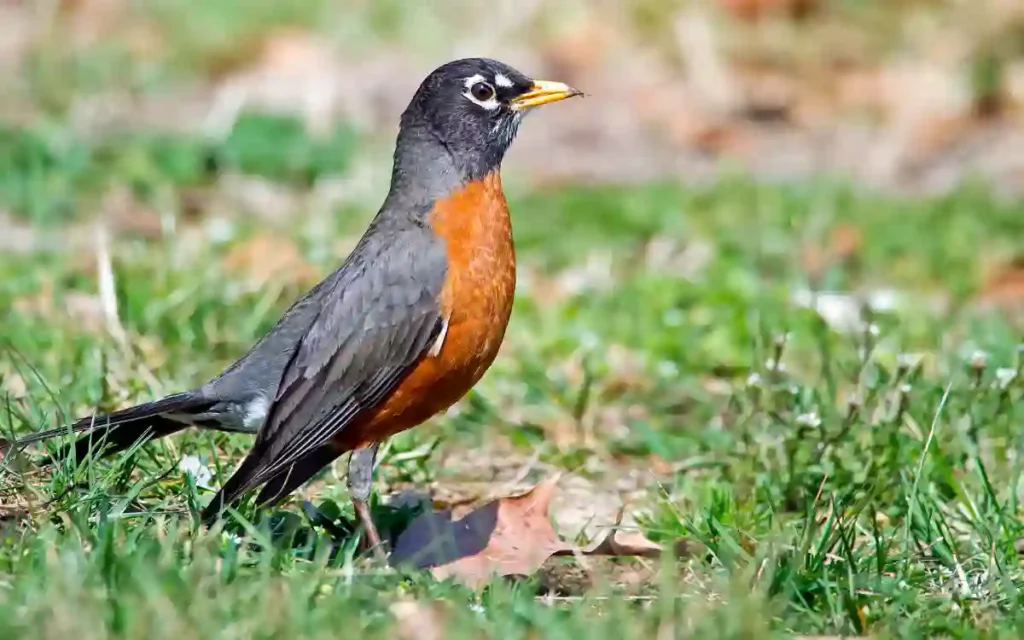
The American Robin is one of the easiest orange-chested birds to recognize. Its chest is a warm rusty-orange color that covers most of the underparts, from the throat down to the belly. The orange looks richer on adult males, while females can appear a little duller or softer.
The back is gray-brown, which makes the orange breast stand out clearly. In good light, the chest may look brick-orange or reddish-orange. This color pattern is one of the main reasons robins are so easy to spot on lawns, gardens, and open fields.
2. Eastern Bluebird
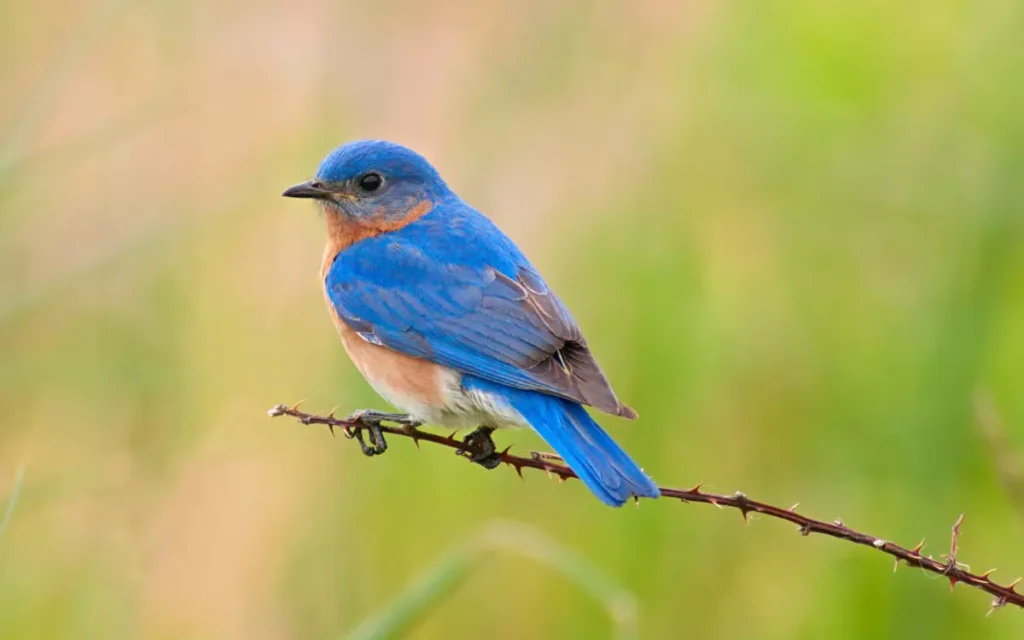
The Eastern Bluebird has a beautiful mix of blue and orange. Males have bright blue wings, back, and head, paired with a rich orange chest and throat. The orange usually spreads across the breast and fades into a pale white belly.
Females are softer in color, with grayish-blue wings and a lighter orange chest. The contrast between the blue upperparts and orange breast makes this bird very attractive. Even from a distance, the orange chest can help separate it from many other small songbirds.
3. Western Bluebird
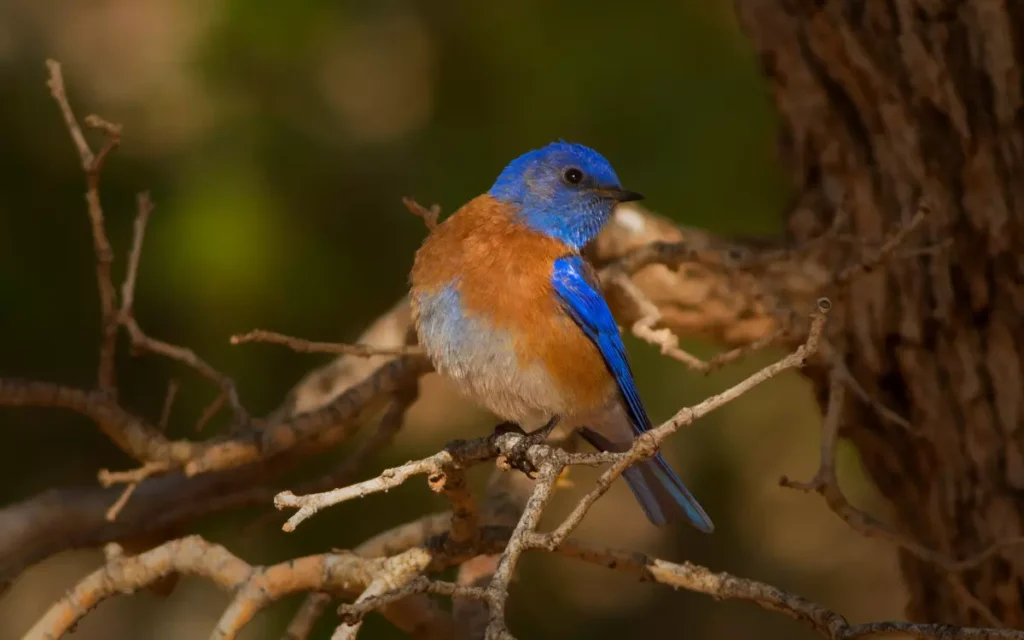
The Western Bluebird also has a blue-and-orange color pattern, but it looks a little different from the Eastern Bluebird. Male Western Bluebirds have deep blue upperparts and an orange chest that often extends onto the upper back or shoulder area.
Their orange coloring can look rusty, warm, or chestnut-orange depending on the light. Females are more muted, with gray-brown upperparts and a softer orange wash on the breast. The orange chest is a key field mark, especially when seen with the bird’s blue wings and tail.
Learn more about 20 Types of Blue Birds
4. Mountain Bluebird
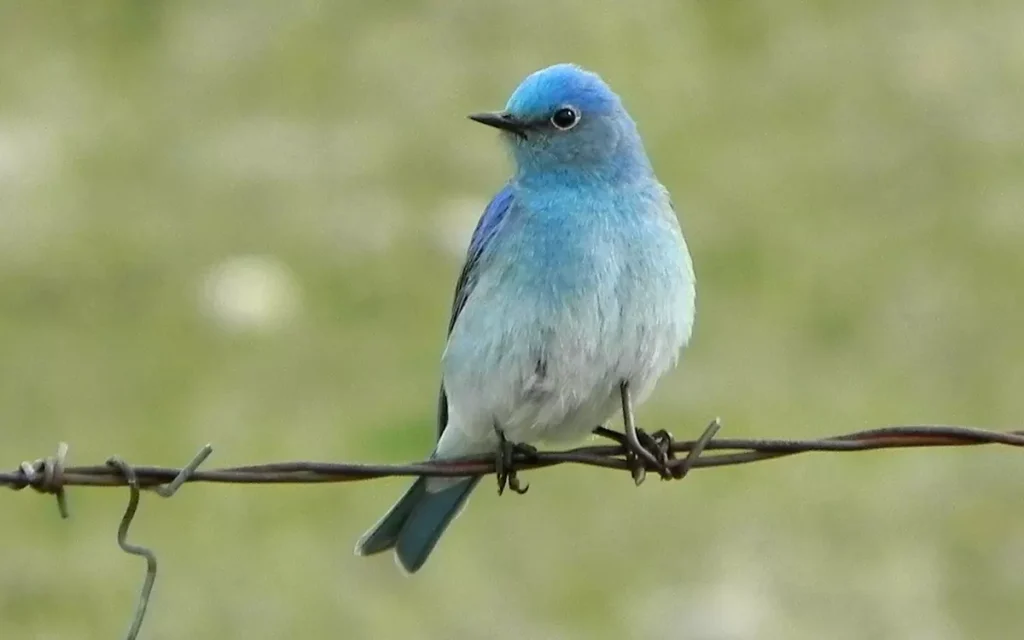
The male Mountain Bluebird is mostly sky blue and does not have a strong orange chest. However, females and young birds may show a pale buff-orange or warm tan wash across the chest. This color is usually soft and not as bold as other bluebirds.
The female’s orange-tinted chest blends with grayish wings and a pale belly. Because the color is subtle, it is easy to miss in poor light. When comparing bluebirds, the Mountain Bluebird usually looks much paler and less orange than Eastern or Western Bluebirds.
5. Baltimore Oriole
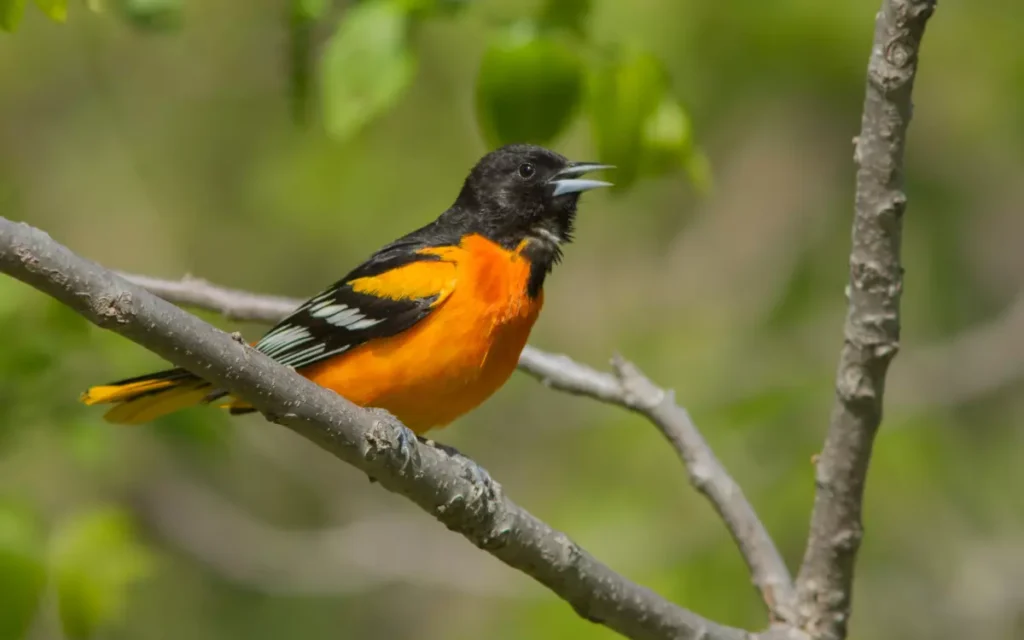
The Baltimore Oriole is one of the brightest orange-chested birds in North America. Adult males have a rich orange chest, belly, shoulders, and rump, paired with a black head and black wings. The strong black-and-orange pattern makes them very easy to notice.
Females and young males are usually yellow-orange rather than deep orange. Their chest color can range from golden-orange to pale orange. In spring and summer, the male’s orange chest looks especially bold against green trees, making this bird a favorite for backyard birdwatchers.
6. Bullock’s Oriole
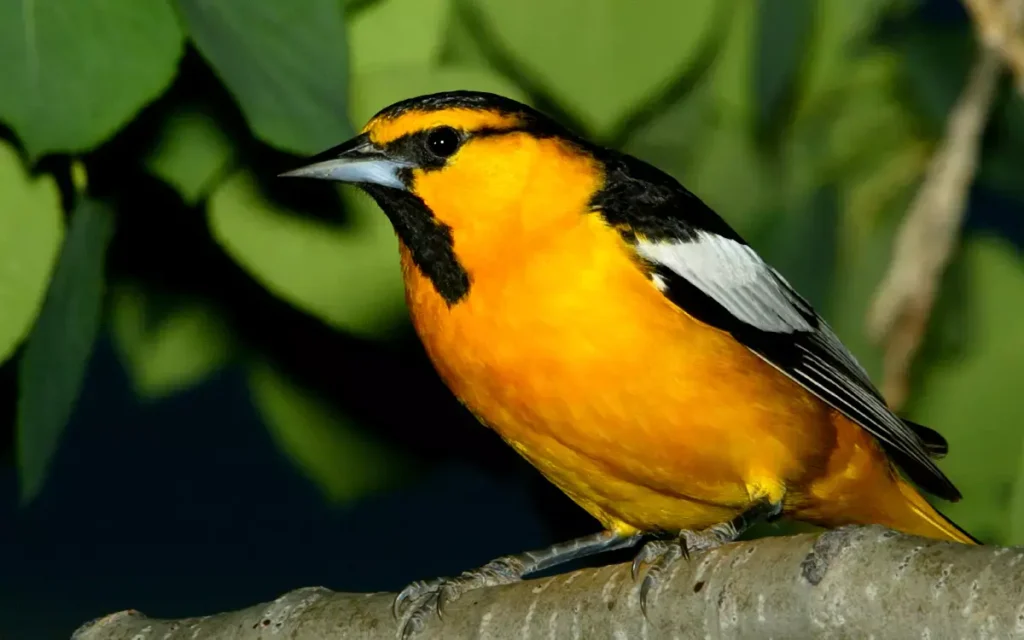
Bullock’s Oriole has a bright orange chest with a sharp black throat line in adult males. The orange covers the face, breast, and belly, while the wings show black and white markings. This gives the bird a clean, colorful appearance.
Females are paler, often showing yellow-orange underparts instead of strong orange. Their chest color may look softer and less clear, but it still has a warm tone. The orange face and chest are among the best clues for identifying this oriole in western areas.
7. Orchard Oriole
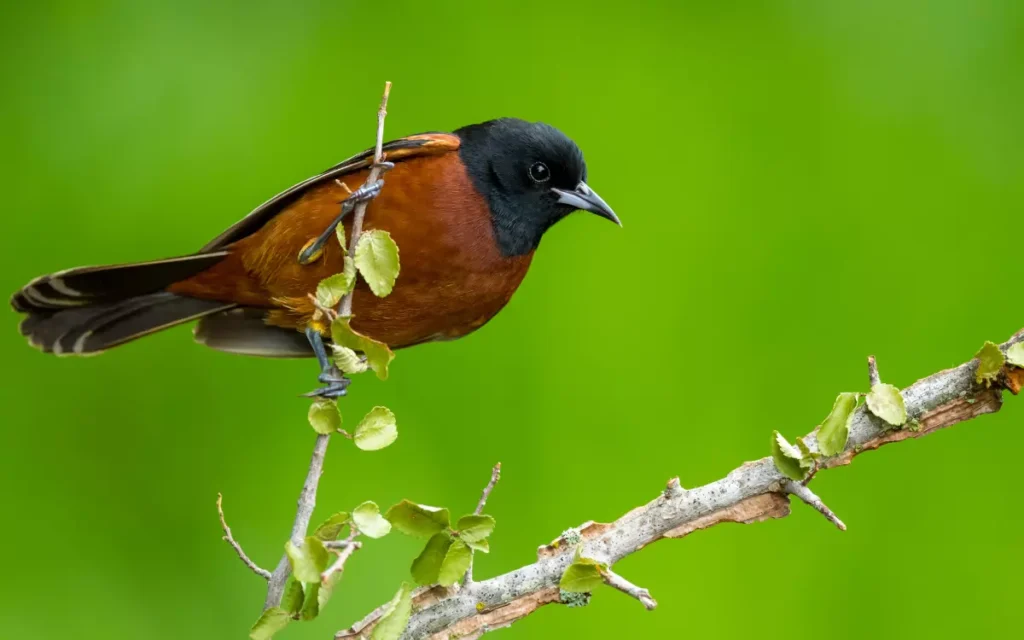
The male Orchard Oriole has a darker orange chest than many other orioles. Instead of bright orange, its underparts are deep chestnut-orange or burnt orange. This darker color pairs with a black head, back, and wings.
Young males and females look very different. They are usually yellow-green or yellowish below, with little to no strong orange. Adult males are the ones with the richest orange chest. Their darker tone makes them look more reddish-brown compared with Baltimore or Bullock’s Orioles.
8. Varied Thrush
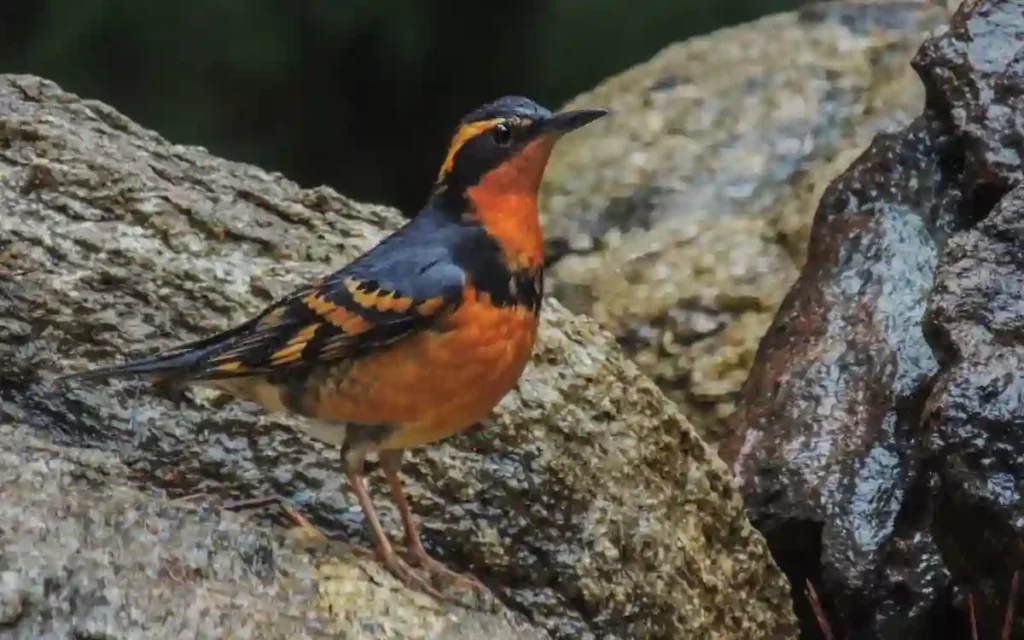
The Varied Thrush has a strong orange chest with a dark band across the breast. Males show a deep orange throat, breast, eyebrow stripe, and wing markings. The black or dark gray breast band cuts across the orange, making the pattern easy to remember.
Females are duller but still show warm orange underparts. Their chest may look softer and more brownish-orange. The orange-and-dark pattern gives this bird a bold look, especially in shaded forests where the color can still stand out.
Learn more 16 Black Birds With White Bellies ( Picture & Id Guide)
9. Blackburnian Warbler
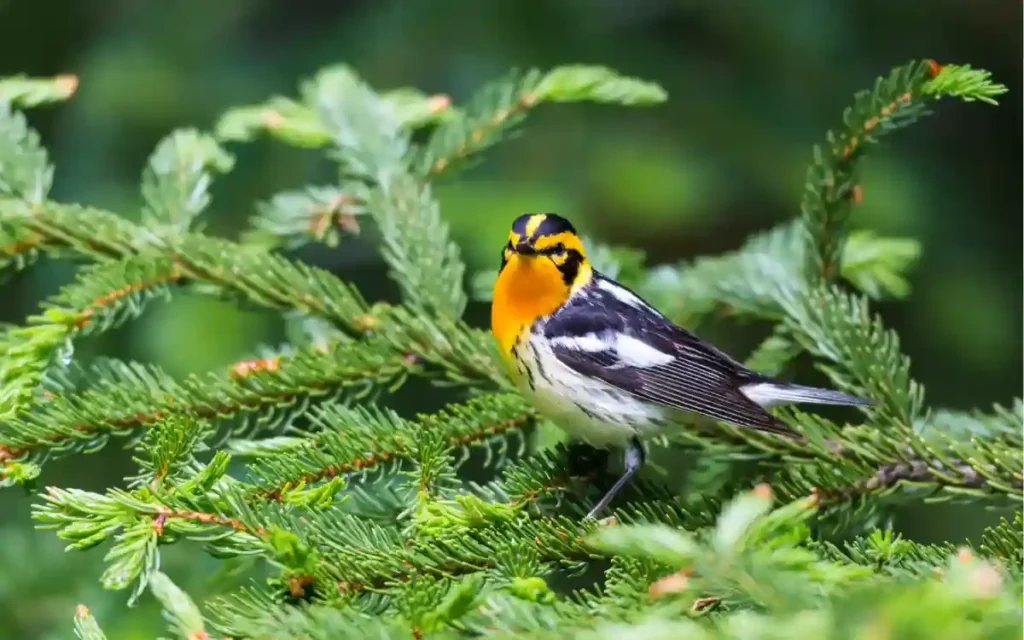
The Blackburnian Warbler is famous for its intense orange throat and upper chest. Adult males have a bright flame-orange throat that can look almost glowing in sunlight. The orange area is bordered by black-and-white markings, which makes it look even stronger.
Females and young birds are less bright but still show yellow-orange or pale orange on the throat and chest. The male’s orange coloring is one of the strongest among warblers. It is often the first feature birdwatchers notice during spring migration.
10. American Redstart
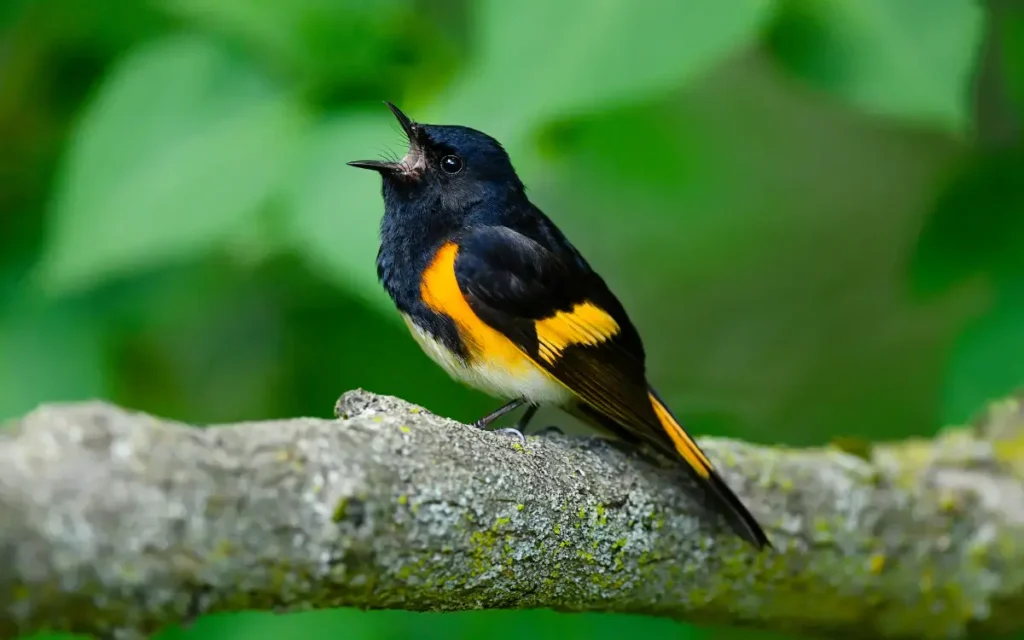
The American Redstart does not have a fully orange chest, but it has bright orange patches on the sides of the breast, wings, and tail. Adult males are mostly black with bold orange markings. These orange patches flash when the bird spreads its wings or tail.
Females and young males are grayish with yellow-orange patches instead of strong orange. The chest itself may appear pale, but the orange side patches make the bird look colorful in motion. This flashing pattern helps the bird catch insects while moving through trees.
11. Flame-colored Tanager
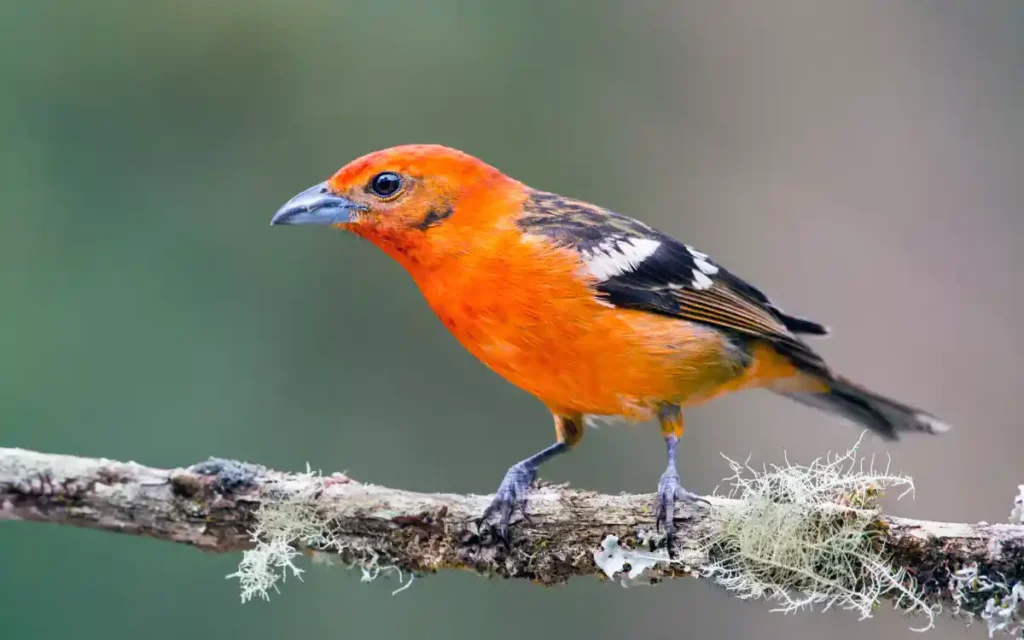
The Flame-colored Tanager has a strong orange to reddish-orange chest. Males are especially colorful, with orange-red underparts, darker wings, and streaking on the back. The chest color can look fiery orange or red-orange depending on the individual.
Females are usually more yellowish or olive-toned, with a softer orange wash below. The male’s orange chest is one of its most noticeable features. This bird looks warmer and brighter than many tanagers, which is why its name fits its appearance well.
12. Western Tanager
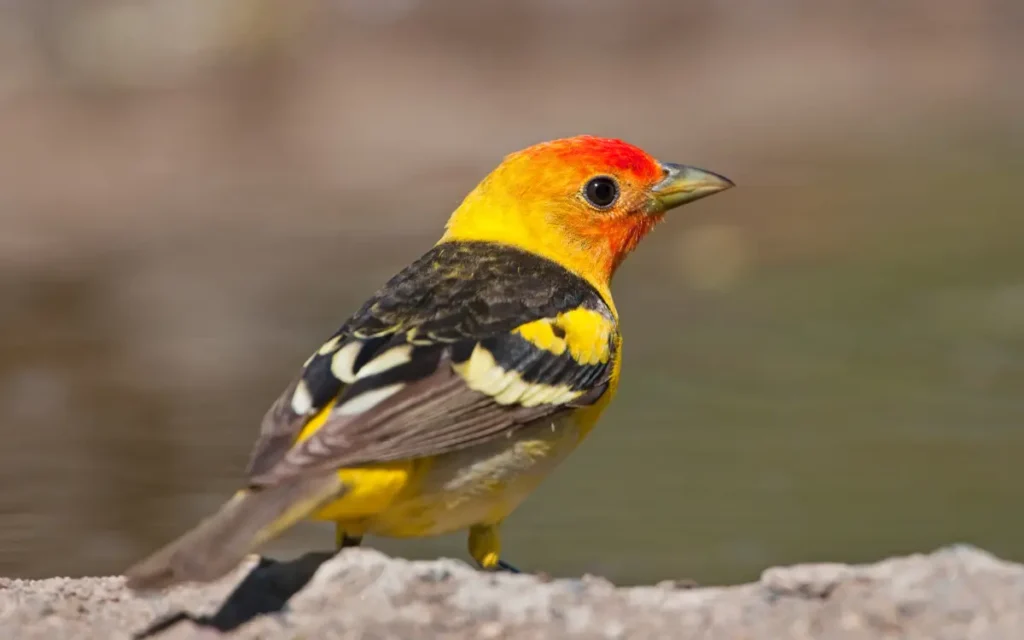
The Western Tanager is mostly yellow below, but males often show orange-red around the head and upper chest area. During breeding season, the head can look red-orange, while the body remains yellow. This creates a warm color blend from the face down toward the chest.
Females are duller, usually yellow-green with little orange. Some males may show more orange than others, especially around the throat. While it is not as fully orange-chested as an oriole, the warm orange tones still make it a good bird to include.
13. Scarlet Tanager Female
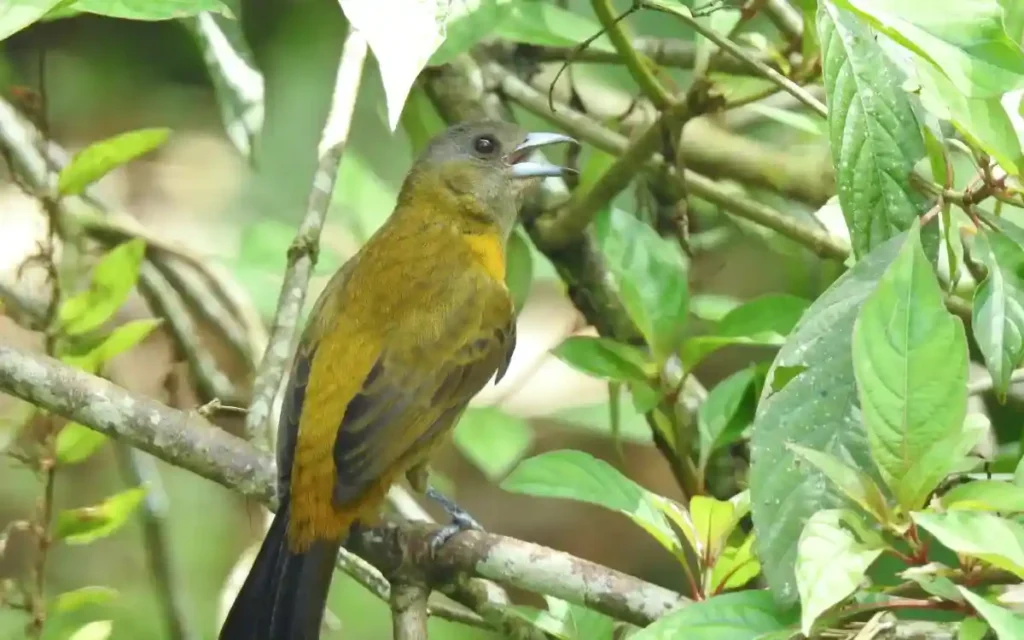
Female Scarlet Tanagers do not have the bright red body of males. Instead, they are olive-yellow with a warm yellow-orange wash on the chest and underparts. In certain light, the chest can look soft orange or golden.
Their color is much calmer than the male’s red-and-black breeding plumage. The female’s orange tone is usually subtle, so it is better described as yellow-orange rather than bright orange. This softer color helps her blend into leafy trees during nesting season.
14. Brambling
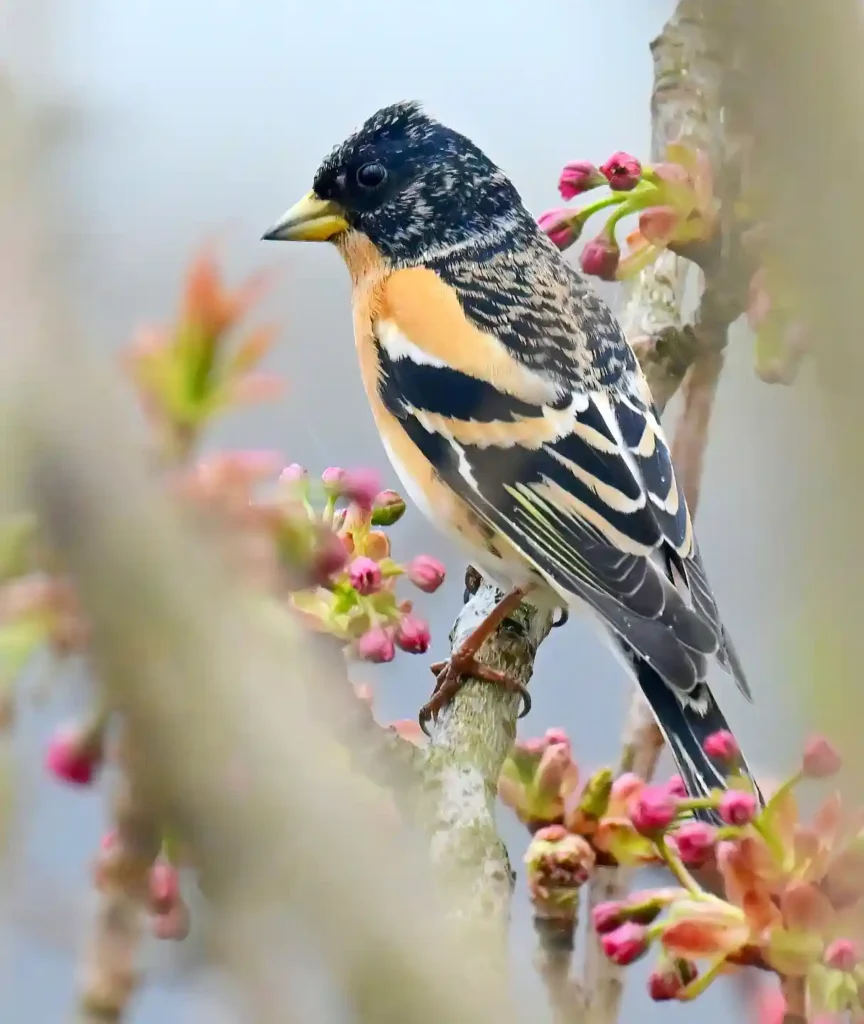
The Brambling is a finch with a warm orange breast, especially in breeding males. The orange color usually appears across the chest and shoulders, while the head can become dark in breeding plumage. The contrast gives the bird a neat, bold look.
Females and nonbreeding males have softer orange or buff-orange tones on the chest. Their colors are less sharp but still warm. The orange breast, white belly, and patterned wings help separate Bramblings from many other finches.
15. European Robin
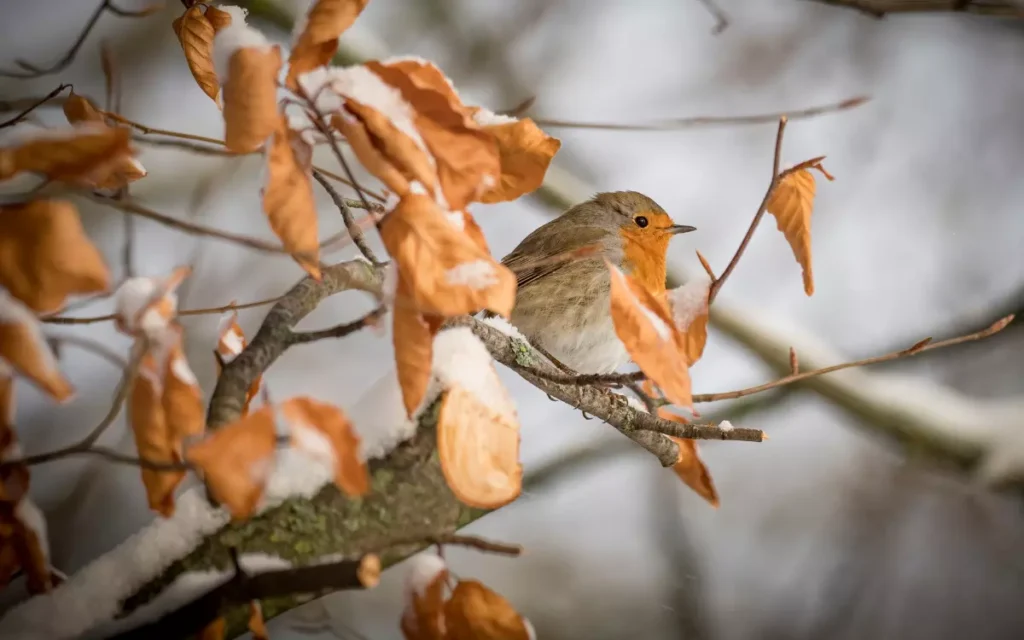
The European Robin has a well-known orange-red face and chest. The orange starts around the forehead and face, then spreads down across the throat and breast. The color is bordered by gray and brown, which makes the chest patch easy to see.
Both males and females look similar, so color alone does not separate them. The orange chest can look reddish-orange in some light and softer orange in shade. This rounded orange patch is the bird’s most famous feature.
Learn more 20 Birds With Colorful Beaks (Picture & Call)
16. Stonechat
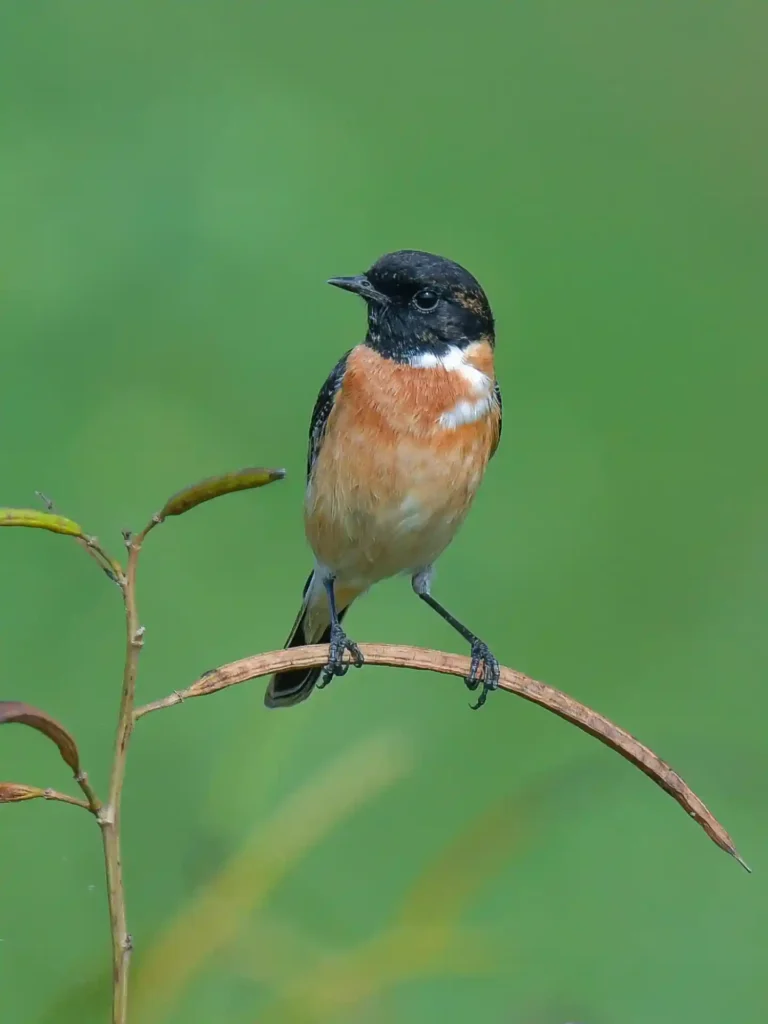
The Stonechat has a warm orange-rust chest, especially in adult males. Males often have a dark head, white neck patch, and orange breast, creating a strong contrast. The orange usually fades into a paler belly.
Females are softer brown with a lighter orange or buff chest. Their coloring is less bold but still easy to notice when perched in open areas. The rusty-orange breast helps the Stonechat stand out on fences, shrubs, and grassland edges.
17. Common Redstart
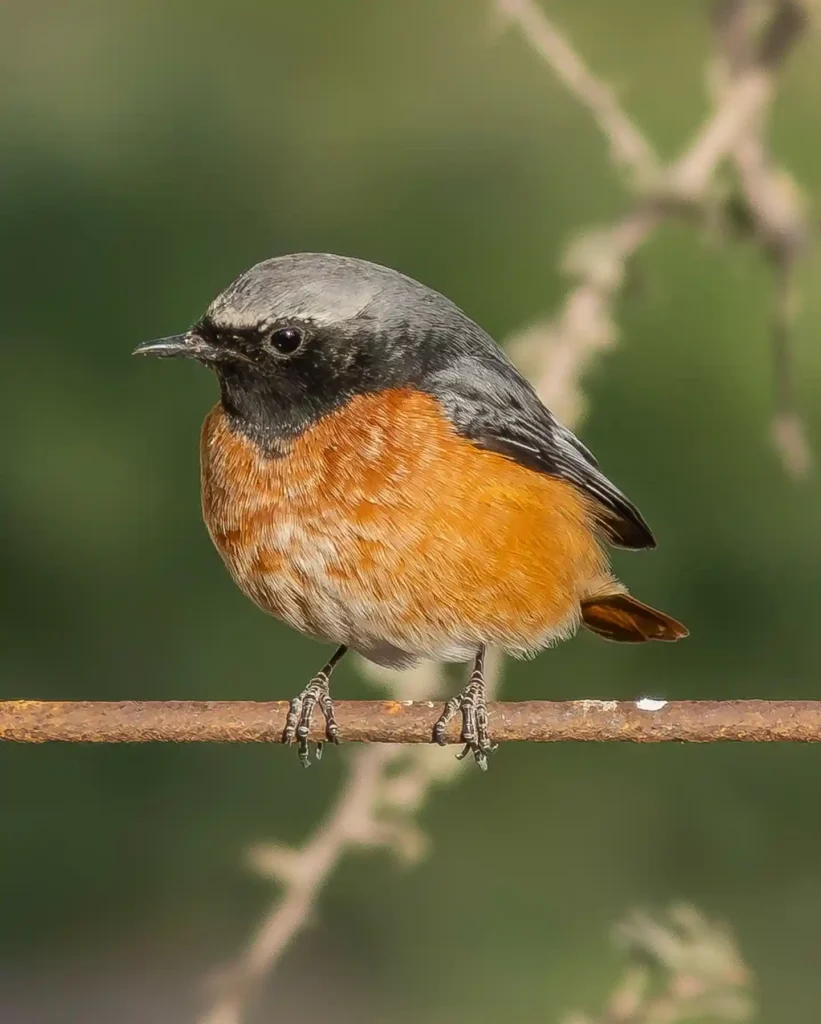
The Common Redstart has warm orange coloring on the chest, belly, and tail area. Adult males show a gray head, dark face, orange breast, and bright orange-red tail. The chest color is usually soft orange rather than heavy red.
Females are browner and have a paler orange-buff chest and tail. Their color is more gentle but still warm. The orange tail often draws attention first, but the chest also helps give this bird its warm-toned appearance.
18. Allen’s Hummingbird
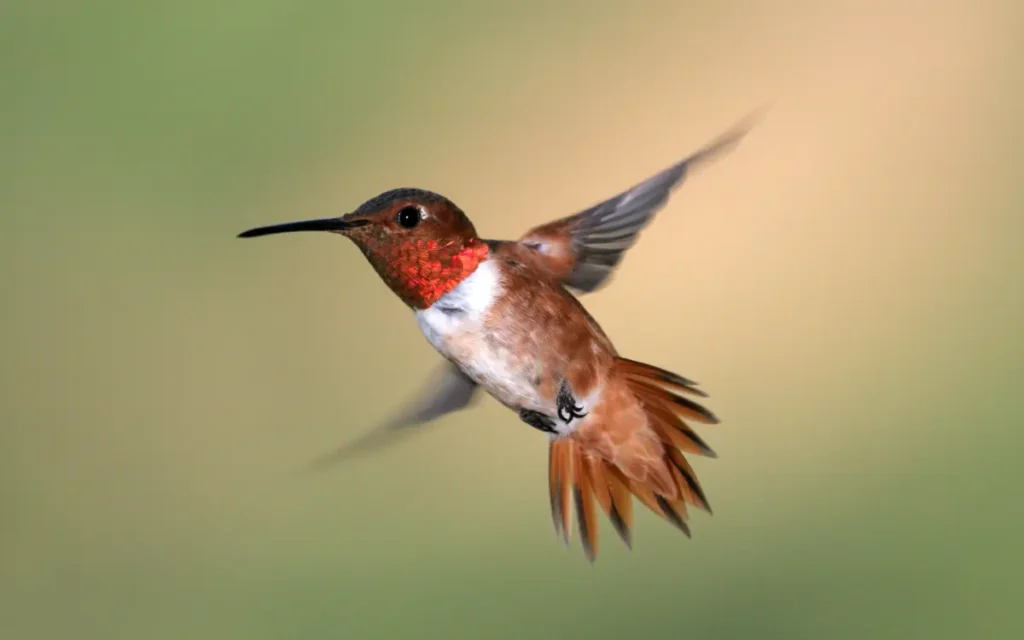
Allen’s Hummingbird has rich orange-rufous coloring on the chest, sides, and body. Males have a bright orange throat that can shine strongly when it catches the light. The back may show green, while the sides and belly are orange-rust.
Females are less bright but still show rufous-orange sides and warm tones near the chest. Because hummingbirds are small and fast, the orange may appear as quick flashes. The warm rufous color is one of the best clues for identifying this species.
19. Rufous Hummingbird
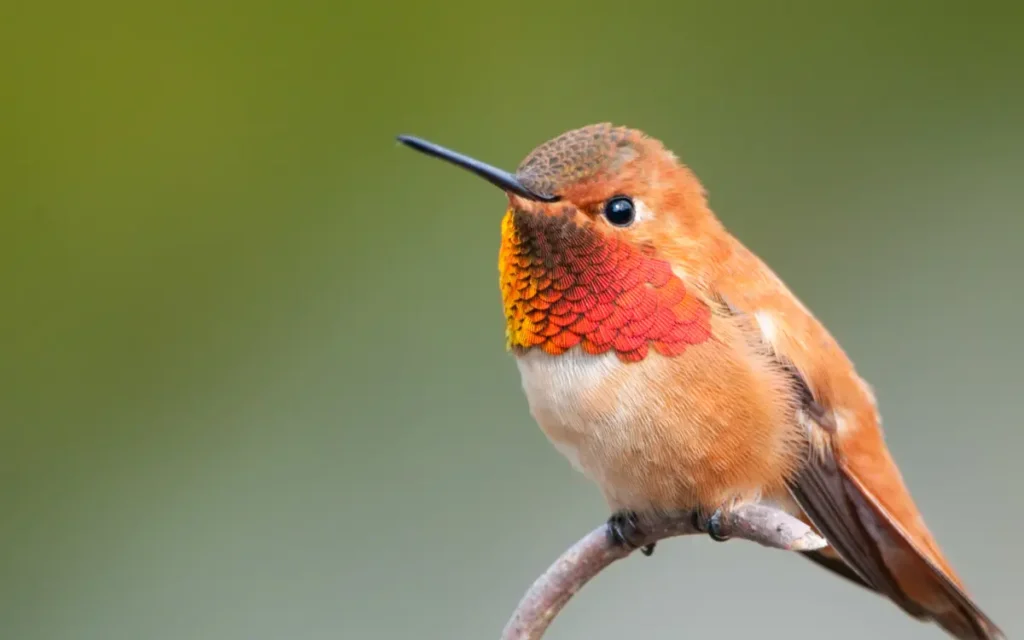
The Rufous Hummingbird is one of the most orange-looking hummingbirds. Adult males are covered in rich rufous-orange on the back, sides, belly, and tail. Their throat can glow orange-red when light hits it.
Females have green backs but still show orange-rufous sides and tail feathers. The chest may be paler, but the overall bird often looks warm orange in flight. This strong rusty-orange coloring helps separate it from many green hummingbirds.
20. Spotted Towhee
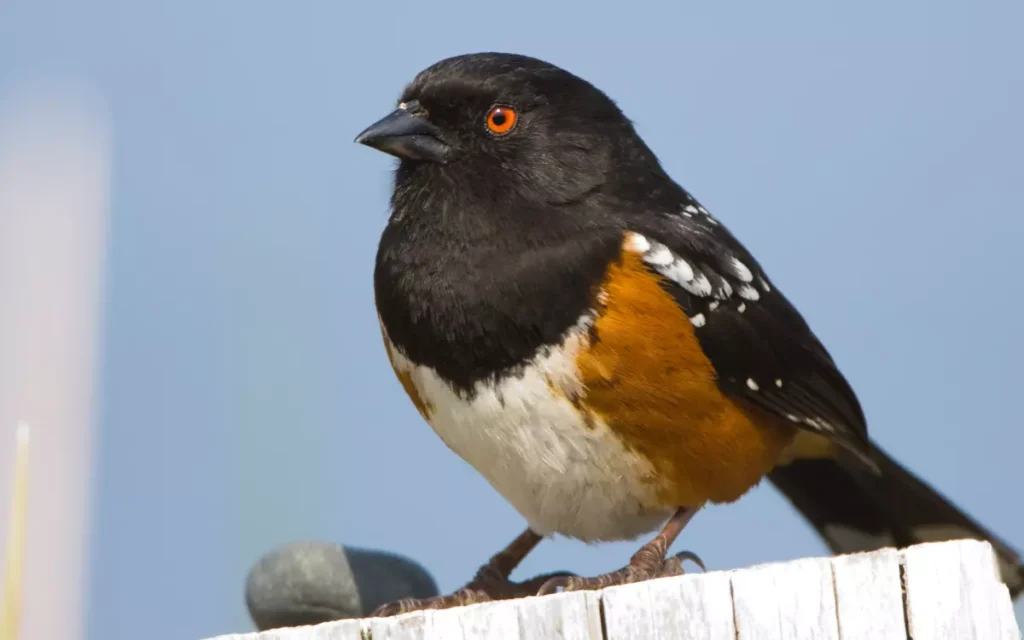
The Spotted Towhee has orange-rufous sides rather than a full orange chest. Its upperparts are black with white spots, while the lower sides are warm orange. The belly is usually white, creating a clear three-color pattern.
Females are similar but more brownish above instead of black. The orange color sits along the lower chest and sides, making the bird look warm from the side view. This color pattern is helpful when the bird is scratching on the ground under shrubs.
Learn more 17 Blue Birds With Orange Chests (Picture,Location)
21. Eastern Towhee
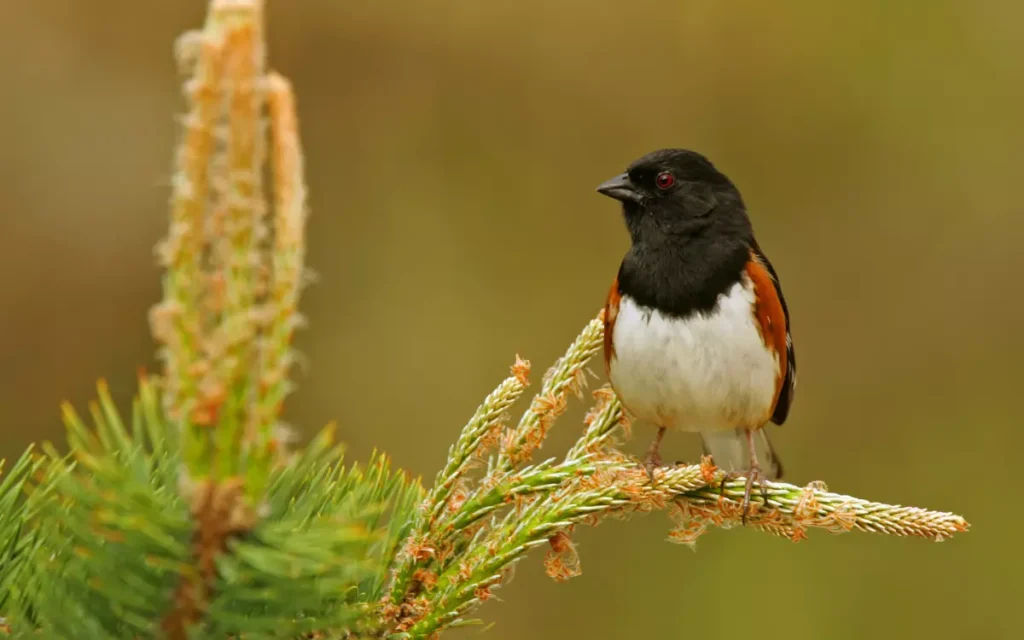
The Eastern Towhee has warm orange-rufous sides beneath a dark upper body. Adult males have black heads, backs, and throats, with white bellies and orange sides. The orange is not centered across the full chest, but it is still a major part of the bird’s color.
Females have brown upperparts instead of black, with the same warm orange sides. When seen from the side, the orange area can look like part of the lower chest. This makes the bird easy to recognize in leaf litter and brushy areas.
22. Barn Swallow
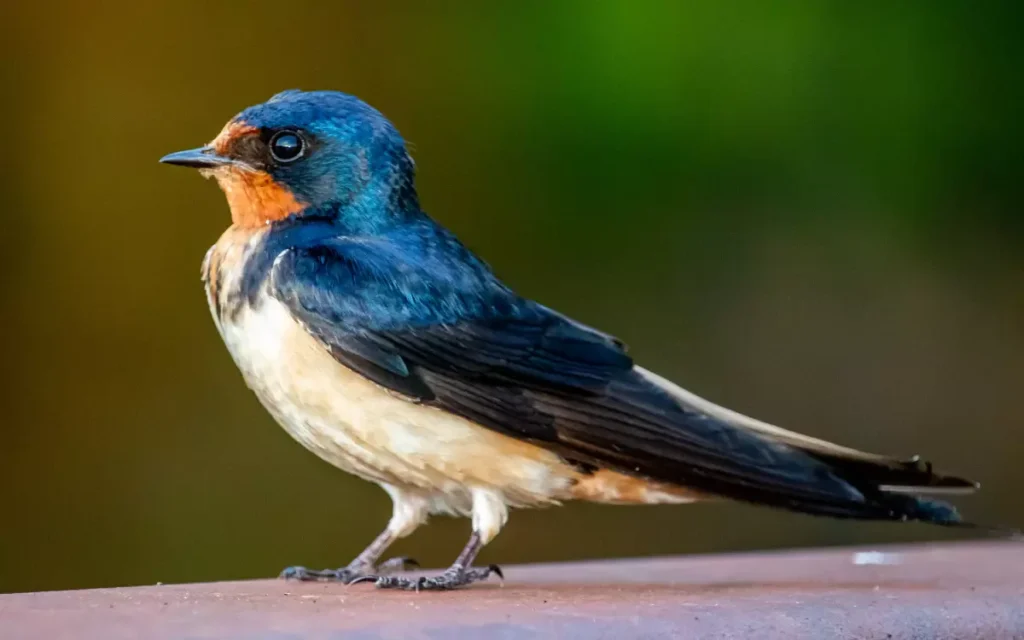
The Barn Swallow has a rusty-orange throat and chest, paired with glossy blue upperparts. The orange coloring is strongest around the face and throat, then becomes lighter across the breast and belly. Some birds may look buff-orange underneath.
The dark blue back and long forked tail make the orange chest stand out when the bird perches. In flight, the color may be harder to see, but at rest, the warm throat and chest are useful identification marks.
23. Cliff Swallow
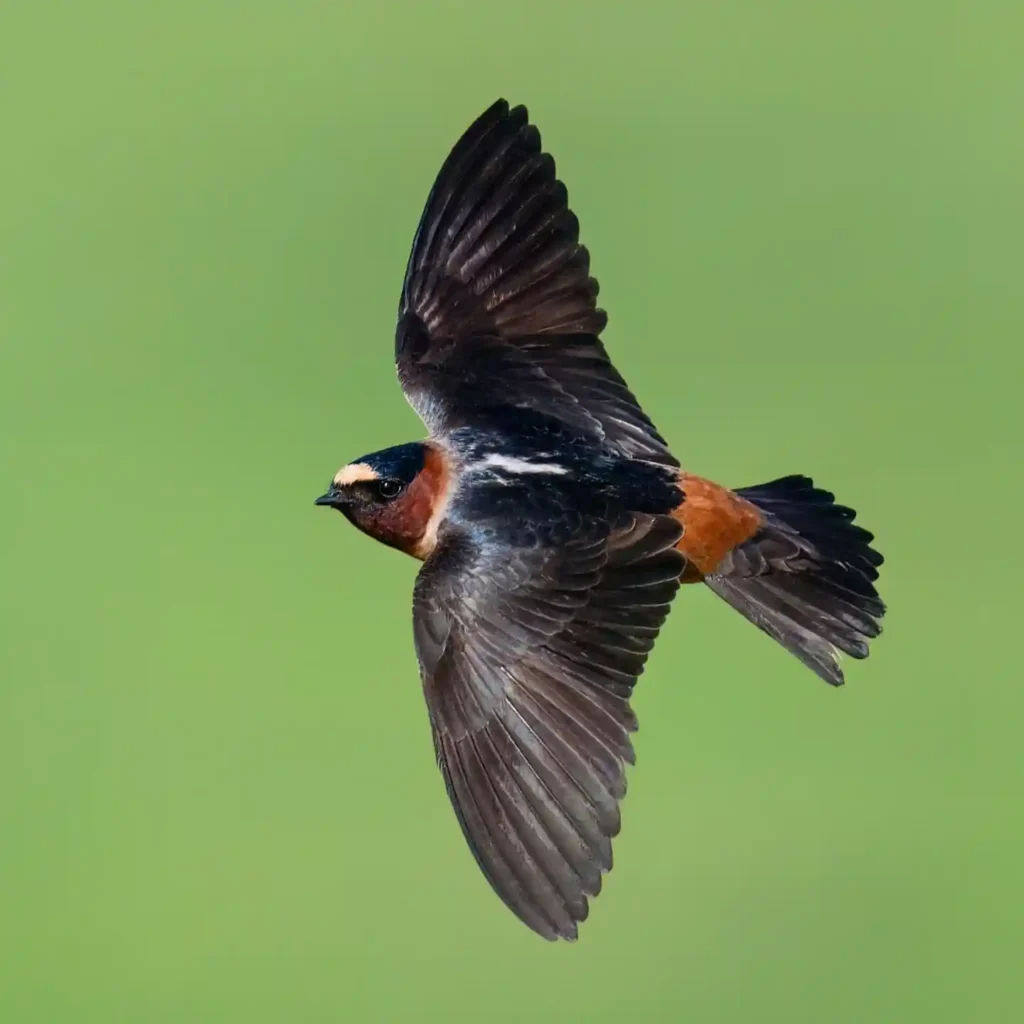
The Cliff Swallow has a pale orange or buff-orange throat, with a light chest and dark cap. Its forehead often has a creamy or pale orange patch, which adds to its warm face pattern. The chest is not as bright as a robin or oriole, but it has a soft orange-buff tone.
The overall color mix includes dark blue-black upperparts, pale underparts, and warm facial markings. When perched near mud nests, the orange-buff throat and forehead help separate it from other swallows.
24. Red-breasted Nuthatch
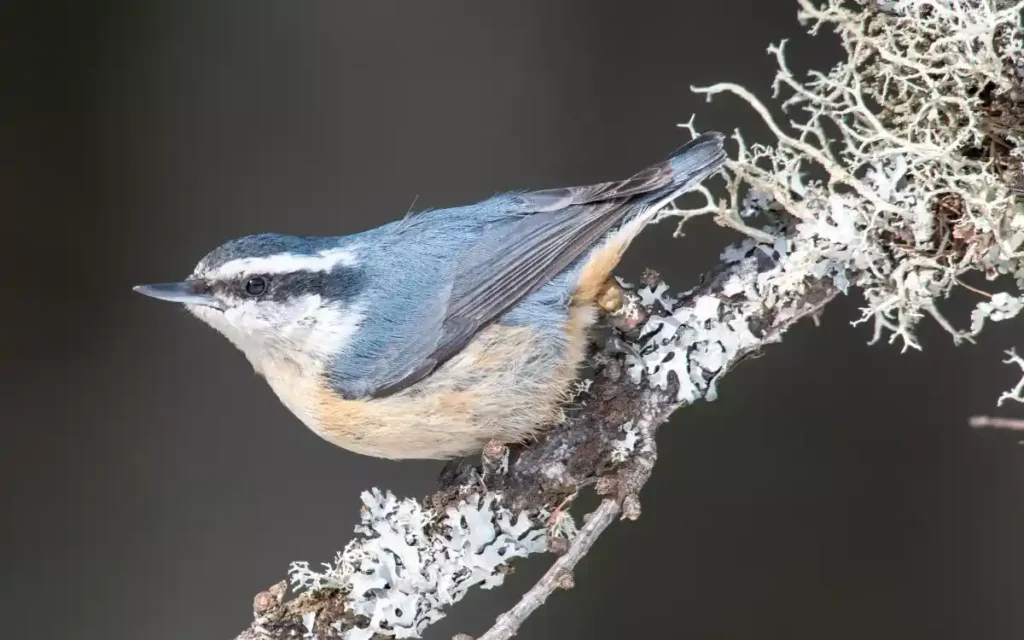
The Red-breasted Nuthatch has orange-rust underparts, including the chest and belly. Males often show richer color below, while females look paler with softer orange or buff tones. The bird also has a gray-blue back and a bold black-and-white face pattern.
The orange chest is easy to notice when the bird climbs tree trunks headfirst. Its warm underside separates it from the White-breasted Nuthatch, which has a cleaner white belly. The color is usually rusty-orange rather than bright orange.
Learn more 25 Birds with Red Heads: A Comprehensive Guide
25. Black-headed Grosbeak
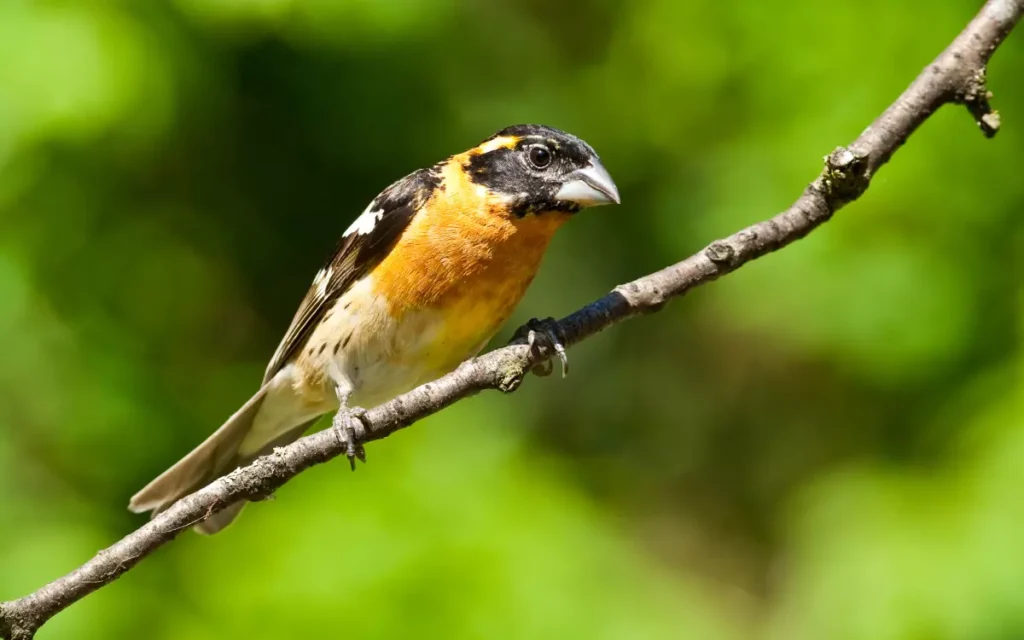
The Black-headed Grosbeak has a rich orange chest that blends into orange-brown sides and a yellowish belly. Adult males have a black head, black wings with white markings, and warm orange underparts. The orange chest is one of the bird’s strongest features.
Females are browner and streakier, but they can still show buff-orange or warm yellow-orange tones on the breast. The male’s chest color is especially bold in spring and summer, making it easy to spot in trees and woodland edges.
26. Rose breasted Grosbeak Female
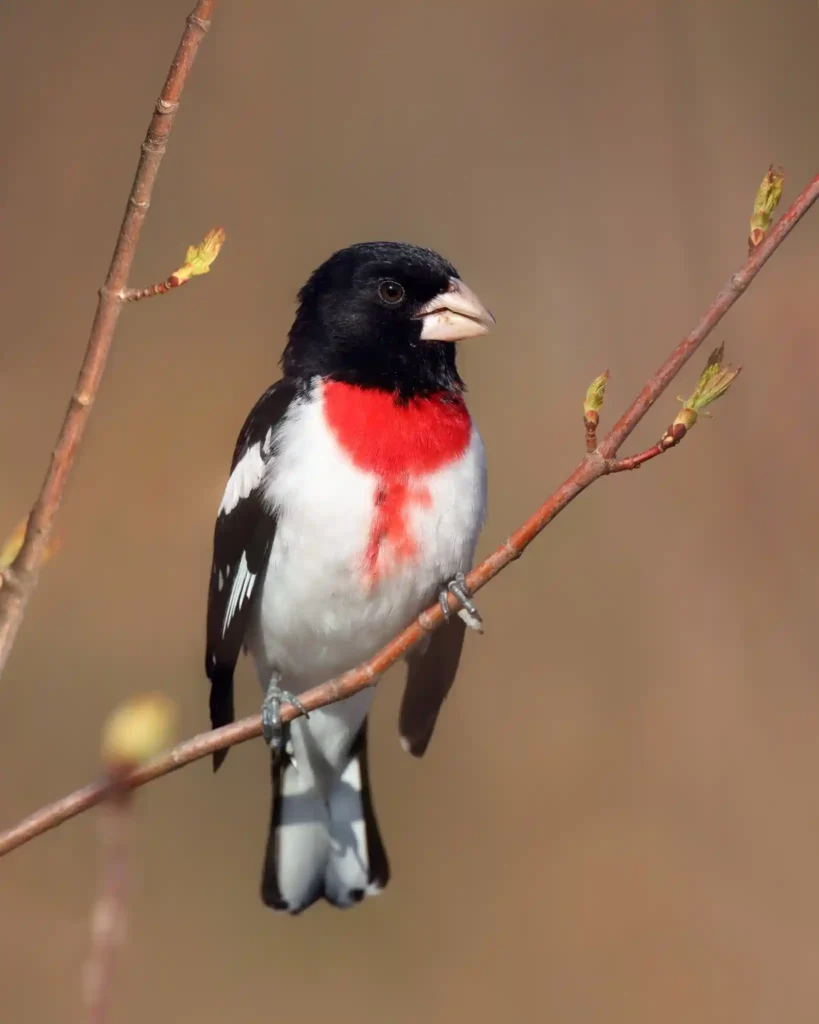
Female Rose-breasted Grosbeaks do not have the bright rose-red chest patch seen on males. Instead, they are brown and streaky with a pale buff or yellow-orange wash on the chest and sides. The color is soft and not always obvious at first glance.
Their warm chest tones blend with heavy streaking, which helps them stay hidden among branches. While they are not strongly orange like orioles, the buff-orange color can be noticeable in good light, especially across the upper breast.
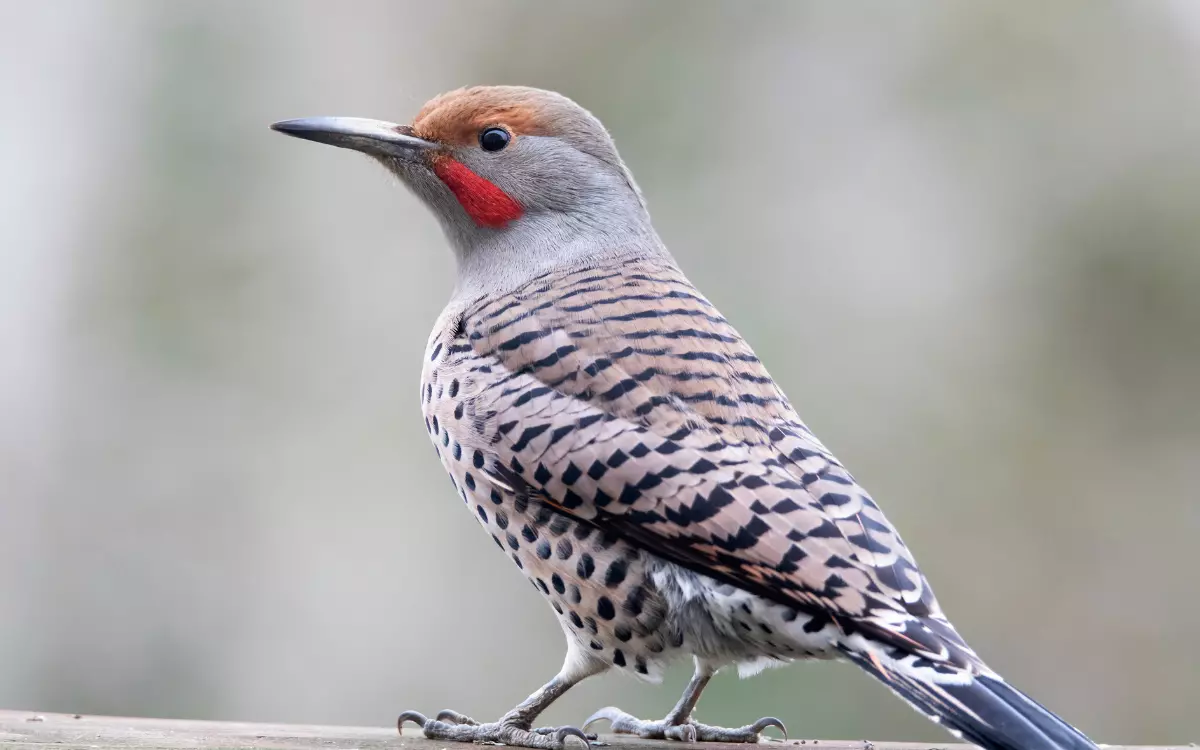
27. Northern Flicker
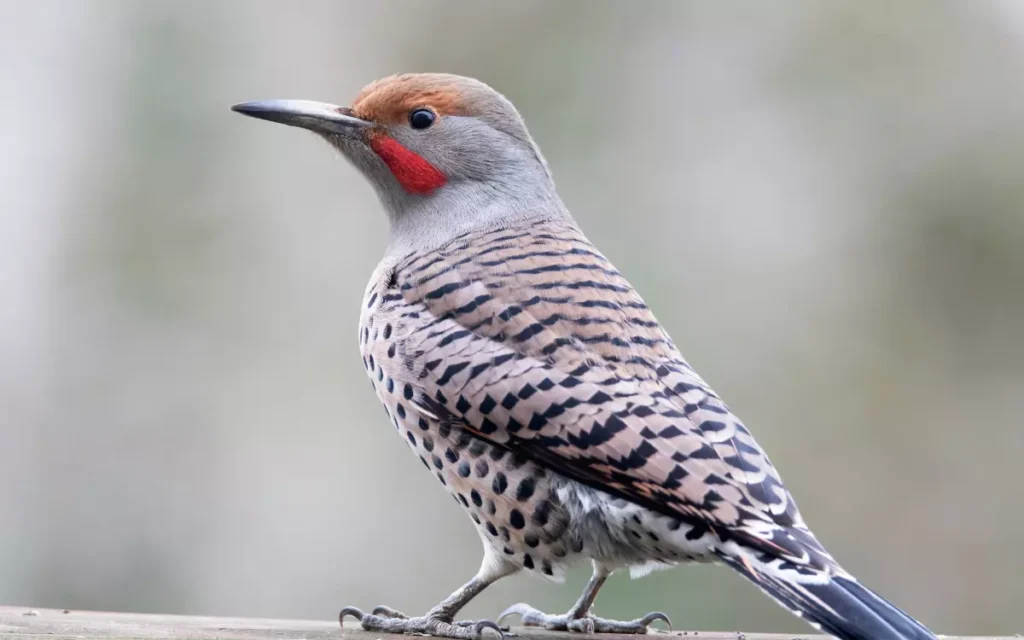
The Northern Flicker has warm spotted underparts that can appear buff, tan, or pale orange depending on the bird and light. It does not have a bright orange chest like a robin, but the body often carries a warm peachy tone. Some western birds also show orange or salmon tones in the wings and tail.
The chest is covered with dark spots, giving it a patterned look. The warm underparts, spotted belly, and bold black chest mark make the Northern Flicker easy to identify compared with many other woodpeckers.
28. Altamira Oriole
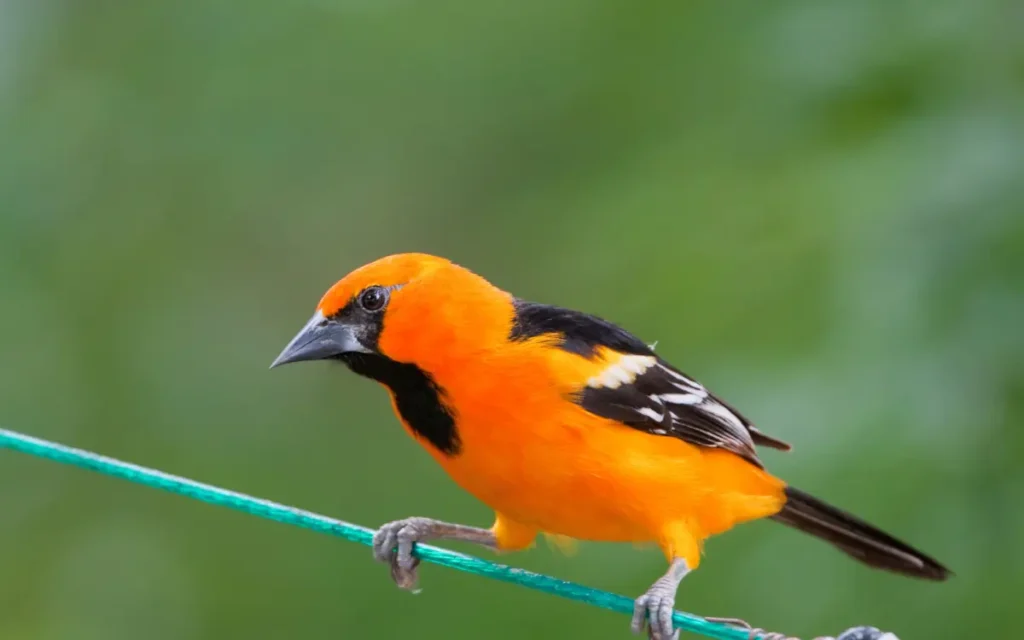
The Altamira Oriole has a bright orange chest, belly, shoulders, and face. Adult birds show a strong mix of orange and black, with black around the throat and back. The orange body is bold and clean, making this one of the most colorful orioles.
The chest color is usually rich orange, not pale yellow-orange. In sunlight, the bird can look almost golden-orange. Its large size and strong orange underparts make it a striking species in southern Texas and parts of Mexico.
29. Spot-breasted Oriole
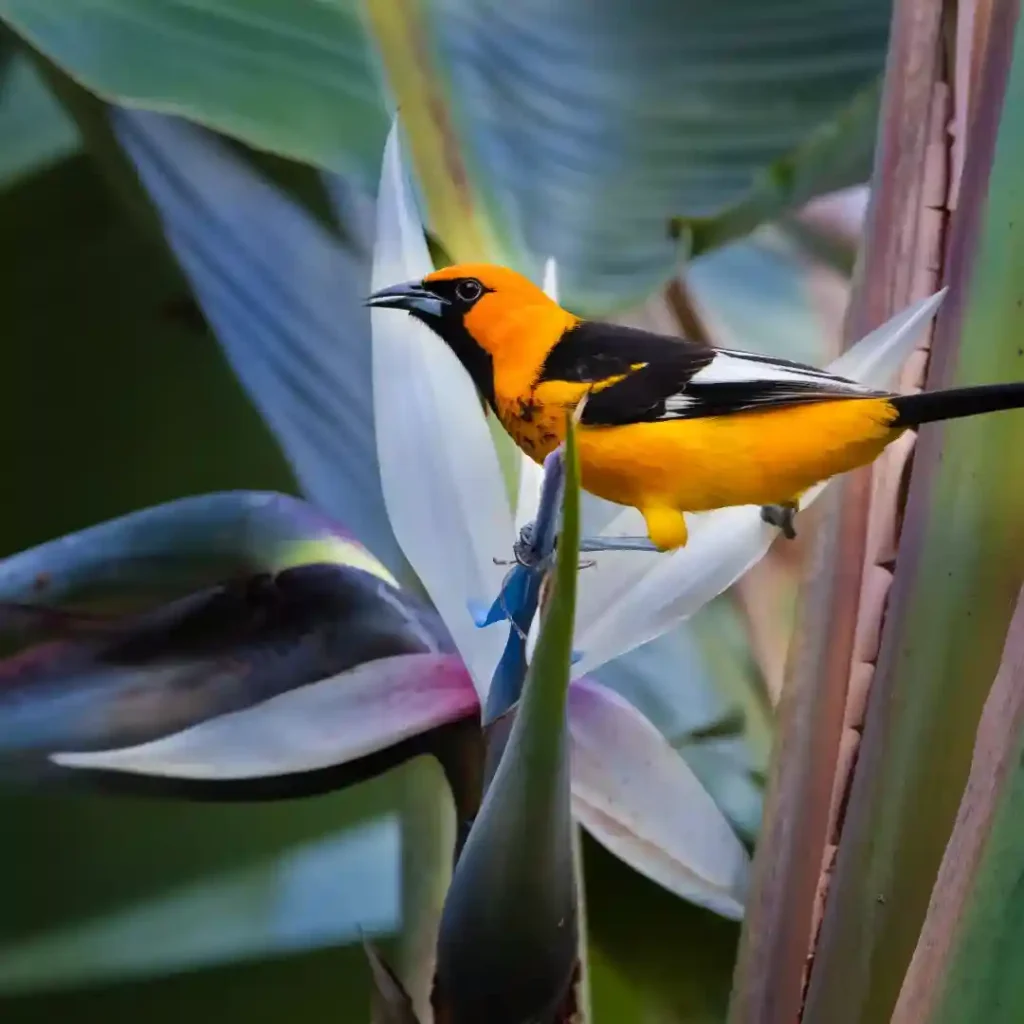
The Spot-breasted Oriole has an orange chest marked with small dark spots. Its body is mostly orange below, while the back and wings are darker. The spotted chest is the key feature that gives the bird its name.
The orange is bright but slightly softer than Altamira Oriole in many views. The dark spotting across the breast helps separate it from other orange orioles. This mix of orange underparts and black marks makes it easy to recognize once seen well.
30. Hooded Oriole
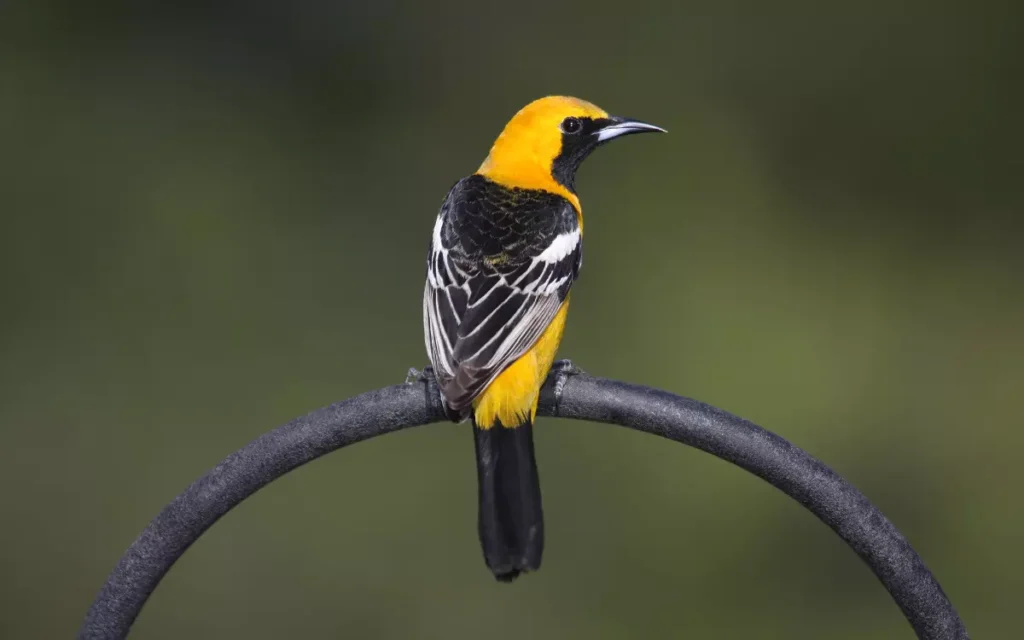
The Hooded Oriole has a yellow-orange to bright orange chest, depending on the bird’s age, sex, and region. Adult males often show a rich orange-yellow body with a black throat and wings. Some males look more golden, while others appear more orange.
Females are much paler, usually yellowish with a soft warm wash below. The male’s orange chest is clean and bright, especially in sunlight. This bird often visits palms, gardens, and nectar feeders, where its warm color stands out beautifully.
FAQs
What bird has an orange chest?
The American Robin is one of the most common birds with an orange chest. It has a rusty-orange breast, gray-brown back, white eye ring, and yellow bill. Other orange-chested birds include the Eastern Bluebird, Baltimore Oriole, Varied Thrush, European Robin, and Black-headed Grosbeak.
What small bird has a bright orange chest?
The Eastern Bluebird is a small bird with a bright orange chest and blue upperparts. The Blackburnian Warbler is another small bird with a fiery orange throat and upper chest, especially during breeding season. If the bird is tiny and fast-moving, it may also be a Rufous Hummingbird or Allen’s Hummingbird.
What bird has a blue body and orange chest?
The Eastern Bluebird and Western Bluebird both have blue bodies with orange chests. Eastern Bluebirds usually have a bright blue back and rusty-orange breast, while Western Bluebirds often show deeper blue upperparts and orange on the chest, sides, and sometimes the shoulder area.
What bird has a black head and orange chest?
Several birds can match this description. The Baltimore Oriole has a black head with a bright orange chest and belly. The Black-headed Grosbeak also has a black head and rich orange chest. Male Orchard Orioles have a black head with a darker chestnut-orange body.
Are orange-chested birds male or female?
It depends on the species. In many birds, males have brighter orange chests than females, such as Baltimore Orioles, Bullock’s Orioles, Blackburnian Warblers, and Black-headed Grosbeaks. Females often show softer orange, yellow-orange, or buff tones. However, in birds like the European Robin, males and females look very similar.
Why do some birds have orange chests?
Orange chest color often comes from pigments in feathers, especially carotenoids from food. These colors may help with mate attraction, species recognition, or blending into certain habitats. In many species, brighter orange coloring can also make adult males easier to notice during breeding season.
What backyard bird has an orange breast?
The American Robin is the most common backyard bird with an orange breast in much of North America. Depending on your area, you may also see Eastern Bluebirds, Baltimore Orioles, Orchard Orioles, Red-breasted Nuthatches, Barn Swallows, or Black-headed Grosbeaks near homes, gardens, feeders, or open yards.
What orange-chested bird visits feeders?
Baltimore Orioles, Bullock’s Orioles, Hooded Orioles, Black-headed Grosbeaks, Red-breasted Nuthatches, and Eastern Bluebirds may visit feeders. Orioles are often attracted to orange halves, grape jelly, and nectar feeders. Bluebirds may come for mealworms, while nuthatches often visit seed or suet feeders.
What is the difference between an American Robin and a European Robin?
An American Robin is larger and has a rusty-orange breast, gray-brown back, white eye ring, and yellow bill. A European Robin is smaller, rounder, and has an orange-red face and chest with brown upperparts. They are not the same type of robin, even though both have orange coloring.
What bird looks like a robin but has a darker orange chest?
The Varied Thrush can look robin-like but has a deeper orange chest with a dark breast band. It also has a bold orange eyebrow stripe and darker wings. Some Black-headed Grosbeaks may also be confused with robins from a distance because of their rich orange underparts.
What orange-chested bird has a black breast band?
The Varied Thrush has a strong orange chest with a dark band across the breast. This band is one of the easiest ways to separate it from an American Robin. Males usually show the clearest dark band, while females have a softer version.
What bird has an orange throat but not a full orange chest?
The Blackburnian Warbler has a bright orange throat and upper chest, but the rest of the body is patterned with black, white, and yellowish tones. Barn Swallows also have rusty-orange throats and upper chests, while the lower belly is usually paler.
Are there hummingbirds with orange chests?
Yes. Rufous Hummingbirds and Allen’s Hummingbirds often show orange or rufous coloring on the chest, sides, and body. Male Rufous Hummingbirds can look almost fully orange in good light, while Allen’s Hummingbirds usually show green backs with orange-rufous sides.
What bird has an orange chest and black wings?
The Baltimore Oriole is a strong match, with a bright orange chest and black wings. Altamira Orioles and Hooded Orioles also show orange underparts with dark wings. The exact species depends on location, size, and head pattern.
How can I identify an orange-chested bird quickly?
Start by checking size, location, head color, wing color, and behavior. A medium bird on a lawn is often an American Robin. A blue bird with an orange chest may be a bluebird. A black-and-orange bird in trees may be an oriole. A tiny fast bird with orange flashes may be a hummingbird.