7 Falcons in Texas: Stunning Birds of Prey You Can Spot
Texas has falcons in city centers, coastal grasslands, desert canyons, ranch country, and open farmland. The American Kestrel is the small falcon most drivers notice on utility wires. Peregrine Falcons hunt over coastal wetlands and sometimes nest on tall buildings, while Crested Caracaras patrol roads and pastures across southern parts of the state.
Seven members of the falcon family are covered below. Six occur regularly or have an established Texas population. The Gyrfalcon is different: it is an accidental visitor with only exceptional state records, so birders should not expect to find one during an ordinary winter trip.
1. American Kestrel
Scientific name: Falco sparverius
Texas status: Year-round resident and breeder; numbers increase in winter
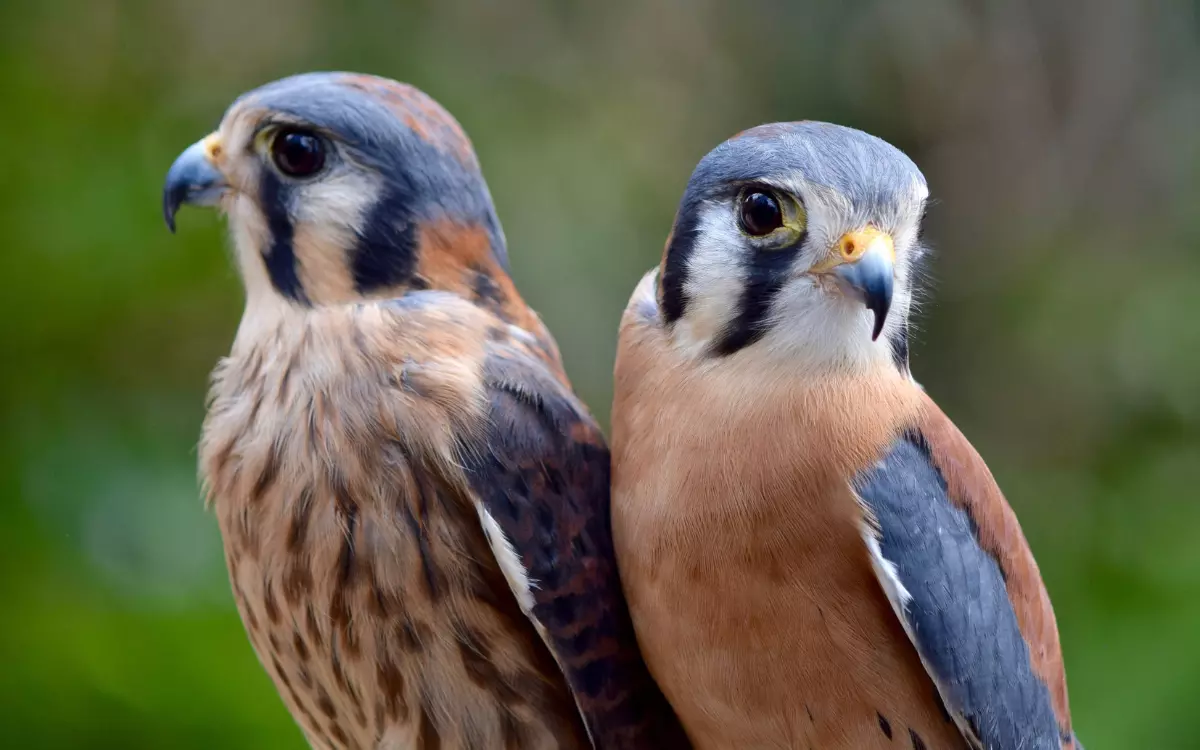
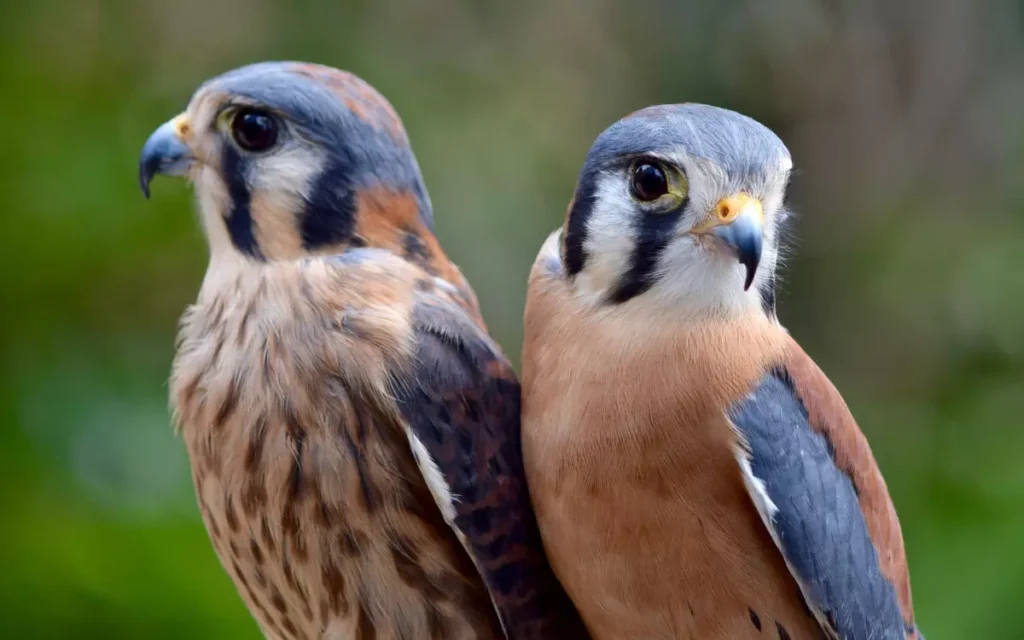
The American Kestrel is North America’s smallest falcon and the easiest Texas falcon to see. It often sits upright on utility wires, fence posts, and roadside signs while watching the ground for grasshoppers, beetles, lizards, mice, and small birds.
Adult males have blue-gray wings, a rusty back, and a rusty tail with a broad black tip. Females are rusty brown across the back, wings, and tail, with dark barring. Both sexes have two dark vertical marks on each side of the face.
Kestrels sometimes hover in place before dropping toward prey. Their flight is light and direct, with quick wingbeats broken by short glides.
Where to See American Kestrels in Texas
Look in pastures, farmland, grasslands, ranch country, and open neighborhoods with scattered trees. They occur across Texas, although winter is often the easiest season because migrants join resident birds.
Kestrels may watch the same open areas used by sparrows found in Texas and Texas finches. A small falcon making repeated attacks on flocks of songbirds is more likely a Merlin, though.
Look-alike: Merlin. A Merlin is slightly larger, darker, and more heavily built. It lacks the kestrel’s two bold facial stripes and usually chases birds rather than hovering over grass.
2. Peregrine Falcon
Scientific name: Falco peregrinus
Texas status: Local breeder, migrant, and winter visitor
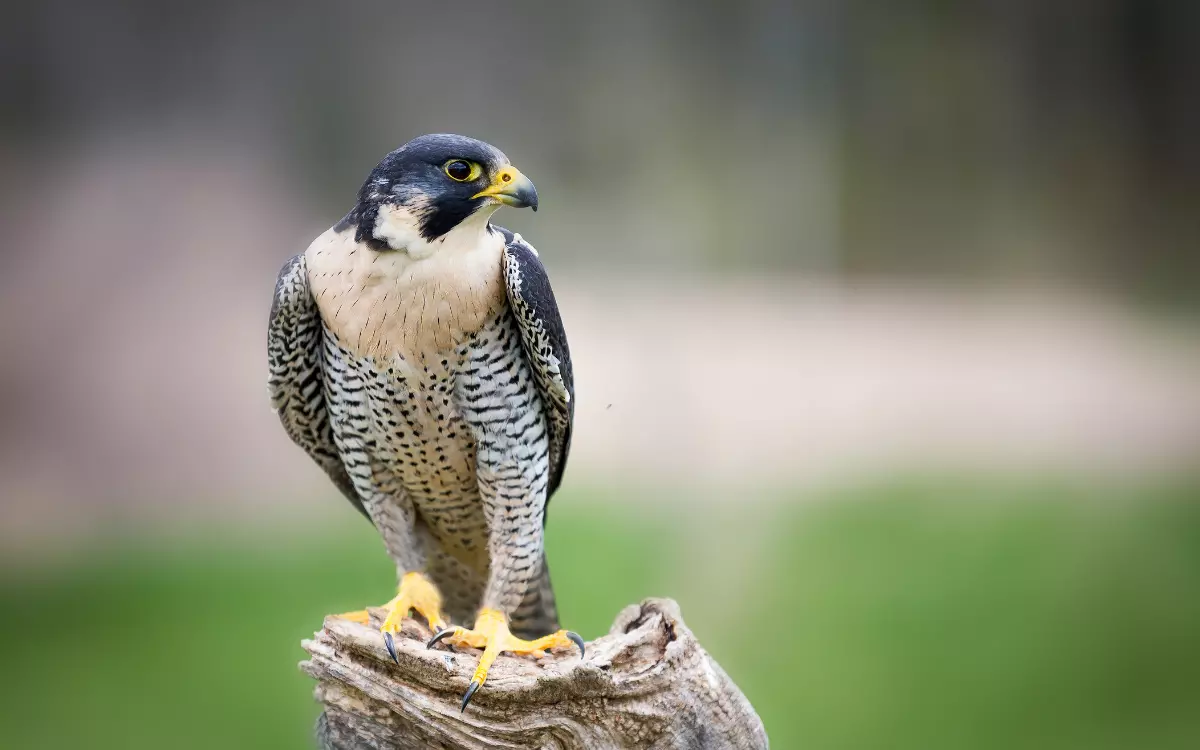
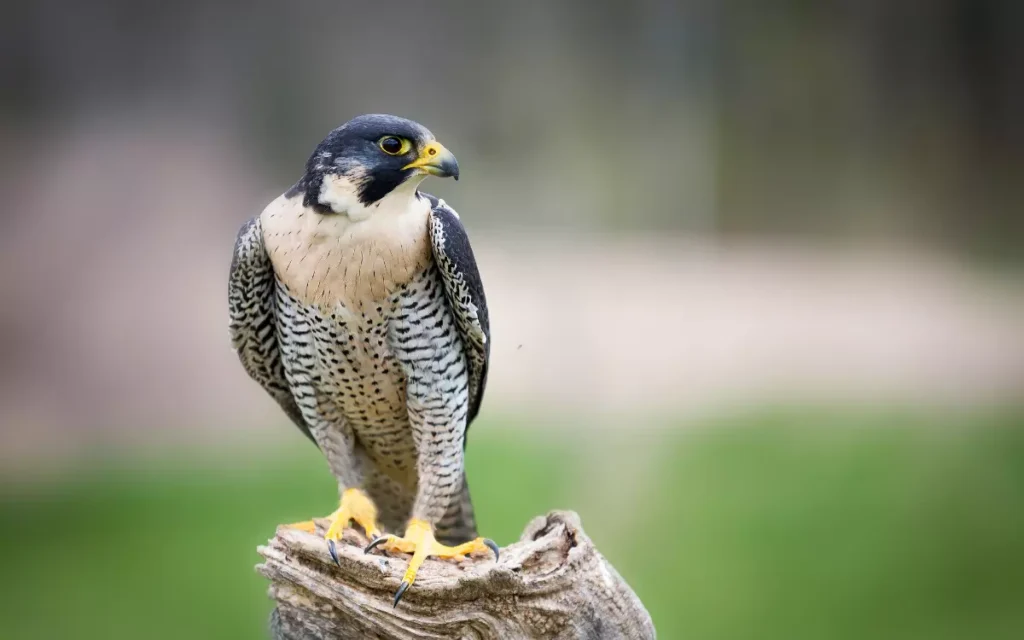
The Peregrine Falcon has long pointed wings, a dark head, and a broad black mark running down the side of the face. Adults are blue-gray above with fine horizontal barring below. Young birds are browner and have vertical streaks on the chest.
Peregrines catch birds in flight. They may climb above a flock, fold their wings, and enter a steep hunting dive called a stoop. Diving speeds can exceed 200 mph, but a perched bird may spend long periods quietly watching from a cliff, tower, bridge, or high-rise ledge.
The original article described Peregrines only as migrants. That is incomplete. Texas also has local breeding birds, especially in western mountain country, while migrants and winter visitors occur across a much wider area.
Where to See Peregrine Falcons in Texas
During migration and winter, check the Gulf Coast, bays, wetlands, reservoirs, tall bridges, and city skylines. Shorebird concentrations can draw hunting Peregrines. Breeding birds occur locally around cliffs and mountain ranges in the Trans-Pecos.
A large dark falcon sitting on a tall building may be a Peregrine, but size can be hard to judge at that distance. Look for the dark helmet, heavy chest, and long pointed wings when it takes flight.
Along the coast, the guides to ducks found in Texas and herons in Texas can help with other birds sharing the same wetlands.
Look-alike: Prairie Falcon. A Peregrine is darker and more heavily barred below, with a broader dark mustache. A Prairie Falcon is sandy brown and shows dark patches where the wings meet the body.
3. Merlin
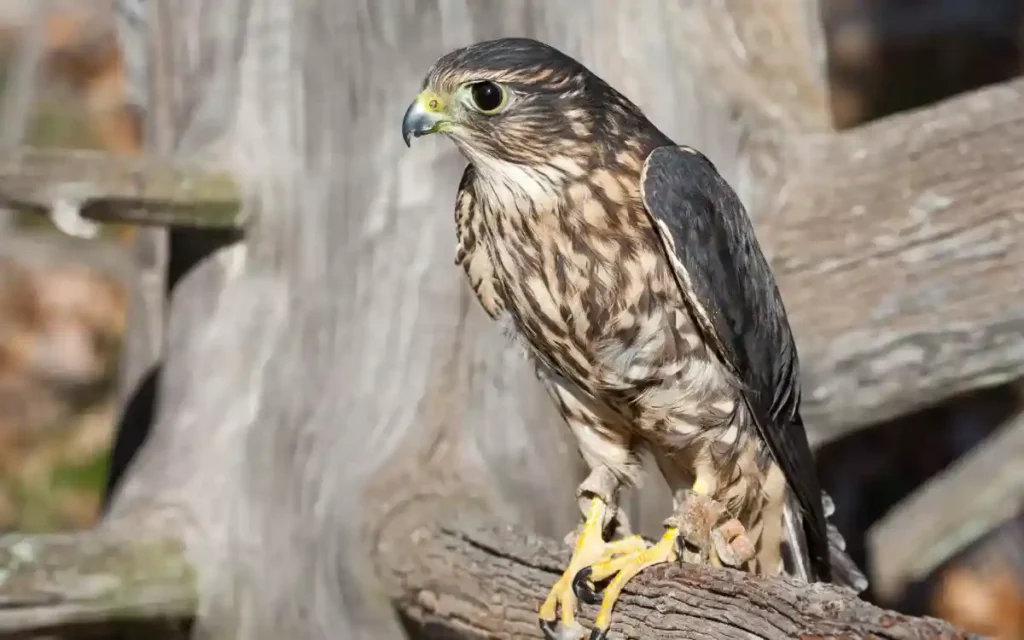
Scientific name: Falco columbarius
Texas status: Fall migrant and winter visitor
A Merlin is a compact falcon with a broad chest, pointed wings, and a strongly banded tail. Adult males may look slate gray above, while females and young birds are brown. The underside is pale with heavy vertical streaking.
Unlike an American Kestrel, a Merlin rarely pauses to hover over a field. It powers through the air with rapid, shallow wingbeats and often makes sudden attacks on small birds. A Merlin may race low across a park, follow a flock, or burst past a line of trees before disappearing.
Where to See Merlins in Texas
Merlins appear across much of Texas from fall through early spring. Coastal areas, open parks, cemeteries, fields, reservoirs, and city edges can all hold wintering birds. Places with flocks of sparrows, shorebirds, or other small birds give them hunting opportunities.
Some Merlins return to the same winter territory in later years. Scan bare treetops and exposed snags after seeing a flock of birds scatter suddenly.
Look-alike: American Kestrel. Merlins are darker and stockier, with a banded tail and a less obvious face pattern. Their direct, forceful flight is one of the quickest ways to separate the two.
4. Crested Caracara

Scientific name: Caracara plancus
Texas status: Year-round resident and breeder
The Crested Caracara belongs to the falcon family, even though it behaves differently from the fast aerial hunters most people picture when they hear “falcon.” It has a black cap, white neck, black body, orange facial skin, and long yellow-orange legs. The tail is white with a wide black band near the tip.
Caracaras hunt live prey and also eat carrion. They walk on the ground, investigate roadsides, and may gather near a carcass with vultures. In flight, look for broad wings with pale patches near the tips, a white tail, and a heavy head.
The claim that the Crested Caracara is Mexico’s national bird should be removed. Mexico’s national symbol is the Golden Eagle.
Where to See Crested Caracaras in Texas
Crested Caracaras are most familiar in South Texas, the Coastal Bend, and parts of Central Texas. Their range has extended northward, but they remain much easier to find in the southern half of the state.
Scan ranches, pastures, open brush country, road edges, and fence posts. Around wetlands and open country, they may share the area with wrens found in Texas and many of the species in the blue-colored birds of Texas guide.
Look-alike: Turkey Vulture. A caracara has a feathered black cap, white neck, long legs, and a strong hooked bill. A Turkey Vulture has a small bare red head as an adult and usually soars with its wings held in a shallow V.
5. Aplomado Falcon
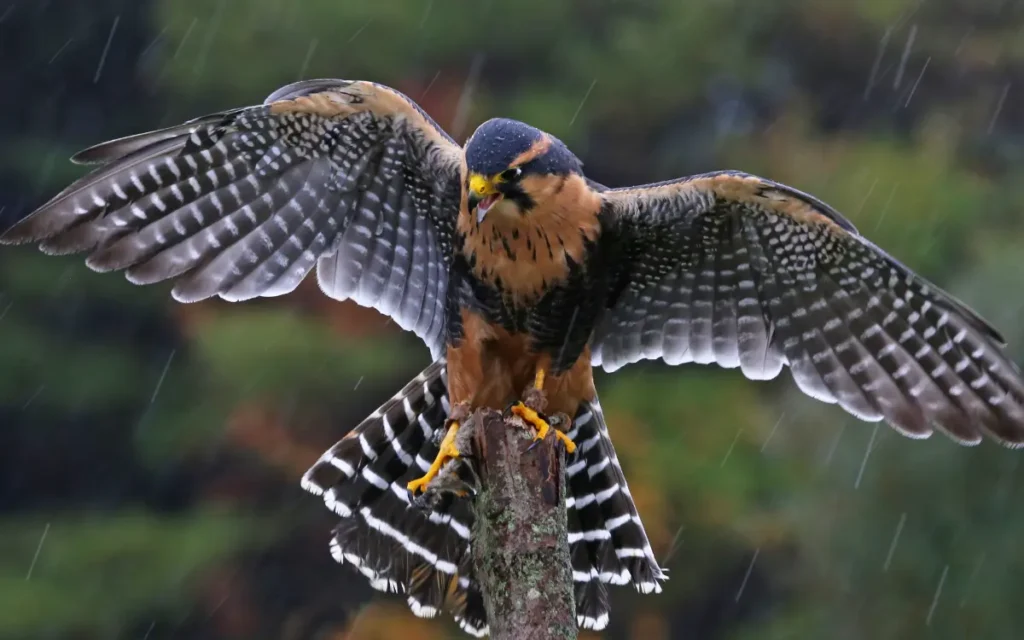
Scientific name: Falco femoralis
Texas status: Localized resident; reintroduced population; federally endangered
The Aplomado Falcon is a slim, long-tailed falcon of open grassland. It has a dark cap and cheek, a clean white eyebrow, pale upper chest, and a dark band across the lower chest. Warm cinnamon coloring covers the belly and legs.
Pairs often hunt together. One bird may flush doves, meadowlarks, or other prey while the second moves in to catch it. They also take insects and small ground animals.
The species disappeared as a regular U.S. breeder during the twentieth century. Captive-bred birds were later released along the Texas coast, and a small population now occupies restored coastal prairie. That recovery does not make the bird common. Its U.S. population remains protected as endangered.
Where to See Aplomado Falcons in Texas
The best chance is in coastal grassland in deep South Texas, especially around managed habitat and refuge land near the Lower Rio Grande Valley and Laguna Madre. Search broad prairie with scattered yucca, low shrubs, utility poles, or other exposed perches.
Do not approach a nest or enter closed habitat for a closer photograph. A distant scope view is safer for the birds and often gives a better look at their long tail and face pattern.
Birders visiting the Lower Rio Grande Valley can also use the guides to hummingbirds in Texas and Texas backyard birds to identify other species found in the region.
Look-alike: Peregrine Falcon. An Aplomado Falcon has a longer tail, narrower build, strong white eyebrow, and dark belly band. A Peregrine looks heavier and has a broad dark helmet.
6. Prairie Falcon
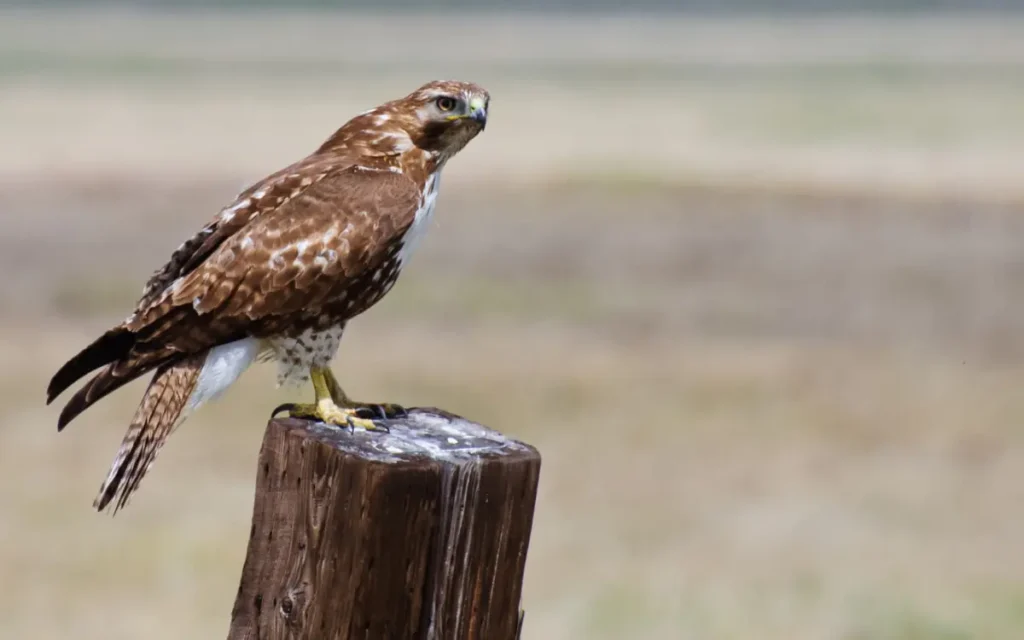
Scientific name: Falco peregrinus
Texas status: Local breeder, migrant, and winter visitor
The Peregrine Falcon has long pointed wings, a dark head, and a broad black mark running down the side of the face. Adults are blue-gray above with fine horizontal barring below. Young birds are browner and have vertical streaks on the chest.
Peregrines catch birds in flight. They may climb above a flock, fold their wings, and enter a steep hunting dive called a stoop. Diving speeds can exceed 200 mph, but a perched bird may spend long periods quietly watching from a cliff, tower, bridge, or high-rise ledge.
The original article described Peregrines only as migrants. That is incomplete. Texas also has local breeding birds, especially in western mountain country, while migrants and winter visitors occur across a much wider area.
Where to See Peregrine Falcons in Texas
During migration and winter, check the Gulf Coast, bays, wetlands, reservoirs, tall bridges, and city skylines. Shorebird concentrations can draw hunting Peregrines. Breeding birds occur locally around cliffs and mountain ranges in the Trans-Pecos.
A large dark falcon sitting on a tall building may be a Peregrine, but size can be hard to judge at that distance. Look for the dark helmet, heavy chest, and long pointed wings when it takes flight.
Along the coast, the guides to ducks found in Texas and herons in Texas can help with other birds sharing the same wetlands.
Look-alike: Prairie Falcon. A Peregrine is darker and more heavily barred below, with a broader dark mustache. A Prairie Falcon is sandy brown and shows dark patches where the wings meet the body.
7. Gyrfalcon
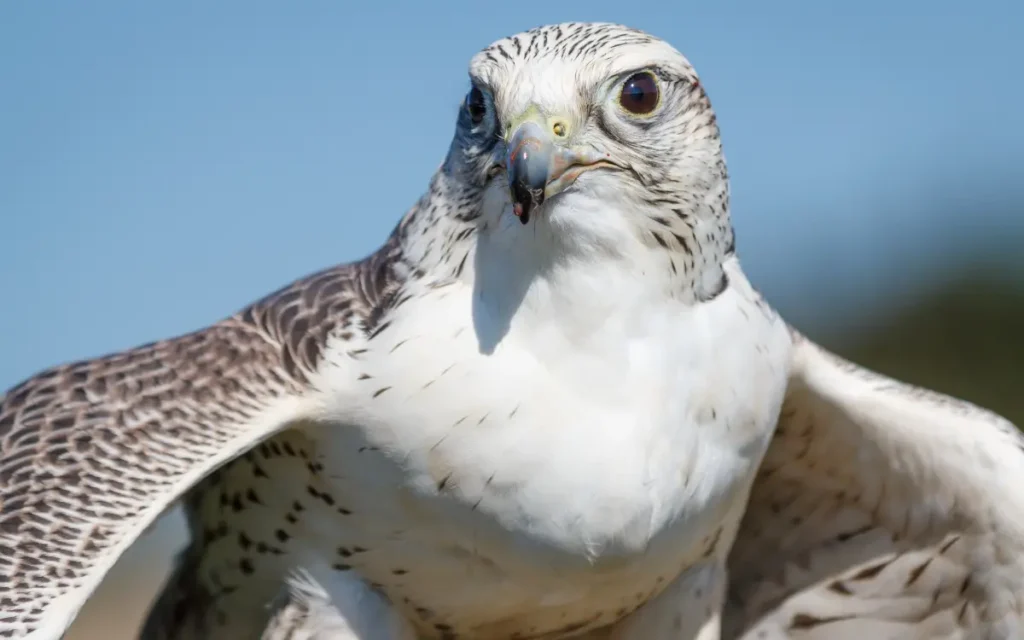
Scientific name: Falco rusticolus
Texas status: Accidental visitor; not an expected winter species
The Gyrfalcon is the world’s largest falcon. It has a deep chest, broad-based wings, and a longer tail than a Peregrine Falcon. Plumage ranges from mostly white with dark marks to gray or dark brown. Texas birds are more likely to cause confusion with pale Peregrines, Prairie Falcons, or large hawks than to look like the nearly white Arctic birds often shown in photographs.
Gyrfalcons breed in the Arctic and normally winter far north of Texas. The species appears on the official Texas checklist as accidental, meaning its records are exceptional. Weather alone is not enough to predict one.
Can You See a Gyrfalcon in Texas?
It is possible, but highly unlikely. A birder should not plan a Panhandle trip expecting to find one. Any suspected Gyrfalcon needs clear photographs showing body shape, wing proportions, tail length, and plumage. The observation should be reported for expert review.
Look-alike: Peregrine Falcon. A Gyrfalcon is heavier, broader-winged, and longer-tailed. It lacks the Peregrine’s bold helmet and broad black mustache.
American Kestrel vs Merlin
These two small falcons often use similar winter habitat, but their appearance and hunting style differ.
| Feature | American Kestrel | Merlin |
| Build | Slim and light | Broad-chested and stocky |
| Face | Two dark vertical stripes | Weak face pattern; no bold double stripes |
| Back | Rusty; male has blue-gray wings | Gray or dark brown |
| Tail | Rusty with a dark tip | Dark with several pale bands |
| Flight | Quick wingbeats with glides; may hover | Fast, direct, and forceful |
| Common hunting style | Watches the ground from a perch | Chases small birds in flight |
From a moving vehicle, posture can be the first clue. A kestrel often looks small-headed and delicate on a wire. A Merlin looks compact, broad through the shoulders, and ready to launch.
Peregrine Falcon vs Prairie Falcon
Both are large, pointed-winged falcons found in western Texas. Color and underwing pattern usually settle the identification.
| Feature | Peregrine Falcon | Prairie Falcon |
| Upperparts | Blue-gray or dark gray adult | Sandy or warm brown |
| Head | Dark helmet with broad mustache | Pale eyebrow with thinner mustache |
| Underparts | Fine barring on adults | Pale with brown spots or streaks |
| Underwings | No isolated dark armpit patches | Strong dark patches near the body |
| Main Texas habitat | Coast, cities, cliffs, reservoirs | Dry plains, desert, farmland, canyons |
Young Peregrines are brown rather than gray, so the head pattern and underwing marks matter more than back color.
When to See Falcons in Texas
| Season | Falcons to Watch For |
| Spring | Resident kestrels, caracaras, and Aplomado Falcons; migrating Peregrines and Merlins |
| Summer | American Kestrel, Crested Caracara, Aplomado Falcon, local Peregrine, and western Prairie Falcon |
| Fall | Migrating Peregrines and Merlins; increasing kestrel numbers |
| Winter | American Kestrel, Merlin, Peregrine, Prairie Falcon, Crested Caracara, and localized Aplomado Falcon |
Winter gives birders the broadest mix across much of Texas. Summer is better for established breeders but poor for finding Merlins. Gyrfalcon should never be treated as a seasonal expectation.
Best Places to See Falcons in Texas
Lower Rio Grande Valley and Coastal Prairie
South Texas gives you the best chance of seeing Crested Caracaras and the localized Aplomado Falcon. Peregrines move along the coast, while kestrels become easy to find in open country during winter.
Search refuge roads, grassland edges, ranch country, and coastal wetlands. Respect closures around sensitive Aplomado Falcon habitat.
Upper Texas Coast
The coast is especially good during migration. Peregrines hunt around bays, tidal flats, and shorebird concentrations. Merlins appear in fall and winter, and American Kestrels use open roadside habitat.
Trans-Pecos and Big Bend
Western mountains and desert basins can produce Prairie Falcons, American Kestrels, and local Peregrines. Habitat changes quickly with elevation, so check cliff faces, canyon rims, open basins, and utility lines.
Panhandle and High Plains
Open farmland and prairie suit wintering kestrels, Merlins, and Prairie Falcons. A distant pale falcon should be checked carefully, but a Gyrfalcon remains an extreme rarity.
Central Texas
American Kestrels are the falcons most likely to be found in open country. Crested Caracaras occur in many areas, and Peregrines or Merlins may appear during migration and winter.
Three Other Falcon-Family Accidentals
The current Texas checklist contains ten members of the falcon family, not seven. This guide numbers the six species that occur regularly or have an established state population, plus the accidental Gyrfalcon because it is widely included in Texas falcon searches.
Three other Falconidae have accepted accidental records:
- Collared Forest-Falcon: A tropical forest species with an accepted Texas record. It is not a bird visitors can reasonably search for.
- Yellow-headed Caracara: A tropical caracara recorded accidentally in Texas.
- Bat Falcon: A small tropical falcon with an accepted accidental state record.
Mentioning these records makes the article complete without placing them beside the American Kestrel or Peregrine as if all were equally likely.
How to Identify an Unknown Texas Falcon
Start with behavior and shape before looking for fine plumage marks.
Check the wings
True falcons usually have pointed wings. A Peregrine or Prairie Falcon looks long-winged, while a kestrel appears smaller and lighter. The caracara is the exception in this group, with broad wings and a less streamlined shape.
Watch the hunting style
A hovering roadside falcon is often an American Kestrel. A small falcon driving hard after a flock may be a Merlin. A large falcon attacking shorebirds can be a Peregrine, while a caracara walking beside a road may be searching for carrion.
Study the face
Kestrels have two dark facial stripes. Peregrines have a broad dark helmet and mustache. Prairie Falcons have a paler head with a thinner mustache. Aplomado Falcons show a strong white eyebrow between dark areas.
Photograph the underside
The underside of the wings can settle difficult identifications. Prairie Falcons have dark patches near the body. A spread tail may also show whether the bird has the multiple narrow bands of a Merlin or the bold black-and-white pattern of a caracara.
Are Falcons Protected in Texas?
Native falcons and caracaras are protected under federal law. Killing, capturing, possessing, or disturbing the birds, their eggs, or active nests generally requires authorization. The Northern Aplomado Falcon also has federal endangered-species protection.
Watch nests from a distance. Repeated close approaches can interrupt feeding or cause adults to leave the area. If you find an injured falcon, contact a licensed wildlife rehabilitator rather than trying to keep or treat it yourself.
Frequently Asked Questions
What is the most common falcon in Texas?
The American Kestrel is the most widespread falcon and usually the easiest to see. It occurs throughout the year, with more birds present during winter.
How many falcon species are in Texas?
The official Texas checklist includes ten members of the Falconidae family. Six occur regularly or have an established Texas population. Four—the Gyrfalcon, Collared Forest-Falcon, Yellow-headed Caracara, and Bat Falcon—are listed as accidentals.
What is the largest falcon in Texas?
The Gyrfalcon is the largest falcon on the Texas checklist, but it is accidental. Among species a birder can realistically encounter, the Crested Caracara is the largest-bodied member of the falcon family.
What is the smallest falcon in Texas?
The American Kestrel is the smallest. It is roughly Mourning Dove-sized and often perches on wires overlooking open ground.
Are Peregrine Falcons found in Texas all year?
Yes, some Peregrine Falcons breed locally in Texas, mainly in western mountain country. Migrants and winter visitors make the species more widespread during other parts of the year.
Do falcons live in Dallas, Austin, Houston, or San Antonio?
American Kestrels can occur around open urban edges in all four metro areas. Peregrines may use tall buildings, bridges, towers, or nearby reservoirs. Merlins are possible during migration and winter, while caracara abundance depends more strongly on location within the state.
Which Texas falcon hovers?
The American Kestrel regularly hovers while watching for prey below. Other falcons may briefly face into the wind, but repeated stationary hovering over a field strongly favors kestrel.
Which Texas falcon has dark patches under its wings?
The Prairie Falcon has dark patches where the wings meet the body. These marks are often called dark armpits and are easiest to see when the bird passes overhead.
Is a Crested Caracara really a falcon?
Yes. It belongs to the Falconidae family. Its long legs, broad wings, ground-walking habit, and taste for carrion make it look and behave differently from a Peregrine or kestrel.
Where can I report a rare falcon in Texas?
Take clear photographs, record the exact location and date, and submit the observation to eBird. Birds marked for review should also be documented for the Texas Bird Records Committee.