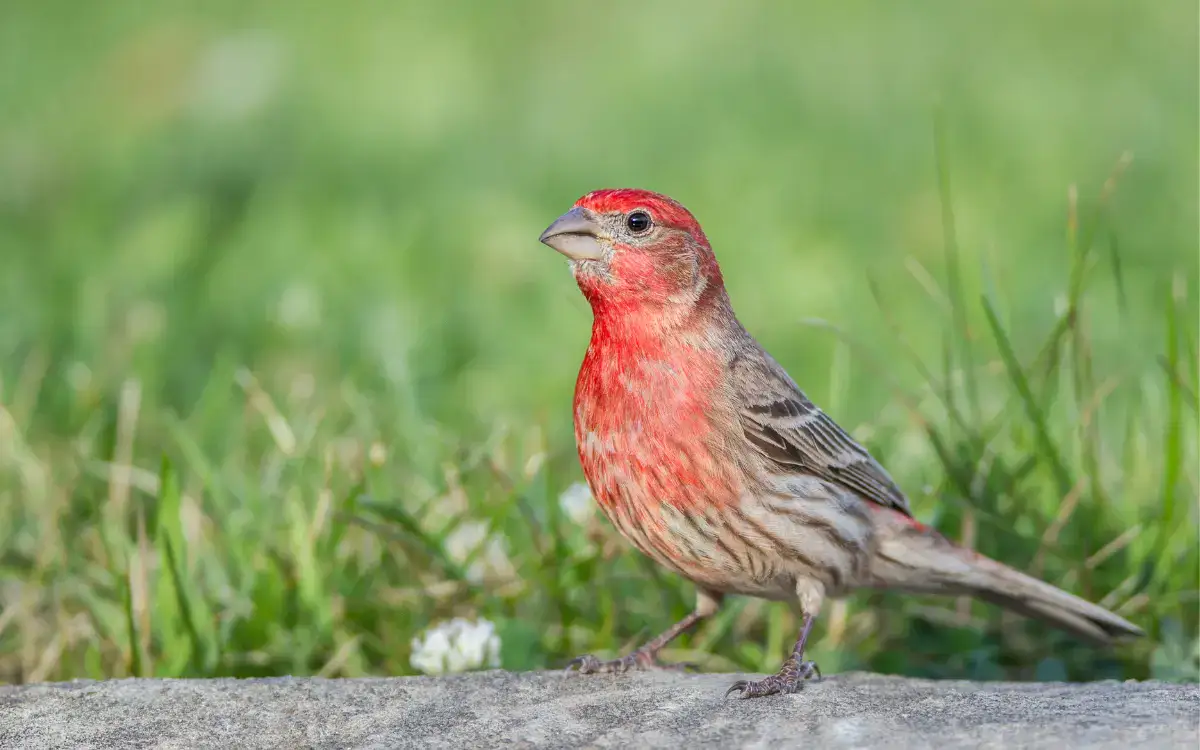
Eastern Bluebird vs Indigo Bunting
Blue-colored birds are always a welcome sight, especially during the warmer months. Among the most eye-catching are the Eastern Bluebird and the Indigo Buntingtwo birds that often get confused due to their vivid plumage and similar size. But they’re quite different once you know what to look for.
This guide breaks down everything you need to know to tell them apart quickly and confidently. Whether you’re a backyard birdwatcher, a budding birder, or just curious about that flash of blue in your garden, this article will help you identify which bird is visiting.
Eastern Bluebird vs Indigo Bunting Comparison
| Feature | Eastern Bluebird | Indigo Bunting |
| Size | 6.5–7 inches | 5–5.5 inches |
| Male Color | Blue back, reddish-orange chest | Deep blue all over |
| Female Color | Gray-blue with warm chest | Plain brown, bluish tint |
| Song | Soft, mellow warble | Bright, bouncy notes |
| Habitat | Open fields, nest boxes | Brushy woods, field edges |
| Nesting | Cavities, boxes | Shrubs, dense vegetation |
| Winter Presence | May stay in southern U.S. | Migrates to Central America |
Eastern Bluebird
Appearance
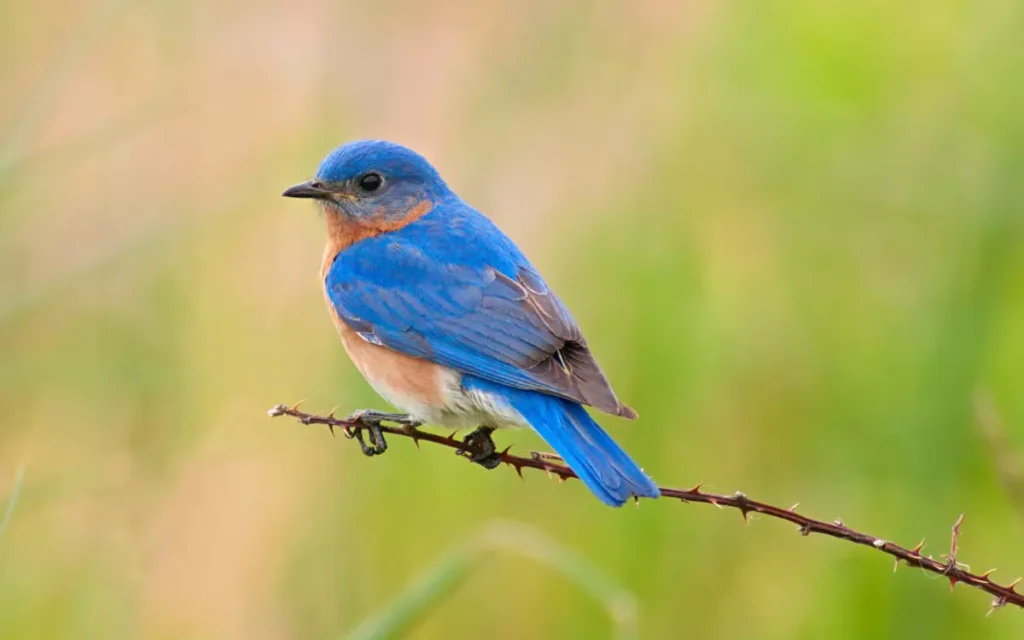
Male Eastern Bluebirds are easy to spot once you know their look: bright blue upperparts paired with a rusty-red chest and white belly. Females share the same pattern but with softer tonesgrayish-blue back and a pale orange wash across the chest.
Behavior
They’re often seen perched on fence posts or wires, scanning the ground for insects. They fly low and swoop down to snatch up bugs or worms.
- Known for soft, warbled calls that sound like “cheer-cheer.”
- Generally gentle and cooperative with humans.
- Often nest in provided birdhouses.
Where to Find Them
Eastern Bluebirds are common in the eastern and central U.S., especially in grassy open areas with scattered trees. They love meadows, pastures, and even cemeteries.
Indigo Bunting
Appearance
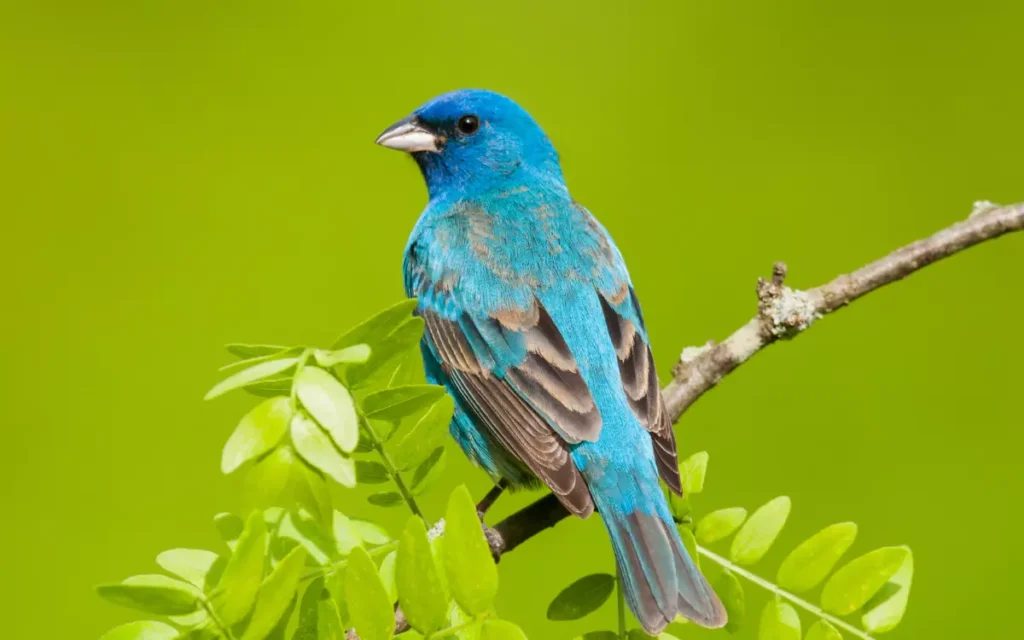
Male Indigo Buntings are small but stunning. They’re covered in rich, electric blue from head to tailespecially brilliant in sunlight. Females are a different story. They’re brown with barely a hint of blue and often mistaken for sparrows.
Behavior
These birds are more secretive than bluebirds. They sing from high branches but tend to stay closer to brush or woodland edges.
- Their song is a quick, cheerful series of notes that sound like “what-what where-where here-here.”
- Males sing all day, especially during nesting season.
- They nest low in thickets, often hidden away.
Range
Like bluebirds, they breed across the eastern U.S., but they travel farther south for winteroften to Mexico, Central America, or the Caribbean.
Telling Them Apart in the Field
Not sure which bird you’re seeing? Here’s how to spot the difference fast:
1. Chest Color
- Bluebird: Has a reddish-orange chest that stands out clearly.
- Bunting: Solid blue from top to bottom (males only).
2. Size and Shape
- Bluebirds are a bit larger and have a more rounded body and head.
- Buntings are smaller, more compact, and stand more upright when perched.
3. Song
- Bluebird: Soft, almost sad-sounding “chur-lee.”
- Bunting: Quick, peppy warbles that sound joyful and fast-paced.
4. Movement
- Bluebirds perch low and drop down to feed.
- Buntings flit through shrubs or perch high to sing.
What Do They Eat?
Eastern Bluebird
- Loves mealworms, beetles, caterpillars, and berries.
- Will come to feeders with dried mealworms or suet crumbles.
Indigo Bunting
- Prefers small seeds like thistle and millet.
- Also eats insects, especially during breeding season.
Attracting Them to Your Backyard
For Eastern Bluebirds:
- Install a properly-sized nest box in an open yard or field.
- Offer live or dried mealworms in open trays.
- Avoid putting boxes near brushy areas (helps deter competition or predators).
For Indigo Buntings:
- Plant native shrubs and tall grasses to mimic their natural habitat.
- Provide thistle or nyjer seed feeders.
- Add shallow birdbaths or water drippersthey’ll appreciate it on hot days.
Female Look-Alikes: A Common Confusion
Female Eastern Bluebirds and female Indigo Buntings are more muted, and they confuse even experienced birders. Here’s a cheat sheet:
| Trait | Female Eastern Bluebird | Female Indigo Bunting |
| Chest Color | Pale orange to warm buff | Plain tan or light brown |
| Wings/Tail | Bluish hints | Mostly brown, little blue |
| Overall Look | Softer version of the male | Sparrow-like |
When in doubt, watch their behavior and listen for songsmales sing frequently, and that’s often your best clue.
Common Mistakes Birdwatchers Make
- Mistaking a Tree Swallow for a bluebird. Swallows are shinier, have no orange on the chest, and a different flying style.
- Confusing female buntings with sparrowslook closely for that faint wash of blue and shape of the beak.
- Assuming any blue bird at a feeder is a buntingbluebirds rarely eat seed unless it’s softened.
FAQs
What’s the biggest visual clue between an Indigo Bunting and a Bluebird?
The chest color. Bluebirds have a distinct reddish-orange chest, while Indigo Buntings are a solid blue (males).
Do Eastern Bluebirds migrate?
Some do. Birds in northern areas migrate to the southern U.S., while those in warmer climates may stay year-round.
Are Indigo Buntings common at feeders?
They can be, especially during migration. They love nyjer and white millet, so try adding a small-seed mix.
Can you attract both birds to the same yard?
Yesjust give them different feeding and nesting setups. Nest boxes for bluebirds, and dense shrubs for buntings.
Why is the female Indigo Bunting not blue?
Only the males are blue. Females stay brown to stay camouflaged while nesting and feeding young.