How to Attract Juncos to Your Yard: A Step-by-Step Guide
The easiest way to attract juncos is to place white proso millet on a low platform feeder or clean patch of ground near dense shrubs. Unlike chickadees and finches, juncos usually search for food on or close to the ground. They may ignore a high hanging feeder even when it contains suitable seed.
You will have better results if your yard also has fallen leaves, native grasses, low plant cover, a brush pile, and fresh water. In much of the United States, juncos are mainly winter visitors, so begin preparing your feeding area in early fall.
Quick Junco Attraction Checklist
| What juncos need | Best choice |
| Favorite feeder food | White proso millet |
| Other useful foods | Hulled sunflower, cracked corn, oats, nyjer |
| Best feeder | Ground tray or low platform |
| Feeder height | Ground level to about 3 feet |
| Water | Shallow birdbath |
| Protective cover | Dense shrubs, evergreens, or brush pile |
| Natural food | Native grass, flower, and weed seeds |
| Ground habitat | Leaf litter and open soil below shrubs |
| Best season | Fall through early spring in much of the U.S. |
| Main safety needs | Clean feeding area, nearby cover, and no outdoor cats |
What Kind of Junco Visits Backyards?
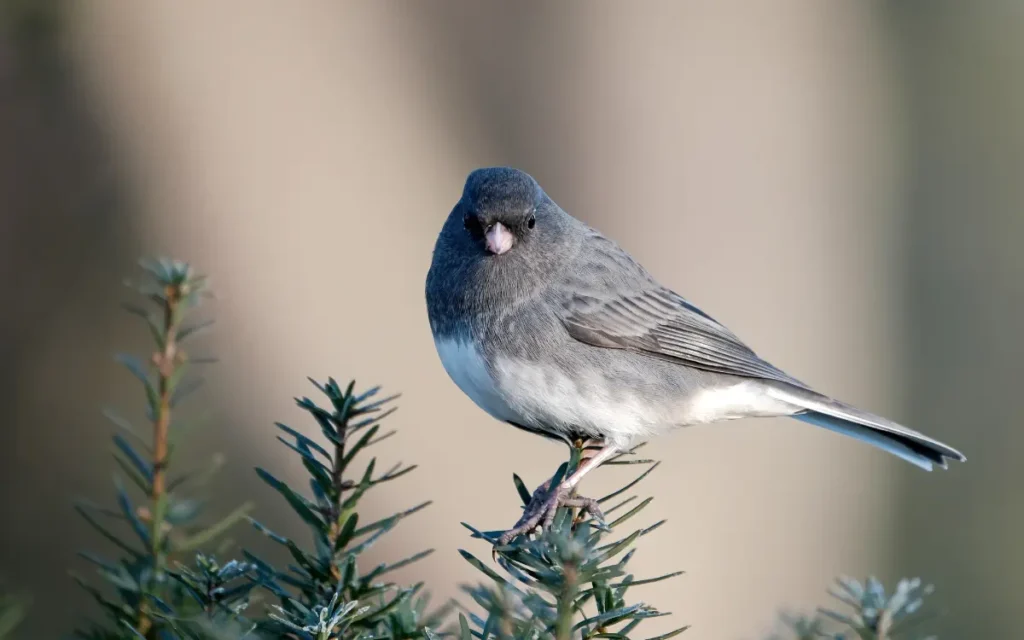
When people in the United States or Canada talk about attracting juncos, they usually mean the Dark-eyed Junco.
Dark-eyed Juncos vary greatly in color across North America. Some have dark gray hoods and white bellies, while others have brown backs, rusty sides, or pinkish bills. These regional forms were once treated as separate species.
The main forms include:
- Slate-colored Junco
- Oregon Junco
- Pink-sided Junco
- Gray-headed Junco
- White-winged Junco
- Red-backed Junco
Despite their different plumage, they share several useful identification clues. Most are small, round-bodied sparrows with pale bills and white outer tail feathers that flash when they fly.
The Yellow-eyed Junco is a separate species found mainly in Mexico and a small part of southeastern Arizona. The steps in this guide are intended mainly for Dark-eyed Juncos.
Step 1: Check When Juncos Visit Your Area
In many northern areas, Dark-eyed Juncos breed during spring and summer. Farther south, they are mainly winter visitors.
Their arrival is so closely linked with cold weather that they are sometimes called “snowbirds.”
General Seasonal Pattern
| Region | When juncos are commonly seen |
| Canada and Alaska | Mostly breeding season; some remain in winter |
| Northern United States | Migration, winter, or year-round depending on habitat |
| Central United States | Mainly fall through early spring |
| Southern United States | Mostly winter |
| Western mountain areas | Often year-round at suitable elevations |
| Pacific Northwest | Common year-round in many places |
Local elevation also matters. In the West, juncos may move from high mountain forests to lower towns and valleys during winter.
If you live in a wintering area, prepare the yard by September or October. This gives early migrants time to discover it.
Step 2: Offer White Proso Millet
White proso millet is usually the best feeder seed for attracting juncos. The seeds are small enough for their compact bills and resemble many of the wild seeds they find on the ground.
The Cornell Lab of Ornithology reports that Dark-eyed Juncos appear to prefer millet over sunflower seed at feeders.
Offer plain white proso millet rather than a mix dominated by red milo. Milo is larger and less attractive to many backyard songbirds.
Other Foods Juncos Eat
You can also offer:
- Hulled sunflower seeds
- Black oil sunflower seeds
- Cracked corn
- Rolled or pinhead oats
- Nyjer seed
- Canary seed
- Finely cracked mixed grain
- Small peanut pieces
- Dried mealworms
Sunflower hearts are easier for juncos to eat than large sunflower seeds in their shells. They also leave fewer hulls on the ground.
Foods That May Be Wasted
Low-quality mixes often contain wheat, large pieces of corn, red milo, and other filler. Juncos may sort through the mix and leave much of it behind.
Start with millet and a small amount of hulled sunflower. Watch which food disappears first before buying a large supply.
Step 3: Feed Juncos on or Near the Ground
Juncos naturally hop across the ground while searching through soil and fallen leaves. A feeding setup that copies this behavior will work better than a tall tube feeder.
Use a Ground-Feeding Tray
A ground tray keeps seed in one place and makes cleanup easier.
Choose one with:
- A mesh or perforated floor
- Good drainage
- Low sides
- No sharp edges
- Enough space for several birds
- A design that can be scrubbed easily
Raise the tray a few inches above the soil using short legs or bricks. This helps prevent seed from sitting in wet soil.
Try a Low Platform Feeder
Juncos will also use a platform mounted about 1 to 3 feet above the ground. A covered platform keeps seed drier during rain and snow.
Keep the roof high enough that birds can see approaching danger and leave from more than one side.
Scatter Only a Small Amount
You can scatter millet beneath a regular feeder, but do not throw large piles into grass or wet soil. Uneaten seed can rot, grow mold, attract rodents, or become mixed with droppings.
Spread only what the birds can finish that day. Rotate the feeding spot to prevent waste from collecting in one area.

Step 4: Place the Feeding Area Near Low Cover
Juncos feel more comfortable when they can retreat quickly into shrubs or low branches.
Place the feeder about 5 to 10 feet from:
- Dense native shrubs
- Evergreen trees
- A woodland edge
- Tall ornamental grasses
- A well-built brush pile
- Low branches
Do not place seed directly against a thick shrub where a cat could hide. Juncos need nearby shelter, but they also need enough open space to see a predator approaching.
An ideal setup gives the birds a clear feeding patch with protective cover a short flight away.
Step 5: Leave Some Fallen Leaves
Juncos regularly search through leaf litter for seeds and small insects. Removing every leaf takes away both food and habitat.
Leave a natural layer beneath trees, shrubs, and garden beds. Juncos may hop through it, scratch with their feet, and peck at exposed food.
Leaf litter can hold:
- Grass and flower seeds
- Tiny beetles
- Caterpillars
- Ants
- Spiders
- Fly larvae
- Other small invertebrates
You do not need to leave thick piles across a lawn or walkway. Move some leaves into planted beds or a quiet corner where they will not create a slipping or drainage problem.
Avoid shredding all the leaves. Intact leaves offer better shelter for many insects.
Step 6: Grow Native Seed-Producing Plants
A feeder provides quick food, but native grasses and flowers create a longer-lasting supply.
Juncos eat seeds from many low plants, including chickweed, sorrel, ragweed, lamb’s quarters, and grasses. They also eat more insects during the breeding season.
Useful plant groups include:
- Native bunchgrasses
- Native sunflowers
- Asters
- Goldenrods
- Coneflowers
- Coreopsis
- Black-eyed Susans
- Native sedges
- Amaranths
- Regional berry-producing shrubs
The best choices differ by state and growing zone. Use a native plant database or ask a local native-plant nursery for species suited to your soil and rainfall.
Leave Seed Heads Through Winter
Do not cut every dried flower or grass stem in fall. Standing seed heads give juncos natural feeding opportunities after frost and snow.
They also support insects that birds may find during warmer winter days.
Cut old growth in spring after local insects have had time to emerge. If the garden becomes too untidy for your preference, leave selected patches rather than every stem.
Step 7: Add Dense Shrubs and Evergreen Cover
Juncos spend much of their time near the ground. They need low cover for resting, hiding, and escaping bad weather.
Good cover may come from:
- Native evergreen shrubs
- Low-growing conifers
- Dense deciduous shrubs
- Bramble patches
- Brushy woodland edges
- Tall grasses
- Fallen branches
Evergreens are especially useful during winter because they continue to block wind and provide visual cover after deciduous plants lose their leaves.
Create plant layers rather than relying on one isolated shrub. A mix of low plants, medium shrubs, and taller trees gives birds more ways to move through the yard safely.
Step 8: Build a Small Brush Pile
A brush pile gives juncos quick cover between feeding trips. It can also hold insects and shelter other small wildlife.
How to Build One
- Select a quiet corner away from buildings and property boundaries.
- Put thicker branches on the bottom.
- Cross the branches to create open spaces.
- Add smaller twigs over the top.
- Leave several low entrances around the edges.
- Keep the structure loose enough for small birds to move through.
- Check it occasionally for instability.
A brush pile does not need to be large. Even a low pile behind a garden bed can help.
Follow local fire-safety rules, especially in dry or wildfire-prone areas. Keep woody debris away from houses where defensible space is required.
Step 9: Provide a Shallow Birdbath
Juncos need water for drinking and bathing, including during winter. A clean birdbath may draw them into a yard that lacks a natural water source.
Choose a basin that is:
- About 1 to 2 inches deep
- Shallow around the edges
- Textured for a secure grip
- Easy to empty
- Close to cover
- Visible from the ground
Place a flat stone in the water if the basin is too deep.
Add Movement
Juncos may notice water sooner when it moves or makes a gentle sound. Add a slow dripper, bubbler, or small fountain.
Keep the flow mild. A strong spray may discourage small ground-feeding birds.
Offer Water in Winter
A heated birdbath can keep water available during freezing weather. Use a model designed for outdoor wildlife use and follow its safety directions.
Do not add salt, antifreeze, alcohol, glycerin, or other substances to the water. Clean liquid water is the only safe choice.
Step 10: Avoid Pesticides and Weed Killers
A yard treated heavily for weeds and insects offers less natural food.
Although seeds make up much of a junco’s annual diet, adults eat beetles, caterpillars, ants, flies, spiders, and other small animals during the breeding season. Nestlings need insect food for growth.
Avoid spraying entire lawns and garden borders. If a pest problem needs control, begin with targeted methods such as:
- Hand removal
- Barriers
- Pruning affected plant parts
- Encouraging natural predators
- Selecting resistant native plants
Allowing a few seed-producing “weeds” in a controlled corner can help juncos. Keep invasive plants from spreading, but do not assume every unplanned plant needs chemical treatment.
Step 11: Protect Ground-Feeding Juncos From Cats
Feeding on the ground makes juncos vulnerable to domestic cats.
Keep pet cats indoors or provide an enclosed outdoor catio. Do not rely on a collar bell as the only protection.
Look at the feeding area from a bird’s height. Remove or avoid:
- Low hiding boxes
- Open storage beneath decks
- Thick cover directly beside the seed
- Abandoned containers
- Objects that let cats approach unseen
Place the food where juncos can see the surrounding ground while keeping escape cover nearby.
If roaming cats regularly visit, stop ground feeding until you can create a safer location.
Step 12: Make Nearby Windows Safer
Juncos may fly toward windows when startled from a feeding group. Glass can reflect trees, shrubs, or open sky.
Make dangerous windows easier for birds to see by adding:
- Closely spaced exterior decals
- Tempera paint patterns
- Exterior cords
- Screens
- Patterned film
- Fine netting installed in front of the glass
One or two hawk-shaped stickers do not cover enough of the window.
Apply patterns across the outside surface with gaps no larger than about 2 inches. Exterior placement breaks the reflection more successfully than decorations placed inside.
Step 13: Keep the Feeding Area Clean
Ground feeding can spread disease when seed, moisture, and droppings collect in the same place.
Daily Care
- Offer only a small amount of food.
- Remove wet or clumped seed.
- Clear away visible droppings.
- Bring a movable tray indoors at night if rodents are a problem.
- Check that drainage holes remain open.
Regular Cleaning
- Throw away old food.
- Scrub the tray or platform.
- Disinfect it when needed using a bird-feeder-safe method.
- Rinse it thoroughly.
- Let it dry completely.
- Refill it with fresh seed.
Move a ground tray periodically so one patch of soil does not collect too much waste.
If several sick or dead birds appear, remove feeders and baths and contact a local wildlife agency for current advice.
Step 14: Create a Winter Feeding Routine
Many backyard juncos arrive with colder weather and leave during spring. A steady winter routine helps them learn that your yard has dependable food.
Morning
Put out a modest serving of dry millet and check the birdbath. Juncos often feed actively after sunrise.
Afternoon
Look for wet seed, scattered hulls, or signs of rodents. Add only a small amount if the tray is empty.
Evening
Remove leftover food if raccoons, rats, mice, or other nighttime animals are becoming a problem.
During heavy snow, clear a small patch beneath cover or place a roof over the platform. Do not scatter food where it will quickly become buried or soaked.
Step 15: Watch How Juncos Use Your Yard
Juncos may first appear along a shrub line before approaching the feeding tray. Watch their movements rather than moving the feeder immediately.
They commonly:
- Hop rather than walk
- Scratch through leaves
- Feed in small winter flocks
- Stay low to the ground
- Flash white outer tail feathers when flying
- Join sparrows at feeding areas
- Retreat into shrubs when disturbed
Their preferred route will show where your yard offers safe cover and where habitat is missing.
Can You Attract Juncos With a Nest Box?
No. Juncos are not cavity-nesting birds, so they normally will not use a birdhouse.
Dark-eyed Juncos usually build open cup nests on or close to the ground. A nest may be hidden beneath:
- A shrub
- Exposed tree roots
- A fallen log
- A bank or slope
- A rock ledge
- Dense ground vegetation
- A porch or building edge
- A hanging planter
If juncos breed in your area, low native cover and quiet ground habitat are more helpful than a nest box.
Do not search through vegetation for a nest. A frightened adult may reveal its location to predators or delay feeding its young.
How to Attract Juncos to a Small Yard
You do not need a large property. A compact setup can include:
- One low feeding tray
- White proso millet
- A shallow water dish
- One dense native shrub
- A patch of fallen leaves
- A planter filled with native grass
- Window-collision protection
Keep the setup clean and avoid crowding it against walls or hiding places used by cats.
How to Attract Juncos to an Apartment Balcony
Juncos are less likely to visit a high balcony because they prefer ground-level feeding. A first-floor patio or low balcony near shrubs has a better chance.
Try:
- A low tray placed on the balcony floor
- A small amount of millet
- A shallow water dish
- Planters with native grass
- A brushy potted shrub
- Closely spaced window markers
Check building rules before feeding birds. Remove spilled seed promptly so it does not fall onto neighboring balconies or attract rodents.
Why Aren’t Juncos Coming to My Yard?
It Is the Wrong Season
Across much of the United States, juncos are present only during migration and winter. They may leave when spring arrives.
The Feeder Is Too High
Move seed to a ground tray or a platform no more than a few feet high. Juncos may wait below hanging feeders for other birds to drop food.
You Are Offering the Wrong Seed
Use white proso millet. Try hulled sunflower seed as a second choice.
The Feeding Area Is Too Exposed
Add low cover within a short flight, but keep the food far enough away to prevent cats from hiding beside it.
The Ground Is Too Tidy
Leave some leaf litter, dried stems, native grass, and open soil where juncos can forage naturally.
The Seed Is Wet
Move the tray under a simple roof, improve drainage, and replace wet seed.
Larger Birds Take Over
Divide the food between two small ground trays or place one near low cover that gives juncos a quick escape route.
Cats Visit the Feeding Area
Stop feeding on the ground until cats can be kept away. Bird safety is more important than attracting them.
Juncos Have Not Found the Yard
It can take time for a winter flock to add a new feeding place to its route. Keep a small amount of fresh seed available and avoid changing the location repeatedly.
Common Mistakes to Avoid
- Using only a high tube feeder
- Offering seed dominated by red milo
- Scattering large piles on wet soil
- Placing food beside a cat hiding place
- Removing every fallen leaf
- Cutting all seed heads in fall
- Using pesticides across the yard
- Expecting juncos to use a birdhouse
- Leaving ground trays out for rodents overnight
- Failing to clean beneath feeders
- Letting water freeze or become dirty
- Assuming juncos stay year-round everywhere
FAQs
What is the best food for juncos?
White proso millet is one of the best choices. Juncos also eat hulled sunflower seeds, cracked corn, oats, nyjer, and many wild grass and flower seeds.
What kind of feeder do juncos prefer?
They prefer a ground tray or low platform feeder. They may visit raised feeders, but feeding on or near the ground better matches their natural behavior.
Do juncos eat black oil sunflower seeds?
Yes, but they often prefer millet. Hulled sunflower is easier for them to eat and creates less shell waste.
Do juncos eat nyjer seed?
Some juncos eat nyjer, especially when it falls onto a clean tray or the ground beneath a finch feeder. Millet is usually a more dependable choice.
Do juncos eat suet?
They may occasionally sample suet, but it is not the best food for attracting them. Seeds offered near ground level work better.
Where should I put a junco feeder?
Place it on or close to the ground, roughly 5 to 10 feet from shrubs, evergreens, or a brush pile. Keep enough open space around it for birds to spot cats.
How can I attract juncos without a feeder?
Grow native grasses and seed-producing flowers, leave seed heads standing, retain some leaf litter, provide low shrubs, and add a shallow birdbath.
Why do juncos eat underneath my feeder?
They naturally forage on the ground. They collect seeds dropped by finches, chickadees, cardinals, and other birds using elevated feeders.
Do juncos stay all winter?
Many do, but local numbers may change as flocks move in response to weather, snow cover, and food. Some juncos continue farther south during severe conditions.
Why did my juncos suddenly disappear?
They may have migrated, found another food source, reacted to a nearby predator, or moved after a weather change. Their absence does not always mean something is wrong with the feeder.
Do juncos return to the same yard every year?
Some may return to familiar winter areas, though the exact birds can be hard to recognize. A yard with dependable food, water, and cover may attract juncos each winter.
Do juncos use birdhouses?
No. They usually build open nests on or close to the ground rather than nesting inside cavities.
Where do juncos sleep at night?
They commonly roost in dense shrubs, evergreens, tall vegetation, and other low sheltered places that block wind and conceal them from predators.
Are juncos friendly?
Juncos often become comfortable feeding near homes, but they remain wild birds. Observe them quietly rather than trying to touch or hand-feed them.
What plants attract juncos?
Native grasses, coneflowers, sunflowers, asters, goldenrods, and other seed-producing plants can attract them. Dense native shrubs provide escape and roosting cover.