Can Ducks Fly ? Secrets of Their Flight Abilities!
Ducks are fascinating birds known for their adaptability to various habitats, from wetlands to forests. One of the most intriguing aspects of ducks is their ability to fly. But not all ducks have the same flight capabilities.
Let’s dive deeper to explore this question in detail.
Ducks’ Flight Capabilities at a Glance
| Duck Species | Flying Ability | Typical Flight Speed | Migration Patterns | Notable Facts |
| Mallard | Excellent flyers | ~40-55 mph | Long-distance migrations | Can fly at altitudes of up to 21,000 feet. |
| Muscovy Duck | Limited flyers | ~35-40 mph | Rarely migratory | Mostly domesticated; wild Muscovies are stronger flyers. |
| Pekin Duck | Poor flyers | ~20-30 mph (rare flights) | Non-migratory | Bred for meat; often too heavy to fly effectively. |
| Wood Duck | Agile flyers | ~50 mph | Short to moderate migrations | Known for fast, direct flights through forests. |
| Ruddy Duck | Limited flight (short bursts) | ~40 mph | Rarely migratory | Strong swimmers; flying mainly for escape purposes. |
| Teal Ducks | Excellent flyers | ~60 mph | Long-distance migrations | Among the fastest-flying ducks. |
Key Factors Affecting Ducks’ Flight
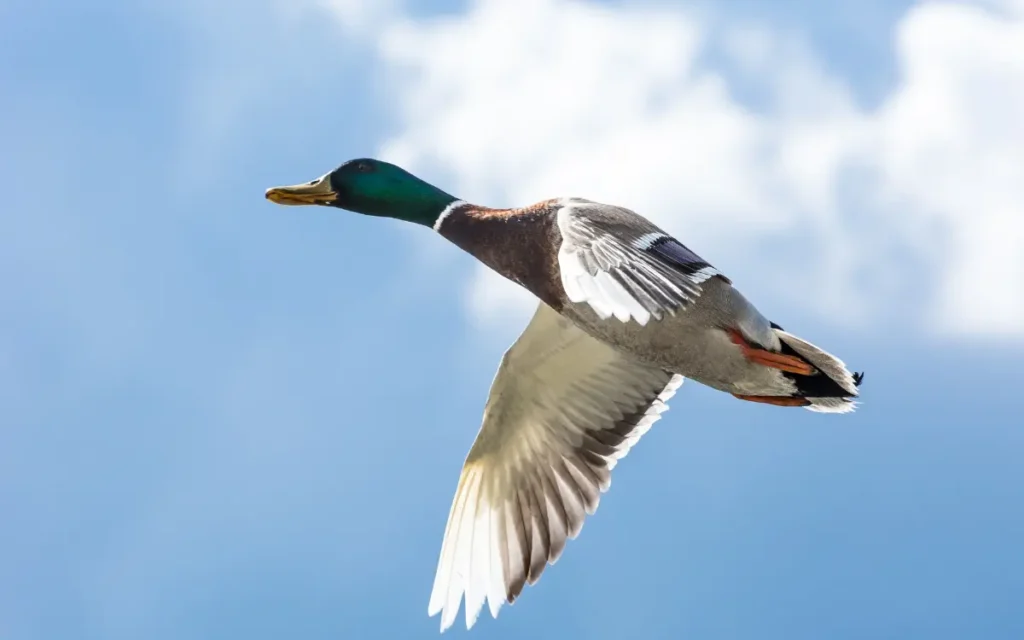
The ability of ducks to fly is influenced by several factors. While some ducks are excellent long-distance flyers, others can only manage short bursts. Here’s an overview of the factors that play a significant role:
| Factor | Impact on Flight |
| Species | Some species, like teal ducks, are natural flyers, while others, like Pekin ducks, are bred for specific traits that reduce their flying ability. |
| Weight and Size | Heavier ducks struggle to take off and sustain flight, while smaller, lighter ducks can cover long distances. |
| Wing Structure | Ducks with broader wings generate more lift, aiding in long-distance flights. |
| Habitat | Ducks living in open wetlands tend to fly more than forest-dwelling ducks. |
| Domestication | Domesticated ducks often lose their ability to fly due to selective breeding for traits like size or meat production. |
Why Do Ducks Fly?
Flight is essential for ducks for a variety of reasons, including:
- Migration: Ducks migrate to find food and suitable breeding grounds during different seasons.
- Predator Avoidance: Flight allows ducks to escape predators quickly.
- Habitat Exploration: Flying helps ducks explore new areas when their habitat becomes unsuitable.
- Mating and Breeding: Male ducks often fly to locate mates across territories.
How High Can Ducks Fly?
The flight altitude of ducks varies widely depending on the species. Some ducks have been observed flying at extraordinary heights during migration.
| Flight Altitude (Feet) | Duck Species | Remark |
| Up to 21,000 feet | Mallard | Spotted flying over the Himalayas. |
| 5,000-10,000 feet | Most migratory ducks | Typical migration altitude. |
| 1,000-2,000 feet | Wood Ducks | Prefer lower altitudes for navigating forests. |
Migration Patterns and Their Role in Flight
Migration is a critical aspect of a duck’s life. Ducks migrate to escape harsh weather conditions and search for food and breeding grounds. Their flight patterns vary depending on the species and environmental factors.
| Migration Type | Common Duck Species | Distance Traveled | Special Adaptations |
| Long-Distance Migration | Mallard, Northern Pintail | Up to 3,000 miles | Fat reserves for energy during extended flights. |
| Short-Distance Migration | Wood Duck, Gadwall | 500-1,500 miles | Ability to quickly adapt to changing climates. |
| Non-Migratory Behavior | Domestic ducks, Muscovy ducks | Minimal | Reliance on human-provided resources. |
Differences Between Wild and Domestic Ducks
The ability to fly differs significantly between wild and domesticated ducks. Here’s a closer look:
| Aspect | Wild Ducks | Domestic Ducks |
| Flying Ability | Strong flyers with migratory capabilities. | Limited or no ability to fly due to selective breeding. |
| Wing Structure | Adapted for long-distance flights. | Smaller wings relative to their body size. |
| Weight | Leaner bodies suited for sustained flight. | Heavier bodies make flight difficult or impossible. |
| Purpose | Survival and migration. | Primarily bred for meat, eggs, or aesthetics. |
Ducks That Rarely Fly
While most ducks are capable of flight, some species rarely do so. These ducks have adapted to their environments in other ways:
- Pekin Ducks: Primarily domesticated and too heavy for sustained flight.
- Muscovy Ducks: Wild ones can fly, but domesticated variants often cannot.
- Ruddy Ducks: Preferring swimming to flying, they take flight only when necessary.
Fun Facts About Ducks’ Flight
- Speed Record: Teal ducks are among the fastest, reaching speeds of up to 60 mph during flight.
- Wing Beats: Ducks have rapid wing beats to stay aloft, unlike soaring birds such as eagles.
- Seasonal Travel: Migratory ducks often follow specific flyways, such as the Mississippi Flyway in North America.
- Longest Flights: Some species, like the mallard, can travel over 3,000 miles in a single migratory journey.
Related article:
- Duck Symbolism: Unique fact you should know
- 41 Species of Ducks Found in Texas (ID &Calls)
- 14 Ducks found in Louisiana with IDs and photos
- 11 Ducks in Colorado You Must Know
FAQs
Can all ducks fly?
No, not all ducks can fly. Domesticated breeds like Pekin ducks are often too heavy, while wild ducks are generally capable flyers.
How far can ducks fly in a day?
Migratory ducks can cover up to 800 miles in a single day during peak migration.
Why do some ducks not migrate?
Non-migratory ducks rely on abundant local food sources and do not need to travel for survival.
Can ducklings fly?
Ducklings typically cannot fly until they are about 50-60 days old when their feathers fully develop.
How do ducks prepare for migration?
Ducks build up fat reserves to sustain long flights and often travel in flocks to conserve energy.
Conclusion
Ducks are incredible creatures with varying flight abilities that depend on their species, habitat, and level of domestication. While most wild ducks are adept at flying and migrating long distances, some domesticated breeds have lost this ability due to human intervention. Whether soaring over mountains or gliding across wetlands, the flight of ducks remains a testament to their resilience and adaptability in the natural world.